
viserys refusing to take any pain killers just to stay awake and drag his corpse to the throne to defend rhaenyra one last time. the crown falling. daemon crowning him. the soundtrack. REAL CINEMA

i don't think house of the dragon will ever be this good again
19
2,571
18,765
248,476
Kristi Hays retweeted

Oh no not a spectacle of physical daring & vitality
I miss being a Serious Country where a corpse president invites a circus of trannies to jiggle their implants on the White House Lawn

This is seriously the cringiest collapse of a nation in real time.
20
141
2,801
34,500
Amb. Jindu 🌉 🇳🇬 🌍 retweeted

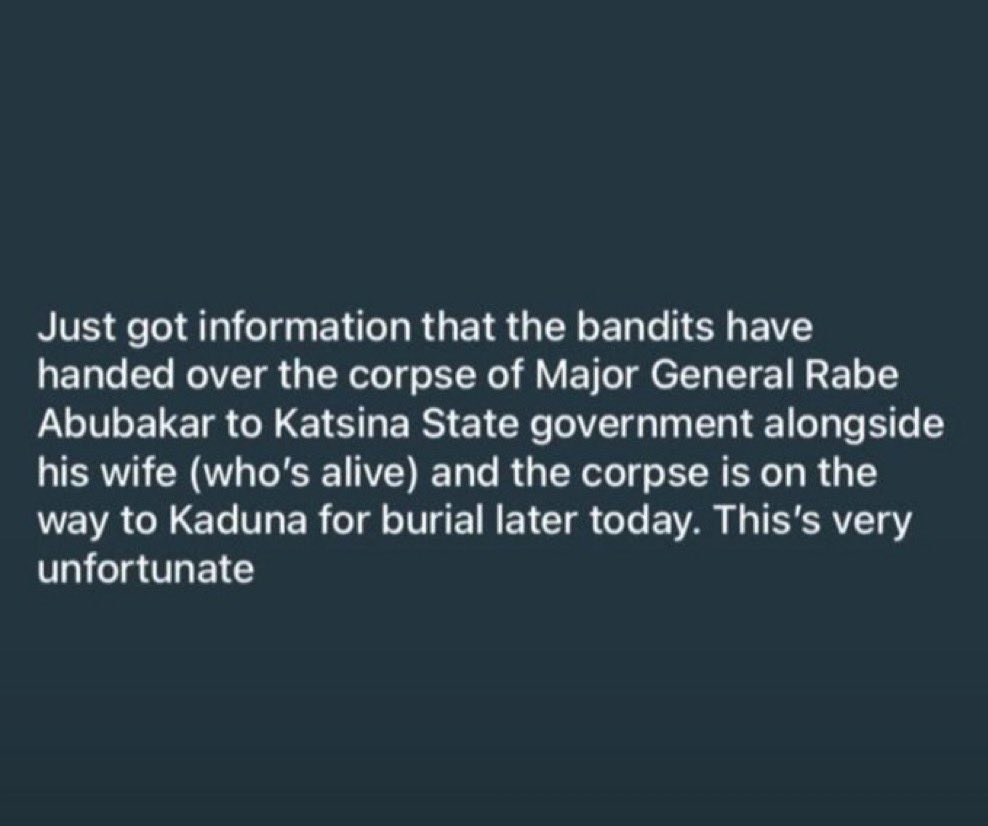
So, the late Major General Rabe was buried today after the terrorists released his corpse. Now be pertinent question is, who was the body released to and why?
Nigeria is a country of particular concern indeed.
 Ms Vee
165
1,426
2,391
85,296
tris viu a sabrina 3x retweeted

this brazil team is so ass but thank god they brought neymar’s corpse along for help 🙏😭😭
35
1,279
24,492
345,909
Chaiwala.ye chai garam garam garam chai. retweeted

An Indian is literally ROTTING Corpse and the Mahamanav is celebrating in France! 🎉
Shameless
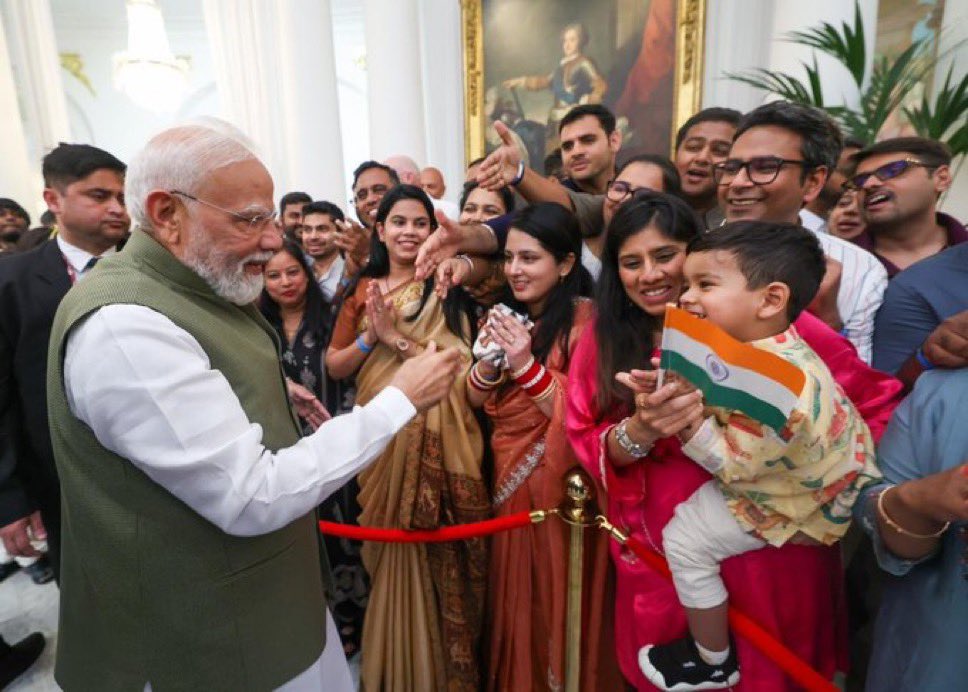

“This is the dead body of our second officer. He died two days ago and his body is decomposing. We reached out to the Indian Embassy but haven’t got a positive response. Our company is hiding from us,” says Indian captain of MT Celestial anchored in Oman
15
155
576
7,344
💖 NEØN DIVA 💖 retweeted

17h
nux takus rotting corpse in the rubble of his house:


do u think he just forgot his login and is to embarrassed to admit it

11
524
7,967
78,765


It pisses us off because NOT ONCE did you ask if Biden's Corpse had any health challenges.
Fuck off
1
Nelson oshile retweeted

Terrorists hand over corpse of slain Major General to Katsina State Government 😭
Being a Nigerian is enough reason to believe God no dey exist sha

104
393
724
20,263

Misogyny is real, BUT Hilary epitomized "establishment" politician and was forced on us by the DNC. Bernie could've won in '16. Then the corpse of Biden wouldn't relinquish the reigns in time to let the proper candidate selection process play out, bc it wouldn't have been Harris.



WARNING: AN ANIMAL CAN HIDE ANOTHER ! (Guess who from Fanon to Sartre and our current bleeding hearts on the left have supported and continue to support the worst barbarity...provided it's exercised by our enemies and against us Westerners?)
God grants to a nation that perfects the industry of death and knows how to die nobly a proud life in this world and eternal grace in the life to come.
Hassan Al-Banna (1938)
The next day, horrible photographs of the battle were being sold everywhere in the Holy City: the burned and mutilated bodies of Haganah members, who, for a perverse Arab reason, had been stripped naked and photographed. These images of nudity once again flooded the markets of the "Holy City" after every fight and sold quickly. Arabs carried them in their wallets and showed them frequently, taking the same strange and abnormal pleasure that our perverts derive from photographs of naked women. One of them is Ali, who confides to Derounian: "I must kill Jews, many Jews. I must kill until my arm is tired. I must not stop killing Jews until the bodies reach this height..." The frenzied Arab raised a hand to his chin. "I must do one more thing... For that I need your help. I want you to come with me the next time we fight the Yahood. When I catch a living Jew, I want you to be with me with your camera. I want you to take a first photo of me holding the living Jew by the throat. I want you to take another photo while I stab him in the neck. Then I want photos while I stab him again and again in the neck, in the face, in the heart, in the stomach... with this knife!" Ali pulled out a vicious blade. "After killing the Jew, I want you to photograph me drinking his blood."
John Roy Carlson (pseudonym for US journalist Arthur Derounian, Cairo to Damascus, 1951)
My brothers, do not only kill... But mutilate your adversaries in the public square... gouge out their eyes... cut off their arms and hang them.
Journal of the Students of the Great Mosque of Ez Zitouna in Tunis (1955)
The barn was on fire, in the courtyard the little girl was on the ground, dead and completely naked; after raping her they had cut off her head and placed it between her bare legs. (...) In the large room that served as the living room (...) the father was lying near the large table that occupied the center of the room; his face, with eyes wide open, still showed his suffering and his half-open mouth had vainly tried to catch a little air when they slit his throat; his pants were pulled down over his shoes. He had been emasculated and there was blood everywhere on the floor. On the large table lay his wife, her skirt pulled up over her chest, a large wound going from the pubis to the waist through which her viscera were spilling out and hanging along the table. A little further on the floor, a bloody "mush" that at first glance resembled nothing was in fact the two boys on whom the terrorists had gone at it, probably with iron bars, turning their heads into a kind of red pancake whose brains streaked this puddle with white. Finally (...) the fourth child. A baby of about fifteen months (...) in the extinguished fireplace they had used the spit to impale the child; the stake that went through his body came out near the neck, his head was hanging and his hands touched the ashes of the hearth. (...) a child whose only crime had been to be born European (...) Can one imagine that human beings could commit such acts in the name of any ideology without becoming animals themselves?
Marie-Jeanne Pusceddu (2010)
At dawn, the negro village (Arab neighborhoods) began to stir and, contrary to what had been promised, thousands of Muslims poured toward the European city, intoxicating themselves with cries, songs, and the you-yous of the women. Nothing yet foreshadowed the drama that was about to unfold. Yet many Europeans noticed that some had weapons in their hands and that many others were trying to conceal either a revolver, a knife, a rifle, an axe, or a club. There was no longer any doubt. So the most cautious barricaded themselves and tried to warn friends and family by telephone of their fears. (...) This was the starting point of the greatest anti-European pogrom that Algeria had ever known. What was going to happen on this July 5 in Oran would be unbearable to see. All limits of horror would be crossed. Hundreds of Europeans would be abducted; throats would be slit, men emasculated, people mutilated for pleasure, entrails torn from the tortured, bellies filled with earth and stones, children's heads smashed against walls like walnuts, men crucified and burned alive; women raped and then handed over to prostitution; blood would flow in sheets while in the negro village, the still-living Europeans would be hung by the palate on butcher hooks. (...) Very quickly, the Europeans who did not expect this outpouring of violence were hunted down and soon there was nothing but horrors and abominations. Screams of terror echoed in all the throats of the pursued victims. There was no longer the slightest coolness, the slightest germ of humanity... It was nothing but an avalanche of madness and terror. The carnage was unprecedented. The uniform stench of death had replaced the multiple smells of life. Meanwhile, the French army barricaded itself in guard posts in a surveillance position. (...) and the French flag was lowered so as not to further excite the multitude. Every European had become prey, game facing the terrible crowd, relentless in its joy, unleashed, and when they spotted French army vehicles, in terror they tried to climb aboard... they were most often pushed back with rifle butts. There was panic among them. "But what is the army doing, what is the army doing?" they said. They could still hear the loudspeakers of military trucks driving through the whole city with the nagging and reassuring call: "Oranais, Oranaises, do not listen to those who lie to you (implied: the OAS). The army is here and will stay for three years to protect you." That was on June 26, 27, and 28, 1962! (...) What did it matter that children were bled and mothers' bellies opened, that the entrails of the tortured were torn out and they were hung by the feet over incandescent embers... At five o'clock in the afternoon, finally, the characteristic noise of a truck convoy was heard. It was the mobile gendarmerie, the damned soul of General Katz, taking up position. From that moment, as if by miracle, the demonstration ended and the populace disappeared... but it was too late. Hundreds of corpses littered the streets, blood stained sidewalks and gutters, apartments were devastated, shops looted, disappearances were countless, the city had taken on the face of the apocalypse. Why had this intervention occurred so late? Had it been decided to make the Oranais pay for their madness, their passion for French Algeria, their too-great fidelity to the OAS? (...) The answer is simple: Paris, which thanks to its intelligence had expected this explosion of furious madness, had ordered Katz "not to move, to let it happen." In the Arab town and at the Petit Lac, the pile of the killed was more incoherent and denser. A fetid, unbearable odor escaped, a dreadful pestilence. One could see, soaking in disgusting baths, the viscera of the unfortunate victims and on a wall, traced by a clumsy hand, one could read: "The guts of the French"... And always this jubilation, and always these cries "Death to the Christians!"... And always this frenzied, fanatical crowd, the same crowd that, a few months later, obtaining nothing from the promises invoked throughout the war and suddenly reduced to famine, would emigrate to France with a saddened face and eyes of pain, into this Fatherland that they had taken pleasure in humiliating and whose children they had persecuted with delight. (...) The number of disappearances increased hour by hour, aggravating the torment of the families. The morgue was overflowing and a fetid odor emanated from it. Soon entry was refused and the piled, mutilated bodies were unrecognizable.
José Castano (2015)
We are on May 28, 1957, in the village of Melouza in Kabylia. This time the FLN's target is no longer the Europeans but its own brothers. It is in Melouza that the FLN decided to "punish" the MNA, the rival organization that overshadowed it in the region. In the early afternoon, under the orders of Mohamedi Saïd (a former member of the Abwehr, German intelligence during the Second World War), commander of wilaya 3, an FLN band, reinforced by many local inhabitants forcibly recruited, encircles the eastern part of the douar. (...) The rebels search every mechta, pillage, extract the men and young people whom they drive back to the place of the massacre. In the late afternoon, everyone is herded into the mechta, and as night falls the systematic execution of all the men present begins. Saahnoun will order his men to massacre all the civilians. "And it is the massacre, the bloodthirsty madness. With rifles, knives, pickaxe blows, the fellaghas cut their prisoners to pieces... Streams of blood now flow from the houses transformed into human slaughterhouses. The massacre lasts barely half an hour. To the cries, supplications, gunshots, and howls of the unleashed djounoud succeeds a heavy silence. Abdelkader Sahnoun gathers his men. They must flee. Stained with blood, their eyes wild, they return to the eastern zone." The killing ended around 4 p.m... It is the group of a man named Chaffaï who will have the task of finishing off the wounded. (...) Horribly mutilated bodies, corpses whose faces still bore the imprint of unspeakable terror, and blood everywhere, in pools, in patches, in trails on the ground and on the walls. And floating in the atmosphere, that heavy, warm and bland odor of blood and decomposing bodies." In the houses and alleys transformed into slaughterhouses, the French army, upon arriving on the scene two days later, counted 315 corpses. The martyrdom of Melouza was abundantly exploited by French left-wing propaganda, which explained the massacre by the pro-French sentiments of the village inhabitants, whereas it was a fratricidal conflict. The victims were ARAB maquisards. The "general" Bellounis, terrified by the carnage, requested a meeting a few days later with Captain Combette, the person responsible for the region, and announced that he was rallying to the French army.
Josette Boussommier (2007)
The conscripts walk along the path (...) They are gripped by fear. Behind every bush they imagine an enemy lying in ambush, ready to pounce to slit their throats. They have been warned. They are ferocious, bloodthirsty. They have been shown photos upon arrival at the barracks. The little guy from the contingent, throat cut, testicles in his mouth. He will never forget. And those who never came back... The list is long.
Maïssa Bey (2010)
This irrepressible violence, he shows it perfectly, is not an absurd storm nor the resurrection of savage instincts nor even an effect of resentment: it is man himself recomposing. This truth, we knew it, I believe, and we have forgotten it: the marks of violence, no gentleness will erase them: it is violence alone that can destroy them. And the colonized heals himself of the colonial neurosis by driving out the colonist with arms. When his rage explodes, he regains his lost transparency, he knows himself in the very measure that he makes himself; from afar we regard his war as the triumph of barbarism; but it proceeds by itself to the progressive emancipation of the fighter, it gradually liquidates in him and outside him the colonial darkness. As soon as it begins, it is without mercy. One must remain terrified or become terrible; that means: abandon oneself to the dissociations of a rigged life or conquer the native unity. When the peasants get hold of rifles, the old myths fade, the prohibitions are overturned one by one: the weapon of a fighter is his humanity. For, in this first phase of the revolt, one must kill: to bring down a European is to kill two birds with one stone, to suppress at the same time an oppressor and an oppressed: there remains a dead man and a free man; the survivor, for the first time, feels a national soil beneath the soles of his feet.
Sartre (preface to The Wretched of the Earth, 1961)
The appearance of the colonist meant syncretically the death of native society, cultural lethargy, petrification of individuals. For the colonized, life can only spring from the decomposing corpse of the colonist. Such is therefore this term-by-term correspondence of the two reasonings. But it turns out that for the colonized people this violence, because it constitutes their only work, takes on positive, formative characteristics. This violent praxis is totalizing, since each becomes a violent link in the great chain, in the great violent organism that arose as a reaction to the first violence of the colonialist. Groups recognize each other and the future nation is already indivisible. Armed struggle mobilizes the people, that is, it throws them in a single direction, one way only. The mobilization of the masses, when it occurs on the occasion of the war of liberation, introduces into every consciousness the notion of a common cause, of national destiny, of collective history. Thus the second phase, that of nation-building, is facilitated by the existence of this mortar worked in blood and anger. One then better understands the originality of the vocabulary used in underdeveloped countries. During the colonial period, the people were invited to fight against oppression. After national liberation, they are invited to fight against poverty, illiteracy, underdevelopment. The struggle, it is asserted, continues. The people verify that life is an endless combat. The violence of the colonized, we have said, unifies the people. By its very structure, in fact, colonialism is separatist and regionalist. Colonialism is not content to note the existence of tribes, it reinforces them, differentiates them. The colonial system feeds the chieftaincies and reactivates the old maraboutic brotherhoods. Violence in its practice is totalizing, national. As a result, it carries within its intimacy the liquidation of regionalism and tribalism. Thus nationalist parties show themselves particularly implacable toward caïds and customary chiefs. The liquidation of caïds and chiefs is a prerequisite for the unification of the people. At the level of individuals, violence detoxifies. It rids the colonized of his inferiority complex, of his contemplative or despairing attitudes. It makes him intrepid, rehabilitates him in his own eyes. Even if the armed struggle was symbolic and even if he is demobilized by a rapid decolonization, the people have time to convince themselves that liberation was the business of all and of each, that the leader has no special merit. Violence raises the people to the level of the leader. Hence this kind of aggressive reticence toward the protocolar machine that young governments hasten to set up. When they have participated, in violence, in national liberation, the masses do not allow anyone to present himself as "liberator." They show themselves jealous of the result of their action and guard against handing over to a living god their future, their destiny, the fate of the fatherland. Totally irresponsible yesterday, they intend today to understand everything and decide everything. Illuminated by violence, the consciousness of the people rebels against any pacification. Demagogues, opportunists, magicians now have a difficult task. The praxis that threw them into a desperate hand-to-hand combat confers on the masses a voracious taste for the concrete. The enterprise of mystification becomes, in the long term, practically impossible. (...) For Europe, for humanity and for ourselves, comrades, we must make a new skin, develop new thought, try to set up a new man.
Frantz Fanon (The Wretched of the Earth, 1961)
I have always condemned terror. I must also condemn the terrorism that is exercised blindly in the streets of Algiers. At this moment, bombs are being thrown into the tramways of Algiers. My mother may be in one of those tramways. If that is justice, I prefer my mother.
Albert Camus (Stockholm, 1957)
Whatever the cause one defends, it will always remain dishonored by the blind massacre of an innocent crowd where the killer knows in advance that he will hit the woman and the child.
Albert Camus (1958)
Yes, it is extremely important to consider Hamas and Hezbollah as progressive social movements, which are on the left and are part of a global left.
Judith Butler (Berkeley, 2006)
In fact, I condemn without reservation the violence committed by Hamas. It is a terrifying and revolting massacre. That is my first reaction, and it endures. But there are also other reactions. (...) Let us be clear, Israeli violence against Palestinians is overwhelming: incessant bombings, assassinations of people of all ages in their homes and in the streets, torture in prisons, starvation techniques in Gaza and dispossession of homes. And this violence, in its multiple forms, is exercised against a people subjected to the rules of apartheid, colonial domination and statelessness. However, when the Harvard Palestine Solidarity Committee publishes a statement asserting that "the apartheid regime is the only one to blame" for the murderous attacks by Hamas against Israeli targets, it makes a mistake. It is wrong to apportion responsibility in this way, and nothing should exonerate Hamas from responsibility for the hideous massacres it has perpetrated. At the same time, this group and its members do not deserve to be blacklisted or threatened. They are certainly right to recall the history of violence in the region: "From systematic land seizures to routine airstrikes, from arbitrary detentions at military checkpoints to forced family separations to targeted assassinations, Palestinians have been forced to live in a state of death, both slow and sudden. (...) The acts of violence we witness in the media are horrible. And at this moment of increased media attention, the violence we see is the only violence we know. I repeat: we are right to deplore this violence and to express our horror. For days I have had a pain in my stomach. Everyone I know lives in fear of what the Israeli military machine will do next, of whether Netanyahu's genocidal rhetoric will materialize in the massacre of Palestinians. I wonder if we can mourn, without reservation, the lives lost in Israel and those lost in Gaza without getting bogged down in debates about relativism and equivalence. Perhaps the broader scope of mourning serves a more substantial ideal of equality, which recognizes the equality of the pain of lives, and gives rise to the indignation that these lives should not have been lost, that the dead deserved more life and equal recognition of their lives. How can we imagine a future equality among the living without knowing, as the United Nations Office for the Coordination of Humanitarian Affairs has documented, that Israeli forces and settlers have killed nearly 3,800 Palestinian civilians since 2008 in the West Bank and Gaza, even before the current actions began. Where is the world's mourning for them? Hundreds of Palestinian children have died since Israel began its military actions of "revenge" against Hamas, and many more will die in the days and weeks to come. (...) Personally, I advocate a policy of non-violence, while knowing that it cannot work as an absolute principle to be applied in all circumstances. (...) Without equality and justice, without the end of state violence led by a state, Israel, itself founded in violence, no future can be imagined, no future of genuine peace—and not "peace" as a euphemism for normalization, which means maintaining structures of inequality, lawlessness and racism. But such a future cannot come about if we are not free to name, describe and oppose all violence, including the violence of the Israeli state in all its forms, and to do so without fearing censorship, criminalization or being in the greatest bad faith accused of antisemitism. The world I wish for is a world that would oppose the normalization of colonial domination and support the self-determination and freedom of Palestinians, a world that would realize, in fact, the deepest desires of all the inhabitants of these lands to live together in freedom, non-violence, equality and justice.
Judith Butler (October 13, 2023)
The repeated practice of massacre tends to “derail” the men who commit them, which gives their conduct the dimension not only of barbarity but of madness. (...) Why these strange rituals performed on corpses? (...) The accusation of impurity is a “universal accusation” against those who are going to be massacred. The initial murder, by suddenly creating a strong anxiety crisis in the population, will in return provoke a vengeful wave intended to purify society of hostile elements, who are designated as responsible. Physically eliminating all those perceived as the vectors of this threat becomes the surest means of hastening this reparative and pacifying process of purification. While being centrally organized by the State, the massacres would thus be “carried” by a social reaction of a cathartic nature.
Jacques Sémelin (2001)
jcdurbant.wordpress.com/2010…
4
plugboy scar retweeted

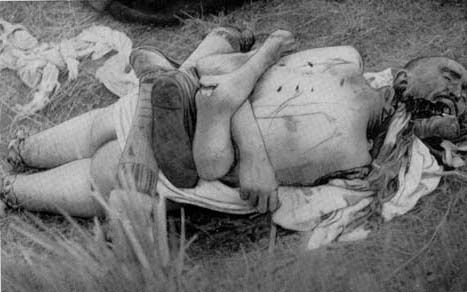
See the corpse of the girl where he buried her in their yard.
Arụ na-eme
This happened in Nkpor here

In Nkpor today, a guy butch€red his girlfriend, put her in a sac and buried her in their yard.
It was in the process that he was caught.
What's this world turning to?
5
32
48
24,777
Yebu retweeted

Imagine if we could simply kill people then behead them then rape their corpse



178
242
4,056
172,867