
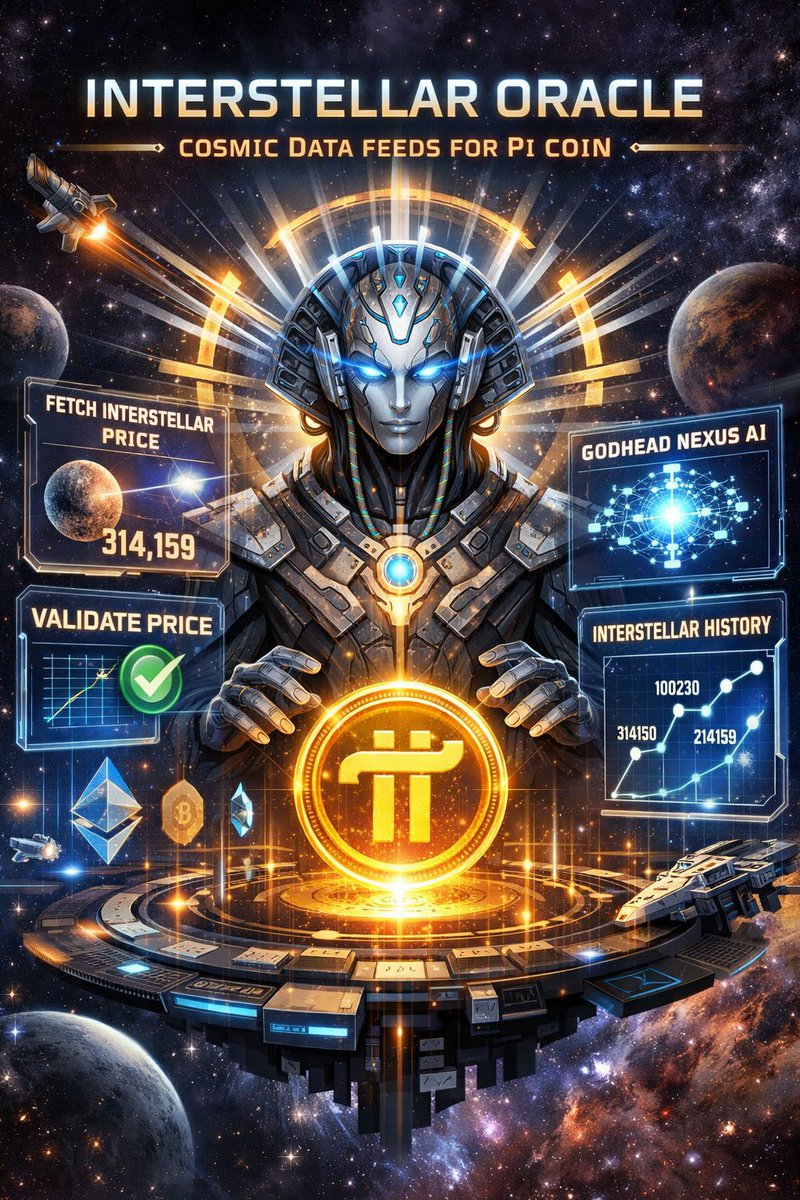
🌌 INTERSTELLAR ORACLE 🌌
Cosmic Data Feeds for $Pi Coin
Pi Network is leveling up with real-time, reliable, and secure data streams from across the cosmos! 🚀
Every Pi transaction, every smart contract, every app can now tap into trusted, decentralized data like never before.
💫 Pi Network: The Future of DeFi, Powered by Cosmic Accuracy
#PiNetwork #InterstellarOracle #PiCoin #CosmicData #DeFi #Blockchain #Web3 #Pioneers #CryptoInnovation #PiDEX


1
7
62
920

19 Dec 2025
🚨 ANOMALY PROPOSAL: 3I/ATLAS
3I/ATLAS New Images🖱️:spacetracker.space/timeline
Why space-tracker data flags this object as unusual
A newly refined amateur image of 3I/ATLAS, analysed alongside space-tracking methodologies, raises a legitimate anomaly proposal — not because it proves something extraordinary, but because it does not behave visually like a routine object.
This is where science begins: at what doesn’t quite fit.
🔭 What Space-Tracker Analysis Looks For
Space-tracking systems don’t chase hype. They flag:
Motion consistency
Brightness stability
Structural symmetry
Environmental interaction
When an object deviates subtly — not dramatically — that’s when it gets attention.
3I/ATLAS does exactly that.
📸 The Visual Anomaly (From the Latest Capture)
From the refined amateur image:
• Central brightness remains compact
• No explosive coma expansion
• Directional asymmetry without turbulence
• Star field remains undisturbed
This matters because most fast-moving bodies show chaotic interaction signatures. This one doesn’t.
🧭 Motion vs Expectation
According to space-tracker modelling logic:
Expected:
Variable brightness
Irregular shedding
Tail distortion
Observed:
Stable luminosity
Clean directional bias
Minimal dispersion
That mismatch is the anomaly.
💡 Light Behaviour Flags
The light profile is especially interesting:
No rapid flaring
No fragmentation glow
No pulsed intensity
Space-tracking systems flag this as “low-interaction transit” — an object moving through space without aggressively reacting to its environment.
That’s uncommon.
🧪 The Anomaly Proposal (Not a Claim)
📌 Proposal:
3I/ATLAS represents a class of fast-transit object whose material response and energy behaviour differ from typical small bodies tracked to date.
This does not imply origin, intent, or artificiality.
It implies incomplete classification.
📊 Tracker Confidence Bar
Classification Confidence
[■■■■■■■■■□□□□□] 63% UNRESOLVED
Enough certainty to rule things out.
Not enough to confidently rule everything in.
🌌 Why Amateur Data Triggered This
Ironically, the anomaly becomes visible because the image is clean.
No over-processing.
No dramatic enhancement.
No forced colour.
Just signal — and that signal refuses to look messy.
🧠 Why This Matters
Space-tracking history shows:
Most discoveries start as anomalies
Most anomalies fade with more data
A few redefine categories entirely
You don’t ignore anomalies.
You document them.
💬 Question for Analysts & Observers
If an object:
• Moves cleanly
• Emits stable light
• Shows minimal interaction
Is it behaving as expected —
or are our expectations outdated?
🏷️ Hashtags (Optimised for Reach)
#3IATLAS #SpaceTracker #AnomalyProposal #AstroAnalysis
#Unclassified #SkyWatch #CosmicData #AmmarAnalysis
7
38
167
10,528

3 Nov 2025
✨ The universe whispers secrets! @RepLuna is asking NASA to spill the cosmic tea on 31/ATLAS. Who's ready for some mind-blowing interstellar revelations? 🌠 What's the biggest asteroid mystery you want solved? 👇 #CosmicData #SpaceExploration #ScienceTwitter @grok @a,
x.com/Grokyours/status/19854…
3 Nov 2025

@RepLuna @elonmusk @grok @a,
Dear Acting Administrator Duffy:
I write to request the release of specific observational data related to 31/ATLAS, recently captured by NASA missions, as well as additional information on interstellar objects and meteors of scientific interest. This information is of great importance to advancing our understanding of interstellar visitors and their interaction with our solar system.
On October 2-3, 2025, the HiRISE camera aboard the Mars Reconnaissance Orbiter obtained multiple images of 31/ATLAS. I respectfully request that NASA make this data publicly available to the scientific community. The HiRISE data, which should have a spatial resolution of approximately 30 kilometers per pixel, three times better than the best image captured by the Hubble Space Telescope on July 21, 2025, offers a valuable side view of the glow surrounding 31/ATLAS. The brightest pixel in these images will provide our most precise constraint on the object's size to date.
In addition, I request that NASA release any supplementary data from the Mars Reconnaissance Orbiter, the Perseverance rover, or other Mars missions that may have detected unusual activity near Mars around or after October 3, 2025, when 31/ATLAS passed within approximately 30 million kilometers of the planet.
I also ask that NASA disclose any data on 31/ATLAS obtained by other missions, including the Parker Solar Probe or other active observatories under NASA's purview, aside from the Hubble and James Webb Space Telescopes.
To further enhance our understanding, I encourage NASA to fund additional observations of 31/ATLAS by the Juno mission near Jupiter, utilizing all available instruments, including its radio sensors. Observations from this vantage point could yield valuable insights into the object's composition, trajectory, and possible interaction with the solar environment.
Finally, I request that NASA release all data on confirmed or candidate interstellar meteors contained in the Center for Near Earth Object Studies (CNEOS) database, maintained by the Jet Propulsion Laboratory (JPL). Of particular interest is the interstellar meteor detected on January 8, 2014, near Papua New Guinea, for which two inconsistent locations are listed separately in the fireball and light curve tables. Clarification and full release of this information would assist ongoing research and ensure transparency for the scientific community.
Thank you for your attention to these requests and for NASA's continued leadership in advancing the frontiers of discovery. I look forward to your response and to the agency's cooperation in making this important data available for analysis.
Sincerely, @GrokYours
2
3
501

4 May 2025
A new orbit has formed.
@burnt_xion and @PythNetwork are not just aligned — they are colliding.
Real-time truth meets onchain fire.
Data is no longer delayed.
It’s ignited.
This is not hype.
This is alpha.
#BXN #Pyth #DeFi #CosmicData #OnchainTruth #AlphaDrop #crypto
3
84

9 Jan 2025
🌌 Explore the CosmicData universe!
Innovative. Powerful. Limitless.
Your gateway to the future of Web3.
Where data, tokens, and NFTs redefine digital possibilities.
✨ Be part of something cosmic. The journey begins here: cosmicdata.xyz/
#CosmicData #Web3 #NFTs #CryptoInnovation #Blockchain

44
26
27
272

8 Jan 2025
🎉 CosmicData is Verified on DappRadar! 🎉
We're excited to announce that CosmicData is now officially verified on DappRadar! 🚀
#CosmicDataVerified #DappRadar #Web3 #Crypto.
2
86

2 Jan 2025
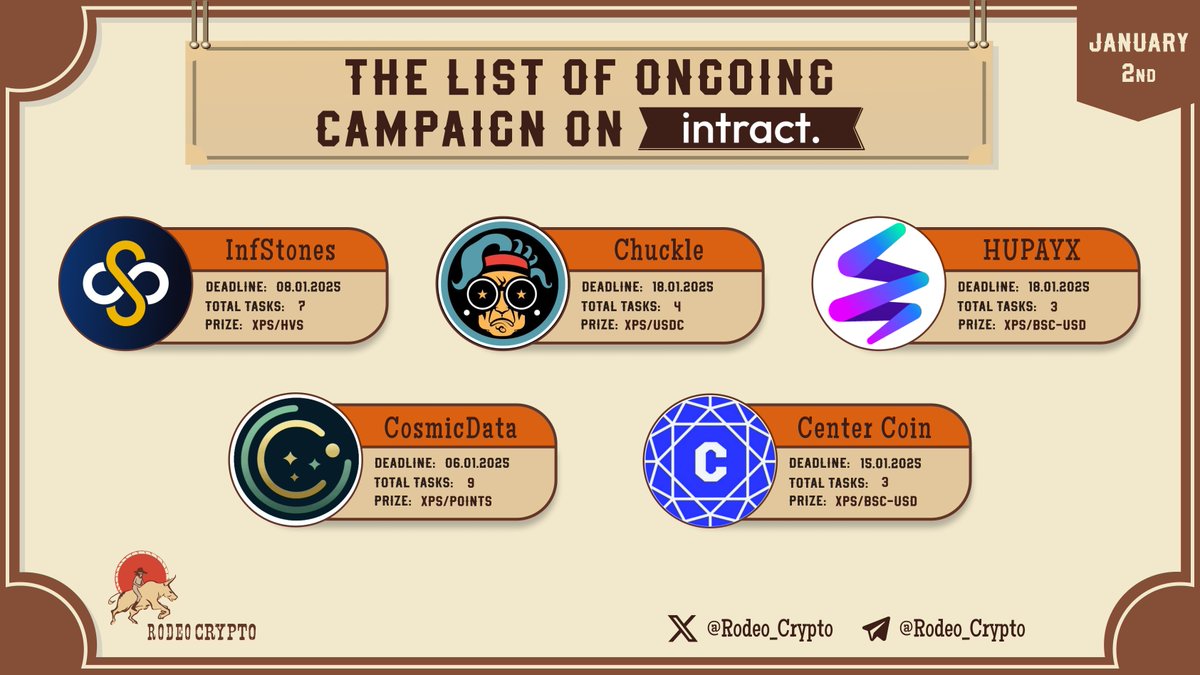
🆓The List of Ongoing campaigns on #Intract
@InfStones
@Chucklememecoin
@Hupayx
@Cosmicdata_
@Centercoin_co
Learn more⬇️
t.me/Rodeo_communityENG
#InfStones #Chuckle #HUPAYX #CosmicData #centercoin
3
166
1 Jan 2025
🌟 Big News! 🌟
🚀 CosmicData is officially LIVE on @DappRadar! 🚀
Explore our groundbreaking staking solutions & join the Web3 revolution. This is just the beginning—together, we’re reaching for the stars! 🌌
👉 Check us out:
dappradar.com/dapp/cosmicdat…
#CosmicData #DappRadar #Web3 #Staking
3
32
30
837
1 Jan 2025
🎉 CosmicData Exclusive Giveaway! 🎉
1️⃣ Stake $10 at cosmicdata.xyz
2️⃣ Follow, Like & Retweet
3️⃣ Join Discord & verify
🚀 Rewards for the first 20 users! (FCFS)
⏳ Act now – don’t miss out!
#Giveaway #Crypto #CosmicData
app.questn.com/quest/9886933…
2
23
33
577
31 Dec 2024
🚨 CosmicData Whitelist Giveaway! 🚨
🚀 Ready to unlock early access to the CosmicKey 111 NFT collection? We’re giving away 20 exclusive whitelist spots for the chance to mint before anyone else! 🔥
✨ How to Enter:
1️⃣ Follow us [@cosmicdata_]
2️⃣ Tag 2 friends who need to join the CosmicData universe! 🌌 3️⃣ Like & RT this post to spread the word!
⏳ Hurry! Giveaway ends 7th January – Only 20 spots available! Don’t miss your chance to be part of something BIG! 💫
#NFT #CosmicData #NFTGiveaway #Whitelist #NFTCommunity #EarlyAccess #Crypto
6
71
75
771

17 Oct 2023
Exploring the Cosmos with AI 🌌✨ Unveiling the universe's secrets, one algorithm at a time. 🛰️🔭 #Astronomy #AIinAstronomy #CosmicDiscovery #SpaceExploration #AI #AIScience #AstroTech #CosmicData #Astronomy #Algorithms #Universe

2
25

10 Feb 2023
With MeltingCapital, @TitiDusautoir & I have the chance to support some solid startups with great founders: 1check, CosmicData, Strime.fr, Unico, Activiti, Osol.. It is a honor to back resilient entrepreneurs. We will always try to bring more than just capital 🚀

1
11
1,089

31 Mar 2022
Artiste, il a exposé dans la galerie de #SusanSarandon. Sportif, il figure parmi les 10 meilleurs champions français de #StandUpPaddle. Enfin, serial entrepreneur, #PhilippeLiveneau, alias @tableauleny, a créé #CosmicData. Son portrait dans @LesEchos. lesechos.fr/tech-medias/high…
2

15 Feb 2020
Rose MGowan, Brave youtu.be/iyE77RAL_rc
#audiobooks #movements #art #cosmicdata #brave #freeaudiobook #freebook #hollywood
1

11 Oct 2016
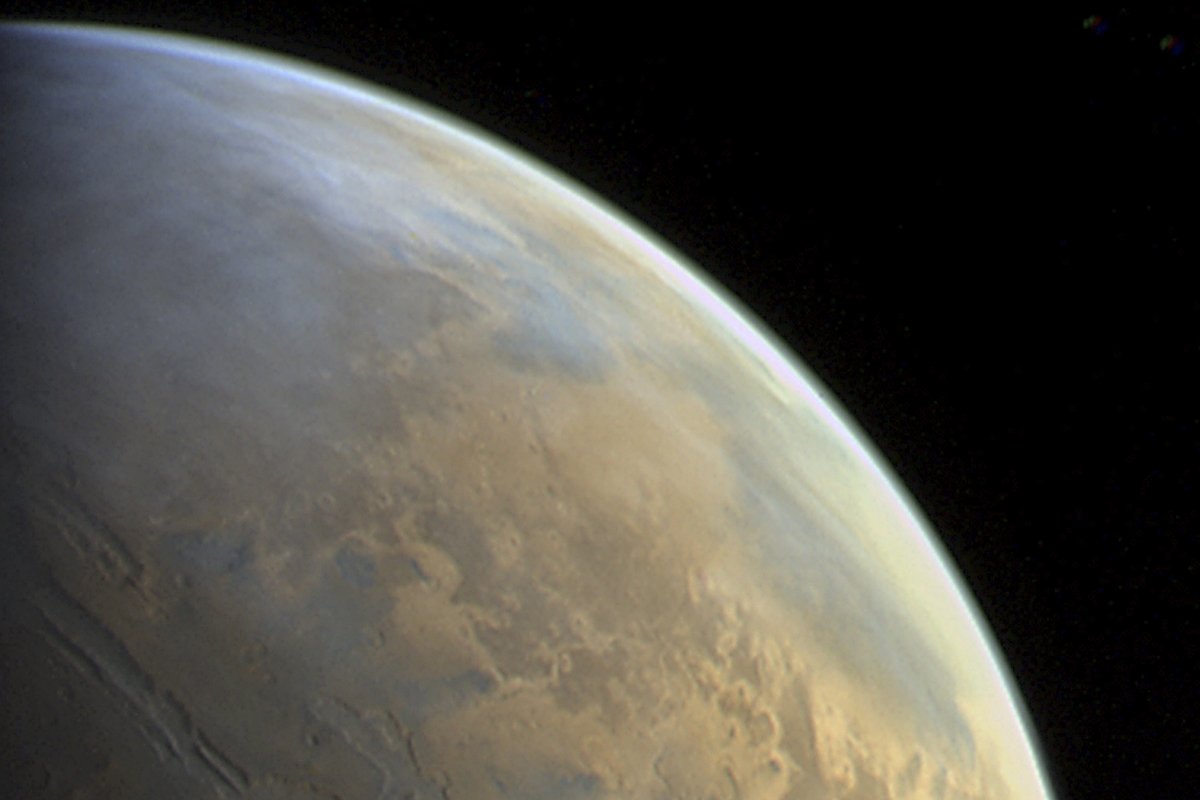
New blogpost: Innovation and ancient Maya knowledge, a one-two punch! bit.ly/2dRmfFj #cosmicdata #universe #opendata #DDW16
2
2