


I was shocked to learn that too, actually I was live and my followers told me about it
1
1
89

Bu grupta ÖZCAN YILDIRIM tercihi kim olursa olsun atın üstünde dursun yeterli düşüncesidir..... Özcan yıldırım bana göre dönem dönem ortaya çıkan kendini geliştirmekte sıkıntılar yaşayan vasat bir jokeydir iyi iken DAPPERMAN sahipleri bile özcana atı vermemiştir
2
332



Paraku Estate at the mercy of floodwaters as torrential rains continue.
📹: Dapperman
#floods
#UniversNews
#RadioUnivers
3
4
443
He said, Ghee and minced meat chapatis!
Hey there @dapperman, ziko ready 😅👌
#Chapatimistress 🇰🇪

2
12
32
3,488


Hehehe shiet.
Kumbe sio Mimi peke yangu hu gooooglee.
1
2
301


May 14
Long runner Türkiye yarış tarihinin gelmiş geçmiş en iyisidir
Her pist her şehir her mesafe her koşulda kazanan doğa üstü bir şampiyondu
İzlemediğiniz tarihi karıştırmayın o zaman
Kaçta başladıysanız izlemeye o tarihten itibaren derseniz linç yemezsiniz
#mandrakede mükemmel bir at kuma rağmen çok çabuk hızlanan beklemede yapıp numarada götüren bir at tam bir yarış atı ama kendinden çok büyükleri var hâlâ bir #dapperman var
#wardenclyffe var
4
80


Dapperman, you are arguing with 2020 era logic in a 2026 world, and that is the problem.
You are essentially saying “if NPP voters left, why didn’t NDC gain more votes?”
But that question only makes sense if you assume voters only have two choices: NPP or NDC.
Real life is messier than that.
Here is what actually happens when a dominant party loses its base:
The votes don’t automatically transfer. They disappear first.
When loyal voters become disillusioned, their first move is almost never to vote for the opposite party.
It is to stay home. That is exactly what your own EC numbers are showing. The 385,098 gap you are so proud of? That is not evidence that NPP kept its base.
That is evidence of mass disengagement from NPP supporters who were not ready to vote NDC yet. The key word is yet.
Now look at what Musah Dankwa is actually measuring.
He is not measuring 2020 versus 2024 election results like you are. He is measuring party affiliation surveys between October 2024 and March 2026.
That is a completely different and frankly more powerful instrument. Elections measure behaviour on one specific day.
Surveys measure identity, loyalty and emotional attachment to a party over time. When party affiliation drops from 61% to 34% in the Ashanti region, that is not about low turnout anymore.
That is people actively saying “I no longer see myself as NPP.” That is identity erosion, and no EC result can disprove that.
The 2026 data is the alarm bell you are ignoring. Your entire argument is built on 2024 election numbers. But the newer survey was conducted in March 2026, well after the election, well after people have had time to reflect.
And what does it show? NDC affiliation in Ashanti has jumped from 17% to 30%. Among Akan voters specifically, NDC has gone from 14% to 24%.
Those people did not just appear from nowhere. Those are former NPP sympathisers who have crossed the floor in their hearts, and the next election is where that crossing shows up at the ballot box.
You are diagnosing the 2024 wound but ignoring the 2026 infection.
Yes, low turnout was some of the factors in 2024. Nobody serious is disputing that.
But to use 2024 turnout as a reason to dismiss 2026 affiliation data is to miss the entire point. The question is no longer where did the votes go in 2024. The question is where are the voters going in 2026. And the data says they are gravitating toward NDC.
Bro,
You and Musah Dankwa are not even contradicting each other as much as you think.
One is explaining what happened on election day 2024. The other is showing what is happening in living rooms, communities and minds across Ashanti right now in 2026. Both can be true. But only one of them tells you what the next election might look like. And that one favours NDC.
END.
1
4
486
Dapperman, you are arguing with 2020 era logic in a 2026 world, and that is the problem.
You are essentially saying “if NPP voters left, why didn’t NDC gain more votes?”
But that question only makes sense if you assume voters only have two choices: NPP or NDC.
Real life is messier than that.
Here is what actually happens when a dominant party loses its base:
The votes don’t automatically transfer. They disappear first.
When loyal voters become disillusioned, their first move is almost never to vote for the opposite party.
It is to stay home. That is exactly what your own EC numbers are showing. The 385,098 gap you are so proud of? That is not evidence that NPP kept its base.
That is evidence of mass disengagement from NPP supporters who were not ready to vote NDC yet. The key word is yet.
Now look at what Musah Dankwa is actually measuring.
He is not measuring 2020 versus 2024 election results like you are. He is measuring party affiliation surveys between October 2024 and March 2026.
That is a completely different and frankly more powerful instrument. Elections measure behaviour on one specific day.
Surveys measure identity, loyalty and emotional attachment to a party over time. When party affiliation drops from 61% to 34% in the Ashanti region, that is not about low turnout anymore.
That is people actively saying “I no longer see myself as NPP.” That is identity erosion, and no EC result can disprove that.
The 2026 data is the alarm bell you are ignoring. Your entire argument is built on 2024 election numbers. But the newer survey was conducted in March 2026, well after the election, well after people have had time to reflect.
And what does it show? NDC affiliation in Ashanti has jumped from 17% to 30%. Among Akan voters specifically, NDC has gone from 14% to 24%.
Those people did not just appear from nowhere. Those are former NPP sympathisers who have crossed the floor in their hearts, and the next election is where that crossing shows up at the ballot box.
You are diagnosing the 2024 wound but ignoring the 2026 infection.
Yes, low turnout was some of the factors in 2024. Nobody serious is disputing that.
But to use 2024 turnout as a reason to dismiss 2026 affiliation data is to miss the entire point. The question is no longer where did the votes go in 2024. The question is where are the voters going in 2026. And the data says they are gravitating toward NDC.
Bro,
You and Musah Dankwa are not even contradicting each other as much as you think.
One is explaining what happened on election day 2024. The other is showing what is happening in living rooms, communities and minds across Ashanti right now in 2026. Both can be true. But only one of them tells you what the next election might look like. And that one favours NDC.
END.
May 12

Mr. Mussa Dankwah says anyone that attributes NPP’s decrease in votes in the Ashanti region in the 2024 elections to low turnout isn’t serious because his research suggests otherwise
Let’s interrogate the data as provided for by the Electoral Commission of Ghana
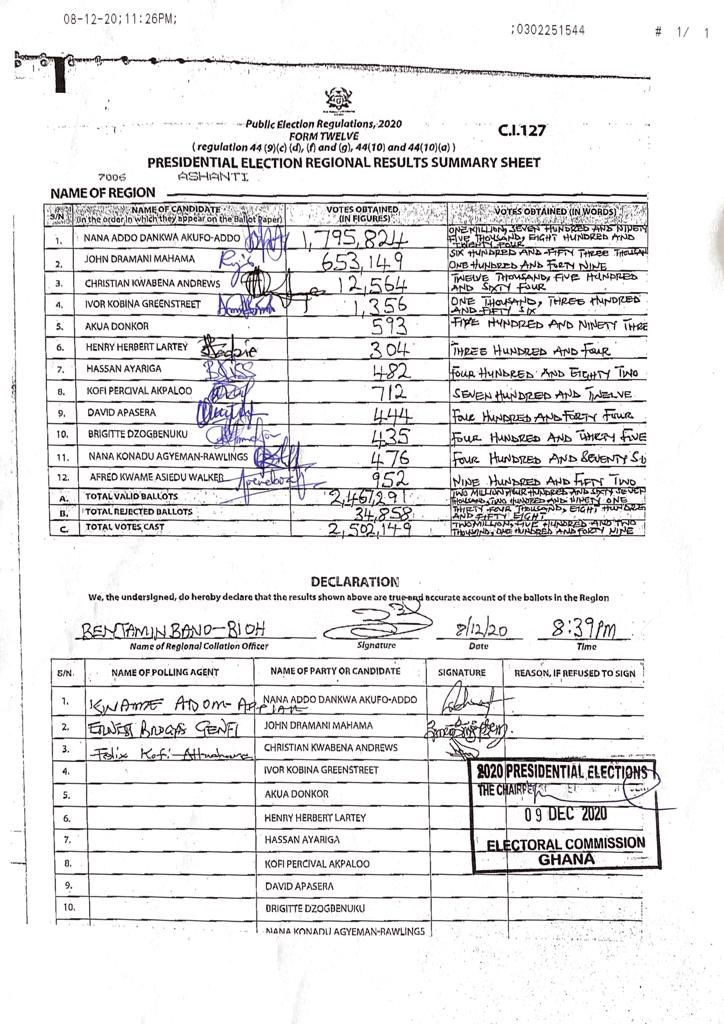
The results for the 2020 elections were;
NPP - 1,795,824
NDC - 653,149
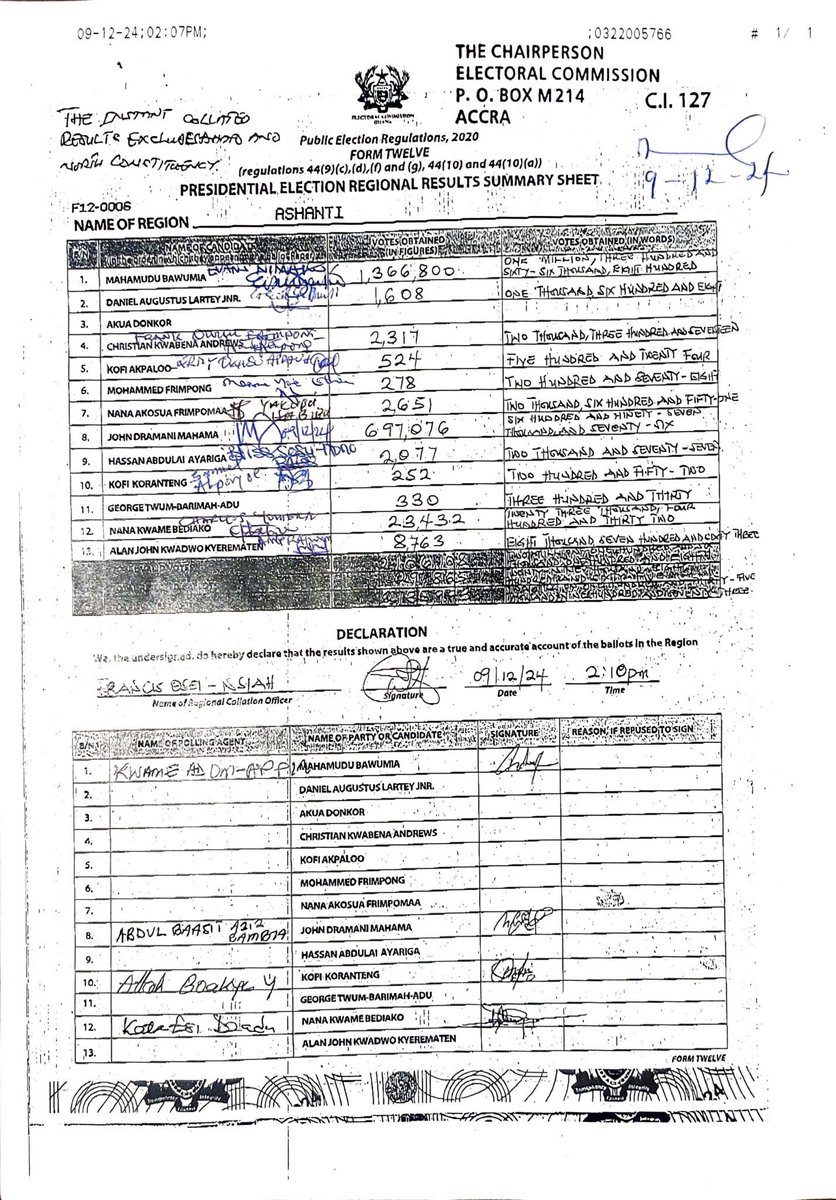
In 2024, the results were;
NPP - 1,366,800
NDC - 697,076
Simple mathematics will show that NPP’s votes reduced by 429,025 where as NDC votes increased by 43,927. If you subtract that from NPP’s lost votes, you would have a difference of 385,098
If Mr. Mussa says it’s not due to low turn out, where did the 385,098 votes go to?
Mind you, there was an increase in the voter register which means if the NPP voters defected to the NDC, then the NDC’s vote increase should exceed at least 200,000
The NPP has a lot of work to do in the Ashanti region. But this attempt to shape public narrative that the party is collapsing or losing its base is incorrect
I blame the leadership of the party for all this
3
8
1,456