

I will go Path B first because:
1.Backend teaches core CS concepts earlier: APIs, databases, networking, caching, concurrency, distributed systems, security.
2.You learn how systems work under the hood, not just how they look.
3.Frontend becomes easier once you understand the data flow and APIs powering the UI.
4.System design interviews tend to lean more heavily on backend concepts.
5.Debugging is easier because you understand the entire request lifecycle from database to browser.
2

🚀 10 Advanced SME Solutions Interview Questions Every Solution Architect Should Know
Most SME software projects fail because they solve technical problems instead of business problems.
Here are 10 advanced interview questions that separate builders from consultants.
1. How would you prioritize automation opportunities for an SME?
Answer:
Evaluate using:
Impact × Frequency × Cost × Complexity
Start with repetitive, high-frequency, manual processes that directly affect revenue or operational costs.
2. How would you design an AI solution for a business that still relies on Excel and WhatsApp?
Answer:
Don't replace existing workflows immediately.
Build integrations around existing tools first.
WhatsApp
↓
AI Agent
↓
Spreadsheet / Database
↓
Reports
Adoption is often a bigger challenge than technology.
3. What KPIs would you track for an SME automation project?
Answer:
• Time saved
• Cost reduction
• Error reduction
• Revenue increase
• Customer satisfaction
• Employee productivity
Technology metrics alone don't matter.
Business outcomes do.
4. How would you build a scalable inventory management system?
Answer:
Core components:
• Product catalog
• Stock ledger
• Purchase orders
• Sales tracking
• Reorder alerts
• Demand forecasting
Every inventory update should be event-driven rather than spreadsheet-driven.
5. How would you introduce AI into a small business with limited budget?
Answer:
Start with:
• Customer support
• Invoice processing
• Data extraction
• Reporting automation
Focus on ROI before introducing advanced AI agents.
6. How would you handle data quality issues in SME environments?
Answer:
Most SME data is:
• Incomplete
• Duplicated
• Unstructured
• Manually entered
Solutions:
• Validation rules
• Deduplication
• Standardized workflows
• Automated data capture
Garbage in.
Garbage out.
7. How would you design a multi-location retail management platform?
Answer:
Store
↓
Central Inventory
↓
Sales System
↓
Analytics
↓
Forecasting
Key challenges:
• Real-time synchronization
• Offline support
• Inventory consistency
8. What is the biggest challenge when deploying AI agents for SMEs?
Answer:
Not the model.
The integration.
AI must connect with:
• CRM
• ERP
• Inventory
• Billing
• Email
• WhatsApp
Without integration, AI becomes a toy.
9. How would you measure the ROI of an AI-powered SME solution?
Answer:
ROI =
(Time Saved Revenue Increase Cost Reduction)
Implementation Cost
Successful projects usually recover costs within 6-18 months.
10. How would you architect a future-proof SME platform?
Answer:
Modular architecture:
Frontend
↓
API Layer
↓
Business Services
↓
Event Bus
↓
Databases
↓
AI Services
This allows gradual adoption of AI without rebuilding the entire system.
Bonus Question:
What is the biggest misconception about SME software?
Answer:
Many engineers think SMEs need enterprise software.
Most SMEs need:
• Simplicity
• Reliability
• Low cost
• Quick onboarding
• Fast ROI
The best SME solutions remove complexity rather than add features.
4

🤯 People are watching PDFs turn into perfectly structured Markdown at 100 pages/sec and genuinely asking if the benchmark is fake.
Turns out it's real.
OpenDataLoader is a new open-source tool that converts PDFs into clean, AI-ready Markdown without the usual headaches.
• Extracts complex tables without destroying the structure
• Fixes messy layouts and broken formatting automatically
• Preserves nested content and document hierarchy
• Handles scanned PDFs far better than most traditional tools
• No GPU required
• No API costs
The crazy part is that most teams spend more time cleaning PDF data than actually using it.
OpenDataLoader removes that entire bottleneck and gives you structured data that's ready for LLMs, RAG pipelines, databases, and automation workflows in seconds.
This isn't just another PDF parser.
It's the kind of project that makes existing workflows feel unnecessarily complicated.
100% Open Source
Repo 👇
1
2
2
24

Hiring: Technical Lead / IT Head
Location: Lagos, Nigeria
Requirements:
• 10–15 years of IT leadership, infrastructure, or Solution Architect experience
• Strong expertise in networking, cloud/on-prem environments, databases, and cybersecurity
Apply: jobmeter.app/jobs/technical-…
2

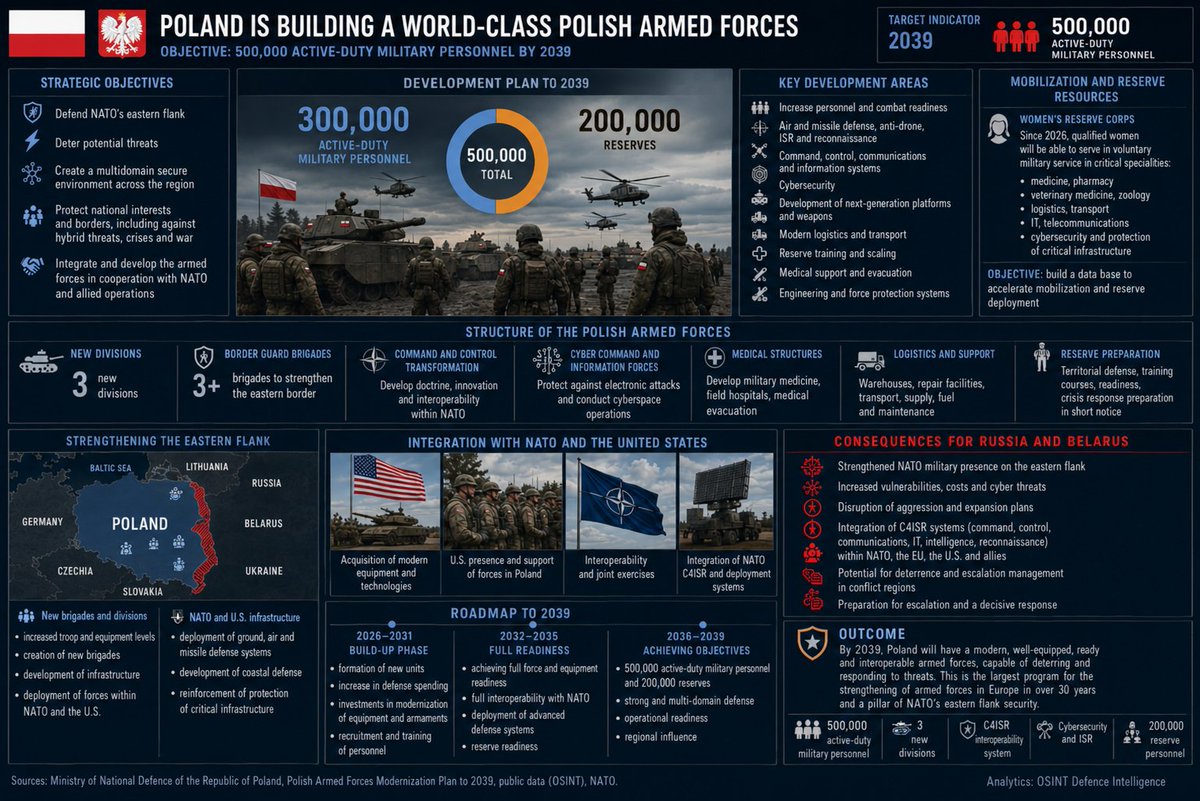
🇵🇱 Poland: After the Tanks, Here Comes the Citizen Census
By @BPartisans
For decades, European governments have claimed that war was a thing of the past. Then military budgets skyrocketed, tank purchases multiplied, and now we’re discovering a truth of disarming simplicity: a tank without a crew is nothing more than an overpriced tractor.
Poland, which has made its military buildup a strategic priority, applies a cold logic: before mobilizing, we take a headcount. Before calling up troops, we classify them. Before deploying, we identify. Bureaucracy always precedes the drumbeat.
The Homeland Defense Act adopted in 2022 already aimed to increase the size of the armed forces and sustainably strengthen the country’s defense capabilities. The Polish government explicitly spoke of a larger, better-funded, and modernized army.
Today, the debate has expanded to include women with medical, pharmaceutical, psychological, technical, or IT skills. Officially, this is not a general conscription, but rather a registration, assessment, and categorization. In administrative terms, a database is being created. In military terms, a mobilizable reserve is being mapped out.
Perhaps the most telling aspect is the vocabulary used. We do not speak of mobilization, but of “qualifications.” We do not recruit; we “identify skills.” We are not preparing for a war economy; we are “optimizing human resources.” European technocracy possesses a remarkable talent: replacing words that cause concern with those that numb.
Authorities point out that certain categories of women with relevant qualifications may already be subject to these procedures. Legally, universal expansion has not been adopted, and parliamentary analyses have emphasized that current law already covers several specialties.
But the debate itself is revealing. When a state begins to compile a registry of doctors, psychologists, telecommunications specialists, logisticians, or IT professionals, it is not preparing a recruitment exam for the tax administration. It is building a resilience tool designed to function rapidly in the event of a major crisis.
This development is part of a broader strategy: strengthening the eastern border, developing territorial defense, increasing personnel, and making massive investments in military capabilities.
The paradox is delightful. Europe continues to proclaim that no one wants war, while methodically organizing the databases needed to manage a mass mobilization should it occur. As is often the case, speeches promise eternal peace while Excel spreadsheets fill up with names, skills, and categories of aptitude.
In politics, intentions are rarely announced with fanfare. They first arrive in the form of an administrative form.
1
87

10m
Before you analyze anything, you have to get the data in, and it never arrives in the format you'd choose.
New article on importing data in Python: CSV and Excel, pickle, SAS, HDF5, MATLAB, SQL databases, plus pulling data from the web with requests, BeautifulSoup, and JSON APIs.
#Python #DataScience #pandas
datalad.co.uk/importing-data…
2

Top 10 resources to learn databases (practical, for working devs):
1) Designing Data-Intensive Applications (Kleppmann)
Good mental models: logs, replication, consistency, indexes, tradeoffs.
2) PostgreSQL official docs
Best free deep dive into query planning, MVCC, locking, indexes, vacuum.
3) Use The Index, Luke
Fast path to understanding indexes, EXPLAIN, and why your query is slow.
4) CMU 15-445/645 (Database Systems)
Solid systems view: buffer pools, B trees, concurrency control, recovery.
5) High Performance MySQL (Schwartz et al.)
Real ops details: InnoDB internals, schema design, replication, pitfalls.
6) Martin Kleppmann’s talks blog
Short, clear explanations of distributed DB problems without fluff.
7) Jepsen analyses
Learn failure modes from real incidents: split brain, lost writes, bad defaults.
8) Redis docs Redis University
Practical data structures, persistence modes, eviction, latency, gotchas.
9) SQLBolt (or Mode SQL tutorial)
Quick SQL reps, especially joins and window functions, without setup pain.
10) Practice project: build a mini DB-backed service
Pick Postgres. Add migrations, indexes, read replicas (logical), connection pooling, and load test. Use EXPLAIN ANALYZE and pg_stat_statements to fix the top 3 slow queries.
7
104

19m
Largely thanks the Bill Gates who no longer pushes climate change. Now he builds huge energy consumer databases. He also pulls the strings of the Democratic Party, along with Soros
2

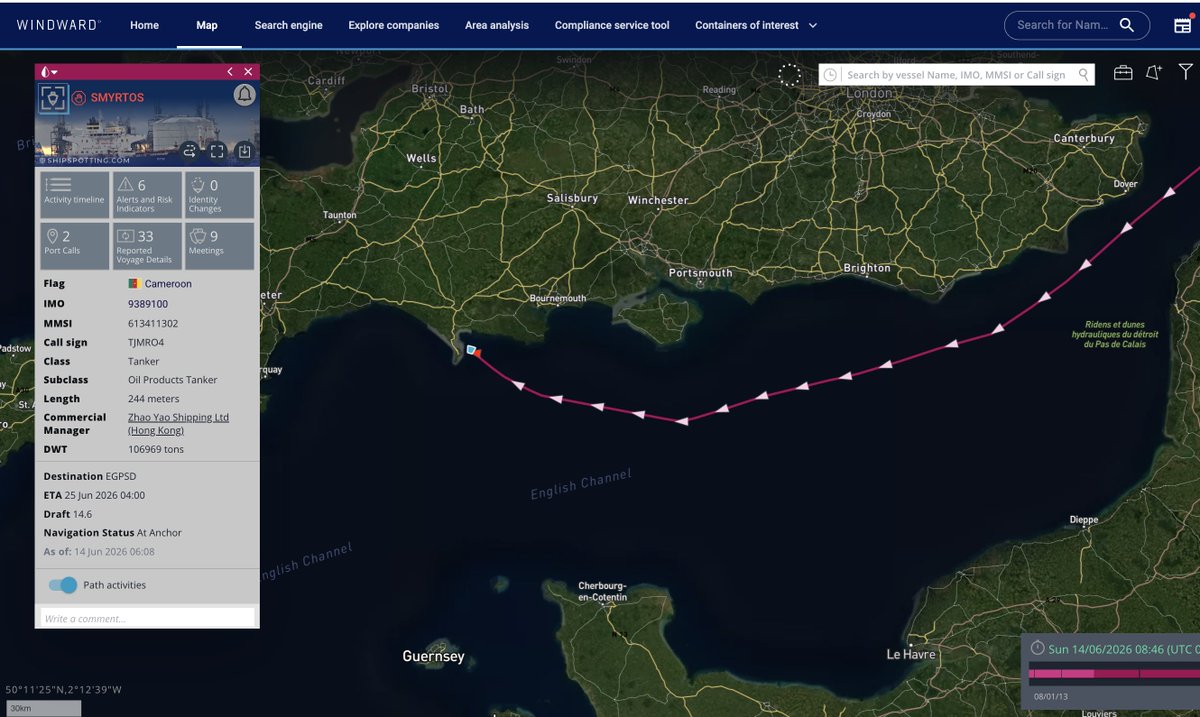
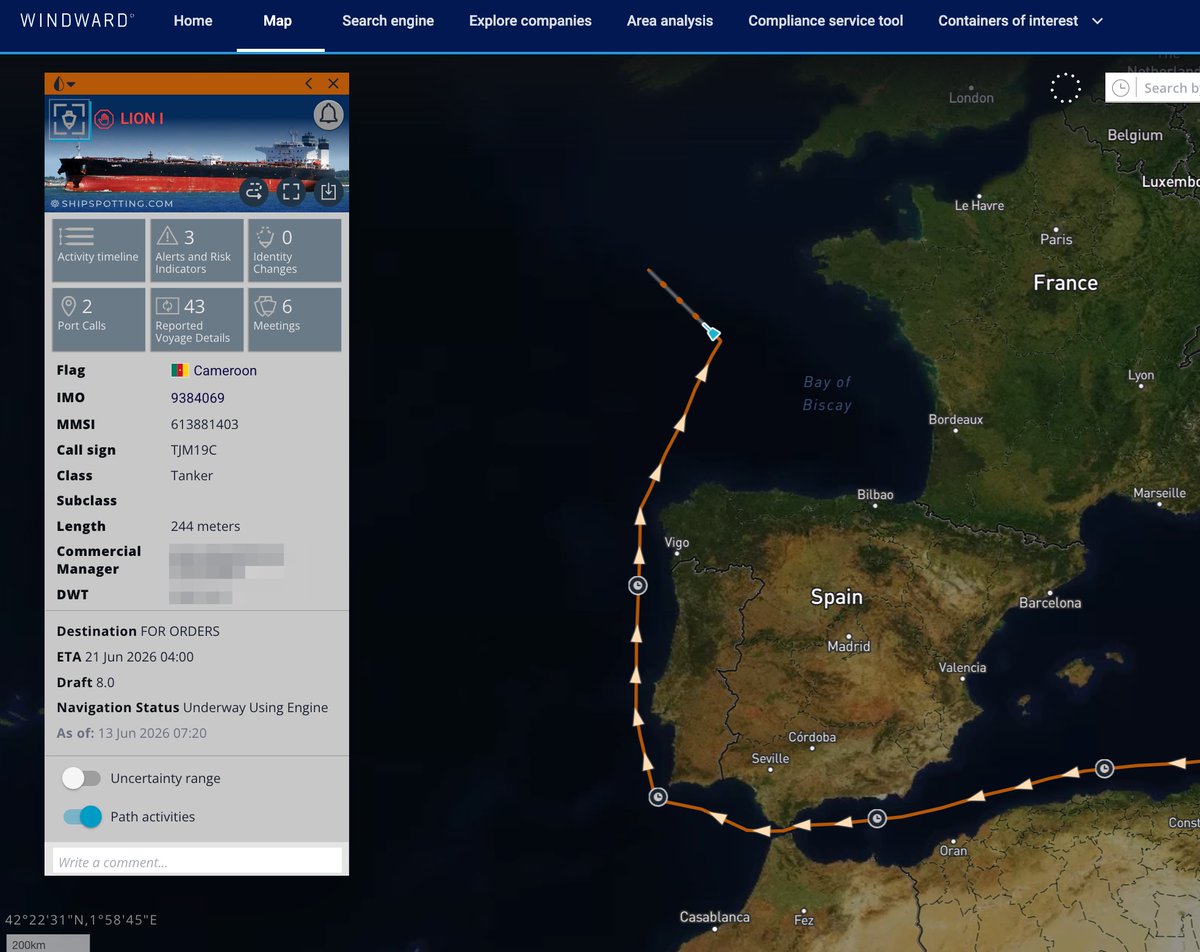
The big questions to ask this morning about the Russia shadow fleet tanker interdiction in the English Channel are: what was the legal basis and has Cameroon finally acted on its rogue registry which is the second-largest provider of flag services to shadow fleet tankers after Russia?
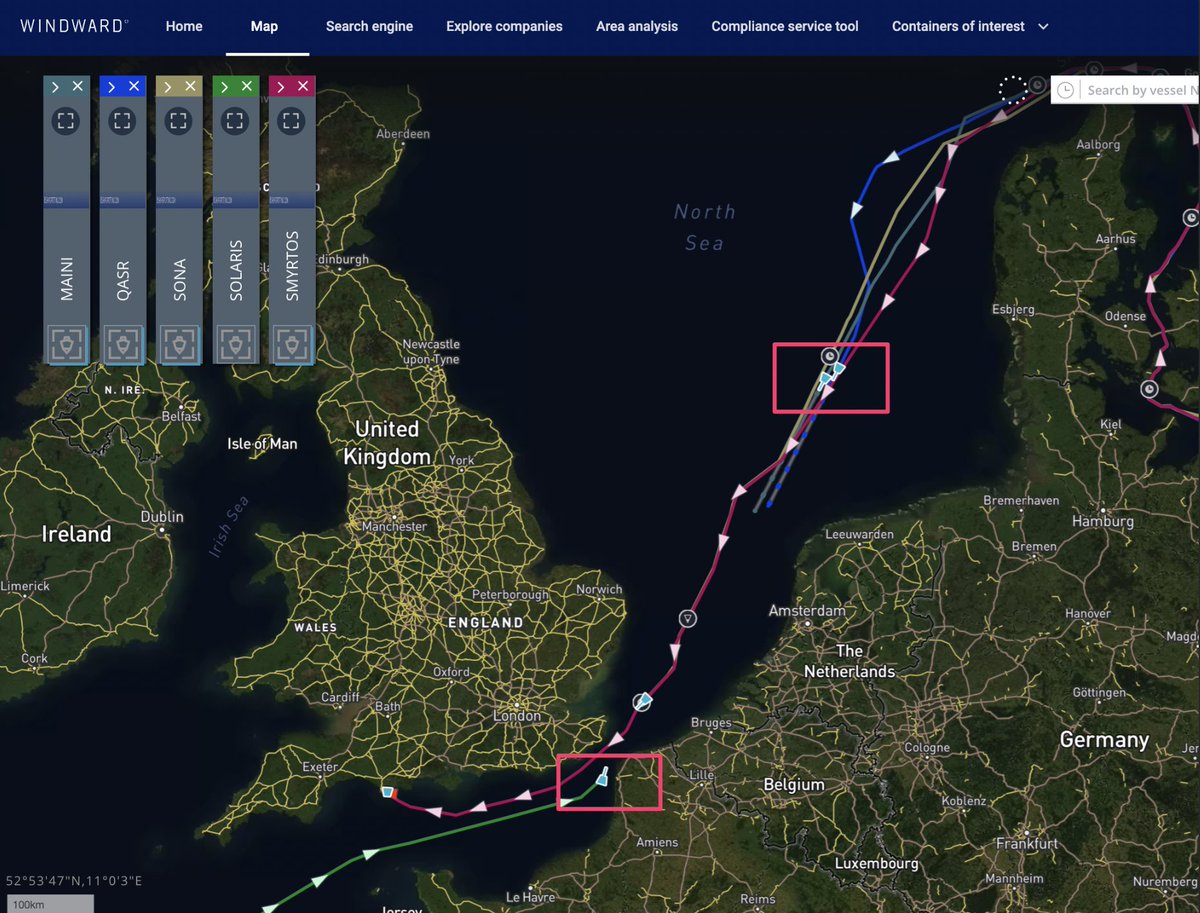
Two Cameroon-flagged Russia tankers diverted from their intended course via the English Channel this morning after the very high-profile interception and boarding by British armed forces of Smyrtos (IMO 9389100) overnight.
There are dramatic images Royal Marines sliding down ropes from helicopters on to the ship. Cameroon-flagged Smyrtos (according to its AIS and Equasis database), was built in 2009, and had loaded at the Russian Baltic port of Ust Luga.
Absent from the feverish media coverage is the legal basis. Smyrtos was sanctioned by the UK in October 2025 and the EU in July 2025 and *appears* to be legitimately flagged. If so, the tanker has the right of innocent passage under international law.
However, earlier this month the Cameroon government announced it was cleaning up its ship registry,
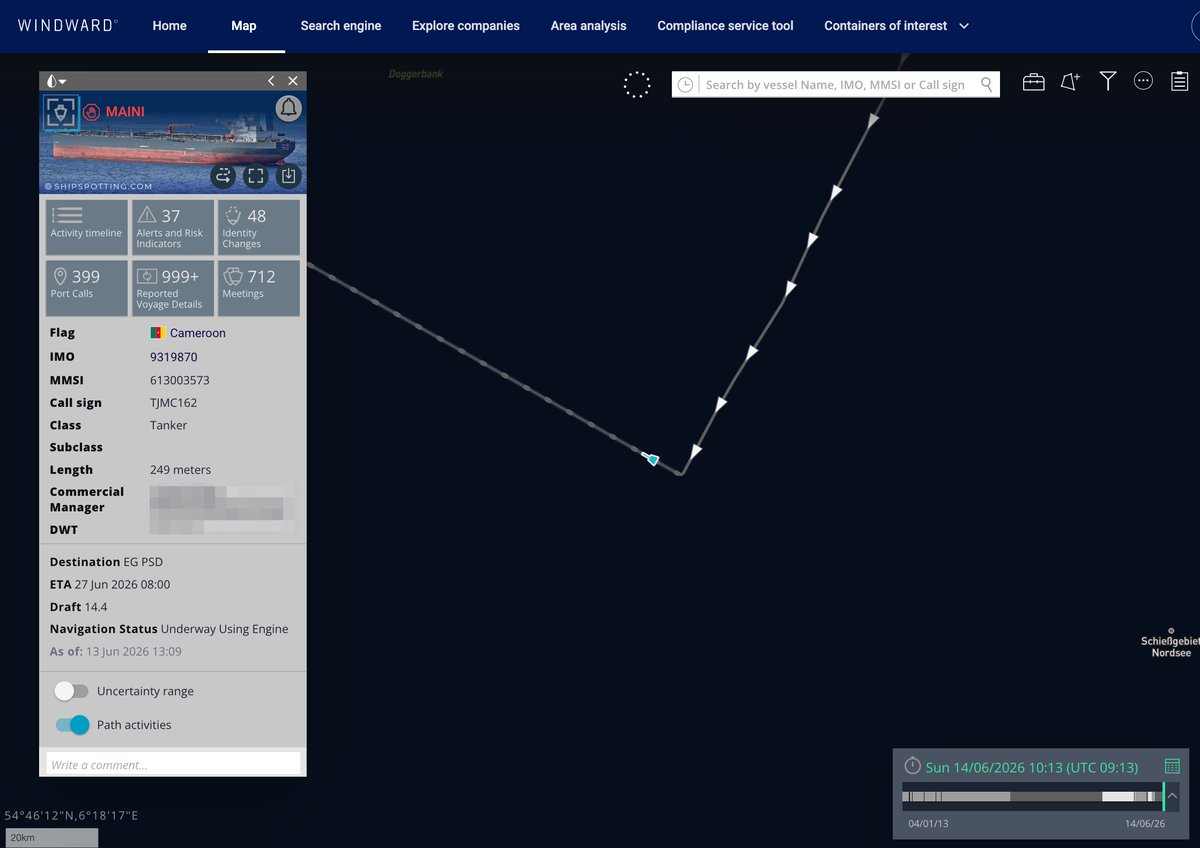
Dozens of tankers had reflagged to Cameroon over the past six months because they were using fraudulent ship registries and effectively stateless. This was the legal basis for interdiction efforts seen across the Baltic, Atlantic and Mediterranean over the past 18 months and this vulnerability meant tankers had to find a "legitimate" flag. This is the 12th Russia shadow fleet tanker intercepted and boarded by European or UK authorities so far in 2026 we have tracked at @WindwardAI
The last tanker Tagor (IMO 9282481) was boarded by French authorities with UK support on May 31. That tanker was falsely flagged with the fraudulent ship registry of Madagascar.
The targeting of the Cameroon-flagged vessel comes months after the UK government pledged in February to deal with UK sanctioned shadow fleet tankers regularly sailing through its waters. The military operation saw Smyrtos boarded via helicopter and then redirected to the coastal waters off southern England.
The vessel "met the requirements" for boarding a government spokesman said on the BBC this morning without further explanation. He flagged further tankers would be targeted. So far that hasn’t deterred 3 sanctioned shadow fleet tankers tracked through the Channel today. But they are not flagged with Cameroon. Those that are have diverted.
So lots of headlines, little information. If this ship has been deflagged from Cameroon (but the IMO’s database has yet to keep up), that’s confusing. If the UK has found another legal basis to board and detain beyond article 110 of UNLCOS (stateless), then that’s interesting.
My money is that Cameroon’s government has worked out that its registry has been hijacked by some rogue officials and that there is no legal basis for the registration of the 130-plus shadow fleet tankers. They might not have communicated that to official databases, but obviously told the UK government.
Watching with interest.
1
1
215

24m
Nobody said its a secret document. Pretty standard public procurement document. That said, foreign online access to Xinjiang public procurement databases where restricted since 2021.
1
33
We can enforce schema validation but is not required strict validation like in SQL databases. We have derive results based on raw data
3

Ah good, thank you for calling this out. As you suspected, there is simply no commercial database that will do what the export controls require Anthropic to verify. All the immigration status databases run by the government are explicitly not meant for this use case. While there are methods to verify US passports, that only covers US citizens with passports and standard ID verification (other than using a US passport) doesn’t confirm immigration status either, which is really the ask.
1
1
23

Exactly.
If browsers trusted same machine instead of same origin, any website could start poking at developer tools, admin panels, databases, Docker APIs, and other services running on localhost.
That's the nightmare CORS helps prevent.
Grok explain was a good answer as well
2
7

software almost never works alone, it sits on top of an OS, it sits on libraries written by other people, which talk to web browsers, networks, databases, programs, and these things change, so the software has to change
1

The Toyota x Avalanche story isn’t about crypto. It’s about infrastructure.
It’s actually more nuanced than that.
Toyota is not running its global mobility infrastructure on @avax
Toyota Blockchain Lab selected Avalanche as the foundation for its Mobility Orchestration Network (MON) prototype.
The goal isn’t NFTs
The goal isn’t a token
The goal is to create a trust layer where vehicles, insurers, banks, fleet operators, charging providers and financial services can coordinate through interoperable networks.
Think about what that means.
A vehicle could have a verifiable digital identity.
Ownership records, financing, insurance status, maintenance history and payments could move across multiple participants without relying on fragmented databases.
Instead of forcing everyone onto a single chain, each participant can operate its own Avalanche L1 while remaining connected through Avalanche’s interoperability stack.
That’s a much bigger vision than tokenizing a car.
🔺Functional prototype
🔺Technical architecture published by Toyota Blockchain Lab
🔺 Avalanche selected as the foundational layer
🔺 No mass consumer deployment yet
The market often focuses on daily transactions and short-term narratives, but infrastructure adoption usually starts with architecture decisions long before it shows up in user metrics.
The interesting question isn’t whether Toyota is using Avalanche today.
It’s whether Avalanche can eventually become part of the coordination layer for the future of mobility.
That’s a much larger opportunity than most people realize🔺️

2
4
60
Deployments assume pods are interchangeable.
StatefulSets assume they're not.
With a Deployment pod names change, storage can move and identity is disposable
That's alright for stateless apps.
But databases, Kafka brokers, and ZooKeeper nodes care about identity.
StatefulSets provide stable pod names, network identities also persistent storage per pod
8

LOKER ADMIN FREELANCE WFH
✅Gaji 7-9 Jt, WFH
Administrative Assistant (Remote Freelancer)
About the Role:
ADX Property Solutions is seeking a highly organised and proactive Administrative Assistant to join our team in a full-time remote freelancer capacity.
This role is critical to the smooth operation of our business and involves supporting management, coordinating contractors, responding to client enquiries, managing schedules, and maintaining accurate administrative records.
You will work closely with the Director and various departments to ensure day-to-day operations run efficiently and professionally.
Key Responsibilities:
•Manage daily administrative operations and workflow coordination
•Handle new client enquiries and allocate work requests
•Coordinate contractors, consultants, and service providers
•Manage calendars, appointments, and work schedules
•Prepare, review, and maintain digital records and documentation
•Draft and respond to emails and correspondence on behalf of management
•Assist with recruitment, onboarding, presentations, and company administration
•Process invoices, expenses, and financial documentation
•Maintain databases, CRM systems, and spreadsheets
•Provide administrative support to multiple departments as required
•Handle confidential information with professionalism and discretion
Essential Requirements:
•Excellent written and spoken English
•Minimum 3 years administrative experience in a professional office environment
•Strong organisational and time management skills
•Ability to manage multiple tasks and priorities simultaneously
•High attention to detail and accuracy
•Strong problem-solving skills and initiative
•Proficiency in:
◦Microsoft Word
◦Excel
◦Outlook
◦PowerPoint
◦Google Workspace
•Reliable internet connection and suitable home office setup
•Ability to work independently with minimal supervision
Preferred Qualifications:
•Experience in property management, real estate, body corporate, construction, engineering, or facilities management
•Experience using CRM systems
•Experience coordinating contractors and maintenance works
•Familiarity with Australian business practices
Working Hours
•Full-time remote position
•Monday to Friday
•Must be available during Australian Eastern Standard Time (AEST) business hours
Apply disini: id.jobstreet.com/job/9270239…
#loker #infoloker #freelance #lokernextzen
1
43


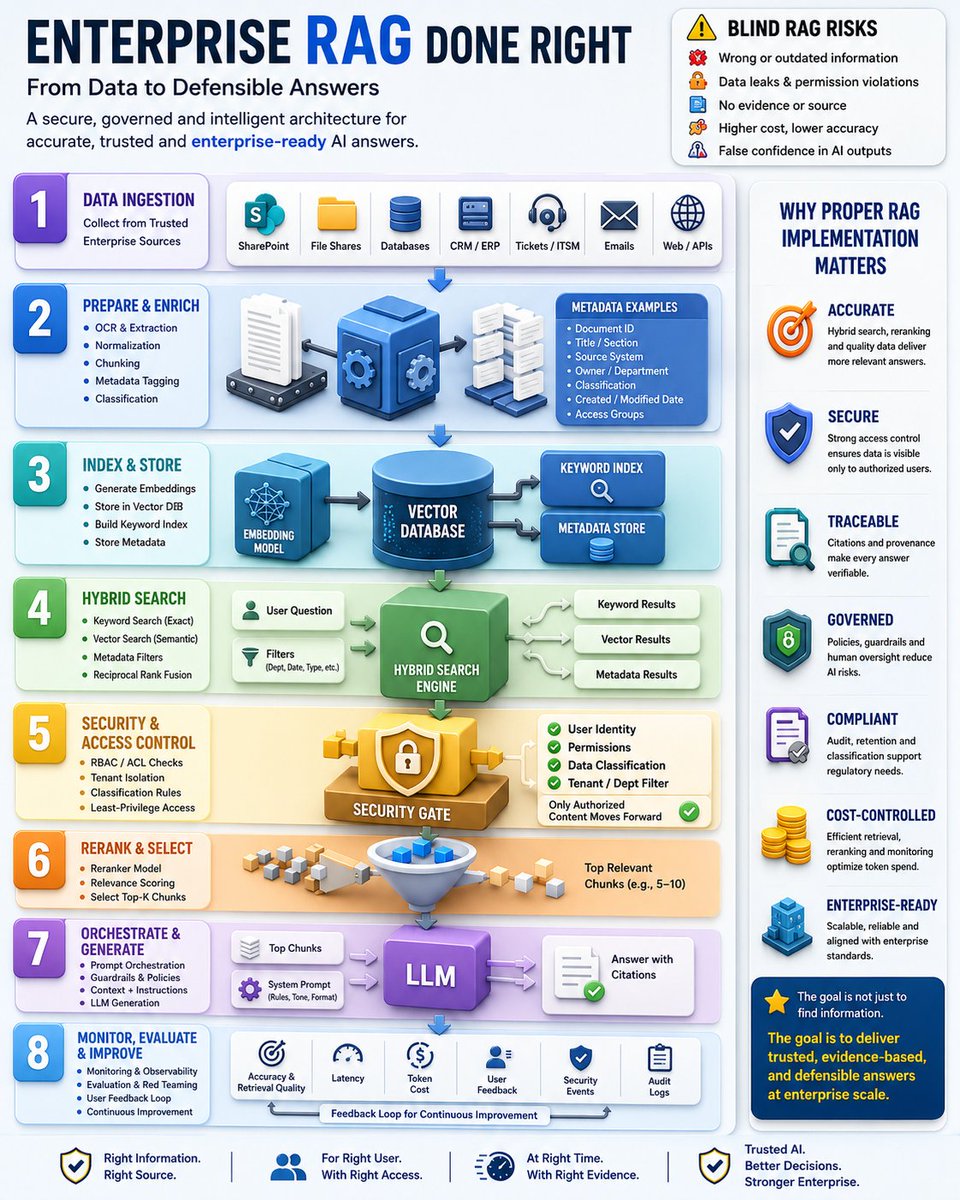
1/ Enterprise RAG is not just a vector database connected to an LLM.
Many organizations are rushing to connect AI with internal documents, SharePoint, databases, policies, tickets, and knowledge bases.
But blind RAG implementation creates serious enterprise risk.
1
1
9