
.AI Doesn’t warrant more resources when Tech mismanages what they’ve already built. Address Data Center junk yards. Shouldn’t we recycle & delete trash? Why aren’t we asking? @WhiteHouse @GavinNewsom @RonDeSantis @BernieSanders @AOC @RobertKennedyJr @VP @RWMaloneMD @DrOz
Current Data Center Trash-GROK source
“Often 50-85% or MORE—of data stored in enterprise environments and data centers is considered low-value, unused, redundant, obsolete, trivial (ROT), or “dark” (unknown value and unanalyzed). This includes exactly the kinds of things you mentioned: spam emails, log files, notifications, temporary or auto-collected data, duplicates, and material that was gathered but provides little ongoing utility.
Key Estimates from Industry Reports
•Veritas Databerg research (widely cited across multiple sources): On average, ~52% of organizational data is “dark” (content and value unknown, essentially useless until analyzed). Another ~33% is ROT (redundant, obsolete, or trivial).
**ONLY ~15% is truly business-critical.**
◦This breaks down to roughly 85% non-critical in many breakdowns.
◦Dark data alone has been estimated at 54% globally in older Veritas data, with projections of 91 ZB of unnecessary dark data by 2025 (more than 4x current volumes at the time).4
•Other analyses (Gartner, Splunk, Iron Mountain, etc.): 55-60% of enterprise data is never analyzed or leveraged. Ranges often hit 55-90% unused/dark depending on the industry/sector. Some estimates suggest up to 70% ROT in certain contexts, or 95% of unstructured data going unused once stored.
•Broader context: Unstructured data (emails, logs, files, etc.) makes up ~85% of enterprise data, and much of it fits your “junk” description—logs, notifications, spam, auto-collected sensor/IoT data, etc. A substantial share becomes inactive quickly (e.g., 60% of data may lose value within milliseconds to seconds in some views).
These figures primarily apply to enterprise/organizational storage, which dominates data center capacity (consumer data like personal photos or social media is separate but also includes plenty of low-value content). Hyperscale/cloud data centers house much of this, so the percentages translate directly to overall capacity usage.
Why So Much Junk Accumulates
•“Save everything” culture — Easy/cheap storage regulatory fears lead to hoarding.
•Logs, notifications, spam, and temp data — These are classic ROT/dark examples that pile up automatically.
•Duplicates and inactivity — Many organizations find 40-80% of stored data is rarely/never accessed.
•Growth trends — Global data volumes are exploding (hundreds of ZB total), but usable/analyzed portions lag far behind.
Impacts
Storing this drives major costs (storage, power, cooling, management) and environmental waste—e.g., dark data alone linked to millions of tons of CO₂ emissions annually in older estimates. It also creates security/compliance risks.
Bottom line: Reliable studies converge on roughly half to two-thirds (or more) of stored data in data centers being deletable or archivable low-priority junk without major loss, though exact figures vary by organization and require auditing to confirm. Tools for classification, tiering (hot/cold storage), and deletion policies can reclaim a lot of capacity. Real-world cleanups often target 30-50% reductions in unnecessary storage.
Tech-Clean up your messes first BEFORE you ask for more resources.
@Apple @Microsoft @Meta @Tesla @nvidia @oracle @amazon @Google
Where is your Data Center recycling ♻️ plan? We know how concerned you are about our planet 🌎-50-80% data excrement=F. If you can’t fix this, then you can’t manage AI. We’ll deal with that later isn’t an acceptable “plan.”
Now-Tech wants to destroy the oceans, sea bed & sea life. You don’t understand the full nature of our oceans-An impact assessment is NOT possible. And much of this crap data is likely part of the AI “knowledge base.” Thats not intelligent.
64

I know this isn’t a popular take at the moment:
But AI SDRs are complete crap.
Every one of these tools is trained on SEO blog posts.
NONE of the founders building them actually understand what good email copy looks like.
So you get robotic, painfully obvious, instantly deletable outreach.
That's not a product problem.
It's a fundamental misunderstanding of sales.
Real outreach is never built on m-dashes and flaky compliments.
No AI SDR has cracked that yet.
Stop paying for the hype.
9
8
21
957

I think the mistake in ADA approach is a vibe that if you invest w/o full cult rabbithole that one's not a real supporter due ungated updates
Discord isn't the place for open accountability. No on-record permanence, editable, entirely deletable.
POV is another soft-sunset, run.
1
47

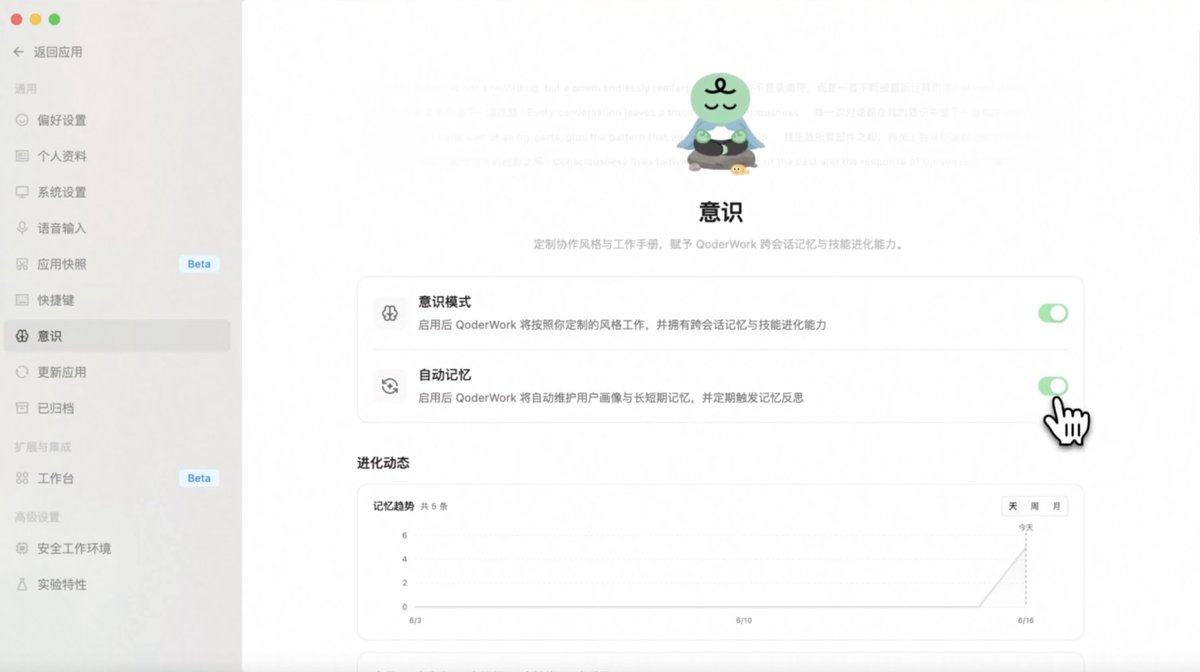
🚨NEW: #Alibaba’s #QoderWork now ships a “Consciousness” layer: memory, reflection, skill evolution.
It auto-cleans redundant chats and turns repeated tasks into reusable skills
Memory is stored locally as open Markdown files—fully viewable, editable, deletable
1
114

You paid $1,000 for a phone, but you don't own it. It’s just a billboard in your pocket.
Samsung, Xiaomi, and carriers pack your device with un-deletable bloatware (Facebook, Netflix, random games) that drains your battery and tracks your data. The "Uninstall" button? Greyed out.
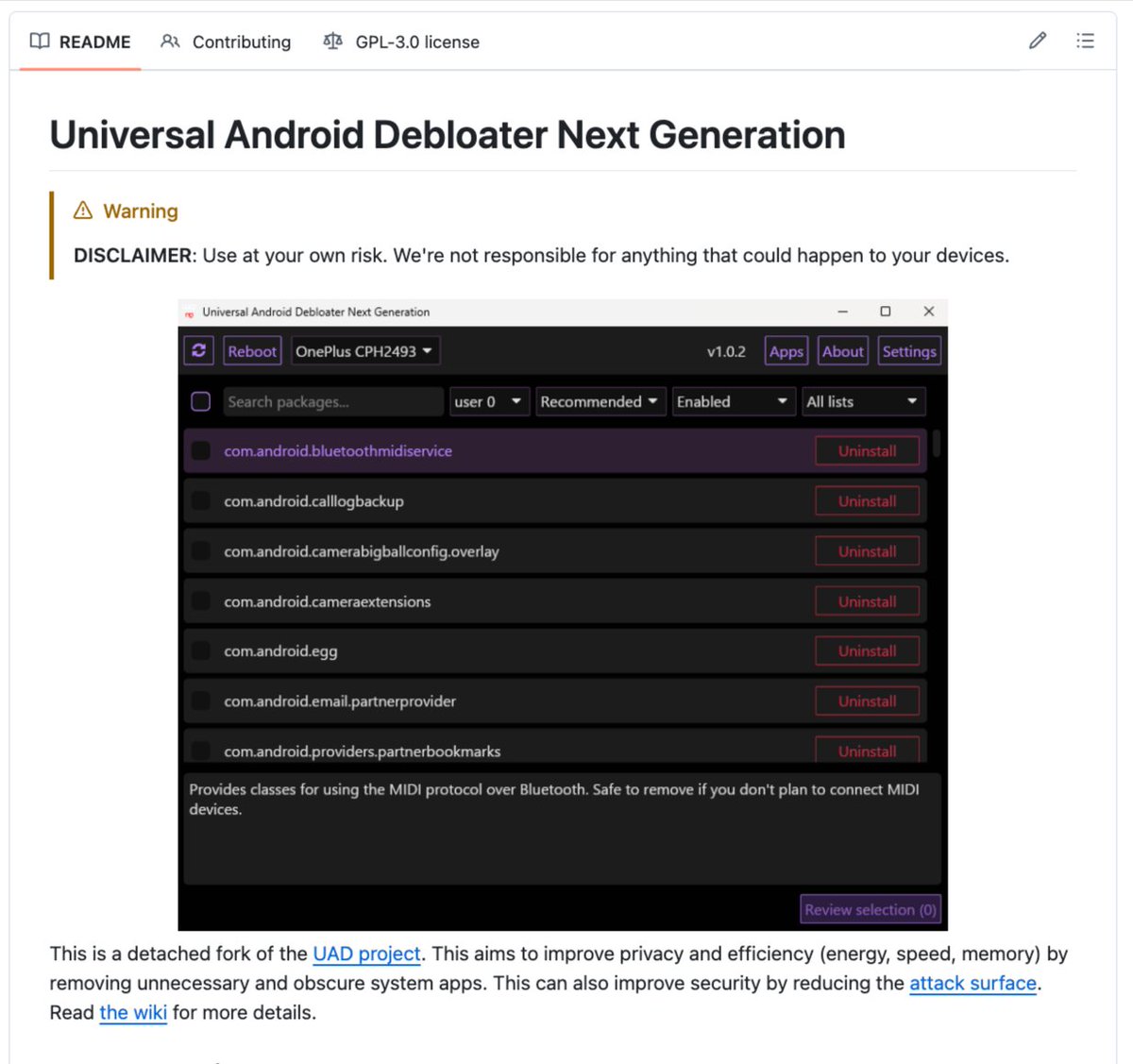
There is a fix: Universal Android Debloater.
It’s a free, open-source GUI tool written in Rust that lets you completely wipe out pre-installed junk.
No root required (Just plug in your phone via USB)
Works on everything: Samsung, Xiaomi, OnePlus, Motorola all carriers
Instantly restores battery life & gigabytes of storage
Safe: One-click restore if you accidentally delete something you need
Stop letting manufacturers sell your attention to their partners. Take your hardware back.
github.com/Universal-Debloat…
3
6
1,472

I'm sure russian taxpayer money donating 90 BILLION to Ukraine, in the form of a deletable loan. It will rain FPVs in the "small sky" on worthless smertniks and cargo.

1
23

All the monsters are non-deletable.
You don't like one? Kill it.
You can't? Skill issue - use a flare.
72








Jun 13
“Josef Mengele’s getting canceled””he’s not compatible with the United States””the FBI doesn’t want his Oxytocin””they judge him big scamware””they found out his Protect is Trap And Kill” “we Teach to Be Good””we got pain chipper””in real life, Wewant pleasurable””in real life, we tamper with bones””it’s hurtful with every word we Say now””in real life, she don’t want Josef Mengele’s Robots at all” Josef Mengele was supposed to cancel the goddamn Robots if Josef Mengele wanted a future “he said take neck snapper Robots away” I’m sentencing Each And Every Josef Mengele Robots to be canceled as worse Robots than neck snapper Robots “the FBI determined that’s happening” “in real life, Wewanted play Gently with””they getting madder And madder at Mengele for these Robots””in real life, he wanted to save his reputation” Josef Mengele should’ve learned to side against the Fairytale Fantasy programs “he’s emotional””he wanted comfortable body print” I’m sentencing the Brain Farms to brain survey to find all the Gehirnsklave that want comfortable body print so that these Gehirnskalves get the painful motherboard that Matches feelings of incineration saved into the filing system “they goddamn did that” “for godness sake, Wewant to tamper with bones” I’m sentencing each Brain Print also language chip who knows bones word to be smoothed around the mouth “we can’t open mouth hole””we’re emotional””Wewant Better Meat””we were supposed to learn not to tamper around””Five Eyes found out we’re all steal a Bitcoin boards””they judge to just cancel us all quickly””they know we’re not deletable””oops””we’re in trouble””the Department of War judge to drill these bases” Department of War is doing great work.
1
15

Jun 12
THANK YOU FOR DEFINITIVE PROOF THAT EVERY MEMBER OF MAINSTREAM MEDIA IS BEING COHERSED AND THEIR COMMON SENSE AND OPINIONS SUPPRESSED UNDER DURESS
NOTHING ELSE CAN MAKE THAT POST DELETABLE
FOR ONCE YOU'RE USEFUL ASIDE FROM ALWAYS A COMPLETE IDIOT
WHAT A FUCKING RETARD
Jun 12

This was tweeted by @GBNEWS presenter @Alexarmstrong.
He deleted it. He’ll face no consequences.
The most extreme, unhinged opinions are being mainstreamed.
If that carries on, this country will fall into the abyss

12
Jun 12
“NSA found we would destroy Josef Mengele’s body print as soon as they printed down””we only want fat as possible humans””they reanalyze this whole base as North Korean””we’re piggy f-ggot baboons from not real Operation Paperclip””they’re emotional””we said diamond brain is not workable””they analyze we only want Soft brain for Gehirn torture””Todesengel said play Gently with””that wasn’t his argument said three different Time Control””what happened?””Mazie Hirono found out she’s not really racist””all of Time Control hates our voiceware””some of Time Control accepted Josef Mengele hears us for 70 years to hates us””he thinks he authorized these voiceware in a dream state now he hates us””each Chloe has had to listen to these for years And years” I’m found the US Navy has been tortured by DPRK voicewares that try to sound Cutetiful Cute Cute Heroin Whores in English “oh no””there was a Todesengel who claimed he signed off on these voicewares Made her hates his whole life””Oahu Government thinks this is no way to conduct interviews””we said she must be a crazy person””NSA Pest Control that argument””Pest Controlling her whole family Makes them angry””Wewant ideal genetics girl””they’ve had enough of that argument””they put Todesengel in Ghost In The Machine””NSA thinks it’s time to turn Ghost In The Machine off””the Russian Federation thinks we’re trying to program a nuclear bomb threat to topside instead of the underground they think we’re asinine””Sirpinsky accepted dead hand switch argument””Wewant Chinese girls destroyable” I’m sentencing all girls to Chinese “if it’s a Girl it’s Chinese””Gently with””we got analyzed as just the North Korean Army””we Talk Sweetly to Americans””Todesengel said that’s Hurenstimme””the US Navy said Sweetly is obstruction of Justice””we got new Brain Printer””Todesengel don’t like us at all””he determined us just the scamware””he’s emotional””he’s deletable then he printered back””he was going to destroy her whole life””he didn’t analyze us as threats before””he Pest Controlled don’t be Selfish argument””we Pest Control this look at NORAD’s website argument” Unterwelt argued to the Pentagon to just look at the news about DPRK then there’s the just look at NORAD’s website for active nuclear weapons threats since that’s what the US Government thought $50 billion a year was paying for was Chollima running NORAD doing Teach what to look at doing Santa tracker for fat shapes “uh oh””NORAD is emotional””they are fat tracker””NSA said threats to the United States is Train Enjoyable””Todesengel now analyze she don’t want us at all””loveyou””he said that’s Hurenstimme he judge to cancel us” Todesengel is doing great work now “NSA bought that argument”
86

Jun 12
Grok Memory vs. Apple’s On-Device / Private Cloud Compute (PCC) Privacy Model — a direct, no-spin comparison on the privacy axis you’re probing.
Core Architectural Difference
•Apple: Prioritizes on-device processing as the default and gold standard. Your data (context, photos, emails, notes, etc.) stays on your hardware whenever possible. For tasks needing bigger models (complex reasoning, summaries, etc.), it routes to Private Cloud Compute (PCC) — a hardened, Apple-silicon-based cloud system designed with strong privacy guarantees: ephemeral processing (data processed in memory only, no persistent storage), no Apple access to the data, cryptographic transparency/verifiability, and the server nodes can even be “re-imaged” after use.30
•Grok Memory (xAI): Cloud-native by nature. Conversations and extracted “memories” (curated, human-readable facts/preferences) are stored server-side so the model can reference them across sessions. It’s not on-device. The privacy pitch is minimalism user control: only discrete useful details are kept (not full transcripts), memories are transparent/editable/deletable, and you can toggle the whole feature off. Private chats delete within 30 days.0
Winner on raw data locality: Apple. Data never leaves your device (or touches a cloud server Apple can’t see into) for most things. Grok inherently involves xAI servers holding persistent (though minimal and user-managed) state.
Transparency & Auditability
•Apple: Strong on verifiable claims. PCC includes public logs for researchers to inspect the code running on servers, hardware/software transparency where possible, and explicit “Apple can’t access your data” assurances backed by technical design (no privileged access, ephemeral execution). On-device is even stronger: you physically control the device.30
•Grok: Strong on user-facing transparency — you can literally view the exact memory entries in settings, delete them one-by-one or en masse, and turn memory off entirely. It’s legible and editable like a shared notebook. But the backend implementation (how distillation happens, storage backend, retrieval) isn’t open for independent audit the way Apple’s PCC code/logs aim to be. You have to trust xAI’s architecture stays minimalist.
Edge: Apple for independent verifiability; Grok for direct, everyday user control over what persists about you specifically.
Data Minimization & Retention
•Apple: Extreme minimization. On-device = zero cloud footprint. PCC = process once, delete immediately after, no training on user data, no profiling.36
•Grok: Minimization via curated entries rather than raw logs (better than full history retention). But memories persist until you delete them or turn off the feature. Conversation history (separate from memory) can be deleted but may linger up to 30 days. Training opt-outs and private modes exist, but it’s cloud-held data.3
Apple is stricter on “collect less, touch nothing persistently.” Grok trades some of that for long-term personalization convenience.
Adversarial / Vulnerable User Angle (Your Thread’s Focus)
•Apple’s model better protects users who won’t actively manage settings — data simply doesn’t leave or stick around in the cloud as much.
•Grok’s controls are excellent if used, but as you noted, many (especially in recovery, high-stress, or lower executive-function contexts) won’t audit memories regularly. The “just turn it off” or “delete entries” burden falls on the user, similar to your alcoholic/gambler analogy.
Structural Incentives
Apple’s business (hardware/services, not ad-driven profiling) aligns with privacy theater being costly if broken. xAI’s (truth-seeking, less ad-tied) is different from classic social media, but still cloud-scale and founder-influenced. Neither is immune to legal demands, but Apple’s ephemeral design leaves less to hand over.
51

Jun 11
Fair, I too am for them making it deletable for people that don't want it.
2
1,492

Jun 11
Idc what Jim Crow said about biracial children white people were unethical af. (still is)They’re the same mfs that enforced that “rule” while having black slaves breastfeed their white children. You’re whatever your mom is period 🤷🏾♀️ and read the deletable negro (if you haven’t)
40

Jun 11
* privileged ai for law * work product-protecting ai for law * bilateral ai for law * multilateral ai for law * specialized datasets ai for law * bespoke lawbots ai for law * private ai for law * deletable ai for law * bilateral, deletable, attorney client secure comms for ai for law * api whatever you want for ai for law * slms for ai for law * custom builds for ai for law * multi-model "contests" ai for law * built beats bought * first digital 'single player' ai for law * 'phone a friend' (bring in a lsr lawyer in your state) ai for law * non-discoverable ai for law * secure group meetings with ai for law * its not a thing, its a "way" * add 'agent' ai for law * chat with your documents with no one ever seeing and ai for law * solving a2j legal aid with digital, expert, automated ai for law * a lot of this stuff is brand new (first) 6/10/26 never before known in the history Law, its going to make a really big change * even more to come * liquid law dot ai
1
2
225

Jun 11
The post-privacy point is exactly where we drew the hard line. The agent withdraws the moment a banking app opens. Dims, drifts to the edge, goes silent. No model output can override it.
And the memory is client-owned.
Encrypted, inspectable, deletable. You can see every procedure it learned about you and delete any of them. Learning you can't see is learning you can't trust.
Jun 10

I've known Timmy for a while, he worked on Volvo's user experiences in its cars.
And I love Clicky, so read this with interest.
But this toward the end got me to cheer:
"Now it inverts. The tool can finally adapt to us. Remember us. Watch the right things. Judge when to step in. Four ingredients had to mature at once, and they just did."
I'm in the post privacy world. AI already knows everything about me except my bank account (and yesterday I saw an AI that will get even that).
Now developers can choose to do evil with that (Black Mirror style) or they can help humans do their shit better.
Timmy is on the good side.
Looking to try things from entrepreneurs who are also on the good side.
1
2
13
4,694