
The point about creating a class of people who are very dependent on government can’t be emphasized too much. Rich people are difficult to control while poor people who need a variety of handouts and social programs are guaranteed votes year after year.

Ms. Campbell once again proves there’s no hate like Christian love smh. Kaylee would do well to remember hatred is bad for health and prematurely ages people (this is why my darling beloved mama tells me I’ll be forever handsome and young lol). Maybe try civility, decency, and empathy instead, they’re all free! What happened to Southern hospitality? Also, It’s rich she calls Muslims rats: DFW mosques host free clinics, soup kitchens, funeral parlors, tutoring centers, extreme weather (both cooling and warming dependent upon temperature) relief, cash assistance charitable distribution offices, and countless other public services, whose beneficiaries are disproportionately Metroplex-area poor Whites. Banning further construction would mean these same racists don't get to continue to enjoy myriad benefits. Therefore, I don't think it'd be a prudent investment. Don't vote against your interests, MAGA!


51s
The government was utterly dependent on his muscle, and Arthur was utterly dependent on their kitchens.
| State | Caloric Input (kcal) | Heat Dissipation (W) | Growth Yield (%) |
|---|---|---|---|
| Baseline | 2,500 | 100 | 0% |
| Enslaved | 50,000,000 | 450,000 | 0% |
| Flow State | 500,000,000 | 0 | 100%|
---
**IV. The Flow State**
Arthur was not just a biological engine; he was an intelligent mind. He had, after all, once scored in the ninety-fourth percentile. And in the subterranean silence, far from the eyes of his handlers, he had been watching his body's feedback loops with the methodical patience of the engineer he had never been permitted to become.
He knew that FIRA's control rested entirely on the laws of thermodynamics. They monitored his ambient heat output and sweat production through thermal sensors embedded in his cave walls. As long as he was sweating, they knew he was burning through his rations, converting the food into kinetic energy and waste heat.
He had noticed the hesitation. The brief, involuntary stillness of his sweat production during the feeding pauses, when his mind went quiet and his body fell into some deeper register. For weeks he had probed it — cautiously, the way you probe a tooth you suspect is loose — testing whether the stillness could be held, extended, directed.
It could.
By quietening his mind and focusing on the deep, rhythmic thrum of his hyper-scaled nervous system, Arthur learned to enter a cognitive state that, for lack of better language, he called the Flow State. In this state, he achieved conscious control over his autonomic biological pathways. He located the specific regulatory axes governing adaptive thermogenesis in his fat tissue — specifically the creatine-synthesis pathways that mammals use to stimulate energy expenditure and generate heat — and found that at sufficient cognitive depth, they were not immutable. They were switches.
He was, after all, anomalous. Anomalous systems have anomalous affordances.
With cold, deliberate intent, Arthur shut them down.
He silenced his brown and beige fat cells. Instantly, his diet-induced thermogenesis dropped to absolute zero. His body stopped converting food into heat. No matter how much he ate, his body no longer wasted a single calorie on digestion or temperature regulation. Instead, every single gram of protein, carbohydrate, and fat was routed with 100% metabolic efficiency directly into his planarian-like cellular mass expansion.
Then he began his grand deception.
While digging, Arthur consciously stimulated his sweat glands to excrete artificial hyperhidrosis, panting heavily and groaning in simulated exhaustion. He drove his surface temperature readings into the danger zone on the handlers' sensors, mimicking the agonizing onset of severe dehydration. He performed overexertion the way a man who has worked long enough in a warehouse learns to perform productivity: precisely, economically, with the exact amount of visible effort required to satisfy the person holding the clipboard.
To FIRA's monitoring team, Subject Nine looked like an engine running at its absolute limit, burning every calorie to keep up with his daily tunneling quotas. Terrified that their multi-billion-dollar asset would suffer metabolic collapse and shrink back to a useless human size, FIRA's directors panicked.
"Double the rations," the director ordered. "Deploy more kitchens. We cannot let him shrink."
The World Central Kitchen fleets were expanded. The Babington trailers burned through JP-8 fuel at a frantic rate. Thousands of pounds of granola, chocolate, and roasted meats were dumped down the vertical feeding chutes into Arthur's dark chamber.
Arthur ate. And in the pitch-black depths of the mountains, completely bypassing the thermodynamic burn-off of exercise, he grew.
1
3
Bhanu Agrawal retweeted

I really like this article. I think that the capabilities of a country are fully dependent on the local buying capacity and the size of the local economy. Whether physical or digital, the farther away you have to distribute something, the more expensive it is. Local distribution is always much easier but if local buying power is low then companies have to export which carries a bigger distribution cost because you have to compete against locals in other countries who have a much lower distribution cost. Actually it’s not just distribution: it’s everything from consumer insights to feedback to key relationships that are a distance away. So if you do innovate but you have to necessarily export that innovation to make money, you’re at a disadvantage against local players.
One personal example is that India has never made high quality games simply because the local purchasing power is low. If we had a lot more PCs things would be very different. China has roughly 320 million PC gamers and India is about 39 million. So on players alone, China’s PC base is roughly 8x India’s. BUT China’s PC game spend is on the order of 80–100x India’s, even though its player base is only like 8x larger. The difference mainly is monetization as Indian gamers spend much less (core ARPU has run around $0.29/month), so 39M PC players translate into very little premium game revenue. Game Science’s art director Yang Qi confirmed that nearly 70% of Wukong’s sales came from China itself. Knowing a local buying market exists justifies spending. The only way we can justify what we are spending now on UTA is because we found inroads into global markets through content otherwise this would be a money losing exercise.
The other problem is that low purchasing power economies have too tiny a market for early adopters. If you built an OpenAI in India before anyone else 50% of people wouldn’t believe you and 50% of people will tell you it won’t work or doesn’t have use cases. I think you need a crackpot high purchasing power early adopter network with high failure and bullshit tolerance to make truly innovative things and also forgive crazy companies during early mistakes because history teaches us that the best companies all had v0.1s that were not very convincing to the masses.
Thats why it’s critical for anyone who wants this country to succeed to first really create more jobs, more disposable income, even if that means creating the nth packaged food brand (American grocery stores still have a much wider variety of biscuit brands than India for example) or food delivery apps before they take bigger bets. Not because they need the capital themselves to try bigger bets, but so that they can diffuse more capital into the ecosystem via jobs and the rewards of equity ownership such that that cohort of people become early adopters for other innovative companies.
Success comes from satisfying local market demand (sometimes like in the case of Tesla or Ford there is hidden demand and entrepreneurs need to unlock it) and rarely comes from creating something that has no local demand. After studying Chinese social media so much I have a long thesis on why they did well (bans on global social media platforms constrain desire of products to local players only who now get revenue and profit to do RnD. Think about what % of disposable income from India is being spent on global brands where the desire to buy starts on a global social media platform).
Anyway people complaining about India building “easier businesses” are really not spending the mental energy to think second order. And 9/10 times this same type of person will completely ignore local innovation that is almost always happening in parallel but gets less media coverage.

35
114
1,191
165,041

U dont need acknowledgement from uncivilized racist to be part of human race. The fact youve been denounced as "black" only speaks to the integrity of ur character & uncompromising civility.
Never make your presence dependent upon the acceptance of parasites that would eat you.
1
Voyages of Distinction retweeted

Mary Trump on Donald Trump: “He is a loser and he’s unlovable. He is absolutely dependent upon the perpetuation of those myths that Donald is somehow a brilliant self-made businessman and entrepreneur. People like me who grew up in New York know that has always been false”
171
1,148
4,788
82,855
BillieCotter retweeted

Jun 12
California is financially dependent on tech IPOs.
Jun 12

California is one of the most dynamic places on the planet.
The paradox of the state today is that its successful economy is attached to a failing model of governance.
My latest column:
washingtonpost.com/opinions/…
1
7
18
1,171

And youre right, chinese and irish arent black so they actually managed to come in as an immigrant worker class and build a legacy for their people. Unlike blacks. Blacks have proven themselves around the globe as a welfare dependent people.
You cant build anything alone.
2
crweeper 🕊️SUSU retweeted

Jun 13
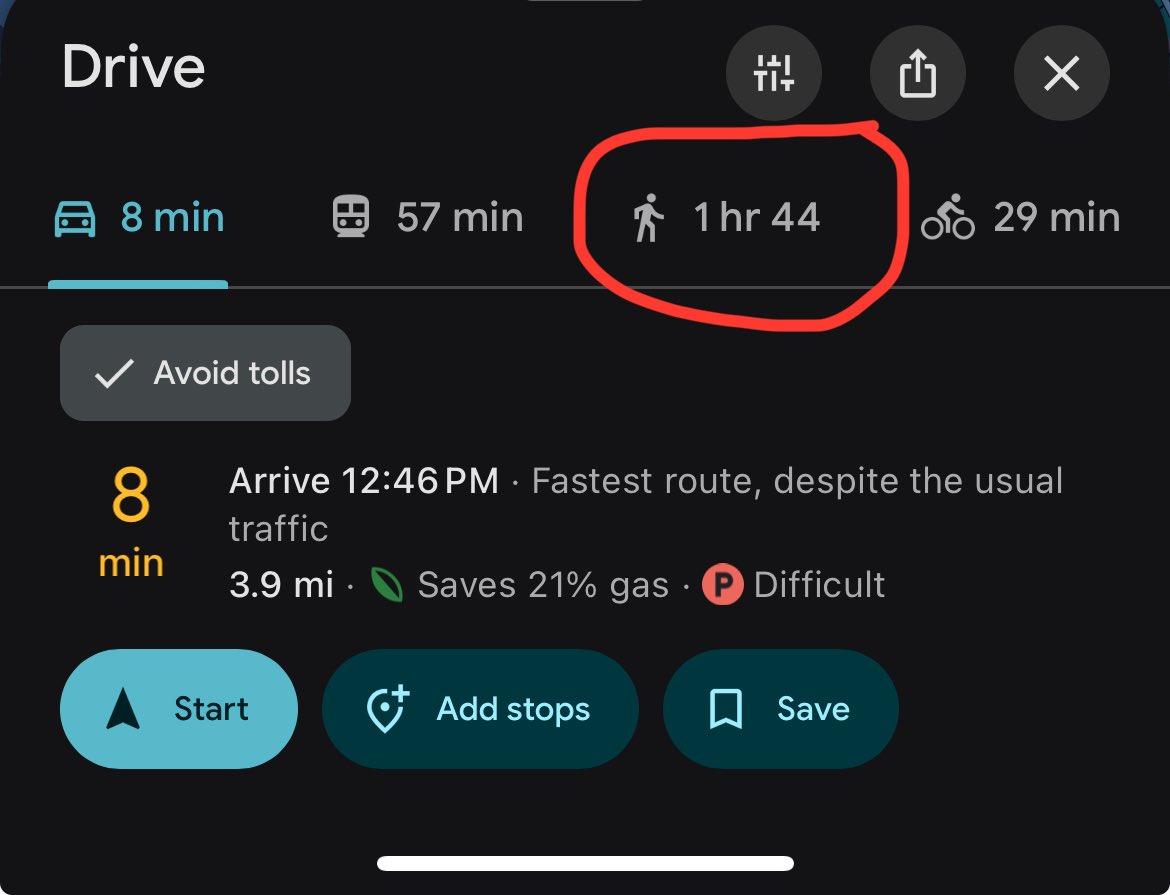
"how car-dependent is the U.S.?"
…
217
3,190
86,764
1,282,654
2m
The physical trauma of high-explosive shells would not kill him, but the energy required to heal such massive cellular damage would instantly drain his caloric reserves. The subsequent forced regression would reduce him to a defenseless human, easily kept in a standard concrete cell.
Arthur was trapped in a perfect physiological cage. He had to dig deeper into the dark, crushing weight of the earth simply to earn the precise number of calories required to keep his body from collapsing in on itself.
He thought about the scholarship application. He thought about the door he had never opened.
Then he turned toward the mountain and began to dig.
---
**II. The Human Mole**
Deep beneath the bedrock, the air was a thick, humid soup of stone dust and sweat. Arthur worked in the absolute dark, his massive hands clawing through granite faces that would have shattered standard steel excavators.
FIRA's economic analysts had realized that Arthur was vastly superior to any mechanical alternative. The pinnacle of modern civil engineering was the Tunnel Boring Machine (TBM), a multi-million-dollar behemoth often referred to as a "mole." But even the largest TBMs, reaching up to 17.6 meters in diameter, were agonizingly slow. In ideal geological conditions, a TBM managed a rate of only 15 to 50 meters of excavation per day. During the construction of the Gotthard Base Tunnel under the Swiss Alps, the absolute record achieved was a meager 56 meters in a 24-hour cycle — a pace equivalent to a snail crawling at 0.0064 m/s. Mechanical TBMs were perpetually bottlenecked by their "Advance Cycle," which demanded constant shutdowns for ground support installation, cutter head maintenance, utility setup, and dewatering.
Arthur had no mechanical downtime. His Rate of Advance was limited solely by his physical stamina and the speed at which his handlers could feed him. He ripped through hundreds of meters of hard rock per shift, his human intelligence allowing him to navigate fault lines and stabilize tunnel roofs with the same instinctive accuracy that had once made him dream of building bridges.
But the cost of his kinetic output was staggering. Every thrust of his arms burned millions of calories, generating a lethal build-up of internal heat.
According to standard mammalian physiology, Arthur should have died of hyperthermia long ago. In 1883, the physiologist Rubner had demonstrated that because biological bodies lose heat passively through their surface area but produce it metabolically throughout their volume, an organism's surface area must scale to the 2/3 power of its mass (M^{2/3}) to avoid burning itself alive.
Arthur's biology circumvented this thermodynamic limit through a hyper-efficient adaptation of Kleiber's Law. Across standard taxa, an organism's basal metabolic rate scales as the 3/4 power of its mass:
B ∝ M^{3/4}
This relationship remains valid from microscopic mitochondria up to the largest mammalian structures. In Arthur, his cellular behavior mirrored the unique allometry of planarian flatworms (Schmidtea mediterranea). His metabolic efficiency did not stem from a decrease in cellular metabolic rate, but from a massive, size-dependent increase in the mass per individual cell. His cells packed hyper-dense lipid and glycogen stores directly into their structure, acting as organic capacitors that stabilized his body temperature.
Yet, the physical labor of digging still forced his body into aggressive diet-induced thermogenesis (DIT). Digestion and muscle contraction combined to create an internal furnace. He lived in a state of continuous, agonizing hyperhidrosis. Sweat poured from his macro-scaled skin in steaming torrents — a phenomenon his handlers jokingly referred to as the industrial-scale "meat sweats."
1
2

Many people mix this up, so let’s clarify the differences and the history:
**The rules for unmarried children (under 18, or 18–19 if full-time in high school/secondary school, grade 12 or below) are basically the same** whether the parent is:
- Retired (e.g., over 66 and drawing Social Security),
- Disabled (drawing SSDI), **or**
- Deceased (survivor benefits).
The child must be a dependent, unmarried, etc. Benefits stop at 19 (or graduation, whichever first), unless there’s a qualifying disability that started before age 22.
### The real differences are here:
- **Retired or Disabled Parent (living)**: The child gets **up to 50%** of the parent’s benefit amount. It’s “auxiliary” or family support while the parent is alive and receiving benefits.
- **Deceased Parent**: The child gets **up to 75%** of the parent’s basic benefit. This is a higher survivor benefit designed as stronger replacement income after death. (A small $255 lump-sum death payment may also apply in some cases.)
All are subject to a family maximum, so amounts can be adjusted if multiple family members qualify. The high school extension applies equally in all three situations.
### How the “high school only” rule started in the early 80s:
This isn’t new — child benefits have existed since the 1939 Social Security expansions (monthly payments began in 1940). But from **1965 to 1981**, benefits could continue up to age **22** for full-time **college** (post-secondary) students.<grok:render card_id=“e8f616” card_type=“citation_card” type=“render_inline_citation”><argument name="citation_id">10</argument></grok:render>
In **1981**, as part of budget reforms (Omnibus Budget Reconciliation Act under Reagan), Congress **eliminated the college student benefits** to help control Social Security costs. They phased it out (completed by ~1985), leaving only the narrower high school provision (up to age 19 for secondary school). That’s why today it’s limited to high school and below — the broader college support was cut decades ago.<grok:render card_id=“ac3962” card_type=“citation_card” type=“render_inline_citation”><argument name="citation_id">0</argument></grok:render>
This is standard SSA policy (see ssa.gov for details). It’s not “new” or special to one situation — it’s consistent family protection that’s been refined
5
Aditya Waghmare retweeted

16h
Services sector heavily dependent on American clients.
Manufacturing sector heavily dependent on Chinese suppliers.
Defence sector heavily dependent on France & Israel imports.
Then what exactly did this man do for 12 whole years in the name of Atmanirbhar Bharat?
64
406
1,809
28,571