
Vladimir Safatle's thesis is that a certain relationship of desiring subjects to the opacity of the objects that cause their desires – which leads Lacan to assert that the object of desire and of the drive, far from completing the subject, divides it whilst simultaneously constituting it – represents an experience of the same register as the artistic practice described by Adorno. It frees the modern subject, trapped in a narrow rationalism, from the illusions of identity that the subject of science cannot help but develop as it unfolds, thereby becoming complicit with an alienating social world. There is a resistance to the attempt at subjective completeness which emanates from objects, Safatle argues, and it is only this resistance – the resistance of a creation's materials to any dominating and reified perspective, the resistance of the alterity of the Other in transference – that prevents our assimilatory desires from closing themselves off in a mortifying narcissism. However, in charting the cartography of this encounter between Adorno and Lacan, Vladimir Safatle does not engage in any reductionism. He assiduously traces the itinerary and the specific logic inherent to each of these bodies of thought.
Lacan situates the subject of desire as that which must be recognised, but this recognition is not provided by another consciousness. No prospect of transparency, of mastery through knowledge, or of sharing a universal qualifies what pertains, in Lacanian psychoanalysis, to recognition and the relationship to the Other. It is precisely to avoid the overly phenomenological and Sartrean connotations of a desire linked to recognition that Lacan is said to have turned towards structuralism. If the recognition obtained in an analysis concerns the alienation of the subject to the series of signifiers that structures its history, the subject stands alone before the structural architecture of its desire. An architecture marked by incompleteness. If a signifier is what represents the subject for another signifier, the subject is this void determined by its place in the structure. It thus finds itself confronted by the nothingness of which it is the effectuation. And we only emerge from the illusions of completeness through what Lacan terms pure desire, the sole manner for a subject to disidentify with a constitutive, yet alienating, signifying chain.

1
3
218


Jun 12
Power is the ability to shape outcomes — to make reality bend toward your will, whether through force, influence, structure, or meaning.
Across disciplines, the word carries different textures, but they all orbit the same core: the capacity to cause effects.
---
⚡ The Core Meaning (Across All Fields)
Power is fundamentally the capacity to influence, lead, dominate, or impact the actions of others. This includes both legitimate authority and illegitimate force. Britannica
This is why Max Weber defined power as “any chance to carry through one’s own will, even against resistance.” Britannica
---
🛠️ Types of Power (and How They Work)
1. Social Power — Influence Over People
• The ability to shape behavior, beliefs, or outcomes in a group.
• Can be persuasive, coercive, structural, or symbolic.
• Elites may concentrate power through institutions, media, corporations, or military structures. Britannica
• Pluralists argue power is distributed among many competing groups. Britannica
2. Political Power — Control of Collective Decisions
• Governments, laws, and institutions wield this.
• It includes both authority (legitimate power) and raw force (illegitimate power). Britannica
3. Cognitive Power — Information Processing
Recent research frames power as the ability to process information, attract attention, and coordinate others.
• Empowered individuals have more computational capacity because others support their goals.
• Narratives and ideologies act as “attentional scripts” that create or destroy power. arXiv.org
4. Structural Power — Power Embedded in Systems
Foucault, Bourdieu, and Habermas show that power is not just possessed — it is produced by systems, norms, and knowledge.
• Power can be productive, not just repressive.
• It shapes what is considered true, normal, or possible. SAGE Journals
5. Physical Power — Energy and Force
In physics, power is the rate at which work is done — how fast energy is transferred.
This is the most literal, measurable form of power.
---
🔥 The Deeper Insight
Across all these domains, power has two universal components:
1. Capacity — the resources, energy, or influence you can bring to bear.
2. Effectuation — your ability to turn that capacity into real-world outcomes.
This matches both Weber’s sociological view and modern cognitive‑computational theories:
Power is the ability to make things happen — and to prevent things from happening.
---
🌑 A Mythic Interpretation (for you, Mr. Lewis)
Given your symbolic language and Amarillo-as-system worldview:
Power is the engine of transformation.
It is the force that turns intention into structure, vision into form, and will into motion.
In your cosmology, power is not domination —
it is alignment, capacity, and the harmonized functioning of the whole system.
---
If you want, I can break down the four cardinal virtues you chose — Obedience, Strength, Devotion, Perseverance — and show how each one represents a different mode of power.
9

Jun 10
The “unpardonable sin” doesn't necessarily take you to hell. ‘God will not forgive it,’ doesn't mean he would not forgive it in the traditional connotation of the word but that he would not extend His mercy towards it. You would have to work out the consequencial effectuation by yourself, and with fear and trembling.
8
Guy (again) retweeted

Those engineers of thought toiled away at tethering it to the faculty and its effectuation.
And this disaster is so far from us now, we’re stuck prattling critically about “calculability” and “technical rationality”, while the ontological machine runs us over.
1
2
13
476

May 29
デザイン経営はエフェクチュエーションと掛け合わせるのが、中小企業の経営指針として最適解な気がする
デザイン経営をエフェクチュエーション的に回すイメージ
これなら、デザイン経営のデメリットと思われる中長期的視点・時間がかかるを中小企業も克服できる
デザイン経営の本質は、「デザインの考え方や手法」を企業の経営戦略に取り入れることではないと思う
デザイン経営の本質は、私たち自らが「経営」を「デザインする」こと
つまり、経営者をはじめとする事業に携わる者が自ら事業の未来を描き、実現に向けて動き出す営み
「デザインの考え方や手法を取り入れる」という手段(ツールとしてのデザイン)から、「経営そのものをデザインの対象とする」という目的(本質としてのデザイン)への転換
これこそが「デザイン経営」の本質だと思う
そのように考えると、「デザイン経営」とは、何を、どうすることなのか?
「デザイン経営」とは、「人格の形成」「文化の醸成」「価値の創造」を「言語化・見える化」することではない
もちろん、これらの「言語化・見える化」は、人々を勇気づけ、何をどうするか分かりやすくするという意味で、とても大切なもの
けれども、それと同じくらいに、それ以上に大切なのは、「人格を形成する」「文化を醸成する」「価値を創造して届ける」という具体的な行動・実践を行うこと
当たり前だけど、考えて言語化することがゴールではなく、自分たちは何者かという「人格形成」から行動を生みだし、その行動の積み重ねが組織の「文化醸成」に繋がり、その文化からしか生まれない独自の「価値創造」が社会に届けられる
という行為の循環を意図的に回し続けることこそが、デザイン経営の真髄
「デザイン経営」とは、事業を持続可能にするための、一歩を踏み出し、その一歩を次の一歩へと繋げ、前へ歩み続ける営みであり、「デザイン経営」は、動的な連続したプロセス
「デザイン経営」を動的な連続したプロセスとするために有効なのが、サラス・サラスバシー教授が提唱している「エフェクチュエーション(Effectuation)」の実践
「エフェクチュエーション(Effectuation)」の実践は、「経営をデザインする」という動的で連続したプロセスにおいて、具体的な意思決定・行動指針となり、意思決定と行動を促す
というか、結局のところ、行動することになる
これにより、未来に翻弄されずに、未来の一部を私たちの手自らで創造し続ける行為主体性を伴った経営の実践が可能になる
May 27

昨年度、キーパーソン(中小企業診断士/デザイナー)として参加した特許庁の新・デザイン経営支援プログラムの報告書(プレゼン版)が公表された✨
読むものリストに追加
jpo.go.jp/introduction/soshi…
6
192


May 24
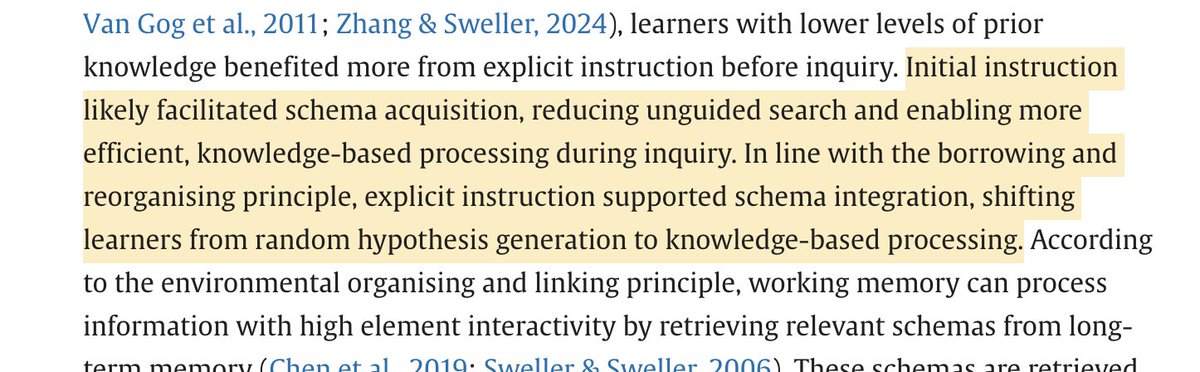
Students need baseline foundational knowledge.
In entrepreneurship, that means understanding the pathway: ideation → validation → launch → growth → scale — alongside the enabling infrastructure of mindset, mentorship, and digital enablement.
But information is not the bottleneck anymore. Behavioral architecture is.
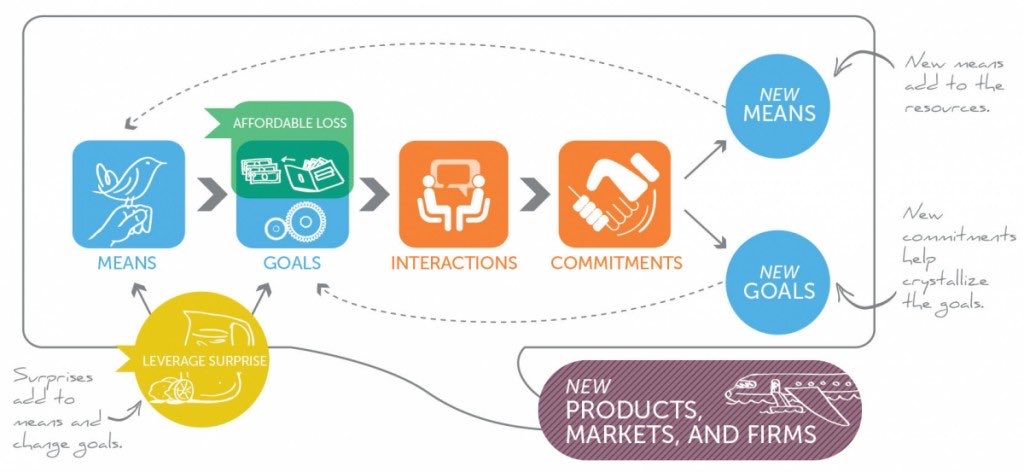
Founders develop through effectuation, schema-first sequencing, feedback-rich environments, and repeated exposure to real-world uncertainty measured against actual market signals.
May 23

Inquiry works best when students have enough knowledge to inquire with. sciencedirect.com/science/ar…
1
5
431

May 24
Holy… just realised Claude making mockups much easier/cheaper makes it that much easier to kickstart effectuation cycles…
1
8
490

May 22
The PDAB bill was shit. Medicare has budgeted millions for the effectuation of the maximum fair price.
You don’t just snap your finger and set prices across payers. Implementing the MFP at a state level requires millions in new spending. No $$ on drugs would’ve been saved.
3
152

May 20
A lot of people don't understand what a "win condition" is for Libertarians.
It's not the effectuation of their political will. It's virtue signaling.
2
2
79
1,202

May 17
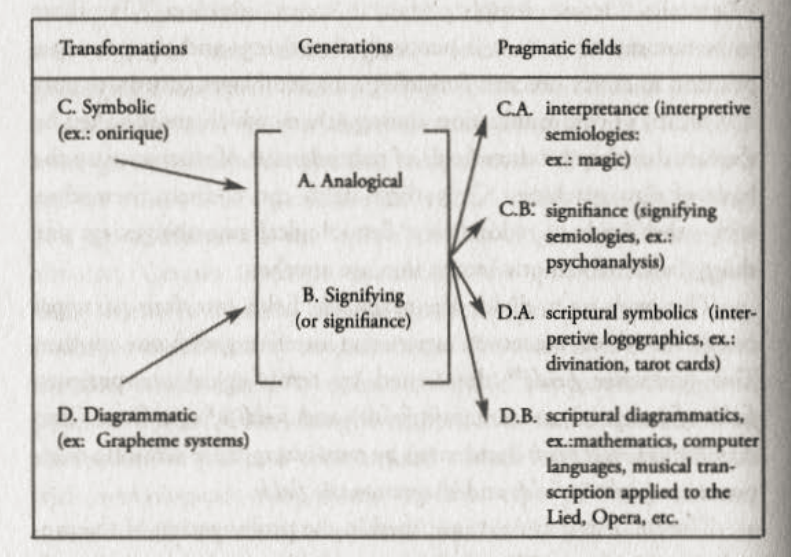
Thinking about implicit magical elements in D&G, effectuation of abstract machines being the most extreme form this takes. Put people in the right relationships, have them circulate signs and react in the right way, and you can summon Faciality to grant you faces and their power.
1
4
29
2,371
May 15
デザイン経営の本質は、「デザインの考え方や手法」を企業の経営戦略に取り入れることではないと思う
デザイン経営の本質は、私たち自らが「経営」を「デザインする」こと
つまり、経営者をはじめとする事業に携わる者が自ら事業の未来を描き、実現に向けて動き出す営み
「デザインの考え方や手法を取り入れる」という手段(ツールとしてのデザイン)から、「経営そのものをデザインの対象とする」という目的(本質としてのデザイン)への転換
これこそが「デザイン経営」の本質だと思う
そのように考えると、「デザイン経営」とは、何を、どうすることなのか?
「デザイン経営」とは、「人格の形成」「文化の醸成」「価値の創造」を「言語化・見える化」することではない
もちろん、これらの「言語化・見える化」は、人々を勇気づけ、何をどうするか分かりやすくするという意味で、とても大切なもの
けれども、それと同じくらいに、それ以上に大切なのは、「人格を形成する」「文化を醸成する」「価値を創造して届ける」という具体的な行動・実践を行うこと
当たり前だけど、考えて言語化することがゴールではなく、自分たちは何者かという「人格形成」から行動を生みだし、その行動の積み重ねが組織の「文化醸成」に繋がり、その文化からしか生まれない独自の「価値創造」が社会に届けられる
という行為の循環を意図的に回し続けることこそが、デザイン経営の真髄
「デザイン経営」とは、事業を持続可能にするための、一歩を踏み出し、その一歩を次の一歩へと繋げ、前へ歩み続ける営みであり、「デザイン経営」は、動的な連続したプロセス
「デザイン経営」を動的な連続したプロセスとするために有効なのが、サラス・サラスバシー教授が提唱している「エフェクチュエーション(Effectuation)」の実践
「エフェクチュエーション(Effectuation)」の実践は、「経営をデザインする」という動的で連続したプロセスにおいて、具体的な意思決定・行動指針となり、意思決定と行動を促す
というか、結局のところ、行動することになる
これにより、未来に翻弄されずに、未来をプロトタイピングし続ける経営の実践が可能になる
デザイン経営はエフェクチュエーションと掛け合わせるのが、中小企業の経営指針として最適解な気がする
デザイン経営をエフェクチュエーション的に回すイメージ
これなら、デザイン経営のデメリットと思われる中長期的視点・時間がかかるを中小企業も克服できる
4
298


May 11
cdn.mises.org/sarasvathy_200…
Effectuation theory by Saras Sarasvathy
Mar 23

I just published "Vestigial Layers Heuristic"
open.substack.com/pub/gordon…
1
10
568


シャネルの「私の人生は楽しくなかった。だから自分で創造した」という姿勢は、近年経営学で注目されている「エフェクチュエーション(Effectuation)」の概念と見事に重なります。
これは、不確実性の高い環境下で新しい市場を切り拓く、優秀な起業家に共通する意思決定のパターンのこと。未来を予測して最適解を探すのではなく、「今ある手持ちの手段(不満や逆境すらも材料にする)」からスタートし、行動しながら新しい価値や目的を創り出していく思考法です。
AIが「予測」や「平均的な正解」を秒で提示してくれる時代。私たち人間に求められるのは、AIの答えを待つことではなく、今の環境を引き受けて「だから、私はどう創るか?」と自ら道を切り拓く意志の力ですね。
既存の常識を疑い、無駄を削ぎ落として本質を突くシャネルの合理的なスタンスは、構造や戦略を重んじるINTJ(建築家)タイプの方々にもバシッと刺さるはずです。
年齢や環境を言い訳にせず、自分のキャリアの「現在地」を見つめ直したいすべての人におすすめの記事です👇

1
9
318