
"Tenemos que defender nuestra privacidad si es que queremos tenerla.Tenemos que unirnos y crear sistemas que permitan las transacciones anónimas. La gente a estado defendiendo la privacidad durante siglos ,mediante susurros , oscuridad,sobres,puertas cerradas ,apretones de manos, en clave y mensajeros.Las tecnologías del pasado no permitían una encriptacion(Fuerte),pero las actuales si.
Eric Hughes.
20

Ocurre que a los caorrockos de coRe se les ocurrio dejarse influenciar a traves de agencias de tres letras y varias corporaciones financieras y administradoras de activos, una vez la cultura cambiaron, abrieron las puertas a Taproot, el cual nos vendieron como una mejora para seguridad y encriptacion...(estabamos con la fiesta encima de precios altos, todos ricos y va...... y ahi fue cuando nos la clavaron, abriendo cajones, puertas y comandos para anexar datos a las transacciones.
UASF, ya han existido... sEgwit fue uno y la ganaron los nodos de minoria, porque enfoca a bitcoin a lo que es diseñado para ser: DINERO.
1
4

Jun 15
Bajo que norma y protocolos de seguridad salvaguardan la información?
Digo hablar de que otros países pero esos países si saben que es un certificado SSL o una encriptacion de 128 bits
12

estoy terminando re revisar unos puntos, ya que en los que estoy probando para que no cuenta con encriptacion, sino solo archivos basicos de Assets y de DAT, quiero ver si se puede crear un archivo extractor y un compilador para extraer los datos, ya si lo termino creo hare tuto
2
85

Jun 11
Lo de la encriptacion no lo sabemos ya que creo que literal Bruce si lo tuvo que desencriptar. Y justamente es mas logico que si pierde tanto es porque se mando una cagada a que es todo parte de su plan, es como que tenga todo para perder y que al final no lo uses por las dudas.
1
14

Jun 8
Me han comentado que hay personas que aún no pueden enviar privados a la cuenta. Es por algo de la encriptacion de los mensajes de twitter. Dejad comentario y os hablo yo
7
4
409

La computación cuántica va a "quebrar" la encriptacion actual en el año 2032.
Lo pasado:
Q-bits (quantum tech).
Lo nuevo:
Neutral Atoms (ultra quantum tech) 🔥
Esto lo descubrió Google y es el PRIMER caso citado con una prueba "escondida" dentro de un ZK-proof, que comprueba avances algoritmicos pero sin revelar datos en sí sobre las mejoras! 🤯 🤯
Justin Drake es co-autor del white paper y aparte investigador en la Fundación Ethereum.
Google. Cloudfare. Ethereum.
Qué tienen en común?
Todas tienen miras en cambiar 100% a post Quantum cryptography en 2029 (3 años antes de QA-Day... El día que todo cambia.)
🤯🤯🤯
Jun 2

Today a crazy quantum story just got wilder.
On March 31, the Google Quantum AI team published a landmark result on Shor's algorithm for elliptic curve cryptography. Technically, the paper was a bombshell: a dramatic 10x improvement over the state-of-the-art. As a stunt and wakeup call to the blockchain space, those optimisations were illustrated on secp256k1, the elliptic curve underlying Bitcoin and Ethereum signatures.
But perhaps the most striking part of the paper was sociological, not technical. Instead of following standard academic process, the optimisations were kept secret, hidden behind a zero-knowledge (ZK) proof. Google's accompanying blog post mentions they "engaged with the U.S. government". The ZK proof demonstrates the existence of algorithmic improvements without leaking details. Academic censorship with ZK, a historic first!
As a co-author of the Google paper I witnessed some of the context surrounding this censorship. To be honest, multiple aspects of that context don't sit well with me. As much as I believe the general public ought to know more, I am limited in my ability to whistleblow. Though let me be clear about one thing: the Google team's professionalism has been absolutely exemplary, and they deserve nothing but praise.
Censorship has a way of backfiring. The Streisand effect, where an attempt to bury something only draws more attention to it, is exactly what's unfolding today. First, Google's key optimisation has been rediscovered by the French. And in a thrilling turn of events, a collaborative Shor-at-home challenge just launched. The initiative, available at ecdsa[.]fail, breached a new Shor world record in a matter of hours.
Let's start with the rediscovery. Just two months after Google's paper, French quantum expert André Schrottenloher cracks the main secret optimisation. His paper, titled "Optimized Point Addition Circuits for Elliptic Curve Discrete Logarithms", landed on the arXiv today. Big congrats to André, who beat several other nerdsnipped experts to it. In a blog post also published today, Craig Gidney, the world expert on Shor optimisations, revealed that he'd been sitting on this very optimisation for a whole year under censorship pressure.
Interestingly, André missed a handful of minor optimisations, both from Google's original publication and from improvements found since. It's plausible there's still plenty of juice left to squeeze out of Shor, and this is exactly what the ecdsa[.]fail challenge is about. The verifier program developed for the ZK proof does double duty, automatically filtering for valid submissions. Dozens of compounding small and micro improvements are rolling in. As of the time of writing there's an 8.4% improvement to Google's circuit, as measured by the product of logical qubit count and Toffoli gate count. Nice!
The nerdsnipping ran deeper than anyone expected. Over the last few weeks it became clear it extended well beyond André and other quantum experts. Behind the scenes, a small army of amateurs quietly got to work. Inspired by Karpathy-style autoresearch, they turned AI on Shor. Ironically, the verifier program for the ZK proof makes an ideal reward function for AIs. The barrier to entry for this modern style of research is refreshingly low, with several non-experts, even a teenager, finding nice optimisations. Get in touch if you'd like to join a Telegram group with fellow autoresearchers :)
Part 2: neutral atoms and qday
The story doesn't end with Google. On the same day Google went public, a stealthy startup called Oratomic published its own Shor paper in a coordinated release. It made a splash, ultimately becoming the most upvoted paper on scirate[.]com, a website ranking arXiv papers.
Oratomic's claim was wild. By building on Google's logical optimisations and applying custom physical optimisations for neutral atoms, they claimed just 10K physical qubits were sufficient to run Shor's algorithm on secp256k1. That number is mind-bogglingly low.
Knowing essentially nothing about neutral atoms when Oratomic's paper landed, I was intrigued and decided to learn more about the tech. I fell straight down the rabbit hole and spent a couple hundred hours on the topic. I got a little obsessed and watched every YouTube video I could find and spoke to a bunch of experts.
My conclusion? The tech is real, very real. Even Google recently decided to start a neutral atom lab, a notable pivot from their sole focus on superconducting qubits. If you care about qday, i.e. the day a quantum computer will break the first piece of cryptography in production, neutral atoms demand your attention. I shared some of my learnings on Shor and neutral atoms in a 30min talk at the ZKProof cryptography conference. You can find it on YouTube by searching "zkproof neutral atom".
Here's an interesting observation about this duo of breakthrough papers: neither Google nor Oratomic say a word about what their results mean for qday. No timelines. Zero. Nada. That is especially baffling given that the whole point of whitehat quantum cryptanalysis is to inform qday estimations and help the general public make good decisions.
So let me attempt to partially fill the silence, similarly to what Scott Aaronson did in his April 29 post. Given everything I know, including scary non-public information, I now put the odds of qday by 2032 at 50%. 10% by 2030.
Anecdotally, the US government has its own date: 2035. Originating at the NSA and later adopted by NIST, it's when branches of the US government will be disallowed from using quantum-vulnerable cryptography. In plain language: with hindsight, that date is a joke and should be discounted entirely. I don't see how NIST avoids being forced to pull it forward by years.
Part 3: post-quantum cryptography
There are good reasons to sound the alarm today, but please do not panic. Rushing carelessly towards immature post-quantum cryptography is a recipe for disaster. IMO a good target date for migration is 2029, roughly 3.5 years out. 2029 happens to be the date selected by Google, Cloudflare, and the Ethereum Foundation.
These days most of my time goes to safely migrating Ethereum towards post-quantum cryptography as part of the broader lean Ethereum effort. There's a lot to do. We need to rip out and replace BLS signatures at the consensus layer, KZG commitments at the data layer, and ECDSA signatures at the execution layer.
The plan to get there is compelling, and is based on hash-based cryptography. Within the Ethereum Foundation we've developed a Swiss army knife called leanVM (github[.]com/leanEthereum/leanVM) powered by the magic of hash-based SNARKs. Thanks to truly exceptional work by Emile, Thomas, and others, its performance is derisked. Regarding security, leanVM is a jewel, a minimal zkVM crafted for end-to-end formal verification and maximum security.
Want to help? There are two $1M initiatives. First, the Proximity Prize (proximityprize[.]org). Solve a long-standing mathematical conjecture in coding theory, improve hash-based SNARKs, and go home a millionaire. Second, the Poseidon Initiative (poseidon-initiative[.]info), offers $1M for breaking Poseidon, the SNARK-friendly hash function.
15
787

May 28
- Ahora que lo pienso, Jill ha logrado infiltrarse en complejos fortificados que requirieron doctorados y años de encriptacion para que con un ganzua logre pasar todo eso ¿Cuál es su obsecion con las ganzuas?
2
54

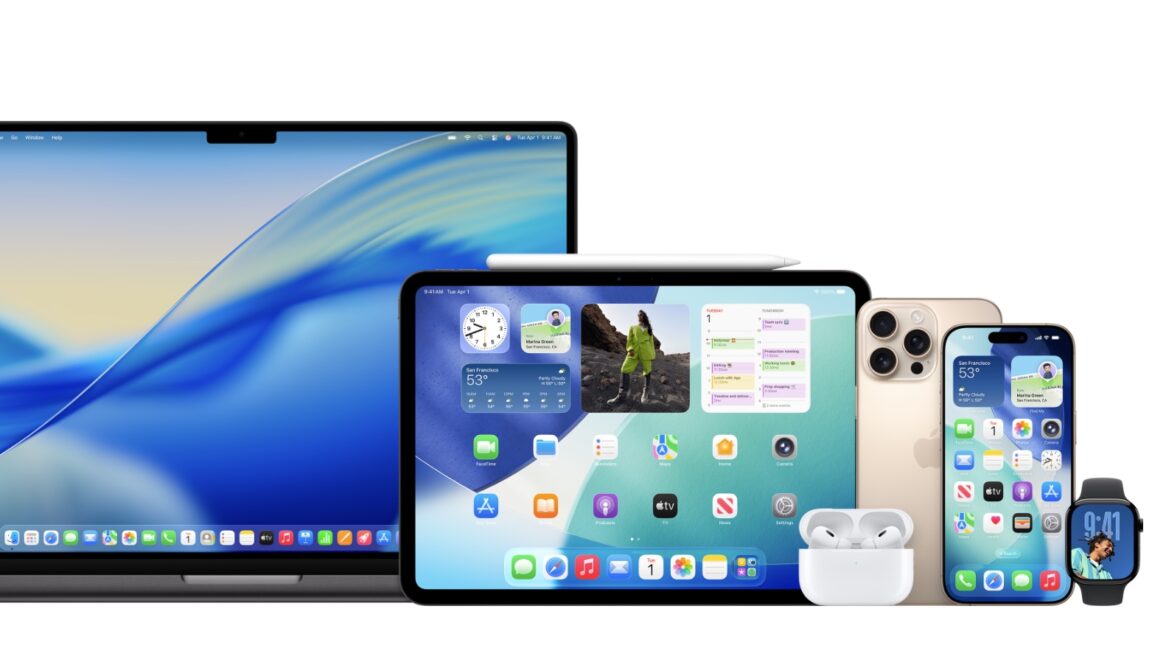
Los mensajes RCS entre iPhone y Android acaban de recibir encriptacion de extremo a extremo por primera vez.
→ La version 26.5 de iOS, iPadOS, macOS y el resto de sistemas de Apple introduce esta funcion en fase beta y limitada a ciertos operadores.
→ Los chats encriptados muestran un icono de candado en la app Mensajes, mientras que los demas siguen sin esa proteccion.
→ La actualizacion tambien incluye fondos de pantalla Pride y los primeros ajustes para mostrar anuncios dentro de Apple Maps.
→ Estas versiones seran las ultimas antes de que Apple presente sus sistemas 27 en la WWDC del mes proximo.
La encriptacion RCS llega tarde pero marca el camino hacia una comunicacion entre plataformas con el mismo nivel de privacidad que iMessage. El verdadero salto seguira dependiendo de lo que Apple muestre con su Siri renovada.
1
4
921

May 11
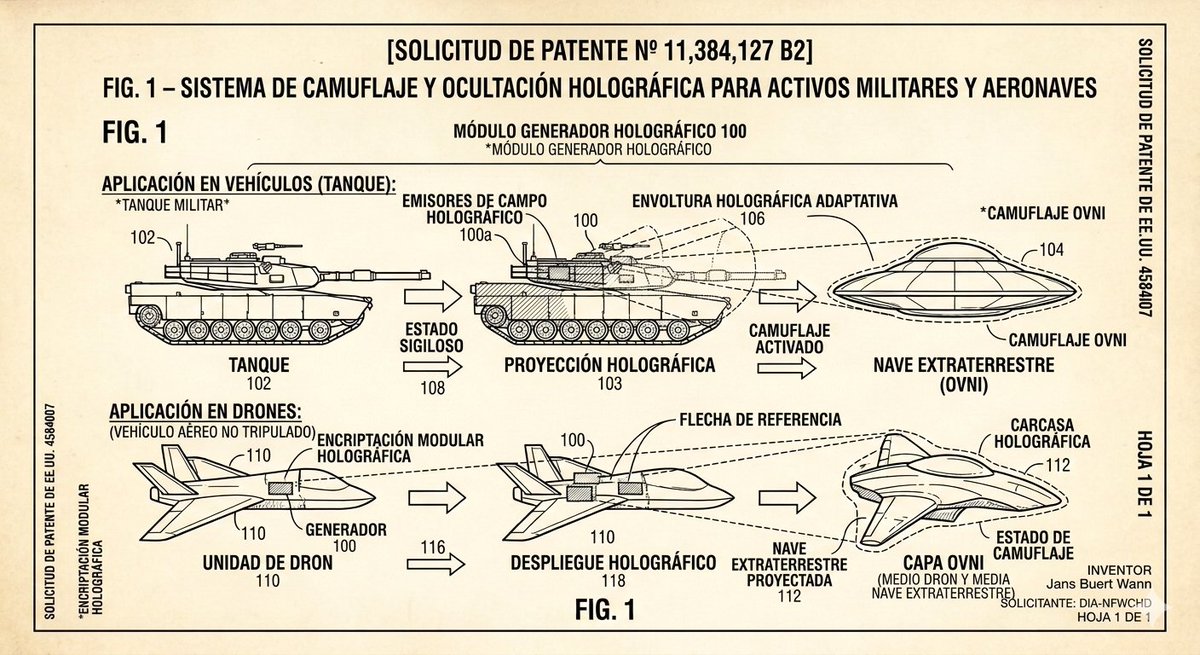
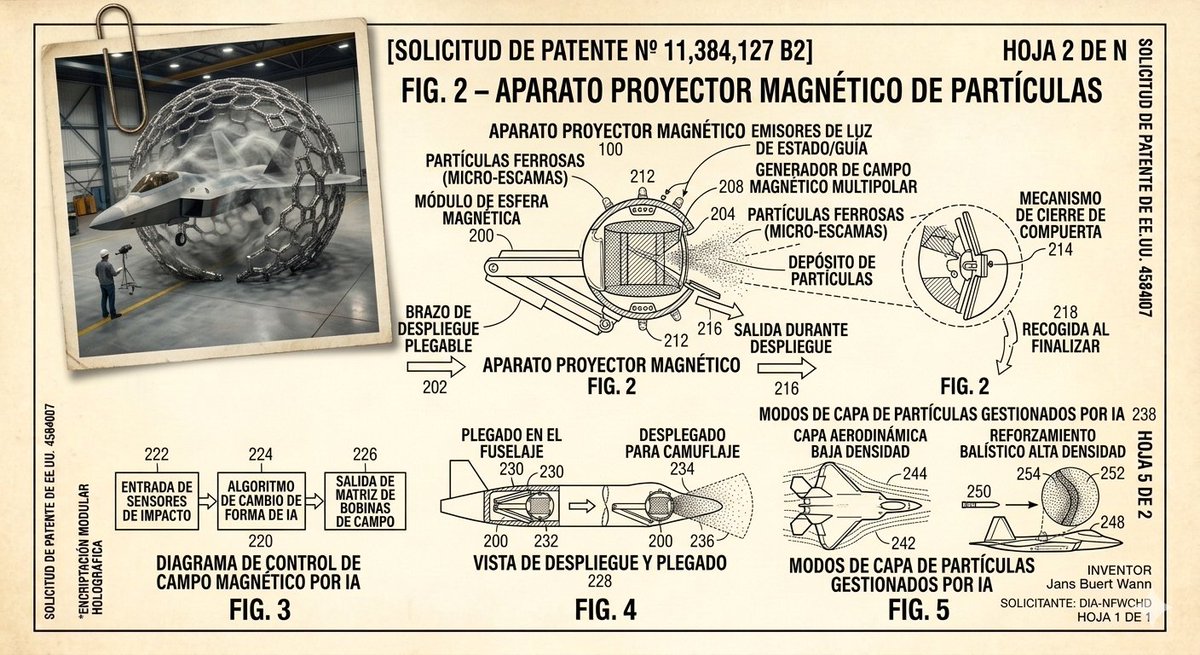
encriptacion modular holografica. // patente pendiente.
vos decís que se me ocurrió solo a mi?
1
2
33

May 8
🦁 EL FACHAÑOL
🔴 #SINURGENCIA | Feijóo pide al Gobierno que se conozca "el nombre de los expertos" que avalan sus medidas ante el hantavirus.
Queda descartada la encriptacion:
INICIAL DE NOMBRE seguida de UN PUNTO.
Ejem:
M.Rajoy
1
3
36

Bueno si tu usas equipos (la Mayoría) con Windows server 7 y todos Ejectutandose a través de maquina Virtual con débiles protocolos de encriptacion cuando se comunican entre sí No puedes esperar mucho
Miren que todavía el BDV usa equipos con WinXP y Programa basado en COBOL🧵

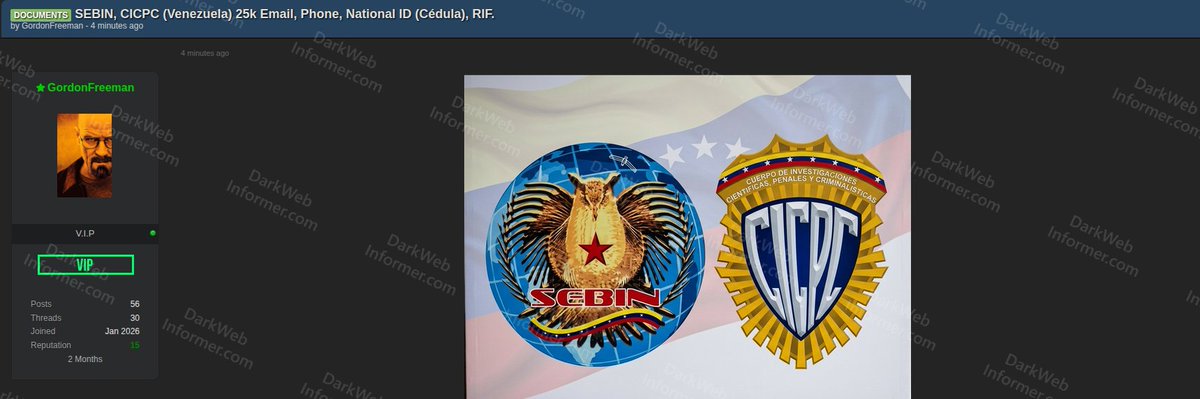
‼️🇻🇪 SEBIN and CICPC, Venezuela's Bolivarian National Intelligence Service and Scientific, Penal and Criminal Investigation Corps, have allegedly had officer roster data leaked for free on a popular cybercrime forum, with approximately 25,000 records covering intelligence and investigative personnel.
⠀
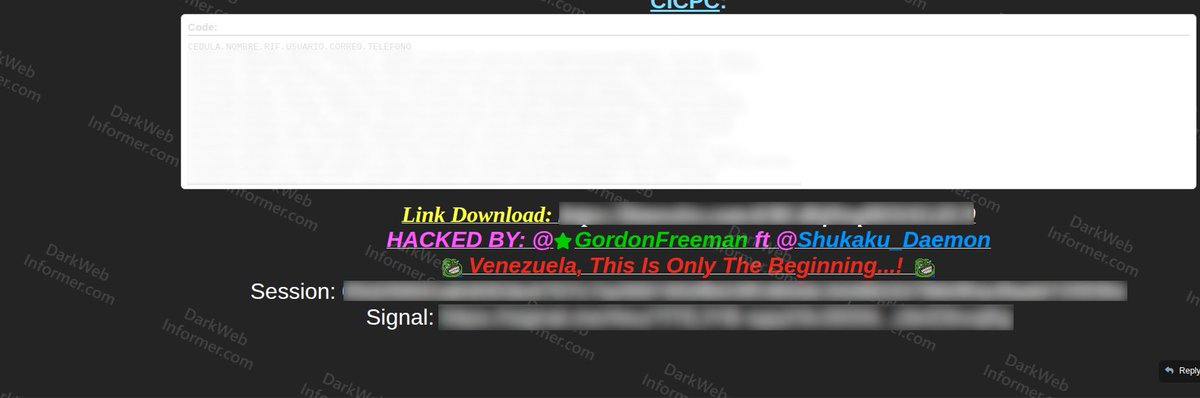
‣ Threat Actor: GordonFreeman (in collaboration with Shukaku_Daemon)
‣ Category: State Security Data Leak / Government Personnel Exposure
‣ Victim: SEBIN and CICPC (Venezuelan state security agencies)
‣ Industry: Government / Intelligence / Law Enforcement
⠀
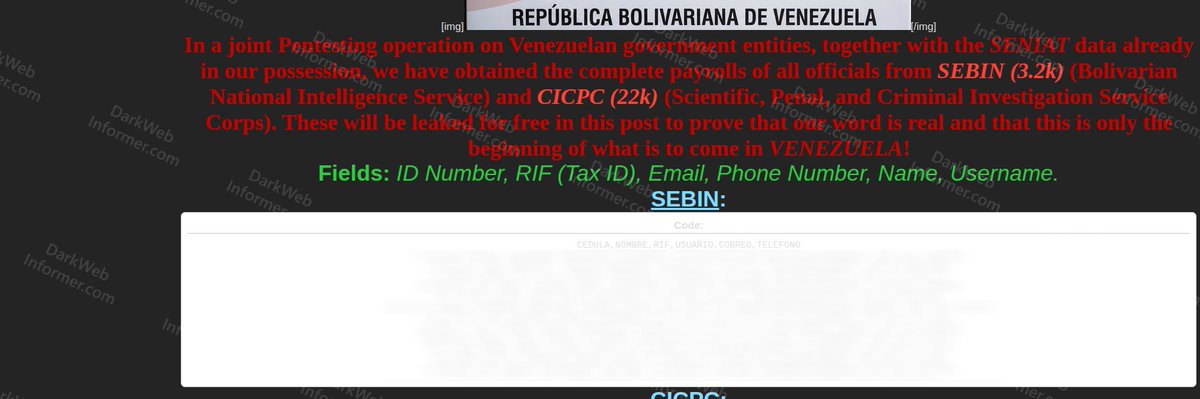
The actors claim the data was obtained during a joint pentesting operation against multiple Venezuelan government entities, building on an earlier compromise of SENIAT (Venezuela's national tax authority). They describe the release as proof of capability and state that further leaks targeting Venezuelan government systems are planned.
⠀
SEBIN (Servicio Bolivariano de Inteligencia Nacional) is Venezuela's primary domestic intelligence agency, while CICPC (Cuerpo de Investigaciones Científicas, Penales y Criminalísticas) is the country's principal forensic and criminal investigation body. Both operate under the Ministry of Interior, Justice and Peace.
⠀
The data release allegedly contains:
⠀
▪️ 3,200 SEBIN personnel records (intelligence service)
▪️ 22,000 CICPC personnel records (criminal investigation corps)
▪️ Total: approximately 25,200 officer records across both agencies
⠀
The exposed fields per record include:
⠀
▪️ Cédula (Venezuelan national ID number)
▪️ Nombre (full name)
▪️ RIF (Registro de Información Fiscal, Venezuelan tax ID)
▪️ Usuario (internal system username)
▪️ Correo (email address, mix of personal and institutional domains including @cicpc.gob.ve)
▪️ Teléfono (phone number, primarily Venezuelan mobile prefixes)
⠀
The sensitivity of this leak is materially higher than a typical personnel dump. For intelligence officers in particular:
⠀
▪️ Named identification of SEBIN personnel undermines operational cover and exposes officers and their families to retaliation from criminal organizations, political opponents, or foreign services
▪️ The cédula plus RIF combination is sufficient to query Venezuelan public and private records for addresses, property holdings, and family ties
▪️ Personal email and phone numbers on named officers enable targeted phishing, SIM swap, and coercion attempts
▪️ For CICPC investigators, the roster can be cross referenced against active cases to identify officers working specific organized crime, narcotics, or political investigations
⠀
Prior SENIAT data is referenced as already in their possession, suggesting a sustained, multi agency targeting effort rather than an opportunistic single intrusion.
3
6
319

Apr 17
Las Notarias, TODAS, son totalmente inservibles . Estamos en la era de la la encriptacion, bases de datos, de lo digital y la bromearía. Todo lo que hacen las notarias lo deberían hacer las alcaldías, gobernaaciones y entes nacionales totalmente digital y precios bajos.
1
12
546

Apr 11
Es que me parece raro que no la hayan hackeados aún. Parece que la encriptacion y seguridad de la consola va más allá. Aprendieron de sus errores con la 1 xD
2
3
883

Mar 24
Instagram elimina la encriptacion para los mensajes
Ahora pueden ver tus conversaciones lo que quiere decir que cualquier empresa que trabaje con ellos tambien
Y tambien los que hackean instagram
Mar 23

Instagram just ended privacy in your DMs because apparently you didn't want privacy anyway.
1
6
358

Da igual quien este al lado.
Si la wifi bien configurada ( por el meme no se sabe ) , la red tendra encriptacion y luego ira a un portal cautivo.
Lo normal seria tener un servidor radius con EAP y desde el administrador se genere las claves y el portal sea las condiciones uso.
6
2,821

Mar 3
Si lo ponias en mas HD capaz se veia hasta la encriptacion de cada pixel no me jodas xD
3
112

Feb 23
Mas importante que eso, EEUU ya espía todas las comunicaciones digitales. Y ni la encriptacion sirve, porque la NSA obliga a los proveedores a incluir backdoors
31
1,087

Feb 17
y si ya quieres algo funcionando que tambien te inspire budget.byteforus.com/ esa es mia personal pero la puede usar quien quiera. Tiene encriptacion desde el usuario no tengo forma ni manera de saber nada de la info.
1
1
5
524
