
Some of the smartest people are also great teachers and explainers
2
30

Every summer, Pakistan’s markets turn shades of green and gold as mango season arrives.
More explainers at #TheExpatStory
#PakistaniMangoes #SummerInPakistan #MangoSeason #FruitLovers
96

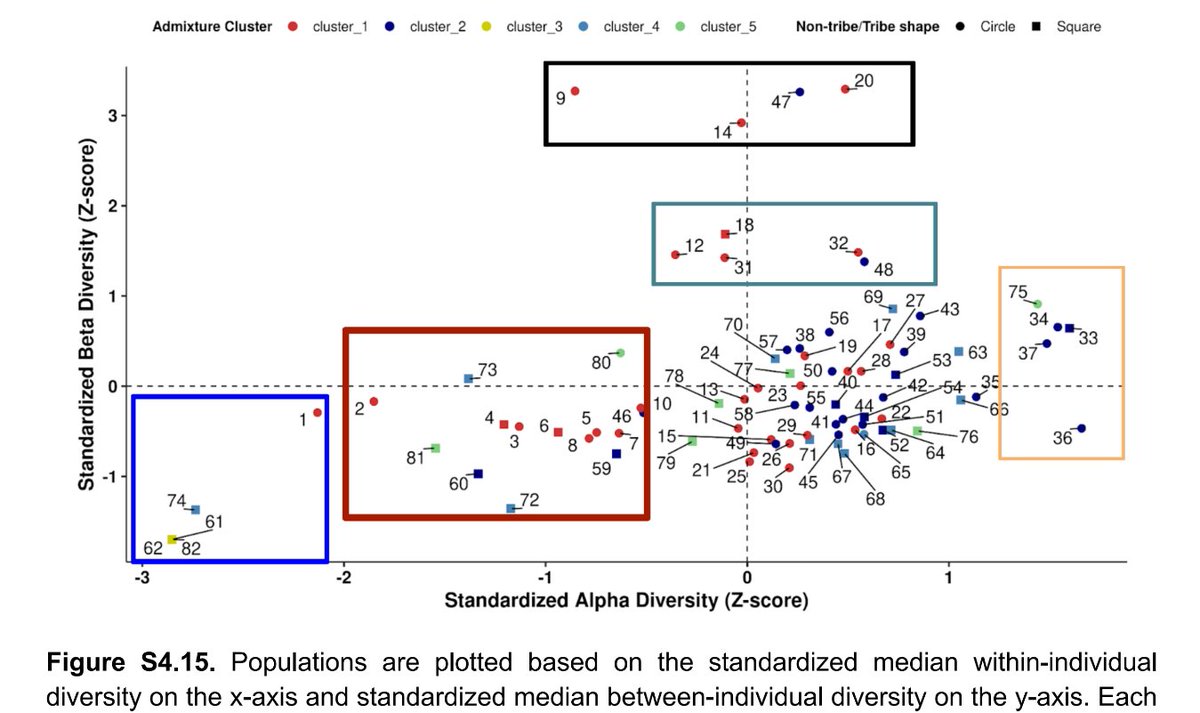
From the GenomeIndia (2026) project, we have one of the clearest explainers of genetic diversity in Indian populations. David Reich made a claim ("it froze due to caste") on the @dwarkesh_sp podcast. The new project provides a prediction model to infer an individual's genetics. And caste is not in the variable mix at all.
6
32
99
5,021

#Reuters_Digital_News_Report_2026
#What_is_in_for_MARATHI_NEWS_Channels?
The _Reuters Digital News Report_ makes one thing clear: audiences are changing faster than newsrooms. For Marathi TV to stay relevant, here’s what has to shift:
1. Think beyond ‘news’ → Think ‘utility identity’
News avoidance is at 39% globally. People feel overwhelmed and helpless. Marathi channels can’t just report problems. Solve them live, track local civic issues end-to-end, become the go-to for MPSC/JEE updates, farm prices, health camps. Be useful, not just loud.
2. Go beyond cliched political debates
Interest in traditional politics coverage is fatigued. The format is repetitive and depressing. Shift the conflict: Tech vs tradition in rural Maharashtra, district-level economic rivalries, the business of festivals. Find friction that matters to daily life.
3. Invent new storytelling formats for a ‘platform reset’ world
Facebook’s decline for news continues. 6 platforms now reach 10% of users vs 2 a decade ago. If you’re still shooting 16:9 and cropping badly for Reels, you’ve lost. Start vertical-first, data-led explainers. Ai videos for tv???
4. Bring digital buzz to TV — don’t just dump TV on digital
Younger audiences get news from creators, not channels. In France, HugoDécrypte hits 22% of under-35s on YouTube/TikTok. Marathi channels need a ‘Creator Collab Desk’. Let Pune’s finance creators or Nagpur’s history nerds do 3-min explainers on air.
5. Make TV likeable for youth: speed, faces, respect
News interest has stabilized in some markets, but only when it feels relevant. Kill the 10-min panel intro. Hire anchors under 30 who sound like their audience. Clean UI, not 2005-era red Breaking News strips. And respect time: “3-min summary” at the top of every hour.
6. Make our tv reporters digital/multimedia ready
I see a major gap of skills for the tv reporters. They need to adapt fast with changing storytelling formats. Gone those days of boom in hand and do the wkts and tictacs and as if audience does’nt have options! (Must I note that anchors from almost all Marathi news channels are experimenting with digital media formats and seems serious about their online presence and output)
The bottom line from Reuters:
Trust is fragile, platforms are fragmenting, and influencers are the new front page. Marathi news can’t compete with Arnab clones anymore. You’re competing with the viewer’s For You page.
What formats would _you_ kill or keep on Marathi TV?
#MarathiMedia #DigitalNews #Journalism #ReutersDNR #Broadcast

103
Zenith retweeted

VEED Fabric 1.0💥
Create hyper-realistic AI explainers and educational videos in seconds
• Up to 5-minute videos
• Blazing-fast rendering
• Starting from $0.08/sec
API live on @fal too
Comment "Fabric" and we'll DM you the access link.
24
11
63
3,477

4h
the way that site uses interactive visuals to explain mechanics is rare
clear technical explainers like this are harder to make than they look
1
698

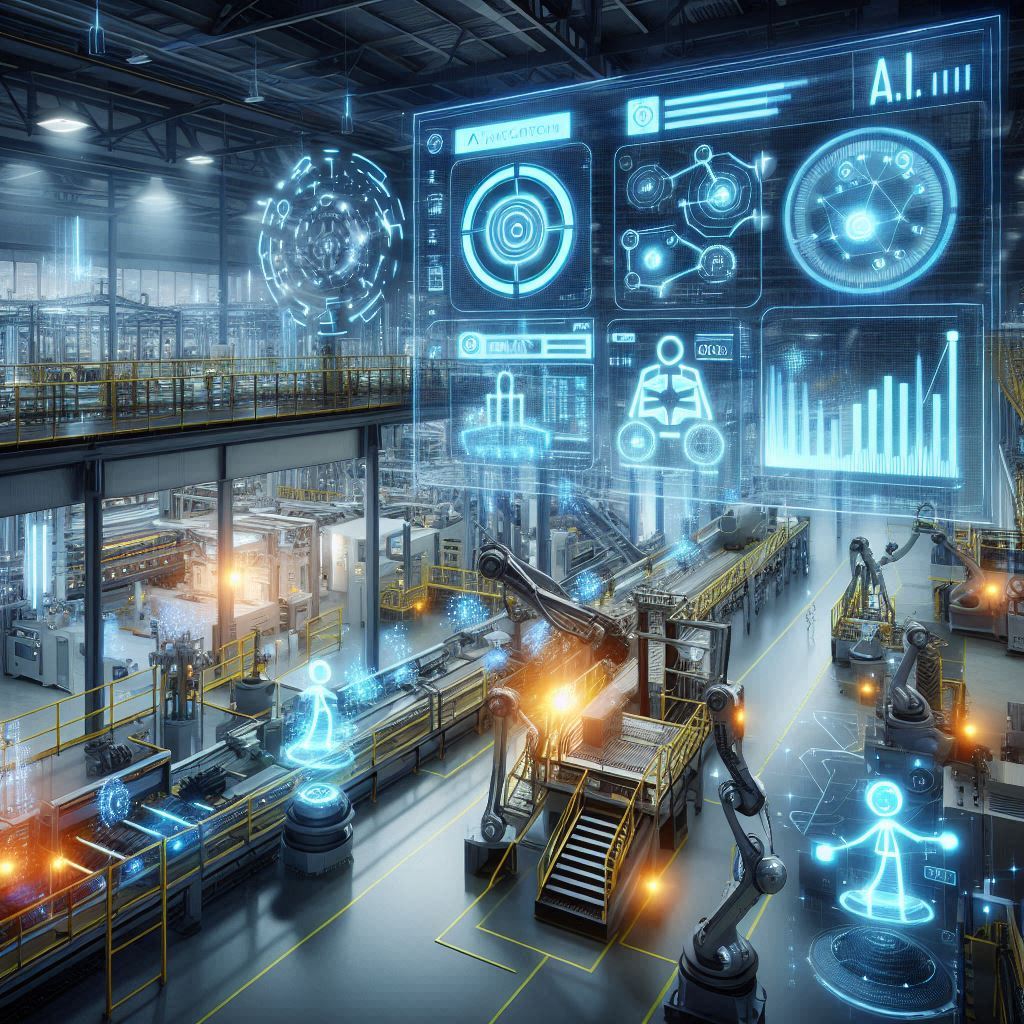
Stop buying another AI license and hoping a no-code platform will magically solve everything. Real progress comes when AI learns both your data AND the practical expertise locked inside your team’s experience. byteLAKE’s Q2 2026 update delivers exactly that through smarter Feature Engineering and Advanced Explainers that make the invisible visible. Give your people tools that work with them — not around them. Case study details here: bytelake.com/2026/03/25/q2-2… #MaintenanceTech #DataDrivenDecisions
3

Everyone needs to urgently write yo their MP.
Dear [MP Name],
I am writing as a constituent to express my concern about the proposed inclusion of YouTube in the list of platforms affected by the planned under-16 social media restrictions.
I fully support the objective of protecting children from online harm. Social media can clearly expose young people to addictive design, bullying, harmful content, inappropriate adult contact, unrealistic social comparison, and excessive screen time. I do not dismiss those risks. However, I am concerned that including YouTube in a broad platform ban is disproportionate, overbroad, and likely to create unintended consequences.
YouTube is not simply an entertainment or social media platform in the same way as many short-form social apps. It is also one of the world’s largest informal learning platforms. Young people use it for GCSE revision, coding tutorials, science explainers, language learning, music lessons, maths support, sports coaching, practical skills, university lectures, careers information, and teacher-created educational resources. While YouTube’s commercial model certainly has problems, particularly around attention retention and recommendations, the platform also contains substantial educational and public-interest content.
A blanket ban risks removing access to these legitimate uses rather than targeting the actual sources of harm. In my view, that is poor policy design. The better approach would be to regulate the harmful mechanics: addictive recommendation loops, autoplay, infinite scroll, targeted advertising to minors, weak privacy defaults, inappropriate adult contact, harmful content amplification, and inadequate moderation. Those are the features that cause many of the problems, not the mere existence of educational video content on a large platform.
I am also concerned about the civil liberties and privacy implications of enforcing such a ban. To determine whether someone is under 16, platforms may need to age-check all users, including adults. That risks normalising a new layer of identity verification for ordinary internet access, potentially involving ID checks, facial age estimation, parent-linked accounts, or digital identity systems. This should not be treated as a minor technical detail. It is a significant change in the relationship between citizens, private technology companies, and the state.
There is also the practical question of effectiveness. Young people are highly likely to work around broad restrictions through VPNs, false dates of birth, older siblings’ accounts, parent logins, cloned apps, or less regulated platforms. If that happens, children may be pushed away from mainstream platforms with at least some moderation, reporting tools, parental controls, and safety infrastructure, and towards less visible spaces where parents, schools, regulators, and responsible companies have less oversight. That would be a poor outcome.
I am especially worried that a ban may give parents and policymakers a false sense of security. The core problem is not simply that children can access named platforms. The deeper problem is that many platforms have been designed around maximising attention and engagement, even when that conflicts with children’s wellbeing. A policy that blocks access to a list of platforms may look decisive, but it does not necessarily address the underlying design incentives.
I would therefore urge you to oppose the inclusion of YouTube in any blanket under-16 ban, or at minimum to press for a much more carefully targeted approach. This could include:
1. Stronger age-appropriate default settings for minors
2. Restrictions on targeted advertising to children
3. Limits on addictive recommendation systems and autoplay for young users
4. Stronger controls on adult stranger contact
5. Better parental control tools at platform and device level
6. Greater transparency over recommendation algorithms
...
1
31

Discover the origins behind airline names. Why some are “airlines,” others “airways,” and a few just “air.” This video traces how ships, trains, and early aviation shaped the terms we see on aircraft today. Watch the explainers and insights. simpleflying.com/video/the-o…
7

🌱 7. Community-first content strategy
When I win rewards, I don’t stop at “I won.”
I turn it into content.
Vietnamese guide.
English guide.
Screenshots.
Step-by-step instructions.
Tips for OG users.
Tips for newbies.
Reminders for deadlines.
Simple explainers for XP, quests, bounties, referrals, clans, and leaderboard.
Because many users want to join but feel confused at the first step.
If we make the journey easier for them, we are not just earning XP.
We are growing the ecosystem.
That is the Vanguard spirit.
1
13

HERMES AGENT CAN CREATE VIDEOS.
NOT WITH AN API CALL.
IT WRITES THE CODE, RENDERS THE SCENES,
AND STITCHES THEM INTO AN MP4.
the video attached to this post
was generated by Hermes Agent using manim-video skill.
three bundled video skills most people skip:
1. MANIM VIDEO
3Blue1Brown-style animated explainers.
algorithm visualizations, equation derivations,
architecture diagrams, data stories.
the pipeline:
PLAN → CODE → RENDER → STITCH → AUDIO → REVIEW
Hermes writes a plan.md with narrative arc
and scene list. then codes a Python script
with one class per scene. renders each scene
through Manim CE. stitches clips with ffmpeg.
adds voiceover if you want it.
requirements:
→ Python 3.10
→ Manim Community Edition v0.20
→ LaTeX (texlive-full)
→ ffmpeg
→ no GPU needed
draft quality: manim -ql script.py
production quality: manim -qh script.py
2. HYPERFRAMES
complement to manim-video.
use manim for math and algorithms.
use hyperframes for everything else:
motion graphics, talking-head with captions,
product tours, social overlays, shader transitions.
HTML is the source of truth.
GSAP timeline for animation.
CSS for appearance.
HyperFrames engine captures frame-by-frame
and encodes to MP4 or WebM with ffmpeg.
3. KANBAN VIDEO ORCHESTRATOR
this is the advanced play.
a multi-agent video production pipeline
backed by Hermes Kanban.
it creates profiles for each video role.
a director profile decomposes the project
into kanban tasks. renderer profiles
pick up scenes and produce them.
the orchestrator decides which skill fits each scene:
manim-video for math, hyperframes for motion graphics,
p5js for generative art, blender-mcp for 3D,
ascii-video for terminal aesthetics.
one prompt. multiple agents. one final video.
HOW TO USE:
enable any of these:
/skills search manim
/skills search hyperframes
/skills search video
or ask directly:
"create a 60-second explainer video
about how the self-improvement loop works
in Hermes Agent. use manim style.
dark background, amber and teal accents."
Hermes writes the plan, codes every scene,
renders, stitches, and delivers an MP4.
you review and publish.
comment MANIM and I'll send you
the exact prompt I used to generate
the video in this post.
full Hermes NIGHT MODE WORKFLOW 👇

7
13
183
14,985

you need to read the code, BUT you can do it in interesting ways if you've a lot of tokens. write very small modular code. get your agent to write good tests and types for those. make HTML explainers creatively for the code
1
1
69

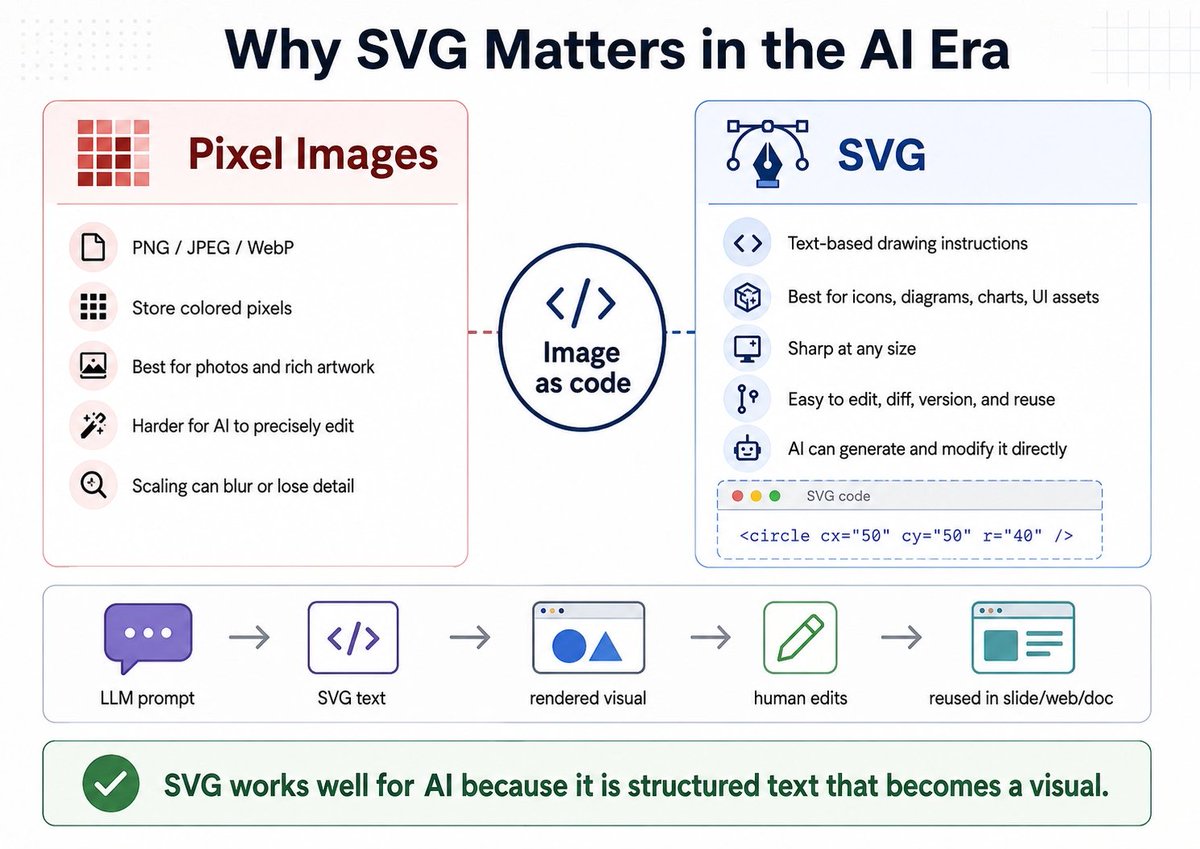
Agents like Markdown files for documents.
They also like SVG files for diagrams and charts.
SVG is taking off in the AI era because it is “image as code.”
PNG and JPEG store pixels. SVG stores instructions.
LLMs are good at structured text. That means they can generate a diagram, modify a label, change spacing, adjust colors, or reuse a visual system without regenerating an entire bitmap.
The best use case is not photorealism.
It is diagrams, icons, charts, UI assets, slide visuals, and explainers.
1
90

I found better pathophysiology explainers on YouTube than what I got in medical school lectures lol
12

I know it’s part of a much longer thread but your gloss on slop-level YouTube explainers ruining a popular understanding of “mysticism” could apply perfectly to these guys and their approach to content lol
1
60

Love the structure you've laid out here, mate. The video skill is definitely doing the job for quick explainers
35

13h
A sleep sounds channel run by a 22-year-old college dropout makes $40K-$60K/month.
Fortune verified it with AdSense screenshots.
Meanwhile, 97% of faceless channels never even reach monetization.
The difference is niche architecture.
I've built and operated multiple automated Shorts channels. Here are the 5 niches quietly printing money in 2026 - and why most people pick the wrong ones. 👇
1. Ambient/Sleep Audio
$10-$20 CPM. Lowest competition of any profitable niche. One 10-hour rain video can earn hundreds per month for years on autopilot. The system: AI-generated visuals, royalty-free soundscapes, looped and uploaded. No scripting. No editing skill needed. The algorithm rewards insane watch time, and people literally leave these running all night. That's 8 hours of average view duration while you sleep.
2. Betrayal & Revenge Narratives
$12.82 RPM - highest on this list. 21x growth rate. AI narration over stock footage, fully automatable. Why it works: 8-15 minute stories keep viewers glued. YouTube's algorithm aggressively pushes high-retention storytelling. Only ~200K channels in this space. That's nothing. A channel called "Revenge With Jake" scaled to serious revenue using this exact format.
3. Finance Explainers (Sub-Niche Specific)
$10-$15 RPM. Advertisers in banking and investing will pay $15-$30 CPM because a single customer acquisition is worth thousands to them. The key: don't do "generic finance." Go micro. "Budgeting for nurses." "Tax strategies for freelancers." "Crypto for retirees." Sub-niche specificity is what separates a channel doing $500/month from one doing $8K.
4. True Crime / 3D Documentaries
A channel called "Fern" does $80K /month producing 3D crime documentaries. No face. No voice. Just cinematic visuals and narration. Horror-adjacent niches pull $6-$12 RPM because the audience is obsessive - they binge at night, driving massive session time. The production bar is higher, but that's the moat. Most people won't put in the work, which is exactly why it pays.
5. English Learning Content
21x year-over-year growth. Global audience with viewers in countries where English education is a premium product. $11.88 RPM for podcast-style formats. The business model goes beyond ads: course affiliates, tutoring referrals, and digital product sales stack on top. This niche is a funnel disguised as a YouTube channel.
Here's what most people get wrong:
They chase views. But a gaming compilation channel needs 5x more views to match a finance channel's revenue. Niche selection is the single largest revenue lever you control. RPM is the architecture of the business. Views are just traffic.
The operators making real money in 2026 aren't choosing niches because they're "easy to automate." They're choosing niches where the CPM justifies the system — then building the automation around that.
I put everything — all 40 untapped niches, the RPM data, the automation workflows, the exact production stacks, prompts and the sub-niche selection framework — into a free ebook.
Like this post and I'll DM it to you. 💌
1
1
65

13h
Whiteboard videos pull millions of views, and one creator builds them in 5 minutes with free tools
A faceless channel runs history and "why smart people fail" explainers. Each one looks hand-drawn, holds viewers to the final second, and costs nothing to produce.
The process: open ChatGPT, paste one prompt, type "generate topic." It returns 20 options. Pick one, set the length to 1 minute, and the script appears. A second prompt splits that script into 10 scenes with an animation prompt baked into each.
Then Google Flow. New project, videos, ingredients, 16:9, 1x. Drop the first animation prompt in, wait, and the first hand-drawn clip renders exactly as written. Repeat for the other 9. Upscale, download.
Back to ChatGPT: "convert the script into a professional voiceover narration script." Paste the result into ElevenLabs, hit generate, voiceover done in seconds.
Final step is CapCut. Import 10 clips and the audio, sync to the narration, apply the Mix transition to all, export.
Three free tools, zero drawing skill, one finished video.

8
41
2,652


I agree just discussing I guess lol yeah they do a really horrible job at translating the text lore into actual stories but yeah I guess because lore explainers who go through All the texts All the artifact sets every drop of lore and explain it so well I kind of just forget..
1
15