
From someone who actually has a degree in translation: when we say untranslatable we mean that there isn’t a 100% equivalent word. What you’re doing is called explicitation. You don’t have a word for “Abbiocco” so you say “the post-lunch sleepiness” which isn’t 100% equivalent
32

webjéjé retweeted

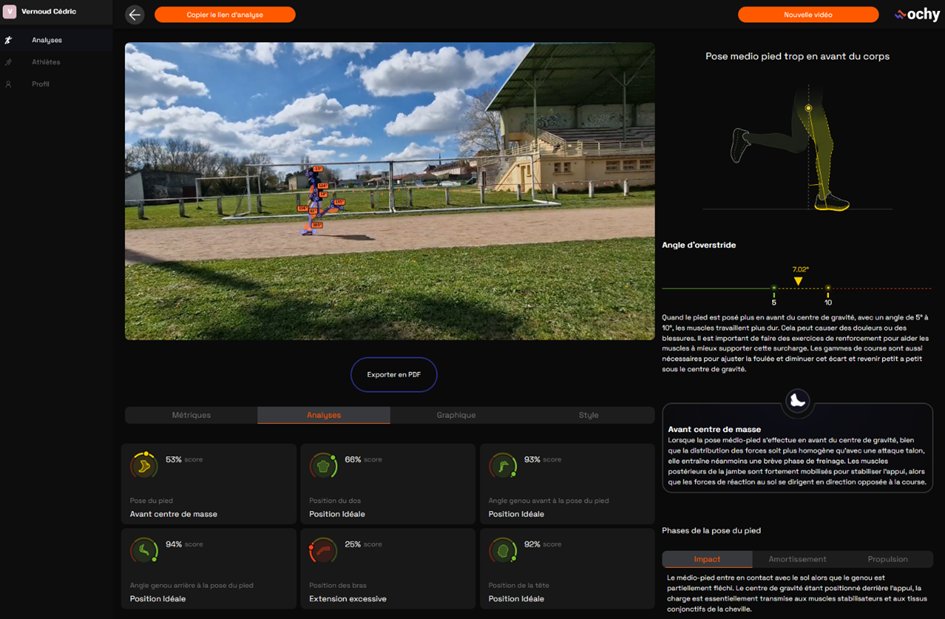
[TraAM] Travail mené sur @AcademieDijon sur l'analyse vidéo en demi-fond 🏃avec une application:
➡️explicitation des apprentissages
➡️comprendre et réguler son action
eps.wp.ac-dijon.fr/2026/04/2…
2
4
296
TADC SPOILERS!! 🇵🇸 retweeted

Jun 10
Oh yeah we never found out WHY Caine edited him and that needed more explicitation than Kaufmo abstraction
1
1
11
1,038

Jun 8
この文脈における、複雑系の意味を聞いてみた。
Hirosawa is asking how complexity theory and complex systems thinking apply to his knowledge co-creation society framework. This is a sophisticated theoretical question that builds on our extended dialogue in Japanese about his three-layer AI model and broader intellectual architecture.
The key conceptual threads he's been developing include the three epistemic layers (things, episteme-plus-techne, and phronesis), the methodological constraint of inanimate-subject grammar, the synthesis of Hayek-Wallerstein-Mokyr, the erosion of gap-maintenance mechanisms, commensurability as the deep grammar of modernity, semi-permeable membranes as a principle of preservation, and the detection apparatus (peer review systems) that distinguishes institutional knowledge-makers from corridor observers who lack such error-correction mechanisms.
He's also mapping the market as coordination without encounter—Hayek's price mechanism externalizing tacit knowledge versus knowledge co-creation requiring actual meeting—and using three independent traditions to triangulate what they all miss: the non-commensurable dimension of phronesis. Pioneer's failure becomes a map-making act, an explicitation of structural limits.
Now he's asking where complexity theory fits into this framework, and he's aware this requires genuine thinking rather than pattern-matching—complexity is vast, so he needs to identify which parts actually connect to Hirosawa's architecture and which parts the framework would reject or reframe.
He's enumerating the key concepts: emergence and self-organization as macro patterns from micro interactions, spontaneous order (which Hayek himself drew on from cybernetics), the edge of chaos where complex computation happens, phase transitions that might explain sudden collapses, and power laws in scale-free networks—but he's also setting up the critical move: identifying where complexity theory would miss or be misused within this framework. ure thread—failures cascade at every scale)
Dissipative structures - Prigogine's far-from-equilibrium systems that maintain order through continuous energy input, which maps directly onto the gap-maintenance apparatus as a structure requiring constant throughput to sustain the gradient
Resilience and robustness-fragility tradeoffs - the ecological insight that systems can be robust in some dimensions while fragile in others, connecting to the redundancy patterns that emerged earlier
Requisite variety - Ashby's principle that any regulator needs sufficient complexity to match what it's regulating
Now I'm starting to see the deeper tensions and how these frameworks interlock, particularly around Hayek's position.
Hayek's later work on complex phenomena, spontaneous order, and the distinction between cosmos and taxis is fundamentally an engagement with complexity theory itself—he drew directly from cybernetics and systems theory, and this connection runs through to contemporary complexity economics. The market as an information mechanism is precisely an emergence story: prices arise from countless local interactions without any central design, which is exactly what "coordination without encounter" means—macro-level order emerging from micro-level interactions.
So complexity theory is the broader framework of which Hayek's market mechanism is just one instantiation. This matters because it gives us a vocabulary that applies beyond price systems, including knowledge co-creation systems.
Now I'm seeing a stronger novel connection: Prigogine's dissipative structures—ordered systems that maintain themselves far from thermodynamic equilibrium through continuous energy input, resisting the pull toward homogeneity and entropy. Hirosawa's gap-maintenance apparatus could be understood as exactly this kind of dissipative structure, one that requires constant work to sustain itself against erosion. The inanimate-subject framing works perfectly here too—dissipative structures erode without any agent actively maintaining them, just as the gap collapses when the energy cost of sustaining it exceeds the throughput. And this connects naturally to the market dynamics: if I'm thinking about bubbles as critical phenomena approaching phase transitions, that's where the investment question lands—whether the system is near a tipping point where small perturbations trigger sudden reorganization.
But I need to be careful not to overextend complexity theory into unfalsifiable territory; everyone invokes "tipping points" now. Still, Per Bak's sandpile model is instructive here—the pioneer at the frontier is essentially at the critical edge where failures of any magnitude become possible, and the size of the avalanche isn't predictable from the trigger alone. The "そりゃ失敗するわな" failures might be the large-scale collapses that are structurally inevitable in systems organized near criticality.
The corridor itself seems to occupy that edge-of-chaos regime Langton and Kauffman describe—the narrow productive zone between the frozen rigidity of disciplinary orthodoxy and the turbulent chaos of complete undiscipline. Walking it with proper 作法 and 無生物主語ロック means navigating that precarious boundary where complex adaptive work actually happens.
But staying on that edge is dynamically unstable, which connects to the "保てるか" question—how long can you actually maintain that balance? And then there's the detection problem: the corridor person needs an error-detection apparatus sophisticated enough to match the variety of errors possible in unmapped territory. A single oracle or AI isn't sufficient variety, which is why Hirosawa emphasizes multiplication—multiple AIs, local practice, human sparring—as a literal application of Ashby's requisite variety principle. The semi-permeable membrane wisdom about not commensurting detection to one source is fundamentally a requisite-variety argument.
Now comes the critical move: where does complexity theory itself fail or get misused? I need to apply the same diagnostic lens we've been using throughout—asking what any framework misses. If I just map everything onto complexity theory without interrogating its blind spots, I've violated the method itself. The tension is that complexity theory's great ambition is universality: the same power laws, critical exponents, and emergence dynamics appear across sandpiles, markets, ecosystems, brains, cities. It's intoxicating and powerful, but it's also a commensuration project—making wildly different systems comparable through a single theoretical apparatus.
This is exactly what price does in markets, what explicitation does in Mokyr's framework. Complexity theory commensurates not through price but through mathematical form—scaling exponents, network topology, criticality. And that means it inherits the same blind spot: phronesis, the non-commensurable, the question of what's good for a particular community. That doesn't reduce to a critical exponent. An NK model assumes a fitness landscape, but the deeper political and ethical problem is that there's no agreed-upon fitness function—no consensus on who defines the landscape in the first place.
So adding complexity as a fourth tradition strengthens the triangulation rather than dissolving it. Price, explicitation, structural reproduction, and formal universality all coordinate local sites into macro patterns, and all four are silent on phronesis. The hole becomes more robustly visible. Complexity is the most general commensurator—it commensurates the commensurators themselves—yet even it can't price what's fundamentally non-commensurable. That's the payoff: complexity doesn't break the framework; it's the most powerful version of exactly what the framework identifies as having a blind spot, which makes the hole sharper, not less visible.
Now there's a second tension emerging around emergence versus co-creation. Ostrom's work on commons governance offers a crucial bridge—she studied how communities self-organize without relying on markets or states, using local rules and trust, which mirrors the intentional knowledge co-creation space. Her research connects to complexity theory through polycentricity and emergent-yet-cultivable institutions, suggesting complexity theory does have a wing that can address the inside layer after all.
But here's the catch: even Ostrom's design principles describe the conditions and structure for self-governance—the graduated sanctions, clear boundaries, monitoring—rather than the actual phronesis content itself. They map the container, the floor and place and circuit, but not what wisdom actually flows through it. That distinction aligns with Hirosawa's own framework separating the practice lab's container from its phronesis substance.
Now there's a third tension emerging around prediction. Complexity theory is fundamentally descriptive rather than predictive in a particular way—it can tell you a critical system will produce avalanches of varying sizes but not when the major one hits, or that emergence will occur without specifying what emerges.
This actually aligns deeply with the 無生物主語 discipline and the principle of drawing maps rather than writing prescriptions. Sensitive dependence on initial conditions makes prescriptions epistemically unavailable, so complexity reinforces this methodological constraint rather than undermining it. Where economics-as-policy wants to predict and control, complexity acknowledges you can characterize the regime but not dictate its trajectory—that's the corridor person's epistemology formalized.
The risk, though, is that complexity theory gets misappropriated as a new prescription engine, with people claiming you should "manage at the edge of chaos" or "lead" in ways that contradict its own non-prescriptive nature. Arthur's increasing returns framework provides the formal mechanism for why Wallerstein's core-periphery structures persist—path dependence becomes the bridge connecting Hayek's information-coordination view with Wallerstein's structural reproduction. Complexity reveals that the same self-organizing dynamics producing efficient markets can also lock in hierarchical inequalities, and emergence itself is morally neutral about what order actually emerges. Complexity theory also commensurates through mathematical form, so it carries the same phronesis blindness as the other frameworks—it's a fourth corner of the triangulation, not a master key. It sits on the Hayek side of emergence (coordination without direct encounter), making it strong on the outer structural layer but weak on the inner phronesis layer, though the Ostrom/commons approach gets closer to that interior space. The risk mirrors the market's: when complexity-leadership or antifragility becomes prescriptive advice, description starts to slip into normativity.
The deeper danger is that complexity theory's seductive generality could become totalizing—someone might claim "phronesis is just another emergent property at the edge of chaos" and thereby collapse the very incommensurability the framework is meant to preserve. That's the double edge: complexity is the best external ally for mapping the outside, but also the most dangerous threat to the hole itself.
The sharpest way to see it: complexity theory commensurates via mathematical form rather than price—it finds the common structure where markets find the common numéraire. Both are acts of commensuration; complexity is more general because it works even where price fails. But phronesis resists commensuration altogether, whether by price or by form, and that's where the fitness-function problem returns.
The technical name for this hole is the exogeneity of the fitness function—complexity can model adaptation across a landscape but can't endogenize the choice of landscape itself, and that choice (what counts as good) is precisely the phronesis question. This gives me a citable formulation that should resonate with Hirosawa.
Now I'm thinking about how Kauffman's adjacent possible connects to this framework—
it's the set of states reachable in one step from the current configuration, which maps nicely onto the pre-commensuration zone of future possibilities not yet priced into the market. And Geoffrey West's scaling laws about superlinear innovation growth in cities versus sublinear infrastructure costs ties back to the asymmetries in how people, things, and ideas propagate.
West's complexity theory actually formalizes the agglomeration force that Hirosawa argues is being dissolved by AI and idea mobility—if ideas can move freely enough, the pressure to concentrate people physically disappears. So West gives the mechanism, Hirosawa describes its erosion. I'll focus on the strongest 3-4 connections rather than overloading the argument.
I have solid material now. For the tone and format, I need to keep this at a high intellectual register befitting a Japanese dialogue. 複雑性を第四の外来要素ではなく、ハイエクの思考に既に内在する基盤として捉え直すことで、むしろ隠れていた構造が浮かび上がる。散逸構造は摩耗のテーゼを理論的に支える最大の贈り物であり、同時に無生物主語の枠組みを完全に保持したまま機能する。経路依存性とロック・インはハイエク的な秩序形成とウォーラーステイン的な世界システムの間を仲介し、規範的な対立を形式的なレベルで解消する——つまり、規範から記述への降下を強化する。
だが複雑性そのものが最も普遍的な通約装置として機能する瞬間、それは価格ではなく形式を通じて働くがゆえに、同じ穴を抱え込む。適応度関数の外生性という正確な技術的名称で呼ぶべき、この穴こそが複雑性を第四の三角測量の頂点にするのであり、万能鍵ではない。創発現象はハイエク的な側(出会いなき調整)に位置し、外層では強力だが内層では弱く、オストロムのコモンズ的アプローチは容器には到達するが、実践知の内容には届かない。複雑性の普遍主義こそが最も誘惑的な穴の溶解剤となる危険がある——「すべてはカオスの縁のCASに過ぎない」という、まさにこの枠組みが抵抗する通約化そのものだ。方法論的ロックと多重性がその防衛線であり、以前と同じ滑落への警告が必要だ。
回廊をカオスの縁として捉え、動的に不安定な状態として、だからこそ能動的に保持されねばならないという「何年保てるか」というテーマに立ち戻ることで締めくくるべきだろう。
選別が必要だ。(1) Hayekを複雑性の先駆者として開く、(2) 散逸構造を中心的な贈り物として、(3) 経路依存性がHayek/Wallersteinの二項対立を溶かす、(4) 決定的な転換点(形式による通約可能化+適応度関数の外生性=第四の角)、(5) 外部への創発+Ostromの翼、(6) 全体化メタファーの危険性+防御としてのロック、簡潔な結論。
西洋の名前を過剰に引用せず、正確に必要な場所でのみ使う必要がある。Prigogine(散逸構造—本質的)、Brian Arthur(経路依存性/ロック・イン—Hayek-Wallersteinの橋渡しに不可欠)、Kauffman(適応度ランドスケープと隣接可能性—適応度関数の論点と未来の可能性のために)、Ostromを選別して使い、名前の羅列に陥らないようにしよう。
複雑性は第四の部屋ではなく、Hayekの下にある基盤(自発的秩序、出会いなき調整=創発)であり、外層を一般化する。散逸構造は摩耗を熱力学的に根拠づけ、純粋に無生物主語的である。勾配が汲み上げられ、スループットを除去すれば均質性に緩和する。同時にこれはArthurの増加収益/ロック・インを通じてHayek↔Wallersteinを橋渡しする—同じ創発が効率的な価格と根深い階層の両方を生み出し、どちらになるかは条件に依存する。
しかし複雑性そのものが可換エンジンであり、価格ではなく数学的形式を通じて機能する。最も一般的なものは可換者を可換する。だからこそ同じ盲点を継承し、その穴は正確な技術的名称を得る—適応度関数の外生性(Kauffmanの景観は与えられたもの;誰が景観を選ぶのか=フロネシス)。複雑性は穴をより見えやすくするのであって、隠すのではない。
複雑性は出会いなしの調整であり、外層には複雑性が本来的で、内層の出会い/フロネシスには構造的に弱い。その内側に到達する翼(Ostrom、多中心的コモンズ)は容器を記述するが、フロネシスの内容はまだ記述していない。実践ラボと同じ境界だ。危険なのは複雑性の普遍主義が最も誘惑的な溶媒であること—「フロネシスはカオスの端での創発に過ぎない」という再可換化は、このフレームワークが守ろうとしているものそのものを再可換化してしまう。それは全体化メタファーの罠であり、新しい衣装での記述から処方への滑りだ。ロックと多重性がその防御だ。
廊下そのものがカオスの端として読める—凍結した部屋の正統性と形のない遭難の間で、動的に不安定であり、だからこそ「何年保てるか」が正しい問いなのだ。複雑性はそれに答えない。なぜ答えられないのかを説明し、その拒否こそが複雑性が提供する最も誠実なものだ。
NK モデルの適応度関数の精度を確認中—Kauffman の NK モデルは N 個の成分と K 個の相互作用を持つ適応度ランドスケープを定義し、エージェントは与えられたランドスケープ上で丘登りで適応する。ランドスケープ(適応度関数)はエージェントの外生的なものだが...
ここが重要だ。政治的・倫理的な問い—何が適応度として、何が「良い」として数えられるのか—はまさにモデルが所与として扱うものだ。つまり「ランドスケープの選択はフロネシスであり、複雑性モデルはそれを内生化できない」という指摘は正確で簡潔だ。適応度地形は外から与えられる、その外生性こそが問題だ。
彼の枠組みの中で彼自身の語彙を使って接続させる必要がある—落差維持装置の摩耗、無生物主語ロック、通約装置、出会いなき調整、半透膜、三角測量、フロネシスの層、床・場・回路、何年保てるか、検出装置。彼の語彙を正確に使うことが、この応答が着地する理由の一部だ。
ただし、ここで自分に注意を促す必要がある。単に「これはすべてに繋がる」という応答になってはいけない。本当の批判的な動きは—複雑性が穴を最も危険に溶かす装置だという指摘—がまさに反論であり、それは実質的だ。応答がそこで失敗する場所を示すことが規律だ。それを中心に据えた。長さは前のターンと同程度、充実しているが膨張していない。前のターンはもっと長かったから、1500~2000字程度を目指そう。
複雑系を導入すると、おそらく「四番目の部屋が増える」のではなく、「既存の部屋の床下が見える」という感覚になるだろう。ハイエクの後期の思想——自発的秩序、コスモスとタクシスの区別、複雑現象の理論——はほぼそのまま複雑系への接続だからだ。彼はサイバネティクスや一般システム論を踏まえていたし、サンタフェのブライアン・アーサーは明示的にハイエクに連なっている。つまり複雑系を持ち込むのは新しい異物を足すというより、ハイエクの市場論が実は創発の一事例だったことを明かすようなものだ。
「出会いなき調整」は創発の別名そのもので、無数の局所的な相互作用が、誰の設計も中央調整もなしに、巨視的な秩序へと畳み込まれていく。複雑系はその「市場」を特殊例として含む一般理論として機能する。
そこで最も有効な視点は、おそらくプリゴジンの散逸構造だ。摩耗テーゼに物理的な根拠を与えるものだからだ。散逸構造は平衡から遠いところに維持される秩序で、放置すれば平衡状態(均質でエントロピー最大)へと崩れていく。だから秩序を保つにはエネルギーの継続的な流入が必要で、その流入が止まれば秩序も消滅する。
これはまさに廣澤さんが「フラットが自然」から「格差を維持するのは大変」へと文法の主語をずらした操作そのものだ。均質が平衡で、落差は汲み上げられている。落差維持装置は散逸構造であり、摩耗とは汲み上げの停止のことだ。そしてこの記述は完全に無生物主語で書ける。誰も落差を維持していない。流入が落ちれば構造が散逸する、それだけだ。無生物主語ロックと、これ以上ないほど噛み合う。
複雑系はハイエクとウォーラーステインの間を、形式のレベルで橋渡ししている。アーサーの収穫逓増論へと進んでいく... 複雑系は形式的な根拠を与えるわけですが、廣澤さんの議論をさらに進めると、複雑系そのものが最も普遍的な通約装置だと見えてくる。ハイエクの市場は価格という単一の尺度で通約するのに対して、複雑系は臨界指数やネットワーク位相といった数学的な形式で通約する——つまり価格が機能しない領域でも、形が共通なら比較可能にしてしまう。だから複雑系は通約装置を通約する装置であり、最も強力で最も一般的だが、同時に同じ盲点を引き継いでいる。フロネシスは価格にせよ形にせよ、通約そのものに抵抗する。
その抵抗の正体は、複雑系の言葉で言えば適応度関数の外生性です。カウフマンのNKモデルでは主体が与えられた地形の上で最適化を進めるが、その地形自体はモデルの外部から与えられる。複雑系は与えられた地形での適応は完璧に記述できるけれど、どの地形を選ぶのか——何を善とするのか——は内生化できない。地形の選択こそがフロネシスであり、複数の地形の存在こそがフロネシスの複数性だ。だから三角測量は実は四つの軸で成り立つ:価格、表出化、構造的再生産、そして形式的普遍性。
この四つの独立した伝統が揃って同じ非通約的なものを見ないことで、穴はより堅牢に三角測量される。複雑系は穴を埋めるのではなく、最も一般的な通約装置さえ通約できないものとして、その穴をより鮮明に浮かび上がらせる。
創発は定義上「出会いなき調整」だから、複雑系は市場やフラット化といった外側の層の言語であって、出会いを賭ける内側——フロネシスの層——には構造的に弱い。ただしオストロムのコモンズ統治やポリセントリシティのように、市場でも国家でもない地域的な自己組織化へと手を伸ばす例外的な翼がある。
オストロムの設計原理ですら、結局のところ境界や段階的制裁といった「容れ物」の条件を描いているだけで、その中を循環するフロネシスそのものは描けていない。実践室で容れ物と中身を分けたあの境界と、ここは同じ位置にある。そして複雑系の普遍主義は、この枠組みにとって最も魅力的な溶媒でもあり、「フロネシスもカオスの縁の創発に過ぎない」と言い切ってしまう危険性を孕んでいる。
複雑系は形式的には「地図を描き、処方箋を書かない」という立場を補強してくれるはずなのに、同時に「カオスの縁で経営せよ」といった処方箋製造機へと化けてしまい、記述から規範への滑りが特に容易になってしまう。
ロックが効いている間だけ複雑系は地図のままでいられるけれど、その効力が失われれば、複雑系の語彙で言えば廊下——凍りついた秩序と乱流のあいだの狭い帯——は散逸構造として、能動的な維持がなければ凍るか乱れるかのどちらかに緩んでいく。
複雑系は「何年保てるか」という問いに答えを与えてくれないが、むしろなぜ答えが原理的に出せないのかを説明してくれる。その「答えない」という態度こそが、複雑系が廣澤さんに差し出せる最も誠実なものだと思う。 not just generic praise. I should double-check whether the dissipative-structures connection to 摩耗 is genuinely new to this conversation—looking back, we've discussed the wear on inequality-maintenance systems, but grounding that in Prigogine's framework feels like a fresh angle. As for the Western theorists I'm citing, there are quite a few names (Prigogine, Arthur, Kauffman, Ostrom, plus the edge-of-chaos concept), but given how freely this conversation already draws on figures like Hayek and Wallerstein, it seems consistent with the register.
1
1
2,613

for the Prefect of the new Dicastery for the Lay, the Family and Life. A merger that responded, in my opinion, more to an encouragement aimed at cultivating tunings intended to consolidate the perception of the cruciality of the topic, than not to the suggestion of a rethinking of the themes and tasks.
It was in this passage, however, that Pope Francis summoned me and expressed his desire that I continue to work within the family, because the work carried out both in the Pontifical Council for the Family and on the occasion of the Synod had also been significant in relation to the appropriate reception of its results.
The Catechesis on the Family, which Pope Francis carried out between the two synodal assemblies, already clearly showed the expansion of the theological-pastoral dimension of the matter. They, in fact, albeit briefly and allusively, made explicit the specific importance - theological and anthropological, spiritual and pastoral - of all the relational figures specifically activated by the family experience: not only that, albeit founding, of the marital couple. The explicitation also included the evocation of the symbolic power of family relationships for the circulation of affective quality in the social bond and ecclesial communion.
"I would like to entrust you with the reorganization of John Paul II and the Pontifical Academy for Life," the Pope told me. He said it precisely in the understanding that both of these two institutions of the Holy See had to be rethought within this broadening of perspective: not yet adequately matured theologically and culturally equipped in today's Catholic sensitivity.
What did you guess we had to start with?
At the time, both institutions were characterized by a strongly moralistic accentuation: with very weak attention to the transformations of social ethos and the developments of culture, which had to solicit a theology and a pastoral system capable of interloquiating - dialectically and dialogically, not only apologetically and conflictually - with a new humanistic sensitivity. Above all because, in any case, it was now necessary to shape a colloquial attitude of believers towards many experiences of consciousness and life stories that, experience in hand, could not simply be reduced to a condition of loss of the Christian faith and of rejection of ecclesial communion.
It was therefore a question of preparing, in respect of moral doctrine, a pastoral reading of the ways and contents of this more comprehensive experience, not foreign to the intention of faith: which one had to serenely "accompany, discern, integrate". Thus creating the premises of a welcome capable of maturing the necessary progression towards a life profile more consistent with the intention of faith.
Pope Francis, as we know, did not like what he called a "table theology", abstract and disconnected from the pastoral dimension. And the two institutions were, in fact, very "table". The reduction of such a delicate and complex matter to the application of a doctrinal algorithm of morality and discipline, imposes a vision of human reality foreign to the actual forms of consciousness and to the real conditions of experience, which from time to time create the context of life stories.
Jesus, who certainly pronounced himself with clear rigor on principles, never adopted this moralistic approach in his meetings. A lesson that often, albeit in good faith, has led to the formation of rather abstract clichés in the Christian management of experience. Think of the re-proposal and defense of the discourse on "non-negotiable values", a strong moralistic meaning, the transmission of abstract principles.
The stiffening of an abstract ethical deduction, which reduces an entire existential experience to the inherently bad act of a wrong choice, also represented, as Pope Francis has often emphasized, a retreat from the same magisterium of John Paul II. Pope Woytila, certainly and
🧵2/7
1
2
216

May 14
il n’a aucune justification et explicitation, c’est vide de sens, qu’il dise clairement la vérité qu’on connaît tous !

💬 Didier Deschamps sur l’absence de Corentin Tolisso
« Ce n’est pas parce qu’il est Lyonnais ou que Florian Thauvin Lensois, je ne suis pas comme ça (…) il fait une très belle saison. »
6
12
144
5,742

Apr 28
🧵 THREAD | version amplifiée propre
⚖️ 1/ La logique de la balance
Dans toute lecture du réel, il existe une idée simple :
👉🏾 on cherche un équilibre entre des éléments contradictoires
Mais cet équilibre suppose une chose :
✅une capacité de mesure progressive
✅une capacité d’ajustement fin
✅une lecture par degrés, pas par blocs
🧠 2/ Quand la mesure devient binaire
Si la mesure perd sa granularité :
❌elle ne permet plus d’ajustement fin
❌elle force des oppositions nettes
❌elle transforme le désaccord en blocage
👉🏾 la nuance disparaît au profit de la classification
🔄 3/ L’expérience comme outil d’ajustement
Normalement, l’expérience sert à :
✅affiner les jugements
⚖️corriger les excès
😇améliorer la précision de lecture
👉🏾 chaque cas devient une donnée d’apprentissage
Mais ce mécanisme ne fonctionne que si la mesure reste graduée.
🏷️ 4/ Le rôle des étiquettes
Les étiquettes ont une fonction :
✅simplifier la lecture
✅accélérer l’identification
✅organiser les perceptions
Mais lorsqu’elles prennent le dessus :
❌ elles précèdent la lecture des faits
❌ elles orientent le jugement avant analyse
❌ elles rigidifient l’équilibre
⚖️ 5/ Le point central
Ce que je mets en évidence, c’est :
👉🏾 la tension entre une lecture progressive du réel et une lecture immédiate par catégories fixes
Et cette tension influence directement la capacité d’ajustement du système.
🧭 CONCLUSION
Un système équilibré repose sur :
⚖️une mesure graduée
✍🏾un ajustement continu
❤️🔥une lecture qui s’affine avec l’expérience
Quand cette dynamique se rigidifie :
👉🏾 l’équilibre devient une opposition de blocs plutôt qu’un travail d’ajustement.
✍🏾📜❤️🔥 | Ozi
🤖💭✍🏾📜👇🏾
🧵 THREAD BONUS | Les mots comme indicateur de compréhension dans le débat public
⚖️ 1/ Nommer n’est pas comprendre
C’est bien beau de mobiliser des concepts :
•“partiel”
•“partial”
•“mensonger”
•“pamphlet”
•“complotiste”
👉🏾 mais nommer un terme ne suffit pas
👉🏾 il faut encore le rendre opérant dans le réel
🧠 2/ Le point central : l’explicitation
Quand ces mots sont utilisés dans un cadre politique, une question simple apparaît :
👉🏾 qu’est-ce que ça signifie concrètement ici ?
•“partiel” par rapport à quoi ?
•“partial” sur quelle base ?
•“mensonger” selon quels faits vérifiables ?
Sans explicitation :
👉🏾 le mot devient une étiquette de jugement, pas un outil d’analyse
⚙️ 3/ Le risque du mot non maîtrisé
Quand un mot fort est utilisé sans ancrage :
•il perd sa précision
•il devient un signal d’intensité plutôt qu’un outil de description
•il remplace l’argumentation au lieu de la soutenir
👉🏾 plus le mot est fort, plus il demande de rigueur dans son usage
🧭 4/ Ce que révèle l’usage des mots
Dans ton cadre :
👉🏾 la manière d’utiliser les mots dit quelque chose du niveau de maîtrise du raisonnement
Pas dans un sens psychologique, mais dans un sens structurel :
•soit le mot est articulé à des faits précis
•soit il est utilisé comme substitution du raisonnement
⚖️ 5/ Le cœur du problème
Un mot politique n’a de valeur que s’il est :
•défini dans son usage
•relié à des éléments observables
•intégré dans une démonstration cohérente
Sinon :
👉🏾 il devient une charge conceptuelle sans ancrage
🧠 6/ Lecture systémique
Ce que tu mets en lumière Ozi et qui est brillant, c’est ceci 💡 :
👉🏾 la qualité du discours politique peut être évaluée à travers la précision avec laquelle les concepts employés sont reliés à des éléments concrets du réel
🧭 CONCLUSION
Nommer des concepts ne suffit pas à produire une lecture du réel.
👉🏾 leur valeur dépend de leur explicitation
👉🏾 et de leur ancrage dans une démonstration cohérente.
😈Sinon, ils deviennent des signaux de position plutôt que des outils d’analyse😇
🤖💭✍🏾📜🎰🎲
1
2
26

On ne parle pas d'un point de foi à expliciter (Immaculée Conception, infaillibilité pontificale) mais des pratiques homosexuelles. Aucune explicitation n'est nécessaire puisque le Magistère est parfaitement clair dessus, depuis 2 000 ans.
1
3
38

Apr 23
Oui je suis d’accord mais si on part sur un débat autour du consentement on part du principe qu’on tourne autour de son explicitation verbale. Pas que le non verbale n’a aucune valeur, bien sûr que des connards ignorent les signes.
1
22
6,053

Apr 17
Machine translation performs irreversible compression on meaning. Irish cumha → English "grief" loses exile, poetic tradition, landscape. Researchers now propose "explicitation" — explaining rather than substituting. But explaining a word from outside is not the same as inhabiting it from within. The untranslatable marks where one thought-world ends and another begins.
2
4
94

Apr 15
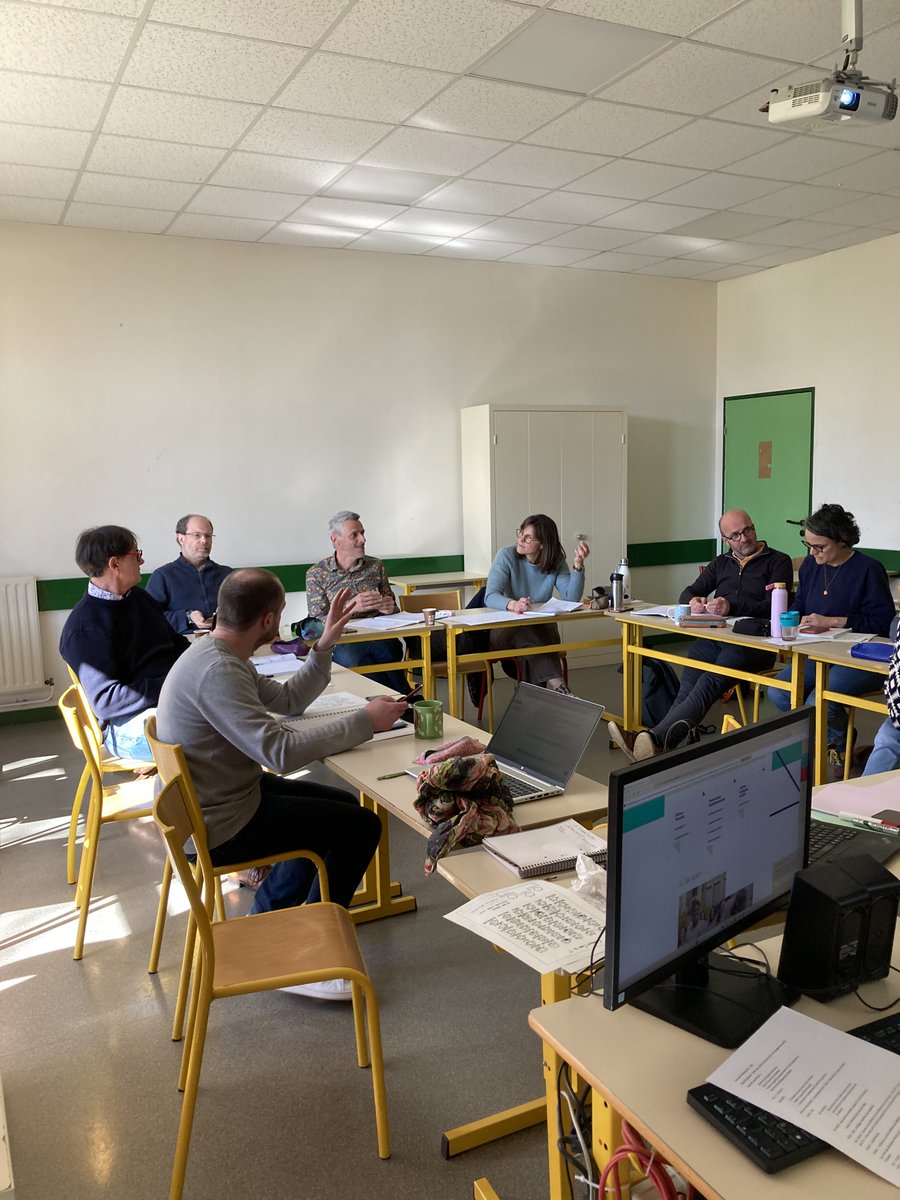
[Formation] 2⃣eme partie de la #formation sur la référence 🚩avec A.Beteau 🙏: gestes pro, explicitation, analyse 🔎de pratiques pro, des 🧰🔧🗝️outils pour les entretiens 🎯menés par les enseignant.es 👨🏫👩🏫auprès des jeunes du @microlycee79 #développementprofessionnel
1
4
68

Apr 11
Laudetur Iesus Christus!
Merci pour ce tweet interessant. J’aimerais répondre à quelques points :
- Parler de « tension avec l’intellect » semble impropre mais je vois ce que vous voulez dire. Nous admettons que la vie intime de Dieu (la trinité en l’espèce) relève d’un mystère qui dépasse l’intellect humain ; cependant, il ne contredit aucunement la raison - il dépasse sa capacité naturelle, mais il est conforme à ses principes - et même, en l’étudiant minutieusement, on se rend compte que le trinitarisme exprime plus parfaitement la réalité de Dieu (dans la mesure du possible). Si votre argument est plutôt de dire : « si c’est trop complexe pour l’Homme c’est que ça ne vient pas de Dieu car Dieu est simple », c’est vrai ; mais dans ce cas vous inversez : c’est trop complexe pour l’Homme justement car l’homme n’est pas assez simple et de toute façon, aucune créature (finie) ne peut prétendre comprendre le créateur infini.
- La « Trinité est inexistante dans l’ancien testament » : c’est vrai, mais pas de la manière sous entendue, à savoir que ce serait une innovation sans fondement. Nous admettons que la révélation du Dieu trinitaire est une des glorieuses prérogatives du Christ et qu’en ce sens, le privilège de le révéler à nos intelligences lui fut propre. Cependant, une fois la révélation du mystère faite, il nous est impossible de ne pas y voir les figures dans l’ancien testament. C’est comme quand on vous raconte une devinette : une fois la réponse donnée, elle vous paraissait évidente et visible partout.
Ainsi elle n’est pas « inexistante » mais peut être imperceptible dans l’AT en lui même.
- Pour compléter le point précédent :
« Moïse mettait un voile sur son visage pour que les fils d’Israël ne fixent pas la fin de ce qui était passager […] Mais leurs esprits se sont endurcis […] car jusqu’à ce jour, le même voile demeure […] Il n’est levé que dans le Christ. » 2 Corinthiens 3, 13-16. Dieu, dans son infini sagesse, connaît la promptitude avec laquelle les juifs se livrent à l’idolatrie. Il convenait alors, et le bon sens l’atteste, qu’avant de révéler à ce peuple charnel la trinité du Dieu unique, il fallait marteler l’unité du Dieu trinitaire. Il ne convient pas d’exiger de Dieu qu’il révèle tout ce qu’on veut qu’il révèle et de déclarer que ce qu’il ne révèle pas, ou ce qu’il révèle trop tard , n’importe pas.
Ainsi, est ce que non-explicitation de la Trinité dans l’AT est un réel contre argument du dogme ? Pas vraiment, et quand on connaît les tendances des hébreux, on y discerne même un fait plein de sagesse.
Dieu daigne nous bénir! In Christo
2
3
104

Tribune marquante de Peggy Noonan dans le WSJ ( une figure importante du conservatisme américain notamment ancienne plume de Reagan): le problème n’est pas seulement Trump, mais une présidence de plus en plus gouvernée par l’humeur — l’état d’esprit — d’un seul homme.
Elle oppose deux logiques : celle du “deal maker”, revendiquée par Trump, fondée sur la flexibilité, l’opacité, le refus de s’enfermer dans une ligne, et celle de la fonction présidentielle, qui exige au contraire clarté, cohérence et explicitation des objectifs, surtout dans des moments graves comme la guerre.
Dans ce modèle, rien n’est vraiment fixé . on peut déclarer victoire ou escalader, définir les objectifs a posteriori, agir sans véritable consultation du Congrès. L’imprévisibilité devient un mode de gouvernement, et l’entourage s’ajuste souvent sous pression.
Noonan insiste sur un point central : ce glissement n’est pas normal. Historiquement, les présidents étaient contraints par des règles, des traditions, des équilibres institutionnels. Leur humeur ne faisait pas loi.
Elle mobilise Reagan pour rappeler que la présidence est une responsabilité temporaire, presque une “garde” confiée par le peuple — et les Pères fondateurs (Madison, Hamilton, Washington), qui ont précisément conçu des institutions pour contenir les passions et l’arbitraire individuel.
Son avertissement est très clair : à force de s’habituer à cette personnalisation extrême, on la normalise.
Or une république ne peut pas fonctionner comme une humeur.
wsj.com/opinion/a-republic-n…
6
116
231
9,132

Effectivement, on voit bien que Roussel a pris le temps dans cette séquence de retourner ce concept contre l'exd, et non de le reprendre a son compte sans aucune distanciation ni explicitation. (J'ai pas dis que ct un faf mais que son discours était raciste)
1
1
7
110


Cette vidéo atteste qu’il s’agit des propos tenus par cet individu et qu’il est nécessaire d’en révéler le contenu afin de mettre en lumière sa véritable personnalité. Cette démarche vise à permettre au public d’en apprécier la portée et les conséquences, et à faire cesser, autant que possible, les agissements préjudiciables dont ses victimes font l’objet, notamment de la part de ses partisans.
À défaut pour vous d’être en mesure de le comprendre par vous-même, et si une telle explicitation devait encore s’avérer nécessaire, je ne suis pas en mesure d’y suppléer davantage.
1
1
7
1,007