
Jun 15
Mid-Day Markets - June 15, 2026
This Morning's Top Story
The macro landscape has shifted dramatically into a full risk-off liquidation cycle today, June 15, 2026, as geopolitical stress completely deflates across global desks. Rumors of a structured resolution in the Middle East gulf have solidified into a tangible peace agreement framework. While official texts remain tightly held, capital markets have waste no time pricing in the immediate de-escalation: crude oil has broken sharply below its previous spring baselines, and commercial shipping channels are preparing to resume normal transit through critical global chokepoints.
This aggressive removal of the global inflation premium is clashing directly with a highly productive domestic weather setup across the U.S. Corn Belt. Last week’s widespread regional rain systems have given way to dry, warming early-summer conditions that favor rapid crop development. With speculative fund managers systematically cutting back long positions ahead of this afternoon's weekly USDA Crop Progress report, front-month agricultural paper is facing an intense technical wash out, dragging the commodity complex down toward major psychological support baselines.
Market News (Performance Review & Rebalancing)
Early-session fund rebalancing is fast-tracking a broad macro retreat, forcing both row crops and livestock to recalibrate to shifting supply baselines.
Crude Oil Plummets on Peace News: WTI crude futures are leading the macro decline today, crashing down to trade near $84.80 per barrel. The sudden collapse of regional hostilities and expectations of normalizing ocean traffic have completely vaporized the geopolitical war premium, dragging down broader energy-linked agricultural margins—most notably across the domestic ethanol and biofuel complexes.
Grains Enter New Low Territories: The row-crop complex is trading with an incredibly heavy tone as near-perfect growing conditions erase summer weather premiums. July Corn has broken critical technical support, sliding down to $4.08 per bushel at mid-session despite a relatively neutral June WASDE print that left baseline demand projections unchanged. July Soybeans have followed the downward slide, trading soft at $11.08 as improved midwestern moisture models overshadow minor storm and wind damage in localized pockets of Iowa.
Livestock Hits a Wall: The meat complex has run into a severe technical barrier at mid-session, completely stalling out early-morning momentum to trade lower. August Live Cattle are under pressure near $239.50, while the CME Feeder Index has pulled back to $368.01. The corrective action follows a highly restricted weekly slaughter of just 524,000 head one of the lowest non-holiday volumes seen in a long time proving packers are actively cutting operations to revive retail box beef prices.
At the same time, analytical consensus indicates that while the Texas screwworm crisis slows herd rebuilding, it will not derail the underlying high-weight structure of current feedyard inventories.
Key Levels (The Map)
Grains
Corn (/ZC): Support 400 - Resistance 420 - Status: Sharp Decline; July contract breaking below previous support to $4.08 as the combination of lower crude oil and cooperative weather isolates bulls.
Soybeans (/ZS): Support 1100 - Resistance 1135 - Status: Soft; July beans falling to $11.08, testing major psychological support as regional moisture runs remain highly favorable.
Wheat (/ZW): Support 570 - Resistance 600 - Status: Steady to Lower; July Chicago wheat holding at $5.84, attempting to establish a baseline even as winter harvest progress tops 10% in core areas.
Livestock
Live Cattle (/LE): Support 238.00 - Resistance 242.00 - Status: Technical Reversal; August contracts losing grip on early gains to trade at $239.50 as restricted packer slaughter volumes limit near-term cash bids.
Lean Hogs (/HE): Support 93.00 - Resistance 97.00 - Status: Firming; Lean hog equivalents show solid cash premium jumps, keeping front-month contracts supported near 95.80 cents.
Energy & Metals
Crude Oil (/CL): Support 82.00 - Resistance 86.00 - Status: Heavy Liquidation; WTI crude sliding to $84.88 as the return of open gulf shipping structures dries up speculative energy weights.
Gold (/GC): Support 4350 - Resistance 4420 - Status: Quietly Lower; Feeling minor pressure as the sudden drop in geopolitical risks reduces systemic safe-haven demand.
Chart of the Day: July Corn (/CN26) Technical Setup
Action: Enforce Short Hedges / Defer Unpriced Old-Crop Sales.
Why: July Corn has breached its structural defensive boundary, tumbling to a contract low of $4.08. Seasonality trends typically peak around mid-June, but the combination of a massive 183 bu/acre trendline yield baseline and the complete collapse of energy-linked inflation has triggered heavy institutional long-liquidation.
Tactical Note: The contract is rapidly descending toward the critical $4.00 psychological shelf. Until automated CTA models signal that net-short positioning has reached complete exhaustion, any temporary intraday bounces should be viewed as resistance retests rather than structural trend shifts.
Market Pulse & Strategy
The smart money is moving with aggressive seasonal efficiency today. Automated asset managers are aggressively dumping long commodity exposure to adjust for the structural shift in global crude transport. With row-crop planting fully finalized across the Midwest and early-season emergence running at a clean pace, systematic capital is abandoning risk premiums entirely. Commercial buyers are retreating to the sidelines, content to let the market bleed lower until a genuine high-summer heat or dryness threat emerges on the weather maps.
Pro Takeaway: The entire landscape has reset. The fact that packers dropped slaughter volumes down to 524,000 head proves they have zero intention of chasing high-priced live cattle while wholesale margins are tight. Do not misinterpret the ongoing screwworm headlines as an immediate reason to abandon your protection—manage your livestock hedges with extreme care because near-term packer demand is highly restricted.
Mode
The bears are completely driving the bus in the grain room today. Seeing July Corn crack down to $4.08 tells you everything you need to know about what happens when perfect early-season weather collides with a massive drop in crude oil. The bulls have run out of arguments, and everyone is bracing for a highly uniform initial condition score on the afternoon crop progress tape. Over in the cattle complex, the screen ran straight into a wall today. Packers are playing defense by letting the kill numbers drop to non-holiday lows, keeping a firm lid on what feedlots can secure in the country. Keep your defensive strategy completely intact.
Notes
The Slaughter Squeeze: The dramatic reduction in weekly slaughter volume down to 524,000 head 36,000 head below last year's pace is a major warning shot for feedlots. Packers are successfully using reduced operations to artificially support box beef prices without having to pay up for physical cash cattle.
With feedlot inventories still carrying high average weights, this operational slowdown transfers all intermediate holding pressure directly back onto the producer.
The Rest of the Week
Monday, June 15 (4:00 PM Eastern): USDA Weekly Crop Progress report. This print will deliver highly scrutinized updates on early-season row-crop conditions across the Corn Belt.
Wednesday, June 17: Regular weekly EIA crude and ethanol inventory data. Watch closely to see how hard the crude oil price drop hits domestic ethanol blending volumes.
Trader Strategy: Hold aggressive trailing stops on all remaining old-crop grain layers, recognizing that a breach of $4.00 corn could quickly fast-track automated fund selling. In livestock, treat any minor technical recovery as a strategic opportunity to reinforce baseline hedges, keeping your downside safety nets closely tied to the reality of reduced packer slaughter schedules.
#CornFutures #CrudeOilCollapse #LiveCattle #CropProgress
Futures Trading Disclaimer: Merchant Creek, LLC, and its employees are not financial advisors. Futures trading involves significant risk. Information provided is for educational purposes only.

188

Jun 13
Heat stress is the one folks underrate. cattle bunched in the shade arent at the feed bunk, every degree over 80 they back off and gains stall. a brutal feedyard summer shows up months later as tighter supply and pricier beef at the counter.
12

Jun 12
Probably 4 then meat will go sky high but cattle feeder be sucking wind . Should open border to screw worm free states . No science can back up Rollins failed policy costing consumers 25 billion and job losses in Tx due to feedlot closures and packing houses and Feedyard downsizing. This allows Mexico to export their beef to us at high prices. Our great President wants more jobs and lower prices @ Secretary Rollins @POTUS @SecScottBessent
1
2
168

Jun 12
Just tracking placements must be a challenge. Was a time when a 725 lb steer went to only a finishing Feedyard. Now a critter that weight may change hands three times before being put on feed for finish at 1200 lbs or more. Isn’t it way easier now to overstate placements?
50

Intern Spotlight!
Meet Bryn Gillespie, one of our General Feedyard Interns. Get to know Bryn in today's spotlight!
1
5
393
Terri Lemmon retweeted

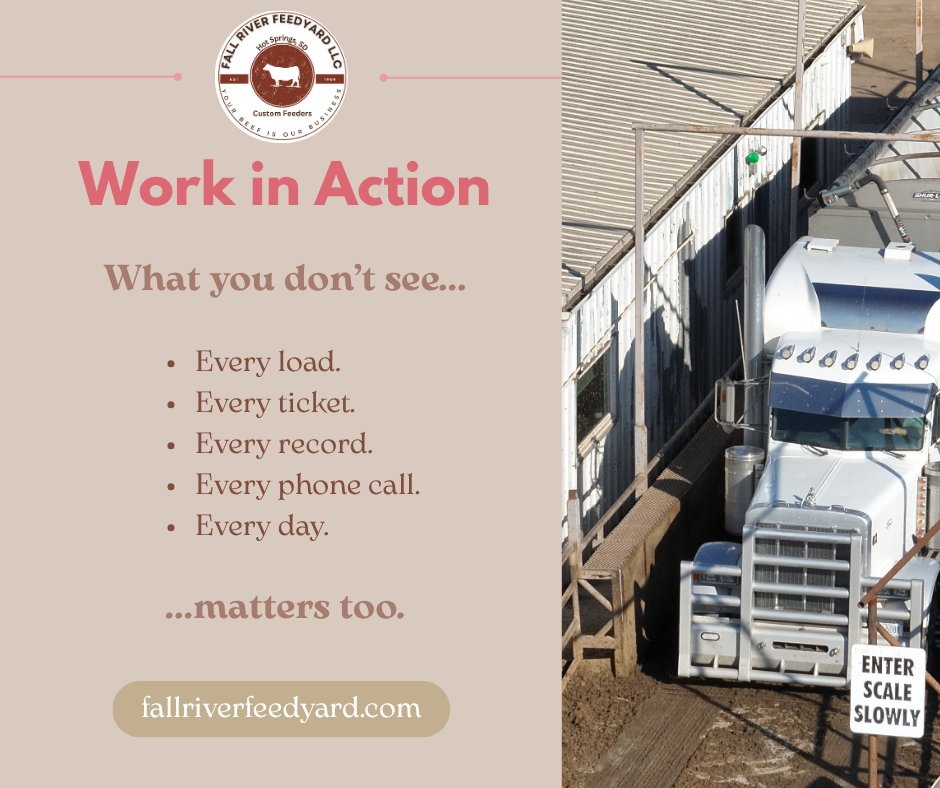
WORK IN ACTION WEDNESDAY
When people think about a feedyard, they often picture cattle, feed trucks, equipment, and cowboys - not the office. The office supports every department across the operation.
Some of the most important work happens where few people ever see it.
1
1
5

Jun 10
Sorry Mahommie but that is not the feedyard that you are smelling. Tech is the butthole of Texas.
3
44
Intern Spotlight!
Meet Laramie Bruce, one of our General Feedyard Interns this summer. Learn a little more about Laramie in today's spotlight!
2
91

nal.usda.gov
Very interesting website,never knew existed.I was researching dipping vats&if they would prove to be helpful for the tick infestation(attack).I spent 20 years working in the feedyard industry&yes,in Texas we dipped. You can search anything on this site.
12

Negative. It basically like trying to get rid of normal flies in a feedyard.
1
4
31
Intern Spotlight!
Today we're introducing Maddy Zerr, one of our General Feedyard Interns this summer. Check out her spotlight to learn more about her!
4
160

Jun 2
If we didn’t have the feedyard I’d let you boss me around! Cuz most days I sit here n scratch my head wondering if any of this is all worth it!
1
2
64

May 29
I sent several to the mountains this morning & more next week but your right, if the figure the wintering bill extra trucking & on & on Usually cheaper to just go to the Feedyard to start
2
11
738

May 25
Wheat silage. Choppers are picking up windrows of chopped wheat or triticale for cow feed. They grind this high moisture feed and fill trucks which are taken to feedyard where it is piled and packed to eliminate oxygen. This allows silage to cure and ferment to excellent cow chow
22
47
604
14,329

Whether you’re filling a feedyard, adding stockers, or expanding your herd, National Feeder Service is here to help. Let us put our market knowledge and connections to work for your operation.
800-999-8998 | kconway@nationallivestock.com
1
2
31

My brother has been in organics for 6-7 years now. It’s profitable and we have been adding acres. He is the brains behind it all but having a feedyard makes things a little easier from a nutrients standpoint. Love the podcast keep up the good work and say hi to Tork.
1
2
1,158

May 14
This ain't hate speech and how is anyone supposed to take health advice seriously from someone who looks like they're a feedyard heifer on feed at Five Rivers Hartley County Feeders?
54

Worked in a 60,000 head feedyard years ago feeding the hungry. It was never ending. But yes, I loved the cattle. Good times, especially when I was horseback.
1
34

Your confusing about 6 different things here.
1. They lost money from like 1995-2015 - 20 years- this why they shut down plain view and there were like 8-9 other closures too.
2. They made a lot of money 19-23, a lot of that is because producers over expanded beyond the capacity we ever had. We then had a plant fire and Covid. They literally had folks trying to price cattle well below the market and would not let them - same thing on beef. Yes their margins were stupid but left to the markets devises it would have been worse- dare I say 2 to 3x in covid. Did they still make too much money- probably (22-23).
3. We built 11% more capacity due to that- no one- no one thought drought or their margins would have been this big (or Covid or a plant fire) or everyone would have built plants to capitalize on it. This put us in the ditch we are in now.
4. As someone who has been in this business most of my life- a. No one forced anyone to stay in business on losses. B. We always over react- we will be in the other borrow ditch with rancher getting rear kicked in again- simply because we can’t complete on a global stage on cost and we will over expand. The hope is these losses don’t force more packers out in the business .
5. Look up retail margins … I dare you lol. Then tell me how bad the Packer is today.
6. 99% of the problem is we need less hooks and less cattle every year- because we grow in weights by 2-3% ever year.
7. We import because we are not cost competitive. Blame the govt blame labor- but brz/ mx can produce 1/3 the cost. Welcome to a global market. Sorry. Plus imports hurt Packer margins not help. They do help retailer however
8. We don’t lose feedyards.. we have more bunks today than ever in this business. We grow days on feed every year(well let’s say 7/10)
9. I’m a rancher, worked at a feedyard, and absolutely can’t stand this victimhood mentality and ignorance of the industry.
I’m all for getting money back from the Packer… just don’t take too much and lose too many plants. And current admin is going to force these guys out. The next guys buying the plant- wait for the shocker - probably wants more money than what the current guy has made historically- I don’t care who that is and if they don’t - they probably will be selling to someone who does
1
7
244

May 3
24 for me boet. Started in your neck of the woods in Ulysses KS. Went the Feedyard then Beef business route.
2
100