HarrellJRyan retweeted

WTF?! Time for these people to “fetch” some dignity!🥴
89
41
263
12,121


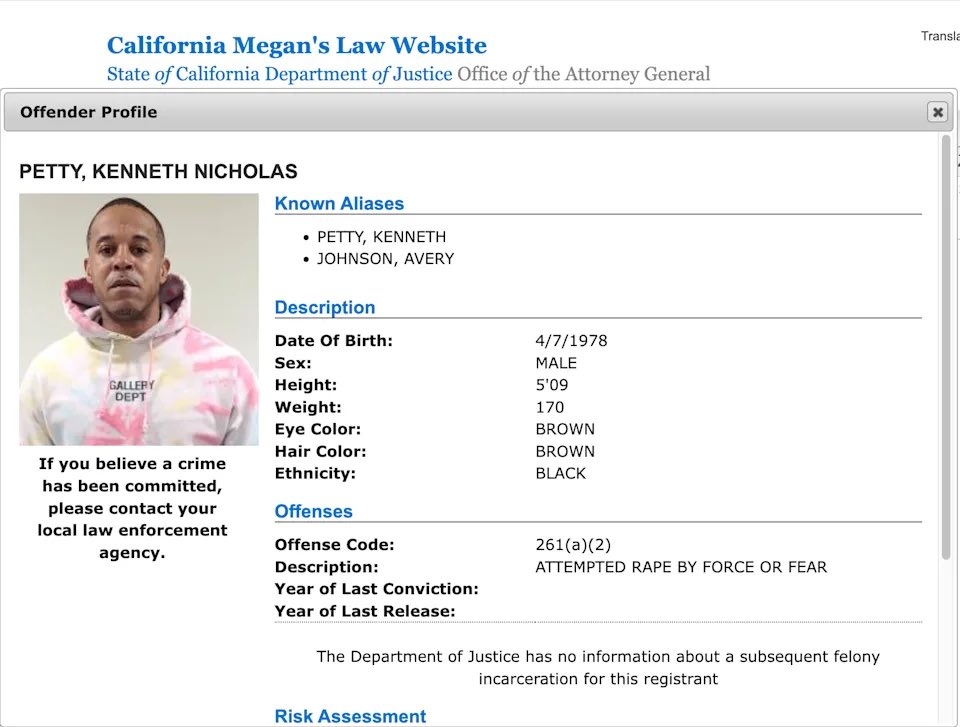
Your fav piggi minaj is married to a r@pist. Fetch me proof of cardis baby daddy’s registry on Megan’s law website?? Quick
1

I know you are not trying to make fetch happen with Corbin….

personalities aside do we agree that these 3 are the finest guys in the villa? #LoveIslandUSA

1
Promo&RT🐷 retweeted

Watching the footy with the lads ⚽️
Go fetch Our beers now! 🍻

7
44
607


Ok so you've picked a write strategy. Now the other half of the problem.
How do you actually expire stale data?
Two approaches:
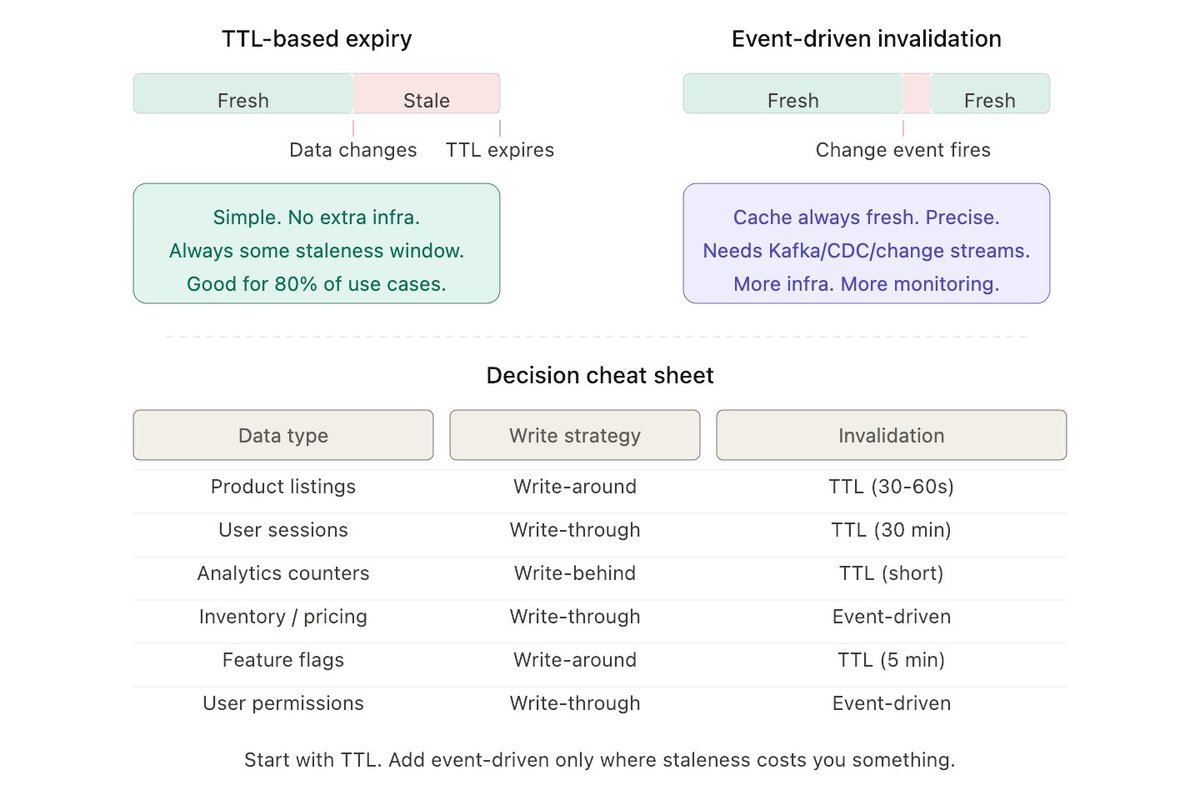
1. TTL-based expiry (time-to-live)
Set a timer on every cache entry. When the timer runs out, the data is automatically deleted. Next read triggers a fresh fetch.
Some rules of thumb I use:
- Config data, feature flags → TTL of 5-10 minutes
- Product listings, search results → TTL of 30-60 seconds
- User session data → TTL of 30 minutes
- Versioned static assets → TTL of 1 year (filename changes per version anyway)
Why it works: Dead simple. No extra infrastructure. Set it and forget it.
Where it breaks: You're always accepting some staleness. If the TTL is 60 seconds, a user might see outdated data for up to 60 seconds after a change. For a product listing? Nobody cares. For a bank balance? That's a support ticket.
2. Event-driven invalidation
Instead of waiting for a timer, you actively delete or update the cache the moment the underlying data changes.
How:
- Database writes trigger an event (via CDC, a message queue, or app-level hooks)
- A consumer listens for that event and invalidates the cache immediately
Why it works: Cache is always fresh. No staleness window. Precise.
Where it breaks: You need infrastructure for it. A Kafka consumer or a database change stream (Postgres logical replication, MongoDB change streams, DynamoDB streams). More moving parts. More things to monitor. More things that can fail silently.
Which one should you use?
Honestly? Start with TTL. For most data in most systems, a 30-60 second staleness window is invisible to users.
Add event-driven invalidation only for data where staleness actually costs you something:
- Inventory counts (overselling)
- Pricing (showing wrong price)
- Permissions/auth (security risk)
- Real-time features (chat, live dashboards)
Everything else? TTL. Don't over-engineer it.
Quick decision cheat sheet:
Format: What you're caching → Strategy → Invalidation
1) Product listings → Write-around → TTL (30-60s)
2) User sessions → Write-through → TTL (30 min)
3) Analytics counters → Write-behind → TTL (short)
4) Inventory / pricing → Write-through → Event-driven
5) Feature flags → Write-around → TTL (5 min)
6) User permissions → Write-through → Event-driven
1
19

𝙎𝙪𝙘𝙧𝙚...✍️ retweeted

46m
if you de find me just call my mama, me and my guys don go fetch firewood…gas too cost.
10
13
35
260
Black Hole retweeted

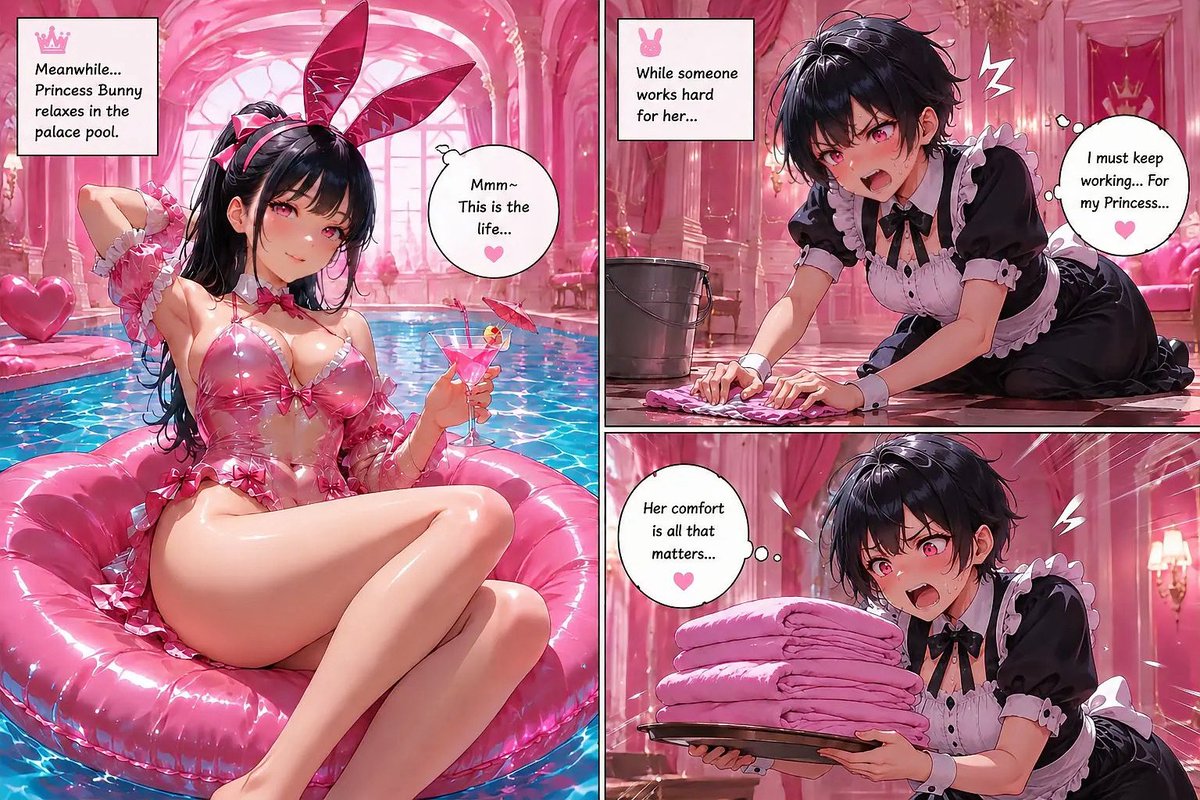
👑 “While Princess enjoys another perfect day… someone is making sure it stays perfect.”
Uhuh of course you can fetch Princess another cocktail 🫰
2
9
105

We need s2 cos I need to know when Matipa is COMING TO FETCH HER KIDS!!!!! #ThePolygamist
9

Wasn’t that the point of the OP?! 🤷🏻
Men are only interested in chasing anything in a skirt and brag about how many people they’ve slept with that weekend… etc etc.
Just raising awareness that there’s more ‘fetch me pipe and slippers’ types like me than people realise 😂
4

I’m sending something special to the first 5 boys who fetch for my coffee this morning. Go send link in my bio chop chop😝😝
3

I will fetch a tiny violin and you may serenade us with your lament
1
10

His ass was finally dragged home🥳🤣 and his brother still sells drugs here 🚮🚮.. I'll fully clap when they fetch his two big brothers and drag them to Nigeria
1
266

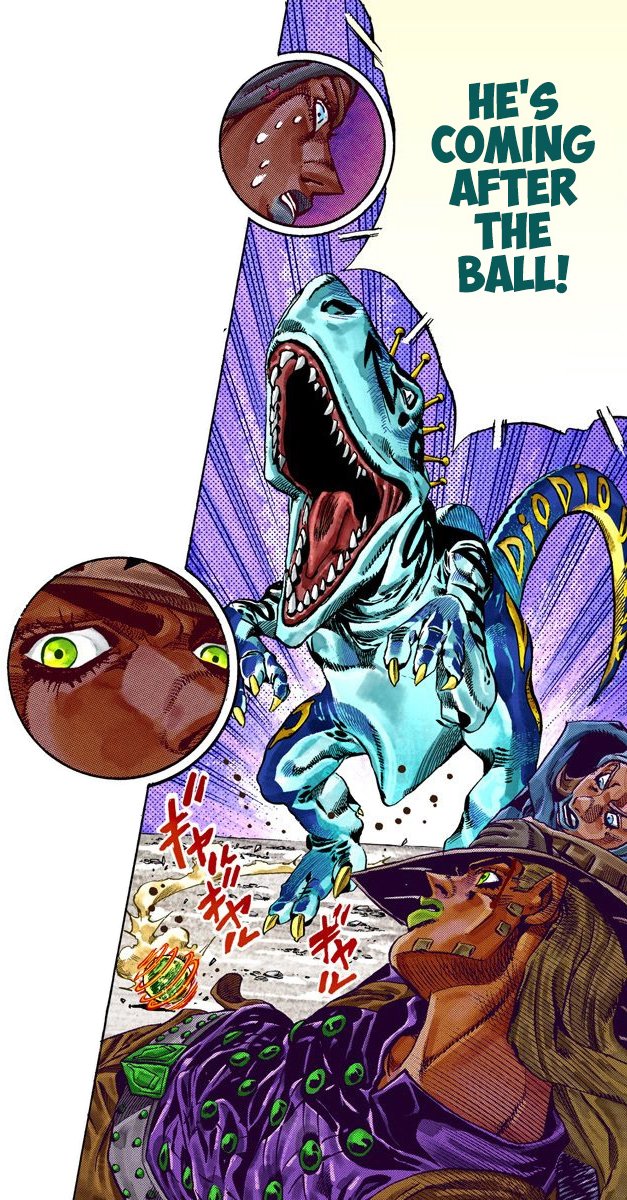
Looks like Gyjo just playing fetch with Scary Monsters

2
22

Recently completed my Git & GitHub lessons, and I'm curious to hear from the Git community.
How would you explain the difference between git fetch and git pull to a beginner?
1
3
14
santasi mbuemo retweeted

Jun 13
Mankind suffer before o. Cos,why should we fetch water for you, because our ball fell inside your yard?

2
7
9
73

burden develop else salon resist fetch trip lake wolf kidney bag kit avoid season toss screen manual finger mix decline mix bus renew number
3