
Mar 27
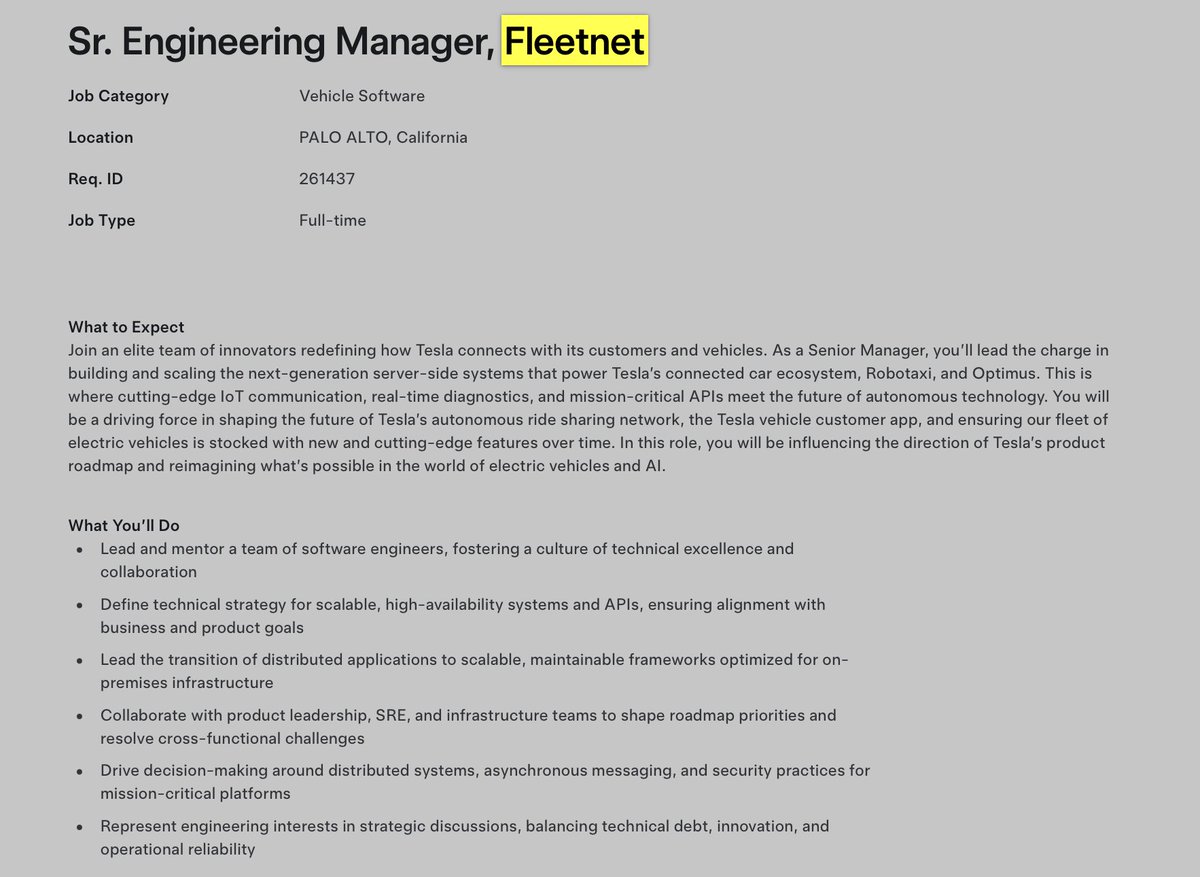
🚨 Tesla is hiring a Fleetnet Senior Engineering Manager to lead the development and scaling of next-generation server-side systems powering Tesla’s connected vehicle ecosystem, Robotaxi, and Optimus.
2
9
116
4,769

Feb 25
In a "First Principles" world, deadheading (unpaid miles) is simply a failure of information and spatial matching. To maximize the ROI of a $40,000 asset, it should never move unless it is earning.
Tesla and other autonomous players are using a "tri-fold" strategy to effectively eliminate or monetize these empty miles:
1. Predictive "Pre-Positioning" (The Hive Mind)
Instead of waiting for a ping, the fleet uses historical data and real-time events to move before the request happens.
• The Logic: If the system knows 500 people will leave a stadium at 10:00 PM, cars start moving toward the stadium at 9:30 PM while they still have passengers heading that way.
• First Principles Fix: By aligning "drop-off" locations with future "pick-up" hotspots, you turn a deadhead mile into a strategic relocation mile.
2. Dynamic "Empty-Seat" Pricing
If a car is stuck in a low-demand area and needs to get to a high-demand area, the system can slash prices to move it.
• The Logic: It is better to move a passenger for $0.20/mile (covering only electricity and tires) than to move the car for $0.00/mile (losing money).
• First Principles Fix: Use "anti-surge" pricing. When the system needs to reposition a car, it offers a "Flash Deal" to anyone nearby, effectively getting a passenger to subsidize the relocation cost.
3. Multi-Modal Utility (The "Cargo-Swap")
A robotaxi is just a mobile platform. If there are no human passengers, the car shouldn't drive empty; it should carry something else.
• The Logic: Between 2:00 AM and 5:00 AM, ride-hailing demand is near zero. This is when the fleet switches to last-mile delivery (groceries, packages, or laundry).
• First Principles Fix: A "unit of transport" doesn't care if it's carrying a human or a box of detergent. By integrating with local logistics, Tesla can ensure that even "dead" hours for humans are "live" hours for freight.
4. Charging & Maintenance as "Productive" Downtime
In a human-driven system, a driver often drives empty back to their home or a gas station.
• The Logic: Tesla’s fleet management (often referred to as Fleetnet in job listings) uses "Deadhead miles" to route vehicles to Inductive Charging pads or cleaning hubs.
• First Principles Fix: You synchronize the car's physical needs (battery/cleaning) with its relocation needs. If a car is empty, it only moves toward its next charger, making that "dead" mile a necessary "fueling" mile.
The Bottom Line
Deadheading is currently a ~40% tax on Uber/Lyft because human drivers are uncoordinated. In an autonomous fleet, deadheading becomes an Optimization Problem. If Tesla can reduce deadheading from 40% to 10% through predictive routing, the "Return on Asset" (ROA) doesn't just improve—it doubles.
2
4
72

22 Nov 2025
The dev for FleetNet is was also the dev for dexbotics and both rugged so idk we can trust them thier words
2
256

22 Nov 2025
$dmch , @demechtech
DeMech Mini Update – Nov 22, 2025 (post-FUD)
22.11.2025
--------------------------------------------------------
- MC dipped to $59K after FleetNet rug link surfaced
- Dev responded calmly: “Good builders have history… nothing shady… we will ship anyway.”
- v3.1 off-chain remains elite (capabilities, robot stats, live dashboard)
- On-chain still in “next” status - reconciliation hook is ready but empty
----------------------------------------------------------
Risk: Past rug bumps rug odds
Conviction: Code quality token locks daily grind
Ship chance for on-chain: 70-75% (slight haircut, but momentum intact)
Dump is now a high-conviction dip if you believe the dev learned from the flop and is here to build.
Wait 7 days for v3.2 on-chain proof - that’s the line in the sand.
----------------------------------------------------------
I have no chrystal ball - in the end every low cap can fail and vanish for this or that reason.
Personaly i keep holding my tokens.
There is only ZERO or MOON.
Nothing in between.
If it goes to zero i can live with it.
But for me the code is too good to ignore.
DYOR
7
4
17
2,937

17 Nov 2025
FleetNet | $Fleet - @thisisfleetnet
25k mcap
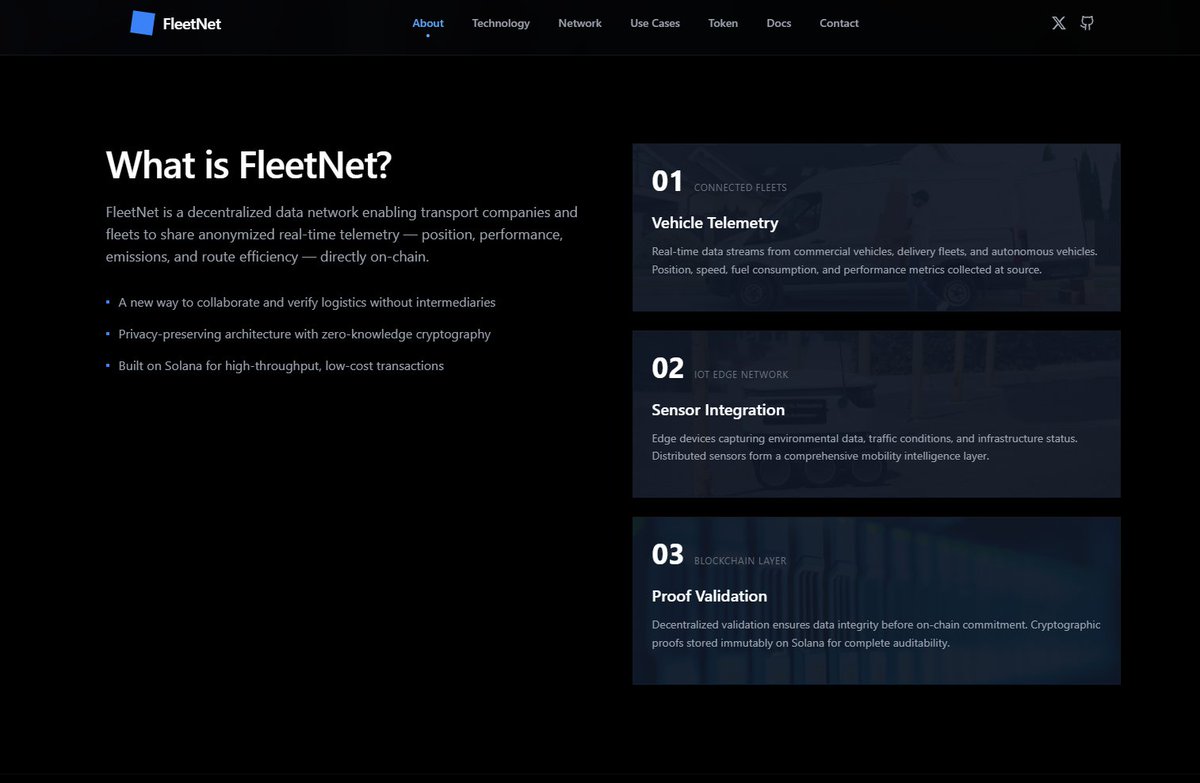
Decentralized data network enabling transport companies and fleets to share anonymized real-time telemetry — directly on-chain
6BbHazb6NmU8uq1FUmUhuoLEmMKZHTG8aqWZh1JDpump

3
4
15
4,672

17 Nov 2025
Found something nice:
$FleetNet introduces a new approach to connected mobility: a decentralized data network that enables transport operators and fleet owners to share real-time telemetry in an anonymous, verifiable, and intermediary-free way. Vehicle data, IoT sensor streams, and infrastructure signals are validated through cryptographic proofs and secured on Solana, ensuring integrity, auditability, and privacy using zero-knowledge technology. FleetNet positions itself as an infrastructure layer designed to standardize logistics data exchange, reduce trust and verification costs, and enable interoperable applications across transport, supply chain, and autonomous mobility.
Dex paid and tokens are locked
Github looks nice:
github.com/thisisfleetnet/fl…
$FLEET
22K
6BbHazb6NmU8uq1FUmUhuoLEmMKZHTG8aqWZh1JDpump

7
7
19
3,389

15 Oct 2025
caught up with an old friend yesterday
reminisced about Fleetnet and Robotaxi shenanigans
life could've been so different if I stayed at Tesla

2
522

23 Jun 2025
Oh haha makes sense
Do you have alpha from fleetnet or just sharing what’s out there 😉
1
2
94



5 Sep 2024
A big 👋 goodbye to the many years of listening to the amazing men and women of the OPP on fleetnet and even before that on simplex. Your social media folks are going to be even busier now :) stay safe @OPP_GTATraffic we will miss you!!
3
1
24
7,374

12 Apr 2024
I sold my family's maintenance & repair company to Dickinson in 2018. Was a VP of sales for them for 18 months, then sat out a 1 yr non compete in software.
Fast forward, Cox Automotive buys Dickinson. Enormous problem for Cox. Cox heavily recruits me to fix it. I accept & over the next 4 months build the roadmap to succeed.
Rebrand Dickinson ✅
Buy FleetNet America from ArcBest ✅
3
89

🚀FleetNet America recently completed their Drupal to WordPress multisite migration. With @WordPressVIP, they saw 2x improvement in Core Web Vitals, improving SEO performance and streamlining editorial processes.
📄Read our case study to learn more.
rtcamp.com/case-studies/flee…
10
397

28 Dec 2023
🔊 RENFREW COUNTY SCANNER NOTICE
📌 CITY OF OTTAWA
🏠
🗒️ NOTICE: Ottawa Fleetnet is back on Rdio.
RCS1 2023-12-27T21:34:53.142-05:00
Updates: facebook.com/groups/renfrewc…
2
287
27 Dec 2023
This is a pretty interesting ask. I’d check out Servicase, FleetNet or TTN. Also NTTS and truckdown. TA also has a decent recovery network.
1
174
26 Dec 2023
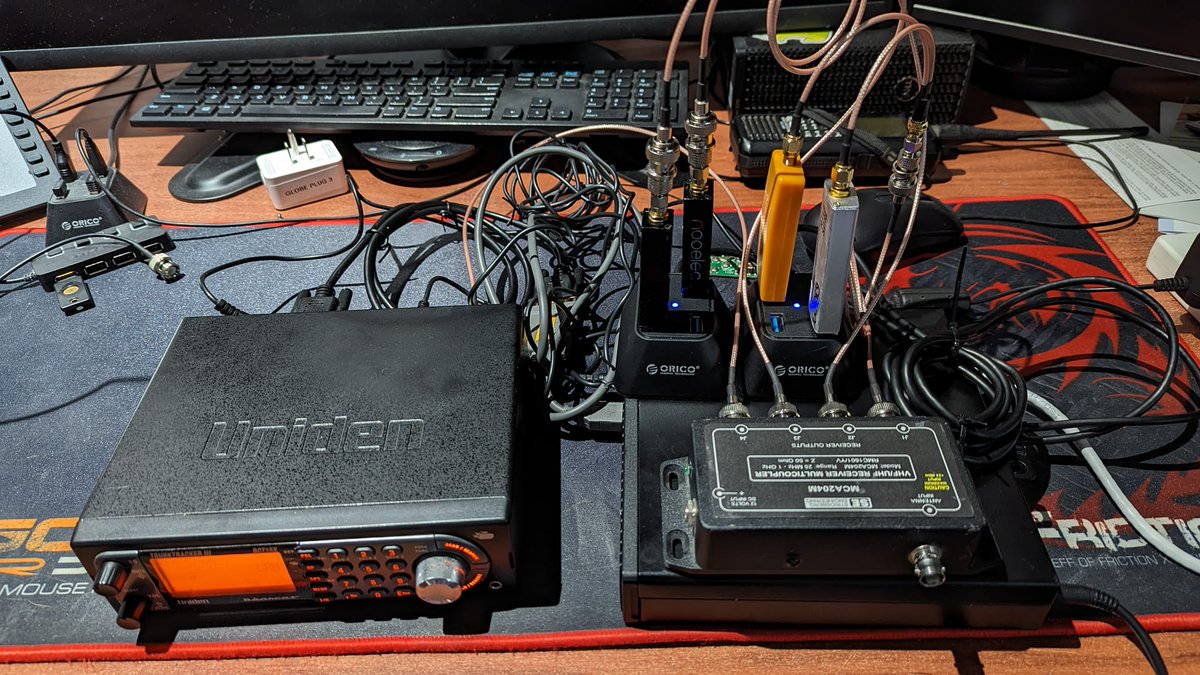
What a real scanner looks like. Kinda. This is the box that ran everything out of Ottawa from Fleetnet to ofs and lanark pages. Repackaging it up to be sent to a new home.
Could be improved coverage within the city.
2
735

6 Nov 2023
a fleetnet é a provedora de internet mais porcaria da cidade, não fica estável 1 dia inteiro
2
9
346

21 Aug 2023
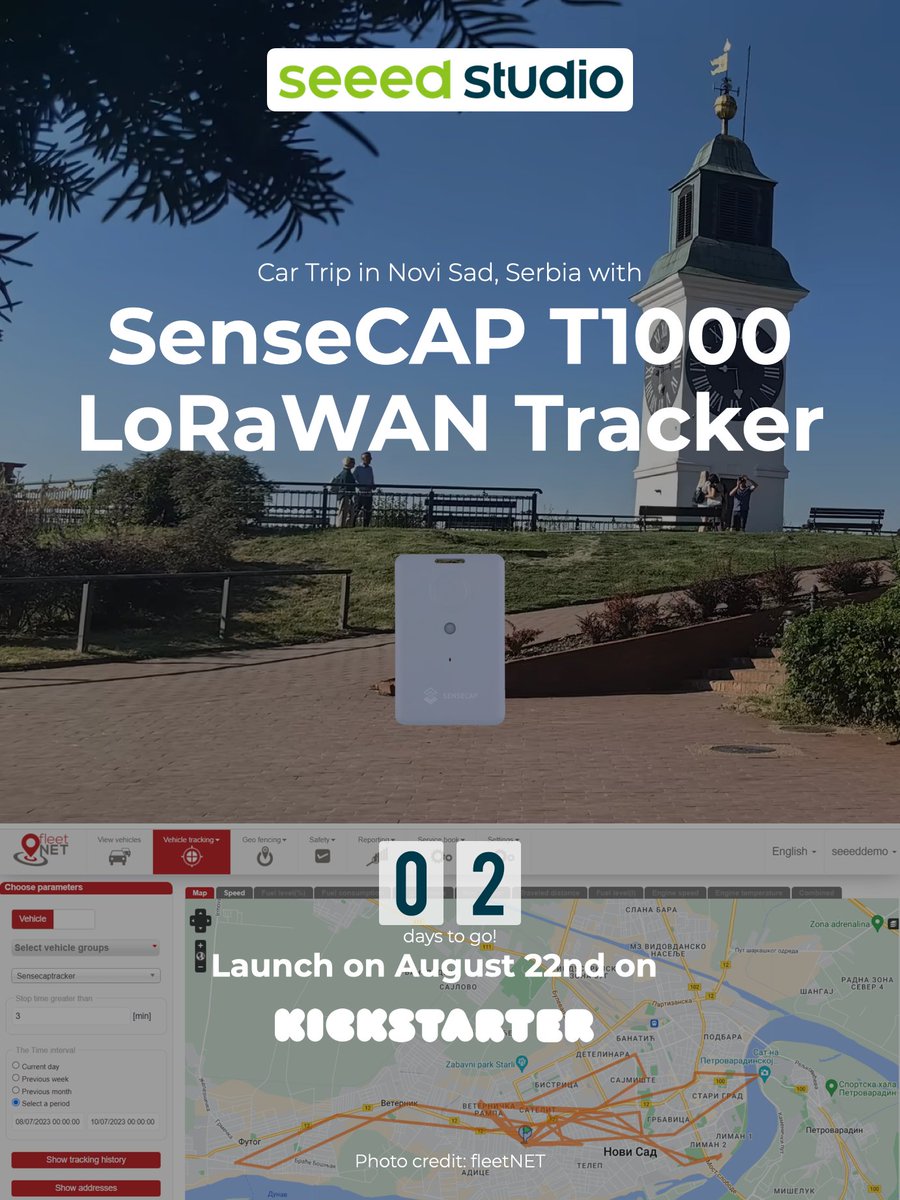
🚀 2 Days Left! Join our @Kickstarter campaign for the SenseCAP T1000 #LoRaWAN GPS Tracker on Aug 22, 8AM (PT)! Subscribe now: bit.ly/47iZlAG 🚀
Today's poster features @DunavNET testing T1000 in Serbia, showcasing the itinerary on their #RTLS platform fleetNET.
3
4
9
3,343

17 Aug 2023
If you would like to listen to Any Of The Fleetnet go to scan.policescanner.ca/ Dm me and I will give you the passcode to sign on. This has been hard choice to make but the Police Scanner App Is Better. Again thank you for supporting the group and also particapating.
4
554

11 Aug 2023
Nope. Two things: remote work was cancelled. My wife loved the new house in Carlsbad CA
Happy wife, happy life.
But I still love the #fleetnet team and respect @ThomasAlxDmy a lot! 🙏
1
2
47