


why did they take it off roblox now i cant get my glev wifi
15
SHO retweeted

11 Aug 2025
オンライン個別サイン会ありがとうございました!
皆と話すのが楽しすぎて一瞬だったよ…!
とても幸せ時間をありがと〜🫶🏻
愛を込めて書いたので早くみんなの元に届きますように!
また話したくなってきちゃうねえ!

109
226
3,492
82,142

l.ici.fr/AluD
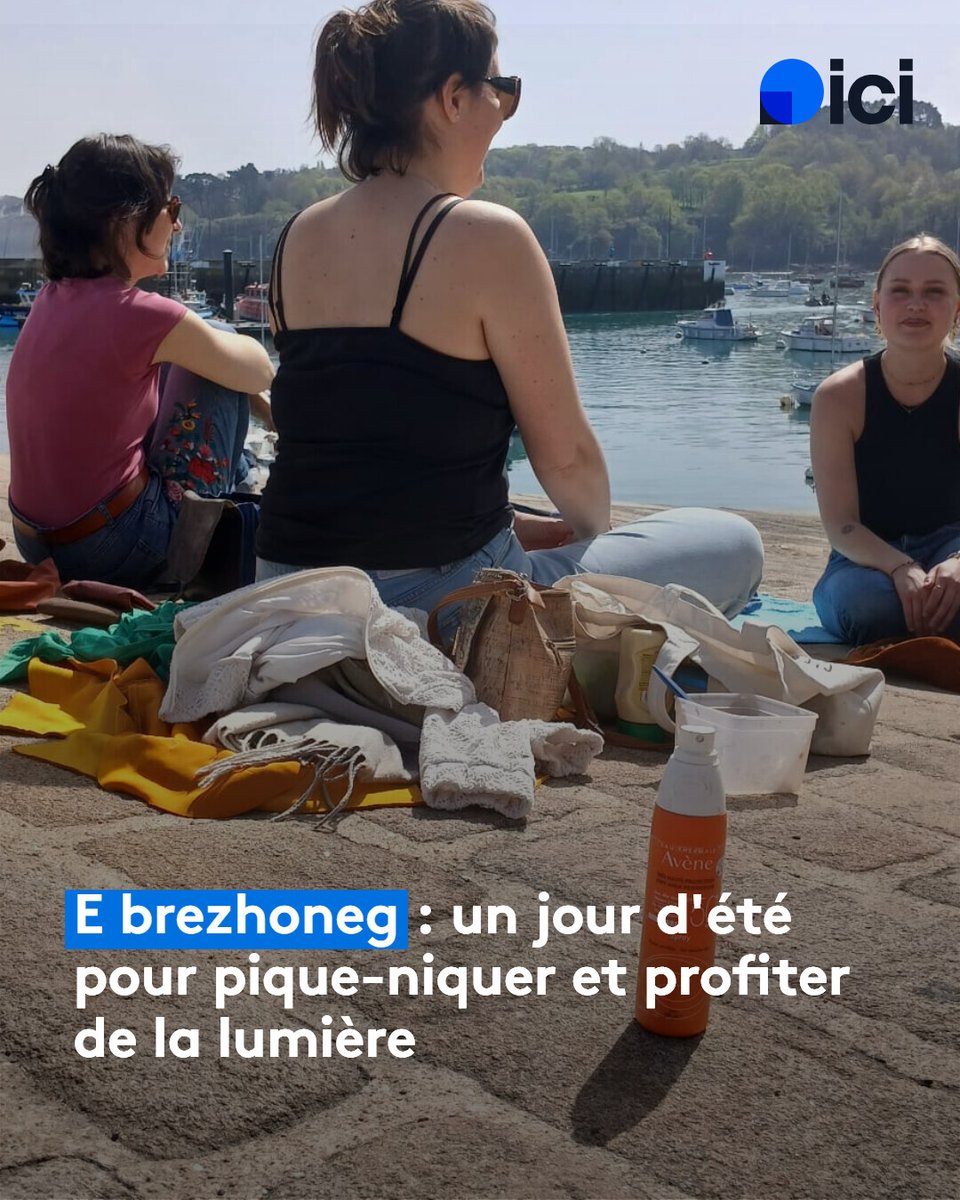
24 derez e Douarnenez, 28 e Kemper pe an Oriant. Brav oa an amzer dec'h. Profited o doa tudoù an draezhenn, pe an tarasoù. E Douarnenez, oa aozet ur pik nik e brezhoneg gant Em Glev e-giz holl eil Meurzh ar miz.
1
5
386

Mar 14
Glev AI trusted us to bring their brand to life through clear, fluid, intuitive motion design.
1
1
2
53

Feb 12
Noz
15 vloaz eo Mael hag ur prantad start eo evitañ. N’em em glev ket gant e vamm ken. Eus he zu, Liza a zo trubuilhet bras gant distro Kevin, he c’haredig pa oa yaouank, an den en deus muntr... #bzhg
📰 Blog @geekezig
soubennargeek.wordpress.com/…
1
2
41


19 Dec 2025
And they say they never started the war .
then their cc make 90% genshin video cuz wuwa is so shit that nobody watch it take that baldy nigga and glev*****
19 Dec 2025

Clowntontas is now weaponizing Silver Palace. Ignorant, shortsighted, biased, as usual.

5
183

5 Dec 2025
Summary of “Read TFHE-rs Handbook With David (Part 1)”
This is an unscripted, hour-long session where David (@cryptodavidw) sits down with the 100-page TFHE-rs Practical Handbook and reads it live. The handbook, produced by @zama , explains TFHE rs an open-source Rust library for running Fully Homomorphic Encryption (FHE), which lets you compute on encrypted data without ever decrypting it.
Tone and format:
Think of it as a study hangout. David starts with almost no context, flips through the handbook in real time, pauses whenever he hits dense math, and tries to reason through LWE, GLWE, and other core concepts. He skips formal proofs and focuses on what’s practical, sharing honest reactions and moments of confusion. It’s informal but surprisingly educational, ending with a tease for Part 2.
Core ideas he covers (around page 11 onward):
1. Cryptographic Building Blocks
•LWE (Learning With Errors): The backbone of noisy encryption used in FHE. Supports computation, but noise grows quickly.
•GLWE: A polynomial-ring version of LWE that offers stronger security without increasing ciphertext count.
•Basic encryption/decryption: Secret keys generate masks; noise is added intentionally. “Trivial encryptions” (zero-noise public values) are useful for testing.
2. Working With Ciphertexts
•Linear ciphertexts (LW/EL) for simple operations
•Addition: Straightforward, but noise accumulates
•Rotation: Multiply by powers of x to shift polynomial coefficients
•Multiplication & scaling: More complex and increase noise significantly
•Key switching & sample extraction: Convert ciphertexts across keys or isolate specific components (like the constant term)
3. Noise Growth and Bootstrapping
Noise is the central limitation every operation makes it worse. Bootstrapping resets the noise so computation can continue, but it’s expensive, so you avoid it until necessary. This ties into real-world blockchain usage, where public-key schemes and threshold MPC decryption help scale FHE systems.
4. Advanced Structures
•GGSW and GLEV ciphertexts: Used for powerful operations like programmable bootstrapping and selection circuits (e.g., CMAX).
•Comparisons to arithmetic circuits in ZK and MPC
•Clarifying the messy notation around rings, modules, and polynomial representations
#ZamaCreatorProgram

26
7
25
2,950

2 Dec 2025
Tweet posvećen mom diječku @grdsk_mngp88 ...
Neću kvotovati autora da ne navuče glev tagovanog kepeca.
〽️
Lako je Hrvatima da budu antifašisti kad su sve fašiste 95 poslali u Srbiju.
2
108




Betek ar steredennoù 🚀✨
Beajal en egor, gwelout ar planedennoù ha kerzhout war Loar pe Meurzh a vo digredus. Evel m'en deus graet Jakez Karter e-pad e veaj war-zu Kanada rak dre ar mor pe dre an egor, n'eo ket disheñvel a-benn ar fin. Ouzhpenn-se dizoleiñ douaroù nevez 'zo ken pouezus en hon istor sevenadurezh Europa hag eo an abeg ma vevomp gant skiant ha teknologiezh : gallout mestroniañ an dianav.
Bremañ, me a glev kalz a dud a lavar din, kerzhout ha sevel kêr nevez war Meurzh n'eo ket pouezus pe posubl rak re ziaes eo pe ne c'hellomp ket en abeg an traoù e c'hoarvez war Douar gant da skouer ar brezel, tommadur an hin, an enbroadeg, ar paourantezh met hervezon un tamm trist soñjal evelto.
D'am soñj eo ret deomp sellout ouzh ar stedennoù kentoc'h hag en em c'houlenn penaos mont a-hont evit kas hor sevenadurezh er steredennoù hep dilezel an Douar evit krouiñ traoù nevez. Ouzhpenn-se tremen amzer evit kavout an doare evit sevel kêrioù war plannedoù koskoriad an Heol a c'hell bezañ mat evit Douar gant ar nevezadennoù ezhommek evit mont a-hont.
Eus Douar betek an egor, eo ret deomp hunvreal a-nevez.
War-raok !

2
4
311

24 Sep 2025
Uhhhh while I was in a process of my Carvetheif au lore (Jerry/Glev & Pest)...How do I explain this to BarkBeetle fans? 😶 I mean yeah
122

20 Sep 2025
💥 El director y productor ejecutivo de cine Jesús Colmenar recientemente comenzó a seguir a Alex Mírez, Irene Balmes, Glev Abrosimov y Pablo Scapigliati.
Por el momento, solo Alex y Gleb le siguen de vuelta.


3
203


17 May 2025
He who loses and runs away lives to trade another day. GLev sp pit...
2
99