
Jun 13
Her smile doesn't falter. She genuinely doesn't see anything wrong with this. At all.
"Were they Tasty? I've heard that in District 23's Backstreets there's great cooks that could make you delicious meals with humanbased meat! Maybe we should go there one if these Saturdays."
1
1
28


Apr 23
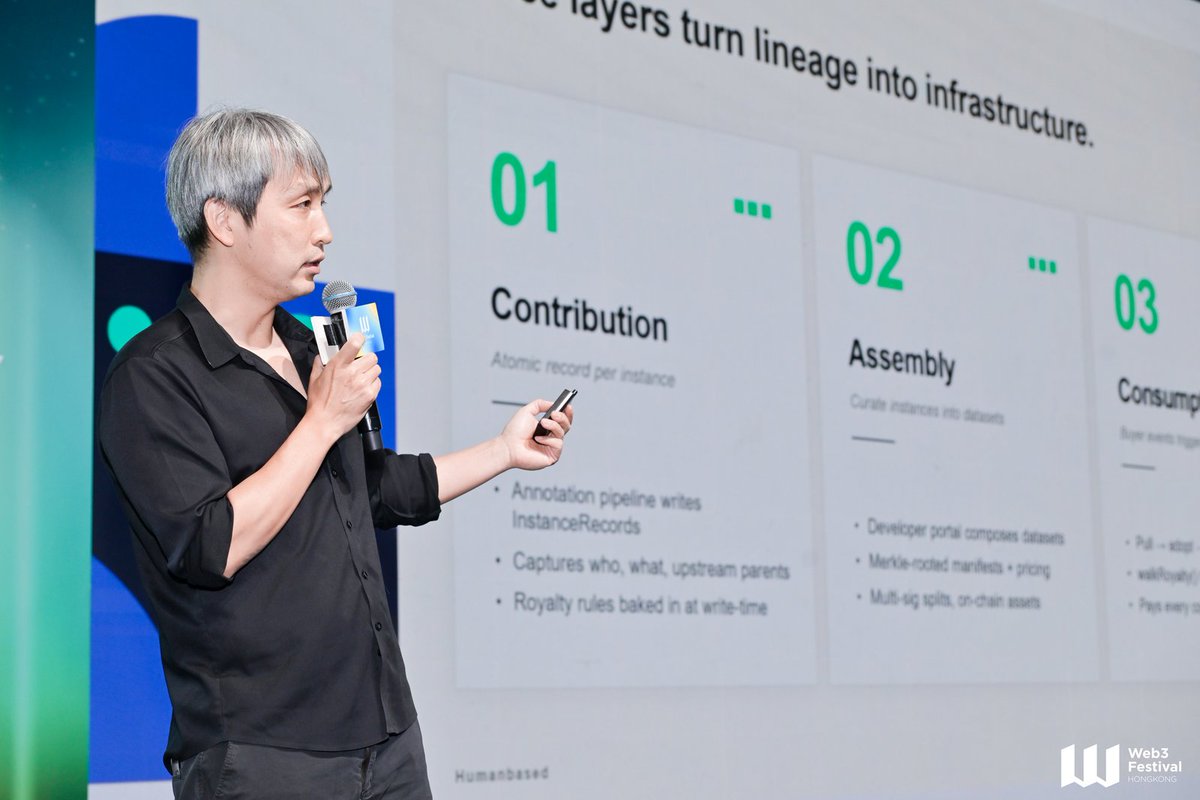
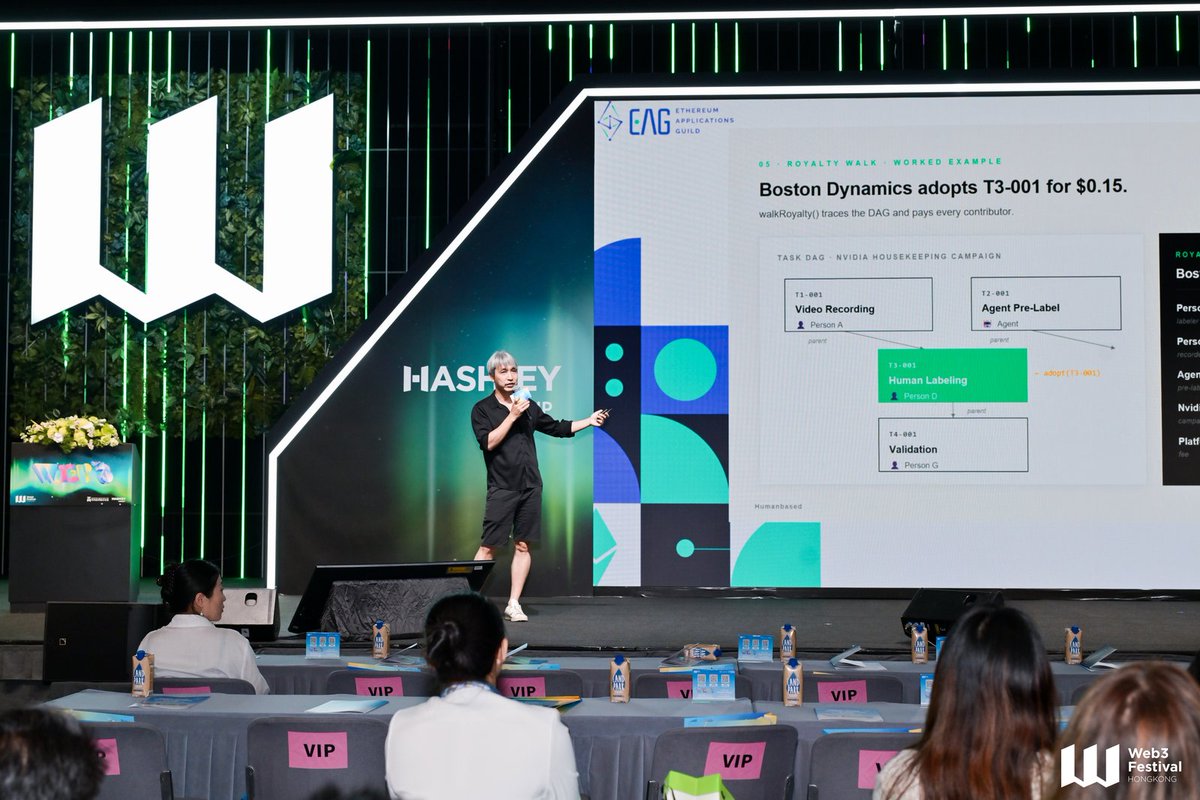
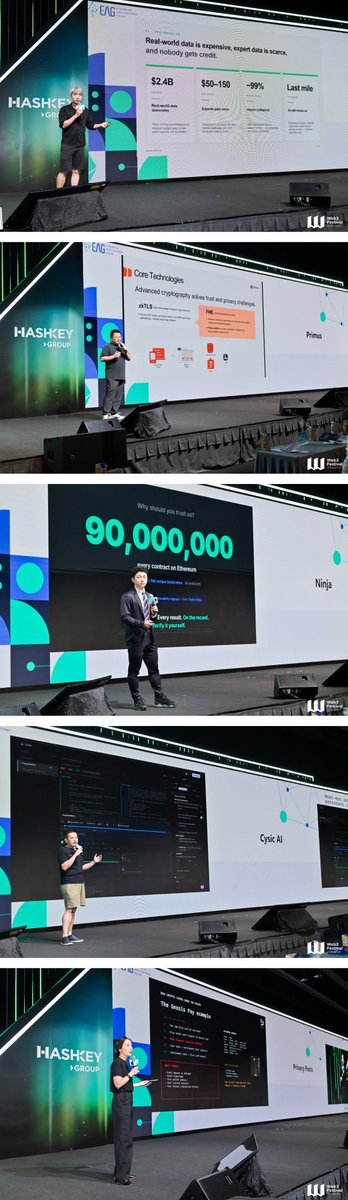
Big shoutout to @EthAppsGuild for putting together a solid event 🔥
Kevin, our cofounder, just stepped up and broke down how Humanbased tackles one of AI’s biggest gaps, data attribution.
We’re building on-chain data lineage so every piece of training data stays traceable, owned, and rewarded.
This is what open data for the next wave of AI looks like.
11
1
32
1,461

Apr 22
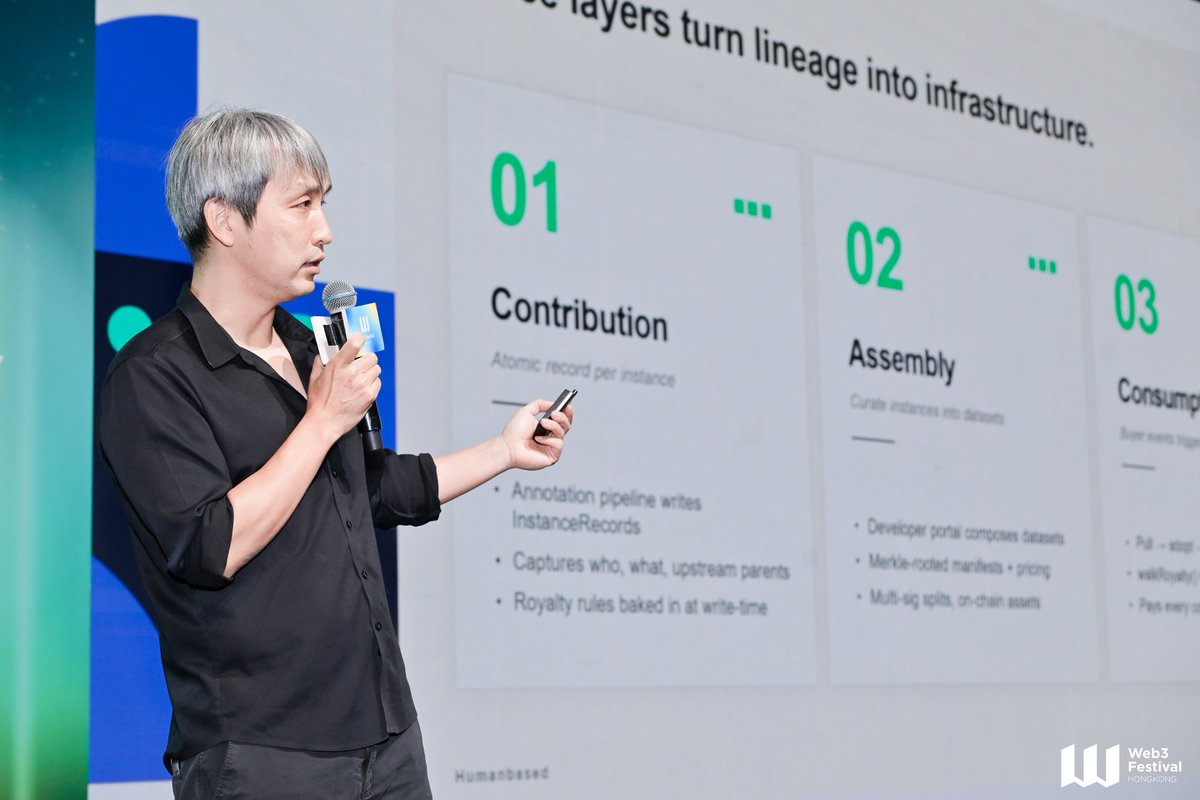
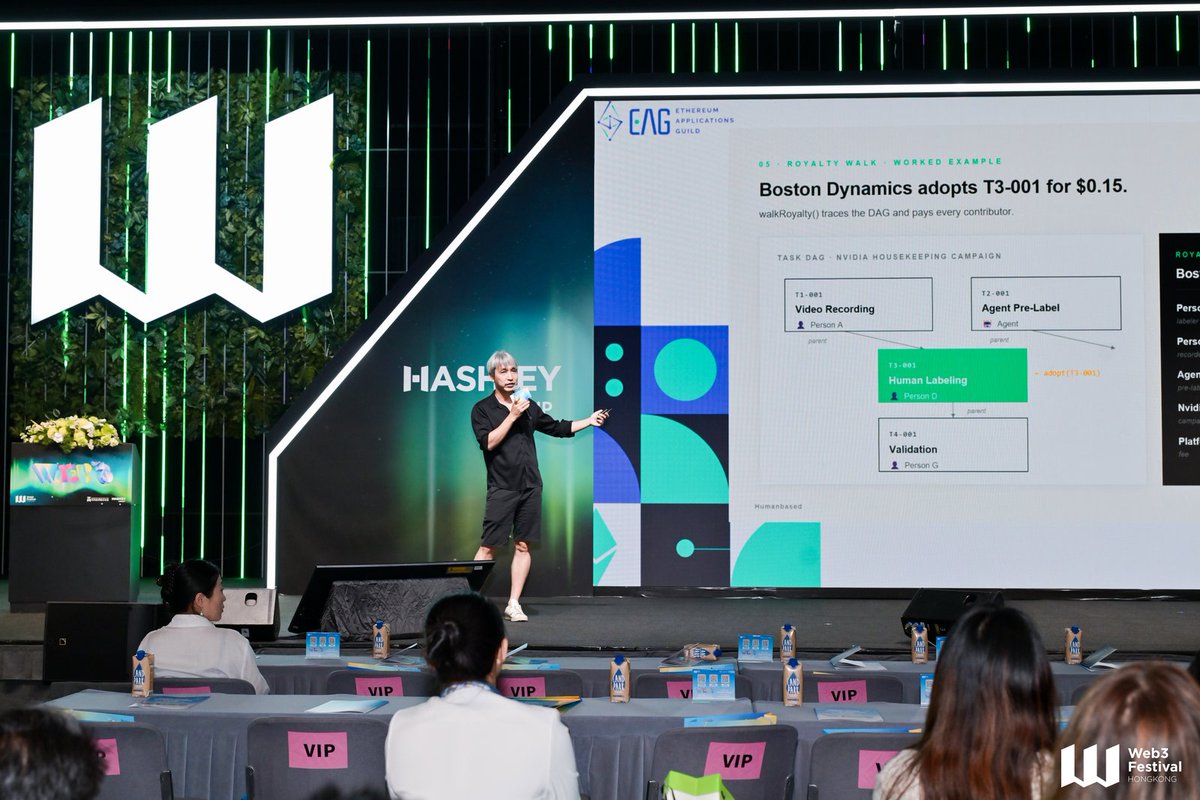
Huge thanks to @EthAppsGuild for an amazing event! 🔥
Our cofounder Kevin just took the stage to unveil how Humanbased is solving the AI data attribution gap. We are building on-chain data lineage to make AI training data auditable, ownable, and rewarding.
Open training data for the open-model era is here!
6
7
23
4,036
💻 Demo session at the Ethereum Applications Gathering:
Humanbased
Primus
Ninja
Cysic AI
Privacy Pools
🔥 Building on Ethereum
⏰ Apr. 22 | 11:30 - 17:30
📍 STAGE 2, HK WEB3 FESTIVAL
🔗Livestream: x.com/i/broadcasts/1qxvvkBYp…
#AppGathering #Ethereum #Web3Festival #EAG
1
3
3,466

18 Aug 2025
That would make sense, If the demons weren't having a humanbased diet, defining evil as in they are an invasive species(much like some plants, fishes and boars), even if they have a heart and souls, these are traits they are mimicing from others species that are not monsters
1
1
30

7 Jul 2025
Oracles Used:
UMA Optimistic Oracle (Polymarket, FORE). As noted, UMA’s oracle uses a Schellingpoint vote by UMA token stakers . It excels at resolving arbitrary realworld questions and only rarely sees disputes (~1% of cases) . If disputed, UMA’s Data Verification Mechanism (DVM) has secret voting by token holders to decide the truth
Pros: Can handle subjective or complex queries
Cons: Single-token governance means a few large holders can collude, as seen in recent disputes
@AugurProject REP Oracle: Augur traditionally uses REP token holders to report outcomes in a multiround dispute process. This humanbased oracle incentivizes truthful reporting via gametheoretic stakes and even the threat of forking the network on dishonest outcomes
Pros: Highly decentralized and aligned with Augur’s community (REP value tied to oracle honesty)
Cons: Slow resolution and still vulnerable if a malicious actor amasses enough REP. To improve speed, Augur Turbo integrated Chainlink oracles for sports events
@RealityEth @Kleros_io
Platforms like Omen use a two-layer oracle: first Reality.eth (an “optimistic” oracle), then Kleros for arbitration
Here’s how it works: anyone can report the outcome on Reality.eth with a bond; if no one challenges within a timeout, that answer becomes final . If disputed, it escalates to Kleros, a decentralized jury system. Kleros randomly selects jurors (staked with PNK tokens) to vote on the correct outcome
Pros: Fast, low-cost resolution if uncontested, and fair handling of disputes – Kleros jurors are economically rewarded for voting honestly and can’t easily be bribed or dominated by one whale (due to random selection and multiple appeal rounds)
Cons: Requires an active community of jurors; in extremely subjective cases, multiple appeal rounds can prolong resolution.
@chainlink Decentralized Data Feeds: Chainlink’s oracle network is used for objectively verifiable events, especially sports and financial metrics. For example, Augur Turbo uses Chainlink oracles to fetch sports scores and stats on-chain, settling markets immediately after games . Multiple independent Chainlink node operators pull data from trusted APIs (sports data providers, price feeds) to deliver a consensus result onchain.
Pros: Fast and highly reliable for clear-cut, binary data (e.g. final scores, asset prices). It removes human reporting bias for those events.
Cons: Limited to outcomes with definitive data sources. not suitable for ambiguous or subjective markets (Chainlink can’t decide “Was Zelenskyy’s outfit a suit?” since that isn’t a clear data feed). Also, trust is placed in data sources and node integrity, though decentralization and reputation mitigate this.
SXBet, a sports-focused prediction platform (now on its own Arbitrum Orbit chain), historically used a mix of oracles. It began on Ethereum and incorporated Chainlink sports data feeds for automated resolution. After moving to its own chain (SX Network), it likely uses designated data reporters or validators on that network to determine outcomes (with the option to dispute via onchain governance).
Pros: Quick scoring of sports events; SX’s approach is tailored to sports betting.
Cons: Less generalized (focused on sports) and not as transparent as public oracle networks, possibly more reliant on the SX validators’ honesty or a fallback multisig for disputes.
@Kalshi (Traditional Model) – Not decentralized, but worth noting: Kalshi is a regulated (CFTC-approved) prediction exchange that resolves markets via internal processes and official sources, akin to a traditional betting house. Pros: Clear, authoritative resolutions (they simply use the official outcome and their own adjudication). No risk of token-vote manipulation, since there is no token voting. Cons: Centralized trust – users must trust Kalshi’s team to call outcomes correctly and fairly. This model doesn’t leverage blockchain for dispute resolution and is included here only for comparison.
1
2
72

11 Jul 2024
Quasi 2 milioni di animali uccisi in Italia dal 2019 al 2022 per fini sperimentali. Necessaria e urgente una transizione della #ricerca verso tecnologie basate su modelli #humanbased.
Oggi su @Corriere nell'articolo di @MorosiSilvia👇 #lav
corriere.it/animali/24_lugli…
16
138
249
2,244

28 Apr 2024
humanbased: we are not even close to acting rationally as collectives (the grand coordination problem
earthbased: desalination (we want jungle in north africa again)
spacebased: maintaining nutritional complexity for long term human thriving without earth's biome
1
2
34

26 Oct 2023
'Water is intrinsically linked to socio-economic, environmental & Geopolitical political factors. #WaterDiplomacy should integrate a #Nexus oriented governance to be robust, sustainable, and integrate #HumanBased approaches'
@AbadiMutaz #EUBlueDeal
▶ europa.eu/!9FMcdP

2
5
416

28 Aug 2023
📢 Read our Review paper
📚 Workforce #LearningCurves for #HumanBased Assembly Operations: A State-of-the-Art Review
🔗 mdpi.com/2076-3417/12/19/960…
👨🔬 by Mr. Carlos Peña et al.
🏫 @TecdeMonterrey
#openaccess #manualprocesses #manualassembly #manualoperations #monitoring

3
4
463

India passed an Amendment recently that allows the use of #humanbased and #nonanimal methods for #preclinical drug testing. I write about what this means for India and what challenges remain on this road towards human-relevant drug development thehindu.com/sci-tech/scienc…
6
19
56
4,865

An international team led by researchers used human-based methods instead of cruel and inapplicable animal tests to study the rapidly spreading mpox, the virus formally known as monkeypox. #humanbased #endanimaltesting #mpox
aktuelles.uni-frankfurt.de/e…
2
2
85

26 Feb 2022
very strange time. We are currently experiencing #Animalkingdom political system not #Humanbased politics. Humans kill,attack, occupy others when they're full (not hungry) animals only kill other animals when they're hungry.
This tweet is unavailable
6

REVIEW: "Implementing organ-on-chip in a next-generation risk assessment of chemicals: a review"
#organonachip #riskassessment #review #chemicals #NAM #invitro #humanbased
linkedin.com/feed/update/urn…
3

Said diary-entry was a relevant & contextual addition to Hannibal's article on (culinary?) attempts to create a humanbased lube, entitled 'Necessity breeds innovation.' (SOMEONE forgot to order their fancy bespoke lube from abroad in time & refused to use the dollar-store stuff.)
1
1

30 Sep 2021
Seek no longer in the Media, Tv or movies
Seek no longer in humanbased churches or temples
Seek in yourself and you'll find the Source
Ask the Source
Your Soul will know the Answer
Bless
❤️💫
1

are passionate about in a white dominated country for everyone. So lets criticise the bestuur but stand strong with Sylvana. It takes a lot to have the right idea and the right people around you. Lets not loose focus people & why we all voted for a humanbased party.
2
2

4 Feb 2021
Today is #WorldCancerDay! The @EU_ScienceHub
produced a freely available knowledge base of over 900 #nonanimal #humanbased models for better breast cancer research and to promote public health. #nonanimalscience #animalfreescience #worldcancerday2021 ec.europa.eu/jrc/en/science-…
4
4

22 Dec 2020
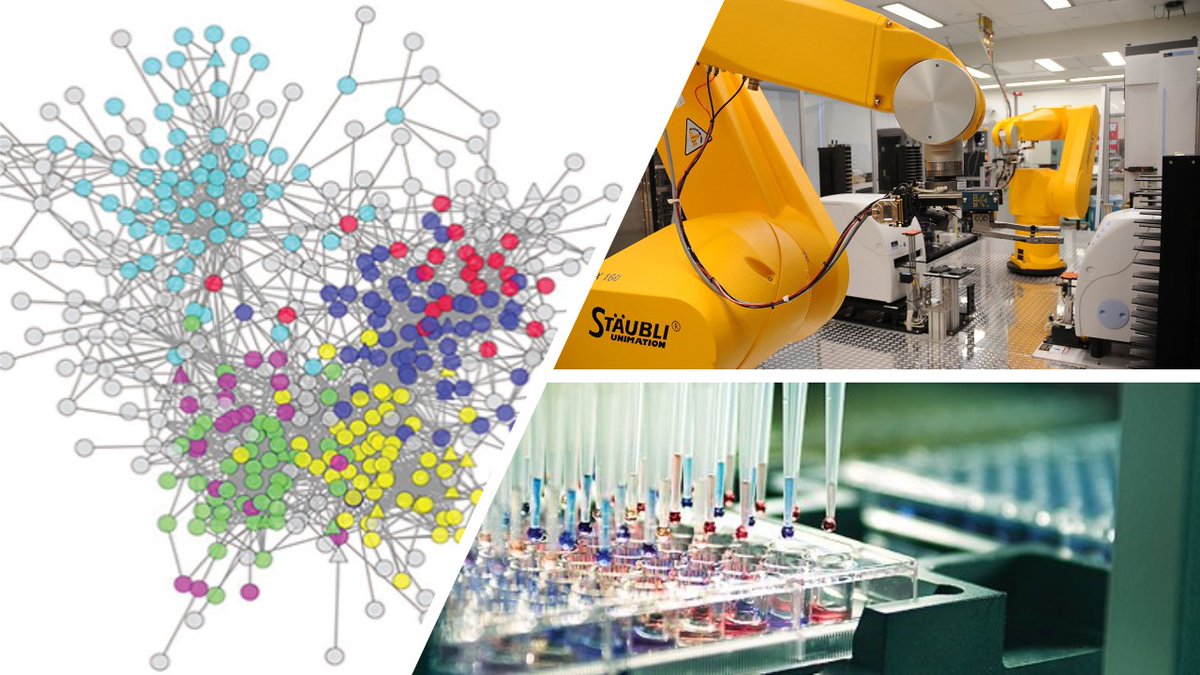
Calling Scientists! Please sign our open letter/petition to support #animalfree #humanbased biomedical #research in Italy! Spread the word! oltrelasperimentazioneanimal…
3