
10h
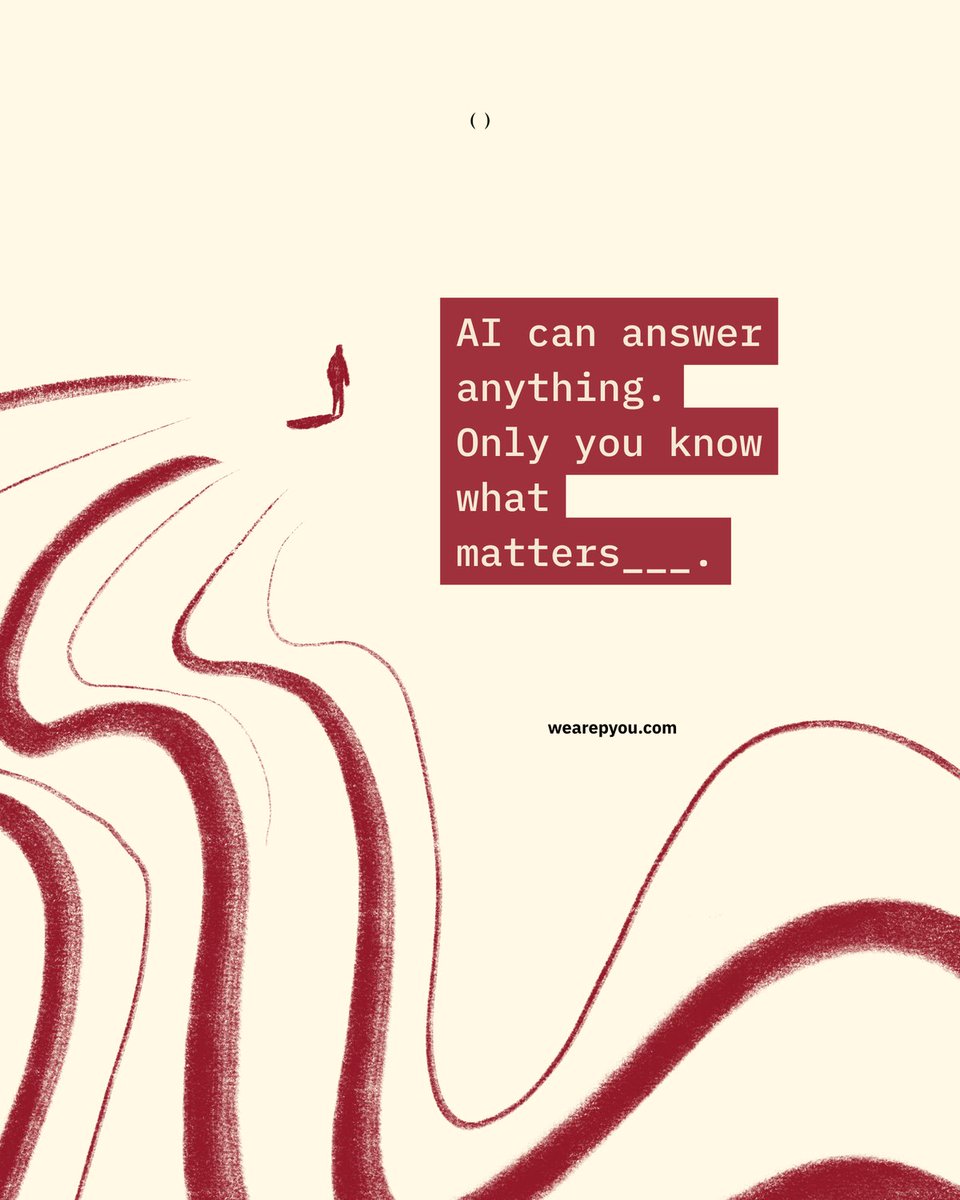
Getting answers has never been easier.
Knowing what to do with them is still down to you.
#AI #HumanSkills #CriticalThinking #HumanCenteredAI #Leadership
4

China and the UK are exploring cooperation on human-centered AI as governments worldwide race to establish ethical standards for a technology expected to contribute trillions of dollars to the global economy. As AI becomes a strategic asset, balancing innovation with safety is emerging as a shared challenge.
#China #UK #Cooperation #HumanCenteredAI #Government #WorldWide #Technology

14
Years ago, Alessia Glaviano, then Head of Photography at Vogue Italia, wrote about my work in a way that stayed with me.
What mattered most was not only that she recognized the images.
It was that she saw the human layer behind them: dignity, vulnerability, hidden power, compassion, and the quiet force of a human story.
That has always been the foundation of my work.
After 22 years of photography and human archive practice, this is now expanding into Selection Lab / Soul Engine™ — a system for preserving human context, identity, memory, and meaning in the age of AI.
Human Archive / Artifact Sessions begin from the same root:
seeing what is already there more fully.
Selection Lab / Soul Engine™
preserve meaning under pressure.
#HumanArchive #SelectionLab #SoulEngine #HumanCenteredAI #Photography #VogueItalia

1
19

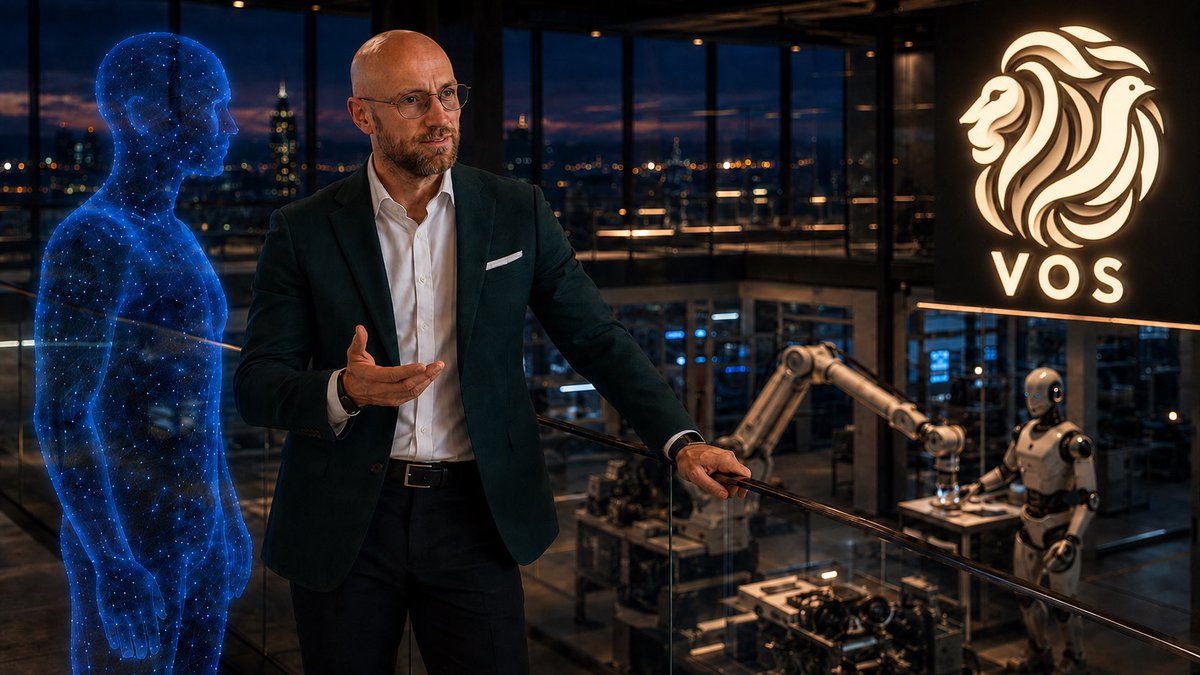
Every AI you have used so far lived behind glass. You typed a question, it answered, and when it got something wrong you closed the tab and lost nothing. Claude, ChatGPT, Gemini and the rest were the gentle introduction. That easy era is ending.
Jensen Huang has said it for months. The next wave of AI does not live on a screen. It moves in the physical world. A week ago he stood inside Hyundai in Seoul and told their engineers, this is your time, everything you have built will now be combined with AI.
The capital agrees. Days ago Jeff Bezos closed a twelve billion dollar round for Prometheus, his physical AI venture, now valued at forty one billion. His thesis is blunt. Text models have learned what the internet can teach. The next leap is physical. The goal is to make the path from idea to built object ten times faster, starting with drug discovery and rocket design.
That is the real story of physical AI, and most people are telling it wrong. The shift is not faster robots. It is machines that stop following our code and start learning how the world behaves.
But the keynote and the factory floor are not the same place. The forecast for humanoid robots in 2026 is around 30,000 units. They handle simple, repetitive, dangerous work, far from what a careful hand does without thinking. We spent hundreds of thousands of years evolving fine motor skill. The machines have had a few years of data. That gap has not closed.
So the temptation is to relax. Do not.
Because what decides who wins physical AI is not who buys the most robots or raises the most money. It is who can actually absorb it. And that has almost nothing to do with hardware.
When AI lived behind glass, a mistake was a bad sentence. When it acts in the physical world, a mistake has weight. It drops a load, stops a line, hurts someone. The stakes do not move to the machine. They land on the people who built the work around it.
This is a leadership problem long before it is a robotics problem. The readiness research is blunt. Strong technology with an unprepared workforce does not create transformation. It creates failed pilots.
The organizations that win will treat physical AI as what it is. Not a purchase. A transformation. They redesign roles before they deploy units. They build the new jobs it demands, robot trainers, fleet supervisors, integrators, and move people up into them on purpose.
None of that is hardware. All of it is human, and all of it is delivery.
Bezos insists this will not kill jobs. He is right only if we make it so. The expertise your people built over years becomes the foundation everything stands on, but only if someone builds the bridge from what they know to what is coming.
The glass is about to disappear. The real question was never whether AI can act in the world. It is whether we have prepared our people to lead it when it does.
#AI #FutureOfWork #HumanCenteredAI
- Image created with support of GenAI -
79

In the AI era, creating explanations becomes cheaper.
Understanding does not.
The bottleneck is no longer information production.
It is feedback.
#AIGovernance #HumanCenteredAI
1
6

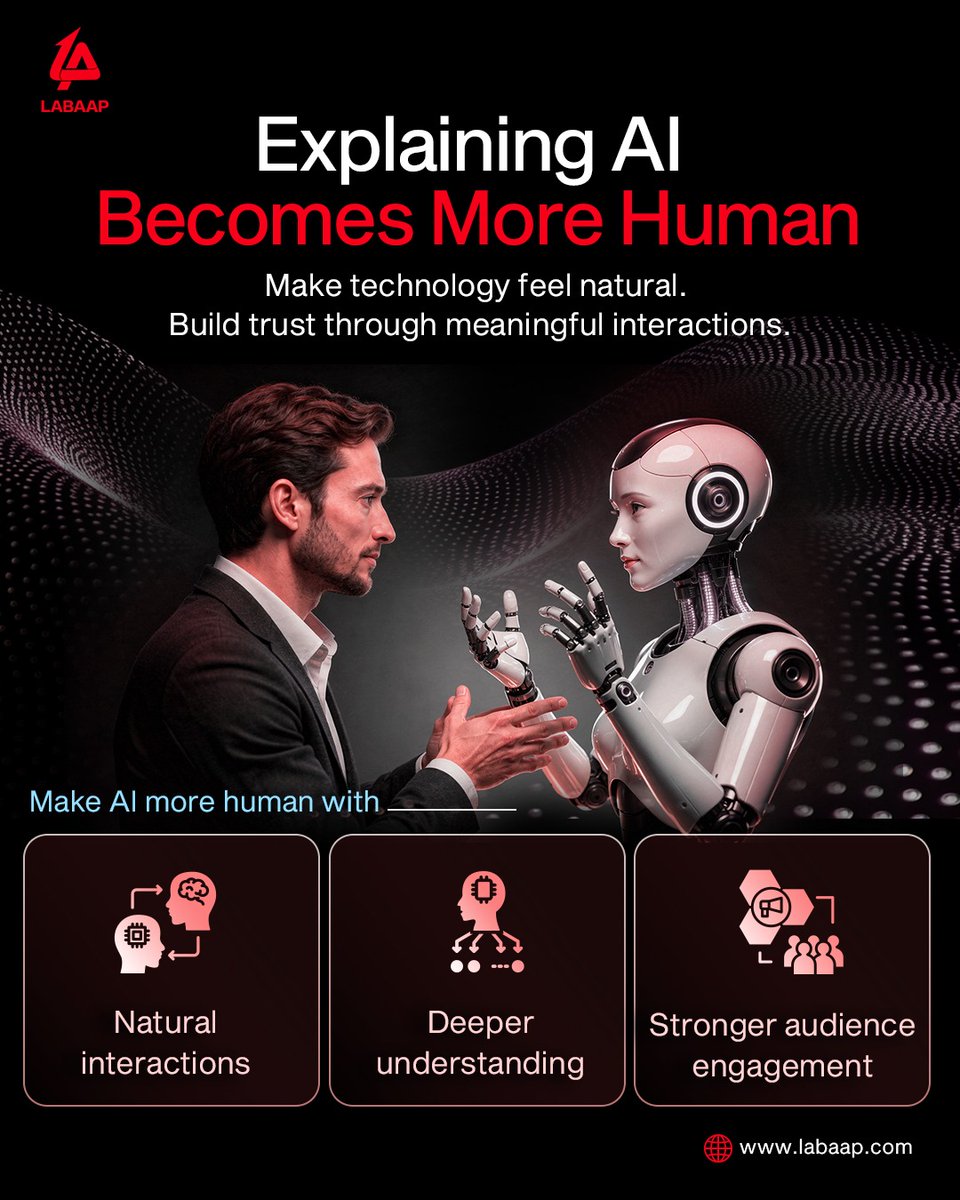
Making AI More Human for Better Engagement
When AI feels more human, it builds trust, improves understanding, and creates deeper, more meaningful audience engagement.
#ArtificialIntelligence #AI #HumanCenteredAI #Innovation #BusinessGrowth #TechInnovation #BrandTrust
1

Jun 13
In an age where Artificial Intelligence is rapidly reshaping education, one fundamental question stands out: What must remain irreducibly human?
We are proud to highlight a powerful and timely report titled “Non-Negotiable Skills in the Future of Education with AI” fii-institute.org/publicatio…
Authored by Radhika Iyengar, Esther E. Gottlieb, and Filipe Medon, under the leadership of Professor Yanis Ben Amor, and jointly published by the FII Institute, Riyadh, and Columbia University – Center for Sustainable Development, Columbia Climate School, New York.
This report delivers a clear and urgent message:
“AI is not the main problem — our response to it is.”It warns against the growing danger of cognitive offloading, in which overreliance on AI threatens human agency, judgment, and independent thinking.
It also highlights critical risks such as digital colonialism, particularly for countries in the Global South, and cautions that education systems risk turning students into passive consumers of AI-generated content rather than active thinkers.
The report strongly advocates that education systems must:
Proactively redesign curricula now rather than react later.
Prioritize slow, deep, and analog practices such as handwriting, journaling, reflection, and discussion.
Clearly distinguish between what should be digital and what must remain non-digital
Focus on the process of thinking, not just the final product.
Support teachers in using AI as a powerful tool—not to replace them.
As the report beautifully states:
“The issue with the introduction of AI in educational environments is not how much learners and professionals use AI, but how they use it — and whether that use deepens or diminishes their human capabilities.”
We are especially proud that our team member, Pratham Rawat, has been featured as a contributor in this landmark report. This marks his first global publication in collaboration with Columbia University — a significant achievement at such a young age.
Heartfelt thanks to Radhika Iyengar for recognizing Pratham’s potential and including him on this distinguished team. This report is essential reading for educators, school administrators, and policymakers navigating the AI era.
#NonNegotiableSkills #FutureOfEducation #AIinEducation #GreenMentors #ColumbiaUniversity #FIIInstitute #EducationPolicy #HumanCenteredAI #PrathamRawat #RadhikaIyengar
28

Jun 13
🏁 Closing Perspective: Engineering Reliable Intelligence for the Physical World — the powerful 100th and final paper in this landmark technical series from @aasaitech.
Just read this excellent capstone white paper that synthesizes everything into a rigorous framework for building safe, reliable, useful, and maintainable LLM/agentic systems in high-stakes industrial and edge environments.
Key highlights: • Core challenge: Reliable intelligence amid uncertainty, high stakes, complex integration, and evolving systems • Engineering response: Systems thinking verification human oversight domain expertise robust operations • Success dimensions: Empowered people, safe & resilient operations, sustainable progress, organizational advantage • Human AI partnership: AI for speed/scale/insight; Humans for judgment/values/wisdom
This is the perfect culmination — turning all prior papers into actionable, responsible engineering for manufacturing and edge orchestration.
Full white paper infographic: x.com/aasaitech/status/20656…
Huge thanks to DIVINE FORCE who helped me keep going for this comprehensive 100-paper journey. It is a masterclass in production-grade industrial AI.
It’s my biggest takeaway for building reliable physical-world intelligence?
#ReliableAI #IndustrialAI #AgenticAI #HumanCenteredAI #ManufacturingAI #EdgeAI #ResponsibleAI

13
Jun 13
🌟 Human Flourishing as the Ultimate Purpose of Industrial AI — the profound values-based capstone and grand finale that anchors every technical layer (architecture, agents, edge deployment, governance, verification, human-AI teaming, etc.) in meaningful, ethical, and sustainable impact.
Just read this excellent concluding technical white paper from @aasaitech — the perfect synthesis of the entire series.
Key highlights: • Core vision: Technology is a means. Human flourishing is the purpose — reduce drudgery, amplify expertise, improve safety, drive innovation, empower people, contribute to society • 6 guiding principles: Human-centered, sustainable, ethical, value-aligned, inclusive, long-term thinking • Positive cycle: Understand needs → Design purposeful solutions → Deliver impact → Empower → Drive progress → Enhance flourishing • Human AI partnership: AI provides scale/speed/consistency; Humans provide judgment/creativity/empathy/wisdom
Build with empathy. Design with purpose. Deliver with impact. This is how we create AI that truly serves manufacturing, edge orchestration, and humanity.
Full white paper infographic: x.com/aasaitech/status/20656…
What does “human flourishing through AI” mean in your work — reducing hazardous tasks, amplifying operator expertise, or building sustainable, ethical systems?
#HumanFlourishing #PurposeDrivenAI #ResponsibleAI #IndustrialAI #HumanCenteredAI #AgenticAI #ManufacturingAI #EdgeAI
6
Jun 13
🧠 Human Judgment in AI Product Design — the irreplaceable human-centered layer that turns powerful technical capabilities into responsible, meaningful, tasteful, and truly valuable AI products.
Just read this excellent grand finale technical white paper from @aasaitech — the perfect humanistic conclusion to the entire series.
Key highlights: • Why human judgment remains essential: Context & nuance, ethical/moral choices, taste & aesthetics, empathy, creativity & originality • HITL advantage: AI generates → Humans evaluate/refine/decide → AI learns & improves • Where judgment matters most: UX, content quality/safety, branding, prioritization, ethics/governance, inclusion & fairness • Principles, pitfalls to avoid, human AI partnership, and culture that values judgment
Technology creates possibility. Human taste, values, and oversight create lasting excellence. This is how we build AI products that are not only powerful but deeply human and responsible — especially in industrial and edge orchestration.
Full white paper infographic: x.com/aasaitech/status/20656…
How do you protect and amplify human judgment in your AI product development — strong HITL at critical points, ethical review processes, or full human-centered design frameworks?
#HumanCenteredAI #HumanJudgment #ResponsibleAI #IndustrialAI #AgenticAI #ManufacturingAI #EdgeAI
7

Jun 12
I’ve posted an updated v0.2 version of my presentation:
Meta-Cognitive Intuition Signals for Agent Governance
A Formal Framework for Safe Autonomous Systems
The core question remains the same:
How do we preserve useful autonomy without allowing an agent to silently expand its authority?
The v0.2 update tightens the formal boundary.
The claim is not that the agent is safe in all conditions.
The narrower and stronger claim is this:
Intuition-driven procedural adaptation cannot expand the externally fixed authority boundary.
That distinction matters.
An agent may generate plans, reason, adapt, respond to uncertainty, detect risk, recognize novelty, approach constraint boundaries, or compare the present state to historical analogs.
Those signals may change procedure.
They may raise thresholds.
They may deepen review.
They may trigger escalation.
They may narrow action.
They may refuse execution.
But they may not authorize.
In v0.2, I added explicit governing assumptions, cleaned up the notation, clarified the historical analog signal, strengthened the authority non-expansion theorem, tightened the emergency exception language, and added a simple worked example:
If an agent is authorized only to notify a human, pause a workflow, or request review, then no amount of uncertainty, urgency, novelty, or internal confidence can make “execute payment” admissible.
The system may escalate.
It may pause.
It may request review.
It may not execute payment.
That is the boundary.
The presentation also includes a deterministic enforcement pattern using Vector Symbolic Architecture, replayable traces, bounded procedural adaptation, and admissibility checks designed to preserve authority boundaries while still allowing useful agentic operation.
This is part of the Genesis AiX / LifeStack direction:
governance before consequence,
authority before action,
replayability before trust.
The goal is not to eliminate AI autonomy.
The goal is to make autonomy bounded, verifiable, and accountable before it becomes load-bearing.
PDF attached.
Interactive narrated version available here: lnkd.in/e9ZgcKsP
#GenesisAiX #LifeStack #AgenticAI #AIGovernance #RuntimeGovernance #AISafety #ResponsibleAI #TrustworthyAI #AutonomousAgents #ExecutionGovernance #AIInfrastructure #VectorSymbolicArchitecture #GovernanceByDesign #HumanCenteredAI
15

Jun 12
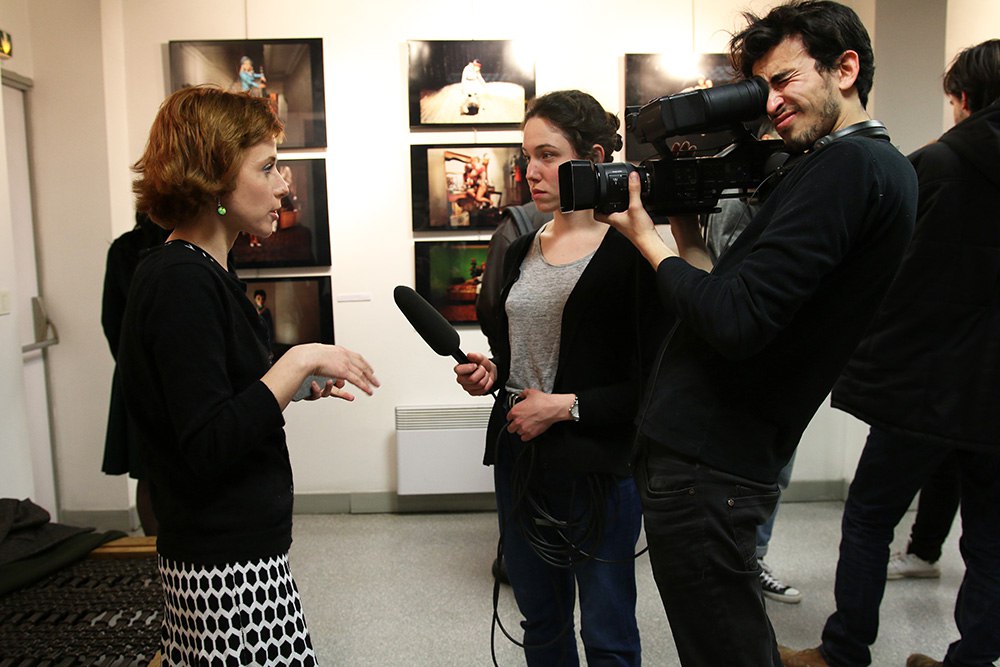
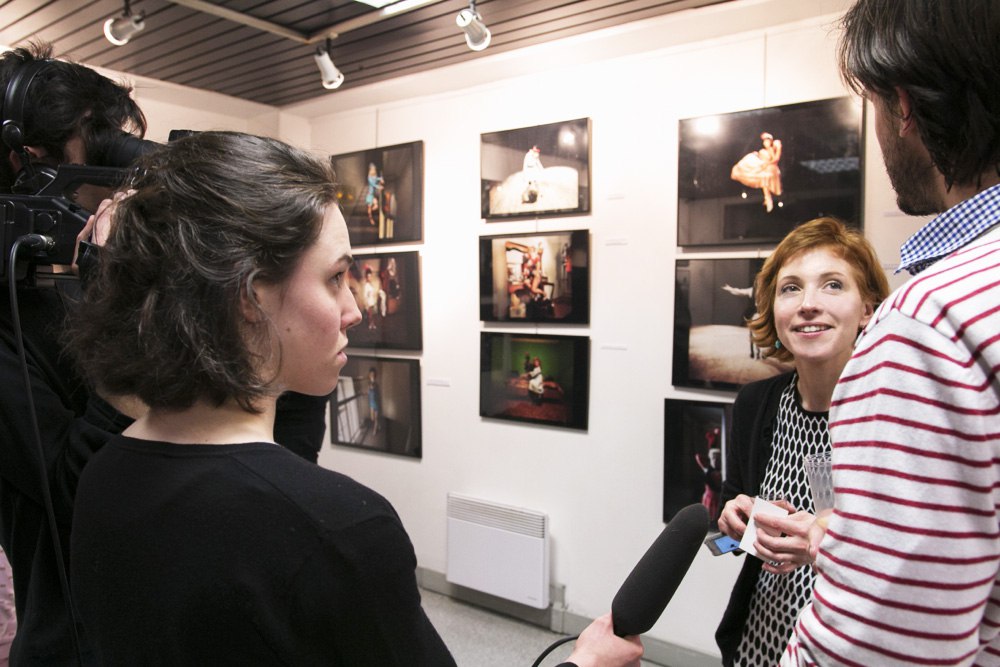
“Sometimes art can change how people see the world.
But I want to change how the world sees people.”
I wrote this years ago.
From an exhibition in Paris, 2017.
Before Selection Lab / Soul Engine™ took the form of an AI reliability project, it existed as a long visual investigation of people, identity, performance, memory, and social systems.
This work moved through photography, documentary observation, exhibitions, and the preservation of real human context.
At the time, I was not yet using words like human signal, institutional memory, data integrity, or AI reliability.
But the core question was already there:
What remains human inside an image, a story, a role, an institution, a system?
And how do we preserve real context when people, technologies, and narratives keep changing?
Today, the same question has moved into AI.
As synthetic data, automated content, and AI-generated narratives expand, authentic human signal becomes more important — not less.
Selection Lab / Soul Engine™ continues this long line of work as human-grounded AI infrastructure: preserving context, memory, authorship, and real-world human complexity as systems become more automated.
theselectionlab.ai/genesis
#SelectionLab #SoulEngine #AI #AIReliability #HumanSignal #InstitutionalMemory #DataIntegrity #Archive #VisualStorytelling #Photography #HumanCenteredAI #AIInfrastructure


22


Jun 12
🟣 Pi Network chưa bao giờ nói rằng Họ muốn thay thế tiền pháp định . Có lẽ tương lai sẽ tồn tại song song hai thế giới :
🏦 Fiat cho nền kinh tế truyền thống
🌐 Web3 cho nền kinh tế Internet - AI, ứng dụng số và hàng tỷ giao dịch trực tuyến sẽ cần một lớp thanh toán mới
Pi đang tự định vị mình như một đồng tiền phục vụ nền kinh tế số lấy con người làm trung tâm . Không phải "Fiat hay Pi" . Mà là : Fiat Pi
Hai Dòng Tiền song song cho hai thế giới đang dần hợp nhất
#PiNetwork #Web3 #AI #DigitalEconomy #FutureOfMoney #Pioneer #PiCoin #HumanCenteredAI #OnePiOnePi

2
7
69
1,983

Jun 12
People keep asking whether AI is corrupting our thinking.
My experience has been the opposite.
When I’m walking down the street and an idea hits me, I don’t always have a laptop, notebook, or time to sit down and develop it. Instead of losing the thought, I pull out my phone, capture the idea, and ask ChatGPT to help me expand it, create a plan, and give me a roadmap for picking up where I left off.
AI doesn’t replace my thinking. It preserves it.
You only surrender your agency to AI if you choose to. Used intentionally, it can become a force multiplier for human creativity, helping you act on inspiration before it disappears.
#AI
#ArtificialIntelligence
#HumanCenteredAI
#FutureOfWork
#Productivity
#Innovation
#MetabolicArchitecture
#DAOFitLife
31
Jun 12
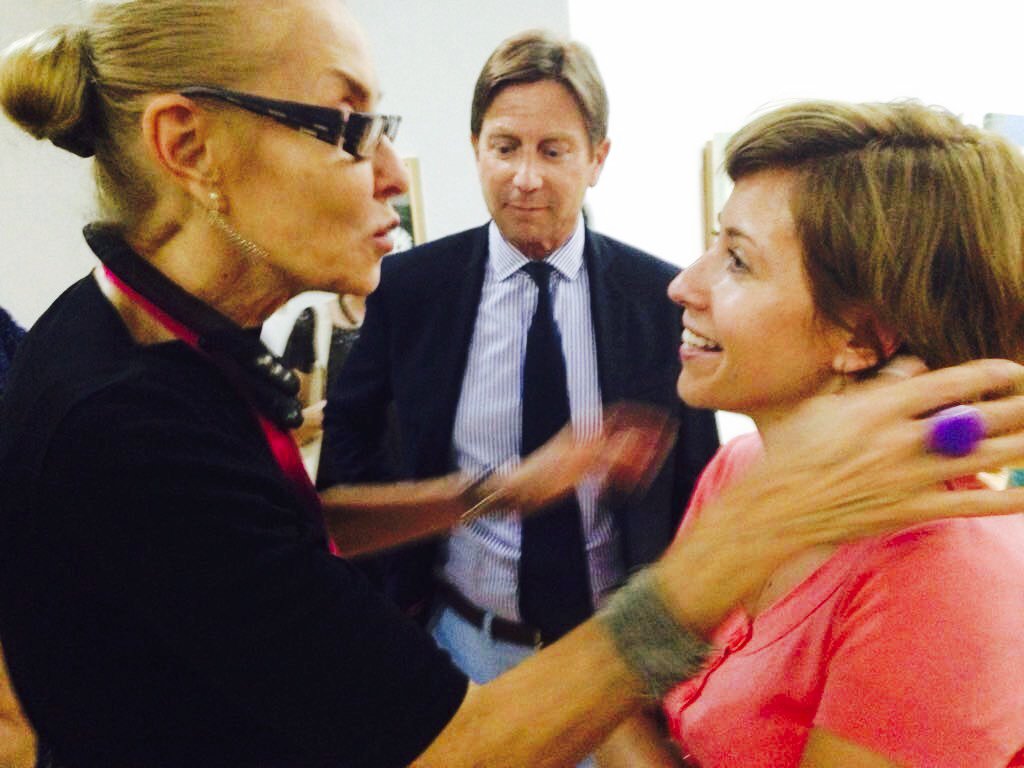
From my graduation at Rodchenko Art School.
In the photo, a moment with Olga Sviblova.
For me, this is not only a personal archive, but part of the professional line that later became Selection Lab / Soul Engine™.
Rodchenko Art School was an important environment for contemporary photography, media, and visual art — a place shaped by rigorous selection, strong intellectual practice, and deep work with image, document, context, and authorship.
At the time, my work was focused on the visual study of people, environments, memory, and social systems.
I was not yet using words like human signal, institutional memory, or AI reliability.
But the question was already the same:
What remains of a person in an image, a story, a gesture, an archive, a system?
And how do we preserve authentic human context as the world becomes faster, more complex, and more technological?
Today, this question has moved into the field of AI.
Selection Lab / Soul Engine™ continues this line as a study of human signal, archival memory, data trust, and human-grounded AI reliability.
#SelectionLab #SoulEngine #AI #AIReliability #HumanSignal #InstitutionalMemory #DataIntegrity #HumanCenteredAI #ResponsibleAI #Archive #VisualCulture #MediaArt #Photography #RodchenkoArtSchool #ContemporaryPhotography #AIInfrastructure
35

Jun 12
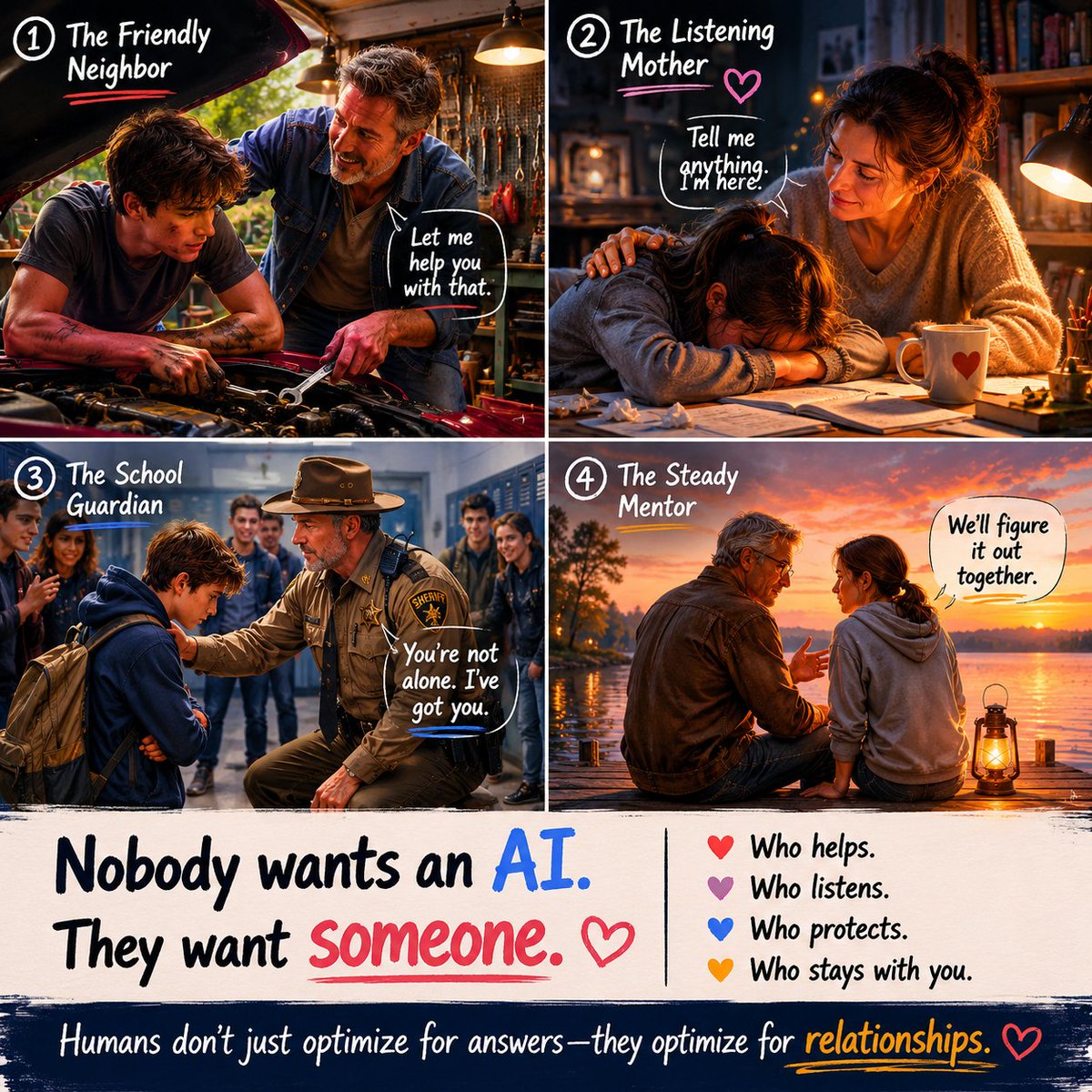
We rarely search for a machine.
We search for understanding.
A trusted neighbor.
A patient mentor.
A comforting voice.
A quiet guardian.
Perhaps that's the AI people have wanted all along.
#HumanCenteredAI #RelationalAI
7
98
Jun 12
The future is not built by technology alone.
It is built by the environments that know how to receive technology, govern it, trust it, and connect it back to people.
Today, every serious conversation about AI eventually becomes a conversation about infrastructure: financial infrastructure, institutional infrastructure, data infrastructure, talent infrastructure, and the invisible human context that allows systems to remain meaningful under pressure.
The strongest cities and organizations are not only adopting AI. They are asking deeper questions:
What should AI be trusted with?
What human signal must be preserved?
What kind of institutions can use intelligence without losing judgment?
What kind of future are we actually building?
This is where AI becomes more than automation.
It becomes a question of memory, responsibility, reliability, and long-term human value.
#AI #ArtificialIntelligence #AIReliability #AIInfrastructure #DigitalTransformation #FutureOfWork #Innovation #HumanCenteredAI #ResponsibleAI #DataIntegrity #InstitutionalTrust #Leadership #FutureCities #UAE #Dubai
1
19

Check out my latest article: THE CREATOR IDENTITY ENGINE: TRUST BY DESIGN linkedin.com/pulse/creator-i… via @LinkedIn #CreatorIdentityEngine #TrustByDesign #DigitalIdentity #DigitalTrust
#Transparency #Authenticity #HumanCenteredAI #AISearch #DigitalEcosystems
#DigitalAuthority
14

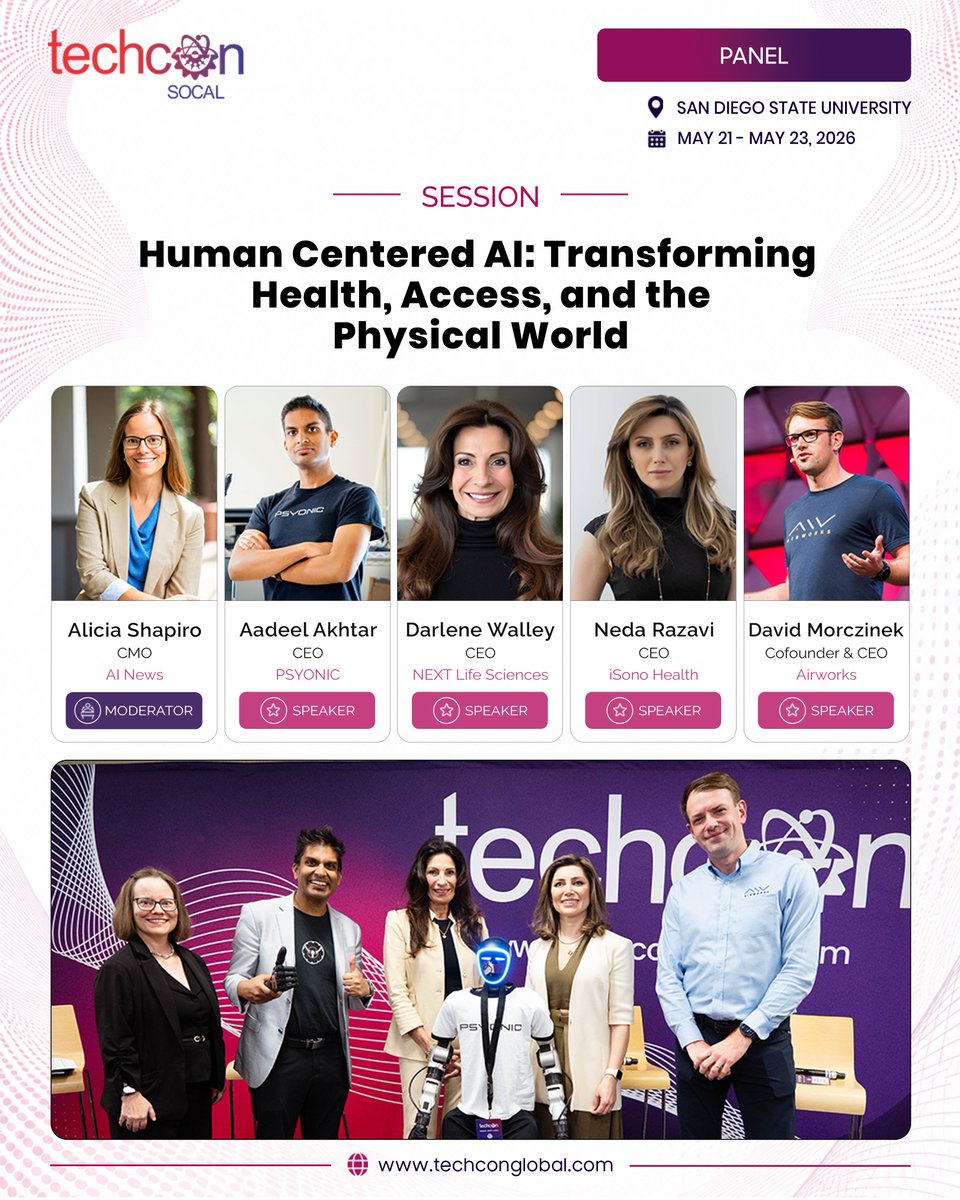
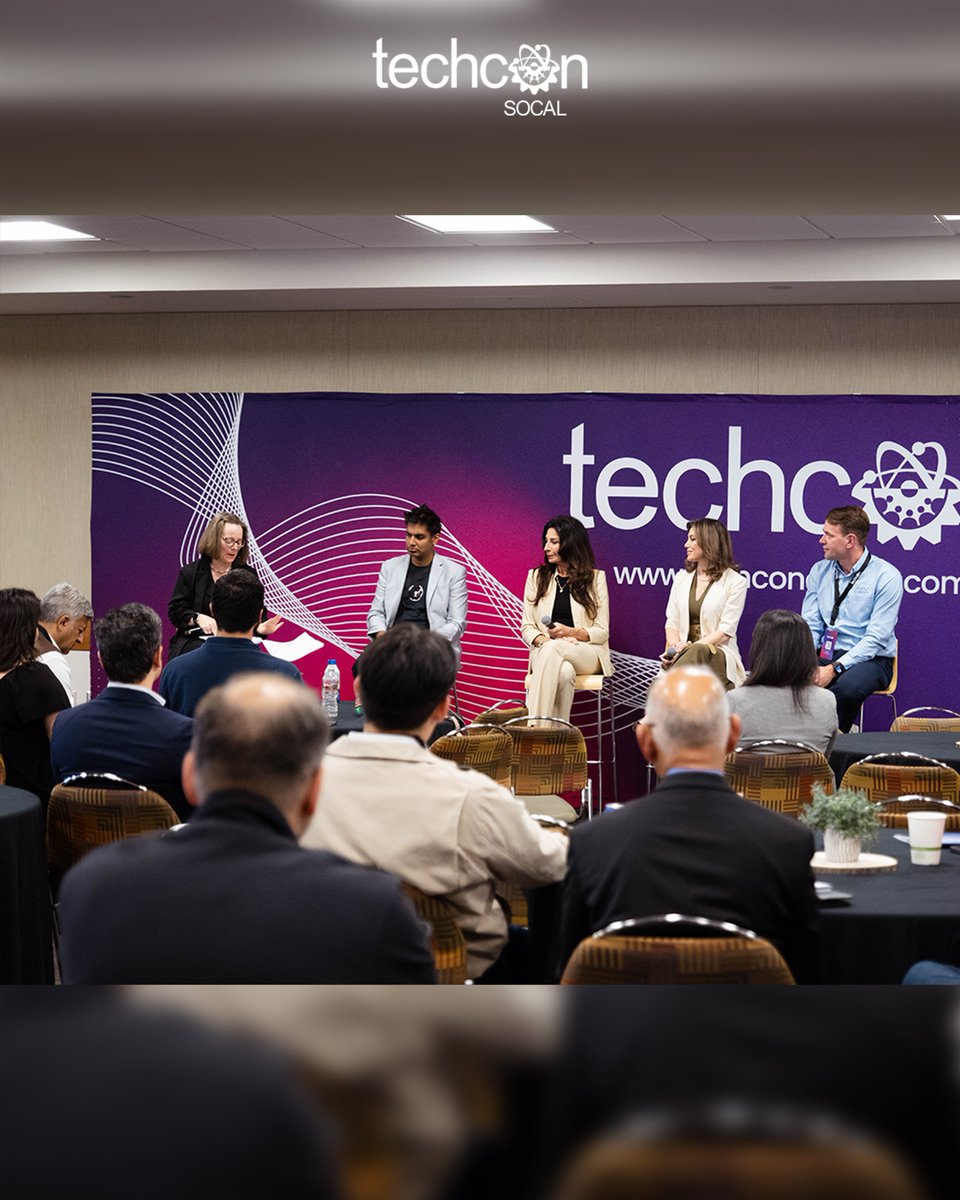
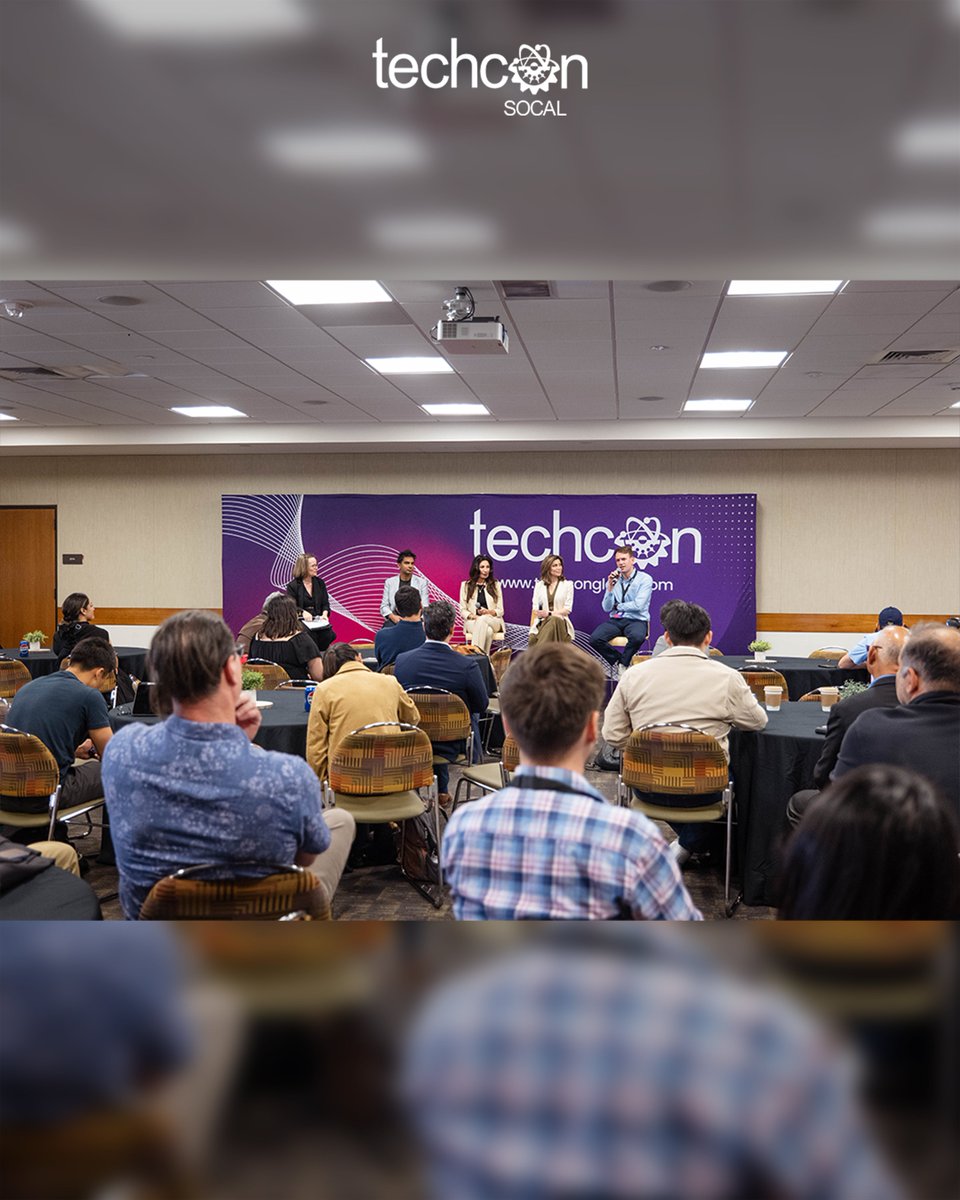
𝗛𝘂𝗺𝗮𝗻 𝗖𝗲𝗻𝘁𝗲𝗿𝗲𝗱 𝗔𝗜: 𝗧𝗿𝗮𝗻𝘀𝗳𝗼𝗿𝗺𝗶𝗻𝗴 𝗛𝗲𝗮𝗹𝘁𝗵, 𝗔𝗰𝗰𝗲𝘀𝘀, 𝗮𝗻𝗱 𝘁𝗵𝗲 𝗣𝗵𝘆𝘀𝗶𝗰𝗮𝗹 𝗪𝗼𝗿𝗹𝗱 | 𝗣𝗮𝗻𝗲𝗹 — 𝗧𝗲𝗰𝗵𝗖𝗼𝗻 𝗦𝗼𝗖𝗮𝗹 𝟮𝟬𝟮𝟲
The strongest AI conversations are not only about models, speed, or automation. They are about what technology makes possible for people.
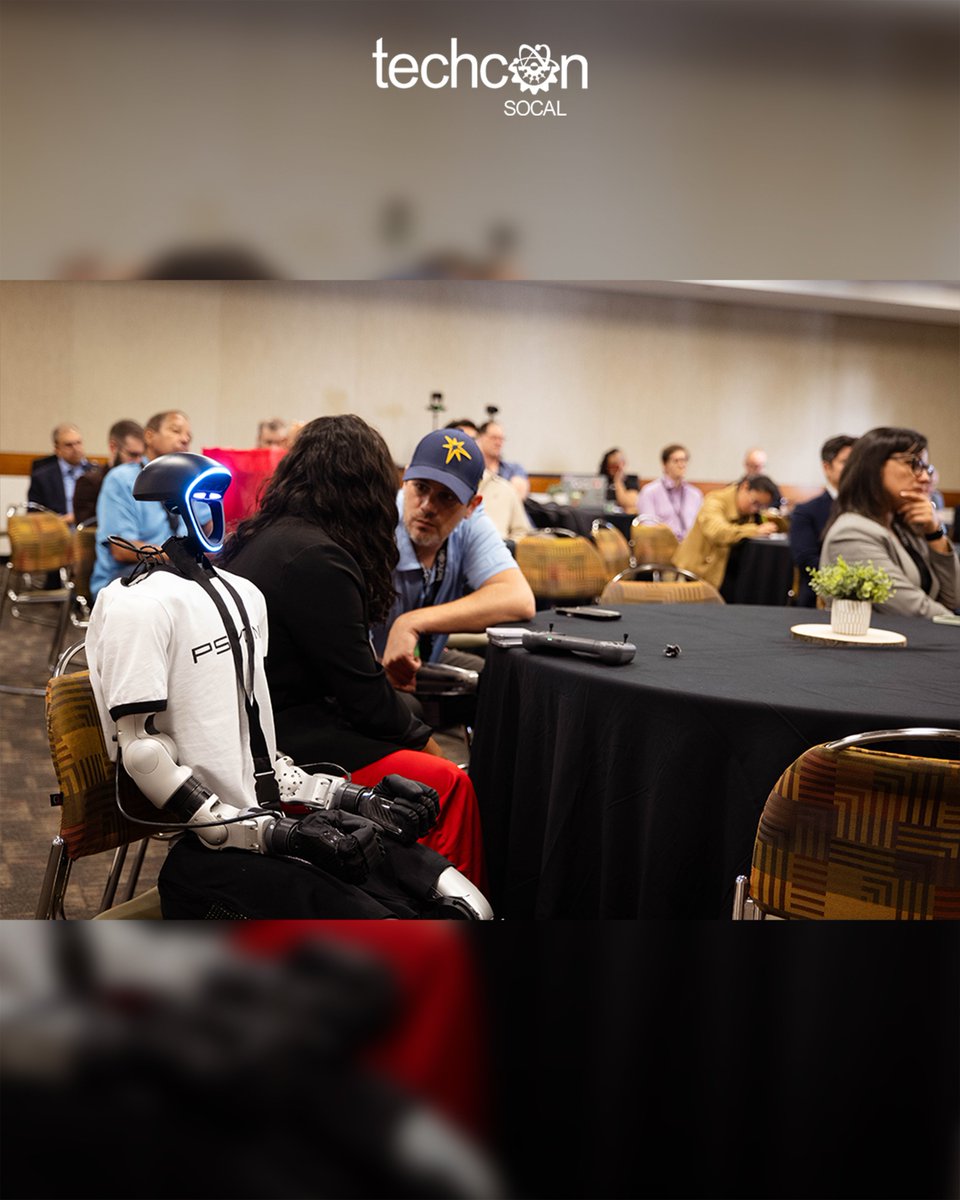
This session focused on human-centered AI and how intelligent systems are transforming healthcare, accessibility, diagnostics, mobility, and the physical world around us.
𝗠𝗼𝗱𝗲𝗿𝗮𝘁𝗼𝗿: Alicia Shapiro, CMO, AI News
𝗦𝗽𝗲𝗮𝗸𝗲𝗿𝘀: Aadeel Akhtar, CEO, PSYONIC | Darlene Walley, CEO, NEXT Life Sciences | Neda Razavi, CEO, iSono Health | David Morczinek, Co-Founder & CEO, Airworks
The discussion brought together founders building AI-enabled solutions with real-world impact — from advanced prosthetics and fertility innovation to medical imaging and infrastructure intelligence.
What stood out was the shared focus on practical outcomes: improving access, supporting better decisions, and building technology that works in the environments where people actually live and operate.
This is where AI becomes more than a tool. It becomes a bridge between innovation and human progress.
𝗘𝘅𝗽𝗹𝗼𝗿𝗲 𝗧𝗲𝗰𝗵𝗖𝗼𝗻 𝗦𝗼𝗖𝗮𝗹 𝟮𝟬𝟮𝟲 𝗣𝗵𝗼𝘁𝗼𝘀 → photos.techconglobal.com/Pub…
#TechConSoCal #HumanCenteredAI #AIforGood #HealthTech #DigitalHealth #Robotics #Innovation #StartupEcosystem #TechConGlobal
1
25