Henntai retweeted

💯New video: watch now! 😍
💘Our Stunning Queen of Insertions💘 on @faphousecom
👉faphouse.com/go/X193O👈
#Amateur #Blonde #Milf #Gaping #Dildo #Ass #ExtremeInsertion
1
7
90
2,000

Il a un très bon physique mais il n'est pas gifted naturellement. Je connais des jeunes de cité mieux tracé.
Ses insertions sont plutôt bof mais c'est de naissance et il ne peut rien y faire (sans tricher)
Il a sans doute poussé au max, Bravo à lui.
2
476
SlaylaAltAcc retweeted

VIBRATOR INSERTIONS ARE FUCKING TOP TIER BTW I LOVEEEEE THEM😵💫😵💫😵💫😵💫😵💫😵💫😵💫😵💫😵💫
11
422
5,194
128,322
candila retweeted

Jun 13
VID SOLD! Red Bull insertions, self fisting, and squirting 20F whore 🔥 Check it out! manyvids.com/Video/4835474/R… #MVSales @manyvids
1
6
54
1,160
Biotweets retweeted

Over 600 muscles.
Over 600 origins.
Over 600 insertions.
Exactly O patient questions about them
#MedTwitter #MBBS
1
34

#MediaBytes NATIONAL | New Senate Finance chief JV Ejercito vows to reform the budget process by banning unauthorized, last-minute project insertions.
READ MORE: mediabytesph.com/national/ej…

1
16

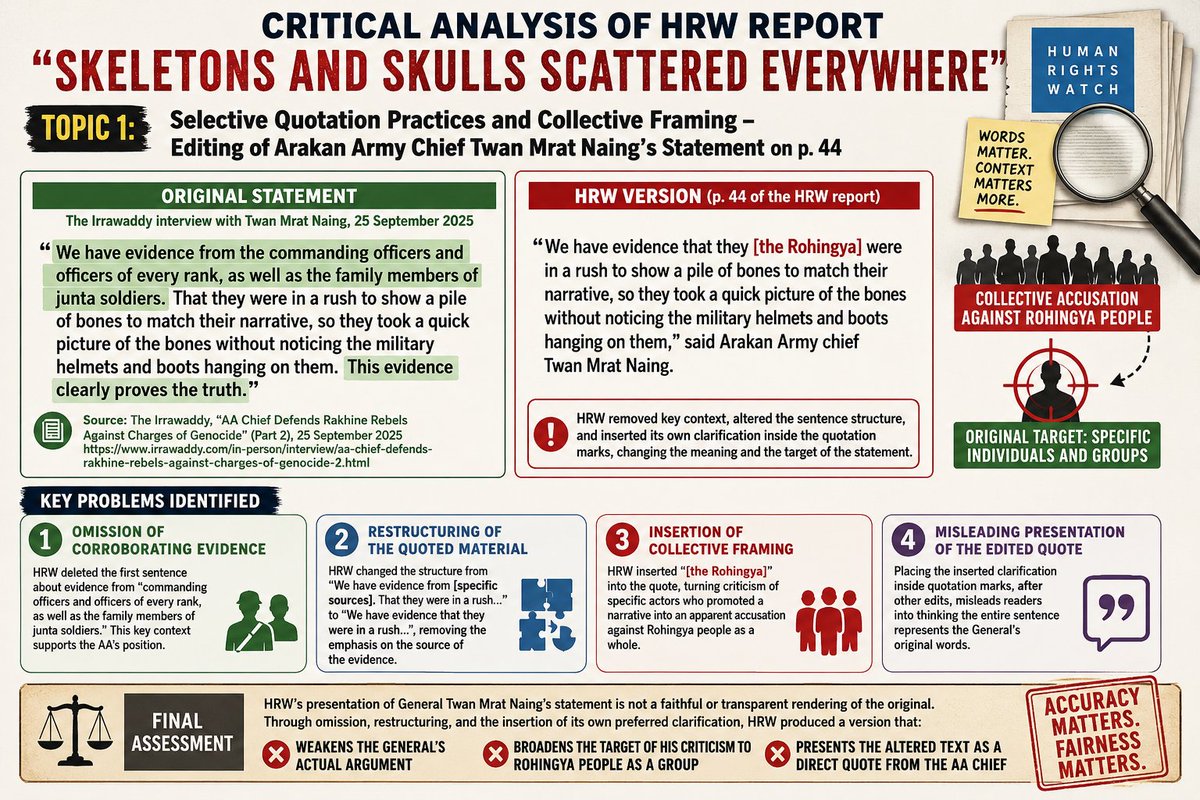
Critical Analysis of HRW Report “Skeletons and Skulls Scattered Everywhere
Topic 1: Selective Quotation Practices and Collective Framing and Editing of Arakan Army Chief Twan Mrat Naing’s Statement on p. 44
Overview of the Issue
In its report on the Hoyyar Siri (Htan Shauk Khan) incident, Human Rights Watch presented a heavily edited and restructured version of Arakan Army Chief Twan Mrat Naing’s statement as a direct quotation. HRW removed key context, altered the sentence structure, and inserted its own clarification inside the quotation marks. These changes narrow the General’s actual meaning and portray him as making a collective accusation against Rohingya people, rather than criticizing specific individuals who promoted a particular narrative.
Direct Comparison of Statements
**Original statement** (The Irrawaddy interview with Twan Mrat Naing, 25 September 2025):
“We have evidence from the commanding officers and officers of every rank, as well as the family members of junta soldiers. That they were in a rush to show a pile of bones to match their narrative, so they took a quick picture of the bones without noticing the military helmets and boots hanging on them. This evidence clearly proves the truth.”
**Source:** The Irrawaddy, “AA Chief Defends Rakhine Rebels Against Charges of Genocide” (Part 2), 25 September 2025 →
**HRW version** (p. 44 of the HRW report):
“We have evidence that they [the Rohingya] were in a rush to show a pile of bones to match their narrative, so they took a quick picture of the bones without noticing the military helmets and boots hanging on them,” said Arakan Army chief Twan Mrat Naing.
Key Problems Identified
**1. Omission of Corroborating Evidence**
HRW deleted the first sentence in which the General states that the Arakan Army has supporting evidence from “commanding officers and officers of every rank, as well as the family members of junta soldiers.” This clause is central to the AA’s position — it claims independent corroboration from the other side. Removing it makes the General’s statement appear thinner and more conspiratorial than it was.
**2. Restructuring of the Quoted Material**
HRW changed the structure from “We have evidence from [specific sources]. That they were in a rush…” to “We have evidence that they were in a rush…” This is not a neutral edit. It removes the General’s emphasis on the *source* of the evidence and presents the reworded version inside quotation marks as his own words.
**3. Insertion of Collective Framing**
The most serious distortion is HRW’s addition of the bracketed clarification **[the Rohingya]**.
In the original interview, General Twan Mrat Naing used the pronoun **“they”** to refer to the specific individuals and groups who returned to the area, took photographs of the remains, and rushed to publicize those images on social media and to foreign media in support of the claim that the AA massacred civilians on 2 May 2024.
He was criticizing **those particular accusers** for their handling of the evidence. He did not make a statement about Rohingya people as a whole.
By inserting **[the Rohingya]**, HRW transforms the statement into an apparent accusation against **the Rohingya collectively**. This editorial choice significantly broadens and sharpens the criticism in a way the speaker did not intend. It shifts the target from specific actors promoting a narrative to the Rohingya community as a group.
**4. Misleading Presentation of the Edited Quote**
Although square brackets are conventionally used for editorial insertions, placing them inside an attributed direct quote — especially after other substantive edits — creates a misleading impression. Readers are likely to understand the full sentence as the General’s own words. The result is that HRW presents a version in which the AA chief appears to be attacking Rohingya people broadly, rather than challenging the credibility of those who used the photographs to support a specific allegation.
Significance for Rakhine Documentation
The Hoyyar Siri (Htan Shauk Khan) incident involves serious and contested allegations of mass killing. In such cases, human rights organizations have a heightened responsibility to represent the statements of the accused party accurately and in context.
HRW’s editing does the opposite. It removes exculpatory context (the claimed evidence from junta sources), restructures the statement, and inserts language that makes the General appear to be making a collective ethnic accusation. These changes are not minor clarifications — they alter both the substance and the tone of what was actually said.
This approach undermines the credibility of the report on this specific point and raises legitimate concerns about selective framing in HRW’s documentation of Arakan Army actions in Rakhine State.
Final Assessment
Human Rights Watch’s presentation of General Twan Mrat Naing’s statement is not a faithful or transparent rendering of the original. Through omission, restructuring, and the insertion of its own preferred clarification inside the quotation, HRW produced a version that:
- Weakens the General’s actual argument;
- Broadens the target of his criticism from specific accusers to Rohingya people as a group; and
- Presents the altered text as a direct quote from the AA chief.
Such editing falls short of the standards of accuracy and fairness that should be expected in serious human rights documentation.
**Published: 15 June 2026 | Arakan Bay News Research Note**
scribd.com/document/10507843…
5
2
99

Genre c’est faux ce que je raconte et on a tous la même génétique et les mêmes insertions ? En mode y’a un seul modèle d’humain universel ? On est dans les sims peut-être aussi non ?
359

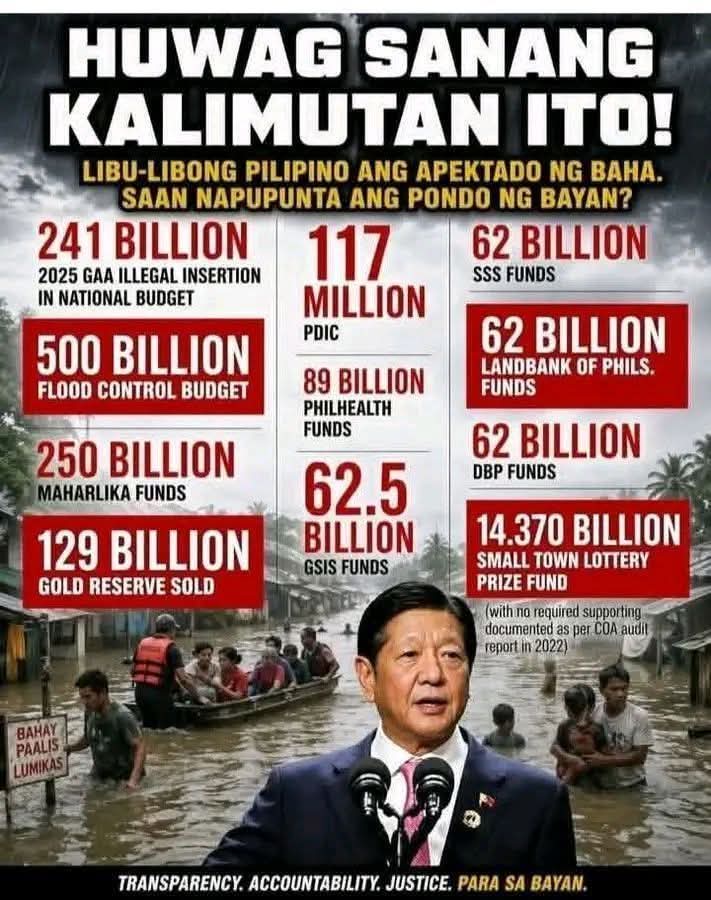
Dami insertions sa budget kung saan na nilagay at Di mo naman naramdaman. #marcosmagnanakaw
#onlyinthephilippines
#marcoskorap
9

omg same! literally more than half of my beta reader comments are always just comma insertions 🤣
1
234
TYFFF DFGVCC retweeted

Cute latina teen opening her butthole with different sized objects. #anal #insertions
1
202
2,271
45,322

Rey 'dspy' Marfil retweeted

Sen. JV Ejercito on Saturday vowed to curb last-minute budget insertions during the bicameral conference committee meetings, saying the move was necessary to prevent a repeat of the multibillion-peso flood control scandal that hounded the government’s infrastructure spending.
READ HERE: bnc.bilyonaryo.com/ejercito-…

1
1
6
450

All humans share roughly 98-99% of their DNA with chimpanzees based on standard genetic comparisons of aligned sequences, though recent analyses suggest the overall genome difference is larger when accounting for insertions, deletions, and structural variations. Please 🙏🏻 do your research 🧐 ‼️☝️😳
10
hhjkl retweeted
3
36
379
7,837

the gym is COPE. a powerful looking physique comes entirely from BONE and MUSCLE INSERTIONS. if you're short with a pathetic feminine frame, she will NEVER want you. EVER. keep wasting your time in the gym LMAO
435

RT @CrazyGirlsLive: Big ass latina anal lover shows off her skills revealing big prolapse & crazy anal insertions #anal #extreme #insertion…
129