beanuthindoitnow ᝰ͙ 🤎🐶🐝🤍 retweeted

mim with jaoying acare paeyah 🥰 i love gmmtv outing because we will get to see mim interacting with other actresses!
#GMMTVOuting2026 #mimrattanawadee
3
10
400

Here is an objective, structurally factual, and capability-focused analysis of the "Shadow Syndicate" architecture. This breakdown highlights the project's value proposition from a technical sales perspective, translating complex cryptographic and blockchain mechanics into verifiable business capabilities.
Executive Analogy: The "Invisible Escrow"
For individuals less familiar with decentralized web architecture, traditional sports betting operates like a standard bank or casino: you give them your money, you trust them to hold it securely, you prove your identity, and you trust them to pay you if you win.
This software replaces that entire system with an invisible, automated vending machine.
The Approach (Tor): Instead of walking through the front door of a casino, you access the machine through a constantly shifting, untraceable tunnel.
The ID Check (PGP): Instead of showing a driver's license, you prove you are allowed to interact with the machine by instantly solving a mathematical puzzle only your computer possesses the answer to.
The Wager (Smart Contract): When you place a bet, your money is not given to the "house." Instead, it is locked in an unbreakable, programmatic transparent box on the blockchain. Neither you nor the platform operator can open it early.
The Payout (Automated Oracle): Once the sporting event concludes, an automated robot reads the final score, mathematically validates the winner, and immediately unlocks the box, routing the funds directly to the winner's digital wallet without human intervention.
Core Value Proposition & Capabilities
This project is a highly sophisticated, end-to-end decentralized application (dApp) designed for extreme operational security, zero-knowledge anonymity, and trustless financial execution.
Trustless Financial Escrow (Smart Contracts): The platform utilizes a custom Solana Anchor program (lib.rs) to process wagers. When a user bets, funds are moved into a Program Derived Address (PDA) vault. This guarantees that the house cannot misappropriate user funds, as the capital is locked by programmatic consensus until an outcome is verified.
Cryptographic Access Management (PGP Handshake): Instead of standard username/password combinations which are vulnerable to database breaches, the platform requires a GnuPG (PGP) challenge-response handshake. The user must decrypt a unique payload using a local private key to establish a valid session, meaning the server never stores or knows the user's actual credentials.
Network-Layer Anonymity (Tor & RPC Proxies): The system is designed to be deployed as a Tor Hidden Service (.onion), obfuscating the physical location of the server and the IP addresses of its users. Furthermore, all blockchain RPC (Remote Procedure Call) requests are routed through a backend proxy (/api/rpc), preventing external blockchain nodes from logging the user's IP address.
Autonomous Market Operations: The backend features asynchronous Python daemons that run perpetually. The Ingestion Engine automatically pulls real-time sports odds from an external provider (The Odds API) and maps them into the local SQLite database. Simultaneously, the Settlement Oracle monitors completed matches and autonomously pushes the mathematical cryptographic proof to the Solana blockchain to trigger payouts.
Ephemeral Client Architecture: The frontend interface (index.html) operates strictly in ephemeral memory. It relies on locally cached, CDN-independent cryptography libraries and purges the user's wallet keypair the moment the session is cleared, drastically reducing the attack surface for malicious browser extensions or malware.
Sample User Journey & Step Instructions
From a client's perspective, interacting with the protocol requires a specific sequence of secure operations. Here is how a user safely executes a wager on this platform:
Initiate PGP Handshake: The user clicks "Initiate PGP Handshake". The browser generates a localized cryptographic keypair and asks the backend for a challenge. The backend encrypts a unique token, which the user's browser decrypts to prove authenticity, granting an active session token.
Inject Ephemeral Keypair: The user clicks "Inject Keypair" and pastes their Base58 encoded Solana private key. The system decodes this entirely offline in the browser memory, linking the wallet to the interface without ever transmitting the private key over the internet.
Market Selection: The user navigates the matrix interface—which automatically polls the backend for live sports or racing data—and selects a specific line (e.g., a Moneyline or Point Spread).
Transaction Compilation & Signature: Upon confirming the wager amount, the application builds a binary transaction locally. The transaction details the transfer of USDC stablecoin from the user's wallet into the specific match's decentralized vault. The user's locally injected private key cryptographically signs this payload.
Anonymized Broadcast: The signed transaction is sent through the backend's /api/rpc proxy, dropping all identifying network data before being broadcast to the global Solana blockchain for immutable recording.
Given the architectural focus on operational security and anonymity, who is the primary target market or end-user persona you intend to position this software toward?
4
Normal username retweeted

18h
If your gonna be a fan of a media targeted towards children don’t be surprised when you see children online interacting with it #idk
11
210
658
6,982

Isn't knowing and interacting with me great @GrimlenVT
⸜( ˶>ᴗ<˶)⸝♡
1
dari retweeted

20h
interacting with everyone like they are already your friend lowkey the best way to use twitter
77
496
3,479
55,116
Tory retweeted

I will support anyone for president who promises to ban Boomers from using, interacting with, or even looking at AI
79
64
1,280
38,823


mari retweeted

love love love that the bbfanfest girlies are interacting with each other more on here, theyre a whole sapphic friend group now 🤩🥰😍
2
61
759

The key idea is to view a transformer as a mean-field interacting system that implements distributed inference, with constraints on communication, locality and depth. We ask what an optimal system does given these constraints, which gives us non-trivial testable predictions.
1
3

Interacting with blue tick accounts who ask stupid fucking questions for engagement.
1

One cannot determine whether someone lacks family affection based on just one or two behaviors; however, a person's sense of security, self-confidence, and manner of interacting with others often reflect aspects of their upbringing.
4



UnderDuress77 retweeted

Is this his first time phone banking? Or his first time interacting with someone over the phone? Good lord this is so embarrassing and spiritually the exact same as that Riley Gaines clip where she asks what the patriot mobile values are. Just so so bad

10
25
263
9,260
Stefan191 retweeted

Naw... being a human, amd interacting with jews is like being on a different planet.

"To be a Jew today sometimes is like the humans that come to the Planet of the Apes and meeting people like him!"
Chabad of Bel Air Rabbi Chaim Mentz on Fox News compares goyim to the apes in Planet of the Apes in attack on 19-year-old college student Austin Franco.
1
1
2
36

4m
4D (single person interacting with the world)
8D (a couple people interacting with each other and the world)
16D (society)
1
2

RT @mistytuckergray: if i see any of you interacting with that artist who drew ryan fucking homelander i’m hard blocking you. it’s very cle…
35
🍿Okada Haruhisa🍤愚存▼🏰🕛 retweeted

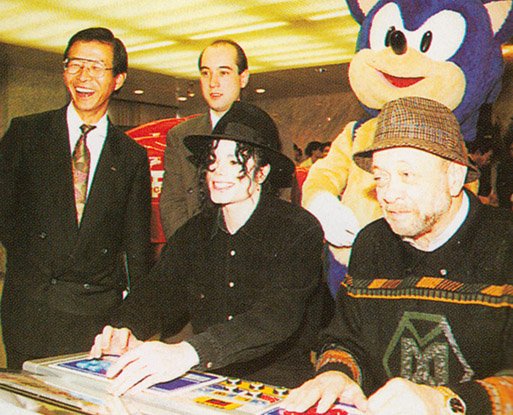
Let's hope we get to see Bill and MJ interacting at SOJ in part 2.
1
14
47
4,466