
14 Aug 2025
Live interview help with Preplink.ai Interview Copilot…because winging it is overrated 💜
Check it out at preplink.ai
#jobinterviewtips #aiinterview #interviewsecrets #techmagic #interviewhacks #preplink #interview #jobinterview #interviewtips #careeradvice #aitools #ai
4
45

2 Jan 2025
Account tt@finalroundai.com has a new viral video:
Views: 406,400
Likes: 4,835
Comments: 23
Shares / Bookmarks: 499 / 1,309
Engagement Rate: 1.64%
Outperforming Acc Median By: 575.64x
Caption: Send this to your friends that need to start using Finalround AI! (Link in bio) #jobinterviewtips #aiinterview #interviewsecrets #techmagic #interviewhacks #finalroundai #interview #jobinterview #interviewtips #careeradvice #aitools #ai
1
2
4
3,116

17 Dec 2024
Send this to your friends that need to start using JobJump! 😁😁😁
#jobinterviewtips #aiinterview #interviewsecrets #techmagic #interviewhacks #JobJump #interview #jobinterview #interviewtips #careeradvice #aitools #ai
3
74
9 Dec 2024
JobJump V1.3.0 is now live on the Chrome Web Store! 🎉 With personalized answer suggestions tailored to your resume, nailing your next interview just got easier. 📝✨ Give it a try and ace that job! 💼 #JobJump #aiinterview #interviewsecrets #buildinpublic
1
2
73

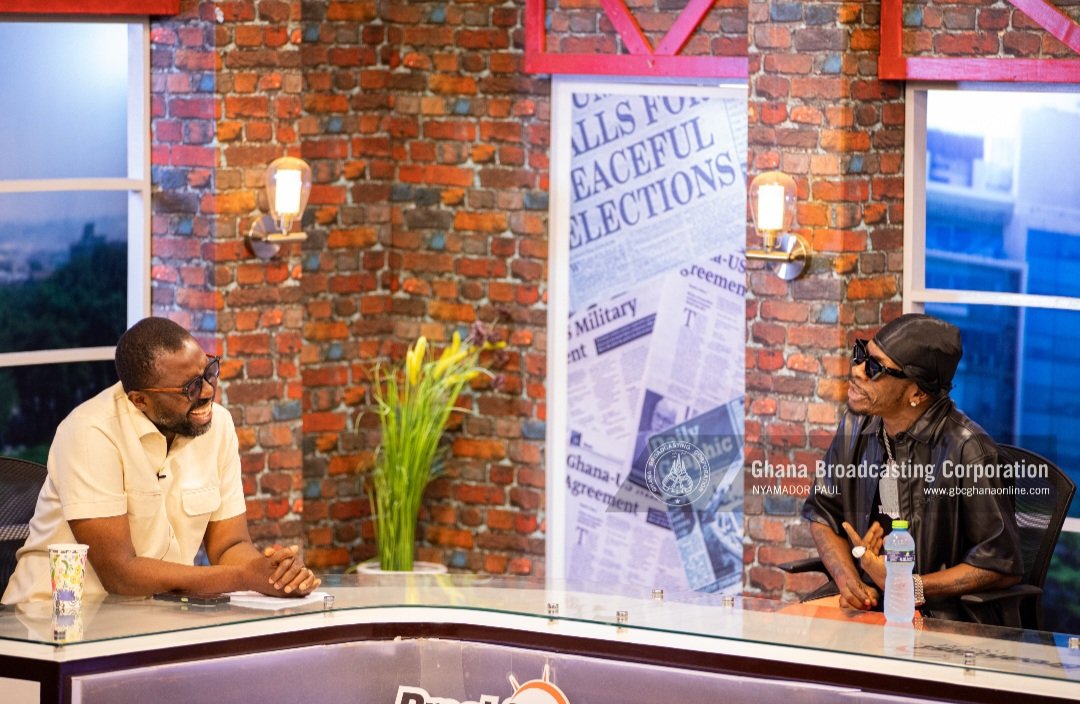
3. Posture helps. I like to lean forward when I’m chatting with a guest (blame Larry King!). It narrows the space between the guest and me, giving the impression that it’s just us having a casual chat. Before long, the guest starts relaxing and opening up.
4. Be Prepared for Surprises
When you start off in a relaxed easy manner, listen carefully to the guest’s responses and follow up, the interview can literally go anywhere. The Shatta chat is a perfect example.
Initially billed as a promotional interview for his new album, I adjusted my focus based on what he said he wanted to achieve (See Part 1). From being curious about the names on his Ghana Card, we spoke about the Ghana internet shutdown, how he began his career online, his father’s career plans for him (pilot or lawyer) and before you knew it, BOOM, we were talking about how Michael Jackson was his hero.
Who would have ever put Michael Jackson and Shatta Wale in the same sentence? Certainly not me! I don’t think my question guide would have anticipated a scenario where I would be discussing the King of Pop with the Dancehall King.
These detours are often the moments where you get something extra out of the interviewee. They get to speak about subjects they may have been yearning to talk about but couldn’t because the opportunity failed to present itself.
My theory is that when somebody makes even an indirect reference to a topic, it means they want to talk about it. So as an interviewer, your antenna has to be up so you catch the signals and go down that route.
When an interview is successful, the audience and interviewer gain should gain a new appreciation and understanding of the personality. I for one was blown away by the sheer volume of music Shatta produces daily. One of my friends confessed “I’m not a fan but I respect his hustle.”
And what about the guest? At the end of the chat, the guest should leave knowing they got their message across.
#Interviewer #InterviewSecrets
1
15
52
2,859
How to Interview Shatta Wale – Part 2
In case you missed Part 1 of my article on how to interview Shatta Wale, here’s a summary:
Before going on air, I greeted Shatta casually to ease any tension. It is crucial not to assume what an interview is going to be about; I asked Shatta what he wanted to achieve. Keeping introductions brief is key to retaining audience interest and allowing more speaking time for the guest. Using informal language and discussing recent events made Shatta comfortable and led to unexpected, engaging discussions. These techniques create authentic conversations that resonate with viewers.
The Interview Commandments
This article focuses on 3 key elements of a successful interview according to the late great CNN interviewer Larry King:
1. Ask short questions
2. Listen closely
3. Follow up
With a track record of over 50,000 interviews in a 60 year career, I consider Larry King to be the world’s greatest interviewer.
Here’s an example of how you can use his technique. It’s from the 4th minute of the Shatta Wale interview where Shatta was reflecting on how some people behave on the internet.
Shatta: …the abuse on the internet is too much.
Me: What has shocked you about the level of abuse on the internet?
Shatta: You know, the way people are so naïve about the opportunities on the internet and how they can…you know…create life for themselves out of it.
In the above example, the sequence is as follows:
1. Guest speaks
2. Host listens carefully
3. Host asks brief question
4. Go back to Step 1
If you are listening carefully and not scanning your notes or thinking about what to ask, you can actually echo the guest’s words in your question. You don’t need to craft a highly original question to keep the chat going. Just do “copy and paste”. When Shatta referred to “abuse on the internet”, I just repeated that very phrase in my question by asking Shatta what shocked him about it.
What to Remember
1. Keep your questions brief. Your role is to guide the conversation not dominate it or show off your knowledge of the subject matter.
2. Pay attention to what the interviewee is saying otherwise you might miss a good story,
3. Originality is overrated. Interviewees react positively when you say words they used back to them – it proves you were indeed paying attention. If you get used to this technique, you won’t need to keep referring to your list of questions which sometimes can be a barrier to an engaging conversation. When was the last time you had a nice chat reading your questions from a piece of paper?
Following Up
The art of following up depends on two factors: the ability to listen closely and a sense of curiosity. After Shatta mentioned “opportunities on the internet” 2 times in 3 minutes, I became curious. Why is he repeating this? So I asked the obvious question using his own words:
Me: Talking about opportunities on the internet…
Shatta: Mmmm
Me: When did you wake up to the realization that… kwe… this YouTube, this Twitter thing…e no be joke?
Shatta: Mmmm
Me: Can you take us back to that time when you realized that this was big?
This was the cue for Shatta to launch into a 6 minute story about how he discovered Google and Yahoo over 20 years ago, how he started recording and uploading his music online and how he began building his fan base. This was news to me as none of this information had turned up in my pre-interview research online.
What to Remember
1. Watch out for clues and patterns. If an interviewee refers repeatedly to a particular topic, that may be a clue or you to explore it. Sometimes the clue may emerge from a change in tone or emotion.
2. Once you’re learning new things as a host, it’s a sign that the interview is going well. I’ve spoken to many entertainers who dread media interviews because they can almost predict what the questions will be (in sum, a wholesale repetition of questions that were asked in previous interviews).
#Interviewer #InterviewSecrets

14
127
607
28,594
Relax the Guest
Television studios can be cold, intimidating places with hot lights and many people moving up and down a room filled with equipment of all kinds. Often, the guest is not sure what to expect from the interview, especially if they had been in the news recently about one controversy or the other. I sensed Shatta was being cautious when the interview began so I decided to speak Pidgin English.
Ghanaian boys and men generally speak Pidgin in informal settings and that is the environment I wanted to create with Shatta. 14 seconds into the interview I asked him “Chaley so on your Ghana Card, what be your name?” I could tell he wasn’t expecting such a question. Smiling and laughing, he told me who calls him “Charles” “Nii Armah” and I was able to learn a few new things about the person seated across the desk from me. The combination of the Pidgin and an unusual question enabled Shatta to open up quickly and get the interview off to a friendly start.
Know the Context
A day before the Shatta Wale interview, Ghana experienced a near-total internet shutdown. The entire population was directly and indirectly affected by slow or nonexistent data services. I knew Shatta’s career was boosted by his use of the internet to promote his music. So it felt natural to ask him when he knew something was wrong with the internet. Shatta’s reply including his theory about who was behind the shutdown took the interview down a path I hadn’t planned but was interesting to audiences. (I knew this because I could feel a ripple of energy from the crew and people in the studio).
What to Remember
1. Make the conversation feel like an informal chat. On both occasions that I interviewed Ghanaian musician King Ayisoba, we spoke Pidgin. My Twi was as rudimentary as his English but our Pidgin was as excellent as the chats we had.
2. If a recent event has occurred, ask the guest for their response or reaction to it. You may be pleasantly surprised by the response you get.
#interviewer #InterviewSecrets
20
30
125
19,309

25 Sep 2020
Ok, So I just bought the @poddecks and signed up to the #interviewsecrets No sure where I'm going with this but I'm hoping it will be the beginning of something new! #Podcasting #TheToughTalk #YSgwrsCaled
1
2

11 Apr 2017
Wow the recruiter during your next phone screen === get to the next step in the interview process! goo.gl/QstAfc #interviewsecrets
4
5 Apr 2017
On the blog: Craft a professional narrative that'll help you ace your next recruiter phone screen! goo.gl/kTmcuY #interviewsecrets
2

11 Mar 2016
Give #Brilliant Answers to Generic #Interview Questions! bit.ly/1W4rpMD #Google #InterviewSecrets #Hired #Quality #Personality

9 Mar 2016

2

8 Mar 2016


9 Jan 2015
Kim Kardashians Tipps für den perfekten #selfie: 1) Licht ist alles. 2)Macht 500 davon. Einer davon ist okay.
Macht Sinn. #interviewsecrets
2
5