

Se vacío completo, quiso terminarlo en el primero, el segundo aún lo pudo controlar, pero desde el primero, los jbas que le entraron y le dañaron el ojo ya lo tenía dañado, se tocaba el ojo constantemente.
2
34


Jun 10
Kon Mii sp nis skol anh jbas mes dol anh tv juii Mae vea ban ot ktery Kon Mii chkea nis
1,290

Jun 10
NO Q LO JBAS A ARREGLAR CABRON



2


🎯 Har en fornemmelse af, at det her Ohnesorge-projekt står og falder med JBAs tålmodighed. Bliver vi nr. 5 næste år, men spiludtryk, MC og alle underliggende parametre peger i den rigtige retning, så har sæsonen IMO været en succes. Men er ikke sikker på, at JBA vil være enig.
2
5
559


May 23
Todo está hecho por mí con un enorme esfuerzo y jbas ganas inmensas de seguir trabajando.
Si algo te gustó, comunícate conmigo por MD, por wsp o por Instagram en mdk.milpuntadas.
HAGO ENVIOS A TODO EL PAÍS 🇦🇷
Me ayudas con tu RT?
Que tengan un hermoso finde!
#Emprendedora
1
26
38
639

May 22
Celtic should steer clear of every Motherwell player.
They will all regress without JBAs style and set up insulating them.
May 22

Motherwell midfielder Elliot Watt is attracting interest from Rangers, Celtic several English Championship clubs as well as teams in Serie A following the success of a number of Scottish players in Italy in recent years.

10
1
130
65,802


 J 😈 & D ❤️🔥
May 7
$TTD I went through the Q1’26 investor presentation
My overall view:
1. The main message: TTD is positioning itself as the “objective AI buying layer”
The presentation repeatedly hammers one core idea:
TTD is buy-side only, does not own inventory, and therefore has no bias toward specific publishers or platforms.
That is the foundation of their entire thesis. They argue advertisers and agencies need a trusted technology partner that is not conflicted like Google, Amazon, Meta, or other platforms that own their own inventory. This is clearly shown early in the deck where they describe themselves as objective, omnichannel, measurement-driven, and technology-led.
This matters because it directly addresses the biggest bear arguments right now:
Amazon DSP competition
OpenAI possibly building its own ads stack
agency disputes
questions around transparency
AI disrupting software/adtech
TTD’s answer is basically:
“AI makes objectivity and data-driven decisioning more valuable, not less.”
I think that is a credible strategic argument.
2. The financial history still looks strong — but the slowdown is obvious
The deck shows revenue growing from $114M in 2015 to $2.896B in 2025. That long-term growth is impressive.
But the growth trend is clearly slowing:
2021: strong post-COVID acceleration
2022: still strong
2023: slower
2024: 26%
2025: 18%
Q1 2026: 12%
So the business is not broken, but it is no longer showing the old hypergrowth profile.
That is why the stock is getting punished. The market is not saying “TTD is bad.” It is saying:
“TTD may deserve a lower multiple if growth is now low/mid-teens.”
3. The agency conflict is addressed indirectly — and very intentionally
One slide says:
“We provide agencies a software platform. We create room for their proprietary advantages. We are an enabler, not a disruptor.”
That is not random. That is clearly included because of the Publicis / Omnicom / agency audit drama.
TTD is trying to say:
“We are not trying to kill agencies.”
But the reality is more nuanced. Even if TTD does not want to replace agencies, its tools do reduce agency control over parts of the value chain:
more direct brand relationships
more transparent reporting
OpenPath
OpenAds
JBPs / JBAs
AI automation through Koa Agents
So I would say the slide is defensive but important. It tells us TTD knows this is now a key investor concern.
4. The “buyer’s market” argument is very important
The deck says this is the single greatest buyer’s market in history.
This ties directly to what Jeff Green said on the earnings call: there is more digital supply than ever, especially in CTV and streaming. When there is more supply than demand, buyers need better tools to sort quality from junk.
TTD’s argument:
not all inventory is equal
some inventory has fraud, low viewability, excessive ad load, invalid traffic, made-for-advertising content
buyers need objective decisioning to avoid waste
This is a strong argument for why TTD still matters even if ad inventory explodes. More supply does not reduce TTD’s relevance — it may increase the need for a better filter.
5. CTV remains the strongest structural growth driver
The CTV section is one of the most bullish parts of the deck.
TTD argues:
TV is converging with the internet
subscription costs are too high for consumers
the future of TV is ad-funded
programmatic CTV allows better targeting and measurement
publishers can earn higher CPMs with decisioned buying
One slide compares traditional TV buying at $10 CPM versus connected TV buying at $20 CPM, arguing that data-driven targeting and measurement can increase publisher monetization.
This is very aligned with the Paramount live sports announcement in the Q1 release. If sports, streaming, and premium video become more biddable/programmatic, TTD benefits.
This remains one of the strongest parts of the bull thesis.
6. International expansion is a major underappreciated lever 🚨🚨🚨
This part stood out
The deck says:
about 86% of TTD revenue comes from North America
but only about 40% of global ad spend is in North America
about 60% of global ad dollars are outside North America
That means TTD is still heavily underpenetrated internationally.
This is important because if North America growth slows, international can still become a long-term growth lever. Management also said international grew faster than North America in prior remarks.
The issue: this is a long-term opportunity, not an immediate fix for Q2/Q3 sentiment.
7. Retail data is a very serious part of the bull case
The retail media slides are strong.
TTD says its retail data marketplace provides access to over 80% of sales from top U.S. retailers. The deck also positions retail data as deterministic, future-proof, useful for customer lifetime data, market share growth, and holistic frequency control.
This directly counters the “TTD doesn’t own data” bear argument.
TTD’s response is:
“We don’t need to own the data. We are the trusted platform that activates data from many retailers and advertisers.”
That is actually powerful if brands trust TTD more than conflicted platforms.
This also ties into the Amazon debate. Amazon has great closed-loop purchase data, but TTD is trying to aggregate retail signals across Walmart, Target, Kroger, Walgreens, Albertsons, CVS, Costco, Home Depot, and others.
If this scales, it meaningfully strengthens TTD’s moat.
8. The technology section is basically their AI/data moat argument
The deck emphasizes:
TTD built a data management platform first
“the buyer with the most data can make the most intelligent bid”
expressiveness is central to their advantage
bid factors are better than line-item structures
reporting covers 200 performance measures across 300 variables
This is important because it explains why Jeff Green keeps saying AI helps TTD.
Their argument is:
AI is only useful if you have scaled data, granular decisioning, and trusted workflows.
That is a stronger argument than just “we use AI.”
9. The financial appendix explains part of the market concern
Free cash flow remains strong:
Q1’26 operating cash flow: $391.8M, up 34% YoY
Q1’26 free cash flow: $276.0M, up 20% YoY
That is very good.
But there is a catch: Q1 capex jumped to $112.7M, up 91% YoY. That may be one reason investors are worried about margin pressure and investment intensity.
So the company is still highly cash generative, but the market may be asking:
“How much do they need to spend to keep growth going?”
My overall interpretation
Bullish points from the presentation
TTD still has a very strong strategic story:
objective buy-side platform
strong CTV positioning
strong retail data marketplace
international underpenetration
AI/data-driven decisioning
UID2 / identity infrastructure
OpenPath / OpenAds / OpenSincera transparency push
strong free cash flow
customer retention above 95%
This is not a broken company.
3
1
30
7,132

Apr 27

2
442
Apr 27

5
399

Apr 19
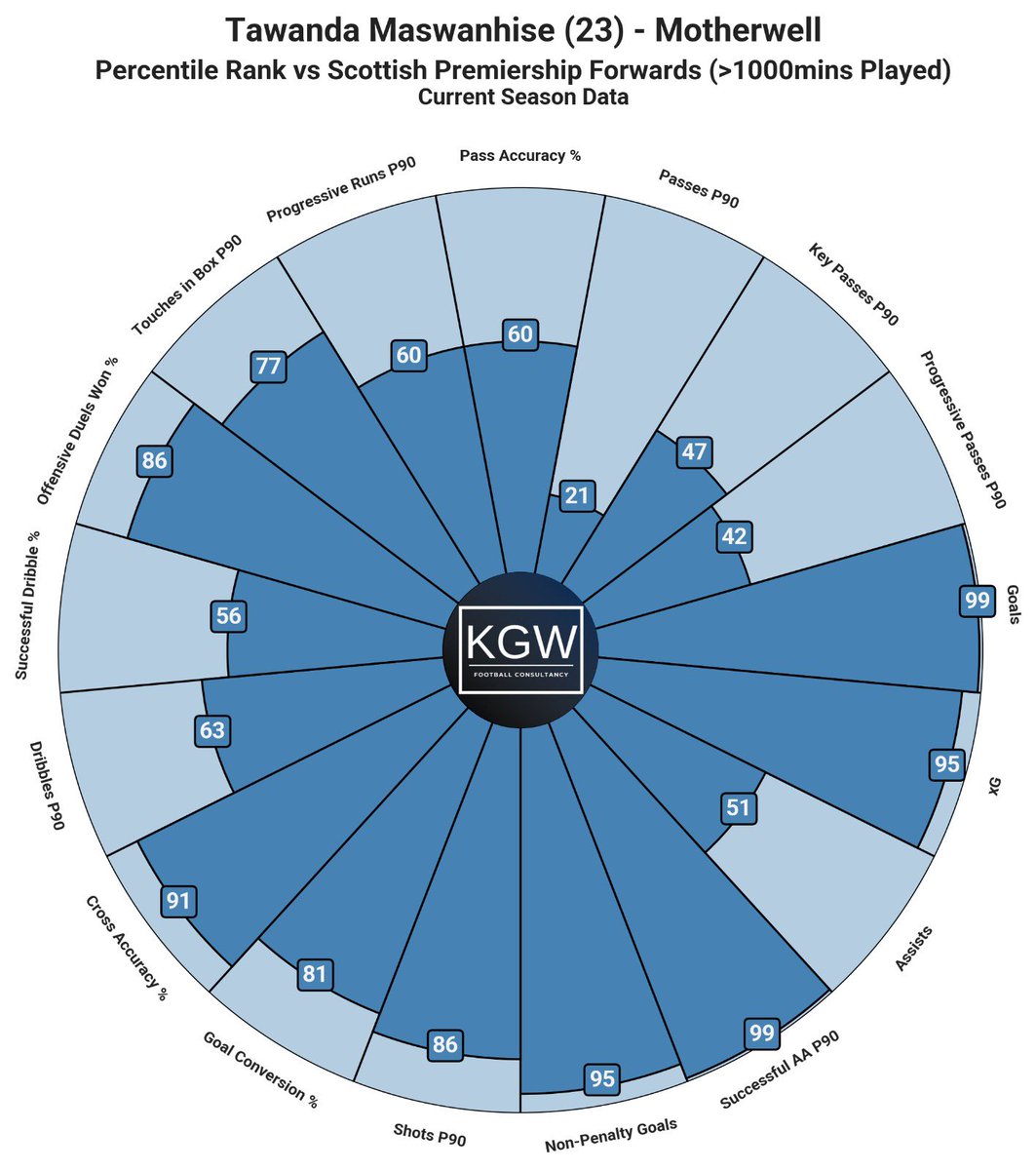
LW - Tawanda Maswanhise - 30 Appearances, 17G/2A
Maswanhise is the Premiership’s top scorer and Motherwell’s main man up top.
His goals have won JBAs side so many points and keeping him in January was the best bit of business they done.
Could be heading for a big move soon.

1
2
24
4,641

ディーゼルは現状jbas一択で
AT車のみ
ふそうは採算割れで辞めている
電気中型バスなら
BYD アルファバス
アジアスターが参入しているけど
2
351