
Jun 11
Most people thought they were just catching Pokémon.
What they may have also been doing was helping build one of the world’s largest AI models of the physical world.
🧵 A timeline:
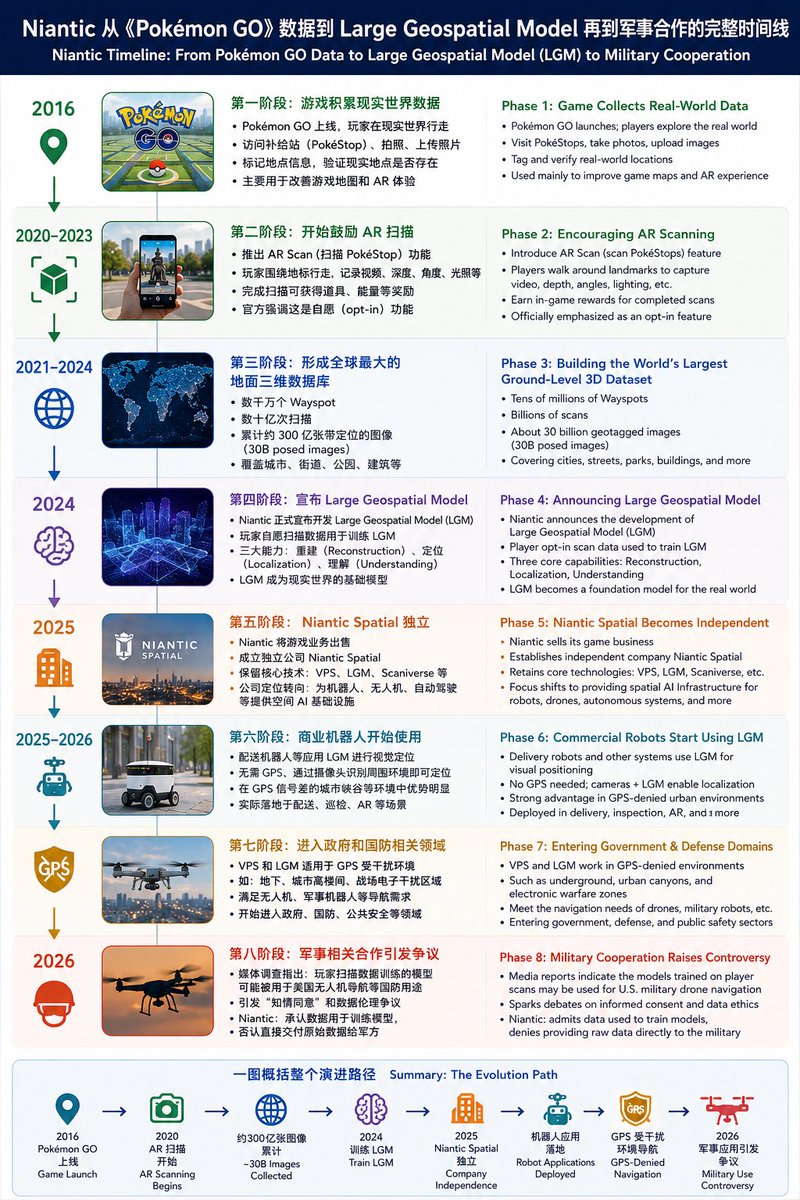
2016
Pokémon GO launches.
Millions of players walk through real cities, visiting landmarks and interacting with the environment.
2020
Niantic introduces AR Scanning.
Players are rewarded for walking around PokéStops and scanning them with their phones.
2021–2024
Billions of scans accumulate.
According to Niantic, the dataset grows to roughly 30 billion geolocated images, creating an unprecedented ground-level view of the world.
2024
Niantic officially announces the Large Geospatial Model (LGM).
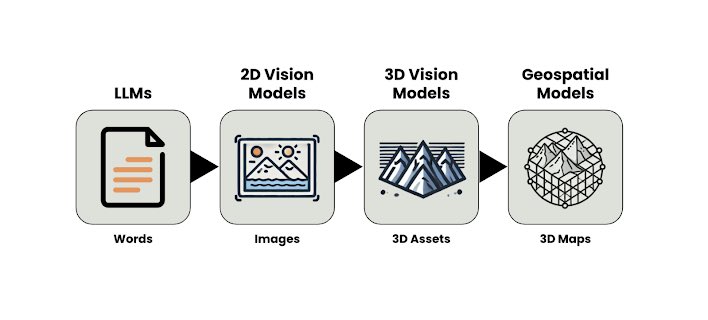
Unlike language models that understand text, LGM is designed to understand physical space—reconstructing environments, localizing positions, and interpreting the world around it.
2025
Niantic Spatial becomes an independent company focused on spatial AI.
Its technology is positioned for robotics, autonomous systems, AR, and navigation.
2025–2026
LGM begins powering robots that can navigate without GPS by recognizing their surroundings through cameras.
Then comes the controversy.
Dutch media investigations reported that technology derived from these spatial models could support navigation for U.S. military drones operating in GPS-denied environments.
To be precise:
❌ There is no public evidence that Pokémon GO players’ raw scans were directly handed to the U.S. military.
✅ Niantic has publicly acknowledged that opt-in player scans helped train its Large Geospatial Model.
The debate is no longer about gaming.
It’s about data ownership, informed consent, and whether entertainment platforms are quietly becoming infrastructure for the next generation of AI—and potentially defense technology.
The next time an app asks you to “scan your surroundings,” you might be helping build far more than a game.
#PokemonGO #Niantic #ArtificialIntelligence #SpatialAI #LargeGeospatialModel #AR #AugmentedReality #MachineLearning #Robotics #Drone #MilitaryTechnology #DataPrivacy #DigitalEthics #TechNews #FutureTech
60

23 Jul 2025
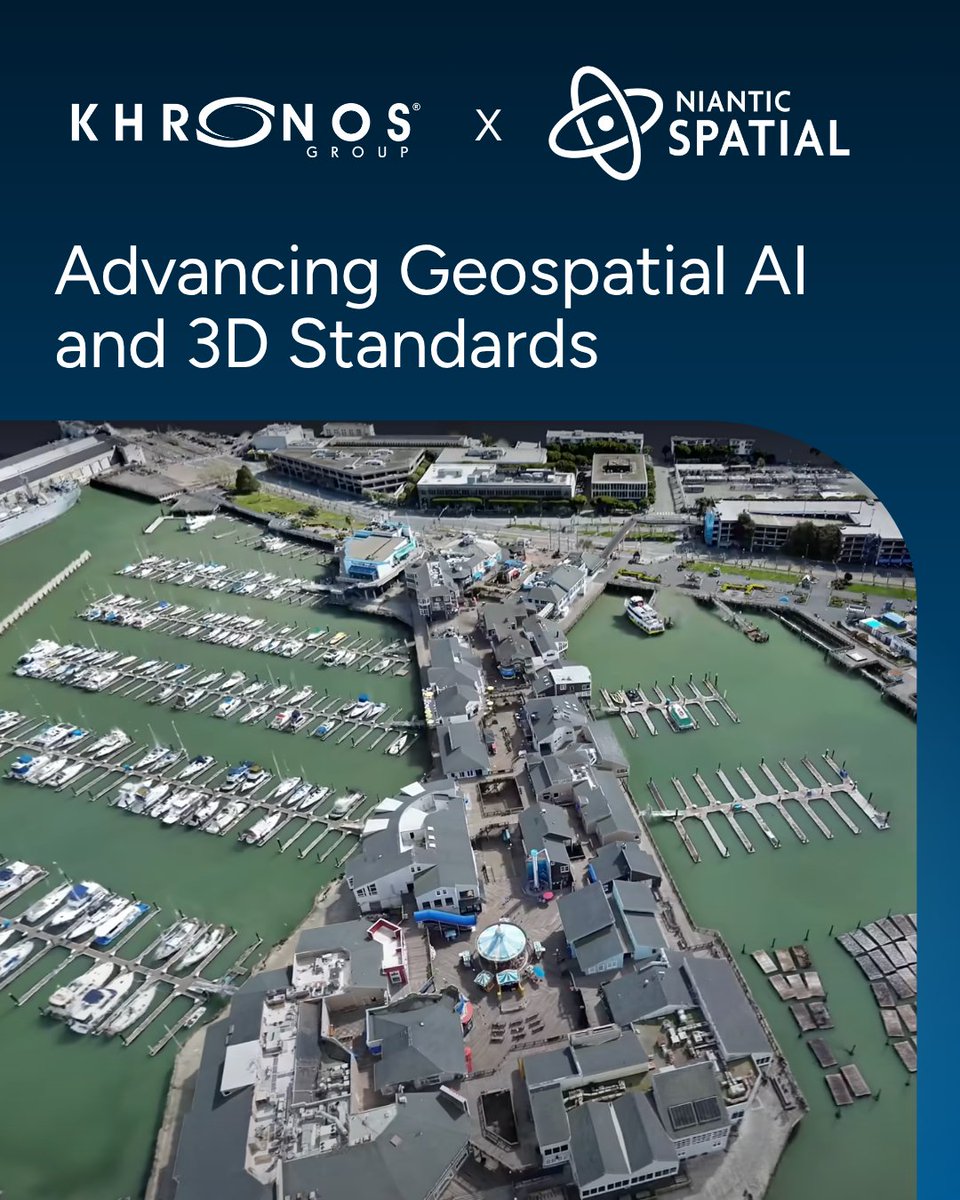
🚀 We have joined the @KhronosGroup as a Contributor member!
Together, we’re advancing open standards in Geospatial AI and 3D content, including breakthrough techniques like Gaussian Splatting.
🌍 Let’s build the next-generation map—open, intelligent, and immersive.
🔗 nianticspatial.com/blog/khro…
#NianticSpatial #GeospatialAI #GaussianSplatting #SpatialComputing #KhronosGroup #VPS #LGM #LargeGeospatialModel
1
2
24
11,361

AIを活用した大規模な地理空間モデル「Large Geospatial Model」を開発するNiantic Spatialが資金調達を実施
#NianticSpatial
#LargeGeospatialModel
#地理空間モデル
startuplog.com/n/n8c1f29918a…
2
189

14 Nov 2024
Love this example of our @NianticLabs VPS in action with Pokémon Playground. The VPS, which is part of our Niantic Spatial Platform helps the “computer” see the real-world in the same way a human would – allowing developers to layer persistent digital content to centimeter degree accuracy shared across anyone visiting that location. The VPS is going to be the secret sauce that makes experiences on the AR glasses of tomorrow even more compelling, immersive, and fun.
Hear more from our engineering team who built this feature: nianticlabs.com/news/pokemon…
#spatialcomputing #nianticspatial #spatialintelligence #webxr #geospatial #largegeospatialmodel #augmentedreality #arglasses #visualpositioningsystem
4
11
68
5,125
13 Nov 2024
ICYMI - we’re building a Large Geospatial Model (LGM) 🌐 @NianticLabs to achieve spatial intelligence which we believe is critical for ushering in the new era of spatial computing and the AR glasses 👓 that are right around the corner. 👇🏽
As part of our Niantic Visual Positioning System (VPS) we’ve already trained more than 50 million neural networks with over 150 trillion parameters. You can think of the LGM as a super smart map for computers – but one that can understand space in a similar way to how humans do. Given our robust set of 3D understanding of the world, our global LGM should be able to help intelligently “fill in the blanks” for locations we may not have a comprehensive scan of.
Read more from our research team about how we’re accomplishing this: nianticlabs.com/news/largege…
#spatialcomputing #nianticspatial #spatialintelligence #webxr #geospatial #largegeospatialmodel #augmentedreality #arglasses #visualpositioningsystem
3
11
73
4,977