
29 Apr 2025
🔥 70% Discount Ending Soon! 🔥
Master Unreal Engine Lighting
🎓 Learn real production workflows
🎯 148 lessons (and growing!)
🚀 Career success stories from students worldwide!
🔗 courses.lightingbot.com/ulti…
#GameDev #UnrealEngine #LightingArtist #LightingBot #CareerUpgrade
1
5
175
18 Jun 2024
The speakers talk about understanding real life lighting, fog and storytelling to improve your digital lighting for games and animation. It takes time to combine various principles and techniques into practical application. #lighting #lightingforgames #lightingartist #lightingbot
1
2
102
14 Jun 2024
Know the game development pipeline a little bit, regardless of your specialty.
#tips #advice #lightingbot #lightingartist #gameartist #gamedev #gamedevelopment #gameindustry #amitpatpatia #lightingforgames #gamelighting #gameeducation #gameschool #mentorship #course
2
2
141
11 Jun 2024
Always check materials before lighting.
#lighting #lightingartist #amitpatpatia #lightingbot #gamedev #gamedevelopment #gameart #gameartist #tips #adive #podcast
3
332
8 May 2024
Join our Discord discord.gg/EAaqkufs where we are having most of our live stream and events, outside of our youtube streams these days. Level yourself up and take part in our community. #lighting #artist #gameart #3dartist #techart #lightingartist #lightingbot #community
1
2
127
26 Nov 2023
Join us in 10 minutes to talk about communication, soft skills, and remote work on today's stream. youtube.com/live/-cj1VbbHGcM…
#lightingbot #lighting #gamedev #gamedevelopment #indiedev #communication #lightingartist

1
8
288
14 Nov 2023
Gary trolling @AmitGinni when giving insight on messaging recruiters when you are looking for work. Part 1. Full video: youtube.com/live/Z3uKa-8BBZk…
#recruitment #advice #tips #career #recruiter #linkedin #messaging #lookingforwork #gary #amitginnipatpatia #lightingbot #gamedev
2
163
11 Nov 2023
Advice on avoiding tangent in your game art portfolio screenshot.
#gameart #gamedev #3dart #environmentart #screenshot #portfolio #lightingbot #amiginnipatpatia #sourabh #maria
4
287

10 Nov 2023
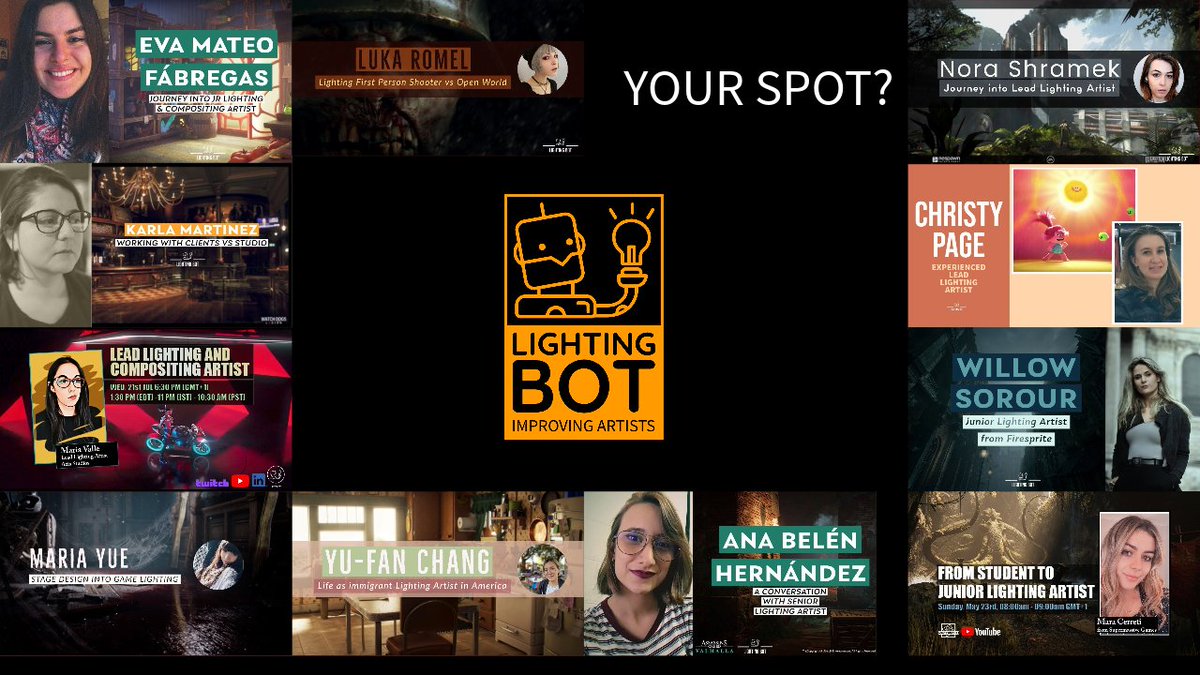
Woman of Lighting that I had the pleasure to talk to so far. In case you think there aren't that many, it is a lot more in the last year we stopped streaming. So, we are looking to highlight even more female lighting artists around the world.
Maybe you think you can't do it? Or live in a country and can't move? Or have a background that is irrelevant? Or that other women had a bad experience?
Hopefully, their individual story and background will motivate you, teach you something, and remind you that anything is possible.
Maybe you are more comfortable asking advice in a specific language, from a country, or whatever reason. Watch their interview with me and follow them, if you want to reach out to any of them for advice.
So, if you are keen to be on the podcast at @LightingBot1 . DM me in case I already asked you and you didn't notice.
Please share this in your feed.
Thank you for your ongoing support. I am very humbled.
Karla Martinez
Watch youtube.com/watch?v=OcpDcoDZ…
Eva Mateo Fábregas
Watch youtube.com/watch?v=RNJeGeBr…
Nora Shramek 🏳️🌈
Watch youtube.com/watch?v=r2PXd6l7…
Luka Romel
Watch youtube.com/watch?v=BOTLR1Mj…
Yu-Fan(Linda) Chang
Watch youtube.com/watch?v=t1SEwbHz…
Maria Yue
Watch youtube.com/watch?v=Ps1CjPai…
Christy Page
Watch youtube.com/watch?v=TeCFl7GO…
Willow Sorour
Watch youtube.com/watch?v=pFDAeWiM…
Ana Belén Hernández Tornero
Watch youtube.com/watch?v=fyePYltH…
María Valle
Watch youtube.com/watch?v=I17wB0Mn…
Mara Cerreti
Watch youtube.com/watch?v=fI0fgL1k…
#lighting #lightingartist #compositing #vfx #animation #movies #virtualproduction #gamedev #gamedevelopment #gameart #3dart #lightingbot #amitginnipatpatia
5
309
5 Nov 2023
Mobile Lighting Optimization Tips from Thomas Didier.
Watch Full interview: youtube.com/watch?v=o2O07HFx…
#lighting #mobilelighting #mobilegames #gamedevelopment #gamedev #indiedev #optimization #lightingbot #amitginnipatpatia #thomasdidier #tips #advice #gameart #gameartist
2
187
4 Nov 2023
How to Light Narrative Environments for Storytelling Games according to Forent Tunno.
#lighting #florenttunno #lightingartist #gamedev #gamedevelopment #advice #tips #amitginnipatpatia #lightingbot #gameindustry #podcast
1
152
3 Nov 2023
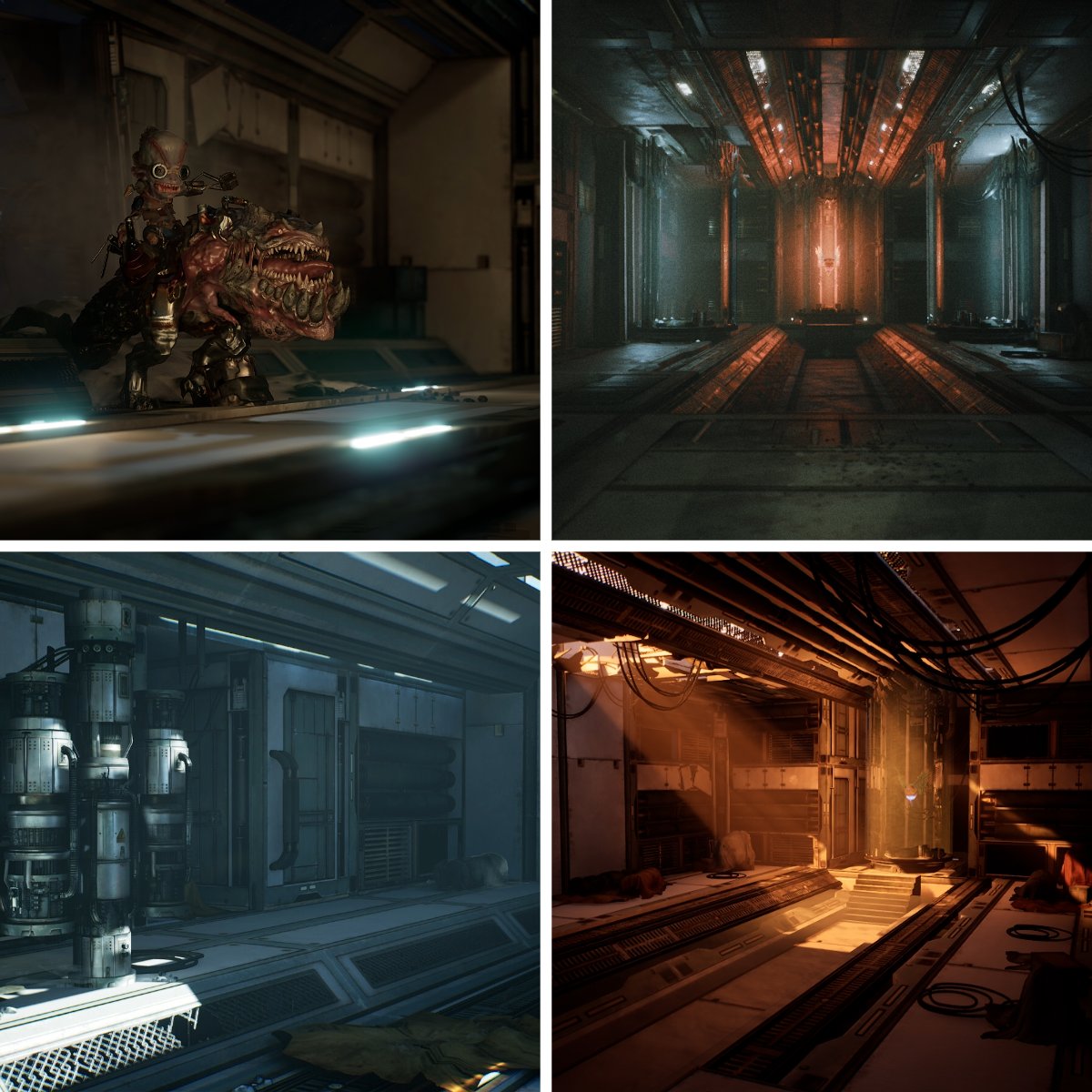
I put my lighting course on artstation into a 15% discounted bundle. So, improve your lighting skills to get that promotion, increase chances for work, or start being comfortable as a technical lighting artist perhaps? So, go on and invest in all of them at once. This is my main income while I freelance on and off. So please share and support me.
artstation.com/marketplace/b…
#lighting #education #unreal #pbr #physical #accurate #rendering #course #tutorial #lightingbot #amitginnipatpatia #lightingartist #gamedev #gamedevelopment #unrealengine #ue4 #ue5
1
4
15
928
1 Nov 2023
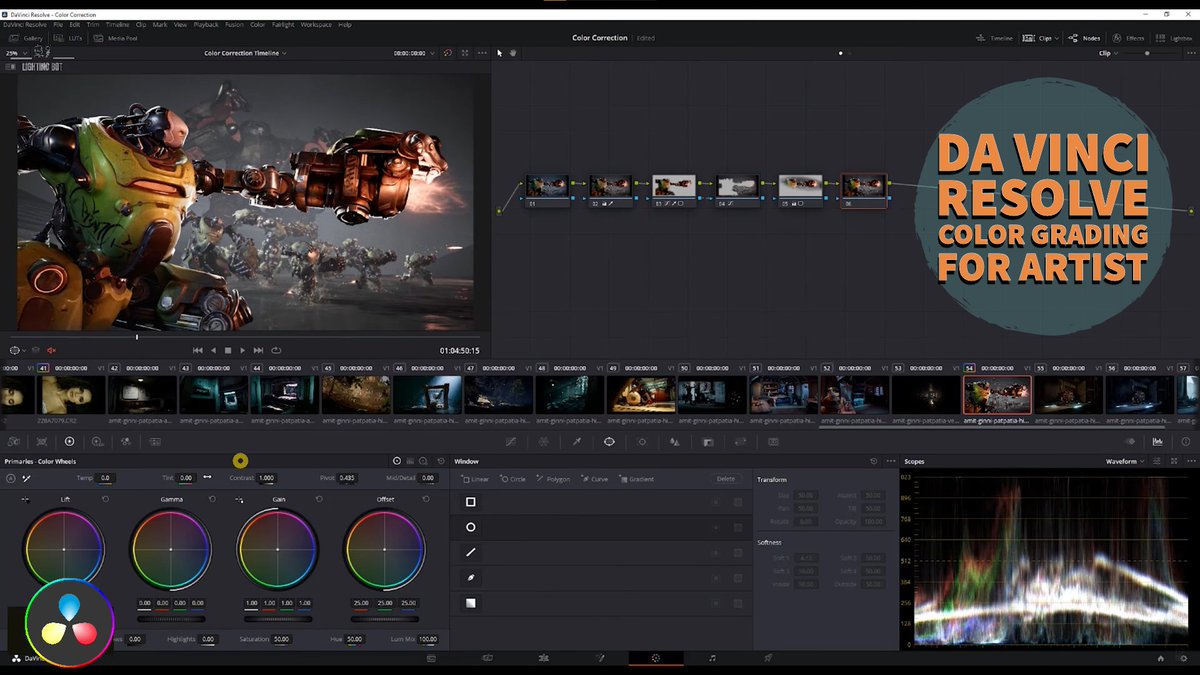
This Color Grading in Davinci Course is a standalone course so is useful for any visual artist. It does help elevate your artistic skills, color understanding, art direction eye, understanding of value, contrast, depth, and exposure further. There is a bi-product of taking this course which is you can become a colorist if you want to as we start with photography, and videography before we use unreal EXR to ensure you get a good deep dive dealing with various scenarios such as light versus dark skin, movement, and reflective surfaces etc. Some parts are very technical and I will explain sometimes the importance of camera files in case you do photography or videography. This is currently my main income so please leave a positive review and share this. You will find the needed source files and references to follow along if you want to.
artstation.com/a/32503963
Course Content
Chapter 1
Introduction to Resolve Interface will take you through media, edit, color, deliver, and cut page to get you up and running quickly.
Chapter 2
Introduction to Nodes will take you through the most used nodes what makes them different and their best practice usage such as the serial, layer, parallel, outside, key, shared, and timeline node/mixer.
Chapter 3
Introduction to Color Correction will ensure you understand Scopes, White Balance, Exposure and how it relates to unreal engine 5, color correcting red hair, caucasian skin, dark skin, sunset, wedding, props and eventually showing how it becomes more challenging using videos. So, we will also color grade a female watching sunset, bartender video and a dj outside to further improve you.
Chapter 4
In Collor Correction Demonstration I show how I can improve very old lighting pieces originally done in Unreal Engine so you can see how we can use resolve to alter our decisions, improve the value or contrast that we might notice months later.
Chapter 5
In Workflow Tips we go through some more quality of life tips and advice such as white balance 2, one color, histogram, preset, transferring grade, grab still screenshot to put on artstation, image wipe comparison mode, split image comparison mode, hotkeys to speed up your workflow.
Chapter 6
The part you all waited for where we go deep diving into Color Grading so I show you common color grading tools, intro to color grading and followed up with multiple videos where I color grade and deal with the challenges that comes with professional color grading.
Chapter 7
We go through the importance of Color Management by introducing you to it, also explaining human eye and optical illusions to understand the light. Then we go through CIE color and Color space before I show a practical example in Da Vinci so you get the same input/output. This is a typical problem when working with HDR workflow, so this might help you understand other things later.
Chapter 8
In this chapter we ensure you know how to use LUT for SDR games in Unreal Engine 5 by importing sRGB image into Davinci using sRGB Linear, exporting LUt from da vinci, applying LUT in photoshop, adding LUT into Unreal 5 and sticking to sRGB Aces when all things get confusing.
Chapter 9
This is at the time of the writing the last part where we visit Unreal 5 ACES Render Workflow for Video and Portfolio work. You will learn more about OpenColorIO, plugins, config file, setting up OCIO, sequencer shot setup, color management setup in UE5, importing EXR render into Da Vinci and exporting the video out as expected.
That is the gist of it. An all-encompassing level up to take your skills, eyes, and potential to another level. As usual, this is my main income right now so please support in any form such as purchase, leaving positive reviews, sharing and recommending.
#lightingartist #gamedev #gameartist #3dartist #visualartist #davinci #resolve #colorgrading #colourgrading #lightingbot #amitginnipatpatia #indiedev #portfolio #artstation #course #tutorial
3
9
576
31 Oct 2023
What are the most important skillset for a lighting artist according to Alex Wahl?
#lighting #lightingartist #skills #upskilling #lightingbot #amitpatpatia #podcast
1
2
258
29 Oct 2023
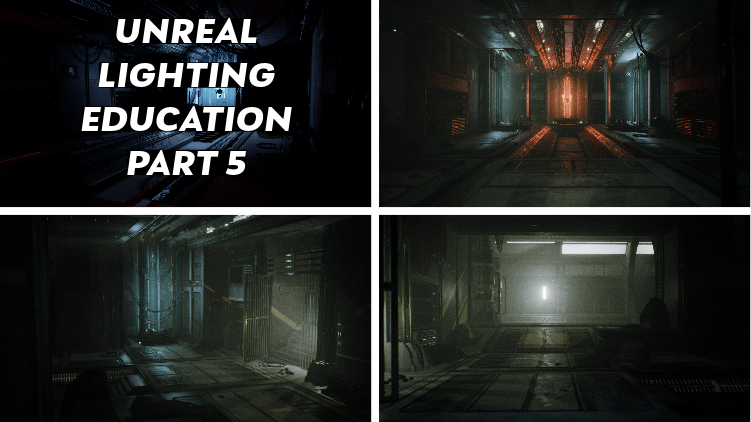
You can grab the next part of my lighting education path and continue joining in my journey to teaching you the world of lighting, slowly over a long period of time. We are slowly moving over to moveable lighting workflow and the mindset required to be a successful lighting artist or to do your own lighting of your environments. This time, we visit lighting art fundamentals and color theory to put you to real test. Why? To really pull off real-time moveable lighting you need to know where to put the lights and do the heavy lifting on your own. For this, you need a trained eye. That is why we started with stable Unreal 4.27 Baked Lighting to unconsciously train you about indirect lighting, to now see if you can do it without the technology helping you out. So, keep supporting me, share, and help me teach the next generation of artists. The recordings have mostly been done in UE4 but work fine in UE5, as the asset has been updated for it now.
artstation.com/a/32408351
#lighting #lightingeducation #lightingcourse #tutorial #course #mentorship #training #unrealengine #realtime #lightingbot #amitpatpatia
1
20
135
10,616

29 Aug 2023
🦌 The herd have an away game. 2nd AMA of the week!!!
x.com/lightningboterc/status…
🔥 Things are heating up out there.
🟢 Tomorrow at 21:00 UTC
✅ Lightingbot hosts elk.finance
📍Where? Here 👇
x.com/i/spaces/1DXGyvqRlzRJM
@LightningBotERC #ElkNet
5
17
26
1,154

14 Aug 2023
I seem to have missed out on revenue share… anyone in the lightingbot team able to help?
1
2
26

13 Aug 2023
All these comparisons between bots.. #MoonBot , #lightingbot #UNIBOT ,this bot that bot.. knowing that when you've tested #zKBot you just beat them all. Come and test it out! @zkbotofficial
Portal: t.me/zkBotErcPortal
🌐: rb.gy/ye1eh
The Next Generation
3
1
7
313

10 Aug 2023
This tweet is unavailable
5
20
1,434