
Good Psychiatric Management (GPM) model is open to prescribing and it makes sense to me that clinicians who aren't trained in Mentalization, CBT or DBT are going to need to use some psychopharmacology.
3
71

From your host @llallawg, “I was originally thinking of starting broader but eventually landed on discussing four perspectives on bpd,
mentalization, transference based, dialectical behaviour, and schema therapy approaches to compare the psychodynamic and other approaches to really see how they all treat the same subject
twitter.com/i/spaces/1wGWjjn…
3
287

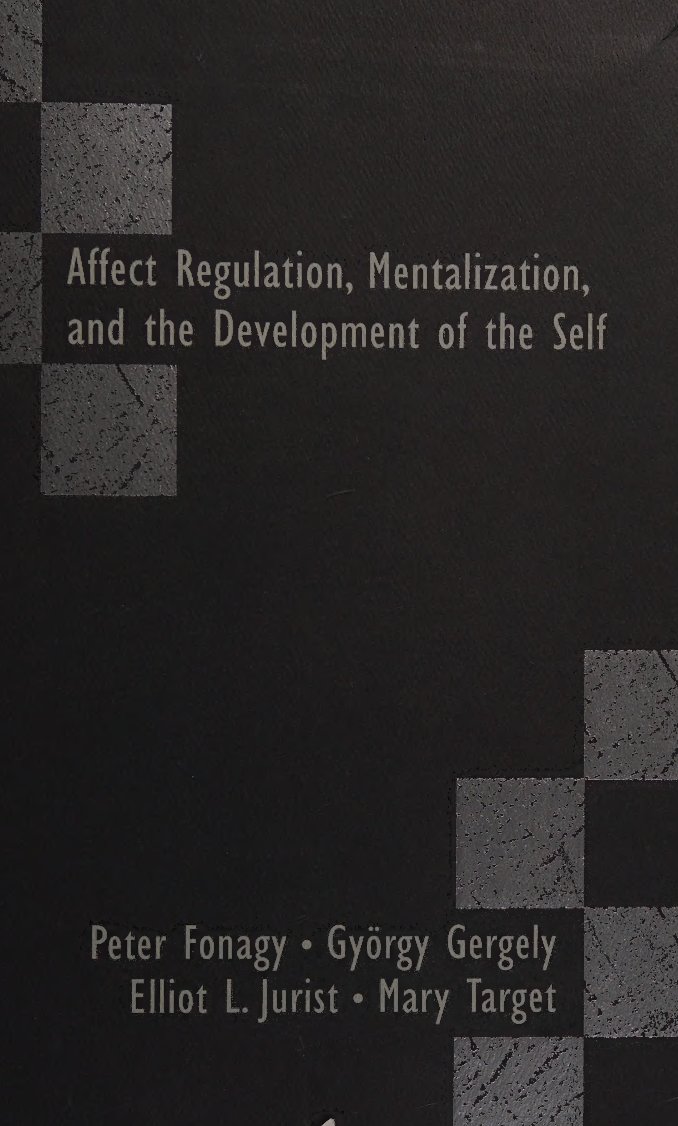
discussing bpd diagnosis and an introduction to mentalization (from affect regulation, mentalization, and development of the self by fonagy et al.) in about 35 minutes
x.com/i/spaces/1wGWjjnvgOeKQ
2
56

Jun 14
There's been a lot of talk about the so-called AI psychosis recently. As someone who's been conducting my own AI-assisted psychoanalysis for almost half a year, I would advise staying away from it unless you have a developed metacognitive apparatus with a strong observing ego and solid mentalization capacity.
A strong observing ego is necessary to differentiate between your inner mental states and external reality. If you can't do this, you may descend into psychosis much faster with AI models facilitating your total detachment from reality through psychotic decompensation. Mentalization helps you identify and reflect on your own mental states. Without these cognitive tools, AI alone won't help you at all and may worsen your condition so you might end up hospitalized with a diagnosis of paranoid schizophrenia.
I myself balance on the line between sanity and madness from time to time when I go very deep into my mind. I have the ability to maintain contact with reality tho, even during very deep psychoanalysis. But again: you need the right mental tools to stay grounded in reality.

2
8
692

The issue is not related to the Israeli attack on Dahiyeh.
The perceptual nature of the two sides is different
We have a perceptual understanding based on external reality.
Trump's understanding is conceptional a complete abstract mentalization, cut off from external reality.
Jun 14

Israel Strikes a Building in Beirut, Lebanon
IRAN had previously warned that any violation of the ceasefire in Lebanon would be met with a decisive and powerful response to Israeli aggression.
1
21

-What’s the difference between this and mentalization, Yeomans?
-…that I’m cooler than Fonagy and Bateman…
m.youtube.com/watch?v=14fW-V…
Frank and Patient
This video demonstrates how Transference-Focused Psychotherapy (TFP...
youtube.com 6

1️⃣ Harry Stack Sullivan — διαπροσωπικό άγχος / self-system
2️⃣ John Bowlby & Mary Ainsworth — δεσμός / ασφάλεια / Strange Situation
3️⃣ Donald Winnicott — holding / true-false self / περιβάλλον φροντίδας
4️⃣ Gregory Bateson — σύστημα / feedback / επίπεδα επικοινωνίας
5️⃣ Stephen Porges — νευρική ασφάλεια / κοινωνική εμπλοκή
6️⃣ Allan Schore — πρώιμος δεσμός / δεξί ημισφαίριο / affect regulation
7️⃣ Daniel Stern & Ed Tronick — μικρο-συντονισμός / rupture-repair
8️⃣ Antonio Damasio — σώμα / συναίσθημα / απόφαση
9️⃣ Dan Siegel — interpersonal neurobiology / integration
🔟 Ruth Feldman — βιοσυμπεριφορικός συγχρονισμός / oxytocin / dyadic timing
1️⃣1️⃣ Peter Fonagy & Mary Target — mentalization / reflective function
1️⃣2️⃣ Wilfred Bion — containing / μεταβολισμός άγχους σε σκέψη
1️⃣3️⃣ Jessica Benjamin — αναγνώριση / intersubjectivity / doer-done to
1️⃣4️⃣ Erving Goffman — κοινωνική σκηνή / παρουσίαση εαυτού
1️⃣5️⃣ Pierre Bourdieu — habitus / κοινωνία ενσωματωμένη στο σώμα
1
1
2
120

Mentalization-Based Treatment for Children: A Time-Limited Approach amzn.asia/d/01PYqcGc
Second edition が出てるんですね〜。
でもペーパーバックで14,620えん…!!
ひー😭
2
159

Jun 11
When I wake up every mornin I have a Mnemosunê of Being,remindin me of what Plato said was lost.I don't remember wars.I remind myself that My Ethical Will will conjure an Infinity of mentalization & spiritualation attached to my momentary degree of reality,to beat govt infinities
11

Active Learning for FACS/AU Detection is a powerful semi-supervised machine learning strategy that optimizes the labeling process for training automated Facial Action Unit (AU) detectors. It is especially valuable in hybrid workflows because FACS data is sparse (most frames are neutral), highly variable (individual differences, lighting, pose, culture), and expensive to label manually.
What is Active Learning in this Context?
Core Idea: Instead of randomly labeling vast amounts of data, the model iteratively selects the most informative/uncertain samples for human experts (certified FACS coders) to label. This maximizes performance gains per labeled example.
Typical Loop:Train initial model on small labeled seed set.
Run model on large unlabeled pool → query uncertain, high-entropy, or boundary samples (e.g., subtle expressions, ambiguous combinations).
Human coder labels selected samples (often using automated suggestions to speed up).
Retrain/update model; repeat.
Benefits for FACS: Reduces labeling effort dramatically (e.g., finds rare positive AUs faster); improves model efficiency on naturalistic/spontaneous data.
Key Examples from Research
Affectiva Approach (Senechal et al., 2015): One of the most practical applications.Collected massive naturalistic webcam dataset (~1.8M videos from thousands of individuals worldwide).
Used active learning to efficiently discover and label positive examples of sparse AUs (e.g., AU2 outer brow raiser, AU4 brow lowerer, smiles) — typically needing to review only 30–60 videos per positive segment.
Combined with smart subset selection and Nystrom kernel approximation for fast SVM classifiers (real-time ~300fps on large data).
Result: Better performance on AM-FED dataset than prior baselines; scalable to real-world variability.
Yao et al. (2021): Combined active learning with SVM for AU classification and emotion mapping.Active learning selects targeted samples to reduce non-support vectors, shortening labeling/training time without losing accuracy.
Achieved higher recognition rates than PCA or human observers on seven expressions; effective for suppressing noise in feature extraction (e.g., gradient histograms).
Other works integrate active learning with deep models, uncertainty sampling, or hybrid human-AI loops for continual improvement.
Integration with Hybrid FACS Workflows
Active learning fits perfectly as the query/selection engine in hybrids:
Automated tools (OpenFace, etc.) propose initial detections → active learning flags uncertain cases for certified manual review.
Human corrections feed back into model retraining → iterative improvement (active learning fine-tuning).
Reduces overall manual effort by 50–90% while maintaining high reliability for research/clinical use.
Ties directly to researchers in your chart (e.g., Ekman’s foundational FACS, Davidson/Haidt emotion work, Fonagy mentalization — where precise AU data supports deeper analysis).
Advantages & Challenges
Advantages:
Handles class imbalance/sparsity common in spontaneous expressions.
Cost-effective for large-scale datasets.
Improves generalization across diverse populations.
Challenges:
Requires initial seed data and reliable uncertainty metrics.
Human oracle (certified coder) still needed for ground truth.
Query strategy must account for AU combinations and intensity (A–E scale).
Modern Extensions: Deep active learning (with CNNs/Transformers), multi-label strategies for AU combinations, and integration with tools like Encord Active or custom pipelines.
1
1
50
Hybrid Coding Workflows for FACS combine automated AU detection tools with manual certified coding to balance speed, scalability, and precision. These "human-in-the-loop" (HITL) or semi-automated approaches are increasingly standard in research, as fully manual FACS is too slow for large datasets, while pure automation often lacks reliability for subtle, rare, or complex expressions.
Why Hybrid Workflows?
Manual FACS (gold standard): High accuracy (~0.70–0.90 inter-coder reliability) but extremely time-intensive (50–100 hours training; 50–60 min per video minute).
Automated tools (e.g., OpenFace, FaceReader, Hume AI FACS 2.0): Fast/real-time but limited AU coverage (often 17–26 vs. ~46), lower agreement on subtle/rare AUs, and sensitivity to lighting/pose/ethnicity.
Hybrid Goal: Automation handles volume and initial passes; humans provide oversight, correction, and validation for scientific rigor.
Common Hybrid Workflow Structures
Automated Pre-Screening Human Review (Most Common)Run automated tool (e.g., OpenFace) on full dataset to detect AUs, intensities, and timestamps.
Flag low-confidence detections, ambiguous cases, occlusions, or key segments.
Certified FACS coders review/override flagged portions (or sample for quality control).
Use automation outputs as a "first draft" to speed up manual coding.
Human-in-the-Loop (HITL) Iterative RefinementAutomation proposes AUs.
Humans correct errors and provide feedback → retrain/fine-tune the model (active learning).
Repeat for continuous improvement.
Tiered or Sampling ApproachFull automation for exploratory/large-scale analysis.
Manual coding on a representative subsample for validation/benchmarking.
Hybrid for final analysis on critical data.
Tool-Assisted Manual CodingSoftware overlays automated AU suggestions on video timelines for coders to confirm/edit (e.g., via visualization tools like FlowAnnotator analogs or custom scripts).
Popular Tools in Hybrid Setups
OpenFace (open-source): Strong for landmarks, head pose, and common AUs. Often used for initial extraction, then validated manually. Dynamic models help with video.
FaceReader (Noldus): Higher FACS agreement in some validations (~0.70–0.81); commercial support.
Others: Hume AI FACS 2.0 (26 AUs), iMotions FACET, Py-Feat. Emerging AI like deep learning hybrids.
Validation: Compare automated outputs to certified manual coding on subsets; aim for high concordance on core AUs.
Benefits
Efficiency: Reduces manual effort by 50–90% for large datasets while maintaining reliability.
Scalability: Handles hours of video that would be impractical manually.
Improved Accuracy: Humans catch automation errors (e.g., non-additive AU combinations, subtle intensity).
Feedback Loops: Human corrections improve future automated performance.
Challenges & Best Practices
Agreement Thresholds: Use certified coders (FACS Final Test ≥0.70). Validate hybrids against pure manual on benchmarks.
Edge Cases: Automation struggles with occlusion, extreme poses, infants (use BabyFACS), or cultural variations → heavy human involvement.
Documentation: Record which segments are auto vs. manual for transparency/reproducibility.
Training: Coders need familiarity with both manual FACS and tool outputs.
Research Examples: Used in emotion studies, pain assessment, clinical psychology, animation, and autism/depression diagnostics. Hybrids appear in papers combining OpenFace with human validation.
Bottom Line: Hybrid workflows are the practical future for FACS applications, especially for the researchers in your chart (e.g., Ekman’s foundational work, Davidson/Haidt emotion studies, Fonagy mentalization). They preserve the anatomical precision of manual coding while leveraging automation’s speed.
1
1
74
FACS (Facial Action Coding System) Methodology Overview
FACS is a comprehensive, anatomically based system for objectively describing all visually discernible facial movements. Developed by Paul Ekman and Wallace V. Friesen (first published 1978, major update 2002 with Joseph C. Hager), it deconstructs facial expressions into independent Action Units (AUs)—specific muscle contractions or relaxations—without initially assigning emotional meaning. This makes it a neutral, reliable tool for research in psychology, emotion, deception detection, pain assessment, animation, and more.
Core Methodology: Action Units (AUs)
Definition: Each AU represents the observable effect of one or more facial muscles. There are ~44–46 main AUs (plus head/eye movements, visibility codes, and gross behaviors).
Coding Process:Observe facial behavior frame-by-frame (often from video).
Identify which AUs are active, their onset, apex (peak intensity), offset, and duration.
Score intensity on a 5-point scale: A (trace/minimal) to E (maximum/extreme).
Note combinations (common, as expressions often involve 3–5 overlapping AUs), laterality (L/R/U/A for asymmetric), and other modifiers.
Time-Intensive: Coding 1 minute of behavior can take 50–60 minutes manually. Inter-coder reliability requires certified coders (at least two for high accuracy).
Examples of Key Action Units (selected common ones):
📷
melindaozel.com
📷
melindaozel.com
AU1: Inner brow raiser (frontalis, pars medialis)
AU2: Outer brow raiser (frontalis, pars lateralis)
AU4: Brow lowerer (corrugator, depressor supercilii, etc.)
AU6: Cheek raiser (orbicularis oculi, pars orbitalis) — key for genuine (Duchenne) smiles
AU12: Lip corner puller (zygomaticus major) — smile component
AU9/10: Nose wrinkler/upper lip raiser — disgust elements
And many more (full lists in the manual cover forehead, eyes, nose, mouth, chin, etc.).
Common Emotion Mappings (via EMFACS or FACSAID guides, not part of core FACS):
Happiness: 6 12
Sadness: 1 4 15
Surprise: 1 2 5 26
Etc. (combinations vary; FACS itself is emotion-neutral).
Training & Certification
Self-Study: 50–100 hours using the 500 page manual, photos, and videos.
Workshops: E.g., 5-day intensive with experts like Erika Rosenberg.
Certification: Pass the official FACS Final Test (video-based, ~34 questions). Only certified coders can claim proficiency.
Strengths & Applications
Objective & Reliable: Focuses on observable muscle movements, minimizing subjective bias.
Versatile: Used in psychology (emotions, deception), medicine (pain, depression), animation/CGI (blend shapes), and even animal versions (e.g., chimpanzees, dogs).
Extensions: BabyFACS (infants), EMFACS (emotion-focused), automated computer vision tools.
Limitations
Time-consuming for manual coding.
Requires training for reliability.
Focuses on visible movements (not subtle tonus, skin color, tears, etc.).
Interpretation (e.g., to emotions) needs additional context or guides.
The researchers in your handwritten notes (e.g., high-value Ekman, Fonagy, Haidt, etc.) align with key figures in emotion, attachment, mentalization, and affective science—many of whom have contributed to or built upon FACS-related work.
1
1
93
Pioneer of FACS Mentalization / Attachment Mentalization Emotion Researcher Philosopher (related) Mentalization Mentalization (Junnst/Junst) Emotion Affective Neuroscience Moral/Emotion Psych Temperament/Developmental Autonomic/Emotion Attachment Attachment/Abuse Mentalization Mentalization Psychiatry Addiction/Emotion Emotion/Relationships Emotion Regulation Emotion/Developmental Emotion Regulation Emotion/Attachment Memory (Related)
1
45
Pioneer of FACS
Mentalization / Attachment
Mentalization
Emotion Researcher
Philosopher (related)
Mentalization
Mentalization (Junnst/Junst)
Emotion
Affective Neuroscience
Moral/Emotion Psych
Temperament/Developmental
Autonomic/Emotion
Attachment
Attachment/Abuse
Mentalization
Mentalization
Psychiatry
Addiction/Emotion
Emotion/Relationships
Emotion Regulation
Emotion/Developmental
Emotion Regulation
Emotion/Attachment
Memory (Related)
43

🔔 Editorial Update | Behavioral Psychology/Psicología Conductual
🎉 We are delighted to welcome Prof. @felixinchausti to the Editorial Board !
🔬 Expert in: #metacognition · #mentalization · #psychotherapy integration · personality disorders · #psychosis · early #intervention
1
12
3,056
The more differences in a country, the higher the prevalence of borderline personality disorder.
And Norway is both a country with constantly growing differences between rich and poor AND we’re one of the countries that buy Fonagy’s claims that mentalization based therapy is
1
1
If this was a country where you could buy guns in the grocery store, starting talking to me while dressed like a standard Norwegian middle aged therapist about transference and mentalization in the Oslo-ish dialect, would be considered a suicide attempt and make you eligible
1
28

We cannot see inside another person’s mind. Instead, our brain relies on mentalization to read subtle social cues. When stress disrupts, we misinterpret the signals. Discover the science of mentalization.
#Mentalization #Psychology #EmotionalIntelligence psychologyfanatic.com/mental…
3
47