
Apr 17
Data Engineering free courses
Linked Data Engineering
🎬 Video Lessons
Rating ⭐️: 5 out of 5
Students 👨🎓: 9,973
Duration ⏰: 8 weeks long
Source: openHPI
🔗 open.hpi.de/courses/semantic…
Data Engineering Essentials using Spark, Python and SQL
🎬 402 video lesson
🏃♂️ Self paced
Teacher: itversity
Resource: Youtube
🔗 youtube.com/playlist?list=PL…
Data engineering with Azure Databricks
Modules ⏳: 5
Duration ⏰: 4-5 hours worth of material
🏃♂️ Self paced
Source: Microsoft ignite
🔗 learn.microsoft.com/en-us/tr…
Perform data engineering with Azure Synapse Apache Spark Pools
Modules ⏳: 5
Duration ⏰: 2-3 hours worth of material
🏃♂️ Self paced
Source: Microsoft Learn
🔗 learn.microsoft.com/en-us/tr…
10
116
533
23,690

Websites to learn TECH skills:
* HP Life.
* YouTube.
* OpenHPI.
* Coursera.
* Classpert.
* WebSkills.
* SkillShare.
* iLearningX.
* CreativeLive.
* DigitalDefynd.
* KhanAcademy.
* MicrosoftLearn.
* FreeCodeCamp.
* Saylor Academy.
* Academic Earth.
14
60
2,673

Mar 13
Websites to learn TECH skills:
- HP Life.
- YouTube.
- OpenHPI.
- Coursera.
- Classpert.
- WebSkills.
- SkillShare.
- iLearningX.
- CreativeLive.
- DigitalDefynd.
- KhanAcademy.
- MicrosoftLearn.
- FreeCodeCamp.
- Saylor Academy.
- Academic Earth.
79
221
4,862

Feb 23
Here are 10 FREE platforms/resources to learn cloud security. All are truly free to start and suitable for beginners to intermediate learners.
1. Google Cloud Skills – Cloud Security Training – A broad set of free learning paths and hands-on labs for Google Cloud, including cloud security fundamentals and security roles. 
cloud.google.com/learn/train…
2. Google Cloud Cybersecurity Certificate (Beginner) – Free beginner-oriented cloud security training covering security concepts and defenses on Google Cloud. 
skills.google/paths/419
3. Introduction to Cloud Security (Great Learning) – A free self-paced course introducing cloud security basics, shared responsibility model, threats and protections. 
mygreatlearning.com/academy/…
4. Cybrary – Check Point Cloud Security Jump Start – Free targeted cloud security course teaching real-world cloud threat challenges and how CloudGuard secures environments. 
cybrary.it/course/check-poin…
5. Palo Alto Networks Free Cybersecurity Courses – Includes a free Fundamentals of Cloud Security course covering threats, virtualization, cloud environments and defensive concepts. 
login.paloaltonetworks.com/l…
6. EC-Council Free Cybersecurity Courses – Offers free beginner courses on cloud computing fundamentals and related security topics as part of its free cybersecurity lineup. 
eccouncil.org/cybersecurity-…
7. AWS Free Tier Cloud Security Learning Tools – While AWS itself isn’t a course platform, its free tier and security product docs allow hands-on learning of IAM, network protections, monitoring, and cloud security services at no cost. 
aws.amazon.com/free/security…
8. Coursera (Free Audit Options) – Many cloud security courses can be audited for free (no certificate), including foundational cloud security topics from recognized educators. 
coursera.org/courses?query=c…
9. openHPI (Cloud & IT Courses) – Free online courses on cloud computing and cybersecurity fundamentals from an academic MOOC platform; useful for foundational cloud security principles. 
openHPI.de/
10. Reddit & Community Shared Resources (Advent Cloud Security) – Community-curated free video series and talks from cloud security practitioners, covering AWS, Azure, GCP security tips and real-world guidance. 
reddit.com/r/cybersecurity/c…
2
10
45
1,224
Jan 21
Websites to learn TECH skills in this 2026:
- HP Life.
- YouTube.
- OpenHPI.
- Coursera.
- Classpert.
- WebSkills.
- SkillShare.
- iLearningX.
- CreativeLive.
- DigitalDefynd.
- KhanAcademy.
- MicrosoftLearn.
- FreeCodeCamp.
- Saylor Academy.
- Academic Earth.
2
59
156
6,292
14 Mar 2025
Data Engineering free courses
Linked Data Engineering
🎬 Video Lessons
Rating ⭐️: 5 out of 5
Students 👨🎓: 9,973
Duration ⏰: 8 weeks long
Source: openHPI
🔗 open.hpi.de/courses/semantic…
2
76
393
44,032
14 Jan 2025
Websites to learn TECH skills in this 2025:
- HP Life.
- YouTube.
- OpenHPI.
- Coursera.
- Classpert.
- WebSkills.
- SkillShare.
- iLearningX.
- CreativeLive.
- DigitalDefynd.
- KhanAcademy.
- MicrosoftLearn.
- FreeCodeCamp.
- Saylor Academy.
- Academic Earth.
1
8
23
1,459

11 Nov 2024
🌟 New at @openHPI: Join the free #MOOC 'Profitable AI' with @ElizabethGPress. Perfect for managers & data experts, this course cuts through #AI hype to show real-world strategies for growth.
No deep AI knowledge is needed!
Register now 👉 open.hpi.de/courses/profitab…

5
9
689

16 Sep 2024
Guten Morgen Twitter,
heute werden die Fäden gezogen. Damit ich nicht einfach nur etwas ins Internet schreibe, habe ich mich gestern zum openHPI Kurs x.com/RobRanisch/status/1833… eingeschrieben. Ob ich die Hausaufgaben für beide abgelaufenen Wochen bis morgen schaffe?
11 Sep 2024

Die Woche 2 unseres @openHPI MOOCs "Digital Medizin - Was ist ethisch verantwortbar?" geht an den Start 😊 . Diesmal zum Thema KI in der Medizin.
Es fehlen nur noch 50 Teilnehmer:innen - dann haben wir die 2000! 😍
👉 lnkd.in/eufCPTkS
3
7
303

11 Sep 2024
Die Woche 2 unseres @openHPI MOOCs "Digital Medizin - Was ist ethisch verantwortbar?" geht an den Start 😊 . Diesmal zum Thema KI in der Medizin.
Es fehlen nur noch 50 Teilnehmer:innen - dann haben wir die 2000! 😍
👉 lnkd.in/eufCPTkS
28 Aug 2024
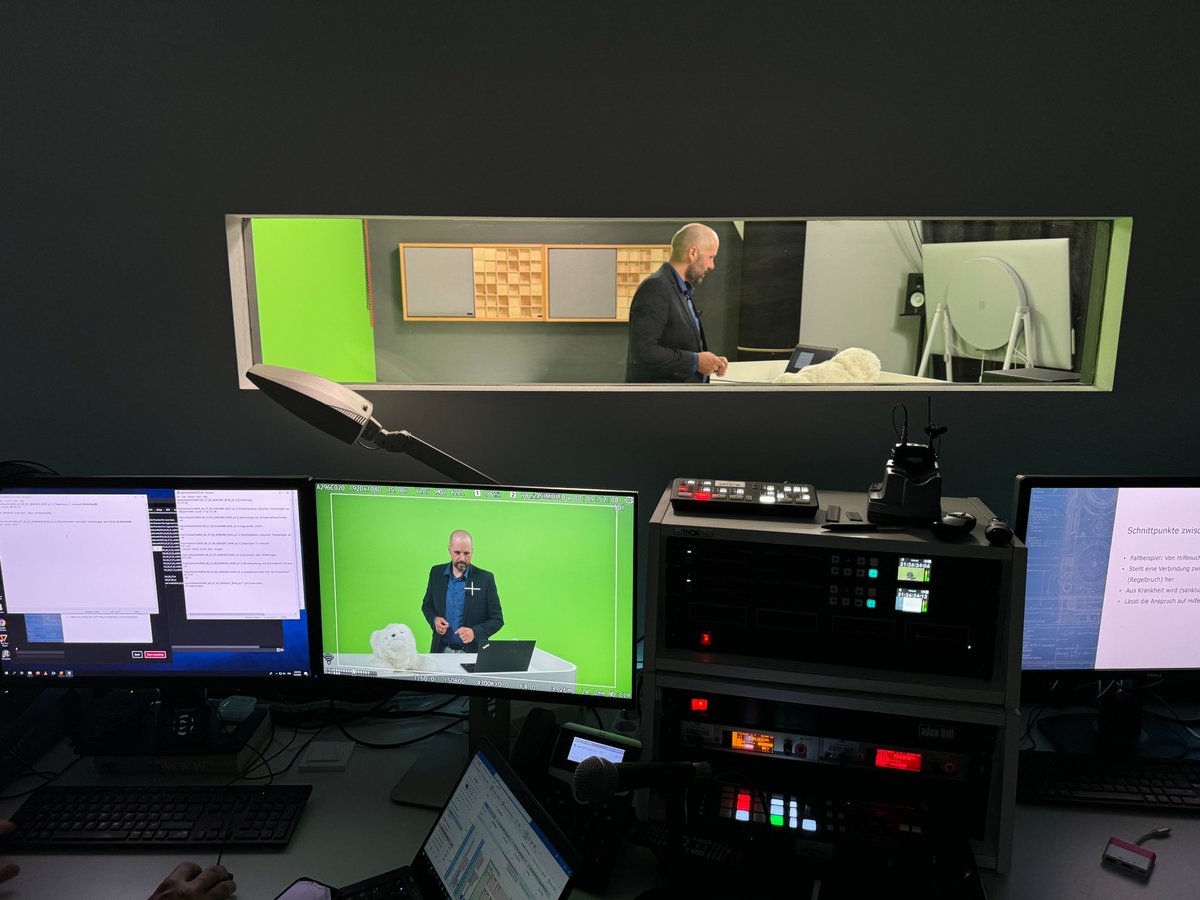
Bis gestern standen @JoschkaHalt und ich noch im Studio - heute geht's an den Start 🤩
Unser @openHPI-MOOC "Digitale Medizin – Was ist ethisch verantwortbar?" beginnt! 🚀 Über 1.600 sind schon dabei. Und du?
open.hpi.de/courses/digitalh…


1
2
5
849

10 Sep 2024
Morgen startet der #DiMEN @openHPI Kurs "Digitale Medizin - was ist ethisch verantwortbar?" in die zweite Woche.
Künstliche Intelligenz in Behandlungsentscheidungen.
Die Anmeldung ist noch offen!
open.hpi.de/courses/digitalh…
1
2
3
371
4 Sep 2024
Heute morgen starten wir die erste volle Woche unseres Kurses "Digitale Medizin - Was ist ethisch verantwortbar?" @openHPI
Die Anmeldung bleibt geöffnet! Und ich will diese Woche noch den/die 2000. Teilnehmer:in begrüßen.
That would be AWESOME!
open.hpi.de/courses/digitalh…
1
2
4
262

28 Aug 2024
Ein sehr interessantes Onlin-Seminar #openHPI-Kurs Digitale Medizin – Was ist ethisch verantwortbar? open.hpi.de/courses/digitalh…
1
1
2
50
28 Aug 2024
Bis gestern standen @JoschkaHalt und ich noch im Studio - heute geht's an den Start 🤩
Unser @openHPI-MOOC "Digitale Medizin – Was ist ethisch verantwortbar?" beginnt! 🚀 Über 1.600 sind schon dabei. Und du?
open.hpi.de/courses/digitalh…
3
8
974

Gestalte die Digitale Medizin von morgen mit!
Der neue openHPI Kurs von @RobRanisch und @JoschkaHalt zeigt dir, wie KI und Roboter unser Gesundheitswesen verändern. Jetzt kostenlos anmelden!
open.hpi.de/courses/digitalh…
2
5
291
15 Jul 2024
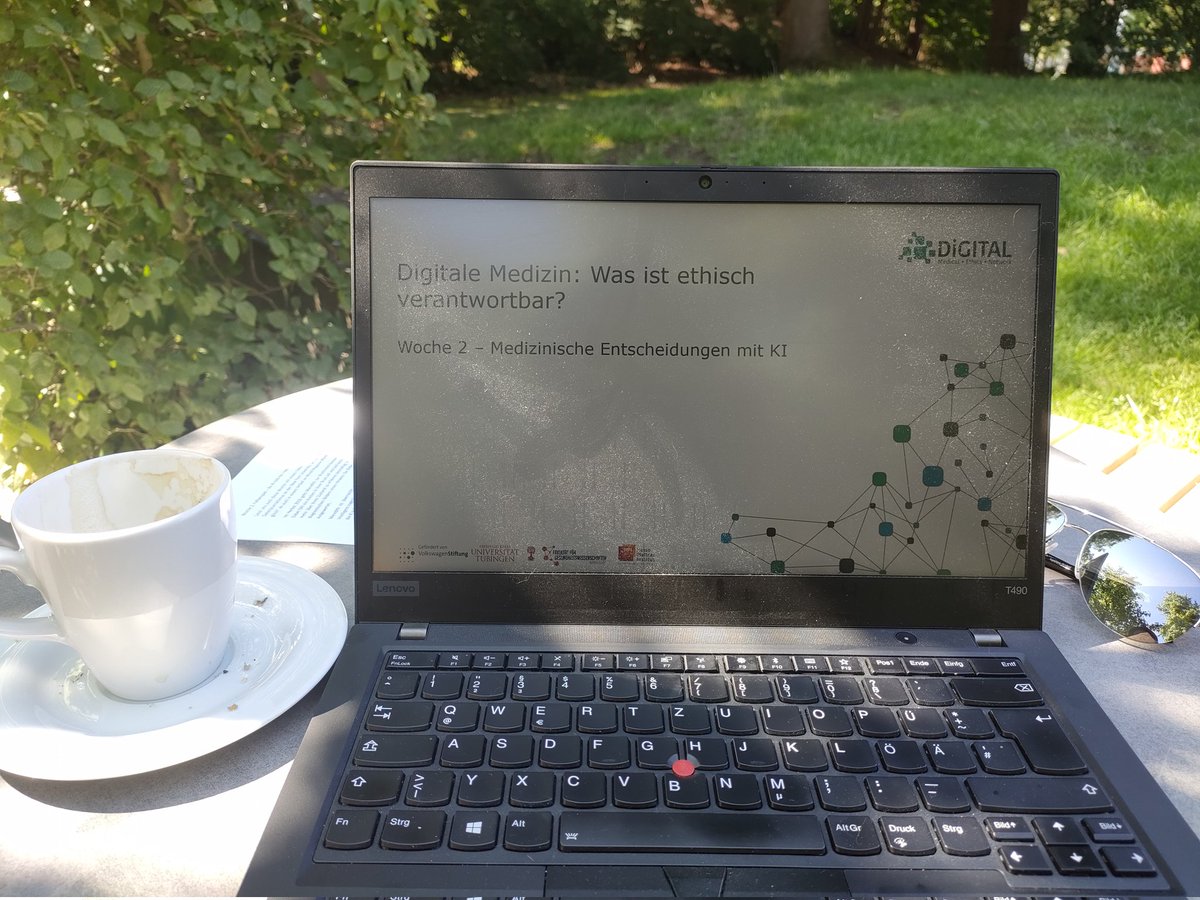
Kurze Pause, dann geht's weiter @RobRanisch und ich nehmen heute wieder für unseren MOOC "Digitale Medizin - was ist ethisch verantwortbar? @openHPI auf. Der Kurs startet Ende September- Anmeldung für alle, die Interesse haben ist frei!
open.hpi.de/courses/digitalh…
2
7
448

6 Jul 2024
How to 50x the number of tech startups in Europe?
Yesterday night in Berlin, @andreasklinger & @dominik_scherm hosted a eu/acc get-together 🇪🇺with ~200 guests to address this pivotal question.
Personal takeaways from Andreas' amazing presentation, panel, and chats with other guests (focus on US vs. EU ecosystem):
🚫 NOT the main issues (against common beliefs):
· Lack of research or innovation: many successful US tech companies base large parts of their tech on EU deep tech acquisitions, or use EU talent as CTOs / engineers / … .
· Lack of education: Germany for example has great technical universities at almost zero cost to study.
· Lack of talent / brain drain: there are at least as many US people immigrating to the EU for quality of life than the other way around, if not more.
· Lack of a “Silicon Valley”: we have many excellent clusters for innovation, in various areas.
· Lack of potential ambitious founders: there are enough tech-minded people with an ambition to build something big and impactful (even though the “craziness” of saying “I will be the one to build the next billion euro company and rule the world” is a bit less common, admittedly – but that’s a cultural thing and that’s OK, not the main issue).
🧩👩⚖️ Problem #1:
Fragmented & complex legal systems
· A zillion different forms for legal entities in EU, no equivalent to the “Delaware LLC”. Makes it very complicated for EU VCs to invest big, across borders, in Europe.
· Also harder for foreign VCs to get into whole EU as a market, as they must to adapt to many different legal systems, instead of just one.
· Generally, founding a limited liability company is much in countries like Germany, compared to US – not a deal breaker for creating a unicorn, but still introducing friction when it comes to quickly building momentum, or just trying out sth. fast.
🧩💶 Problem #2:
Fragmented market
· US startups can, more or less, serve their products and services across all states, to a giant economy, from day one. EU startups usually aren’t that easily able to do business in EU neighbor states (esp. when they aren’t having a SaaS model).
· Language and cultural barriers are one issue in this context, but a main reason are also different legal systems, different tax rules, etc.
· Applies especially to companies in heavily regulated verticals, such as space tech or other sectors with a lot of specific national regulations and practices.
🌟🦄 Problem #3:
Lack of accessible role models & success stories
· In the US, founders go to Stanford and similar Ivy League schools to spread excitement and entrepreneurial spirit to students. Jensen Huang even has a Stanford building named after him. In EU, buildings are commonly named to honor people that are just retiring, or already dead.
· Exceptions exist, like Hasso Plattner Institute (@HPI_DE | @openHPI), or August W. Scheer having co-initiated @softwarecampus1 (talked to him in person during the program 🥲)
· But what about the unicorn builders under 50? Can we invite them to our top engineering schools more frequently and spread their success stories? @Fraunhofer_IGD does it with their annual “Mein Weg Danach” talks, and it has the highest spinoff ratio across all Fraunhofer institutes, I believe.
Thanks @ricvath, @andrewztan, @princessashinze, @trentmc0 and everyone else for the great conversations, panelists @emilkendziorra, Laura from @tileboxio, Marcus from Dunia.ai & @b_johannsen for sharing your insights, and everyone at the event for the great learnings and inspirational conversations.
Now back to building! 🚀🇪🇺
4
9
33
4,416
27 Jun 2024
Heute wirds ernst. @RobRanisch und ich sind im Studio und beginnen mit den Aufnahmen für den #DiMEN MOOC "Digitale Medizin - was ist verantwortbar?" beim @openHPI
Die Anmeldung ist bereits offen.
open.hpi.de/courses/digitalh…
#Medizinethik #DigitalHealth

1
2
204