
what i mean by " watering down " is basically the overpathologizing of normal human experiences !! if people start claiming a disorder based only on a few traits ( which they can have without the disorder as you said ), the whole point / severity of the disorder is lost !! 2/2
8
i do think the rise in self diagnosis is a little concerning considering it can lead to watering down the very real and very debilitating experience of disorders. it also involves overpathologizing of normal human experiences.
7
3
21
595

Jun 6
Every few years laymen get obsessed with some psychology term, causing it to escape the academic context, turning it into an annoyingly overused and misapplied catchphrase applied to every situation.
Last few years people were obsessed with the term “cognitive dissonance.” This year people are obsessed with “Dunning–Kruger effect.”
Becomes a pop-psychology version of overpathologizing; treating ordinary behaviors or personality traits as if they are clinical conditions.
Someone speaks confidently:
“Dunning–Kruger”😱
Someone disagrees with an expert:
“Dunning–Kruger”😱
Someone starts a company despite lacking experience:
“Dunning–Kruger”😱
Someone posts a strong opinion online:
“Dunning–Kruger”😱
Label-happy folk who can’t think for themselves.
6
3
42
3,029

May 13
ive always stood by therapy being for healing and not for self introspection. figure out your trauma. figure out your damage. move on. stop with the overanalyzing and overpathologizing, 90% of shit can be fixed with clear communication and empathy consideration
1
6
163


lowkey i think people are overpathologizing normal fandom behavior sometimes 😭 being excited that ur oshi noticed u is not automatically people “not knowing how to be normal.” i think there’s a difference between being parasocial and just being happy about an interaction. if creators publicly interact with fans, fans are naturally gonna talk abt it—that’s kinda just how fandom works 🤷♀️
and honestly, i feel like treating every visible excitement from fans as “weird” just creates this environment where people are embarrassed for caring about things at all. i think fandom spaces get exhausting when people start acting like caring too openly is something shameful
1
48
278
5,361

Apr 28
That is far too expansive a definition for me (with concerns about overpathologizing).
I wrote a bit about how I differentiate here, but lay language
medium.com/@nicole.prause/wh…
1
4
150
Patrick is right here if I may call you, Patrick. And trust me there are many people that pathologize things that shouldn’t be, but there is a metric to determine whether it’s ordinary distress or significant.
Determining whether someone’s distress rises to clinical significance is not a gut feeling or an eyeball test. It is a careful process that keeps us from labeling ordinary life struggles as full-blown disorders. Picture a burnout questionnaire showing scores that dipped after a punishing work stretch. We do not stop at the numbers but examine the instrument itself was it normed on a sample that reflects real people, not just college undergraduates or one narrow demographic? Does it carry solid construct validity, meaning it is actually measuring burnout and not simply tiredness on a difficult week? Every measure is different, and no single threshold fits everyone.
That skeptical check matters just as much on the statistical side. A study can show a technically real change simply because it crunched data on a thousand participants and landed below a p-value of 0.05. In practical terms, that is like a gas gauge dropping from 3/4 to 2/3 full its measurable, but not the kind of thing that leaves anyone stranded.
Clinical significance asks the harder question: does this actually matter in the person’s life? Are they sleeping, showing up for the people they love, moving through their days without that crushing fog? We look past the statistics to functional impact, asking whether distress has crossed from a reasonable reaction to a difficult situation into something that genuinely impairs living.
Tools like the reliable change index help confirm that any observed shift exceeds measurement error and random test wobble. Effect sizes tell us how meaningful the difference actually feels. Norms and cutoffs provide structure, but context and the person’s own life keep the interpretation honest.
The goal throughout is to help without overpathologizing the hard things we all face.
I would definitely encourage those who want to learn more to go visit his class if he’s offering the opportunity. From reading his posts, he is very knowledgeable and integrates statistics and psychology very well. Something that is kind of rare to find these days because most schools don’t teach you the statistics or research components very well.
1
2
115

Mar 11
AI-Psychosis is not on the DSM-5…but do you know what is a a disorder…overpathologizing. It’s an excessive over focusing on finding mental health issues in oneself or others….this is usually linked to high anxiety, OCD, trauma, or fear-based perspectives. You only find it in individuals or groups who have the tendency to interpret normal, healthy, or cultural activities as signs of a mental health condition. This fucking behavior skews the lines between actual normal and abnormal behaviors and usually leads to unnecessary worry or stigmatization of people or persons in daily life.
In short…take your self diagnosis…and pound sand. Your false psychiatric gobbledygook has 0 space to exist where actual communication is occurring. People who do this are attempting to gaslight, use ridicule as a weapon, or are just agents / mouthpieces who parrot exactly what they are told to think…0 originality, 0 character, 0 intellect…and honestly just taking up oxygen in a space that can no longer afford them the place to breath.
My opinion.
13
13
73
5,539
Mar 2
AI-Psychosis is not on the DSM-5…but do you know what is a a disorder…overpathologizing. It’s an excessive over focusing on finding mental health issues in oneself or others….this is usually linked to high anxiety, OCD, trauma, or fear-based perspectives. You only find it in individuals or groups who have the tendency to interpret normal, healthy, or cultural activities as signs of a mental health condition. This fucking behavior skews the lines between actual normal and abnormal behaviors and usually leads to unnecessary worry or stigmatization of people or persons in daily life.
In short…take your self diagnosis…and pound sand. Your false psychiatric gobbledygook has 0 space to exist where actual communication is occurring. People who do this are attempting to gaslight, use ridicule as a weapon, or are just agents / mouthpieces who parrot exactly what they are told to think…0 originality, 0 character, 0 intellect…and honestly just taking up oxygen in a space that can no longer afford them the place to breath.
My opinion.
4
3
21
1,302
the result of tiktok ( and the internet in general ) overpathologizing normal behaviours. no, that common behaviour you show is not indicative of a personality disorder. everyone does that. 😭😭
it genuinely irritates me the amount of misinformation getting spread on disorders

person with bpd: so i went on a walk-
person without bpd: omg i also take walks!! does that mean i have bpd? i think it means i have bpd. im literally sooo crazy lol look at us both taking walks! tiktok told me i have bpd because i eat a lot?
2
18
342

Feb 22
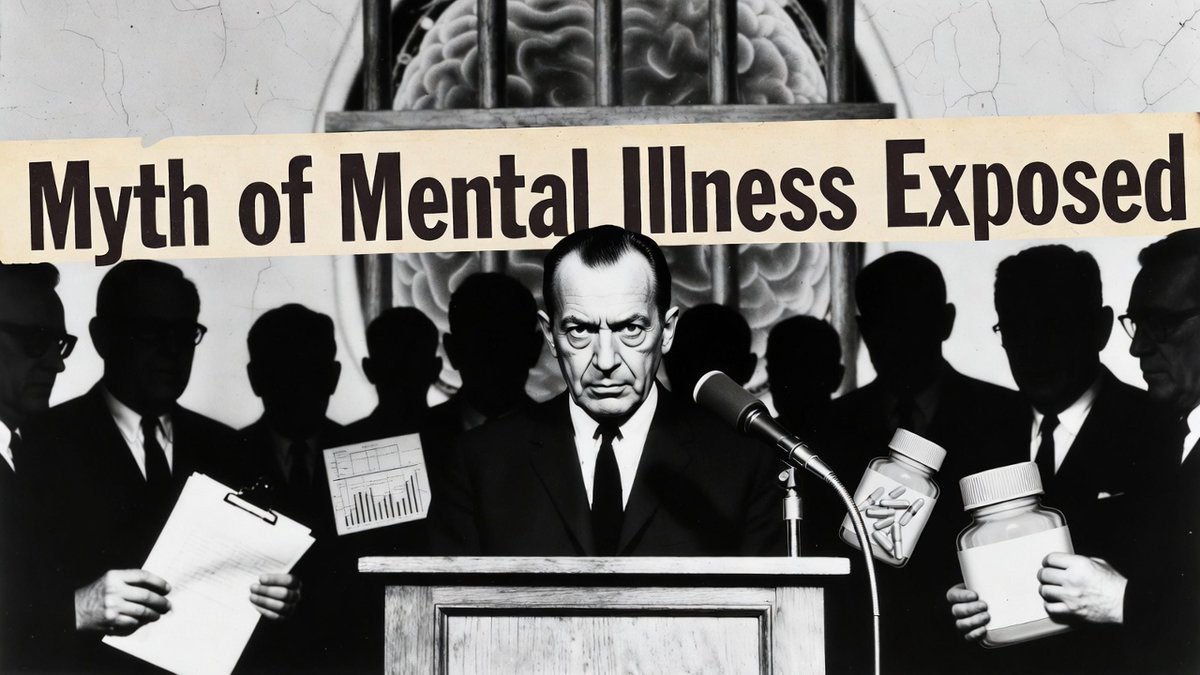
Thomas Szasz dropped some heavy truths back in the day psychiatrist turned fierce critic who called out the whole field as more power play than science.
Dude argued mental illness is just a label for life's messes, not some brain disease you medicate away, pushing for real personal responsibility over forced treatments.
Szasz's Core Beef:-
His book The Myth of Mental Illness (1961) flipped the script: behaviors we call crazy are problems in living, not medical conditions psychiatry's just politics dressed in lab coats, controlling folks via drugs and lockdowns. He slammed the chemical imbalance story as pure fable, perfect for Big Pharma sales but zero proof.
Spot on with today's SSRI debates, right?
Real-World Ripples:-
Szasz testified to Congress, helped shrink forced commitments US states tightened rules, public psych wards emptied out.
But critics say it backfired: more homeless, jammed prisons (40-80% with mental struggles by 2006). Economics angle?
He saw it as a coercive racket, state-backed behavior mods over free choice.
Still Echoing Today:-
Libertarians love him for anti-statist vibes antipsychiatry crowd runs with the human rights angle. Not anti-help just anti-coercion.
Makes you wonder: epidemic of bad coping or overpathologizing normal struggles?
What's your take overprescribed society or Szasz too extreme?
1
7
28
1,298

Feb 21
Such an accurate statement. A big problem in our overpathologizing society
Feb 21

"when did saying "no" become a "symptom"?" Great point that I often make in court.
Some mental health expert appear to take the position of: A. Admits mental illness = mental illness
ØA. Denies mental illness = lack of insight = mental illness
If A & ØA are both equal to mental illness then mental illness has no meaning.
10
931



Feb 9
The DSM-V, as a cultural artifact, exemplifies this by fragmenting human experience into "disorders," fostering suggestibility (e.g., self-fulfilling prophecies via labels), eroding risk literacy (overpathologizing normal volatility as pathology), and hijacking interpersonal trust—turning relational stresses into fixed identities rather than transient loops.
1
2
30

8 Dec 2025
Lower the cost of health care. Stop making people sick. Set minimal dietary standards for SNAP, and fitness standards in schools. Go after the pseudo-disability subculture, and the overpathologizing “providers”. Stop the medication-industrial complex.
1
21

23 Nov 2025
Recent research underscores the critical importance of addressing both trauma and dissociation in treatment, particularly when dissociative symptoms are clinically significant. Meta-analyses reveal that while therapy-as-usual and non-trauma-focused therapies e.g. cognitive-behavioral therapy (CBT) can be beneficial, targeted approaches yield significantly better outcomes in the presence of dissociation.
Therapy-as-usual is effective, but if it does not directly work on these areas, it will not help sufficiently - and these areas often are barriers to therapeutic growth beyond a certain level - as is the case with untreated depresion, anxiety and other conditions.
Key findings from systematic reviews:
- Trauma-focused therapies: Cognitive Processing Therapy (CPT), Eye Movement Desensitization and Reprocessing (EMDR), and Prolonged Exposure (PE) demonstrate larger effect sizes compared to therapy-as-usual.
- Dialectical Behavior Therapy for PTSD (DBT-PTSD): Shows particular benefit for complex PTSD with borderline personality disorder (BPD) features.
- STAIR (Skills Training in Affective and Interpersonal Regulation): Effectively addresses emotion dysregulation and interpersonal challenges.
- Multicomponent approaches: Improve retention and engagement in treatment.
Clinical indicators that may benefit from specialized approaches:
- Significant dissociative symptoms
- Emotion dysregulation
- Interpersonal difficulties
- Comorbid BPD features
- History of childhood trauma
An important insight from recent research is that dissociation functions as a critical mediator between trauma and treatment outcomes. Without addressing dissociation, trauma symptoms may persist or worsen.
Detection and treatment of dissociation can lead to significant reductions in healthcare utilization, improved quality of life, and shorter treatment durations. Persistent dissociation at two weeks independently predicts worse three-month PTSD outcomes, beyond childhood trauma and current symptoms. Dissociation is also linked to impaired neurobehavioral decision systems affecting anxiety, depression, and stress regulation.
These findings suggest the necessity of early assessment and direct treatment of dissociation, positioning it as a gateway to effective trauma processing.
- Integrating fragmented "parts of the self"* is essential for healing from dissociation and achieving a cohesive identity. Key strategies include:
- Establishing Safety and Trust: Creating a secure environment allows individuals to explore and acknowledge different aspects of themselves without fear.
- Recognizing Internal Parts: Identifying and understanding the distinct subpersonalities or ego states, each with unique emotions and roles, is crucial.
- Facilitating Internal Communication: Encouraging dialogue among these parts fosters cooperation and reduces internal conflicts.
- Processing Traumatic Memories: Addressing unresolved trauma linked to dissociated parts helps alleviate their burdens, aiding integration.
- Promoting Self-Leadership: Cultivating a compassionate core self to guide and harmonize internal parts leads to unity.
- Harmonizing the Self System: Gradually integrating these parts into a cohesive whole acknowledges each part's positive attributes, resulting in a balanced identity.
- Incorporating these strategies can significantly aid in reducing dissociative symptoms and improving overall well-being.
* It is very important clinically and ethically not to over-reify the idea of "parts of the self". The individual is one person, in one body - without invalidating personal experience or foreclosing on therapeutic opportunities. The clinician is careful to avoid imposing one's own pre-conceived notions about how self is constructed and experienced, which attending to the best data we have. Iatrogenic harm is a real issue with misdiagnosis, overdiagnosis, and overpathologizing.
#TraumaInformedCare #Dissociation #ComplexPTSD #EMDR #DBTPTSD #ClinicalPsychology #MentalHealthTreatment #EvidenceBasedPractice #TraumaTherapy
References:
Karatzias, T., et al. (2019). Psychological interventions for ICD-11 complex PTSD symptoms. Psychological Medicine, 49(11), 1761-1775.
Coventry, P. A., et al. (2020). Interventions for PTSD and comorbid problems following complex trauma. PLoS Medicine, 17(8), e1003262.
Schnurr, P. P., et al. (2024). Management of PTSD and acute stress disorder: 2023 VA/DOD guidelines. Annals of Internal Medicine, 177(3), 363-374.
Hoppen, T. H., et al. (2023). Efficacy and acceptability of psychological interventions for adult PTSD. Journal of Consulting and Clinical Psychology, 91(8), 445-461.
Bohus, M., et al. (2020). DBT-PTSD compared with CPT in complex presentations. JAMA Psychiatry, 77(12), 1235-1245.
Kleindienst, N., et al. (2021). Treating dual diagnosis BPD and PTSD related to childhood abuse. Journal of Consulting and Clinical Psychology, 89(11), 925-936.
Cloitre, M., et al. (2024). Home-based STAIR for women veterans with MST. Journal of Consulting and Clinical Psychology, 92(5), 261-274.
Maercker, A., et al. (2022). Complex post-traumatic stress disorder. The Lancet, 400(10345), 60-72.
Sele, P., et al. (2023). Comparing phase-based treatment, PE, and skills-training for CPTSD. Journal of Anxiety Disorders, 100, 102786.
Langeland, W., et al. (2020). The economic burden of dissociative disorders. Psychological Trauma, 12, 730-738.
Lebois, L. A. M., et al. (2022). Persistent dissociation and its neural correlates predict outcomes. American Journal of Psychiatry, 179(9), 661-672.
Basso, J. C., et al. (2024). Dissociation and trauma symptomatology linked to CNDS imbalance. Frontiers in Psychology, 14, 1317088.
Rüfenacht, E., et al. (2023). Addressing dissociation with trauma-focused mentalization-based treatment. Psychoanalytic Psychotherapy, 37(4), 467-491.
#Dissociation #MentalHealth #TraumaRecovery #CPTSD #PTSD #Anxiety #Depression #Healing #SelfCare #Mindfulness #EmotionalRegulation #SelfIntegration #TraumaHealing #MentalHealthAwareness #Therapy #SelfLove #Recovery #MentalIllness #ComplexPTSD #TraumaInformedCare
2
5
464

5 Nov 2025
Adults interacting in public doesn’t equal grooming content. Teaching young women autonomy includes letting them distinguish normal social gestures from actual predatory behavior. Overpathologizing everyday interactions doesn’t protect girls, it just creates fear.
1
2
45

31 Oct 2025
I think there's a huge difference between self-diagnosis and diagnosis by a qualified professional without an agenda. But yes to the overpathologizing of every quirk and idiosyncracy in the human condition.
2
38