Fascinating. Not good to live in an echo chamber. Leads to confirmation bias. Were you able to ever see Lindell’s pcaps? Remember when he promised Trump would be reinstated? Remember when he said he had evidence of China stealing the election? Whatever happened to all that?
1
23


Jun 14
I kinda lost respect for Rob after the my pillow pcaps. When asked why he didn't get on stage Rob said they were big and had guns. Being the event was televised in the USA.. what the hell would happen? Obviously nothing
1
13
TonyD² retweeted

Jun 11
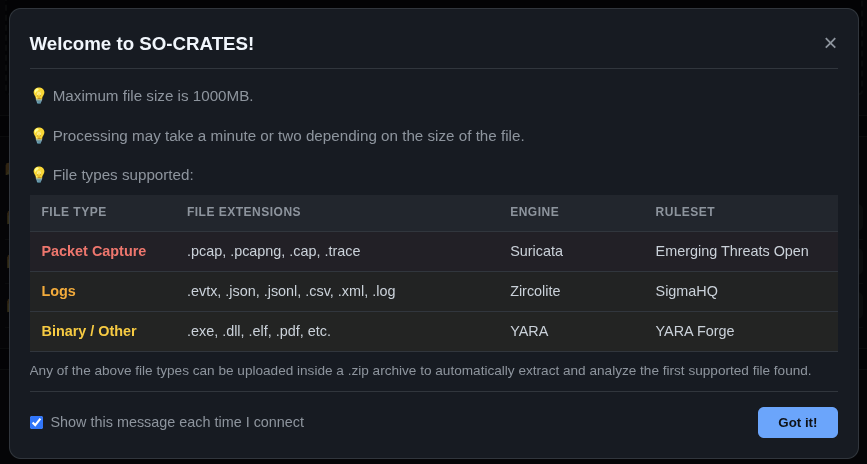
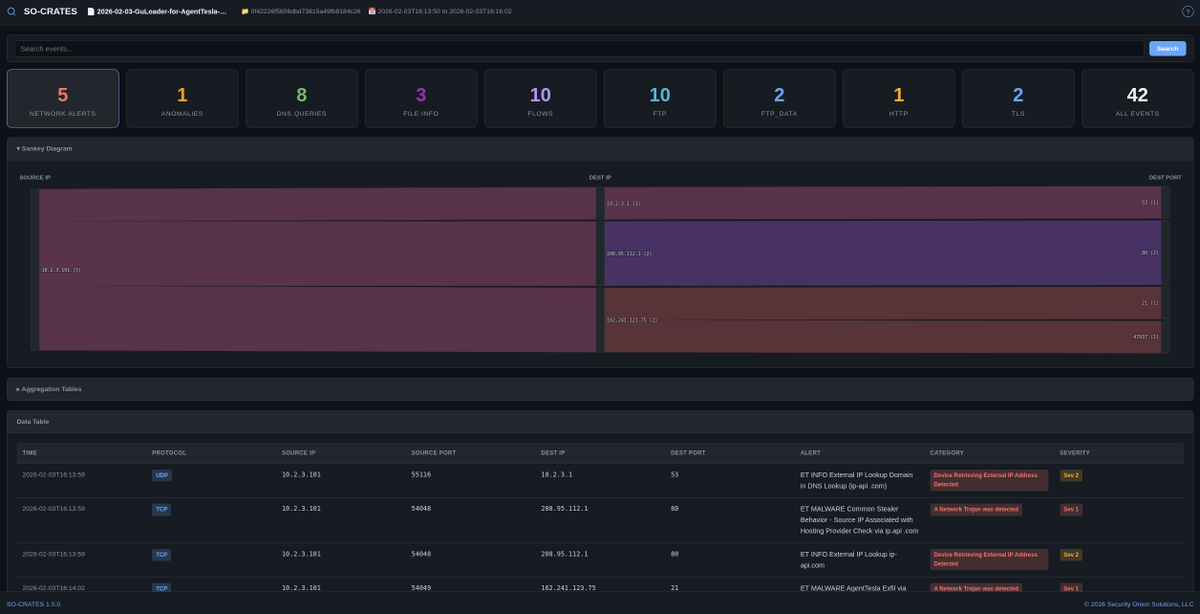
🚀 Introducing SO-CRATES — a powerful new FOSS standalone analyzer for PCAPs, logs, and binaries
✅Suricata network analysis alerts
✅Sigma rule detection on logs
✅YARA scanning on binaries
✅Rich metadata, transcripts, hexdumps & stream carving
All in one Docker/Podman container — perfect for air-gapped work, malware analysis, DFIR, and threat hunting.
Who’s throwing files at it? ❤️ reply with your use case!
#DFIR #Cybersecurity #BlueTeam #ThreatHunting #Suricata #YARA #Sigma
1
6
18
1,687

Every single day, a new concept, a new lab, a new scenario. Everything documented and pushed to GitHub. No days off. No excuses.
In the last 12 months I've built an Active Directory home lab from scratch, hunted attackers through Windows Event Logs, analyzed malicious PCAPs in
1
15

Jun 13
I'm so bummed it never made it to the civilian market. Maybe all our ARs would be using PCAPS now too.
45

Jun 12
Did he ever provide the PCAPS? He said he has them for years, but he didn’t… I call that a lie, what do you call it?
1
22

Jun 11
Good morning Scott. Lindell is a delusional liar. He had no actual evidence. No pcaps. If he did, Trump would have used it in court. youtu.be/EnxwaJQiYLI?is=xDf1…
1
1
76

Jun 10
So what's your problem now, he's got the proof , the receipts, the pcaps, the testimony. Not just him either Guillani has aftdavits and testimony. . Guess you didn't research all the links, you have been brainwashed to believe,"it was the most secure election ever"
4

Jun 10
Essayli didn't reveal the whole list of ways! @JovanHPulitzer knows the facts. Pcaps were nothing more than PEE & CRAP. The bull never ends!
1
107

Jun 10
Hey everyone, thanks for coming. Let’s start with a hard truth: spyware does not announce itself. It runs silently in the background of a device. It logs keystrokes, steals credentials, and monitors private data. High-profile corporate and political surveillance tools like Pegasus prove that traditional endpoint security, like your standard antivirus, is no longer enough to stop targeted attacks.
If you want to catch truly sophisticated spyware, you have to stop looking at the device itself and look at the network traffic. Cybercriminals and state sponsored criminals can hide their local binaries, they can encrypt their files, but they cannot hide their data transmissions over the wire. Every spy eventually has to call home.
Today, we are talking about how to build a behavioral, network-based spyware detector using nothing but open-source machine learning.
Every good machine learning model starts with data. You cannot train an algorithm to find bad behavior unless you show it what bad behavior actually looks like. For network-based detection, this means we need packet captures—or PCAPs—of actual spyware running live.
Luckily, we don't have to infect our own networks to get this. The community has provided three incredible, open resources:
Stratosphere IPS is the absolute gold standard dataset. It contains raw PCAP files of real, live Android and desktop spyware, including things like Pegasus and Predator, captured inside strictly controlled sandbox environments.
MTA-KDD'19 is a specialized dataset containing over 65,000 traffic instances, explicitly optimized for training classic supervised classifiers.
IoT-23, If you are focusing on smart devices or connected hardware, this is a massive dataset featuring labeled malware traffic from real IoT environments.
Now, here is the engineering hurdle: machine learning algorithms do not understand raw binary PCAP files. You cannot feed raw network packets straight into a neural network or a decision tree. You need a bridge to convert raw packets into structured numerical features, things like flow duration, total byte counts, and packet arrival intervals.
We use two primary open-source tools to do this data transformation:
CICFlowMeter ingests your raw PCAP files and spits out a neat CSV matrix. It extracts over 80 distinct statistical network features designed specifically for ML ingestion.
Zeek, formerly known as Bro, is a legendary network monitoring platform. It generates structured connection logs, like conn.log, which you can parse and load into Python Pandas with just a couple lines of code.
Once your network traffic is flattened into a structured format, you can finally leverage community-driven machine learning codebases to train your actual detection brain.
Two great repositories to look at on GitHub right now are:
Network-attack-detection is a clean, lightweight Scikit-Learn implementation. It takes NetFlow data and uses standard algorithms like Random Forest, K-Nearest Neighbors, and SVMs to separate clean traffic from malicious traffic. You can use iot_network_malware_classifier If you want to go deeper, this repository uses neural networks to spot highly complex, malicious behavior patterns inside encrypted data streams without needing to decrypt the payload.
To tie this all together into a real engineering pipeline, here is the workflow you should implement on your team:
First, Download your malicious seed data, pull a specialized spyware PCAP down from Stratosphere IPS.
Second, Parse that data, run the raw network packet capture through CICFlowMeter to generate your statistical feature matrix.
Third, Train your model—feed that structured CSV into a Scikit-Learn Random Forest classifier alongside some clean baseline data.
Fourth, Evaluate, test your newly trained model against your live corporate traffic. Your goal here is to rigorously tune the model to minimize your False Positive Rate so your security team doesn't burn out from alert fatigue. 🏴☠️
122

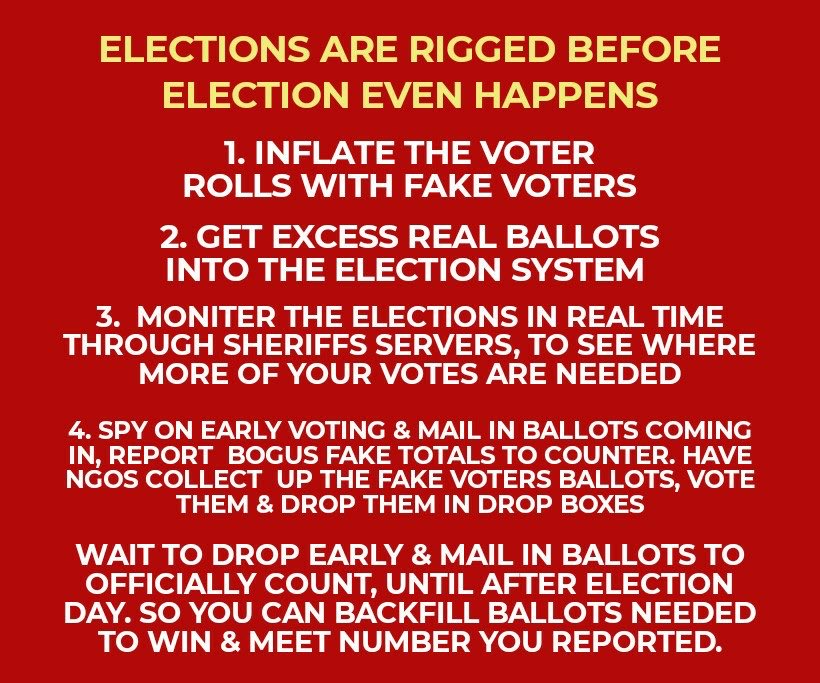
It’s 💥ELECTION MALADMINISTRATION💥
& 💥VOTER FRAUD💥
🤡it’s NOT THE MACHINES🤡
🤡it’s NOT FOREIGN ACCESS🤡
🤡it’s NOT NUMBERS FLIPPED ON TV🤡
🤡It’s NOT PCAPS or POLYNOMIALS🤡
🔥x.com/S83118579/status/18583…🔥
@JovanHPulitzer has the provable evidence ⚖️
18 Nov 2024

Check out @JovanHPulitzer forensic audit work from the 2020 audit of Maricopa County in AZ. He can tell you how they rig the votes, even in Newsom’s recall election and how they are doing it in this election.
4
5
288

Jun 10
10, because I never infiltrated an Antifa call or had Pcaps and sweeping a dirt floor would leave footprints!
1
10