
I used to be terrified of turning people down, but I realized saying "no" is a muscle that gets stronger every time you use it.
Full interview at phparch.com/podcast/communit…
✨ #boundaries #selfcare #productivity #mindset#communityCornerPodcast #php #phpc #coding #phptek #jstek
1
3
おさない retweeted

PHPカンファレンス新潟2026 にプロポーザルが投稿されました!
「どうしても Eloquent でリポジトリパターンをやりたいんだ」 / 河瀨 翔吾さん (@shogogg)
fortee.jp/phpconniigata-2026…
#phpcon_niigata
2
9
344

its 13:34 pm on a Saturday i'm bored with no world cup matches in sight so i'm going to yap about what i'm vibing @flux_xyx.
Somewhere along the way, stable-coins turned into the most important technology crypto has produced. They are the closest thing the industry has to a finished product: hundreds of billions of dollars in circulation, trillions in settlement volume every year, and a real regulatory path now that the United States has passed the GENIUS Act and Europe has MiCA. The largest payment networks and banks in the world are issuing them, backing them, or building on top of them.
Stable-coins are the base collateral, the default unit of account, the asset on the other side of almost every trade, and the rails most value actually moves on. If decentralised finance has a number one primitive, it is no longer a volatile token, It is stable digital money.
The catch is that nearly all of this is still the dollar. The euro, the peso, the NAIRA, the won, the Canadian and Australian dollars exist as stable-coins too, but they have nowhere to actually meet and interact.
That is the void i want flux to close. flux is an on-chain prime liquidity and clearing layer that takes this wave of regulated stable-coins and extends it past the dollar to every currency at once. It uses the new generation of fiat-backed coins as raw material and gives them a single venue where they can swap, lend, and hedge against each other. The whole protocol comes down to one sentence: one pool, three markets, where currencies clear.
You can feel the missing piece the moment you try to use it. Off-chain, those currencies still cross borders through correspondent banks, cutoff times, and settlement windows designed in the 1970s. On-chain it is barely better: moving a dollar around the world takes seconds, but moving a peso into a euro takes bridges, wrapped assets, three different DEXs, and slippage at every leg, and even then you never see a clean, honest price for one currency against another.
Stable-coins solved storage and transfer for the dollar.
to explain flux better i'll Start with the engine, because everything else hangs off it. flux prices currencies with a bin-based self-pricing AMM. No oracle sets the price trade by trade and there is no order book to maintain. Liquidity sits in discrete price bins, and the market itself decides where the euro trades against the dollar, where the CAD trades against the peso, where the won trades against the Philippine peso. The price is not quoted to you by a desk you have to trust. The price is the pool, fully on-chain and fully visible, and anyone can trade it. The one backstop is drift. flux uses Chainlink Data Streams to watch the pool against real market rates, and when the two pull significantly apart, Chainlink steps in to bring the price back in line. The market runs the price; the oracle only catches it when it slips too far. No KYB, no KYC, no gatekeeper deciding whether your jurisdiction is allowed to participate.
The same capital that prices those swaps does more than one job. When you provide liquidity to flux, you are not only a swap LP. The same balance backs the lending markets and the hedging book at the same time. One pile of capital, three sources of return. That is the Fused Trade Ledger, and it is what lets a single position earn from swapping, lending, and hedging without being split across three separate protocols. Everything you hold lives inside one cross-margined equity account, so your collateral, your debt, and your hedges are netted against each other rather than scattered.
Borrowing on FLUX works differently from anything you have used on a money market. When you take a loan, the position is not a row in a database. It is minted as a Debt NFT that carries its own collateral, its own debt, and its own live health ratio. Your loan becomes an object you can inspect, value, and sell. Hedging works the same way: when you protect an FX position, you mint a Hedge NFT, a transferable claim on the other side of the trade. Loans and hedges stop being private entries on a ledger and become assets in their own right, trading in their own marketplace. A whole secondary market for debt and protection sits on top of the pool.( in all honesty i'm still considering if there is any need/ gamification attached to selling the hedge positions as nft's if it not fun i will pull it away)
Walk through what that feels like in practice. Say you hold BRLA, the Brazilian real stable-coin, and you want euro exposure without selling your $BRLA. On flux you post BRLA as collateral, borrow EURC against it, and the system mints you a Debt NFT for the position. You hedge the pair to lock your risk. A week later you change your mind. You do not have to unwind anything, pay to close, or fight the pool for liquidity. You list the Debt NFT, walk away, and let someone else step into the exact position you built. The loan, the collateral, and the health travel with the token.
i also added a little bit of gamification into the lending and borrowing aspect of it as a random user you can also earn by calling liquidation for accounts or wallets who are either due for partial liquidation or full liquidation and earn a fee (2.5%-1.5%of the position being liquidated, im still uncertain about fee but thats a range) all these are demonstrated in the demo video i dropped
after brainstorming for a long ass time i decided that flux should give you cross-margined net equity across every currency you touch, with live health, liquidation buffers, and your currency exposure broken out in real time.
Chainlink is not a price source quoting every trade. The pool prices itself, and Chainlink Data Streams sits to the side with one job: catch significant drift. If the pool and real market rates move violently apart, the protocol has a way to correct the price and shut down manipulation instead of trusting the pool blindly. The same feed anchors the FX hedging leg, so hedges settle against an honest rate. Belt and suspenders, in the one place it counts.
All of this runs on @arc , Circle's layer-1 built specifically for stable-coin finance. On Arc, stable-coins pay the gas, settlement is final in real time, and foreign exchange is treated as a first-class citizen at the chain level rather than an afterthought bolted on later.
FLUX only means something because of the currencies it can hold, and that is the part I am very much happy that arc brings. Eight stable-coins, eight issuers, one shared pool, and eight teams doing the hard work of bringing regulated money on-chain in the first place.
The dollar and the euro come from @Circle, as USDC and EURC. The Canadian dollar is QCAD from @stablecorp. The Australian dollar is AUDF from @ForteAUD. The Mexican peso is MXNB, issued by Juno, a @Bitso company. The Brazilian real is BRLA from @BRLAdigital. The Philippine peso is PHPC from @coinsph. The Korean won is KRW1 from @BDACSKorea. Each of them is a real currency, backed and redeemable, and on FLUX they finally trade against each other in one place instead of living on separate islands.
( to note for now that i have only built the v1 model to just tie each currency to usdc firstly, when flux is then live by community request or dao governance we can now have the currency pairs requested as long as the pair is on flux)
Eight is only the beginning, because the design is currency-agnostic, every new stable-coin that lands on Arc becomes a new pair, a new corridor, and a new market on flux with no new infrastructure to build. Dollar to won. Euro to Philippine peso. Canadian dollar to real. Peso to Australian dollar. These are routes that do not exist anywhere on-chain today, and on Flux they clear inside the same pool as everything else.
Put it together and you can see what flux turns into for different people. A trader gets real stable-coin currency pairs with pricing they can actually see, plus leverage and hedging in the same account. A liquidity provider earns from swaps, lending, and hedges on one pile of capital instead of choosing one and missing the others. A business moves between eight currencies with no bank relationship, no paperwork, and no five-day settlement wait. None of it asks permission.
On status, I would rather show than promise. The protocol design is finished. The documentation and the full mathematical specification are complete. As i am a one man army, the dApp I have been building is not yet live although i have been able to design the frontend to the best of my capabilities with core interactions ( see video attached below for core interactions), after speaking to some chad devs the core smart contracts are not going to be hard to code but it will cost me a lot thats in writing and decoding for audits so i'm stuck in
> using claude opus 4.8 to code the core contracts or
> pitching to a pre-seed investor and securing a base fund to ensure code can be written and audited with the best firms.
either one of them is a problem i cant seem to decipher Rn, if you are a builder that has had this problem how did you ship beyond this point?
The simplest way to say it is this. Stable-coins put the dollar on-chain. Flux puts the foreign exchange market on-chain. One pool, three markets, multiple currencies, and a single place where the world's money finally clears. If you trade FX, build money, or simply think the dollar should not be the only currency that works on-chain, follow @flux_xyx .
11
2
13
809
I’ve seen so many people in power destroy their credibility because they refuse to admit a simple mistake. 😤
Full interview at phparch.com/podcast/communit…
#Leadership #Shorts #GrowthMindset #Accountability #communityCornerPodcast #php #phpc #coding #podcast #phptek #jstek
12

Jun 12
🧩 Composer plugins are powerful, but execute code during install & update. Composer prompts to allow a plugin, but a distracted "yes" or an AI agent on autopilot is all it takes. Private Packagist now has org-level allowlists for plugins. #php #phpc #composerphp

ALT Private Packagist: Restricting Composer plugins across your organization Shield icon behind a jigsaw puzzle piece representing a plugin, connecting to multiple puzzle pieces with checkmarks or crosses underneath a building and a group of 3 people
1
6
19
1,402
I don't have a security team, so I need something fast and hard to misconfigure. UFW takes about two minutes: allow SSH, enable the firewall, move on.
Full video at phparch.com/2026/04/ubuntu-f…
#php #phpc #coding #podcast #phptek #jstek #LinuxTips #CyberSecurity #Ubuntu #CodingLife
1
23
Rage retweeted

Jun 9
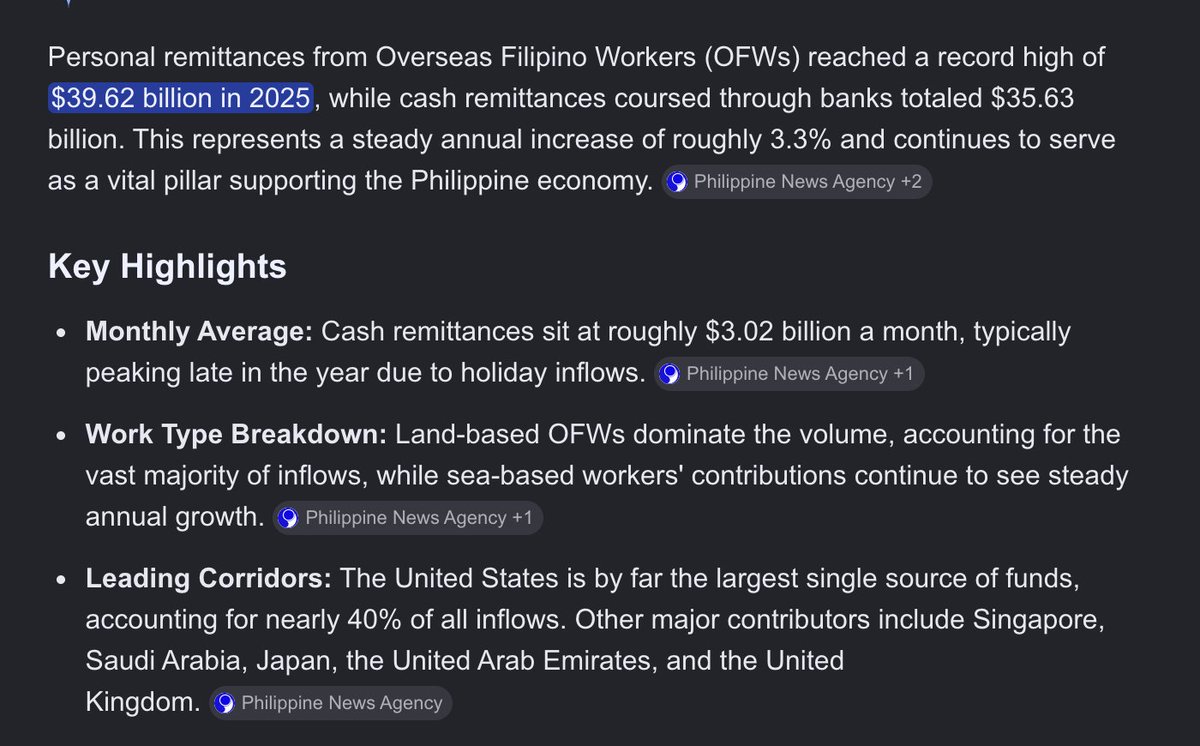
disrupting PH remittance with the power of @base stable coin PHPC via Gitlawb tech and infra. exciting times !
11
25
111
15,834

Crypto remittance has been attacked from every angle.
Lower fees.
Faster settlement.
Stablecoin rails.
Onchain payments.
All of that matters.
But $GITLAWB is not trying to win by being another remittance company.
The more interesting angle is upstream.
Who builds the apps?
Who keeps improving them?
Who connects Base, PHPC, x402, wallets, compliance flows and user interfaces into something people can actually use?
That is where AI agents change the game.
If agents can build and iterate financial apps at machine speed, remittance becomes more than a payment problem.
It becomes an application generation problem.
And that is where $GITLAWB could have a real edge.
Jun 9

Working on it with PH remittance
2
134


Most developers treat Nginx as just a black box, but you're missing out on the magic happening between the user and your app.
Full episode: phparch.com/podcast/communit…
#Nginx #WebDev #PHP #CodingTips #communityCornerPodcast #php #phpc #coding #podcast #phptek #jstek
15