
Jun 12
OpenMetal's new v5 hardware offers Intel Xeon 6000 P-series, DDR5-6400 memory, and three tiers up to 64 cores and 1TB RAM. Bare metal or hosted private cloud, ready in minutes. Available now in Ashburn.
hostingdiscussion.com/news/o…
#BareMetalCloud
#PrivateCloud
#AIInfrastructure
18
Jun 12
Apple extended Private Cloud Compute to Google Cloud using Nvidia Blackwell Confidential Computing. Your device cryptographically verifies the infrastructure before data moves. Apple still controls the software entirely.
hostingdiscussion.com/news/a…
#AppleAI
#PrivateCloud
20

Jun 11
Beyond Cloud-First: Why Private Cloud Deserves a Fresh Look
I’m looking forward to joining Rick Walsworth of Broadcom and Pete Flecha of Broadcom for an upcoming webinar, Beyond Cloud-First: A Data-Driven Case for Private Cloud. Together, we’ll explore how enterprise leaders are reassessing infrastructure strategy as rising costs, compliance pressures, data sovereignty requirements, and the demands of AI continue to reshape the cloud conversation.
During the session, we’ll unpack key findings from the latest Private Cloud Outlook and discuss where private cloud adoption is accelerating, why organizations are repatriating workloads, and what these shifts mean for infrastructure strategy, operational efficiency, and long-term cost structure. We’ll also examine how modern AI infrastructure is evolving, including the growing need to bring AI closer to where data lives, reduce operational silos, improve security, and lower total cost of ownership.
If you’re a CIO, CTO, architect, or IT leader navigating the next phase of cloud and AI strategy, I encourage you to join us for the discussion and register today.
Register here: go-vmware.broadcom.com/vcf-d…
#PrivateCloud #CloudStrategy #HybridCloud #AIInfrastructure #EnterpriseIT #CloudComputing #DataSovereignty #CloudRepatriation #InfrastructureModernization #DigitalTransformation
65

Public cloud makes it easy to start. Private cloud makes it sustainable to scale.
The 2026 Private Cloud Outlook has the data on where production AI is actually going.
youtu.be/KrTH2g6kEbM
#PrivateCloud #AI #VCF
3
319

Jun 11
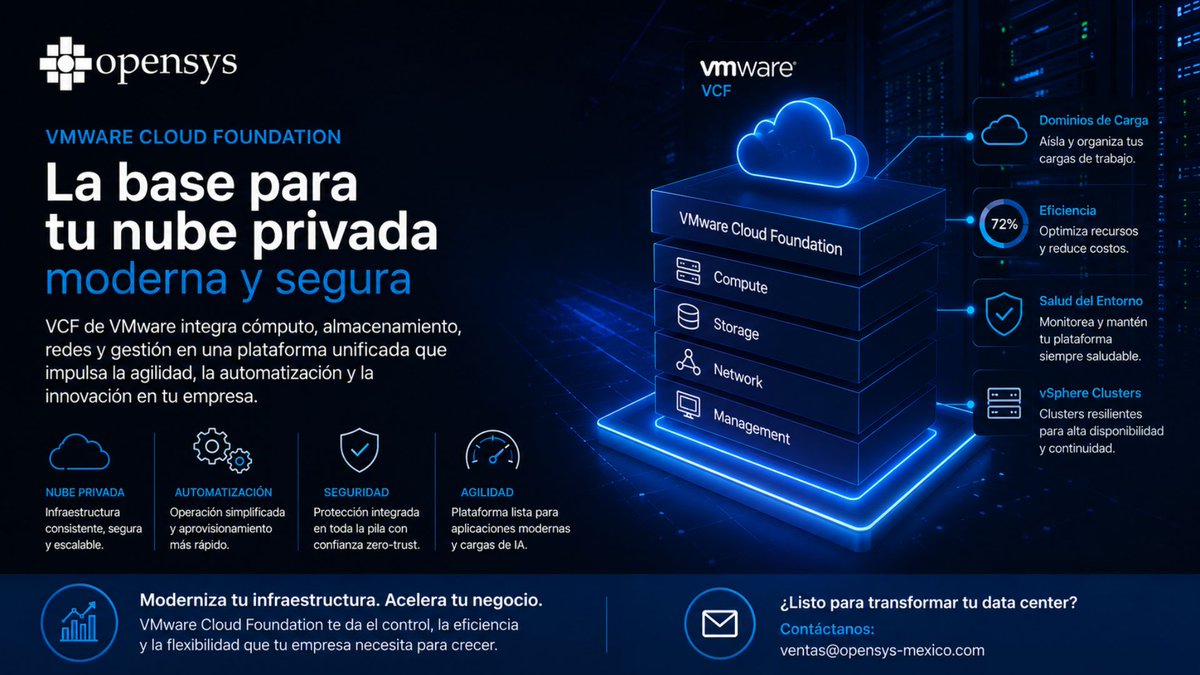
¿Tu infraestructura está lista para soportar las demandas actuales del negocio?
Con *VMware Cloud Foundation (VCF)* puedes unificar cómputo, almacenamiento, redes y gestión en una plataforma moderna, segura y escalable.
#VMware #VCF #VMwareCloudFoundation #PrivateCloud #Opensys
13

Jun 11
The benefits of virtualization with the guarantees of a dedicated hardware 🚀
Uninterrupted, high performance, without worrying about the networking, hardware and virtualization layers.
#PrivateCloud #DedicatedServers #HighPerformance
3

Jun 11
Rising costs, security concerns and data sovereignty are pushing more firms to run production AI inferencing in private cloud, according to a Broadcom survey. #AI #PrivateCloud #DataSovereignty #CyberSecurity techday.asia/story/enterpris…
12
Jun 10
Private Cloud Wasn’t a Detour—It Was the Destination for Enterprise AI
Broadcom’s latest analysis is spot on, and it aligns closely with my research over the last few years: as AI becomes a larger and more strategic business opportunity, enterprises are moving decisively toward infrastructure they own, control, secure, and optimize.
For a long time, the conversation centered on speed and convenience. Public cloud won that early phase because it enabled experimentation at scale. But production AI is a very different equation. Once enterprises move from pilots to real business-critical AI systems, the priorities shift quickly to cost predictability, governance, security, performance, data sovereignty, and architectural control.
That’s why this trend should not surprise anyone paying close attention. Enterprises are realizing that the economics and operational realities of AI—especially inference at scale—often favor owned infrastructure and private cloud models. This is particularly true for organizations in regulated industries and for businesses that see AI as a core competitive asset, not just another IT experiment.
In other words, as AI matures into a true business platform, infrastructure strategy is maturing with it. The future is not simply “cloud first.” It’s fit-for-purpose infrastructure, and more often than not, that means bringing strategic AI workloads closer to home.
Well worth the read: news.broadcom.com/releases/b…
#AI #PrivateCloud #EnterpriseAI #CloudComputing #DigitalTransformation #Infrastructure #GenerativeAI #CIO #CTO #HybridCloud
1
1
3
99

Jun 10
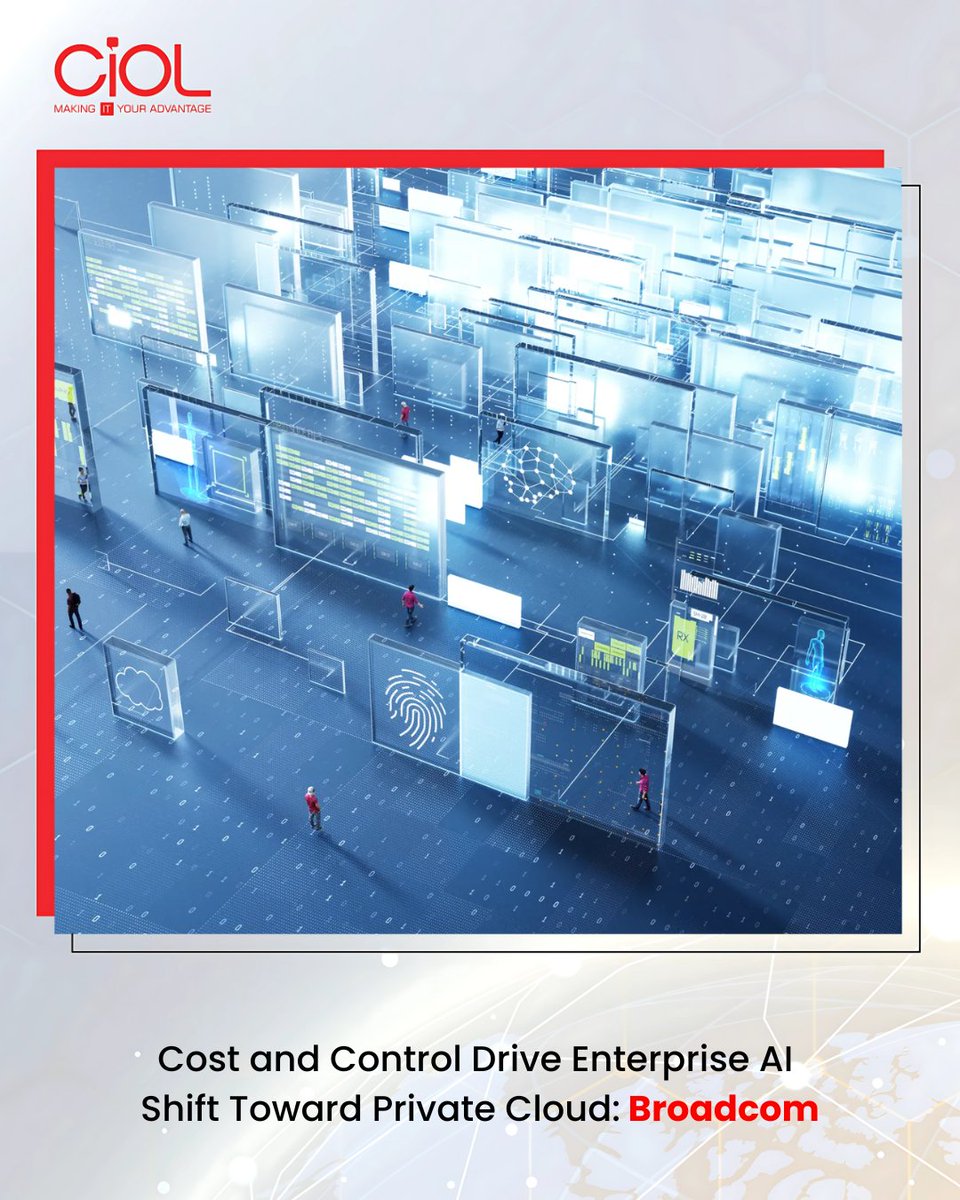
AI Workloads Shift to Private Cloud
Broadcom’s Private Cloud Outlook 2026 shows enterprises moving production AI workloads to private cloud infrastructure. Rising public cloud costs along with security
Read more: ciol.com/news/broadcom-priva…
#CIOL #Broadcom #PrivateCloud
@Broadcom
20

“Modern Private Cloud: A Secure Foundation for Production AI” exclusive: @furrier speaks with @Broadcom’s Paul Turner & @prashanthshenoy about how #VCF lowers #infrastructure costs improves #privatecloud economics.
💡 Get more insights!
thecube.net/events/broadcom/…
#EnterpriseAI
1
3
50,215

🚨 #EnterpriseAI is leaving the #publiccloud. Production AI inference dropped from 56% → 41% in public cloud in just ONE year.
@VMblog sat down with @Broadcom's Prashanth Shenoy to unpack the Private Cloud Outlook 2026 findings. Cost, control & sovereignty are reshaping everything.
🔗 vmblog.com/qa/the-ai-tipping…
#AI #PrivateCloud #VMware #Broadcom @VMware
33
Jun 10
Private AI Cloud Platforms: What We Learned From Comparing the Market
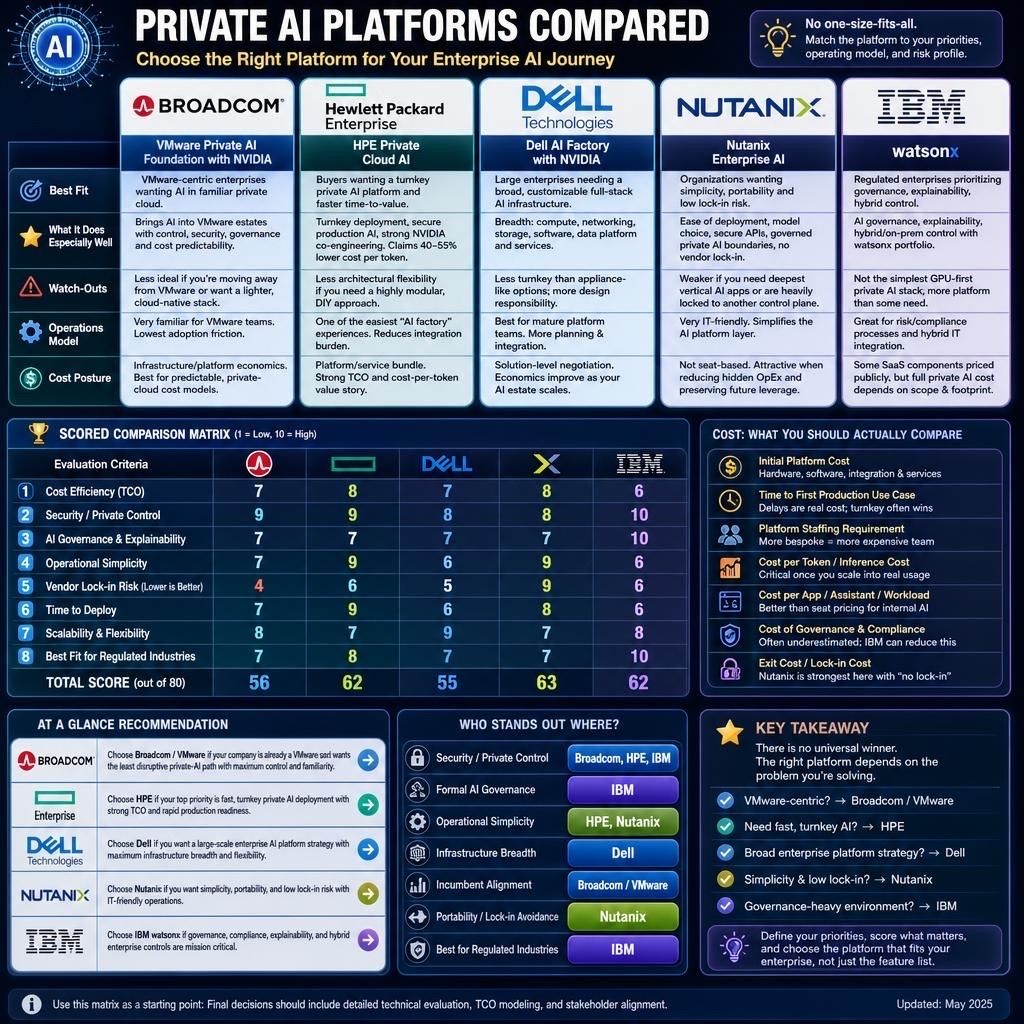
I’ve been spending time comparing several of the leading private AI cloud platforms, looking at the things that matter in the real world: features, functions, security, governance, operations, flexibility, and overall cost-effectiveness.
The platforms I looked at included Broadcom/VMware, HPE, Dell Technologies, Nutanix, and IBM. Each brings something important to the table. HPE has a strong turnkey story. Dell offers impressive breadth across the stack. Nutanix stands out for simplicity and reduced lock-in concerns. IBM remains compelling where governance, explainability, and regulated enterprise requirements are front and center.
But if I had to call out the strongest overall option from this comparison, it would be Broadcom, particularly in how VMware’s private AI approach lines up against the features and functions of the other providers. The biggest advantage is not just the AI capability itself, but the operational model around it. For enterprises already running private cloud infrastructure, Broadcom’s approach feels practical, integrated, and aligned with how many organizations actually need to deploy and govern AI at scale.
That said, there is no universal winner here. Every one of these technologies has pros and cons. Some are better for turnkey deployment. Some are better for governance-heavy environments. Some are better for flexibility and long-term architectural freedom. The right answer still depends on your requirements, your operating model, your security posture, and how much complexity your team is willing to absorb.
What continues to stand out to me is that private AI clouds are becoming a much more serious option than many people assumed even a year ago. In many cases, they are proving to be more cost-effective than cloud-based AI, especially when organizations need predictable economics, stronger data control, and tighter operational governance.
The real challenge now is helping enterprises map their business and technical requirements back into the right private AI cloud architecture. That is where the market is moving, and it is where many organizations still need clearer guidance.
I hope this helps as people jump into figuring out how their requirements map back into private AI clouds.
Let me know what you think. Do you agree or disagree with Broadcom as the strongest overall choice from this group? Am I missing companies that should be on this list? And where do you think this technology is going over the next 12–24 months?
#AI #PrivateCloud #PrivateAI #HybridCloud #EnterpriseAI #CloudComputing #DigitalTransformation #AIOperations #Infrastructure #CIO
1
85

Jun 10
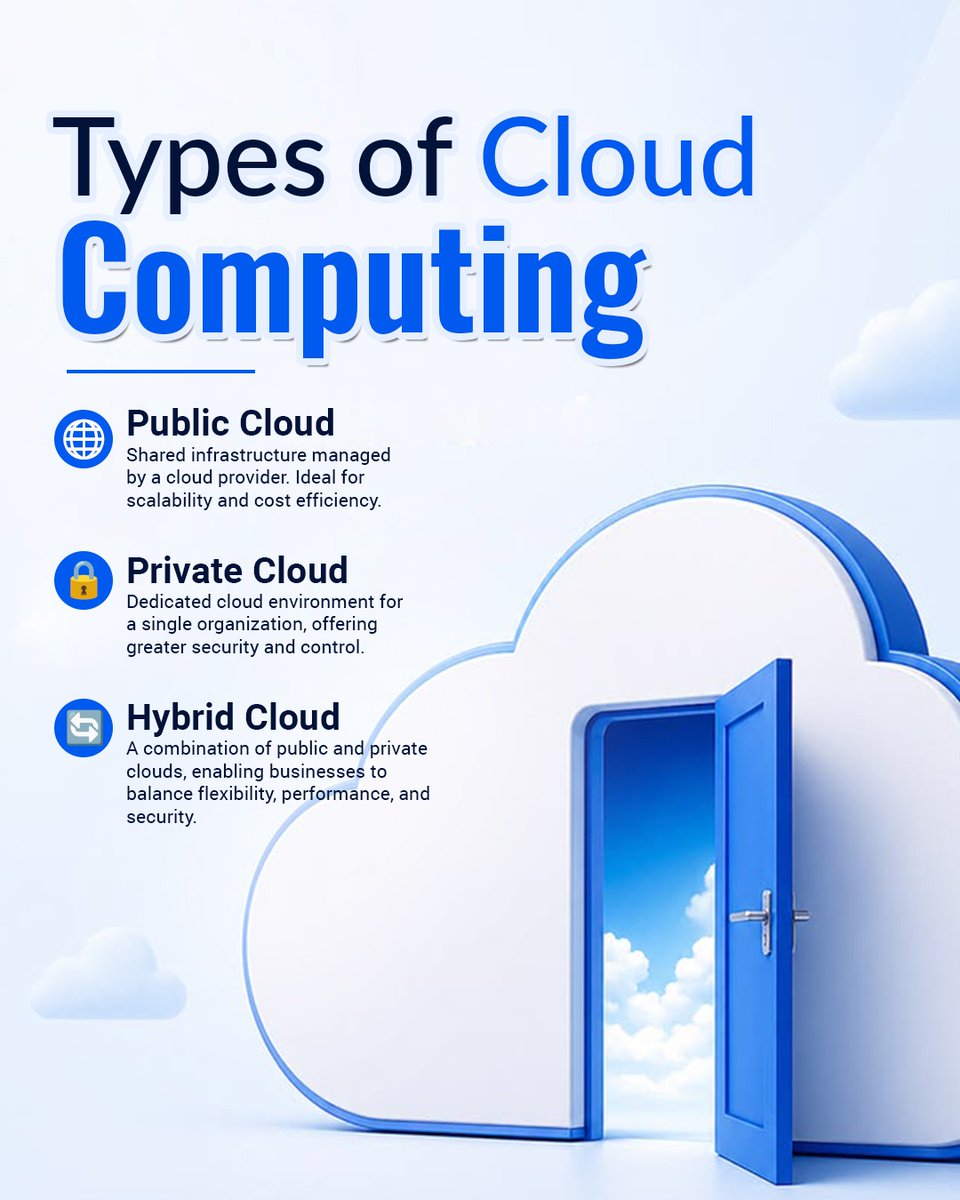
Cloud computing powers modern business with 3 key models: Public, Private, and Hybrid.Public cloud = scalability. Private cloud = control. Hybrid cloud = balance.
Choosing the right one can shape performance, security, and growth.
#CloudComputing #PublicCloud #PrivateCloud
5

When it comes to healthcare and finance, data security is not optional; it is a compliance requirement.
Learn why private cloud is becoming the trusted solution for compliance-focused industries: bit.ly/4uugthk
#privatecloud #medicalitservices #australia
1

Jun 10
Higher hardware prices and longer lead times are pushing Australian firms towards private cloud, with steadier costs and onshore data control. #PrivateCloud #Australia #CloudComputing #IT techday.com.au/story/rising-…
1
29

Jun 9
AI workloads are pushing enterprises back toward private clouds, with 56% of IT leaders already deploying AI in private environments and 72% planning to increase that spend over the next three years.
Half have already pulled workloads out of public clouds, and security, compliance, and data sovereignty are driving the pivot.
See the full survey result and learn how AI is reshaping the cloud placement equation: zpr.io/nZhQvVzQZDBk
#AI #PrivateCloud #CloudRepatriation
2
1
204
🔴 LIVE NOW: The future of #privateAI is taking shape.
x.com/i/broadcasts/1nGeLLnow…
Join theCUBE’s @furrier for live coverage of “Modern Private Cloud: A Secure Foundation for Production AI,” featuring leaders from @Broadcom @ThinkOnCloud & @charlottepipe.
📺 Tune in NOW!
#PrivateCloud #EnterpriseAI #HybridCloud #TechNews
1
115,548

Jun 9
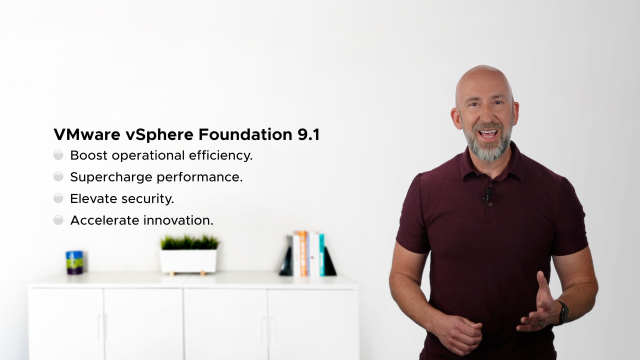
Two paths forward for IT right now. One: a full cloud operating model. Two: fixing the math of the infrastructure you already have. VVF 9.1 is built for the second one. Watch the video: #VMware #VVF #privatecloud #vSphere dy.si/DyN3KX
1
6

Jun 9
Following up on his #privatecloud post, Patrick Wohlschlegel delves into the distinction between the Private Cloud, Dedicated Infrastructure and an AI Factory.
Ultimately they describe different aspects of infrastructure architecture and operation. This matters because each model solves a different problem comes with different implications.
radiant.co/blog/private-clou…
21

Jun 9
$AVGO | Broadcom Report: Enterprise AI Shifting Toward Private Cloud
Broadcom ($AVGO) released a report indicating a significant shift in enterprise AI infrastructure strategy toward private cloud environments.
Key findings:
56% of enterprises currently run or plan AI inferencing on private cloud
Public cloud AI inferencing adoption dropped from 56% to 41% YoY
Cost has overtaken security as the top concern in public cloud usage (2026)
97% of IT leaders report some level of public cloud spending waste
83% are considering workload repatriation, with 50% already doing so
Data sovereignty and residency are now major geopolitical infrastructure drivers
Private cloud investment growth expected to outpace public cloud by 2x
The report highlights increasing pressure on enterprises to optimize AI workloads, with many shifting away from public cloud due to cost and complexity at scale.
#AVGO #Broadcom #AI #CloudComputing #PrivateCloud #EnterpriseIT
98