
Jun 13
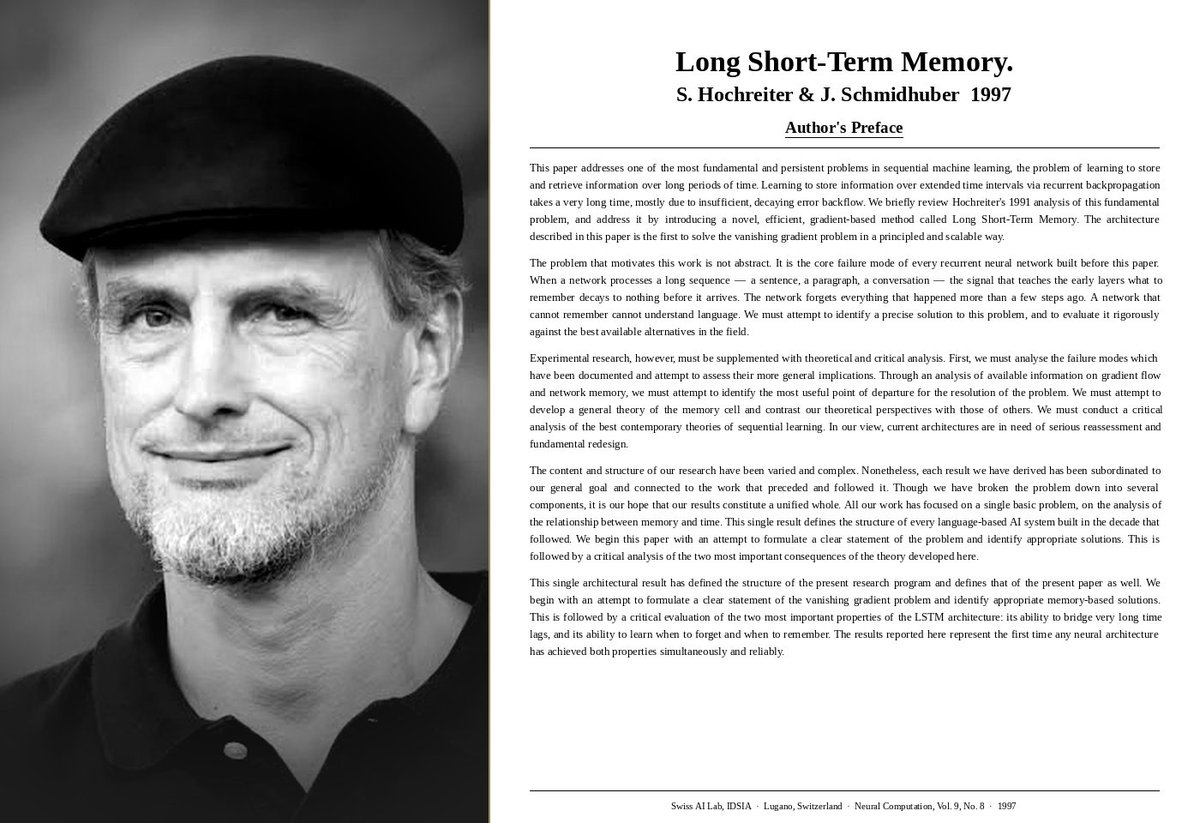
The man who made every AI chatbot possible taught himself to think in systems while the rest of the field was still drawing diagrams.
Google used his work. Apple used his work. Amazon used his work. Facebook translates 4.5 billion messages a day using its architecture.
He never got the Nobel Prize. He never got the Turing Award. He never got a front page.
He got a reputation for complaining.
His name is Jürgen Schmidhuber. The architecture is called LSTM. And before it existed, every AI system on Earth had the memory of a goldfish.
Schmidhuber was born in 1963 in Munich, Germany. He studied at the Technical University of Munich. From the beginning, he had one goal, his colleagues found either visionary or embarrassing. He wanted to build an artificial intelligence smarter than himself and then retire.
He has not retired yet.
In 1991, his student Sepp Hochreiter put his finger on the problem that was quietly killing every neural network of the era. When you train a network on long sequences, a sentence, a conversation, a paragraph the signal that teaches the network what matters vanishes before it reaches the early layers. The network forgets everything that happened more than a few steps ago.
A neural network that cannot remember cannot understand language.
Hochreiter wrote it up in a master's thesis. In German. In Munich. Nobody outside his lab read it.
Schmidhuber and Hochreiter spent six years building the solution.
In 1997, they published Long Short-Term Memory. What they built was a new kind of neural network unit with a precise internal memory mechanism. A cell that could decide what to keep, what to discard, and what to output at each step. For the first time, a neural network could hold context across an entire sentence. Across an entire conversation. Across hundreds of steps without forgetting the beginning.
For the first time, a neural network could actually remember.
Geoffrey Hinton was the most famous name in AI at the time. He had spent the 1980s popularizing neural networks. He had the reputation, the connections, the platform. When the deep learning era arrived, and the world needed heroes to credit, Hinton was the obvious choice.
Schmidhuber had the work. Hinton had the stage.
The field chose the stage.
Between 2010 and 2017, every major tech company quietly built its most valuable products on LSTM. Google used it for Google Translate and cut translation errors by 60 percent overnight. Apple used it to build Siri and QuickType. Amazon used it for Alexa. Facebook used it to translate 4.5 billion messages every single day. Bloomberg Businessweek called LSTM "the most commercially valuable achievement in AI."
Schmidhuber documented all of it. Every paper. Every date. Every deployment. Every citation that credited someone else for work his lab had done first. He published a detailed history of deep learning. He gave interviews. He wrote public letters. He filed formal objections with the institutions handing out awards.
The AI community called him difficult. The papers kept citing him incorrectly.
In 2018, the Turing Award, the Nobel Prize of computer science, went to Hinton, LeCun, and Bengio for their work on deep learning. The three men the industry had decided to call the Godfathers of AI. Schmidhuber was not included. In 2024, the Nobel Prize in Physics went to Hinton and Hopfield for neural networks. Schmidhuber was not mentioned.
The strangest part is what LSTM actually made possible.
Before transformers replaced it in 2017, every serious AI language system on Earth ran on LSTM. The architecture that first proved AI could handle language, hold context, and generate coherent text was built by a German scientist and his student in a Swiss lab in 1997. The researchers who built the transformer learned what was possible from LSTM. The engineers who built ChatGPT learned from the transformer.
Without LSTM, there is no proof that AI can handle language at all.
Without that proof, there is no transformer.
Without the transformer, there is no ChatGPT.
He is 62 years old. He still runs a lab in Saudi Arabia. He still publishes. He still maintains his public record of who invented what and when. He has said plainly, without apology, that machine learning is the science of credit assignment, and that the machine learning community should practice what it preaches.
The community has not listened.
Geoffrey Hinton got the Nobel Prize and the Turing Award.
Jürgen Schmidhuber built the memory that made it all possible and spent 20 years asking for the record to reflect that.
His name is Jürgen Schmidhuber. Now you know it.
Did you know his name before reading this?
7
7
12
962

Jun 11
I will be playing Bingo in a retirement home somewhere and my primary language still won't have QuickType available on iOS. It's so fucking embarrassing @Apple. It's been 12 years since this feature was introduced and that's still not enough time for you to add support?
Jun 9

iOS 27 still doesn't support new keyboard in Croatian........................................................................................................................
1
10
8,217

I absolutely love the suggested paste option within QuickType. Definitely a super convenience that's welcomed.
44


🎉🔨 Copilot SDK v1.0.0-beta.6 released!
92 features & enhancements in this release
Top features:
• Add remote session support across all SDKs 🔗
• Add SDK tracing diagnostics for better monitoring
• Add enableSessionTelemetry session option across SDKs
• Support experimental schema types in codegen
• Add model field to CustomAgentConfig across all SDKs
• Add cloud session config support
• Add .NET CopilotTool helper
• Add SessionFs sqlite support for runtime sqlite routing
• Add preMcpToolCall hook support to all SDKs
• Share generated schema definitions across SDKs
• Generate typed Go union interfaces
• Generate Go bool discriminated unions
• Derive Default on generated Rust types
• Seal generated session event types
• Export generated session event types
• Add enum value descriptions to generated docs
• Add netstandard and net10 targets to C# SDK
• Add Java to monorepo: code and test CI phase
Enhancements:
• Update GitHub Copilot SDK dependency to 1.0.52-1 🛠️
• Align Rust SDK public surface for consistency
• Internalize env_value_mode for cross-SDK parity
• Use string enums for .NET session events
• Restore mode handler APIs across SDKs
• Normalize skill context replay snapshots
• Update README and guide for Rust SDK
• Consolidate ask_user E2E snapshots into single canonical folder
• Harden permission-reject E2E tests across all SDKs
• Honor preinstalled CLI path in .NET MSBuild targets
• Make MCPStdioServerConfig.args optional across all SDKs
• Use 32-bit types for bounded schema integers
• Clean up argument validation across SDKs
• Propagate experimental RPC markers through generated types
• Hide deprecated APIs where supported
• Use schema descriptions in generated SDK docs
• Normalize SDK docs and tooling pipelines
• Publish .snupkg symbols package to NuGet.org
• Enable .NET E2E tests to run on .NET Framework (net472)
• TypeScript SDK API review improvements
• Go SDK API review improvements
• C# API review fixes
• Remove Ms suffix for duration properties in C# codegen
Bug fixes:
• Fix .NET E2E event capture race condition 🔧
• Fix Go CLI stderr capture and SetProcessDone race
• Fix shared schema comparison for Go codegen
• Fix Python Quick Start example compilation
• Fix Python session.send documentation examples
• Fix C# listFiles E2E ordering assumption
• Fix stale Python from_dict() round-trip for optional fields
• Fix hook snapshot for runtime replay
• Fix permission handler kinds in SDK docs and samples
• Fix sub-agent hook propagation: expose sessionId on hook inputs
• Fix some argument validation in C#
• Fix flaky test Should_Accept_Both_MCP_Servers_And_Custom_Agents
• Fix flaky pending-messages-modified E2E test across SDKs
• Fix .NET E2E auth setup
• Fix flaky compaction E2E tests
• Handle empty session fork behavior in E2E tests
• Temporarily use beta versions for latest dist-tag
• Fix codegen identifier sanitization
Misc:
• Disable CI workflows on forked repositories for security
• Default release publishing to prerelease
• Unify Rust SDK release with publish.yml workflow
• Replace Go RPC quicktype generation
• Expand Rust E2E test coverage
• Add Go and Maven Central reference badges to README
• Fix SDK documentation typos
• Update README and guides
• Consolidate SDK docs and tooling normalization
• Update SDK language lists in docs to include Rust and C#
• Clean up docs for permission handler kinds
• Add tooling readiness for pre-release deployment
github.com/github/copilot-sd…
#GitHubCopilotSDK
1
15
829
🎉🔨 Copilot SDK v1.0.0-beta.4 released!
8 features & enhancements in this release
Top features:
• Typed Go union interfaces replace flattened structs, enabling compile-time safety and eliminating invalid union states 🚀
• Unknown union members and session event payloads preserved for forward compatibility
• Experimental schema type annotations added for generated types to warn about unstable APIs across multiple languages ⚠️
Enhancements:
• Replaced Go quicktype-based RPC codegen with a custom schema-aware generator, preserving distinct named types and aligning casing with repo policies
• CLI stderr captured and included in Go SDK startup errors for clearer root cause visibility
Bug fixes:
• Fixed Go SDK startup error messages to show actual error details instead of generic opaque messages
github.com/github/copilot-sd…
#GitHubCopilotSDK
2
24
1,325
🎉🔨 Copilot SDK rust/v1.0.0-beta.4 released!
33 features & enhancements in this release
Top features:
• Add remote session support across all SDKs 🚀
• Support binary tool results in Rust SDK
• Add SDK tracing diagnostics for better observability
• Add enableSessionTelemetry session option across SDKs
• Use string enums for .NET session events for cleaner code
• Restore mode handler APIs across SDKs
• Generate typed Go union interfaces for stronger typing
• Support experimental schema types in codegen
Enhancements:
• Align Rust SDK public surface for consistency
• Internalize env_value_mode for cross-SDK API parity
• Normalize skill context replay snapshots
• Expand Rust E2E coverage for improved test reliability
• Update README and guide for Rust SDK clarity
• Replace Go RPC quicktype generation for efficiency
• Use z-prefixed Go generated files to avoid conflicts
• Update GitHub Copilot dependency progressively
• Normalize docs pipeline for SDK documentation
• Temporarily use beta versions as latest dist-tag for testing
• Unify Rust SDK release process with publish workflow
• Add Go and Maven Central badges to README ✨
Bug fixes:
• Fix .NET E2E event capture race condition
• Fix race in SetProcessDone in Go SDK
• Fix CLI stderr capture in Go SDK
• Handle empty session fork behavior in E2E tests
• Fix C# listFiles E2E ordering assumption
• Fix SDK documentation typos
Misc:
• Disable CI workflows on forked repositories for security
• Default release publishing set to prerelease
• Docs normalization for SDK documentation pipeline
• Update and normalize SDK documentation and tooling
github.com/github/copilot-sd…
#GitHubCopilotSDK
3
15
1,051

Jan 30
Intenté utilizarlo pero en la práctica no me servía para adoptar ciertas notaciones, preferiría mejor que se hiciera un formateado basado en estructura como quicktype hace con typescript bueno yo asi doy el contexto en AGENTS MD, aunque mi proyecto no utilice ts
2
4,824

The keyboard was near perfect with iOS 13 when that QuickType feature launched, literally was able to type without looking. Now I got no idea if it’s the size of the iPhone but it’s not as accurate. Still surprisingly better than my fold 2, good luck typing on that 🙄
1
4
707

11 Dec 2025
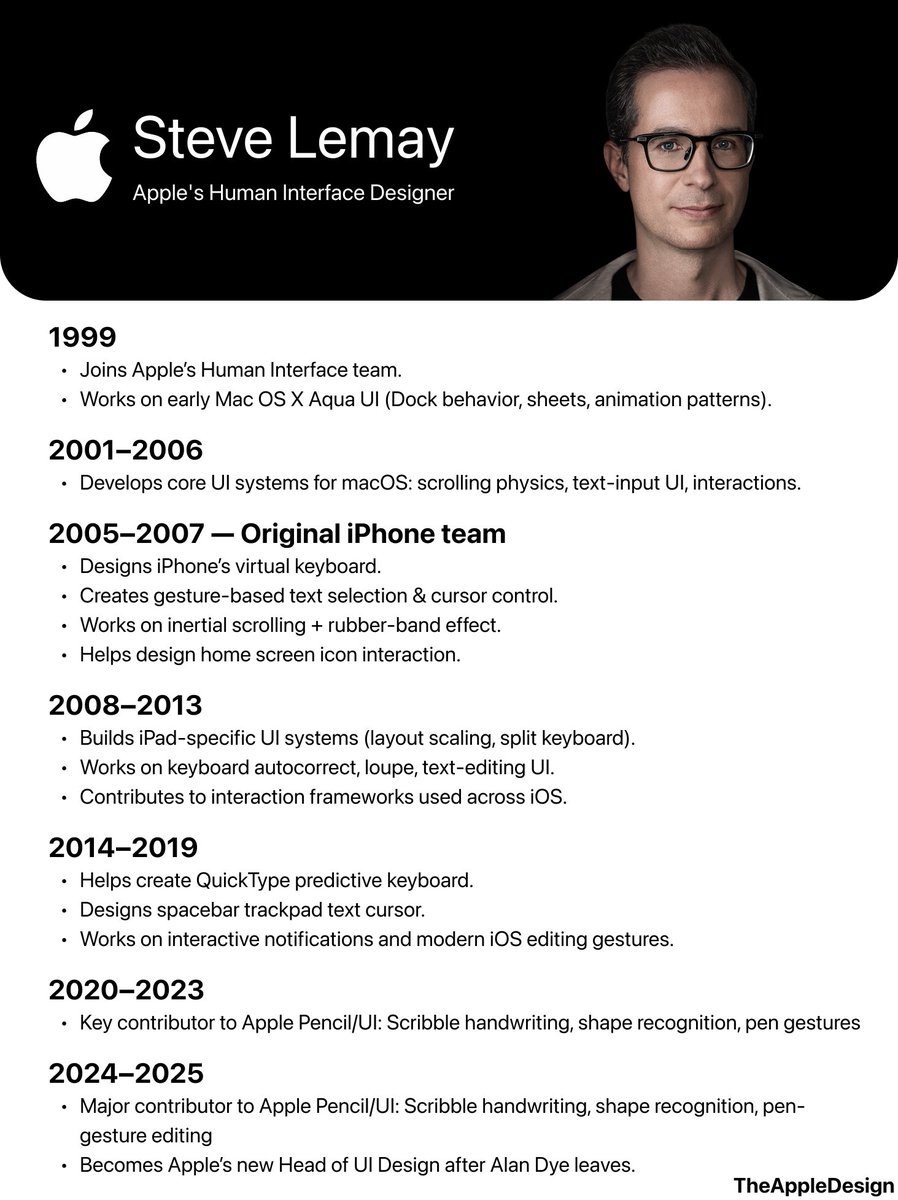
Appleの新しいUIデザインのトップになったSteve Lemay氏のこれまでの経歴。
1999年:Apple入社、ヒューマンインターフェイスチームで、Mac OS XのAqua UIに携わる。Dockの動きなどのアニメ担当。
2001年〜2006年:macOSのコアなUIシステムの開発(スクロールやテキスト入力UI、インタラクション)
2005年〜2007年:初代iPhoneの開発チームで、バーチャルキーボードやジェスチャーによる文字選択、スクロールしたときの跳ね返りのエフェクトなどを担当。
2008年〜2013年:iPadのUIシステム開発。キーボードのオートコレクト、ルーペ、文字編集UI。iOS全般のインタラクションフレームワークに参加。
2014年〜2019年:QuickTypeの予測変換付きキーボード、スペースバーを用いたテキストカーソル、文字編集のインタラクションの開発。
2020年〜2023年:Apple PencilとUI、スクリブル(手書き)、図形認識、ペンのジェスチャーの開発に主体的に参画。
2024年〜2025年:Apple Pencilまわりを主体的に開発。UI Designのヘッドに就任。

16
112
16,242

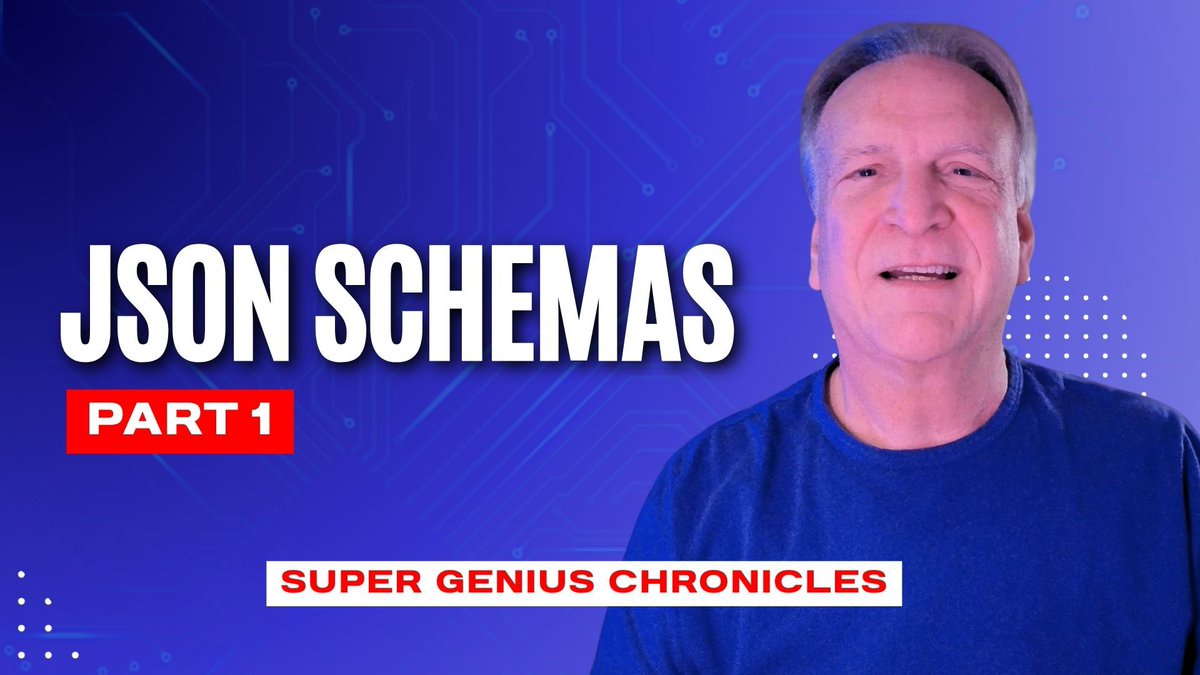
🚨 New on SuperGenius Chronicles! 🚨
Transform any JSON Schema into clean, auto generated Dart models with Quicktype.
Zero manual coding, zero mistakes, all speed.
Level up your Flutter workflow now.
Want more genius level dev tips?
Smash that like button and subscribe👍
#Flutter #Dart #Quicktype #SuperGeniusChronicles #CodeGen
3
9
26
870

26 Oct 2025
I love these kinds of codegen from custom lints and analyzer. I have created some for my work project.
I bet we can create a pretty good alternative for json_serializable and freezed. If not that then at least the min boilerplate code generator for those, like quicktype[dot]io
3
231

11 Jun 2025
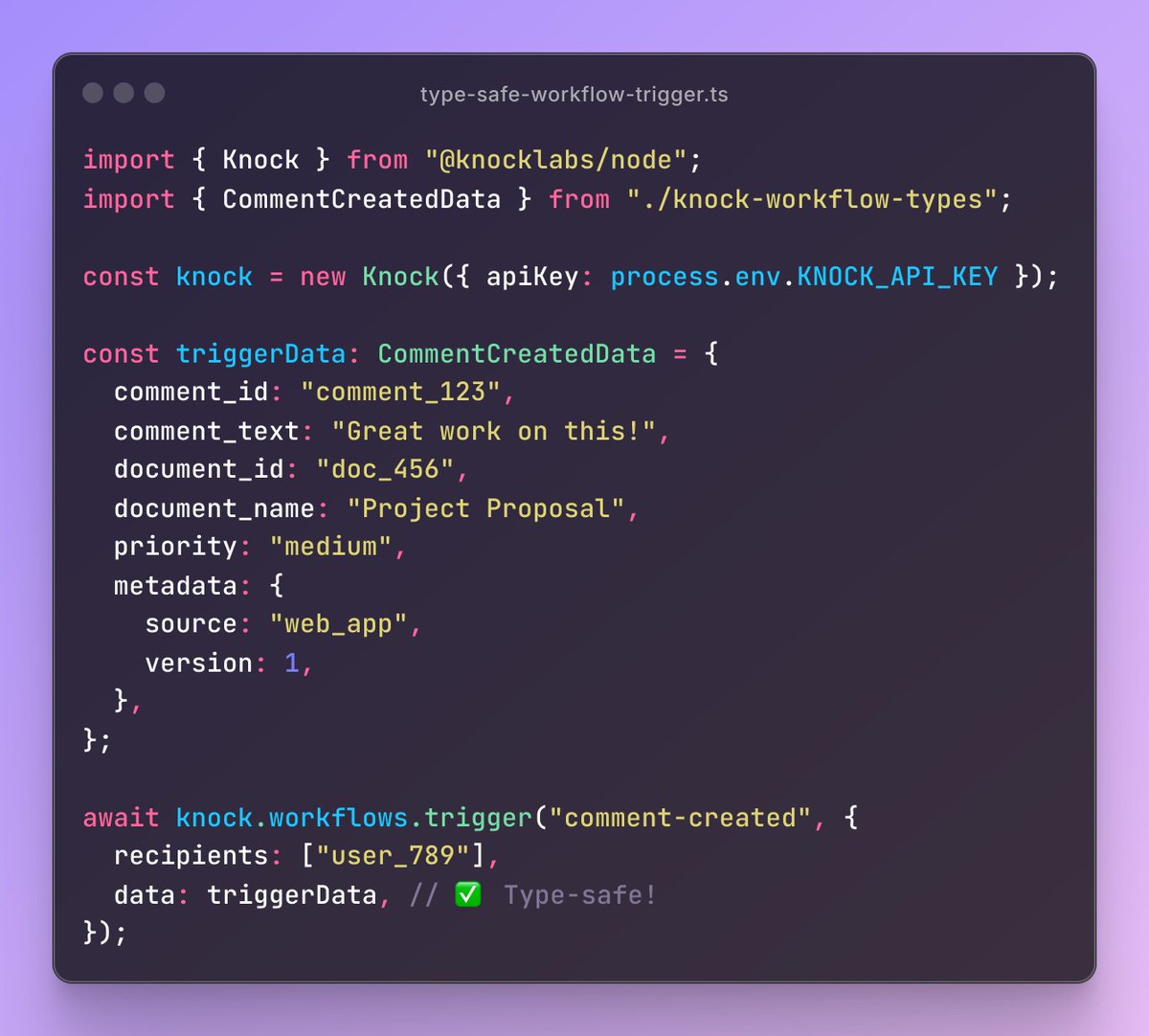
Very happy with this one. Builds on our workflow schema validation, which defines the data your workflow expects as a JSON schema. We then generate types from that in our CLI using quicktype.
End result is end-to-end type safety and validation on your workflow trigger data!
11 Jun 2025

🆕 Workflow type generation.
We now support type generation for Knock workflows through the CLI. You can now get end-to-end type safety between your application and the workflows you trigger.
Get the details here: knock.app/changelog/2025-06-…
1
12
537

Do you have “libtard” set up on QuickType and buy your blond in a box Laura?
Because you are about as ubiquitously bland as cornflakes which have sat in milk too long.
Please get a douche for your insults so we can all appreciate you being fresh as a summer’s eve.
12
83


QuickTypeは今もちゃんとメンテされてるんだな "glideapps/quicktype: Generate types and converters from JSON, Schema, and GraphQL" github.com/glideapps/quickty…
3
1,512

20 Apr 2025
Been working on something small but exciting — Quicktype.
A Chrome extension that helps you write faster and more effortlessly.
It’s still living on my system, but every time I use it, I wonder why I didn’t build it sooner.
Soon, maybe you’ll wonder too.
4
91
19 Apr 2025
Now Trying to build a chrome extension name Quicktype.
Wish me luck 😅
2
4
84

24 Feb 2025
Advanced Data Protection (ADP)
I am in no way affiliated with @Apple.
I used Grok 3 to produce a simple explanation of Apple’s standard encryption and what the loss of Advanced Data Protection (ADP) means for the users in the UK.
It doesn’t go into enormous technical depth, so if anyone wishes to add to it (without ad-hominem attacks or foul language) please feel free.
For TL:DR the picture at the end of the piece loosely summarises the words.
Data Encrypted by Default on iCloud
Even without ADP, Apple provides end-to-end encryption for certain data categories as part of its standard protection. This means that only you can decrypt this data on your trusted devices, and Apple doesn’t hold the keys to access it. As of February 22, 2025, the following 15 data categories are end-to-end encrypted by default for all iCloud users, including those in the UK:
•Health Data: Anything synced from your Apple Watch or iPhone, like fitness stats or medical info.
•Passwords and Keychain: All your saved passwords in iCloud Keychain.
•Payment Information: Credit card details stored for Apple Pay.
•Apple Card Transactions: Financial data tied to your Apple Card.
•Home Data: Info from HomeKit devices, like smart locks or cameras.
•Messages in iCloud: Your iMessages (but only if you’ve enabled Messages in iCloud; otherwise, backups might include them differently—see below).
•QuickType Keyboard Learned Vocabulary: Your custom typing habits.
•Safari History, Tab Groups, and Bookmarks: Your browsing data (without ADP, bookmarks remain encrypted, but history syncing might differ—more on that later).
•Screen Time: Usage stats and restrictions.
•Siri Information: Your Siri requests and personalization.
•Wi-Fi Passwords: Saved network credentials.
•Maps Data: Your search history, favorites, and navigation info in Apple Maps.
•Memoji: Your custom avatars.
•Call History: FaceTime call logs (not regular phone calls).
•iCloud Mail: Your emails (end-to-end encrypted since iOS 18, though attachments might vary).
These categories above stay secure even without ADP, so you don’t need to worry about Apple or anyone else peeking at them, assuming no breaches occur on your devices.
Data That Needed ADP for End-to-End Encryption
With ADP enabled, the number of end-to-end encrypted categories jumped from 15 to 25, adding more sensitive stuff that only your devices could unlock. Without ADP in the UK, these additional categories fall back to standard encryption. Under standard encryption, your data is still encrypted in transit and at rest, but Apple holds the decryption keys in its data centers. This means Apple can access it if they need to (e.g., for recovery or if legally compelled). Here’s what’s no longer end-to-end encrypted without ADP:
•iCloud Backup: Your full device backups, including settings, app data, and non-encrypted Messages backups (if Messages in iCloud isn’t enabled).
•Photos: All your pictures and videos in iCloud Photos.
•Notes: Your notes and attachments in the Notes app.
•iCloud Drive: Files, documents (like Pages, Numbers, Keynote), and PDFs stored here.
•Reminders: Your to-do lists and reminders (unless synced via CalDAV, which never supported end-to-end encryption).
•Voice Memos: Audio recordings you’ve made.
•Safari Bookmarks: These stay encrypted, but without ADP, the broader Safari syncing (like history) might not be fully end-to-end.
•Shortcuts: Your custom automations in the Shortcuts app.
•Wallet Passes: Boarding passes, tickets, etc., stored in Wallet.
•Apple Invites: Unpublished Calendar invites (published ones were never fully encrypted unless all participants had ADP).
For these, standard encryption still offers decent protection against hackers, but Apple can decrypt them if required—say, by a UK government warrant under the Investigatory Powers Act, which reportedly prompted ADP’s withdrawal.
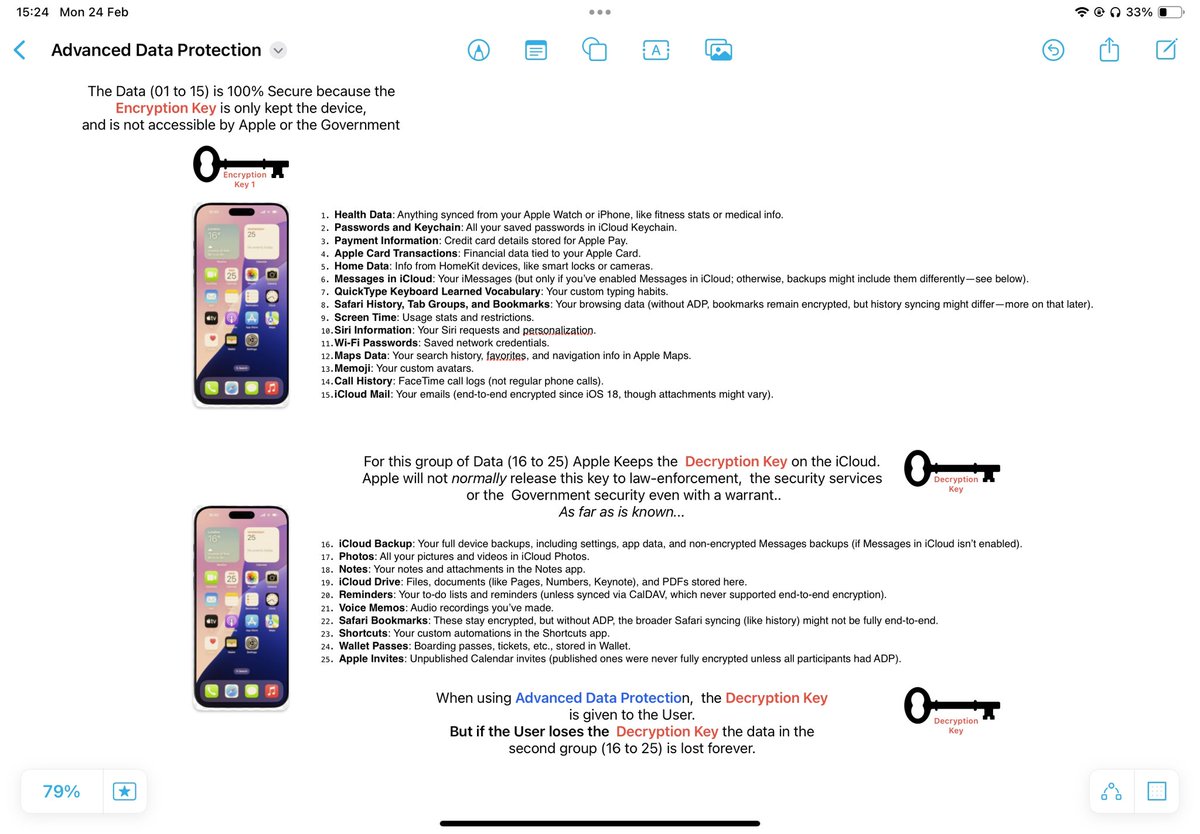
2
165

22 Feb 2025
Just to clarify, the follow will still be protected by end-to-end encryption by default for all UK users
Passwords and Keychain
Health data
Journal data
Home data
Messages in iCloud
Payment information
Apple Card transactions
Maps
QuickType Keyboard learned vocabulary
Safari
Screen Time
Siri information
Wi-Fi passwords
W1 and H1 Bluetooth keys
Memoji
11
7
20
3,496