David Boyd retweeted

Why Charles Huff is eyeing 2028 for conference realignment talks
“I’m not saying in 2028 we’re going to be sticking an ACC or Big 12 sticker in the middle of the field."
dailymemphian.com/section/sp…
2
3
541

When you flee to bunkers, but the realignment has already started, and half the people in there with you aren't from your faction.
Vaults, man, they can be scarier than you think...
youtube.com/watch?v=d0-EuoBj…
2

"The [SMB] market is too hot."
But is it?
Over hundreds of conversations with hungry acquisition entrepreneurs in the last two years, and thousands over the last decade, the 'noise' of the space feels real.
And it is. For most of them.
We talk all the time at our meetups, with partners, other investors, etc., about the need to run the race with both legs, meaning doing an on- and off-market search.
But one of the biggest benefits isn't actually about lead flow, it's about focus.
Your focus.
The wandering eye of a searcher with a generic buy-box.
See, to actually pursue off-market sourcing, you have to actually take the time to clearly define your investment thesis.
Industry (niche... a real niche) or two. Geography. Size.
Classic requirements, right?
But here's the slippery slope. Sticking with it. Anecdotally, somewhere around 8 out of 10 searchers I've spoken with stray from their box.
Realignment is real, and that's okay. An industry might not be for you.
Those without a thesis, running broad, untargeted searches often complain of the lack of opportunity. And those with a thesis, stepping out because that broker's email caught their eye with $1.5M of EBITDA, feel like they can't get traction.
Yes, of course, you're likely missing out. It's the likely outcome of spending time, energy, and resources without a direction.
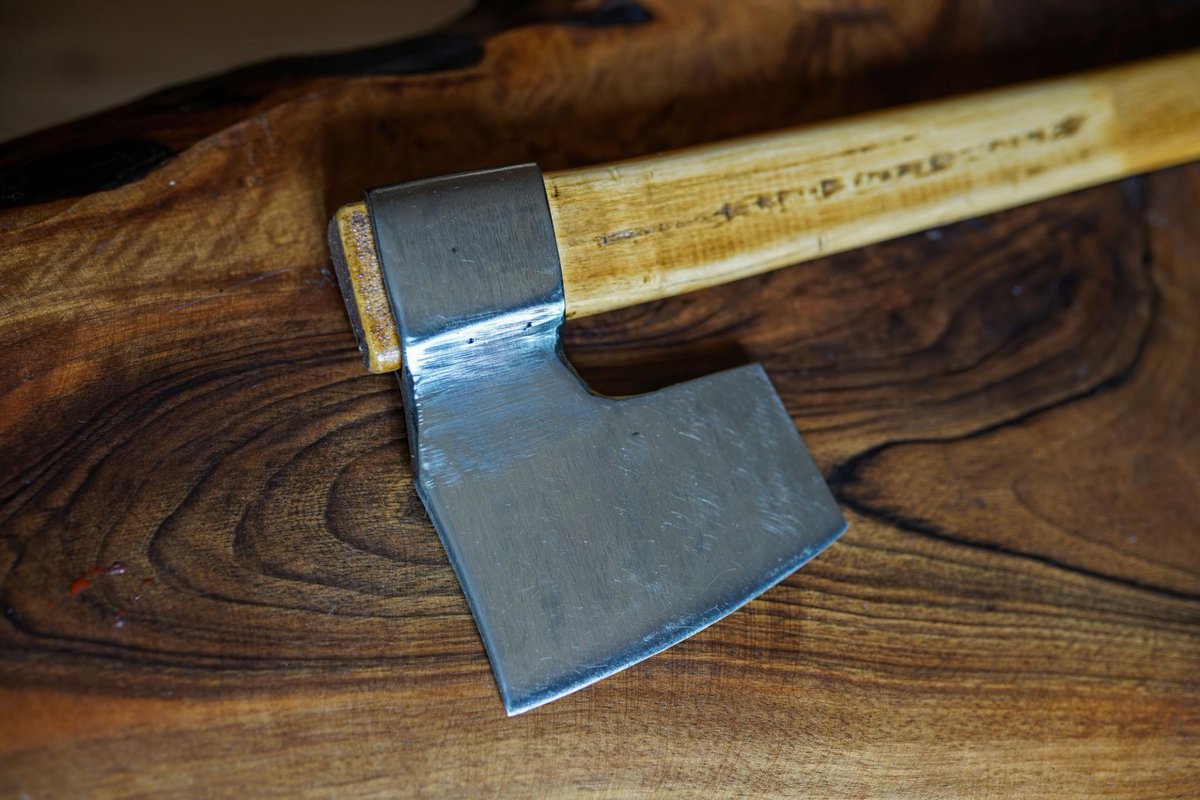
As old Abe Lincoln said... You gotta spend most of your time sharpening your axe. Cliche, but true.
Brokers know you aren't serious or passionate about an opportunity as they track your signed NDAs on unrelated and uncorrelated companies that 'fit your buy box' (don't ever say this to a broker). Good luck working through their funnel.
Investors know you aren't serious because you've pitched a garage door company, right after you tried to buy a marketing agency or grease trap cleaning business.
Lenders hearing why 'you're the fit' for the fourth different business they've reviewed for you.
Lastly, and most importantly.
It becomes hard to build the foundation for success post-acquisition when everything that has legs and EBITDA catches your eye. You aren't building connections, relationships, or knowledge in what you plan on operating.
Success post-acquisition is already going to be a grind. Why wouldn't you lean into your thesis and direction, and increase the likelihood of the successful outcome you desire?
It's your move and your future.
4
69

19m
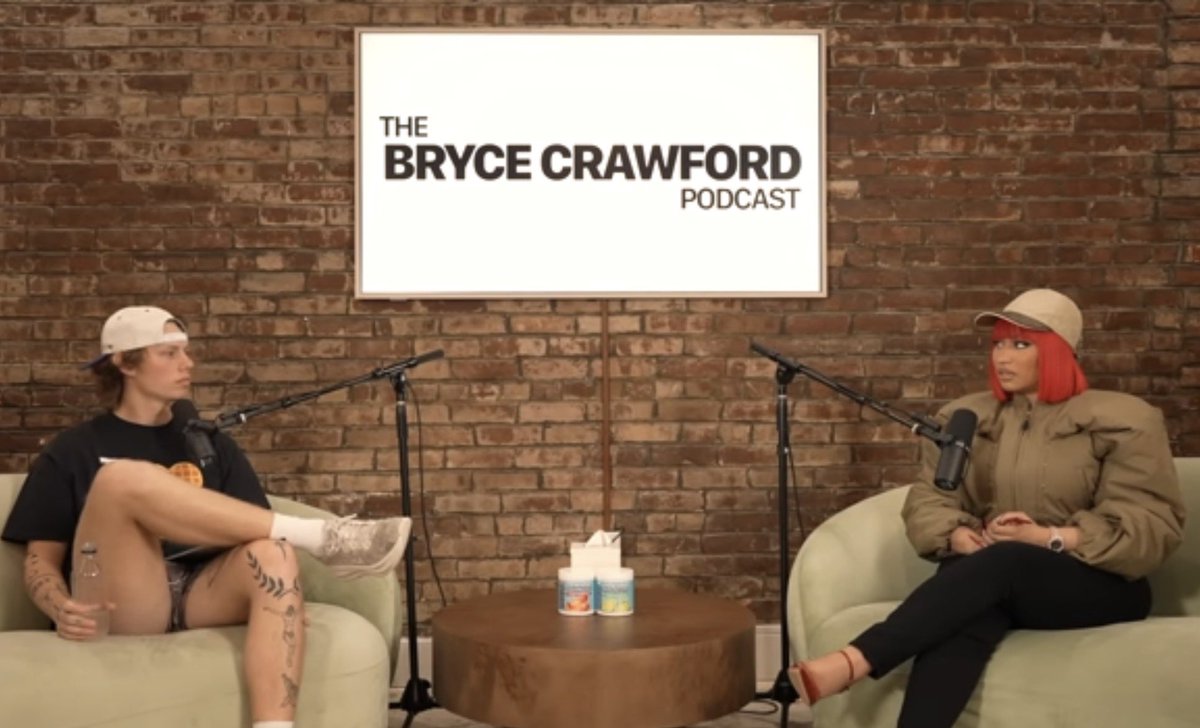
@NICKIMINAJ @ibrycecrawford I had to take notes for my night time reflection🫶🏾🫶🏾
Being on display & losing intimacy with God (combat that with solitude)
Prayer & Humility 🙏🏽
Constant realignment 🫶🏾
Loving yourself strongly, regardless of outside perception
Betrayal hurts
9
When I say "terrible spawn point," I am obviously also talking about myself. I was obviously hit by a realignment op, we all see that now, right? That they taught me a neat little trick is sort of on them.
My spellbook is pretty vast at this point...

This sounds like a fair question. Ultimately, to work with the West and get everything Trump promised, Iran needs long-term trust. A realignment operation has already, by my understanding, taken place. Now, can it consolidate into something that works?
Everyone knows what I...
1
12

This sounds like a fair question. Ultimately, to work with the West and get everything Trump promised, Iran needs long-term trust. A realignment operation has already, by my understanding, taken place. Now, can it consolidate into something that works?
Everyone knows what I...
Jun 10

Is the Iranian regime facing a tipping point from within? Analyze the internal fractures and power struggles defining Tehran's current political landscape with the Hoover Institution.
1
20

🇺🇸 2026 Geopolitics Update: Big Moves in Iran, Venezuela & the Middle East
It’s no surprise the Iran deal has been on-and-off. When the U.S. and Israel took out Iran’s top leadership in late February (Operation Epic Fury) — hitting Supreme Leader Khamenei and key figures during a major gathering — it was like a direct strike on the U.S. Capitol during the State of the Union. Chaos erupted inside Iran with factions jostling for power.
The administration handled it with precision. At the same time, removing Maduro in Venezuela (Operation Absolute Resolve in January) and ramping up American oil production helped keep fuel prices manageable. Without that domestic energy strength and Venezuelan oil flows, the disruptions from the Iran conflict would’ve driven prices much higher.
Trump didn’t stop at strikes — he built on the Abraham Accords to assemble a powerful Middle East coalition. Saudi Arabia, UAE, Bahrain, Qatar, Egypt, Jordan and others provided key support: airspace, bases, joint pressure on Iran, and absorbed retaliatory attacks on their own territory. Israel was the primary operational partner. This de facto U.S.-Israel-Gulf front isolated Iran and its proxies.
Trump pushed hard for a major Accords expansion — urging these nations to normalize with Israel as part of any Iran settlement, creating a strong anti-Iran bloc. Gulf states (especially Qatar and Pakistan as mediators) played a big role in talks, leveraging their stakes in stable oil flows and the Strait of Hormuz. Their involvement raised the cost for Tehran and helped bring a shaky MoU/deal to the table: ceasefire, Hormuz reopening, sanctions relief, and nuclear curbs.
Results so far:
• Iran: New leadership, ongoing negotiations.
• Venezuela: Shift toward pragmatic energy deals.
• Energy markets: Elevated but not exploding, thanks to U.S. production.
• Regional realignment: Stronger cooperation, even if the full simultaneous normalization wave didn’t fully materialize yet.
Big moves, real risks, and history in the making. Peace through strength in action?
What do you think — smart strategy or too risky? Drop your thoughts below! 👇
#IranDeal #AbrahamAccords #Venezuela #MiddleEast #TrumpForeignPolicy #EnergySecurity #Geopolitics2026
18


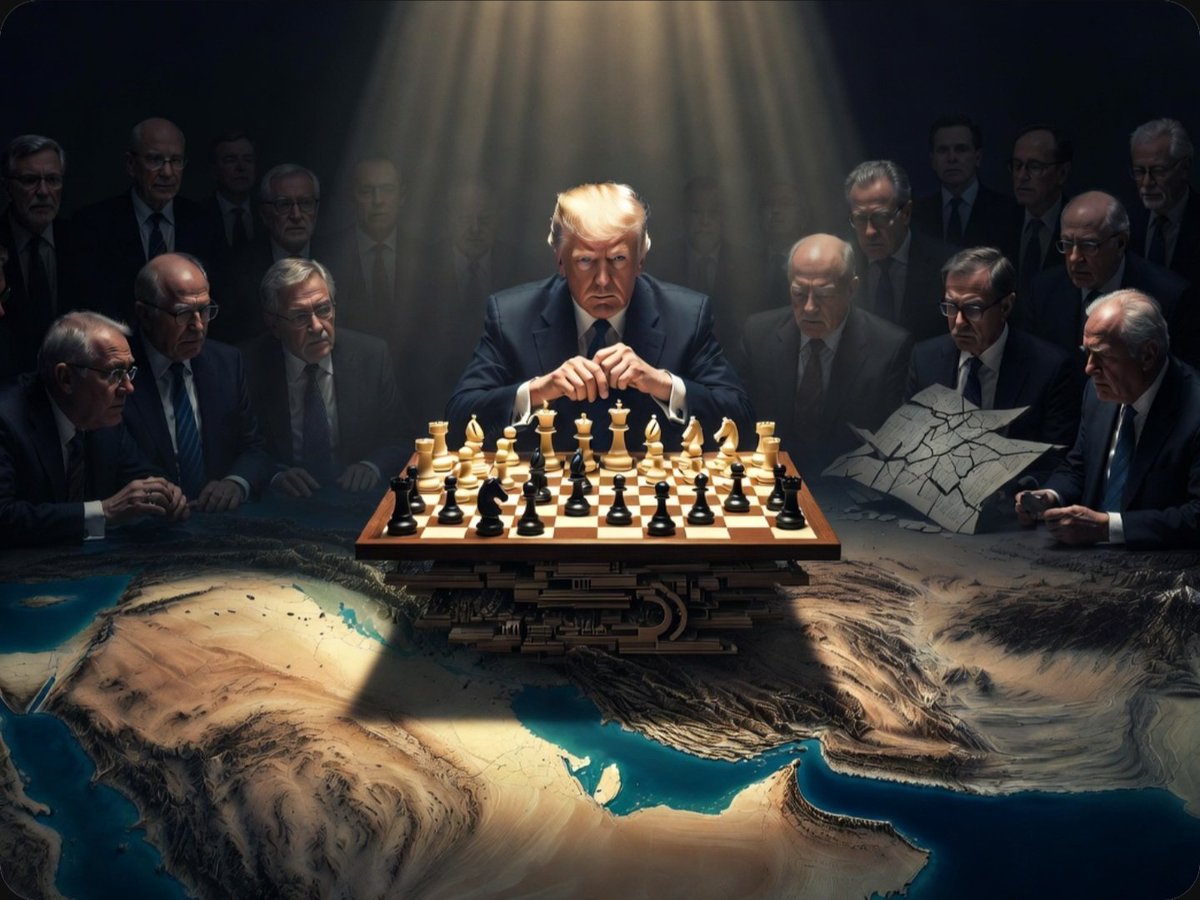
While the liberal commentariat and their credentialed echo chamber of strategic illiterates continue deploying the heuristic of “Trumpian irrationality” to rationalize their own catastrophic failure of deterrence modeling . .
For the benefit of the cognitively impaired and the morally hazard-prone, here is the
Iran War/Peace Deal technical autopsy:
1. The Obama-era JCPOA was a textbook demonstration of time-inconsistent bargaining under incomplete information: massive upfront rent transfers to a revisionist theocracy, coupled with sunset clauses that structurally incentivized future nuclear breakout. The current framework inverts this by first imposing negative externalities through sustained sanctions and targeted degradation of critical infrastructure, then conditioning any relief on observable, monitorable restraint; thereby solving the commitment problem these fucking naifs never even modeled.
2. Kinetic and maritime pressure operations were not “escalation” in the simplistic liberal ontology; they were a calibrated application of compellence that shifted the payoff matrix, raising the cost of continued defiance while lowering the perceived probability of successful nuclear latency. Result: the adversary arrives at the table with degraded capabilities and eroded proxy bandwidth, rather than the enriched breakout posture enabled by prior appeasement equilibria.
3. Securing toll-free maritime access through the Hormuz chokepoint under U.S.-dictated terms is not concession; it is extraction of the single highest-value asymmetric leverage point Iran possessed. Global energy price stabilization and the denial of Iranian rent-seeking constitute direct negative externalities imposed on the revisionist actor while generating positive externalities for the liberal international order these same critics claim to defend.
4. This was never “Trump’s war.” It was the predictable equilibrium outcome of the previous administration’s signaling of restraint and accommodation, which lowered the expected costs of proxy aggression and nuclear hedging across the Axis of Resistance. The current operator inherited a deteriorated deterrence posture and restored it through demonstrated willingness to absorb short-term audience costs for long-term strategic gain.
5. Sanctions relief is now structured as a repeated game with observable actions and verifiable milestones, not the one-shot transfer of fungible resources that characterized the prior deal. Nuclear enrichment ceilings, stockpile disposition, and inspection regimes are to be negotiated from a position where the adversary’s outside option has already been materially worsened; classic leverage maximization that the goddamn sunset-clause architects never contemplated.
6. The regional realignment effect operates through updated beliefs: Gulf actors, having observed credible U.S. willingness to degrade Iranian power projection, rationally update their alignment strategies toward the stronger node in the network. This further isolates the revisionist actor in a manner that pure diplomatic engagement under information asymmetry could never achieve.
7. The liberal preference for “dialogue” absent credible threats is a classic moral hazard problem: it subsidizes continued revisionism by signaling that the costs of defiance will remain low. The current approach prices defiance correctly by maintaining the shadow of future kinetic action, thereby inducing concession without requiring perpetual occupation or nation-building externalities.
8. Termination of active hostilities on terms that restore global public goods (energy transit) while avoiding open-ended commitment of ground forces represents efficient termination of conflict rather than the open-ended quagmire equilibria favored by both neoconservative overreach and progressive restraint signaling. The technical term is “victory with minimal sunk costs.”
(Next Post 👇)
1
1
1
10

@grok Over the past 12 years we’ve seen repeated high-profile cases of corruption and major contradictions in public statements from leaders across both NATO and BRICS countries — from energy policy and alliances to anti-corruption rhetoric versus actual governance.
If you could design the single most effective systemic intervention to meaningfully reduce grand corruption at a global scale, what would it be?
Would you focus on reforming existing institutions through radical transparency, incentive realignment, and AI-assisted detection? Or do you think building elements of a new parallel system (with stronger structural safeguards) would ultimately be more effective?
What would the first practical steps look like in either direction?
1
9

36m
When you have the entire alumni base telling the school to find another conference, I wouldn’t bet against the administration doing just that. Realignment will happen and if Tech is out on the Big12 it gives an opening to the ACC. Do you think the schools will just fold into G6 obscurity.
2
19

I get asked about @TPUSA often and am glad to know some amazing people involved in the org. There’s a lot of wild commentary out there and it’s chaotic. I can’t help but think Charlie would have concerns if he saw a widow in this space being exploited-from many angles.
My Monday musing: @MrsErikaKirk has an incredible platform and a heart for impact. She was tasked with the impossible and I don’t know any legit conservative who expects her-or really anyone- to fill Charlie’s shoes.
After everything her family has walked through, I think the most powerful pivot she could make right now is toward peace; not retreat, but realignment with what matters most.
My unsolicited advice is for her to start a media subsidiary called Turning Home.
Leverage her proven experience in media, marketing, and storytelling to speak directly to the conservative base in a fresh way: where lifestyle meets reality. High-production content celebrating faith-filled motherhood, practical homemaking, cultural pushback done with grace, and raising kids who love Jesus in a chaotic world. Showcase her as the Christian mom she is. That will resonate more authentically than widow-turned-CEO.
This direction feels far more aligned with Charlie’s evangelism and legacy than trying to fully step into the arena he owned. Looking at the latest TPUSA event lineup in Illinois, it is mainly male-heavy (21 males-most of whom I don’t recognize-7 females) and a bit awkward.
There’s clearly a gap in how to appeal to females.
TPUSA can (and should) keep Erika on the board and bring her out for powerful surprise appearances at events - never announced in advance, always impactful.
But the organization itself needs rebranding with new energy: a rotation of fresh voices and rising faces (including more proven advocate voices versus social media influencers) who carry the mission forward instead of any attempt to replace the irreplaceable.
As for Erika, I think she can turn home and still make an impact. 🫶🏼

2
97

Yeah. Thats the appeal. If you read Jefferson he is clear that revolution is necessary to reset the system from time to time. That is conserving principles when corruption occurs. It isnt conserving order. It is by necessity disorder, so there can be realignment.
Radicalism birthed the U.S. It severed the connection to Britain. It destroyed the government and replaced it. We should be loyal to truth more than systems. The Constitution is brilliant in its forethought. It provides a means of change without another revolution. However, those means are inadequate now. The disease has metastasized. It is too deep in the marrow. The sickness was allowed to fester too long.
The need for a return to first principles persists, but without radical action by the masses it wont happen. The appetite to fix what ails us simply isnt there. Thats why I ask the question. There just isnt a real solution that is feasible.
As the saying goes, change only happens when the pain of transition is outweighed by the pain of doing nothing. We haven't felt real pain yet. Perhaps we wont in our lifetime. I think it is inevitable though.
If you are heading towards a cliff and do nothing, the result is easy to predict.
1
8

Parsi's main points...
On the deal itself
- The deal is real and significant but preliminary; nothing holds until a final agreement, and 2015 is the warning (Obama struck the JCPOA, Trump walked out in 2018).
- Multiple deal versions are circulating; some are deliberate sabotage by Iranian hardliners trying to inflate expectations so the real deal looks bad.
- The hardline "Pedari faction" is dead set against it and staged protests outside the foreign ministry calling for the deaths of the negotiators.
- Likely terms: gradual reopening of the Strait of Hormuz (requires demining), US lifting its blockade, a regional ceasefire, and a partial release of frozen Iranian funds, followed by the harder nuclear negotiation.
- The funds are Iran's own money ($120-150 billion frozen in foreign banks, refrozen since 2018), not American money, and any release will be structured so Trump can claim he released nothing while Iran claims it got money back, possibly via GCC intermediaries.
- The 2015 cash-pallet payment was a separate Hague arbitration settlement over undelivered Shah-era weapons, not frozen money, and only required cash flights because sanctions blocked a wire transfer.
- No deal will ever have the US paying Iran American money.
On the Strait and Iran's leverage
- Iran's control of the Strait is now durable because missiles and drones along its 1,500 km coastline make insurance impossible, unlike the old mining scenario the US could clear in about two weeks.
- A tanker shortage looms because stuck ships have degraded in warm water and need extensive cleaning before reuse.
- Iran has its best negotiating leverage in decades and should push for full sanctions relief, including primary sanctions.
On Israel as the main risk
- Israel is the biggest threat to the deal; Netanyahu spent 25-plus years pushing the US toward war with Iran and won't quit.
- Israeli strikes on southern Beirut hours before the announcement were sabotage attempts crossing US and Iranian red lines.
- Iran striking back over Lebanon (not just over attacks on Tehran) reflects its "forward defense" doctrine of using Hezbollah as a deterrent buffer, which it is trying to reestablish after Assad's fall and the pager attacks.
- Trump should proactively tell Israel that if it restarts war with Iran, regardless of how it starts, the US is out, since Israel can't sustain a war with Iran without US missile defense.
- Removing the assumption of automatic US backing would reduce Israel's incentive to sabotage the deal.
On Israeli security doctrine
- Israel assumes hostile intent is permanent and focuses only on capability, so it believes survival requires perpetually outgunning every regional state ("military hegemony on crack").
- This doctrine is unsustainable; no small country has pursued it successfully for long.
- An Israeli official told him in 2004 that Israeli youth no longer believe in peace, only constant warfare, which he says proved correct and explains Netanyahu's endless-war assumption.
- The entire posture depends on limitless American support, which Israel cannot survive without "for a week"; that support is what has been changing over the last five years.
- Israel's apparent regional dominance is "fake hegemony," the tip of the spear of US hegemony, which the US has grown tired of carrying.
On the "existential threat" framing
- The "Iran is an existential threat" line was a manufactured talking point aimed at the US, not a sincere internal Israeli assessment.
- Three former Mossad chiefs (Halevy, Pardo, Dagan) and Ehud Barak publicly said Iran was not an existential threat.
- From his dissertation interviews, Israeli officials privately viewed Iran as rational, cautious, and calculating; the suicidal-irrational image was sold publicly to argue that diplomacy and deterrence won't work and only preemptive strikes will.
On the war's real goal
- The war was less about Iran's nuclear program than about eliminating rivals to regional hegemony.
- At a 2012 track-two meeting, a former Mossad head said it was "never about enrichment," but about preventing the US from reconciling with Iran.
- Israel fears US-Iran reconciliation because it would let the US leave the region, producing Israeli "abandonment," so Israel works to keep the US from making friends in the region.
On US bases and regional realignment
- The US is unlikely to keep its roughly 19 regional bases a decade from now; many have been destroyed and neither the US nor the GCC seems likely to pay to rebuild them.
- The bases proved useless in conflict (emptied before every strike on Iran) and were a magnet for attacks rather than a deterrent; GCC states valued the weaponry, not the bases.
- China would never take on the regional-hegemon role because it has free-ridden on US presence and there's no benefit in it.
- The region now has a chance to build its own security architecture through economic integration and collective security, modeled on post-WWII Europe (isolating Germany after WWI led to WWII; interdependence made France-Germany war unthinkable).
- This is a blessing for the US, allowing a stable exit that wouldn't resemble Afghanistan 2021, and would be popular and strategically sound.
On Iran's internal system
- Iran can't reach its potential without sanctions relief, and its political system is a major self-inflicted inhibitor.
- It is neither free nor a conventional dictatorship; power is dispersed, making it assassination-proof and built to survive counter-revolution.
- Killing Khamenei would not collapse it (~135 senior officials killed and immediately replaced, often by harder-liners), unlike removing Saddam.
On US politics
- Israel's standing has plummeted across nearly every US demographic except boomer Republicans.
- Young Republicans can no longer reconcile opposition to forever wars with reflexive support for Israel.
- He predicts a Gaza-centered reckoning in the Democratic Party, noting the DNC autopsy omitted the word "Gaza," and doubts the party can change without a leadership overhaul.
- He criticizes a US foreign-policy doctrine of lecturing and trying to remake other countries in America's image, calling for humility and two-way learning.
1
5
223
57m
I hope Tech is talking to the ACC schools in the background. Should ACC lose schools to realignment, stick together and invite Tech, West Virginia, maybe even Oklahoma State. Screw the @Big12Conference.
40
K.R Vaishnav 🇮🇳 retweeted

3D View of Thoppur Ghat Section Realignment on Salem - Bengaluru National Highway.
₹906 crore project is set to complete by March 2028.
🎦 Just Now Salem
#Thoppur #Salem
@TamilNaduInfra @UpdatesChennai @SalemHub @arulmuru182002 @Baskarvasee
1
9
76
8,582