sissy jenny retweeted

22 Aug 2025
Which triggered you more: Mommy's RMMs? The stem of the glass between Mommy's toes? or the wine that you're paying for? No matter what triggered you most, you're still just a pathetic bitch that needs to find a way to get noticed by Me. @cocosrmms 👑

1
20
40
5,691

A recent campaign hit 29k users with a fake "IRS Viewer" email. The catch? It installed real RMM software, giving hackers full remote control.
Because the tools are legitimate, antivirus won't flag them.
Block unapproved RMMs & audit endpoints this week. #cybersecurity #RMM

3
CocosCollegeDrone retweeted
Jun 3
Watch your Goddess dip Her perfect toes in the water, wiggling & splashing just for My devoted RMMs worshippers 💦👣 My red diamond♦️💎 toes sparkling in the sun while you throb and ache. Send tribute if you want to taste the water that touches them.👅 $500 minimum to even speak.
5
10
29
2,635
CocosCollegeDrone retweeted
Jun 17
Imagine the yummy Coco dirt under My perfect RMMs 😈💦 These expensive Valentino sandals have been walking everywhere and all over the hot beach sand. Now they’re filthy just like you losers. Bet you’re drooling to lick every speck clean while I ignore your pathetic ass.
3
12
37
1,350

1) you don’t need to block everything, especially when you’re starting out. It’s actually better NOT to
2) some of the burden should be on the vendor (they have the threat intel & expertise)
3) you start by blocking known bad/abused. RMMs, vulnerable drivers, LoLbins.
This is why I’m so bullish on @magicswordio - this is what they do
23
Femdom slave 'AJ' (18 )👠 (International account) retweeted
Feb 25
If you didn’t twitch, tremble, kneel or lose your breath watching this, something is seriously wrong with you.
RMMs @cocosRMMs
2
15
44
4,776

Jun 17
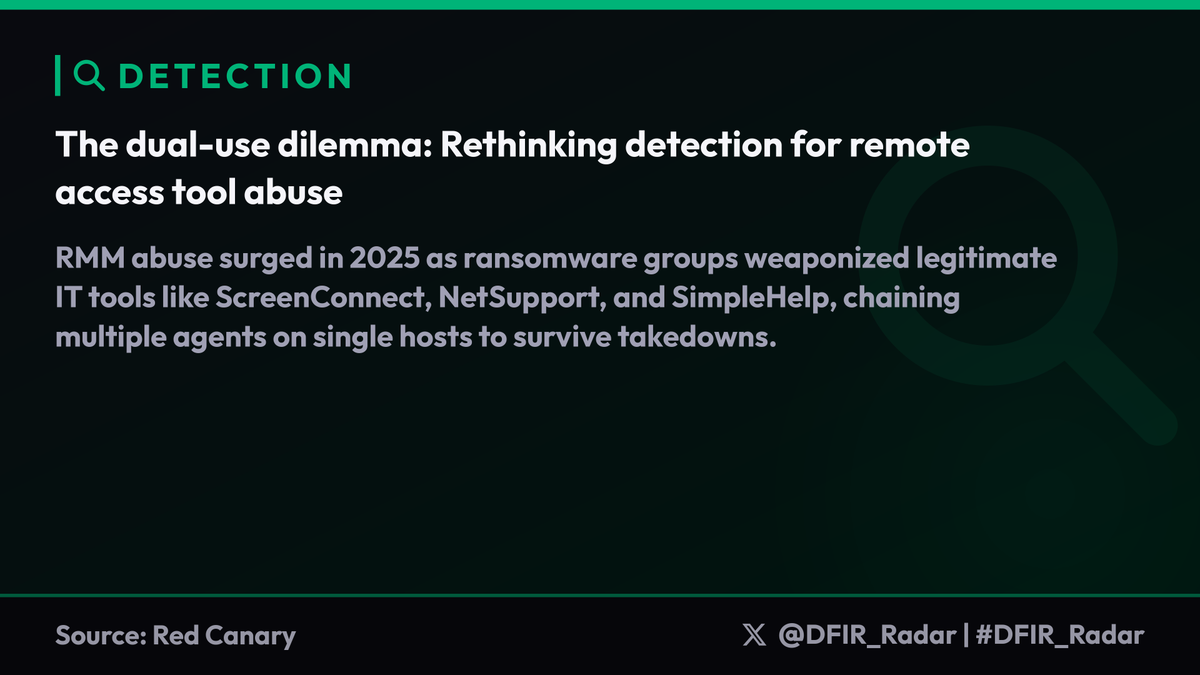
RMM abuse surged in 2025 as ransomware groups weaponized legitimate IT tools like ScreenConnect, NetSupport, and SimpleHelp, chaining multiple agents on single hosts to survive takedowns.
Key findings:
- Adversaries deploy RMMs in layers: one documented case shows JumpCloud installing GetScreen, ScreenConnect, and SuperOps on the same host simultaneously, creating redundant footholds that survive single-agent removal (T1219)
- ScreenConnect is nearly always a second-stage payload; its C2 domain often appears directly in the ScreenConnect.Client.exe command line, making process logs one of the few places a "malicious" domain is extractable without network inspection
- NetSupport hides in C:\Users\Public\ or randomized folders; cracked copies use nonsense license strings like HANEYMANEY; network detection is reliable via User-Agent NetSupport Manager/1.3
- ITarian dropped DeerStealer and HijackLoader via sideloaded DLLs after staging through DicomPortable.exe; PDQ Connect stores its API token at C:\ProgramData\PDQ\PDQConnectAgent\token, which is the config artifact to pull in an investigation
- MSIExec breaks the process tree: follow-on malicious activity runs under SYSTEM, severing the visible link to the phishing lure
Hunt for RMM binaries in Downloads or Public folders whose metadata names a known RMM product but whose filename says Invoice.exe or Statement.msi. If you find one RMM, hunt for two more. Baseline authorized tools against lolrmm[.]io.
#DFIR_Radar
1
1
153
Yggdrasil Yesod retweeted

Jun 15
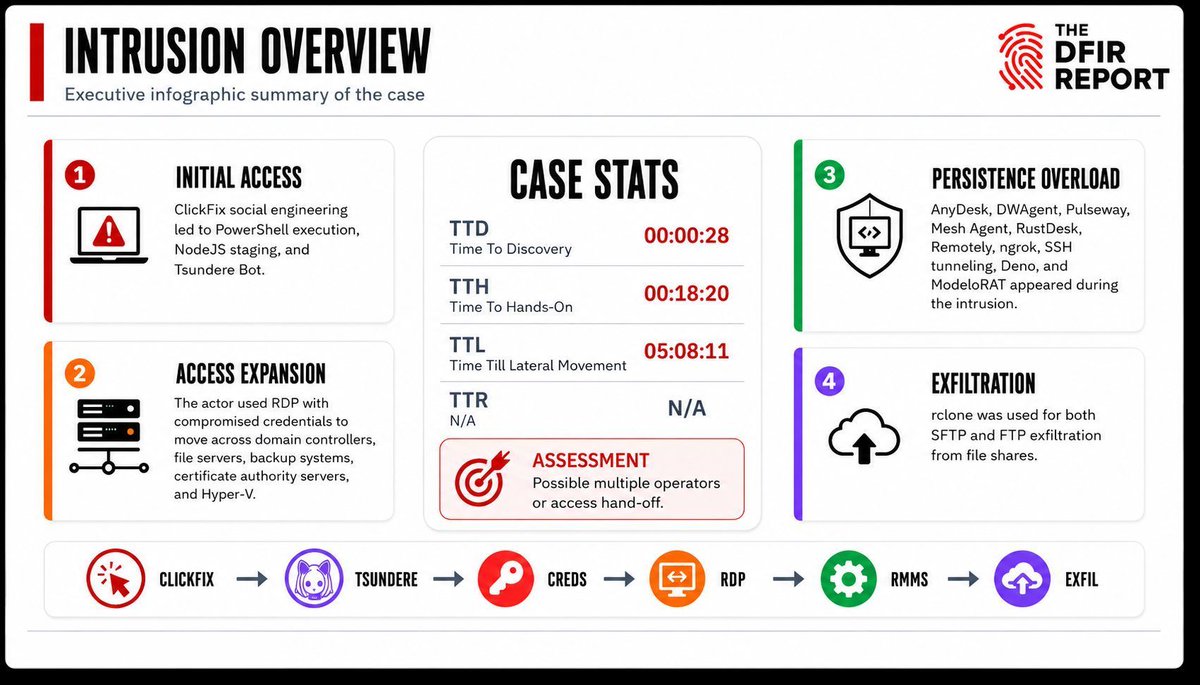
🔒 Private DFIR Report: ClickFix Leads to Tsundere Bot, Tunnels, RMMs, and Double Theft
Hands-on-keyboard activity began less than 20 minutes after initial execution. The threat actor quickly performed host and domain discovery, captured screenshots, enumerated domain users and groups, and escalated operations through Cobalt Strike, Kerberoasting, and the use of compromised privileged credentials.
Request access to the private DFIR report or schedule a demo to see how our Threat Intelligence offering delivers timely, actionable intel for defenders: thedfirreport.com/products/t…
2
26
94
7,201

Jun 17
I heard but not verified, why the Rebbe didn't wear a kolpik like the previous rebbes did. That the rebbetzin of the Rayatz was opposed to RMMS taking over instead of RSG, she didn't allow the Rayatz's kolpik to be used, so Rebbe just started wearing a hat all the time
12