びやんかまーの retweeted

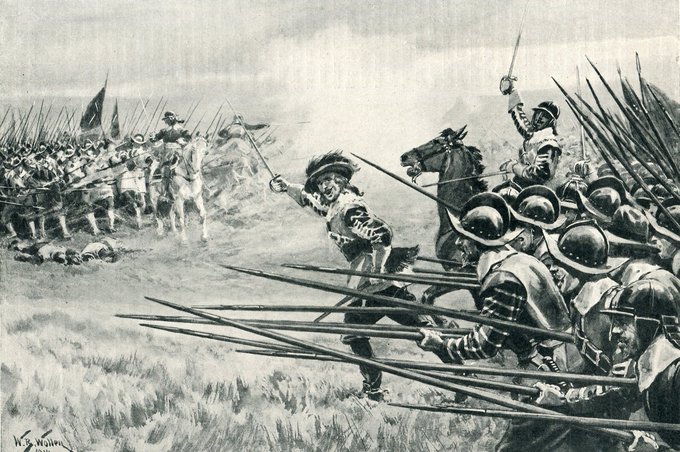
On this day in 1645, the Parliamentarian 'New Model Army' smashes Royalist forces under Charles I at Naseby. Although England's three-year-old civil war will continue for another 12 months, the king is effectively beaten.
6
23
1,439

I'm a royalist but I have to admit, the House of Windsor is pretty crap. Just like the rest of our leaders.
1

As an ex royalist I can see no use for the monarchy as it stands under King Charles 111 his duty is to us

I do wonder what the point of a King is if he won’t speak out and stand up for the British people against a tyrannical government.
Thoughts?

2


Today is the anniversary of the disaster of Naseby in 1645, which was the key in a series of events which ultimately led to the Royalist defeat. The Companion to British History (2008 Edition), whose author was a great admirer of Prince Rupert, but not of Charles I, summarises the events leading up to the battle as follows:
Rupert and the more sensible courtiers saw that Charles still had enough to save something by a negotiated peace but not enough to win, but the King still hoped for too much from Ireland (where Glamorgan was negotiating on the basis of a secret treaty while Ormonde was attempting an open one) and was buoyed up by Montrose’s further exploits. On 4 Apr. he had raided Dundee.
The King was adamant and Rupert advised a northern campaign which could lend help to Montrose. Cromwell, however, struck from London northwards of Oxford on 23 Apr. while Fairfax marched towards Dorset. The King’s forces were now to concentrate for the northern campaign but his commanders were a quarrelsome lot; Rupert detached Goring to the West to get rid of him; and to hold Fairfax he himself marched for the north. The Committee of Both Kingdoms ordered Fairfax to leave the West and make for the threatened Midlands; the parliamentary siege of Chester was abandoned. Thereupon Rupert and the King stormed Leicester, having first recalled Goring. Goring, however, disputed his orders: he wanted a south western not a northern campaign. Fairfax and Cromwell’s forces were united on 2 June. On 14 June 1645 they together fought the King without Goring’s cavalry at Naseby. If Rupert’s advice had been followed the battle would not have been fought. The King lost his infantry, guns and secret correspondence and fled with the remnant of his cavalry to Wales.
55

RT @carmen167057816: แขวนรูปที่กำแพง เรียกว่า Royalist ตัวแม่ แต่ไม่รู้ประวัติเจ้า ส่วนบ้านกุไม่เคยติดรูปเจ้า ทุกวันนี้ก็ไม่มีรูปเจ้า แต่…
11

King Rat has taught him well 🐀obviously they don’t live in the real world 🐀🐀🐀🐀 I was always a royalist not now it would suit the monarchy too look after their own people 🤬🤬🤬🤬🤬
1


Och Owe som skriver "fuck rasister" jag är själv ingen royalist men att lägga sig i andras kärlek är svinaktigt och tölpaktigt
2

วางตัวดีจริงๆ เคยเห็นช่วงรับสเด็จที่royal family มาเดินพบปะแล้วroyalistเขาจะเอาผ้ามาวางที่พื้นให้พระบรมวงศานุวงศ์เหยียบเก็บไว้บูชาอะ แต่องค์ภาเอามือมาแตะผ้า

ไม่แปลกใจ เพราะไม่ใช่แค่ first daughter พูดตรง ๆ ก็เป็นคนที่ได้ดั่งใจที่สุด เป็นโล้เป็นพายสุด เป็นความหวังสุด ไม่เคยมีข่าวเสียหายถึงขั้นที่บางคนที่ไม่ใช่ รยล.ยังไม่กล้าวิจารณ์เพราะคีพเมนไม่คีพวง อาจจะได้เป็น crown princess ด้วยซ้ำถ้าไม่สิ้นฯเสียก่อน สิ่งที่ถาโถมยิ่งกว่าเสียใจแหละ
724