
I think this white house card is a great however the time span in between Fights is taking too long for a sunday night

Contact period opens tomorrow
Coaches feel free to reach out and contact me #608-628-2396
teddycambahe@gmail.com
Teddy Bless Ambahe | c/o 2038
6’3 | 290 | 80 wing span| 10 hands
Vel Phillips memorial
@austinthecoach @gradamsiii

Andrew Hollen C/O 2028
#56 OL (C/G)
6’ 4” 285 lbs
4.0 GPA
80” wing span
27” vertical
96” broad jump
4.99 5-10-5
2025 GA 3A State Champ
2025 1st team All Region
300lb bench
475lb squat
250lb clean
3

NTA arranging all these in just a span of 1 month is suspicious itself.. now they are high on their ego. Suicide rates gonna raise high well nobody cares
1
native don draper retweeted

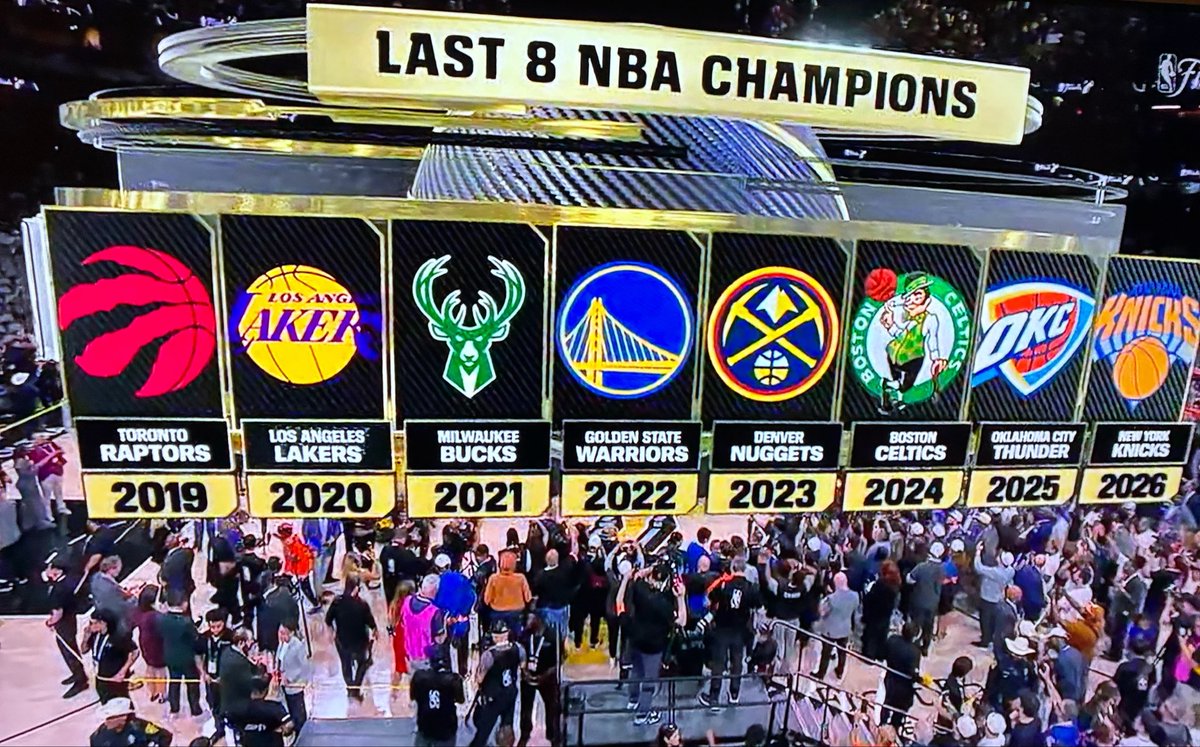
Imagine if there was a team that appeared in multiple finals during this span but ended up empty handed 😂😂😂😂😂😂😂😂😂😂😂😂😂😂😂😂😂😂😂😂😂😂😂😂😂😂😂😂😂😂😂😂😂😂😂😂😂😂😂😂😂😂😂😂😂😂😂😂😂😂😂😂😂😂😂😂😂😂😂😂😂😂😂😂😂😂😂😂😂😂😂😂😂😂😂😂😂😂😂😂😂😂😂😂😂😂😂😂

287
1,508
93,654
13,140,047

THURSDAY -- Obama Presidential Center Grand Opening Ceremony - LIVE at 10:30am ET on C-SPAN c-span.org/event/public-affa…

19
268
688
15,430
frankie!☆ 5SOS in 2❕ retweeted

23h
Hockey is like. The only game for you if you have a shit attention span. You can literally never go back nothing moves like puck
14
406
6,030
88,020
Benoit Blanc Stan Account retweeted

Kat really secured two rings within a 6 month span man what a guy 👏


17
1,241
35,787
521,519

🇪🇬📿 The Egyptian Bead Necklace and the 1944 Ledger: Tracking a Herzog Seizure to the Museum of Fine Arts, Budapest
Archival evidence from the 1944 looting of the Herzog Palace (Andrássy út 93, Budapest) details the vast array of art and antiquities stripped from one of Central Europe’s premier private Jewish collections: the renowned holdings of Baron Mór Lipót Herzog and his heirs.
Following the German occupation of Hungary in March 1944, the state systematically inventoried, seized, and took custody of Jewish-owned cultural property. Thousands of objects were caught up in this bureaucratic confiscation, including paintings, sculptures, furniture, and manuscripts.
Among these plundered treasures was an ancient Egyptian necklace.
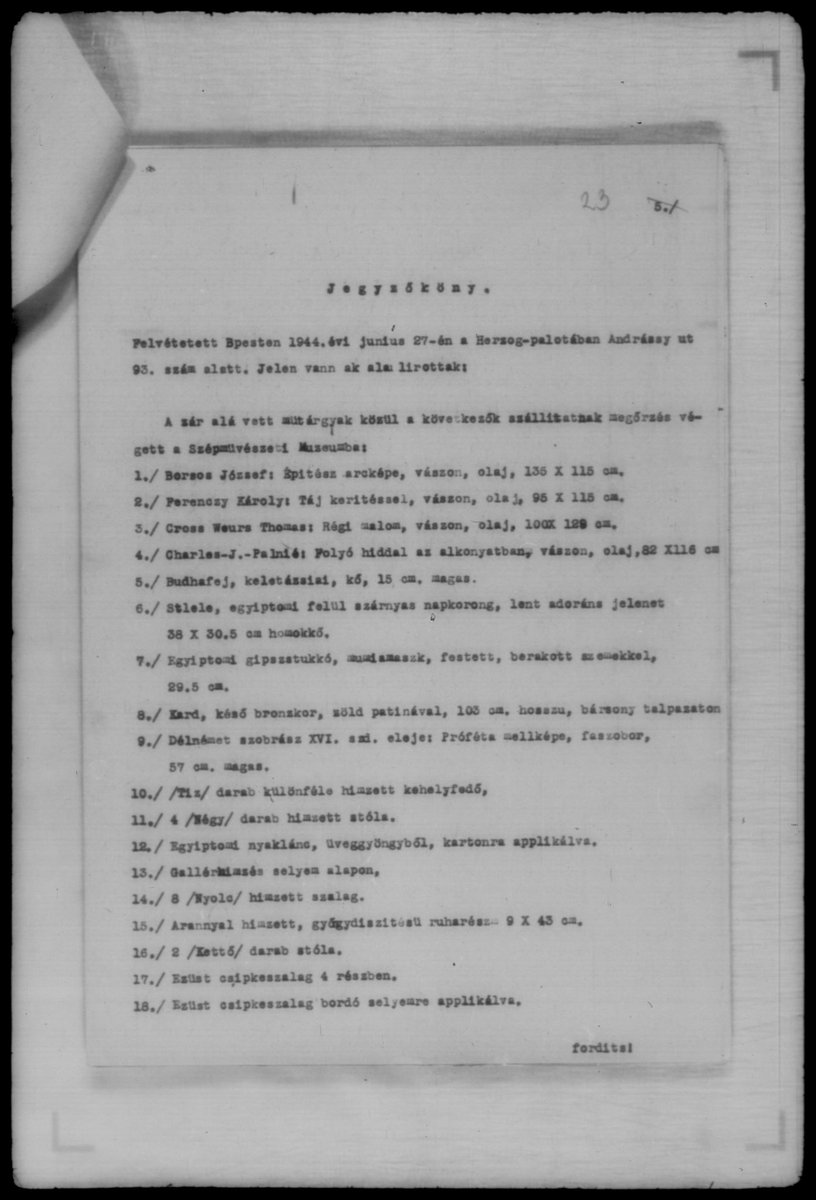
📜 The 1944 Inventory Entry (#12)
“Egyiptomi nyaklánc, üveggyöngyből, kartonra applikálva.”
(Egyptian necklace, made of glass beads, mounted on cardboard.)
The description is brief but unusually specific. It records an Egyptian bead necklace preserved in the practical museum manner of the era — mounted on cardboard to keep the fragile components together and prevent loss.
🏛️ Strongest Identified Candidate
Beads from a Necklace
Museum of Fine Arts, Budapest (Szépművészeti Múzeum)
Egyptian Art Collection
Inventory No. 51.1038
Status: Not on display
mfab.hu/artworks/20818/
The museum’s own record notes:
“This record is subject to revision due to ongoing research.”
🔍 Why This Object Warrants Investigation
• Material Correspondence
The museum catalogs the object as Egyptian faience beads. Wartime inventory clerks may have described faience as “glass” because of its glossy, glass-like surface. The 1944 description is entirely consistent with a faience bead necklace.
• The Mounting Detail
The inventory specifically notes that the necklace was mounted on cardboard (kartonra applikálva). This is not a decorative feature but a preservation detail. Small bead assemblages were commonly mounted in this manner, making the notation unusually useful for provenance research.
• Institutional Continuity
The candidate object remains in the same museum that received confiscated cultural property during 1944. At the time, Dénes Csánky served both as director of the Museum of Fine Arts and as the government official overseeing the custody of seized Jewish-owned cultural assets.
• The Cataloging Date
The inventory prefix “51.” indicates formal cataloging in 1951, during the period when wartime deposits, transfers, and previously uncataloged holdings were being incorporated into permanent state museum inventories.
• Elimination of Alternatives
A review of publicly accessible museum records did not identify a stronger candidate matching the 1944 description. While this does not establish identity, it makes Inv. 51.1038 a significant object for further provenance review.
• The Provenance Gap
The public record contains no reference to the Herzog family, the 1944 seizure, or the object’s path into the collection after the war.
⚖️ An Ancient Object, A Modern Question
The Museum of Fine Arts can identify the necklace’s civilization, material, function, and approximate age. It can place the object within the history of ancient Egypt and explain how it was made thousands of years ago.
What remains unclear is a much shorter span of time.
A surviving 1944 inventory records an Egyptian bead necklace removed from the Herzog Palace and transferred into state custody. Today, a remarkably similar necklace sits in the same museum’s Egyptian collection under Inventory No. 51.1038.
Whether this object ultimately proves to be the Herzog necklace remains an open question.
But the comparison highlights a recurring challenge in Holocaust-era provenance research: sometimes the greatest uncertainty is not the ancient history of an artifact, but the last eighty years of its existence.
The beads survived antiquity.
The ownership history should not be harder to reconstruct.
4

Degenerates who murder little girls have a very short life span in prison for some odd reason.
1
Lu_Espo retweeted

I took a picture with Bumblebee in Times Square once. Now I’ve got one with the big guy — Optimus Prime!
(And my Spanish lawyer, @PerezRoldanJM!)
Transformers know that transforming is for cars, not kids!
Los niňos no pueden consentir bloqueadores de la pubertad!



Así recorrimos madrid después de salir de la comisaría

3
51
425
12,023


I saw like two penalties on Ehlers in the span of three seconds #stanleycup #nhl
76
s i m u / ココロの調整中 retweeted

今回の銀座動物園は犬と猫を出品予定です
銀座動物園Ⅶ
2026年6月27日〜7月7日
SPAN ART GALLERY
東京都中央区京橋2-5-22
キムラヤビル 3F

4
13
198

Holding Vegas to three shots in a 30-minute span in a potential clincher.
1
66