📣 Deal of the Day 📣 Mar 11
Save 45% TODAY ONLY!
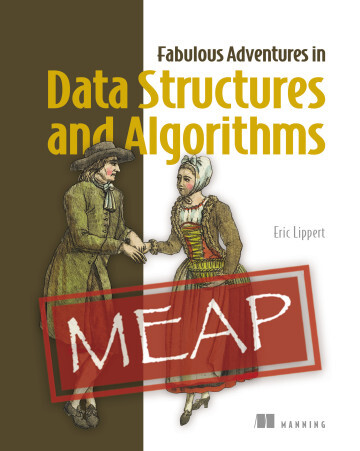
Fabulous Adventures in Data Structures and Algorithms & selected titles: hubs.la/Q046lRJb0
Author Eric Lippert introduces fabulous solutions using uncommon algorithms and data structures. #algorithms #datastructures #stochasticprogramming #probabilisticprogramming
This unique book introduces a collection of amazing algorithms that have the potential to change the way you program. You’ll upend the way you think about lists, learn the algorithms behind powerful developer tools, and rethink how to handle stochastic quantities in modern programming languages.
1
7
35
1,374

10 Nov 2025
📣 Deal of the Day 📣 Nov 10
HALF OFF NEW MEAP!
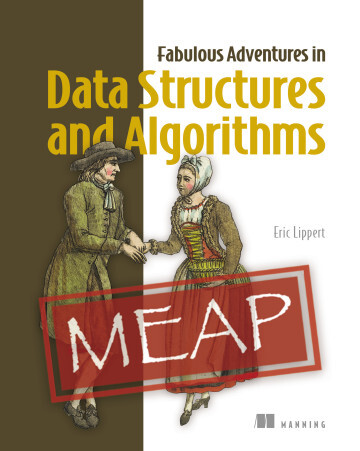
Fabulous Adventures in Data Structures and Algorithms & selected titles: hubs.la/Q03Sqm5w0
Learn how to solve programming challenges with lesser-known algorithmic approaches. @ericlippert #datastructures #algorithms #stochasticprogramming #probabilisticprogramming
Language designer and C# legend Eric Lippert explores exciting, esoteric, and exotic data structures and algorithms that will expand your programming toolbox, and your horizons.
2
3
31
1,227

5 Aug 2025
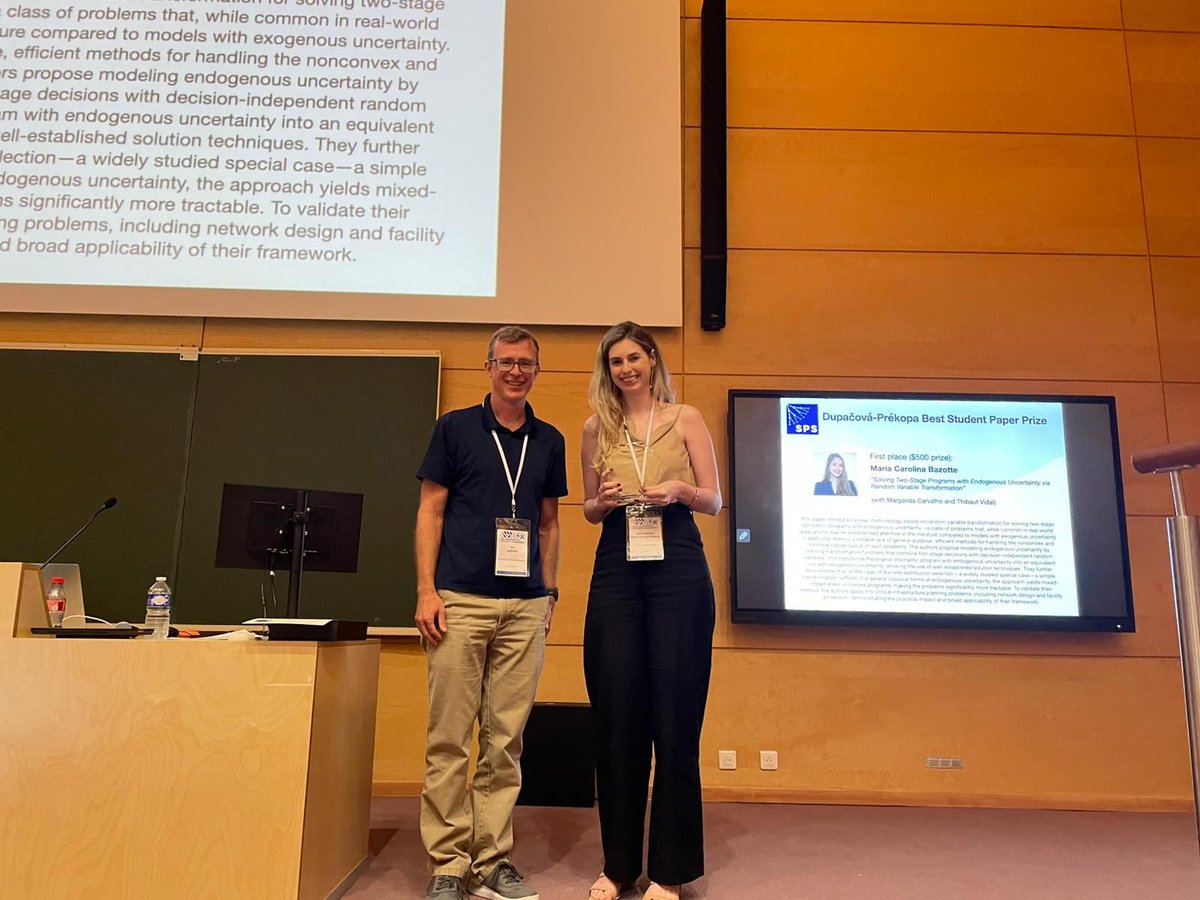
Maria Bazotte (@MBazotte), one of our brilliant PhD students at the SCALE-AI Chair at @polymtl, has just been awarded the Dupačová-Prékopa Best Student Paper Prize in #StochasticProgramming at #ICSP2025!
1
9
436

15 May 2025
Subject to: Laureano Escudero (Universidad Rey Juan Carlos, Spain), youtu.be/xopUNBHhm4A, #orms #optimization #Analytics #stochasticprogramming @SEIO_ES @urjc @EWGSO @IBMResearch @iberdrola

10
376

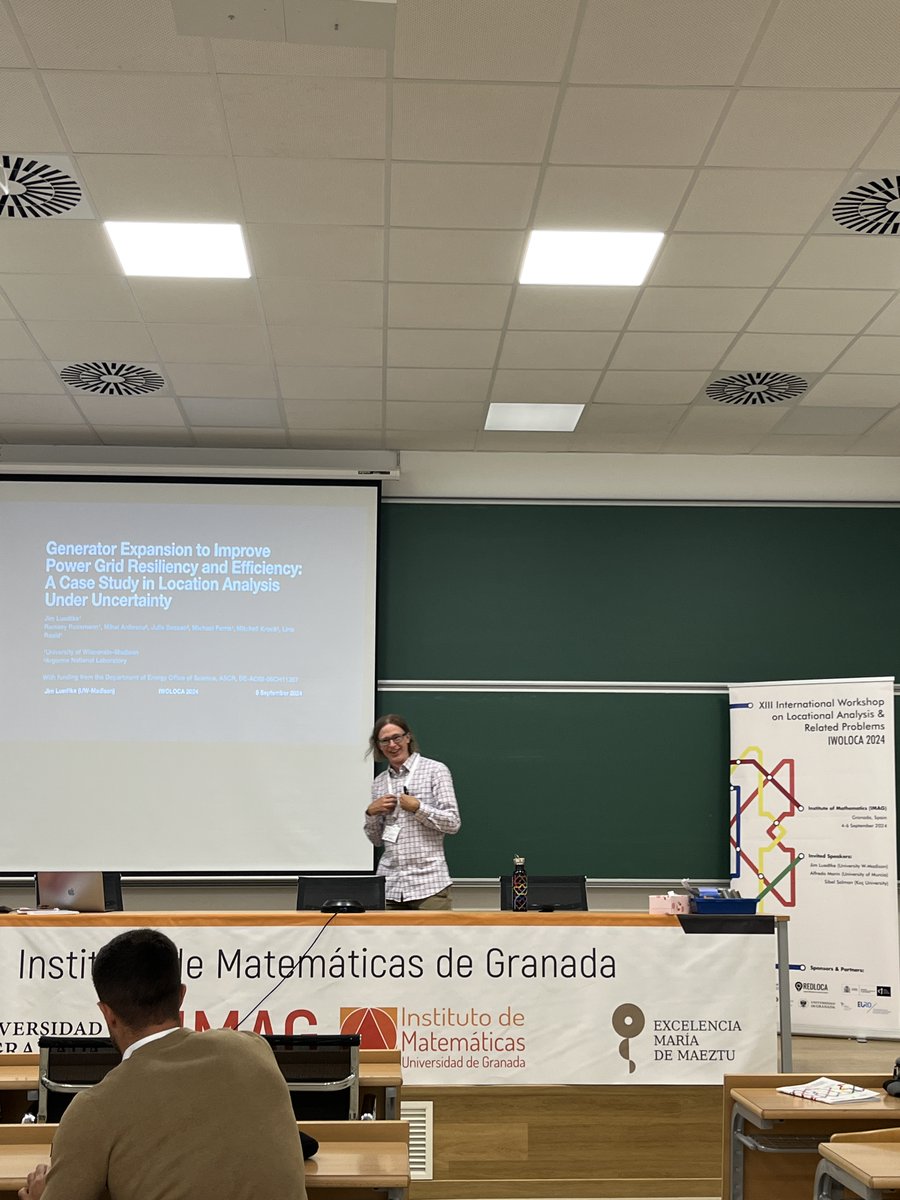
Plenary talk
Jim Luedtke (@jim_luedtke)
U. Wisconsin-Madison (@UWMadison), USA
"Generator Expansion to Improve Power Grid Resiliency and Efficiency: A Case Study in Location Analysis
Under Uncertainty"
#StochasticProgramming #NonLinearOpt #MachineLearning

3
20
799

11 Jun 2024
Dr Michael A H Dempster: "Bill Ziemba's legacy consists of a wide range of contributions to the literature ranging from pure mathematics and theoretical physics to engineering, economics, politics, finance and professional baseball."
#StochasticProgramming #RiskManagement

1
4
52
248,650

19 Dec 2023
The 2nd Copenhagen PhD School of Stochastic Programming will take place during the days before EURO 2024. Guest lecturers:
- @Francy_Maggioni
- Asgeir Tomasgard
- Alois Pichler
- Michal Kaut
Info and registration math.ku.dk/english/calendar/…
#StochasticProgramming #Optimization
1
3
1
614

7 Sep 2023
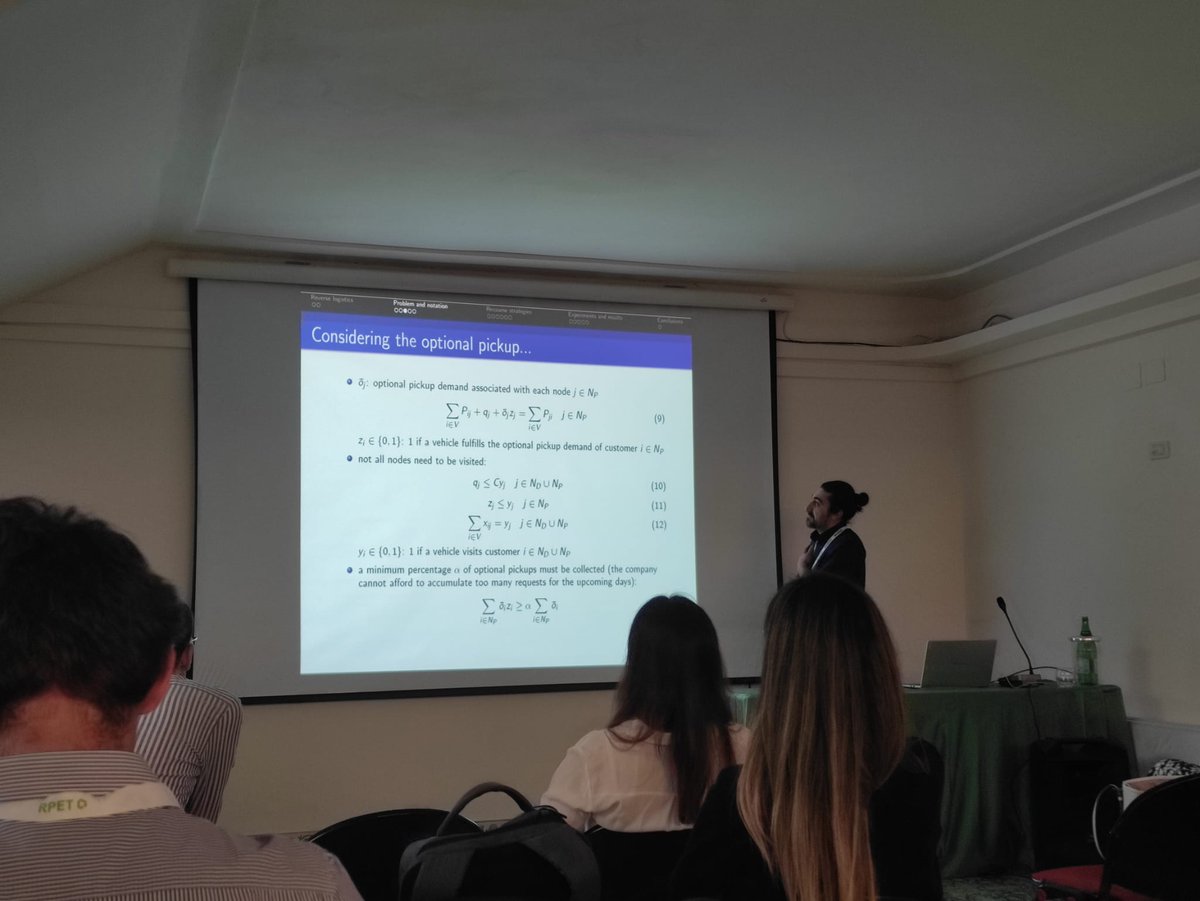
#ODS2023 #Day4 #StochasticProgramming
Daniele Manerba talks about a VRP with divisible delivery and pickups where the optional return demand is subject to uncertain positive variations as in realistic scenarios in the context of reverse logistics @ODS2023 #orms
2
6
462
7 Sep 2023
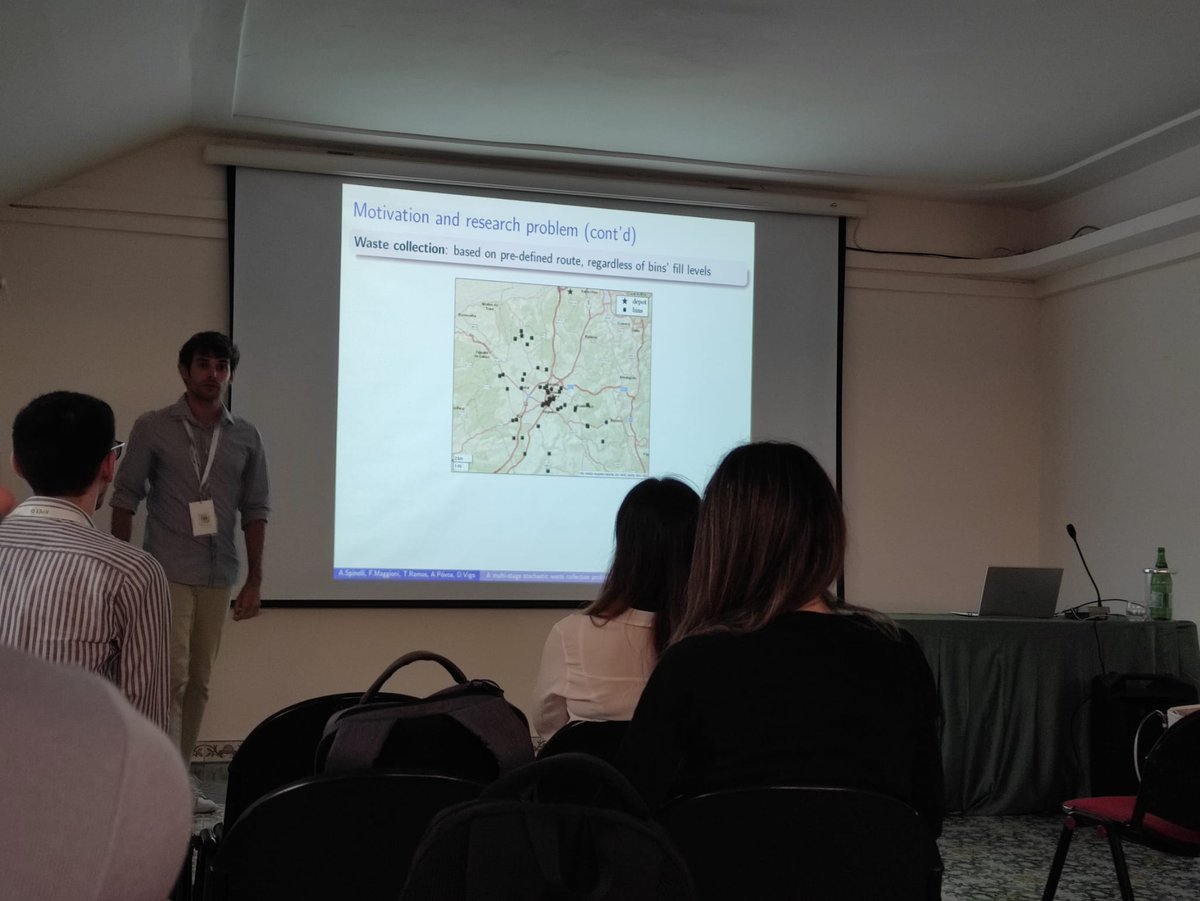
#ODS2023 #Day4 #StochasticProgramming
Andrea Spinelli uses a rolling-horizon approach to tackle a multi-stage stochastic model for the waste collection problem @ODS2023 #orms
1
2
150
7 Sep 2023
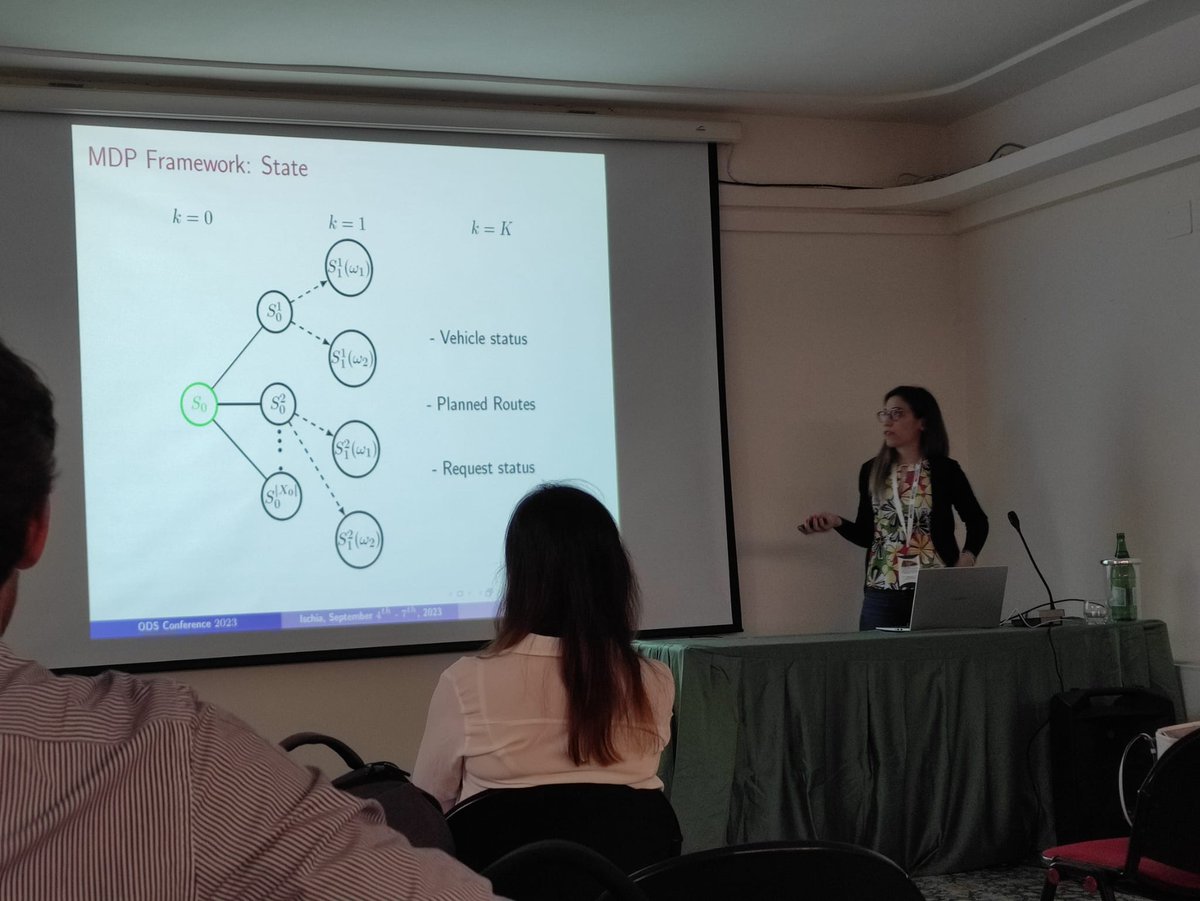
#ODS2023 #Day4 #StochasticProgramming
Sara Stoia shows how to frame into a Markov Decision Process a Dynamic Pickup and Delivery Problem with crowd-shipping and time-dependent travel times in order to apply Approximate Dynamic Programming @ODS2023 #orms
1
2
182
7 Sep 2023
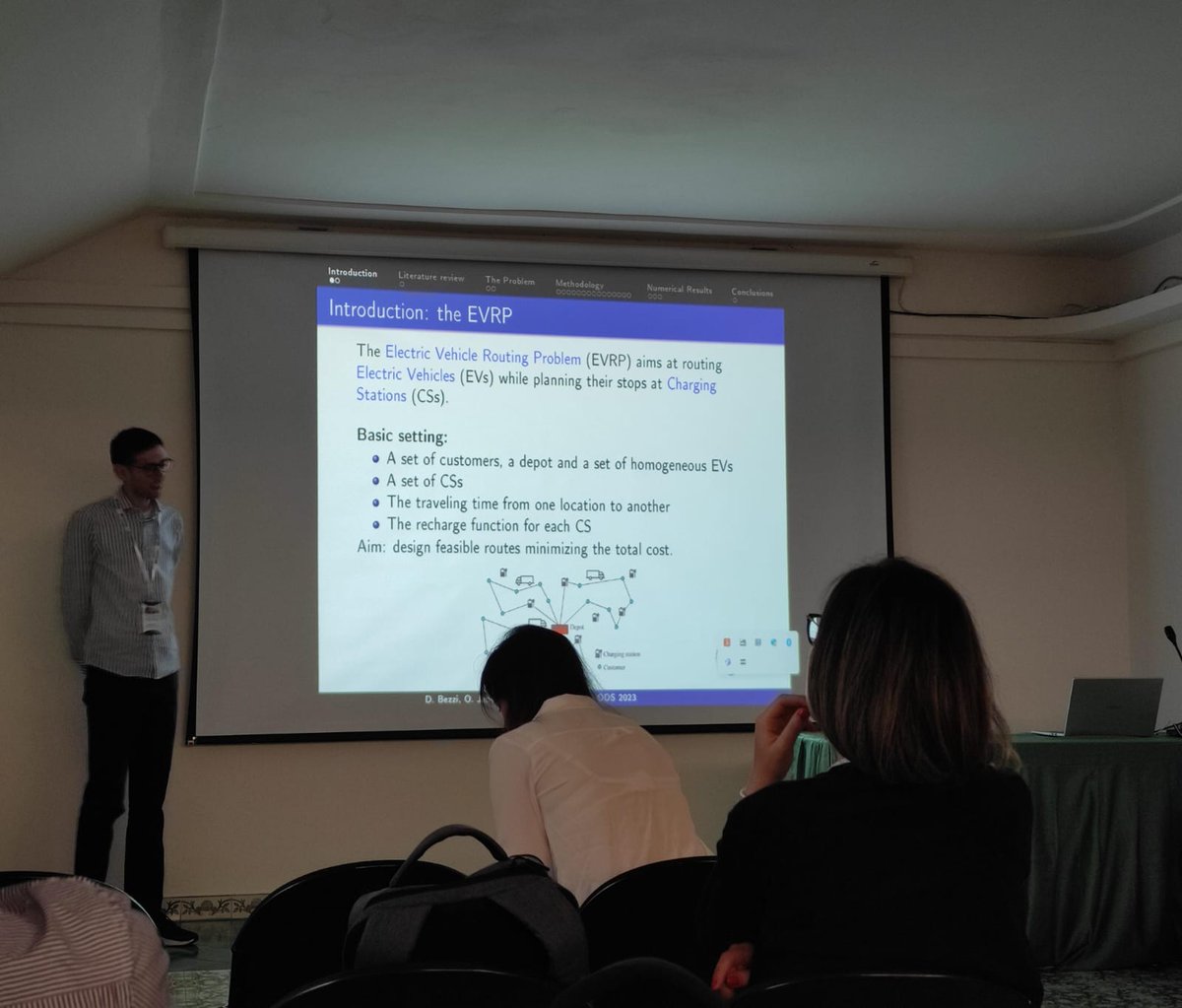
#ODS2023 #Day4 #StochasticProgramming
Dario Bezzi shows a two-stage stochastic
programming formulation for the Electric Vehicle VRP with stochastic energy consumption and presents a heuristic based on a threshold recourse policy @ODS2023 #orms
1
6
307
3 Aug 2023
Subject to: Francesca Maggioni (University of Bergamo, Italy), youtu.be/DLCIrNKAKTs, #orms #optimization #Analytics #stochasticprogramming #WomenInSTEM @Francy_Maggioni @UniBergamo

5
19
3,166
25 May 2023
Subject to: Andy Philpott (University of Auckland, New Zealand), youtu.be/RBr7NIYMvBU, #orms #optimization #Analytics #stochasticprogramming #energy @AucklandUni

2
14
1,093

23 May 2023
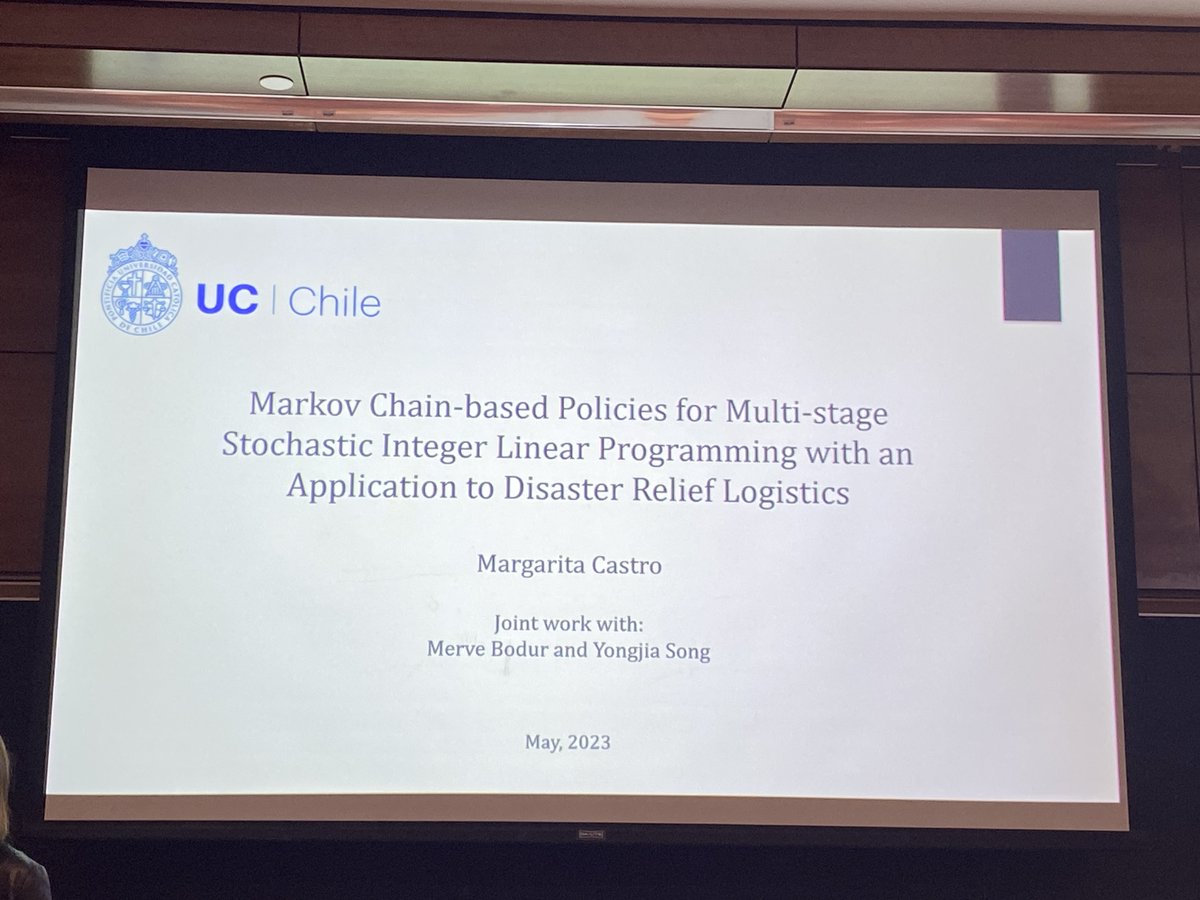
Reflecting on Margarita Castro's enlightening presentation at #MIP2023 titled "Markov Chain-Based Policies for Multi-Stage Stochastic Integer Linear Programming with an Application to Disaster Relief Logistics."
The talk is about a novel Markov chain-based aggregation framework and its accompanying methodologies designed to optimize multi-stage stochastic integer linear programming. Primarily geared towards enhancing decision-making in situations such as disaster relief logistics, the methods balance policy flexibility, solution quality, and computational efficiency.
The potential impact could expand to other areas such as unit commitment and economic dispatch within the renewable energy sector. For instance, aggregating distributed energy resources could both boost operational efficiency as well as effective decarbonization planning. As a result, the impact of climate-change-related disasters like hurricanes could be potentially diminished.
The strength of Markov chain-based policies generally lies in their capability to handle low-probability, high-impact events, thereby paving the way for the adoption of greener technologies and fostering deeper decarbonization efforts.
This can lead to a virtuous cycle: by leveraging these techniques for renewable energy integration and decarbonization, we could potentially reduce the severity of climate-change-induced disasters like hurricanes. Thus, Castro's Markov chain-based policies not only serve to mitigate the impact of such disasters but is also relevant to lessening their occurrence by fostering greener technologies and promoting deeper decarbonization efforts.
In other words: Stochastic models and Markov chains rule!
#MarkovChain #StochasticProgramming #DisasterRelief #RenewableEnergy
1
8
929
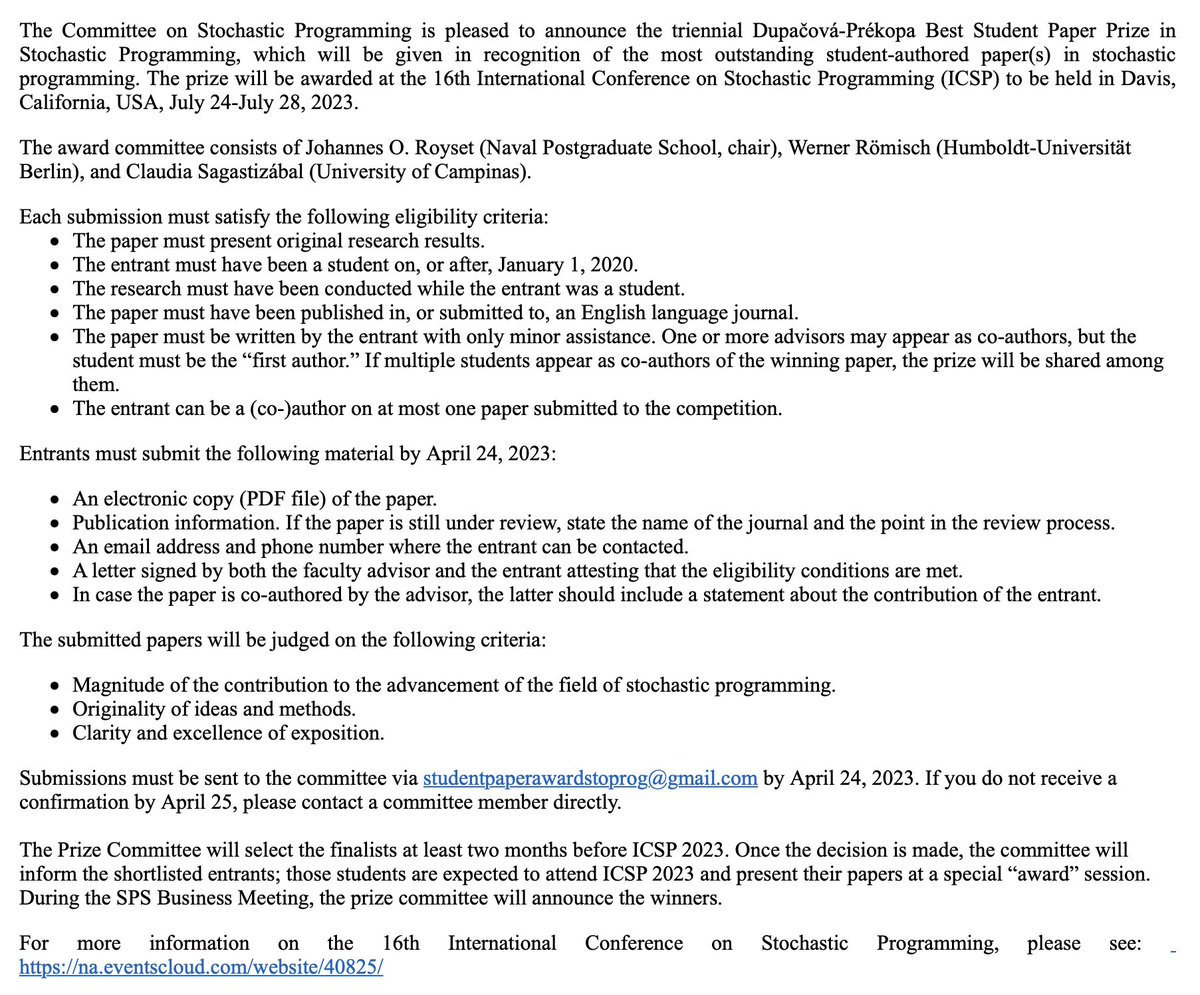
We are pleased to announce the triennial Dupačová-Prékopa Best Student Paper Prize in Stochastic Programming which will be given in recognition of the most outstanding student-authored paper(s) in #StochasticProgramming to be awarded at ICSP @ucdavis!
2
8
1,138

6 Dec 2022
Join us this summer for the flagship conference on #StochasticProgramming @ucdavis ! Amazing lineup of plenary and keynote speakers!
We will also have a day of tutorials on end-to-end learning / contextual stochastic optimization!

The keynote and plenary speakers for the 2023 XVI International Conference on Stochastic Programming taking place @ucdavis have been announced!
#ICSP2023
na.eventscloud.com/website/4…
3
Check out this new video on the #RealLife impact of #StochasticProgramming in the #energy sector!
youtube.com/watch?v=TNzC0HQ8…

1
12

15 Sep 2020
Check out the C3.ai COVID-19 Grand Challenge, an international public data science competition to combat COVID-19!
c3.ai/c3-ai-covid-19-grand-c…
The top seven teams will share $200,000 in prize money!
#StochasticProgramming #DataScience #SocialImpact

2
28 Apr 2020
Apply now for this Junior Professor position in “Optimization and Uncertainty in Mobility” at the Carl-Friedrich-Gauß-Fakultät of @tuBraunschweig
tu-braunschweig.de/en/vacanc…
#OptimizationUnderUncertainty #StochasticProgramming #Mobility #RobustOptimization

2
4
22 Apr 2020
Addressing climate change in a post-pandemic world mck.co/2xah29j via @McKQuarterly
On this #EarthDay, what lessons can we learn from the pandemic to tackle climate change?
#StochasticProgramming will be a key technology for planning our future
#SPforSocialImpact

2