
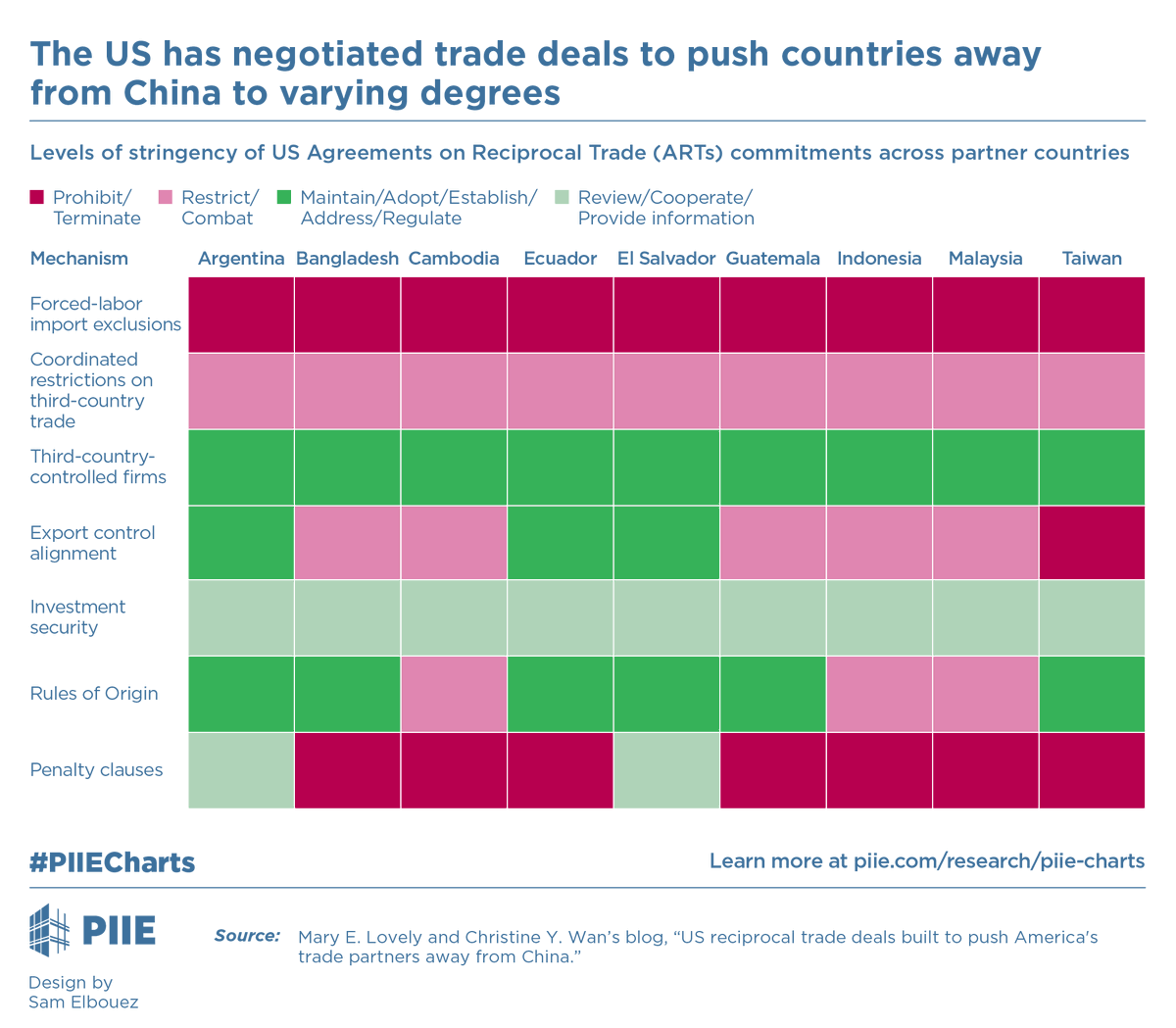
The Trump administration is using Agreements on Reciprocal Trade to construct legal architecture to pull US trade partners away from China & constrain China economically. But the stringency of mechanisms vary across partner countries. #PIIECharts
More: piie.com/research/piie-chart…
4
6
1,422

1. Mishnah Niddah 5:2 (exact match for the impurity mustard seed idea)English (Sefaria primary translation):
"If a priest was partaking of teruma, the portion of the produce designated for the priest, and sensed a quaking of his limbs indicating that a seminal emission was imminent, he should firmly hold his penis to prevent the emission from leaving his body, and swallow the teruma while ritually pure. And the emission of a zav and a seminal emission impart impurity in any amount, even like the size of a mustard seed or even smaller than that."
The mustard seed blood spot stringency (R. Zeira)This is the main Talmudic passage using the mustard seed for a tiny blood spot. The core statement appears in Niddah 66a and is discussed/referenced as a classic example in Berakhot 31a.English (standard translation, e.g., from halakhah.com and scholarly sources citing the Bavli):
"Rabbi Zeira said: The daughters of Israel have undertaken to be so strict with themselves that if they see a drop of blood no bigger than a mustard seed they wait seven clean days on account of it."Alternative close rendering (from multiple academic citations of Niddah 66a):
"R. Zera stated: The daughters of Israel have imposed upon themselves the restriction that even where they observe only a drop of blood of the size of a mustard seed they wait on account of it seven clean days."
The mustard seed (ḥardal) is a standard rabbinic unit for “extremely small/minimal amount,” especially in purity laws.
2
1
178

You jumped from peanuts to an entire race because your brain can’t handle basic logic. That’s not insight, that’s you broadcasting that your worldview is built on the same statistical stringency as a youtube comment section. Yes, my entire family is Black, including me peckerwood
2
27

US deaths from fire are higher than Europe despite less stringency, this is because marginal code really doesn’t do much as the large majority of modern deaths are non-functional fire alarms.
So yes, I think we can tolerate weaker code in order to help house everyone.
1
37

Jun 13
"‘Lockdowns Had Little to No Effect on COVID Mortality’: New Johns Hopkins Study
Brad Polumbo
But the costs of these draconian measures weren’t minimal at all.
We’re into year three of the COVID-19 pandemic. From mask mandates to vaccine passports, government restrictions on our liberties remain in place. But, thankfully, at least in the US, the era of lockdown orders confining Americans’ to their homes to “slow the spread” is over.
Unfortunately, a new meta-analysis of studies shows that all the pain and sacrifice we endured from those orders achieved little—despite their tremendous costs.
The new research review was led by economist Steve Hanke and published by Johns Hopkins University. It evaluated 24 relevant studies examining lockdown stringency, the impact of stay-at-home orders, and the effectiveness of specific restrictions. The meta-analysis concludes that “lockdowns have had little to no effect on COVID-19 mortality.”
Why wouldn’t stay-at-home mandates effectively combat the pandemic? Well, to some extent they simply delayed the inevitable. Plus, research has shown that most COVID-19 spread actually occurred at home.
“Micro evidence contradicts the public-health ideal in which households would be places of solitary confinement and zero transmission,” University of Chicago economist Casey B. Mulligan concluded. “Instead, the evidence suggests that ‘households show the highest transmission rates’ and that ‘households are high-risk settings for the transmission of [COVID-19].’”
So, however disheartening it may be, it’s hardly surprising that Hanke and co. found such minimal public health impact from lockdown policies.
“Stringency index studies find that lockdowns in Europe and the United States only reduced COVID-19 mortality by 0.2% on average,” their new research concludes. “[Stay-in-place orders] were also ineffective, only reducing COVID-19 mortality by 2.9% on average. Specific [non-pharmaceutical restriction] studies also find no broad-based evidence of noticeable effects on COVID-19 mortality.”
But the costs of these draconian measures weren’t minimal at all. They devastated the economy, pummeled the working class, fueled a youth mental health crisis, led to record-breaking drug overdoses, worsened a crime wave, delayed life-saving medical treatments, and so much more.
These devastating results offer a vivid reminder of a crucial lesson. When central planners, in their hubris, ignore the fact that their actions will have sweeping consequences beyond their intentions, human suffering ensues.
“It’s not enough… to endorse legislation that has a nice title and promises to do something good,” economist Robert P. Murphy wrote for FEE. “People need to think through the full consequences of a policy, because often it will lead to a cure worse than the disease.”
When it comes to lockdown policies, the “cure” has indeed proven far more harmful than helpful.
..."
fee.org/articles/lockdowns-h…
61

Jun 13
The solution is certainly not to let Christianity set moral stringency at permanent odds with harmless human nature or at too harsh of odds against mostly harmless nature by default. Humanity largely does not fit the container they have been put in (especially in W.E.I.R.D. cultures) and having genuine concern for how at odds base passions can be should not be boiled down to a pure free will problem. It is a just world fallacy to presume that every single "sin" could have been avoided to every degree by the magic of will power and moral responsibility. You should put your superstitious cards on the table Bible-believer. In a world where mental illness can completely debilitate someone and no amount of free will can save them there must surely be every degree between that and Captain America to contend with.
24

Jun 12
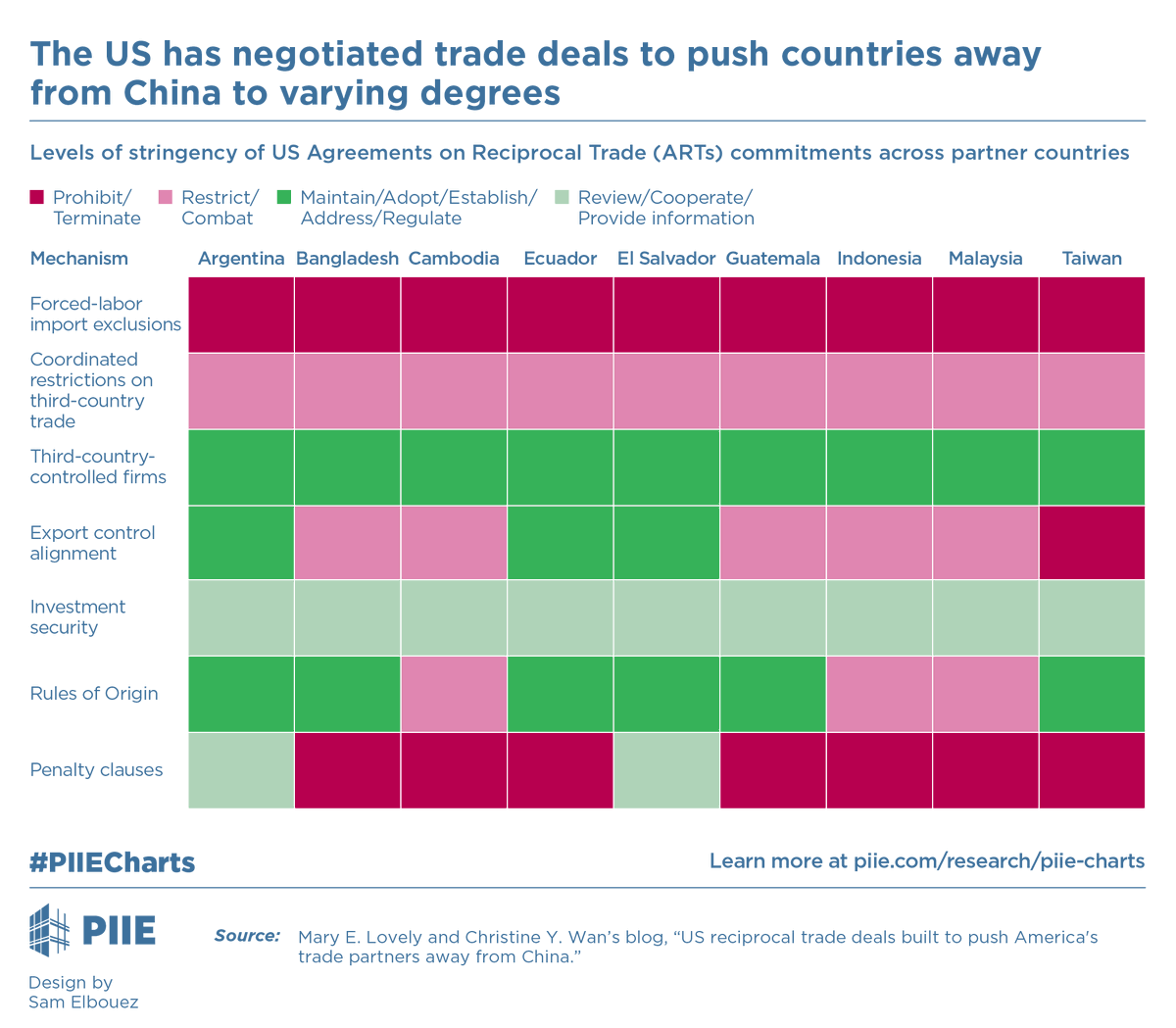
The deal of the ARTs: The Trump admin has made deals called Agreements on Reciprocal Trade with partners adjusting tariffs for concessions. But ARTs have mechanisms the US may use to control supply chains beyond its borders—& depth & stringency of commitments vary. #PIIECharts
1
11
2,710
Jun 12
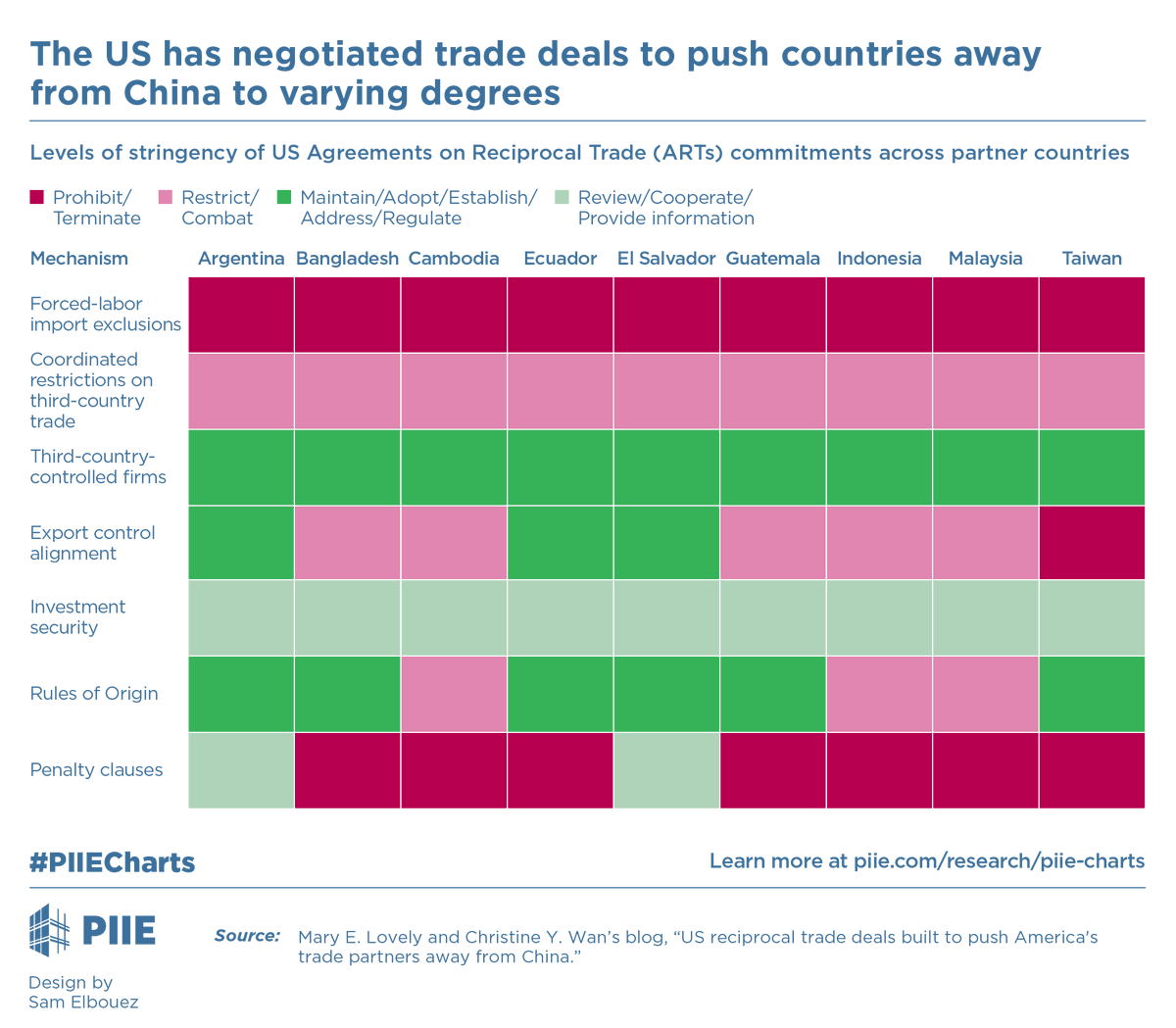
The Trump admin has made deals called Agreements on Reciprocal Trade (ARTs) with trading partners to adjust tariffs for some concessions. But the ARTs have mechanisms the US may use to control supply chains beyond its borders—& depth & stringency of commitments vary. #PIIECharts
1
4
12
1,458


Jun 11
Day 2 of the ongoing 2026 Global Energy Show holding 9th-11th June in Calgary, Alberta, Canada saw His Excellency the Hon. Minister for State Petroleum (Gas) Rt. Hon. Ekperikpe Ekpo meet with his counterpart the Minister for Energy and Minerals for the Province of Alberta, The Honorable Brian Jean on the sidelines of the summit.
Both energy leaders expressed a desire for collaboration between both countries in the areas of carbon capture to minimize emissions and thereby promoting environmental sustainability.
The Nigerian Minister who was accompanied by the Authority Chief Executive, Mallam Rabiu Umar and other key industry executives reiterated the country’s vast gas resources, approximately 215 TCF of proven gas and about 600 TCF of unproven reserves in the deep waters, as significant incentive for the country’s aggressive push towards advancing policies to arrive at net zero emissions.
He averred that significant strides have been made in this direction, citing evidence of Total Energies achievements in their OML 100 concession. The Hon. Minister solicited his counterpart’s cooperation & commitment to assist Nigeria in improving and sustaining this initiative in hoping to leverage Canada’s expertise, experience and technology in achieving this goal.
The Canadian Minister, Brian Jean agreed that his country possesses the required technology and know-how and would be very willing to help especially in the areas of capacity building and sharing knowledge with Nigerians. In this regard, both Ministers agreed to set up a combined technical team to drive this collaboration to fruition. Part of the capacity building strategy would be to identify subject areas where the Canadians would share their knowledge and insights with Nigerian engineers in the coming months ahead.
Also, during the day, both HE. Ekperikpe Ekpo and the ACE, Rabiu Umar delivered the keynote and goodwill addresses respectively at the Gas Aggregator Company of Nigeria (GACN) inspired Nigeria-Canada Trade, Investment and Gas Commercialisation Event organised to explore “Partnerships for a Sustainable & Secure Energy Future”.
Whilst the Hon. Minister of State reiterated Nigeria’s readiness to attract business and share its massive natural resources in order to help boost global energy security and reduce global warming in minimizing GHG emissions, Mallam Umar on his part underscored the Authority’s surefooted commitment to help market the country’s enormous gas assets and encourage investments into a sector that is increasingly being regulated with less stringency and more measured flexibility to guarantee maximum ROI to players.
He stated that “Through our Decade of Gas Initiative (2021–2030), Nigeria is executing a comprehensive economic pivot to transition into a gas-powered industrial economy, serving as a critical bridge toward our net-zero targets. We are here in Canada to market an industry that is fully open for business, highly structured, and commercially ripe for international collaboration”.
The ACE also indicated that the time was ripe for Nigeria to inform the watching and listening world that we no longer taut potential in our vast reserves, but are now on a relentless march towards actualisation.
“Let me be clear: Nigeria is no longer steering its energy policy using reserve-based pride. We have pivoted decisively toward utilisation-driven performance." Umar declared.


4
22
907

Jun 11
The People, universally, are sovereign, the highest civil authority in the nation, because their inalienable and inherent God-given natural rights are the supreme natural law that is the LAW of the laws, seating sovereignty (simultaneously supreme, plenary/ALL political authority of every kind in full degree) in the People. All political/civil governing authority belongs to, resides in, and comes from the People; and all authority possessed by civil/institutional government is the People's authority, provisionally entrusted by the People to government for the protection, facilitation, and realization of the People's human rights and good and the common good of society.
The People's natural rights being the natural/ontological (in being/reality) seat and source of all political authority, and the People's natural rights being inalienable, the sovereignty of the People is inalienable; no government, no human power, no constitution or law of man can take away the People's sovereignty or legitimately obstruct or deny or prevent the People from exercising their sovereignty or the full range of their political rights as sovereign. The sovereignty of the People is natural, universal, inalienable, immutable, and indivisible.
"God gave political authority first to the people. Afterward, as observed by St. Thomas Aquinas, Cajetan, St. Robert Bellarmine, and Francisco Suarez, S.J., government only possesses authority by some manner of transfer by or transmission from the People." (Yves R. Simon, A General Theory of Authority)
The authority of government, no matter what the form of government, is received, dependent, contingent (hinged on the People), alienable, mutable, and divisible.
Thus, while the People's sovereignty is permanent, inalienable, unalterable, and irremovable, all authority possessed by government is the People's authority, not government's, and has only been entrusted to government on condition that it be used for its proper, just purpose, and is subject to being revoked, withdrawn, and removed by the People, especially when government is corrupt and treasonous (completely betrays its purpose to protect, facilitate, and realize the just requirements of the People's natural rights and the People's human good).
The sovereignty of the People, philosophically established, destroys and permanently removes all claims by the State to be sovereign. The People of the nation claiming, relying on, and resorting to the principle and doctrine of the sovereignty of the People is the philosophical solution to confronting and overcoming government's, especially corrupt, rogue, treasonous "government's", false claim to be sovereign and that the People are absolutely and always (under all circumstances) inferior in authority and power to the government, that the citizens are absolute subjects who must conform and unconditionally submit to the arbitrary, unjust demands of an unjust State.
"The People are maiestas realis (Latin, the 'real sovereign'), who hold full iura maiestatis ('rights of sovereignty'), are the true dominus reipublicae ('Lord/Master of the Republic'), and hold true dominium ('rule, dominion, ownership'), while government is only tutor and curator ('watcher, protector, and guardian') – curator reipublicae and tutor regni ('guardian of the political order' and 'watchman of the political realm')." (17th century German jurist and political philosopher Johannes Althusius, Politica, quoted by Daniel Lee, Popular Sovereignty in Early Modern Constitutional Thought)
"The People make government their absolute commissioners and deputies [absolute servants who receive their commission/assigned mission and authority from the People and are empowered by the People to act with the People's authority as the People's vicars or substitutes in guarding and protecting the People's rights and good]." (English Leveller Richard Overton, An Arrow against All Tyrants, in The English Levellers, Cambridge Texts in the History of Political Thought, quote in summary form (bracketed emphasis added))
"The 'sovereignty' of the State [institutional government] is a fiction of words believed by many and accompanied by a great deal of coercive power." (Serena Ferente, "Popolo and Law: Late Medieval Sovereignty in Marsilius and the Jurists," Chapter 4 in Popular Sovereignty in Historical Perspective, Richard Bourke and Quentin Skinner, editors (Cambridge University Press, 2016), p. 96 (quotations emphasis and bracketed emphasis added))
"The federal and state governments are in fact but different agents and trustees of the people . . . The adversaries of the Constitution seem to have lost sight of the people altogether in their reasonings on this subject . . . These gentlemen must here be reminded of their error. They must be told that the ultimate authority . . . resides in the people alone." (American founder James Madison, Federalist No. 46)
"[G]overnments which have a view to [that are oriented toward] the common interest [the natural rights and good of the People] are constituted in accordance with strict principles of justice, and are therefore true forms [authentic civil government with genuine authority]; but those which regard only the interest of the rulers are all defective and perverted forms for they are despotic...." (Aristotle, Politics (bracketed emphasis added))
"Government becomes unjust when it spurns the common good of the multitude and seeks the private good of the governing element. The more it recedes from the common good, the more it is an unjust government." (St. Thomas Aquinas, Summa Theologiae)
"For this is tyranny: being conducive to the private good of the ruler, and to the injury of the multitude." (St. Thomas Aquinas, Summa Theologiae, II-II, Question 42, "Sedition", Article 2, Reply to Objection 3 (bracketed emphasis added))
"Political obligation [duty as a matter of justice to recognize, respect, honor, and submit to legitimate rights, especially the People’s natural rights, within the citizen-government government-citizen relation] pertains not only to . . . subject and citizen but also with at least equal stringency to rulers and governors [obedience and submission, to the higher natural law, is no less for government, than it is for citizens]. By the Lockean account (as embedded in long tradition [of natural law extending back to the Greeks and the Old Testament]) the rulers are obliged to exercise their powers only for the preservation of the liberties and properties of the people. The [American] Declaration of Independence finds [King] George III to be a tyrant precisely because he has perverted his powers as monarch by overstepping limits imposed by both constitution and higher law [the divine and natural laws, that are the LAW of Justice] to serve his own self-interest rather than to tend the common good of the Englishmen in America." (Ellis Sandoz, A Government of Laws: Political Theory, Religion, and the American Founding, pp. 39-40 (bracketed emphasis added))
"A regime that oversteps limited powers or imposes rule that fails to be just and reasonable by the standard of the higher law [the eternal and natural laws (called by Edward J. Cahill, S.J. (The Framework of a Christian State), the "twin-part divine law"] is in rebellion against the people and God [and, consequently, the People and the officials in government who are just and virtuous, are no longer obligated to obey it, but, instead, are obliged and obligated, by the higher natural and eternal laws, to follow and obey the natural law of the People's natural rights and human good, and therefore to disobey and resist illegitimate tyrannical 'government' and to right the so-called 'ship of state']." (Sandoz, Id., pp. 40-41, quote in partial summary paraphrase form (bracketed emphasis added))
84
GenXKentuckian ☕️🇺🇸 retweeted

Kentucky scores 100/100 on CON stringency—barriers in every category measured. Neighboring Indiana and Ohio have scrapped most of theirs. Read the full report: bluegrassinstitute.org/certi… CC: @KneeCenter_WVU
1
1
32

Jun 10
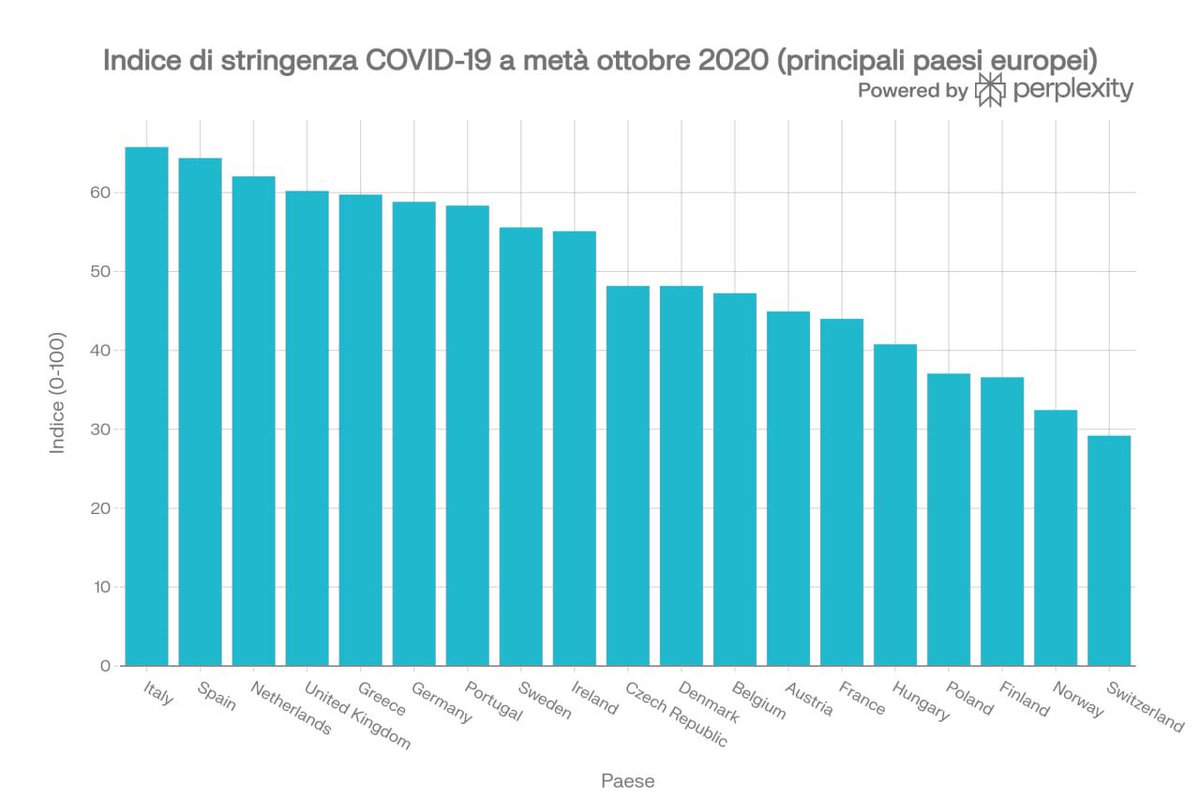
Numeri: l’Italia a ottobre 2020 aveva lo stringency index più alto in assoluto tra i paesi europei. Quel che ha scritto dimostra quindi esattamente l’opposto di quanto vuole sostenere. Mi si perdonerà il grafico al volo con perplexity, la fonte è bsg.ox.ac.uk/research/covid-…
13
722

Jun 10
written language deforms thought with the stringency of its rules
1
5

Jun 10
All federal elections should require the same stringency of ballot counting and security as required for election voting machines by federal law. "the 2002 FEC Voting System Standards, Volume I, Section 3.2.1 “Accuracy Requirements” states that for each defined processing function (paper-based scanning, DRE recording, consolidation, etc.):
“For each processing function indicated above, the system shall achieve a target error rate of no more than one in 10,000,000 ballot positions, with a maximum acceptable error rate in the test process of one in 500,000 ballot positions.”

California made it illegal for any election in the state to require ID. This is nuts.
9

Jun 9
My own security stringency may just be more hard-core than Elon’s is.
35
9
78
2,666

Remember you are now a SC. That places more stringency and professionalism on your shoulders.
43
John Read retweeted

Jun 8
This cannot pass for an official election. Until there is more stringency involving proof of citizenship , the Federal Government should stop all payments going to the State of California .
4
26
307