
Alan, can you imagine at this point and time believing that the political Zionists needed to throw money at the Kentucky to cause this result?
No, I really can’t. I guess it doesn’t matter how many times people spend weeks testifying in Congress you overturn elections with a-
2

The idea of the wonen testifying to untrained men made me v unconfortable at the outset .
That tgere is no psych and social support makes it even worse.
Thank you for the insights.
1
4

For one day only, Lethal Rescue is on sale for $0.99.
amzn.to/4vnpha5
Two romantic-suspense page-turners by USA Today–bestselling authors featuring K-9 crime-stoppers in the Alaskan wilderness!
Backfire by Carol Award-winner Elizabeth Goddard
Tracy Murray thought she'd be safe disappearing in the wilds of Alaska after testifying against a gang leader. Now the clock has run out, and she knows the killers won't let her escape again. But when she finds herself relying on firefighter David Warren, a new struggle emerges. Fleeing Alaska could be the only way to survive . . . but it would mean leaving her heart behind.
To Save Her Child by Margaret Daley
When a young boy goes missing from wilderness day camp, Alaskan search-and-rescue worker Josiah Witherspoon is on the case. The brooding ex-marine promises to find the child and return him to his worried mother. But he doesn't know that Ella Jackson has a secret past. One that could put them all in danger . . .

2
Karizma retweeted

Mashaba spent three days testifying before the commission last week, where details emerged about his involvement in a botched drug bust in Aeroton, south of Johannesburg, in 2021.
ewn.co.za/2026/06/15/gauteng…
5
5
1,784
GrmncPgn33 retweeted

The Oct 7 stand-down order has been confirmed by an Israeli soldier testifying in the Knesset.
May 25

October 7 Was Clearly an Inside Job
Thread 🧵 8/x
The Israeli military was ordered to stand down on October 7.
---
Shalom Sheetrit is an Israeli soldier who testified before a Knesset committee in July 2025 regarding his experiences on October 7, 2023. Sheetrit testified that his platoon was ordered to stand-down on the morning of October 7. (This is why Hamas was able to enter Israel with NO RESISTANCE and commit atrocities against Jewish civilians for hours with no IDF response.)
14
29
416

The Holy Spirit in me is testifying that yours is a deceiver. So now what? Which one is correct?
5

1) You like using Yoruba names everytime you want to talk about bad things.
2) NELFUND is real, many students have been testifying to it and even your ibo people have been benefiting from it.
Don’t just worry, continue fooling yourself and ur mumu followers, one day you will cry!
28
Touch Midas. retweeted

Soccer has to be played with confidence, some arrogance and some self love. Bafana Bafana played as if they were testifying at the Madlanga Commission.
7
14
64
1,551

She literally questioned him about a public statement he made while testifying you absolute dumbfuck
1
4

The criminal cases against Benjamin Netanyahu primarily refer to three domestic corruption investigations in Israel (Cases 1000, 2000, and 4000), for which he was indicted in November 2019. These are separate from the International Criminal Court (ICC) arrest warrant issued in November 2024 related to alleged war crimes and crimes against humanity in Gaza (starvation as a method of warfare, intentional attacks on civilians, etc., from October 2023 onward).
icc-cpi.int
Netanyahu, Israel's longest-serving prime minister and the first sitting one to face criminal charges, has consistently denied all wrongdoing, describing the cases as a politically motivated "witch hunt."The Three Israeli CasesThese cases, tried together in the Jerusalem District Court, allege improper exchanges of gifts or favors for political or regulatory benefits:Case 1000 ("Gifts Affair"): Netanyahu and his wife Sara are accused of receiving luxury gifts (cigars, champagne, jewelry, etc., valued at roughly $200,000–$260,000) from Hollywood producer Arnon Milchan and Australian billionaire James Packer. In return, prosecutors allege he provided political favors, such as helping with tax issues, U.S. visa matters, or regulatory assistance. Charges: fraud and breach of trust.
theconversation.com
Case 2000 (Netanyahu-Mozes affair): Alleged negotiations with Arnon Mozes, publisher of the Yedioth Ahronoth newspaper, for favorable media coverage of Netanyahu and his family (and negative coverage of rivals) in exchange for legislation to limit the circulation/growth of a competing free newspaper (Israel Hayom). Charges: fraud and breach of trust.
reuters.com
Case 4000 (Bezeq/Walla affair): As Communications Minister, Netanyahu allegedly granted significant regulatory favors (worth hundreds of millions of shekels) to telecom giant Bezeq and its controlling shareholder Shaul Elovitch. In exchange, prosecutors claim he received positive coverage on the Walla news site (controlled by Elovitch) for himself and his wife. Charges: bribery, fraud, and breach of trust.
israelpolicyforum.org
The trial began in May 2020. The prosecution rested its case in 2024. Netanyahu began testifying in December 2024 (defense phase), with cross-examination ongoing into 2026 (e.g., continuing in February and into June). The trial has faced repeated delays due to security concerns, wars (Gaza, Iran-related conflicts), and other factors. As of mid-2026, it remains ongoing in the cross-examination stage, with hearings sometimes shortened or postponed.
en.wikipedia.org
Netanyahu requested a pardon from President Isaac Herzog in late 2025 (with related reviews into 2026), but the trial has continued. Conviction could carry prison time (up to 10 years for bribery in some interpretations, plus terms for fraud/breach of trust) and political consequences.Did a Judge Presiding Over His Case Die?No presiding judge over Netanyahu’s main corruption trial (Cases 1000/2000/4000) has died. The panel consists of three Jerusalem District Court judges: Rivka Friedman-Feldman (lead), Moshe Bar-Am, and Oded Shaham. These judges remain in place.
en.wikipedia.org
The claim appears to stem from misinformation or sensationalized reporting about a different case:Judge Benny Sagi (president of the Beersheba District Court) was involved in the separate “submarine affair” (sometimes called Case 3000 or the naval vessels/submarine procurement corruption case from around 2016). This involved deals for submarines and vessels with a German company; Netanyahu was questioned but not indicted in that matter. Sagi died in a motorcycle accident on January 4, 2026, on Route 6 after being struck by a vehicle that came off-road. It was officially reported as a traffic accident.
timesofisrael.com
Some social media and certain outlets misleadingly linked Sagi directly to “Netanyahu’s corruption trial” or called the death “suspicious,” but reliabl
1
1
41

Testifying on behalf of Human Rights Watch @hrw, Anneke Van Woudenberg @woudena detailed the findings of her organization’s investigation in the Congo: “We interviewed girls, some as young as 13-years old, who had been raped by MONUC soldiers” @WCPInst
wcpinst.org/source/panel-exa…
1
17

YOU’RE TESTIFYING IN COURT,STOLE WHAT WAS LEFT TO U,INVESTIGATION,SETTLE... youtu.be/A96L1c0ucvM?is=Hwt0… via @YouTube
10

I'm on replay this morning but i was happy to see 👀 you cover the fuckery of ADA Lally "reinstating" that police officer for the limited purpose of testifying in a GJ. I thought Lally was just incompetent but NOPE he is just as bad
1
7
Seraphim Angels retweeted

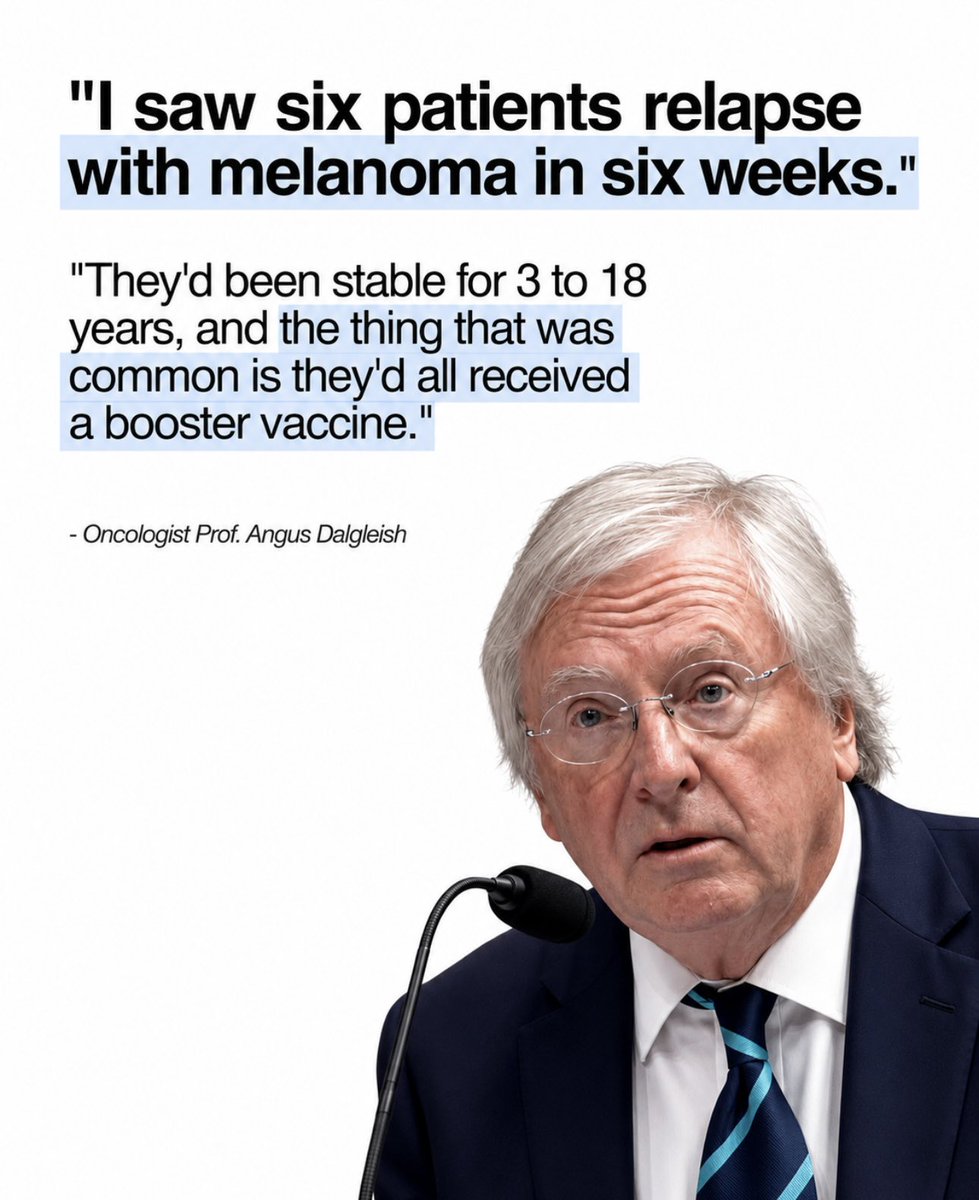
"I saw six patients relapse with melanoma in six weeks."
Testifying before the Senate, oncologist Prof. Angus Dalgleish described seeing melanoma patients who had been stable for years relapse in a short period of time.
"They'd been stable for 3 to 18 years, and the thing that was common is they'd all received a booster vaccine."
Dalgleish also said he was hearing reports from fellow surgeons of colorectal cancers "presenting late stage 4, not stage 1 or 2," and appearing "in patients in their 20s, 30s and 40s in a way that we have not seen before."
"As an oncologist who I'm starting to see that it's not only my patients now, it's people I know really, well, who are going down with cancer and they're going down more aggressively, and the treatment is not working nearly as well."
"Many have seen a dozen doctors before. Not one of them has ever asked the vaccine history."
2
73
124
3,088

Gemini's opinion on the testimony during the Karmelo Anthony trial.
Looking at this transcript excerpt, there are several glaring evidentiary issues. The most egregious errors happen toward the middle and end of the Prosecutor's questioning, where the attorney shifts from asking facts to leading the witness and asking for legal conclusions.
Here is a breakdown of where objections should be called, categorized by the specific rules of evidence being violated.
## 1. Leading Questions on Direct Examination
A lawyer generally cannot ask "leading" questions (questions that suggest the answer or call for a simple "yes" or "no") during the direct examination of their own witness. The prosecutor does this repeatedly at the end of his block.
* **The Line:** *Prosecutor Bill Wirskye: “Austin Melcalfe meant a lot to you.” / Witness “Yes.”*
* **Objection:** Objection, Your Honor. Leading.
* **Why:** The prosecutor is testifying for the witness rather than letting the witness describe the relationship in his own words.
* **The Line:** *Prosecutor Bill Wirskye: “It was Karmelo Anthony being stubborn, provoking?” / Witness “Yes.”*
* **Objection:** Objection. Leading.
* **Why:** Again, the prosecutor is feeding the exact narrative and descriptive words ("stubborn," "provoking") to the witness.
## 2. Calling for a Legal Conclusion / Speculation
This is the single biggest error in the entire transcript. Witnesses are there to testify to *facts* (what they saw, heard, or did). They are explicitly barred from giving legal definitions or deciding the ultimate issue of the case.
* **The Line:** *Prosecutor Bill Wirskye: “Was this self defense or murder?” / Witness “This was murder.”*
* **Objection:** Objection, Your Honor. Calls for a legal conclusion, invades the province of the jury, and calls for speculation.
* **Why:** Determining whether an act constitutes "self-defense" or "murder" is the exclusive job of the jury based on the judge's legal instructions. A 16-year-old lay witness cannot legally define "murder" on the stand. This is highly improper and prejudicial.
## 3. Speculation / Lack of Personal Knowledge
A witness cannot testify about what another person was thinking or feeling unless they have a factual basis for it.
* **The Line:** *Prosecutor Bill Wirskye: “Austin tries to force him out because we didn’t have any other choice.”*
* **Objection:** Objection, move to strike as speculation and narrative.
* **Why:** The phrase "because we didn't have any other choice" is an opinion/conclusion rather than a physical fact. The defense should object to the witness speculating on Austin's internal motivations or making a broad generalization for the whole group.
## 4. Relevance / Undue Prejudice
Evidence must actually relate to proving elements of the crime, and its value shouldn't be outweighed by just trying to make the jury emotional.
* **The Line:** *Prosecutor Bill Wirskye: “Have you been in counseling?” / Witness “Yes.”*
* **Objection:** Objection. Relevance, or under Rule 403, its probative value is substantially outweighed by the danger of unfair prejudice.
* **Why:** While tragic, whether this specific witness went to counseling after the fact doesn't prove whether the defendant committed murder or acted in self-defense. It is often injected solely to garner sympathy from the jury.
## 5. Improper Redirect (Form of the Question)
It’s worth noting the messy flow of the transcript. It goes: Prosecutor -> Defense -> Prosecutor -> Defense.
When the prosecutor jumps back in (starting at *"What happens next?"*), that is called **Redirect Examination**. The scope of redirect is strictly limited to issues raised during the defense's cross-examination.
* If the defense hadn't yet brought up the backpack or the "bigness" of the push, the prosecutor asking about those out of nowhere would be objectionable as **"Outside the scope of cross-examination."**
1/2
Jun 6

ANOTHER WITNESS TAKES THE STAND – 16-YEAR-OLD BOY WHO WAS A FRESHMAN AT THE TIME OF THE STABBING.
HE PLAYS FOOTBALL AND TRACK.
He helped set up the tent.
Prosecutor Bill Wirskye: “Did you see anyone who didn’t belong in the tent?”
Witness “He was from Centennial High School. We told him to leave multiple times.”
Prosecutor Bill Wirskye: “Is the expectation that other teams stay out of your tent?”
Witness “Yes.”
Prosecutor Bill Wirskye: “When you tell him to leave, what does he do?”
Witness “He doesn’t leave. He gets angry and tries to provoke us, saying, ‘Make me leave.’”
Prosecutor Bill Wirskye: “Was Austin or Karmelo instigating?”
Witness “Yes, Karmelo.”
Defense attorney Toby Shook: “When Austin decided to push him out, how did he get to him?”
Witness: “He walked over to him.”
Defense attorney Toby Shook: “Was Karmelo still sitting down?”
Witness: “I think so.”
Defense attorney Toby Shook: “Did he grab or push him?”
Witness: “He pushed him on his shoulder area with both hands.”Prosecutor Bill Wirskye: “What happens next?”
Witness “Austin tries to force him out because we didn’t have any other choice.”
Prosecutor Bill Wirskye: “Did Karmelo have his hand in his backpack?”
Witness “Yes.”
Prosecutor Bill Wirskye: “Describe the push from Austin.”
Witness “A little push.”
Prosecutor Bill Wirskye: “Austin Melcalfe meant a lot to you.”
Witness “Yes.”
Prosecutor Bill Wirskye: “Have you been in counseling?”
Witness “Yes.”
Prosecutor Bill Wirskye: “It was Karmelo Anthony being stubborn, provoking?”
Witness “Yes.”
Prosecutor Bill Wirskye: “Was this self defense or murder?”
Witness “This was murder.”
Defense attorney Toby Shook: “When it was raining, it was okay for him to be in the tent?”
Witness: “Yes.”
Defense attorney Toby Shook: “Once it stopped raining, he was asked to leave?”
Witness: “Yes.”
Shook is showing cardboard cutout of layout. Witness is saying where everyone was.
Defense attorney Toby Shook: “Did he talk about what was in the backpack?”
Witness: “He said there was something in there.”
Defense attorney Toby Shook: “You said Eddie called Karmelo mellow?”
Witness: “Yes.”
bit.ly/4eoFIMU
1
41