

QuantTürk 🇹🇷 retweeted

Threatening a return to Sturgis's unique political climate is a bold move, but it's the only way to ensure the SAVE America Act doesn't get buried in bureaucracy.
4
9
23

Brian Romero
·
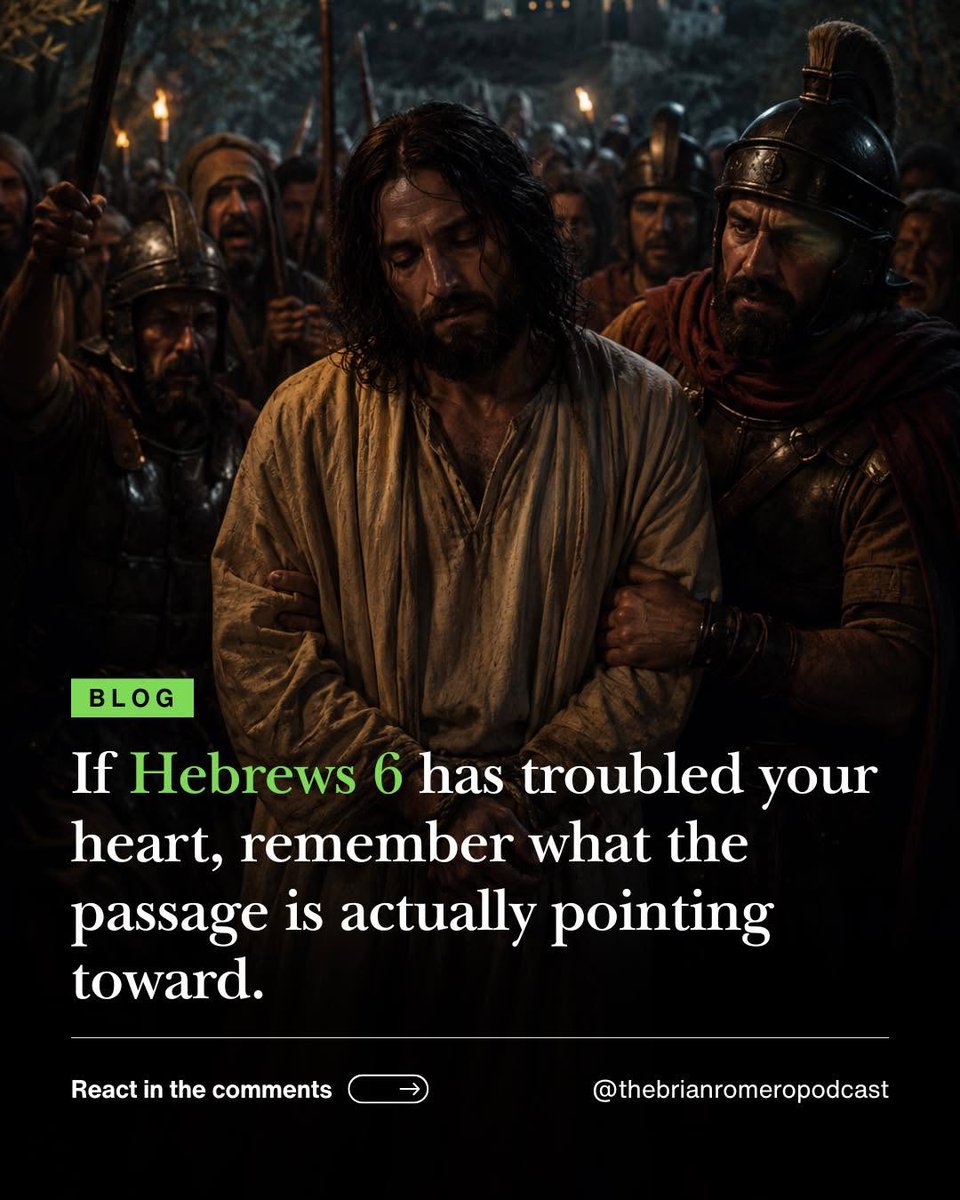
Few passages have created more fear in the hearts of sincere believers than Hebrews 6:4-6. For many, these verses have become a source of anxiety rather than assurance. Some have read them and concluded that one mistake, one season of weakness, or one spiritual failure could somehow remove them from the salvation that Jesus purchased with His own blood. Yet when we slow down, examine the historical setting, and view the passage through the finished work of Christ, a very different picture emerges. Instead of threatening believers, Hebrews is actually revealing the superiority of Jesus and warning people not to reject the only sacrifice capable of saving them.
The book of Hebrews was written to a unique audience. These were Jewish people living during a transitional period in history. For centuries their entire religious life revolved around the temple, priests, sacrifices, ceremonies, and the Law of Moses. Then Jesus came and fulfilled everything those shadows pointed toward. As persecution increased, many were tempted to abandon Christ and return to the old covenant system. The writer’s concern is not a believer accidentally losing salvation. His concern is people turning away from the only Savior and returning to a covenant that could never remove sin in the first place.
Notice the language carefully. The passage describes people who have been enlightened, tasted the heavenly gift, shared in the Holy Spirit, and tasted the goodness of God’s Word and the powers of the age to come. Some immediately assume these descriptions must refer to born-again believers. Yet the text never explicitly says they were justified, made righteous, sealed, born again, or declared children of God. Throughout Scripture people can experience the activity of God without placing genuine faith in Christ. Entire crowds witnessed miracles, tasted God’s goodness, and still rejected Jesus.
The word “tasted” is especially important. In the ancient world, tasting something was not necessarily the same as fully receiving or possessing it. Israel tasted the blessings of God in the wilderness yet many never entered the promised land because of unbelief. Large numbers of people witnessed Jesus heal the sick, cleanse lepers, and raise the dead. They experienced the reality of God’s power firsthand, yet many never entrusted themselves to Him. Exposure is not the same as faith.
The historical backdrop strengthens this understanding. During the first century, Judaism and Christianity existed side by side in many communities. Some individuals stood with one foot in each world. They heard the apostles preach. They saw miracles. They gathered with believers. They understood the claims of Christ. Yet they had not fully embraced Him. The warning addresses those who had been brought right to the doorstep of faith and were now considering walking away from the only sacrifice that could save them.
The phrase “and then have fallen away” must be understood within that context. The issue is not a Christian struggling with sin. The issue is a deliberate rejection of Christ after receiving a profound exposure to the truth about Him. The writer is describing people who are not merely stumbling. They are turning their backs on the Messiah Himself. They are choosing to place their confidence somewhere other than Jesus after having clearly seen who He is.
This becomes even clearer when the passage says they are “crucifying once again the Son of God to their own harm.” The writer is not suggesting that Jesus literally returns to the cross every time someone sins. Rather, he is describing the seriousness of rejecting Christ’s sacrifice. To abandon Jesus and return to animal sacrifices would be to publicly declare that His cross was insufficient. It would be to side with those who originally rejected Him rather than trust in the work He finished.
Think about the logic of the gospel for a moment. If salvation could be lost through failure, weakness, inconsistency, or struggle, then none of us would survive. The same blood that saved us would have to keep being reapplied every time we fell short. Yet the entire message of Hebrews is the opposite. Jesus offered one sacrifice for sins forever. His priesthood is permanent. His covenant is better. His work is complete. The book consistently moves believers toward confidence in Christ, not confidence in themselves. Hebrews 7:25; Hebrews 10:14.
The fear surrounding Hebrews 6 often comes from reading our own struggles into the passage. A believer battling temptation may wonder, “What if this is me?” A Christian emerging from a season of doubt may ask, “Have I fallen away?” Yet the very fact that someone is concerned about returning to Christ demonstrates a heart that has not rejected Him. Those addressed in this warning were not running toward Jesus in repentance. They were moving away from Him in unbelief.
Consider the heart of God revealed throughout Scripture. The Father does not save people by grace and then keep them by fear. He does not adopt sons and daughters only to abandon them when they are weak. The New Covenant is built upon the faithfulness of Jesus, not the consistency of human performance. Our confidence rests in the One who promised never to leave us and who completed the work necessary for our redemption. John 10:28-29.
Even the structure of Hebrews supports this hope. Immediately after delivering this strong warning, the writer turns and says, “Though we speak in this way, yet in your case, beloved, we feel sure of better things, things that belong to salvation.” Hebrews 6:9. Notice that distinction. The warning describes one category, while the writer expresses confidence that his readers possess something that accompanies genuine salvation. His goal is not to convince believers they are lost. His goal is to encourage them to continue trusting Christ.
If Hebrews 6 has troubled your heart, remember what the passage is actually pointing toward. It is not magnifying the power of your failure. It is magnifying the sufficiency of Jesus. The warning exists because there is no other Savior. There is no backup plan. There is no second cross. There is no better sacrifice. The good news is that the One who died for you is enough. His blood is enough. His righteousness is enough. His grace is enough. The answer to Hebrews 6 is not greater fear. The answer is greater confidence in the finished work of Jesus Christ, who remains the same yesterday, today, and forever. Hebrews 13:8.
Kaymarierob #ULTRA-MAGA retweeted

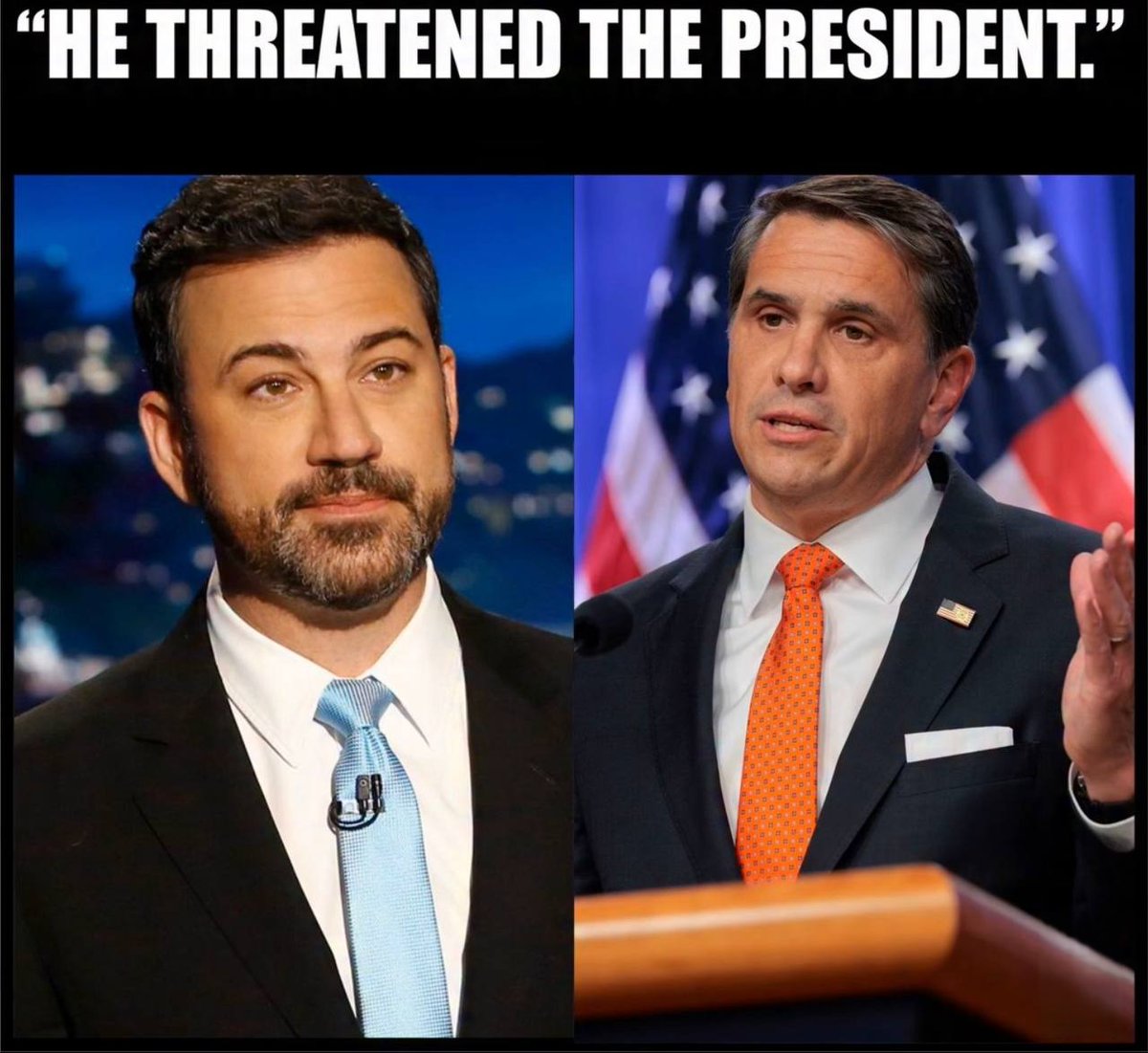
🚨JIMMY KIMMEL THE VIOLENT THREATENING CUNT LOOKED STRAIGHT INTO THE CAMERA AND SAID HE’D “END” PRESIDENT TRUMP QUICKLY IF HE EVER MET HIM ON THE STREET — AND NOW ATTORNEY GENERAL TODD BLANCHE SAYS IT’S A DIRECT THREAT WITH THE SECRET SERVICE ON THE CASE!
🔗 t.me/ Nm1AnsY87kZkM2M0
This isn’t a joke anymore.
Jimmy Kimmel didn’t just make some edgy late-night comment. He stared into the lens and openly declared that if he ran into President Trump on the street, he would “end him quickly and pay the consequences.”
Attorney General Todd Blanche called it exactly what it is: a direct threat against the President of the United States.
Blanche pointed out that Kimmel has significant resources and influence, making it irresponsible for the Justice Department to ignore it. The Secret Service is now taking the lead on the investigation.
These Hollywood clowns have been openly fantasizing about violence against Trump for years, and now one of them finally said the quiet part out loud on national television.
Kimmel thought he could get away with it because he’s “just a comedian.” Nah. Not when you’re openly threatening the Commander in Chief.
This is what happens when the left thinks there are no consequences for their deranged rhetoric.
Share this everywhere and let the world see what these unhinged late-night hosts are really saying!
Follow @mcafeenew for more drops.
2
2
27
HummerGirl Childless Cat Lady for Harris retweeted

Jun 15
BREAKING: The Trump administration is THREATENING anyone that speaks about Eric Trump's attempts to PROFIT off of the UFC fight match.
Be careful!
653
2,998
19,135
423,025

Patrick retweeted

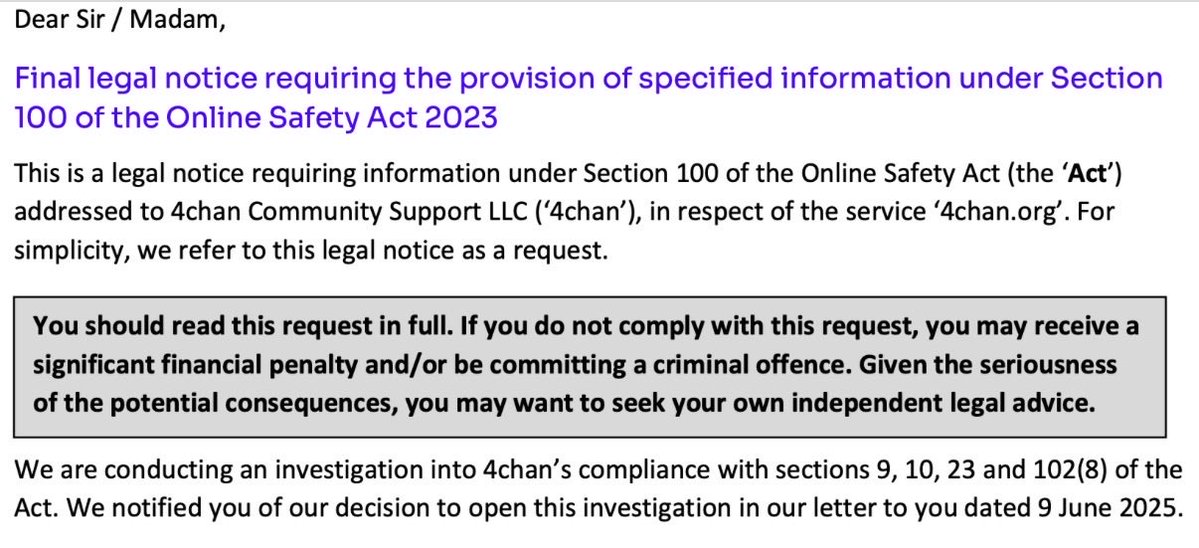
Here’s a letter from Ofcom, the UK’s Internet censor, threatening my American clients with fines and arrest if they refused to censor their site.
Any comment?

"He has no idea about what the law is here... the government is not censoring anything."
Online Safety minister Kanishka Narayan MP responds to Elon Musk's claim of the social media ban for under-16s: "the real goal is to enable the government to track everyone".
#Newsnight
55
443
2,686
94,303
IAM DAVID. retweeted

COINCIDENCE? Spencer Pratt goes scorched earth on Karen Bass and Nithya Raman, threatening to expose something devious about them and the same week, his CAMPAIGN OFFICE is set on FIRE? I don’t believe in coincidences! Expose them all and be safe, @spencerpratt 🙏🏼
3
38
138
1,624

Niggas was on here unironically moving like Hitler and threatening disabled people with violence and they want you to memory hole that and not think they're pieces of shit.

That tourettes shit was actually crazy what the fuck was wrong with all of you
2
Ichoku retweeted

Threatening senator @LindseyGrahamSC and thinking of Firing the secretary of defence , CIA director and state secretary for their opposition to surrender (when they actually almost won the war but we're stopped by @realDonaldTrump )
Is further proof that Trump has something personal to gain from this deal. This is unheard off and will eventually be uncovered .
74
261
1,122
30,925

if u have enough patience after months of continuous unban appeals pretending to be an elon & x fan they usually just unban u. i got this acct unbanned after 2 years for threatening m*n and my other acct unbanned after exploiting free premium which it still has lawlllll
3

It is clear that Strategy being an industry leader has lost a round in the Bitcoin digital credit competition round to Strive. This is a HUGE LOSS and life threatening. But that is business, you must constantly innovate and take bold steps to keep leading the charge. For now, to save STRC and get back to above par, just do what SATA does, it is very simple. Other people have copied you in the past, now it is your turn to COPY AND EXCEED competitions. @saylor @phongle
7
Rhonda Conapitski retweeted

.@JVLast: "This should be obvious but: threatening to wage economic war against any country looking to decouple from your currency creates incentives for countries to decouple from your currency."
Check out more from JVL's Triad today including pictures of K-Pop the cat.
lnk.thebulwark.com/4oxsLDX
lnk.thebulwark.com/4oxsLDX
5
15
3,514

⚠️ WARNING: Life-threatening flash flooding in central LA. 4-8 inches of rain have already fallen, with 1-3 more possible. Reports indicate water is covering highways and underpasses near Bunkie, Glenmora, and Lecompte, LA. Turn around, don't drown! #LAwx
Follow local officia...
32
Mr. B retweeted

If Jeffrey Epstein was threatening to release dirt on Bill Gates then just imagine what he was threatening to do to Trump and other # @@# extremely important people around the World.
7
54
106
1,992
Nay retweeted

19h
all jokes aside kenzie threatening to cut off her connection with corbin bc he wouldn’t kiss her is really weird like wdym…….
215
4,350
54,867
611,107
Susan Loves Cats 🌊🇺🇦🇺🇸 retweeted

“Ooh, a storm is threatening
My very life today
If I don't get some shelter
Ooh yeah, I'm gonna fade away”
Gimme Shelter
The Rolling Stones 1969
5
8
233
5,958