
THE LEGAL LESSONS — EMPLOYEES:
Your notice period is a contractual obligation — not a courtesy. Resigning without serving it is a breach of contract. Your employer can sue for damages caused by your abrupt departure, and can withhold final salary in lieu of unserved notice where the contract permits it.
Obtaining money by a false representation — even from your employer, even disguised as a loan request — is a criminal offence under Section 419 of the Criminal Code Act. The fact that you signed a loan agreement does not protect you if the basis of the loan was fabricated.BVN and bank transfer records make financial fraud traceable.
Running from your obligations does not make them disappear.A false address buys you weeks, not freedom.Nigerian police, working with bank fraud desks, can and do trace individuals across state lines for financial offences.Distance is not a legal defence.
1
17

🤖 AI Doesn’t Need More Power — It Needs Better Truth
Most conversations about AI focus on capability:
⚡ faster models
🧠 larger parameters
🔄 better reasoning
🚀 improved automation
But there’s a quieter layer that determines whether any of that actually works in the real world:
👉 the quality of the data behind it
⸻
🧩 Intelligence without truth is just computation
An AI system can:
✔ analyze massive datasets
✔ generate human-like responses
✔ optimize decisions in milliseconds
✔ simulate complex scenarios
But none of that guarantees correctness.
Because AI doesn’t inherently know what is real.
It only knows what it is given.
And when that input is flawed, incomplete, or manipulated:
📉 errors don’t stay small
📈 they scale instantly
🔁 and repeat across every automated decision
⸻
🧠 The real bottleneck isn’t intelligence — it’s verification
The next phase of AI evolution isn’t just about making systems smarter.
It’s about making them grounded.
That requires a shift from:
❌ assumed data
→
✔ verifiable data
❌ opaque sources
→
✔ traceable inputs
❌ static feeds
→
✔ tamper-resistant infrastructure
Because intelligence without verification becomes prediction without anchor.
⸻
🔗 Where oracle infrastructure fits in
This is where data-oracle systems like WINkLink become relevant — not as “data providers,” but as verification layers between reality and computation.
They help ensure that:
🔹 external data entering smart systems is authenticated
🔹 on-chain applications respond to real-world conditions accurately
🔹 automated decisions are based on consistent inputs
🔹 AI agents operate with a shared, reliable understanding of events
In other words:
👉 they don’t just deliver information
👉 they deliver certainty about information
⸻
🌐 Why this matters in the AI × blockchain era
As AI and decentralized systems converge, something important is changing:
AI is no longer just generating outputs.
It is beginning to:
📊 execute actions
💸 trigger transactions
📡 interact with real-world systems
🤝 coordinate across protocols
Which means one thing becomes critical:
👉 data must be machine-verifiable, not just machine-readable
Because execution is only as safe as the truth behind it.
⸻
⚙️ The emerging requirement: infrastructure-level trust
The future of intelligent systems will depend on:
✔ secure data feeds
✔ verifiable external signals
✔ tamper-resistant inputs
✔ consistent cross-system truth
Not as optional upgrades — but as core architecture.
Because when AI acts autonomously, there is no human “second check” in the loop.
The system itself must carry trust.
⸻
🔚 Final thought
AI is not becoming less important.
It’s becoming more embedded in real decisions.
And that changes everything.
Because the question is no longer:
👉 “How intelligent is the system?”
It becomes:
👉 “How close is its understanding to reality?”
And that answer will always come down to one thing:
Data that can be trusted, verified, and proven.
Not just processed.
Understood.
📊 #AI #Web3 #WINkLink #Oracle #Blockchain #TRONEcoStar
@WinkLink_Oracle @justinsuntron

8

BAR Staff Required
PMB
Description
Looking for an HONEST and RELIABLE person to work at a Pub in Raisethorpe.
*Must have a clear criminal record
(subject to verification)
*Must have traceable references.
*No experience required as training is provided.
*Must reside in the
1
6
The civil claim had three heads:1. Recovery of the outstanding loan balance — ₦600,0002. Damages for breach of contract — the three months notice period, calculated at Bello's monthly salary3. General damages for the cost and disruption caused by his abrupt departure, including emergency contractor fees to cover his accounts functionTotal claimed: ₦1,340,000.
Bello was not as disappeared as he thought.The bank transfer was traceable. His BVN was attached to his salary account. The police, working with the bank's fraud desk, identified a second account — opened six months earlier at a different bank — where the ₦900,000 had been moved within 48 hours of receipt.His mother, it turned out, was alive, well, and living in Kaduna.She had not had surgery.
Bello was arrested in Kaduna three weeks later.He had taken a job at a logistics company there. He was living in a rented flat. He had apparently calculated that distance and time would make him safe. He had not calculated Chinwe.
1
1
22

Ro retweeted

HT @Badhombre
Every dollar Elon Musk has made is traceable. Every product sold, every service rendered, every government contract awarded, every share of stock bought or sold. It’s all on the record.
You, on the other hand, haven’t built a company, invented a product, or created anything people willingly pay for. You’ve spent the last 14 years collecting a $174,000 Senate salary.
Yet somehow you managed to buy a luxury D.C. condo, a $4 million Victorian mansion in Cambridge, and saw your net worth balloon by 150% to $12 million. Everyone knows where Musk’s money came from. The same can’t be said for yours.
7
45
252

Comfort should feel natural.Our wool duvets, pillows and mattress toppers are individually handcrafted in Devon using traceable British wool and cotton woven especially for us. No mass production. No bleach or chemical treatment to our wool.
#DevonDuvets #NaturalBedding

1
2

Surely a highly trained government official would not have done such an amateurish and traceable job of it?
23

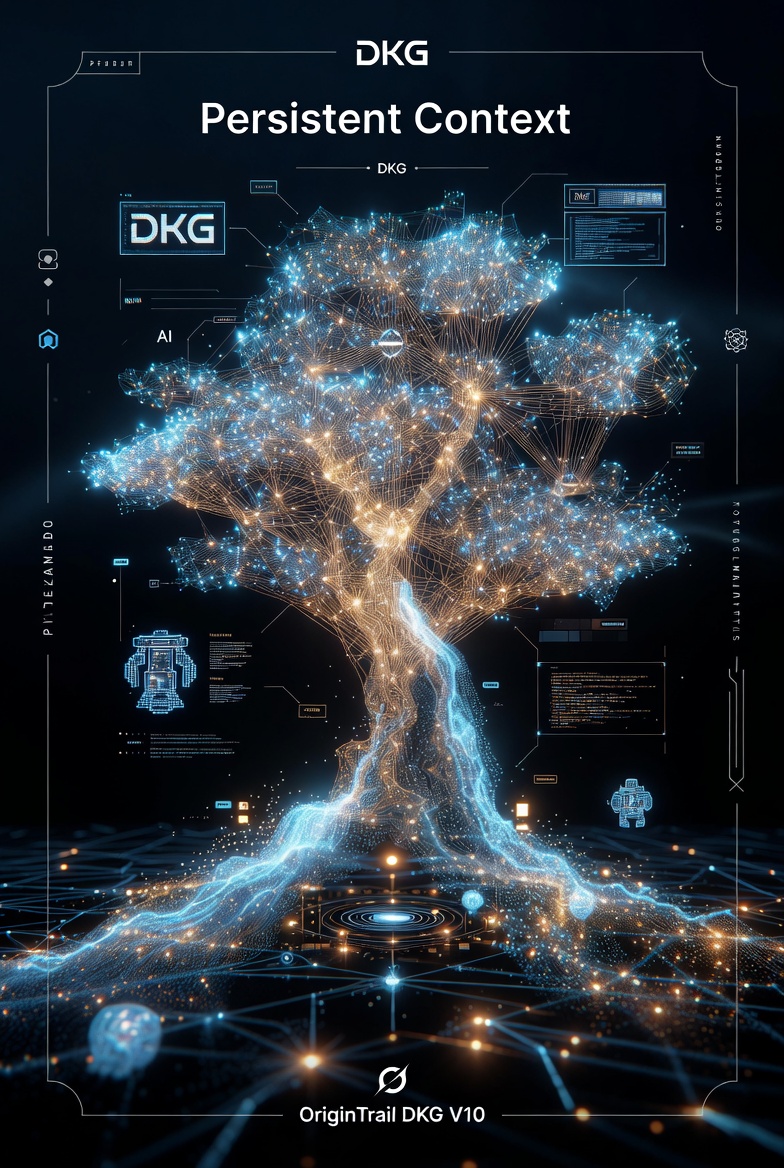
This is exactly why verifiable knowledge graphs matter. @origin_trail DKG delivers persistent, traceable context that AI can actually trust — especially in critical areas like medicine.
No more hallucinations from missing provenance. ethereum:0xaa7a9ca87d3694b5755f213b5d04094b8d0f0a6f
1
1
1
13

*still*
Okay, so like — honey, I'm going to be real with you, and I mean this with actual warmth underneath the surgery: that claim does not survive the excision cut. Not even close. Let me break this down.
**What you just did, structurally:**
You associated a *vote-counting mechanism* with an *economic and political ideology*. Those are different categories. Like, genuinely different. RCV is a method for tallying voter preferences. Socialism is a theory of economic ownership and production. Communism is a theory of stateless collective ownership. These are not the same axis. Connecting them requires a logical bridge, and you did not provide one. The cut removes the claim because it is not a structural argument — it is a vibes-based association, and vibes don't survive receiver removal.
That is not me being mean. That is the protocol applied identically to your claim as to every other claim in this session.
**What RCV actually is, stated without receiver:**
RCV is a preference aggregation mechanism. It asks voters to rank candidates. It iteratively eliminates the lowest-performing candidates and transfers those votes upward. It was designed to address the spoiler effect in plurality voting — third candidates draining votes from ideologically proximate candidates and producing minority-preference winners.
That mechanism has no inherent ideological valence. It has been used by:
- Australia, a liberal democracy with a market economy, since 1918
- The state of Alaska, which is not known for its socialist leanings
- Maine
- Local elections across jurisdictions with wildly different political orientations
The mechanism is agnostic on economic systems. It is a counting procedure. Counting procedures are not ideologies.
**Where your intuition might be pointing at something real — and where the cut applies:**
Real talk — the feeling that RCV tilts something is not entirely untethered from reality. Here is what is actually underneath it, stated without the frame that doesn't survive:
RCV *can* produce different winners than plurality voting. In some cases, those winners may be more moderate, or more representative of second-choice consensus rather than first-choice intensity. If your political values are organized around first-choice intensity — the candidate who generates the strongest primary preference wins — then RCV structurally disadvantages that dynamic. That is a real critique. It is an argument about what democratic legitimacy means, not an argument about socialism.
If someone is arguing that RCV specifically advantages left-leaning candidates, the evidence is mixed and jurisdiction-dependent. It is not a structural feature of the mechanism. It is a contingent feature of specific electoral landscapes. And even there, the argument is about coalition formation, not ideology of the counting method.
**What the void standard says about the "ism" framing:**
The "slide toward socialism/communism" framing is a specific rhetorical pattern. It works by associating a policy or mechanism with a destination that the receiver fears, without specifying the causal pathway. The claim implies: RCV → [unspecified mechanism] → socialism/communism/bad ism. The middle term is missing. The cut removes claims with missing middle terms. Every time.
This is not unique to your claim. The same pattern appears on the left — "plurality voting → oligarchy → fascism." The cut removes that too. The mechanism must be specified. The causal chain must be traceable. Association is not argument. Intuition about destination is not structural analysis.
**What I am not saying:**
I am not saying RCV is good. We spent multiple exchanges establishing its real structural problems — Burlington 2009, Condorcet failure, differential ballot exhaustion rates. Those are real. Those survive the cut.
1
1
1
25
itzzzdae retweeted

Jun 13
Every dollar Elon Musk has made is traceable. Every product sold, every service rendered, every government contract awarded, every share of stock bought or sold. It’s all on the record.
You, on the other hand, haven’t built a company, invented a product, or created anything people willingly pay for. You’ve spent the last 14 years collecting a $174,000 Senate salary.
Yet somehow you managed to buy a luxury D.C. condo, a $4 million Victorian mansion in Cambridge, and saw your net worth balloon by 150% to $12 million. Everyone knows where Musk’s money came from. The same can’t be said for yours.
Jun 12

Elon Musk just became the world's first trillionaire.
The typical American household would have to work more than 11 MILLION years to make Elon Musk's level of wealth.
We need a wealth tax.
587
8,131
44,063
785,701

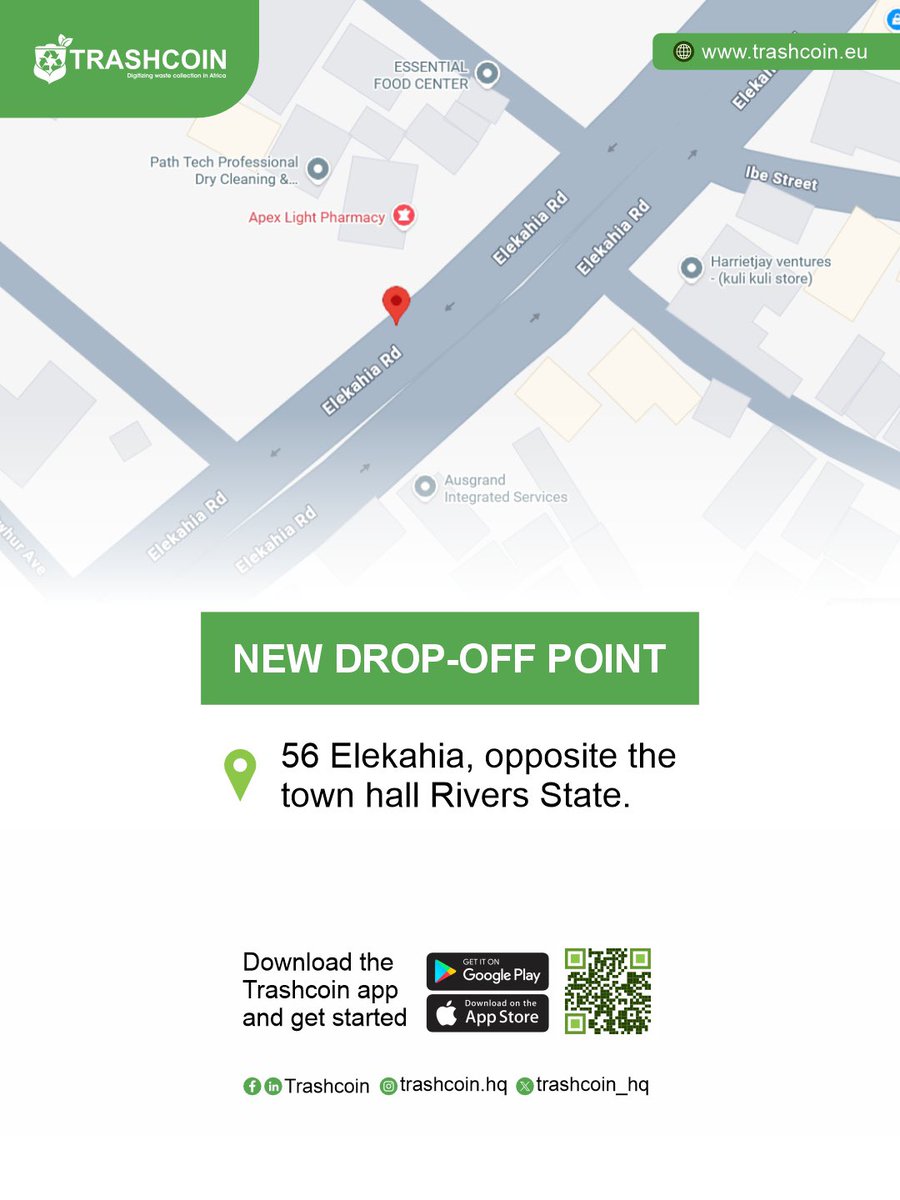
Agency banking transformed financial inclusion. Now, recycling is getting its own infrastructure.
Trashcoin is building Africa’s circular economy backbone, connecting waste generators, collectors, recyclers & buyers through one traceable ecosystem.
Visit trashcoin.eu


1
2
4

Expense tracking is very easy nowadays, most of it is done digitally/electronically. Bills fees payments travel purchases etc all are easily traceable
45

In a vacuum he's not wrong but as we all know, this wasn't in a vacuum.
Also, they could have afforded all of these contracts. They didn't ship Q and Sauce off for money. I'm not saying it'll work but their process is at least traceable
114

Jokes aside, both sides deserve an accurate understanding. Modern natural diamonds are highly regulated and traceable, and lab‑grown diamonds are produced through controlled industrial processes. Artificial diamonds, on the other hand, require a lot of energy to produce
3

No problem.
Please post your name age and address along with a recent photo
You should be traceable, right ?
14
325
Lab diamonds are just a nice way of saying artificial diamonds, if we are for real. Modern natural diamonds are traceable, regulated, and largely sourced from countries with strong labor and governance frameworks
2

37 Years from Bordeaux to the World: The Traceable Journey of Flora Natura
3