
May 30
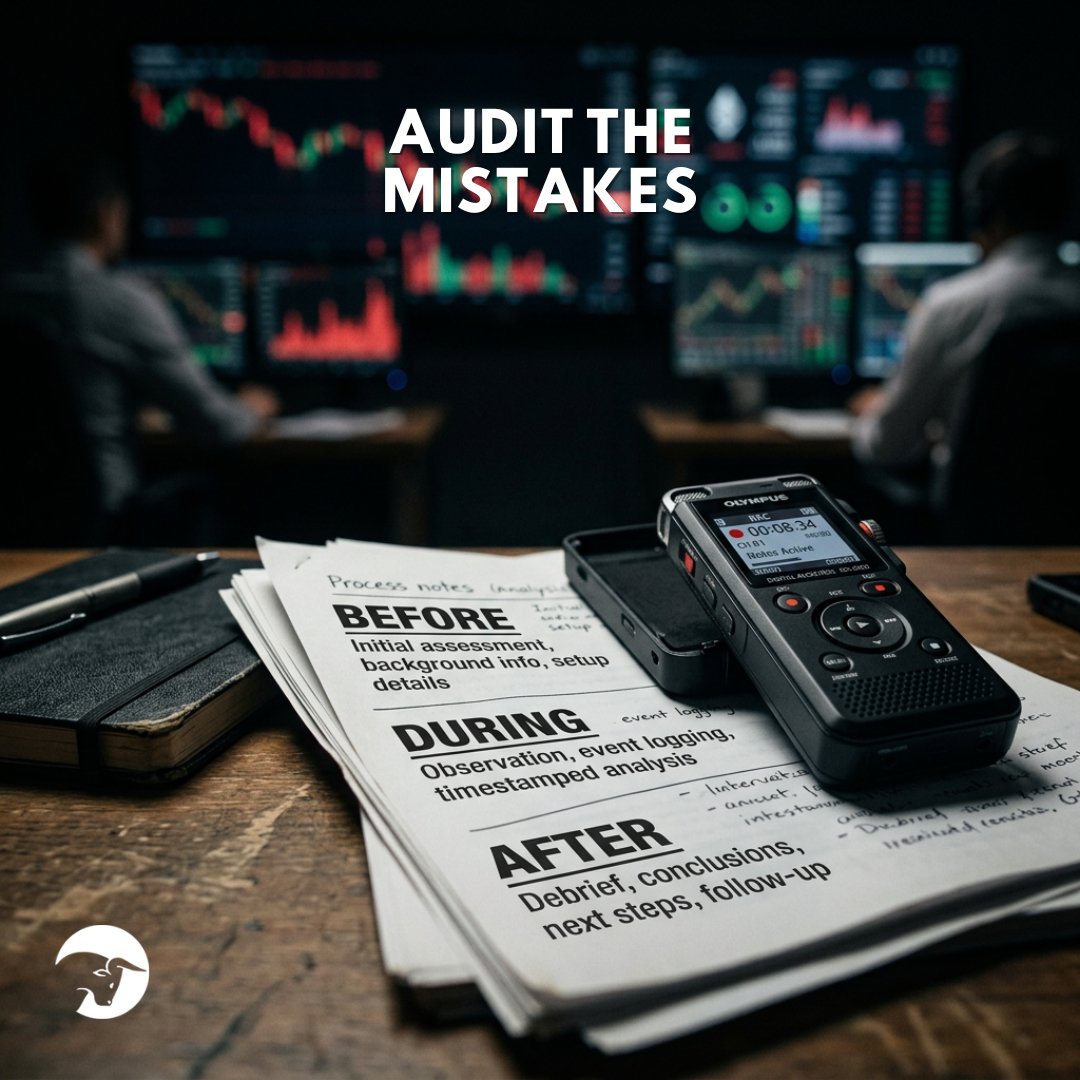
The same mistake repeated three times is not bad luck. It is a pattern asking to be fixed.
Review the process like a black box: what happened before the loss, during it, and after it?
Evolve is back. Secure your seat now: livetraders.com/next-summit
#TradingJournal #TraderPerformance #TradingPsychology #RiskManagement #TradingCoach
1
3
393

MUST READ FOR TRADERS
We don’t see the market as it is.
We see the market as we are.
The market is less like a math problem and more like a Rorschach inkblot test.
Give ten traders the same chart, the same data, the same timeframe....and you’ll get ten different interpretations.
Why?
Because you’re not just reading price.
You’re projecting your internal world onto it.
Consciously and unconsciously, you bring:
• Fear and hope
• Recent wins and painful losses
• Old memories of being wrong (or right)
• Pressure to prove something
• Emotional residue from your life outside trading
Your brain fills in the blanks on the chart.
In a sense, our brain is not designed for trading.
And it's not just psychological, from a neuroscience perspective, trading is almost a perfect stress test for the nervous system:
> Dopamine feedback loops reward impulsive action
>Cortisol spikes narrow perception & shorten time horizons
> Sleep deprivation distorts risk perception
> Fight / flight / freeze activates precisely when calm execution is required
...just a few examples.
So when traders say:
“I know what to do... I just can’t do it consistently"
That’s not simply a discipline problem.
That’s biology meeting uncertainty.
Which leads to the part most traders overlook:
YOU are your edge.
Not your setup.
Not your indicators.
You.
This is where the rubber meets the road.
It's all going to come down to you.
YOU are the operator.
And that’s exactly why skilled coaching matters.
It helps you re-wire how you respond to risk, opportunity, and uncertainty.
✅A skilled coach helps you develop accurate, honest self-awareness. Pointing out your ego and it's own defense mechanisms.
✅And helps you learn to see emotion, which is a natural part of being human, not as the problem, but key information, and learn how to not trade from emotion.
✅And a good coach teaches you how to manage your nervous system. (e.g. HRV biofeedback)
Because without self-awareness you think you’re simply trading price…but in the final analysis, you’re also trading:
• Your last win or loss
• Your need to prove competence/self-worth
• Your fear of being wrong
• Your attachment to P&L as validation
This is where emotional intelligence becomes part of the edge.
Emotional intelligence in trading isn’t about “being calm.”
It’s the ability to recognize when emotion is influencing perception in real time...and still execute in a controlled manner.
Instead of letting your P&L trade you.
That's the work I do as a coach.
Because your trading performance is downstream from:
• Sleep
• Nutrition
• Fitness
• Stress load
• Personal history and family dynamics
• Conscious and subconscious beliefs about money, worth, and safety
Ignore those, and the market will keep reflecting them back to you...through your P&L.
Again and again.
The market doesn’t lie.
But it does reveal.
And until you work with the internal lens you’re trading through, you’ll simply keep staring harder at the chart and making the same 'mistakes'.
If this resonates, BOOKMARK, like, r/t this post. And comeback to re-read it...regularly.
#tradingmindset #traderperformance #tradingpsychology $ES_F $NQ_F $QQQ $SPY
4
31
1,091

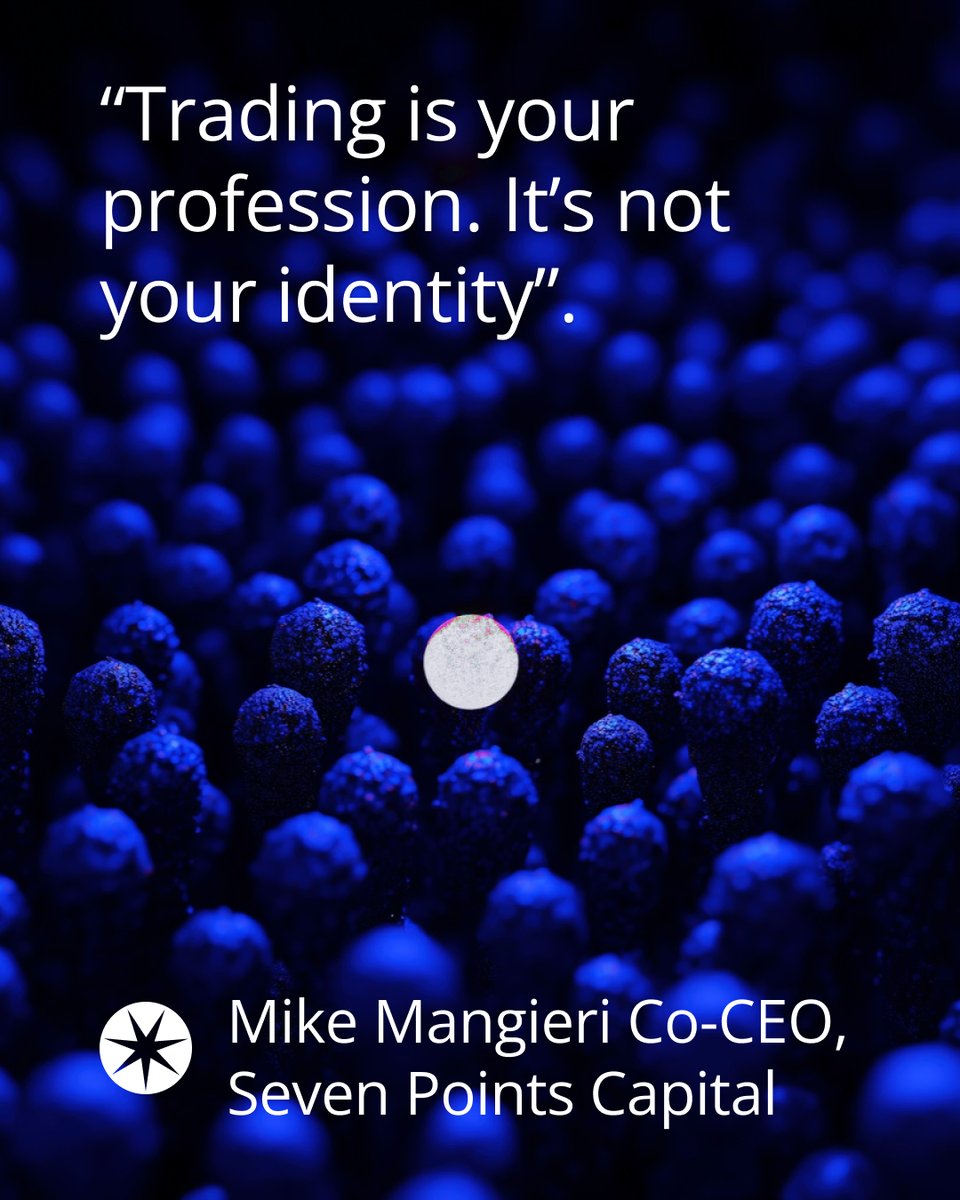
Trading is your profession. It's not your identity. The traders who build a life outside the screens are the ones who last. Breaks aren't optional. Routines build mental toughness — Mike Mangieri.
#TradingPsychology #TradingMindset #PropTrading #TraderPerformance
1
6
586
FEEL FOMO?
Read this...long but worth it 👇
Most traders don’t blow up because they don’t know enough.
They blow up because they can’t tolerate the urge to trade.
Let's unpack the urge and solve the problem.
That urge isn’t a signal. It’s a stress response.
✅And learning not to act on it is one of the most important muscles you’ll ever build as a trader.
Resisting FOMO is strength training.
Every time you:
> Don’t chase
> Don’t impulse-trade
> Don’t override your plan
> Don’t “just take a small position”
You’re doing a rep.
It doesn’t feel good.
It burns.
Your nervous system screams that you’re missing something important.
That discomfort is the workout.
No pain, no gain.
Here’s the part most traders get wrong:
🔴They think good trading feels calm.
🔴They think discipline feels clean.
🔴 They think doing the right thing should feel reassuring.
It doesn’t.
Elite traders feel FOMO just like you, but they've learned to tolerate it and not act on it.
At first, doing the right thing feels like withholding relief.
>You’re denying your brain a dopamine hit.
>You’re saying no to immediate certainty.
>You’re choosing long-term stability over short-term soothing
That’s not weakness. You're training your nervous system.
✅Just like a physical muscle, this one grows through repetition.
One rep doesn’t change your body. One resisted urge doesn’t change your trading.
Day after day.
Set after set.
Urge after urge.
Over time, something shifts:
➡️The urge is still there...but it’s quieter
➡️The space between impulse and action gets wider
➡️You stop needing to prove yourself to the market ➡️Patience becomes embodied, not forced
Here’s the truth most traders don’t want to hear:
🟢You are not “missing trades.” You are training capacity.
The capacity to:
> Stay regulated under pressure
> Trust your process over your emotions
>Let opportunity pass without panicking
>Play the long game instead of the nervous one
That capacity is your edge.
If you can’t tolerate missing out, you can’t be consistent.
If you can’t sit with the urge, you’ll keep paying tuition to the market.
Build the muscle.
The market will always offer another rep.
If this resonates, R/T, BOOKMARK, like, & follow
#tradermindset #traderperformance #tradingpsychology $ES_F $NQ_F $SPY $QQQ
2
5
39
1,162
Here's why your veer form your plan, it's not just a discipline problem:
You think they’re trading the market.
But in reality, something else is happening...
You're trading your own Inner Market.
And when you don’t understand that…
you ignore your plan.
Ignoring your plan is actually an emotional regulation strategy.
Bored > take a trade
Anxious > avoid or exit early
Frustrated > revenge trade
Missed a move > chase
You’re not trading opportunity.
You’re trading for emotional relief.
Here’s the part most traders miss:
Your Inner Market has structure.
It has its own supply & demand:
• Demand for certainty
• Supply of patience
Its own support & resistance:
• Support = self-trust
• Resistance = fear, doubt, shame
Its own volatility:
• Calm, clear, intentional
• Or reactive, urgent, impulsive
When pressure rises, your Inner Market moves fast.
And if you can’t read it in real time…
you’ll use the buy/sell button to manage how you feel.
Your interaction with the market is an attempt to feel better.... instead following your plan, which often feels too uncomfortable.
The edge isn’t just reading price.
It’s reading yourself. In real-time.
Which is difficult to do under pressure
The moment you feel the urge to trade for relief…
you’ve already stepped away from your edge.
And this is why skilled 1:1 coaching works.
The best traders don’t eliminate emotion.
They understand it.
They track it.
They stay present with it.
And because of that…
they realize they don't have to act on it.
You’re not just trading the market.
You’re trading your Inner Market.
Learn its structure.
Or it will trade you.
If this post resonates, follow, like, r/t, BOOKMARK this post.
#tradingmindset #traderperformance #tradingpsychology $ES_F $NQ_F $QQQ $SPY
3
11
43
2,476
Many traders think they’re managing risk.
But in reality, they’re managing their self-worth through P&L.
And that’s where everything starts to break down.
If your process is fused with outcome, then your identity becomes fused with P&L.
• Green day: “I’m good enough”
• Red day: “Something’s wrong with me”
That’s not trading.
That’s emotional exposure disguised as execution.
This is why separating process from outcome is not just a performance concept…
➡️It’s an identity-level intervention.
(Something I do a lot of in my 1:1 coaching)
Because when you don’t separate them, every trade becomes personal.
And when every trade is personal:
You hesitate.
You force.
You override your plan.
You size poorly.
You chase.
You cut winners.
You hold losers.
Not because you lack skill…
…but because you’re trying to regulate how you feel.
You're trying to avoid discomfort.
This is where my concept of the Inner Market comes in.
You’re not just trading what you see on the screen...
You’re also trading an internal landscape with its own:
• Supply (confidence, clarity, capacity)
• Demand (urgency, fear, need to prove)
• Support (self-trust)
• Resistance (doubt, past pain, memory)
And just like any market…
If you don’t understand its structure, you’ll get chopped up.
Now layer in the neurobiology.
Every outcome creates a dopamine response:
• Wins > reward signal > “do that again”
• Losses > threat signal > “avoid this/fix it now”
Over time, this builds a feedback loop:
Outcome → Emotion → Behavior → Outcome
If you’re not aware of it, you stop trading your edge…
…and start trading your emotional state.
On a hot streak:
Dopamine rises
Confidence expands
Risk perception drops
You start to feel invincible.
You loosen discipline, not because you’re careless…
but because your brain is reinforcing the feeling of reward.
In a drawdown:
Dopamine drops
Threat sensitivity rises
Your nervous system tightens
Now you hesitate, avoid valid trades, or press to “make it back.”
That's not trading your strategy.
It's trading your state.
So whether you’re up big or down big…
The real question is:
Can you stay anchored in process without outsourcing your self-worth to P&L?
Because the traders who last…
Aren’t the ones who feel the best.
They’re the ones who can feel everything
without needing to act on it.
They’ve learned to:
• Trade from intention, not emotional reaction
• Stay connected to process under pressure
• Awareness of their Inner Market in real time
You don’t simply trade the market.
You trade your state.
And if your state is being dictated by P&L...
then your P&L is no longer an output.
It’s controlling your inputs.
Separate process from outcome.
Separate self-worth from P&L.
That’s not just discipline.
That’s freedom.
And it’s a real edge.
If this post resonates, follow, like, r/t, BOOKMARK this post.
#tradingmindset #traderperformance #tradingpsychology $ES_F $NQ_F $QQQ $SPY
4
11
78
3,531
Real transformation isn’t quick.
And it’s definitely not easy.
It’s not repeating a better thought.
It’s facing the one you’re trying to avoid.
The fear of not being good enough.
The vulnerability of being wrong.
The shame of losing.
The exposure of being seen by others, and by yourself.
This is the real work:
➡️Deep honesty instead of surface positivity
➡️Self-truth instead of self-protection
➡️Real-time self-awareness in the middle of risk
➡️Allowing discomfort instead of trying to escape it
Not fixing the feeling...but understanding it.
And it's why skilled 1:1 coaching is so effective.
Because every impulsive trade, every deviation from your plan, is an attempt to avoid something internal.
And this is where most traders get stuck.
Because this type of work doesn’t sound as appealing as what gets sold as "transformation" :
> Quick confidence.
> Effortless discipline.
> “Just reprogram your mindset.”
But the truth?
➡️You don’t outperform your self-awareness.
Unrealistic affirmations preserve ego identity.
Because unexamined fear doesn’t disappear, it waits… then resurfaces under pressure.
The market will expose it
Self-awareness disrupts it.
And that’s what actually creates sustainable improvement.
If this resonates, follow, like, r/t, BOOKMARK this post. #tradingmindset #traderperformance #tradingpsychology $ES_F $NQ_F $QQQ $SPY
1
4
34
1,394
Most traders think they’re reading the market.
They’re not.
They’re reading themselves.
And the market has an uncanny, ruthless way of exposing every story you tell yourself....
about your skill, your worth, your discipline, your “edge.”
Under pressure, the truth leaks out.
Not the version of you that journals on the weekend.
Not the affirmations you recite.
The version of you that clicks the button when it matters.
The market doesn’t care about your expectations.
It reveals your patterns.
It shows you:
👉Where you expect to be right → you oversize
👉Where you expect to be wrong → you hesitate
👉Where you expect relief → you force trades
👉Where you expect validation → you abandon process
This is why two traders can have the same strategy…
…and completely different results.
Because one is trading the market.
The other is trading their expectations.
Ego sits right in the middle of all of it.
Trying to protect how you see yourself.
Sometimes that looks like being too aggressive...
“I know this should work.”
Sometimes it looks like playing too small...
“What if I’m wrong again?”
Different behaviors.
Same driver:
protection.
➡️And here’s the uncomfortable truth:
Anyone can have a few good days.
Even a few good weeks.
That’s not the game.
Sustainability is.
And sustainable success requires one thing most traders overlook:
✅Trading from intention...not expectation.
Intention = following your plan, your process, your edge.
Expectation = needing the market to validate you, now.
When you trade from expectation, you distort risk.
You force outcomes.
You overreact.
When you trade from intention, you execute.
Clean.
Repeatable.
Grounded.
But here’s the catch:
You can’t consistently trade from intention
without deep self-awareness.
➡️Because expectations don’t show up as “expectations.”
They show up as urgency.
As conviction.
As “this one feels different.”
The traders who improve are the ones willing to see themselves clearly....especially the parts they’d rather avoid.
That's one of the key factors when a 1:1 coaching client reaches a new level if sustainable success.
Traders stuck in the common boom and bust cycle are held back by an unwilingness to examine:
👉Their need for approval.
👉Their fear of inadequacy.
👉Their quiet belief that “maybe I’m not good enough.”
Because the clearer you see yourself…
…the clearer you see the market.
This is one reason why affirmations or 'positive self-talk' is not nearly enough to create sustainable transformation.
Unexamined fears papered over will always re-surface. That's what trading does.
Ego protects the identity.
Truth improves the trader.
And the market?
It will keep exposing the gap...
between expectation and intention...
until you’re ready to trade from truth.
If this resonates, follow, like, r/t, BOOKMARK this post.
#tradingmindset #traderperformance #tradingpsychology $ES_F $NQ_F $QQQ $SPY
3
7
49
2,779
Most traders think they’re trading the market.
They’re not.
They’re trading two markets at the same time.
The one on the screen…
and the one inside them.
I call the second one your Inner Market.
➡️Your Inner Market has its own:
• Supply and demand
• Support and resistance
• Breakouts and breakdowns
• Momentum and exhaustion
But instead of price… it’s emotion, identity, and nervous system state.
> Fear
> Greed
> Shame
> Relief
> The need to feel competent
> The fear of being wrong
And most traders are completely unaware they’re trading it.
A losing trade doesn’t just feel like a loss of money.
It quietly becomes:
“Maybe I’m not good enough.”
Now the Inner Market starts moving faster.
👉Pressure builds.
👉Self-doubt spikes.
👉Your nervous system wants relief.
So what happens next?
You size up.
You revenge trade.
You cut winners early.
You skip the next good setup.
Not because your strategy changed.
Because your Inner Market just broke support.
This is why risk management is so important.
Good risk management doesn’t just protect capital.
It helps separate your self-worth from your P&L.
When risk is contained, a losing trade is just information.
But when risk is too large, your identity gets pulled into the trade.
➡️Now you’re no longer trading the market.
➡️You’re trading your need to feel okay about yourself.
And that is an impossible market to trade well.
One of the biggest shifts I see with 1:1 coaching clients happens when they begin doing something most traders never learn:
✅Real-time technical analysis of their own Inner Market.
In trading psychology terms, this is real-time emotional awareness.
They learn to notice things like:
“Pressure is building.”
“I’m trying to make this trade work.”
“My size suddenly feels too big.”
“I’m trading to get relief.”
➡️In that moment, awareness becomes the circuit breaker.
Instead of unconsciously acting on the emotion, they can see the Inner Market moving.
And when you can see it…
you’re no longer being run by it.
This is where real consistency begins.
Not because the emotions disappear.
✅But because you stop using the buy/sell button to manage them.
You start trading the market…
instead of trading your self-worth.
If this resonates, follow, like, r/t, BOOKMARK this post.
#tradingmindset #traderperformance #tradingpsychology $ES_F $NQ_F $QQQ $SPY
1
6
52
2,034
A MUST READ FOR TRADERS - long but worth it
One of the hardest things in trading isn’t being right.
It’s consistently doing the right thing.
And that’s not simply a "discipline problem".
It’s neurochemistry psychology working against you.
One example from neuroscience...
Impulsive trades often create bigger dopamine spikes than disciplined ones.
Why?
What neuroscientists call Reward Prediction Error.
Surprise rewards from impulsive behavior produce larger dopamine surges, making the behavior more likely to repeat.
Now layer in variable reinforcement... the same mechanism that makes slot machines addictive.
Most impulse trades lose. But the occasional winner rewires your brain far more powerfully than the losses.
Your ego then seals the deal:
“See? It worked.
➡️No.... it was a reinforced compulsion
Markets are dangerous because:
• Bad process can pay
• Good process can lose
• Feedback is often immediate
Your brain often learns the wrong lesson.
✅The solution is counterintuitive:
✔️Stop celebrating wins.
✔️Start rewarding disciplined execution regardless of outcome
Did you follow your plan, size correctly, respect risk?
That’s the win... regardless of P&L.
Rewiring doesn’t happen once. It happens through repetition.
✅Reward discipline often enough, and the brain begins to crave it.
✅Withhold reward from impulse, and the old habit weakens
Consistency isn’t simply willpower.
It’s training your nervous system to want the right reward.
If this resonates, follow, like, r/t, BOOKMARK this post. And comeback to re-read it...regularly.
#tradingmindset #traderperformance #tradingpsychology $ES_F $NQ_F $QQQ $SPY
1
15
119
5,383
TRUE STORY
Learning To Trust Myself:
I’ve coached some of the best traders in the world... independent and professional, nine-figure, some famous.
And for a long time, that made it harder, not easier, to trust myself in my own trading.
This is my story about self-trust, not from a client...but from my own journey.
When you coach elite traders, you see behind the curtain:
The speed. The conviction. The massive gains. Even though I had decades of experience and success myself…
Part of me always wondered:
👉“Am I really as good as them?”
That voice, subtle, persistent...kept me second-guessing.
It wasn’t about trading knowledge.
It was identity-level:
> “You’re a psychologist, not a killer instinct trader.” >“You’re better at helping others than executing yourself"
➡️Imposter syndrome in disguise
The irony?
The more I helped others develop self-trust, the more I noticed how little of it I had left for myself.
I knew what to do.
I taught what to do.
But I didn’t trust me to do it under pressure.
That’s when I realized:
Self-trust can’t grow without self-acceptance.
As long as I saw myself as “less than” those I coached… I’d always trade with a chip on my shoulder.
Trying to prove something. And sabotaging my edge in the process.
I stopped chasing their style.
And I started honoring my strengths....how I see flow, how I think in patterns, how I use A/VWAP, volume profile, market structure, and multiple timeframes.
I stopped trying to trade like the killers.
And started trading like myself.
That shift changed everything:
My execution became cleaner.
My emotions had room to breathe.
My identity no longer needed validation from performance.
I wasn’t trading to prove anything. I was trading from a place of grounded self-respect.
✅Self-trust isn’t the absence of doubt.
It’s the presence of alignment.
✅You earn it by showing up for yourself.
But you unlock it when you stop needing to be someone else.
To any trader secretly wondering:
“Am I enough?”
Yes, you are.
But only when you stop using others as your mirror. You’ll never trust yourself until you accept who you already are.
If this resonates, R/T, BOOKMARK, like, & follow.
#tradingmindset #traderperformance #tradingpsychology $ES_F $NQ_F $SPY $QQQ
4
43
1,588
Every elite trader will tell you the same thing:
Risk control is everything.
Without it, sustainable profitability is impossible.
That’s 100% true.
But there’s something missing from the way this advice is usually delivered.
➡️Risk control does not happen in a vacuum.
Every time you click buy or sell, you bring your entire nervous system with you.
>Your neurobiology.
>Your psychology.
>Your personal history.
All of it.
Risk decisions are happening inside a living system that includes:
👉Your dopamine feedback loop
👉Your sleep and fatigue level (alters risk perception)
👉Your recent wins and losses
👉Your hopes about this trade
👉Your fear of being wrong
And something even deeper.
🤳Your sense of self.
Because beneath many risk mistakes you’ll often find hidden forces like:
• The need to avoid the shame of failure
• The question: “Do I actually deserve success?”
• Fear of Future Regret (FOFR) — “What if I stop out and price immediately reverses?”
• The urge to make back what was lost so you can feel okay again
In other words:
Risk management is never just technical.
It’s emotional regulation in real time.
This is why the advice traders hear most often…
“Just follow your rules.”
…while well-meaning, rarely solves the problem.
If it were truly that simple, far more traders would succeed.
Most traders already know their rules.
What they struggle with is being able to follow them when emotion spikes.
> When dopamine surges.
> When the nervous system is activated.
> When the market threatens their identity.
In those moments, risk control becomes a psychological skill, not just a procedural one.
And that skill requires something deeper than:
• affirmations
• mindset hacks
• hypnosis
• motivational quotes
What’s often required is deep self-awareness.
And even more importantly:
➡️Deep acceptance of what’s actually driving your behavior. Which is why skilled coaching is so effective.
Because what you resist…
drives your trades.
What you process…
frees you to manage risk clearly.
The best traders don’t just manage positions.
They learn to manage themselves in the moments that matter most.
That’s where real risk control begins.
If this resonates, R/T, BOOKMARK, like, & follow.
#tradingmindset #traderperformance #tradingpsychology $ES_F $NQ_F $SPY $QQQ
3
11
59
3,140
OVERTRADING ISN"T ABOUT GREED:
It’s about emotional relief.
Too many trades.
Too much size.
Too much leverage.
Sometimes it follows losses... an attempt to get it back and feel okay again.
Sometimes it happens while winning... because it never feels like enough.
Same root.
Your self-worth is tangled with your P&L.
👉You’re trading to feel validated.
👉To feel competent.
👉To avoid the deeper fear of shame and inadequacy
Instead of focusing on making money this week, what would happen if you made it a primary process goal to sit with discomfort and NOT trade for emotional relief?
Heres' what most struggling traders don’t realize:
The best traders feel the same emotions - FOMO, fear, urgency, doubt.
They’re not special.
They’re trained.
✅They’ve learned to tolerate the normal emotional load of trading without acting out their emotions.
This is a core part of my 1:1 work with high-achieving clients:
✅Helping them build the capacity to stay with discomfort…so execution isn’t driven by the need for emotional relief.
Make it a primary goal process this week They don’t trade to feel better.
They trade well...despite not feeling better. That’s the real edge.
Instead of focusing on making money this week, make your goal to sit with discomfort and NOT trade for emotional relief.
➡️If you can do that, you'll be pleasantly surprised with your P&L by Friday.
If this resonates, R/T, BOOKMARK, like, & follow.
#tradingmindset #traderperformance #tradingpsychology $ES_F $NQ_F $SPY $QQQ
4
33
1,192
A MUST READ FOR TRADERS - long but worth it
One of the hardest things in trading isn’t being right. It’s consistently doing the right thing.
And that’s not simply a "discipline problem".
It’s neurochemistry psychology working against you.
Impulsive trades often create bigger dopamine spikes than disciplined ones.
Why?
🔴What neuroscientists call Reward Prediction Error.
Surprise rewards from impulsive behavior produce larger dopamine surges, making the behavior more likely to repeat.
Now layer in variable reinforcement... the same mechanism that makes slot machines addictive.
Most impulse trades lose. But the occasional winner rewires your brain far more powerfully than the losses.
Your ego then seals the deal:
“See? It worked.
➡️No.... it was a reinforced compulsion
Markets are dangerous because:
• Bad process can pay
• Good process can lose
• Feedback is immediate
Your brain often learns the wrong lesson.
✅The solution is counterintuitive:
Stop celebrating wins. Start rewarding disciplined execution regardless of outcome
Did you follow your plan, size correctly, respect risk?
That’s the win... regardless of P&L.
Rewiring doesn’t happen once. It happens through repetition.
✅Reward discipline often enough, and the brain begins to crave it.
✅Withhold reward from impulse, and the old habit weakens
Consistency isn’t willpower.
It’s training your nervous system to want the right reward.
If this resonates, follow, like, r/t, BOOKMARK this post. And comeback to re-read it...regularly.
#tradingmindset #traderperformance #tradingpsychology $ES_F $NQ_F $QQQ $SPY
8
43
251
16,239
OVERTRADING ISN"T ABOUT GREED:
It’s about emotional relief.
Too many trades.
Too much size.
Too much leverage.
Sometimes it follows losses... an attempt to get it back and feel okay again.
Sometimes it happens while winning... because it never feels like enough.
Same root.
Your self-worth is tangled with your P&L.
👉You’re trading to feel validated.
👉To feel competent.
👉To avoid the deeper fear of shame and inadequacy
Instead of focusing on making money this week, what would happen if you made it a primary process goal to sit with discomfort and NOT trade for emotional relief?
Heres' what most struggling traders don’t realize:
The best traders feel the same emotions - FOMO, fear, urgency, doubt.
They’re not special.
They’re trained.
✅They’ve learned to tolerate the normal emotional load of trading without acting out their emotions.
This is a core part of my work with high-achieving clients:
✅Helping them build the capacity to stay with discomfort…so execution isn’t driven by the need for emotional relief.
Make it a primary goal process this week
They don’t trade to feel better. They trade well...despite not feeling better. That’s the real edge.
Instead of focusing on making money this week, make your goal to sit with discomfort and NOT trade for emotional relief.
If you can do that, you'll be pleasantly surprised with your P&L by Friday.
If this resonates, R/T, BOOKMARK, like, & follow.
#tradingmindset #traderperformance #tradingpsychology $ES_F $NQ_F $SPY $QQQ
3
8
35
2,301
A key factor among struggling traders:
The inability to recognize and accept that a good decision can result in missing out or losing a pre-defined amount.
That single factor differentiates the successful from the rest.
#tradingmindset #traderperformance #tradingpsychology $ES_F $NQ_F $SPY $QQQ
2
21
709
You don’t trade the market. You trade your nervous system.
Trading exposes who you are under pressure.
That’s why trading feels so challenging.
#tradingmindset #traderperformance #tradingpsychology $ES_F $NQ_F $SPY $QQQ
1
1
21
820
FEEL FOMO? I Read this...long but worth it 👇
Most traders don’t blow up because they don’t know enough.
They blow up because they can’t tolerate the urge to trade.
Let's unpack the urge and solve the problem. ⬇️
That urge isn’t a signal.
It’s a stress response.
✅And learning not to act on it is one of the most important muscles you’ll ever build as a trader.
Resisting FOMO is strength training.
Every time you:
• Don’t chase
• Don’t impulse-trade
• Don’t override your plan
• Don’t “just take a small position”
You’re doing a rep.
It doesn’t feel good.
It burns.
Your nervous system screams that you’re missing something important.
That discomfort is the workout.
No pain, no gain.
Here’s the part most traders get wrong:
🔴They think good trading feels calm.
🔴They think discipline feels clean.
🔴They think doing the right thing should feel reassuring.
It doesn’t.
Elite traders feel FOMO just like you, but they've learned to tolerate it and not act on it.
At first, doing the right thing feels like withholding relief.
>You’re denying your brain a dopamine hit.
>You’re saying no to immediate certainty.
>You’re choosing long-term stability over short-term soothing
That’s not weakness.
You're training your nervous system.
✅Just like a physical muscle, this one grows through repetition.
One rep doesn’t change your body. One resisted urge doesn’t change your trading.
But hundreds do.
Day after day.
Set after set.
Urge after urge.
Over time, something shifts:
• The urge is still there...but it’s quieter
• The space between impulse and action gets wider
• You stop needing to prove yourself to the market
• Patience becomes embodied, not forced
Here’s the truth most traders don’t want to hear:
➡️You are not “missing trades.” You are training capacity.
The capacity to:
> Stay regulated under pressure
> Trust your process over your emotions
>Let opportunity pass without panicking
>Play the long game instead of the nervous one
That capacity is your edge.
If you can’t tolerate missing out, you can’t be consistent.
If you can’t sit with the urge, you’ll keep paying tuition to the market.
Build the muscle. The market will always offer another rep.
If this resonates, R/T, BOOKMARK, like, & follow
#tradingmindset #traderperformance #tradingpsychology $ES_F $NQ_F $SPY $QQQ
2
6
29
1,272
IF YOU FEEL FOMO: Read this...long but worth it 👇
Most traders don’t blow up because they don’t know enough.
They blow up because they can’t tolerate the urge to trade.
Let's unpack the urge and solve the problem. 👇
That urge isn’t a signal.
It’s a stress response.
✅And learning not to act on it is one of the most important muscles you’ll ever build as a trader.
Resisting FOMO is strength training.
Every time you:
• Don’t chase
• Don’t impulse-trade
• Don’t override your plan
• Don’t “just take a small position”
You’re doing a rep.
It doesn’t feel good.
It burns.
Your nervous system screams that you’re missing something important.
That discomfort is the workout.
No pain. No gain.
Here’s the part most traders get wrong:
🔴They think good trading feels calm.
🔴They think discipline feels clean.
🔴They think doing the right thing should feel reassuring.
It doesn’t.
At first, doing the right thing feels like withholding relief.
>You’re denying your brain a dopamine hit.
>You’re saying no to immediate certainty.
>You’re choosing long-term stability over short-term soothing.
That’s not weakness.
That’s training.
✅Just like a physical muscle, this one grows through repetition.
One rep doesn’t change your body.
One resisted urge doesn’t change your trading.
But hundreds do.
Day after day.
Set after set.
Urge after urge.
Over time, something shifts:
• The urge is still there...but it’s quieter
• The space between impulse and action gets wider
• You stop needing to prove yourself to the market
• Patience becomes embodied, not forced
Here’s the truth most traders don’t want to hear:
➡️You are not “missing trades.”
You are training capacity.
➡️The capacity to:
> Stay regulated under pressure
> Trust your process over your emotions
>Let opportunity pass without panicking
>Play the long game instead of the nervous one
That capacity is your edge.
If you can’t tolerate missing out,
you can’t be consistent.
If you can’t sit with the urge,
you’ll keep paying tuition to the market.
Build the muscle.
The market will always offer another rep.
If this resonates, R/T, BOOKMARK, like, & follow
#tradingmindset #traderperformance #tradingpsychology $ES_F $NQ_F $SPY $QQQ
2
4
38
2,295
Many traders approach self-improvement like a mechanic fixing a car.
They assume it's about swapping out parts (habits) using a manual (logic).
But a human being is not a machine.
A human being is a biological feedback loop driven by emotion as much as reason.
#tradingmindset #traderperformance #tradingpsychology $ES_F $NQ_F $SPY $QQQ
2
2
23
1,144