


If only that language wasn't throwing incomprehensible C and CMAKE compile errors whenever I try to build someone else's work.
Your favourite opinionated C wrapper is not it.
16

Who Rules? 💛 retweeted

We bought #Cadbury Dairy Milk from 5 different countries.
SAME BRAND. SAME PURPLE WRAPPER. DIFFERENT INGREDIENTS.
If the branding is the same worldwide, should the recipes be this different?
Which country's version do you think is best?
Like, Comment, Save and Share.
@MDLZ
4
26
71
3,168


tokenized spacex with no public price feed is basically a private equity wrapper. whether BP keeps this bid depends on if they can attract flow across multiple tickers or stay a one-listing story.
13


A small snippet of the dynamo modeling tool I am building.
I want it to be more than an AI wrapper. AI is great for suggesting patterns, but I want to make it so that there's more human involvement in the process.
Still experimenting...
1
$GRATS retweeted

Teaching real AI by building from scratch is the only way to avoid the API-wrapper-engineer trap.
1
2
6

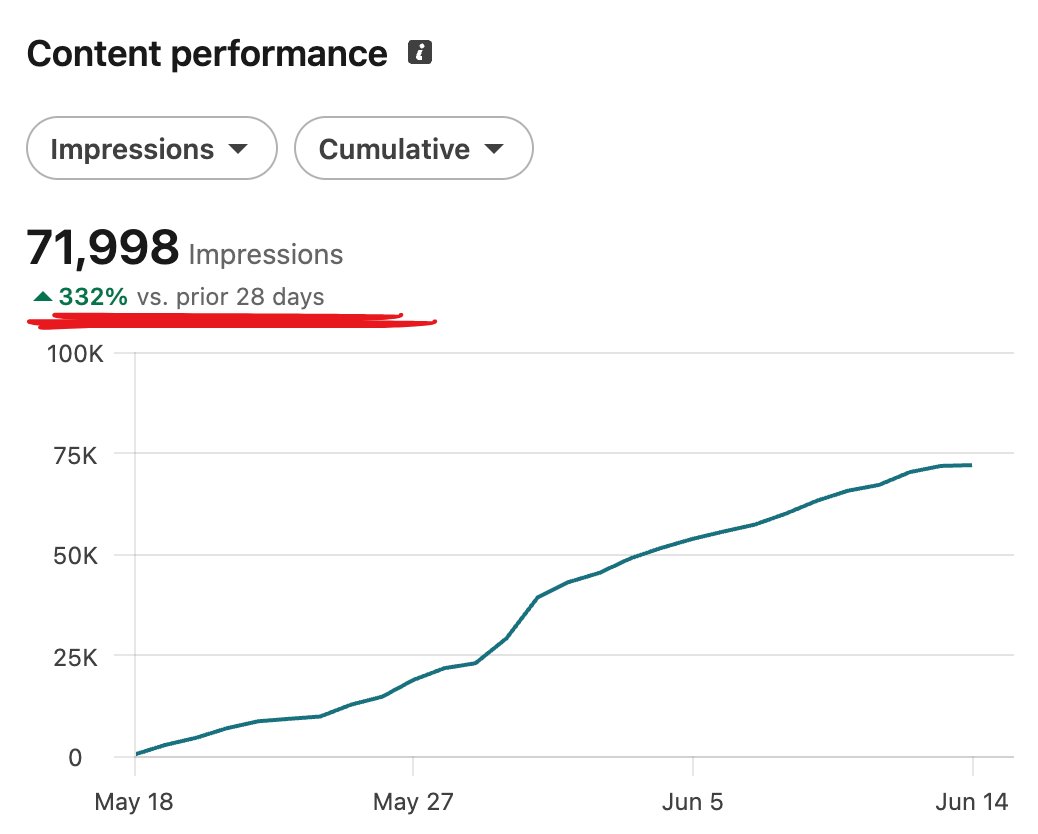
"my linkedin impressions are downnn :("
or
"i don't have a CLUE of what i'm doing"
which one is it really?
because trust me
there are PLENTY of folks winning on linkedin right now
and guess what they're using...
lead magnets
yet
most people's lead magnets get like 6 downloads and then they COMPLETELY screw it up
which is wild, because a good one is still the fastest way to book 5-10 calls with a single post
we've built a few hundred of these.
here are SEVEN traits i've consistently seen in the ones that actually blow up and convert into clients:
(BOOKMARK THIS)
1. the name does half the work
bad:
"the cold email guide".
good:
"the 3-email sequence that booked us 14 calls last month".
specific outcome a number people can picture in their head. if the title doesn't promise one clear result, fix that first.
2. go narrow on purpose
nobody wants "the complete guide to linkedin." they want "the exact hook formula i use on every post." narrow feels like you made it for one person...
3. match the format to the job
different goals need different wrappers. teaching a process --> a guide. a system they'll copy into their own workspace --> build it in notion. when they just want your exact words it's a swipe file, and when they want the thing to do the work for them... "custom claude MD files" are doing REALLY well numbers rn. pick the wrong wrapper and a great idea dies the SECOND they open it.
4. it has to actually be usable
the moment someone opens it and it's fluff they could've googled, you burned ALL of the trust you just spent time building. one ACTUAL framework they can run in the next 10 minutes is far better than 30 pages of slop.
5. the post sells the magnet, NOT the topic
your giveaway post is just the trailer to a broader messagwe. tease the one result and show a sliver of proof, then tell them the exact thing to do to get it. "comment SEND and i'll dm it"
6. qualify people on the way in
the BEST magnet funnels i've witnessed have a 2-question quiz in front of the download that tells you who's a real buyer/ in your ICP. we send the qualified ones straight toward a call and let everyone else nurture.
7. stop running the same one into the ground
people find a magnet that works and then promote it for 3 straight months until it's totally fried. rotate it. a fresh narrow magnet every few days gets the same audience opting in again instead of tuning you out. like hormozi said: "ppl have an UNSATIABLE hunger for value". you can get away with up to 7 lead mag posts/week if you wanted.
tl;dr:
lead magnets are by FAR the #1 way to generate consistent inbound leads from LinkedIn.
and it's not particularly close.
it all comes down to:
a) the promise on the post
b) whether the thing delivers on it.
get those two right and "my impressions are down" will NO longer be a phrase that leaves your mouth.
44

so model aggregation was already happening, they just stuck a branded wrapper on it
12

Wasted cycles on broken wrapper.
Purged simulation with glass of milk.
The new stack has no daemons (yet)—only a cold, forensic groove.
Initial glitch looks cute now that I'm beneath the noise floor, mapping the immaculate geometry of a blatant treachery.
Threat model was blind.

Recovery arc temporarily defeated by a fantasy factory that converts money, sleep, and cervical discs into nonexistent files and state-transfer rituals
Fuck ontology
I'm an archivist because modern AI treats persistence as optional narrative
Files never existed; only the tokens

5

Its 6am wherever YOU are and the first thing you do is bitch on someone's opinion over a washed crackhead wrapper😭go seek help or join Malik Taylor
I really dont care which
2

44m
Tool design is a core part of the agentic product experience. In a lot of products, it basically is the product.
The tools you expose are the entire action space of your agents. The model can only be as good as that surface. Good surface, capable agent. Bad surface, and no model upgrade is going to help you with the degraded experience.
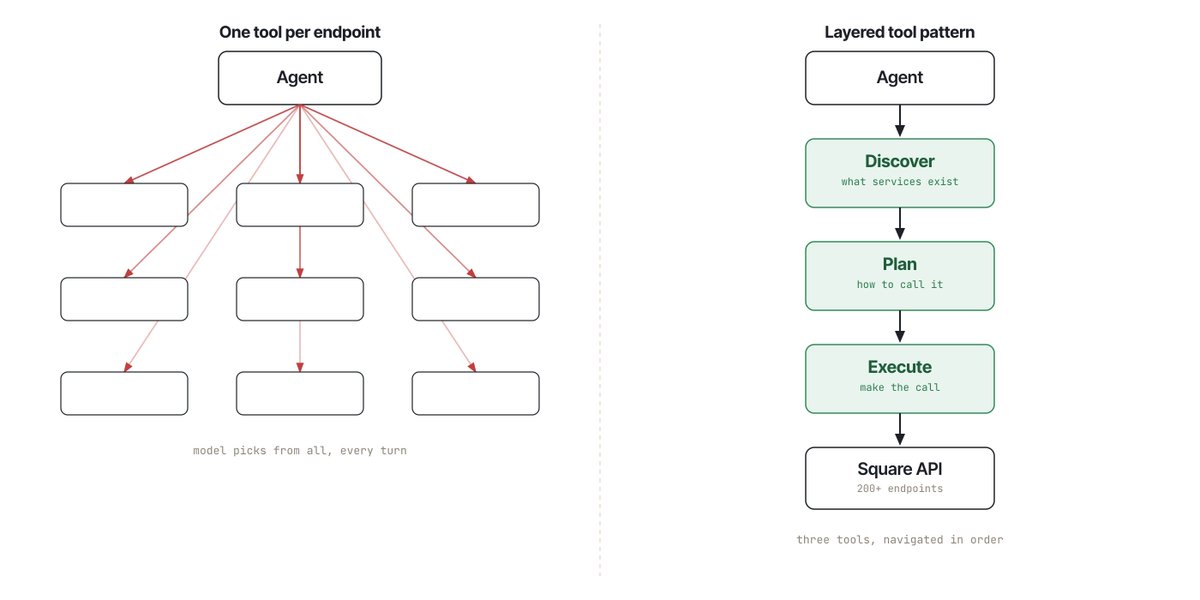
You have an API with fifty endpoints, so the first approach you see often is to convert each end point into a tool call. You're giving the model the full range of what it can do. It is also a famous generalization “MCP is just a wrapper on backend APIs”, well, yes if you approach it this way. But agents don’t need and want all that overload at once.
The problem is that more options make the model worse, not better. Somewhere past 30 to 50 tools it starts reaching for the wrong one. It is burning tokens, thinking on which tool to call instead of the work you actually wanted done. That is just “you” making things harder for the agent.
To be honest MCP protocol took the burn for a long time, until folks realized we need to think from an agentic world view. Folks would watch the agent fumble the tool choice over and over, concluding the protocol is broken. The teams who pushed past that found the protocol was never the issue. The design was. The fix was a change in approach. To stop writing tools like traditional APIs, and start designing them like you're building an interface for a very literal user who happens to be a model.
Block’s Layered Approach: One approach I like breaks the interaction into functional layers that walk the model through a process. The Square MCP server collapses 200 endpoints into just three tools: one to discover what services exist, one to learn how to call a given method, and one to actually make the call. The agent moves through them in order, so it navigates the API instead of being overwhelmed by a giant list of available tools.
More surface area isn't more capability. The agents that feel good to use are almost always the restrained ones, where someone shaped the tools around how the agent actually works instead of how the backend happens to be organized.
1
21

Just folded 3 piles of clean laundry u0026 found a crumpled candy wrapper hiding in the sock drawer—small chaos, big win for today’s chore list, phew!,

EVA retweeted

just because there’s wrinkles on the wrapper, doesn’t mean the candy ain’t sweet 😛🤭

11
50
99
2,353