
Joined January 2022
- Tweets 663
- Following 456
- Followers 129
- Likes 2,579
29 Photos and videos







Tool design is a core part of the agentic product experience. In a lot of products, it basically is the product.
The tools you expose are the entire action space of your agents. The model can only be as good as that surface. Good surface, capable agent. Bad surface, and no model upgrade is going to help you with the degraded experience.
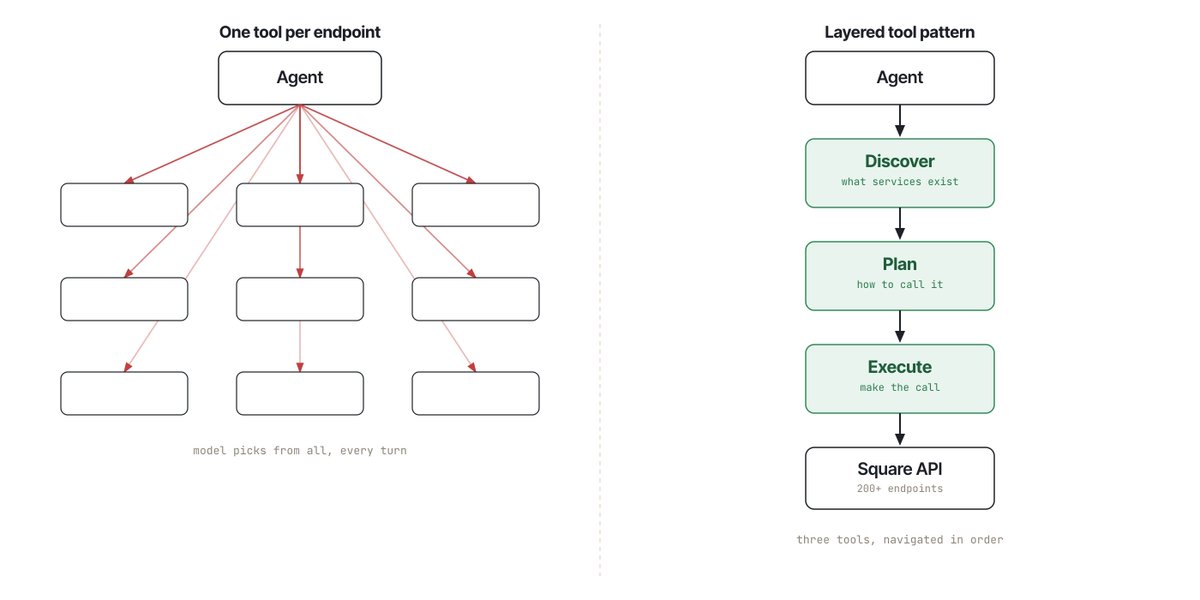
You have an API with fifty endpoints, so the first approach you see often is to convert each end point into a tool call. You're giving the model the full range of what it can do. It is also a famous generalization “MCP is just a wrapper on backend APIs”, well, yes if you approach it this way. But agents don’t need and want all that overload at once.
The problem is that more options make the model worse, not better. Somewhere past 30 to 50 tools it starts reaching for the wrong one. It is burning tokens, thinking on which tool to call instead of the work you actually wanted done. That is just “you” making things harder for the agent.
To be honest MCP protocol took the burn for a long time, until folks realized we need to think from an agentic world view. Folks would watch the agent fumble the tool choice over and over, concluding the protocol is broken. The teams who pushed past that found the protocol was never the issue. The design was. The fix was a change in approach. To stop writing tools like traditional APIs, and start designing them like you're building an interface for a very literal user who happens to be a model.
Block’s Layered Approach: One approach I like breaks the interaction into functional layers that walk the model through a process. The Square MCP server collapses 200 endpoints into just three tools: one to discover what services exist, one to learn how to call a given method, and one to actually make the call. The agent moves through them in order, so it navigates the API instead of being overwhelmed by a giant list of available tools.
More surface area isn't more capability. The agents that feel good to use are almost always the restrained ones, where someone shaped the tools around how the agent actually works instead of how the backend happens to be organized.
1
30
A year ago, I would have thought 7,300 levels in a single year was absurd and unsustainable. A year later, is this sustainable? 🤦♂️
9 Apr 2025

That is a pretty serious single day rebound. Just bouncing off from 200 day moving average or did I miss something?
12

Jun 9
Such constraints are as sad as it gets. Hopefully local and OSS models catchup soon.
Jun 9

First they came for the model builders...
I feel we're getting a glimpse of a future where AI is only provided to a privileged few, and that's not a future I want to live in.
46
Jun 9
Rushing towards an IPO, not a great sign. Signal of no moat by both OpenAI and Anthropic.
28
Parth retweeted

Jun 8
what is agent looping
for the last two years we prompted agents one task at a time. that is starting to change
instead of asking an agent to build the landing page and then driving every step yourself, you set up a loop that handles discovery, planning, the work, checking, and iterating until the goal is met
looping is a setup you build. almost any agent harness can run it, it just depends on how you wire it up
at its simplest, looping is one agent working on itself:
> researches
> drafts
> checks the draft against a goal
> fixes what is weak
> runs that cycle again until the work clears the requirements
you are not prompting each step anymore. the agent repeats the cycle for you
the bigger version is a fleet looping. you give an orchestrator agent a goal, it breaks the goal into pieces, hands each piece to a specialist agent, and those specialists hand smaller jobs to their own subagents
the whole tree keeps looping through discovery, planning, execution, and verification until the goal is met
one agent looping is like a person redoing their own draft. a fleet looping is a whole team running a project end-to-end
you create a goal, and the system runs the loop until it finishes within the reqs you set
open and closed looping:
OPEN LOOPING is exploratory. it still has conditions and a goal, but you give the agent or the fleet a wide space to move in. it can try different paths, discover things, build something you did not fully spec out
this is the exciting end, it is what Peter and others are doing, and tbh it is where I want to spend more time
the catch is cost, an open loop with real room to explore burns an insane amount of tokens. for the 90 percent of people without an unlimited budget it is not runnable yet, and pointed at projects with a loose standard it turns into a slop machine
CLOSED LOOPING is bounded. a human designs the end-to-end path first:
> clear goal
> defined steps
> an eval at each step
> a point where it stops or hands back to you (and feeds back performance data)
the agents still loop, but inside framework you built. it gets better every run because each pass feeds the next, and it runs on a normal budget because the path is tight.
for most marketing work, closed is the one that pays off today.
> the orchestrator owns the goal
> the specialists own the steps
> the subagents do the narrow work
> an eval gate make sure its not slop
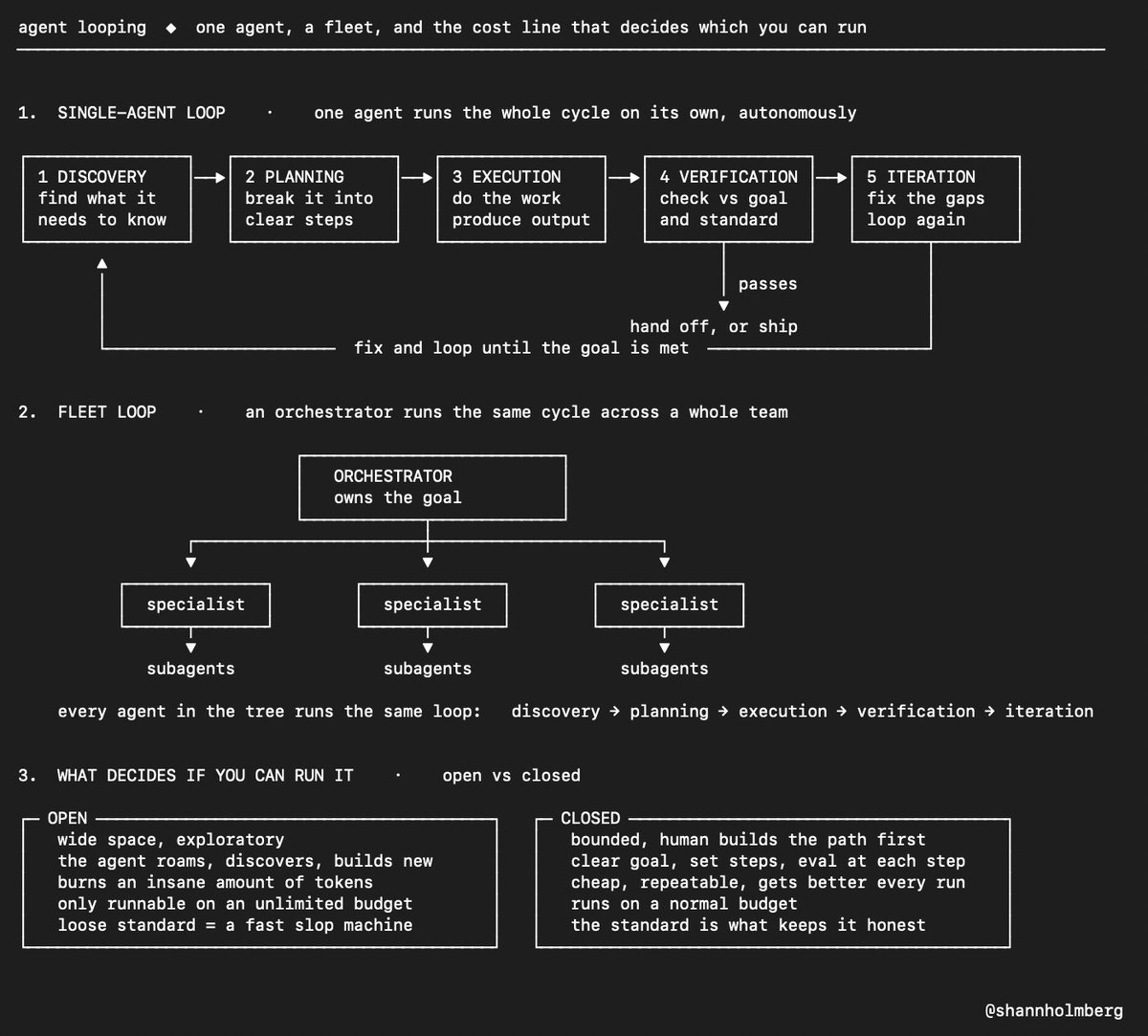
Jun 7

Here’s your monthly reminder that you shouldn’t be prompting coding agents anymore.
You should be designing loops that prompt your agents.
200
695
6,031
737,553
Jun 7
Ever used a chatbot agent and actually found it helpful? Most people still just ask for a human.
The problem isn’t accuracy. It’s trust. And that says a lot about the friction AI adoption will face outside software engineering.
Jun 7

It’s happening. There are about 2.9 million customer service workers in the US.
9
May 22
Go and look up the economic reforms in that window that India went through. You left the context out for convenience ;)
May 22

For those hyperventilating over falling INR:
1991: INR 17.97 to USD.
1996: INR 35.43 to USD.
100% depreciation in 5 years.
21
May 22
100x engineers might not need a CEO or Clickup for that matter.
Tech has transitioned from being most attractive to most depressing careers over last 2-3 years.
May 21

Today we reduced headcount by 22%. The business is the strongest it's ever been. So I think it's important to be direct about what I'm seeing and why.
First, I made this decision and I own it. I did it because the way to operate at the highest level of productivity is changing, and to win the future, ClickUp needs to change with it.
Second, this wasn't about cutting costs. Most savings from this change will flow directly back into the people who stay. We'll be introducing million-dollar salary bands. If you create outsized impact using AI, you'll be paid outside of traditional bands.
Most importantly, I have the deepest gratitude for those affected. We're doing this from a position of strength specifically so we can take care of people properly. Everyone affected receives a package aimed at honoring their contributions and easing the transition.
I only see two options: wait for this to play out gradually in the market or be honest about what I'm seeing and act proactively.
THE 100X ORGANIZATION
The primary change is that we're restructuring around what I call 100x org. The goal is 100x output. The roles required to build at the highest level are fundamentally different than they were a year ago.
Incremental improvements to existing systems won't get us there. We need new ones. That means creating enough disruption to rebuild rather than iterate on what's already broken.
The common narrative is that AI makes everyone more productive. It doesn't. Many of the workflows of today, if left unchanged, create bottlenecks in AI systems.
These roles will evolve. But waiting for that to happen naturally means falling behind now.
The 100x org is actually heavily dependent on people - infinitely more than today. This is only possible with 10x people that have embraced and adopted new ways of working.
THE BUILDERS, AGENT MANAGERS, AND FRONT-LINERS
— THE BUILDERS: 10X ENGINEERS
I don't think most companies have internalized what's actually happening with AI in engineering. The common narrative is that AI makes all engineers more productive. That may be true in isolation, but at an organization level - that is the farthest thing from reality.
Here's what we've validated recently at ClickUp: the great engineers, the ones who can orchestrate, architect, and review, are becoming 100x engineers. They're not writing code. They're directing agents that write code. The skill is judgment.
AI makes the best engineers wildly more productive, and everyone else using AI slows these engineers down.
Think about it - the bottlenecks are (1) orchestration - telling AI what to do, and (2) reviewing - what AI did. Everything is leapfrogged and no longer needed.
So who do you want orchestrating and reviewing code?
And how do you want your best engineers to spend their time?
If your best engineers are spending time reviewing other people's code, then this is inherently an inefficient bottleneck. These engineers can review their agent's code much faster than reviewing human code.
The new world is about enabling your 10x engineers to become 100x.
The wrong strategy is to push every engineer to use infinite tokens. Companies doing this are celebrating 500% more pull requests. But customer outcomes don't match the volume of code being generated.
I call this the great reckoning of AI coding, and every company will face this soon if not already.
More code is just another bottleneck to the best engineers, and ultimately to your company's impact as well.
— THE BUILDERS: 10X PRODUCT MANAGERS
Product management and design roles are merging.
Designers that have customer focus, become more like product managers.
And product managers that have intuition for UX become more like designers.
The bottleneck of user research is gone. It takes us just one mention of an agent to kickoff research and analyze results.
The bottleneck of product <> design iteration is also gone. The product builder iterates on their own, along with agents and skills that ensure alignment with quality and strategy.
Also controversial today - I believe that the wrong strategy is to have your PMs shipping code - that just introduces another bottleneck that the best engineers will waste their time on.
To be clear, PMs should be coding but they should do this in a playground to iterate, validate, and scope. That code should not go to production.
Everything outside of managing systems, orchestrating AI, and reviewing output becomes a bottleneck.
That's why the other roles that are critical along with these are the systems managers (to reduce bottlenecks) along with a bottleneck you can't replace - customer meeting time.
— THE SYSTEM MANAGERS
Ironically, the people that automate their jobs with AI will always have a job. They become owners of the AI systems - agent managers. We have many examples of these people at ClickUp.
The underlying systems in which we operate are absolutely critical to get right. I think most companies are delusional to think they can iterate on existing systems and compete in this new world.
You must create enough disruption so that old systems are deprecated entirely. If there's any definition for 'AI native' that's what it is.
— THE FRONT-LINERS
In a world that will become saturated with AI communication, the human touch will matter more than anything to customers.
This is a bottleneck that you shouldn't replace - even when agents are high enough quality to do video meetings.
One-on-one meeting time with customers is something that shouldn't be automated. The systems around the meetings should be - so that front-liners spend nearly 100% of their time with customers.
REWARDING 100X IMPACT
In a world where companies are able to do so much more with less, where does that excess money go?
In our case, much of the savings in this new operating model will flow directly back to those that enabled it.
We must reward people that create productivity accordingly. This aligns incentives on both sides. Plus, in a world where your best people create 100x impact, you can't afford to lose them.
You should aim to retain these employees for decades. The context they have and their ability to efficiently orchestrate and review will be nearly impossible to replace.
Compensation bands of today should be thrown out the door. We're introducing $1 million cash/year salary bands with a path available to nearly everyone in the company if they produce 100x impact by creating or managing AI systems.
THE FUTURE
Nearly every company will make changes like these. The ones that do it proactively will define what comes next.
The future is not fewer people. It's different work, new roles, and better rewards for those who embrace it. We're already seeing entirely new roles emerge, like Agent Managers, that didn't exist a year ago.
ClickUp is positioning to lead this shift, not just internally, but for our customers too. I've never been more certain about where we're headed.
30
May 22
Trade deficit fuel valued in USD = eroding purchasing power
Not rocket science. India runs on imports and trade happens in USD.
21
Parth retweeted

May 13
Indeed, High Agency without Keen Judgment = Trainwreck
May 13

Small thing to add.
high agency with bad judgement sometimes is worse. Especially in larger orgs, where it takes momentum, and difficult conversations to course correct.
2
6
85
12,702
Apr 16
To assume that it is in the right hands in the first place is a bit rich ;)
Apr 15

"If the technology fell in the wrong hands" => Yes, it will. Every. Single. Time.
35
Parth retweeted

Apr 13
AI actually isn’t moving that fast.
It just feels like it is because you’re watching the surface layer.
It’s not Claude vs ChatGPT.
It’s whether your product creates real business value.
It’s not OpenClaw vs Claude Cowork.
It’s whether AI can actually take actions on behalf of users.
It’s not vector databases vs Postgres.
It’s whether your system gets the right context at the right time.
It’s not which model is “best.”
It’s whether the model is embedded into a workflow people already use.
The biggest mistake people are making right now: Optimizing for demos instead of outcomes.
We’ve had:
- Impressive copilots that no one opens twice
- Agents that work until they hit real-world edge cases
- Dashboards powered by AI that don’t change decisions
Claude isn't killing anything unless we actually trust it to!
8
10
87
7,841

Mar 23
If taking things out of context had an example.

Nvidia CEO Jensen Huang says ‘I think we’ve achieved AGI’ theverge.com/ai-artificial-i…
46
Mar 15
If everyone is replaced then where does the demand come from? Somehow second and third order effects are not accounted for. These projections act like demand doesn’t get impacted at all by these changes.
42

Air Launches as Public Preview – A New Wave of Dev Tooling Built on 26 Years of Experience
blog.jetbrains.com/air/2026/…
1
3
18
1,948
Parth retweeted

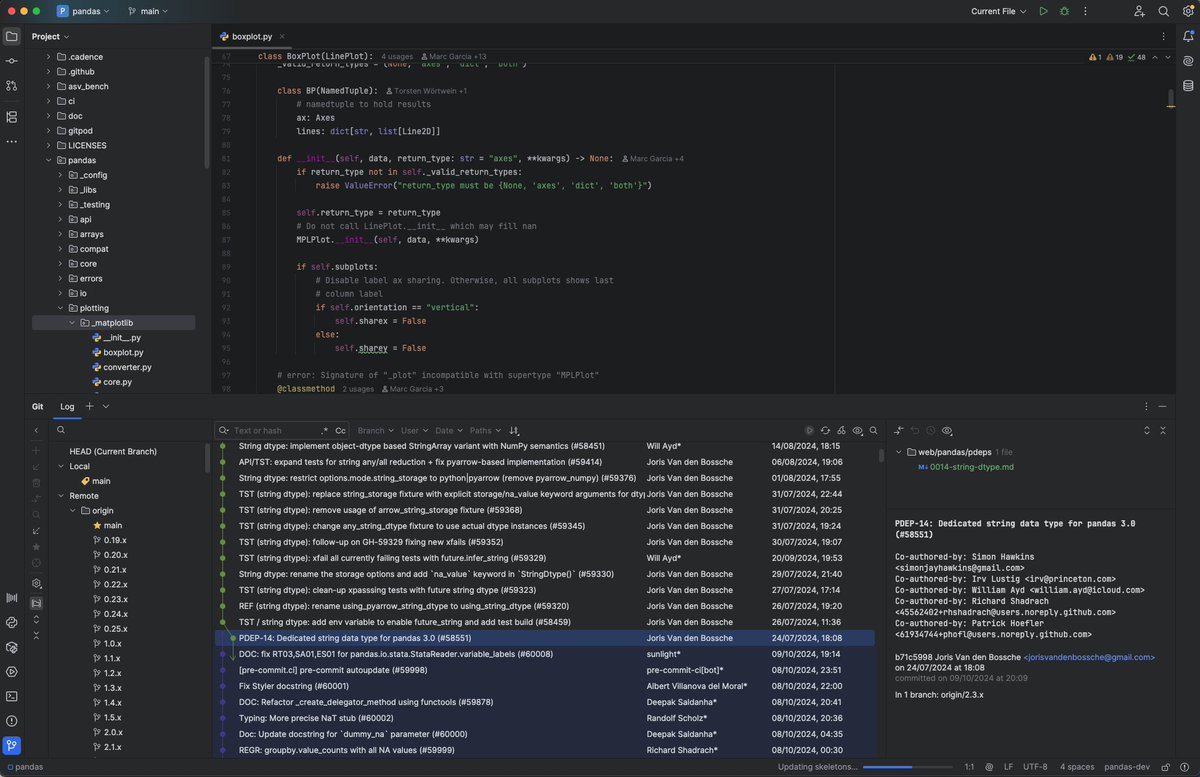
We are launching something new at JetBrains – please meet Air.
It's a new Agentic Dev Environment built for working with agents from different vendors. More cool stuff is coming, stay tuned: @getsome_air
10
10
145
17,338
Parth retweeted

The world, Europe, and Spain have faced this critical moment before. In 2003, a few irresponsible leaders dragged us into an illegal war in the Middle East that brought nothing but insecurity and pain.
Our response then must be our response now:
NO to violations of international law.
NO to the illusion that we can solve the world’s problems with bombs.
NO to repeating the mistakes of the past.
NO TO WAR.
lamoncloa.gob.es/presidente/…
12,678
67,265
293,825
10,368,354