Full-Stack Developer & Architect 🚀 .NET Core, JavaScript (TypeScript), Angular, React, Node.js and Cloud (Azure, AWS)
- Tweets 3,214
- Following 715
- Followers 327
- Likes 1,852












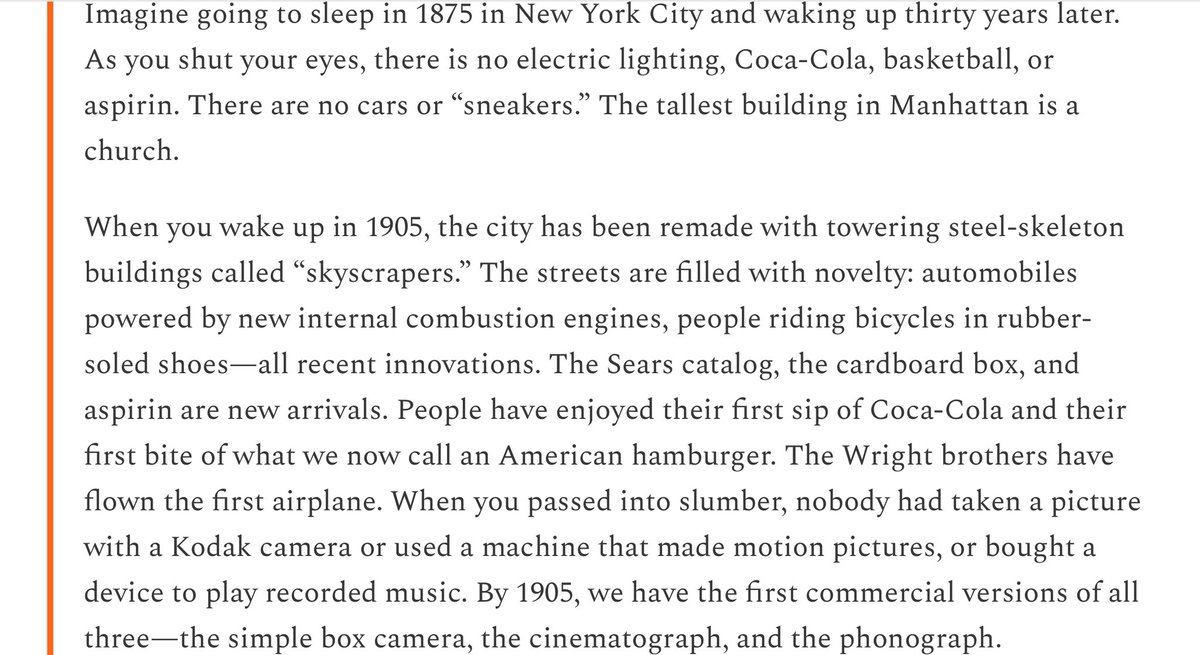
ALT Imagine going to sleep in 1875 in New York City and waking up thirty years later. As you shut your eyes, there is no electric lighting, Coca-Cola, basketball, or aspirin. There are no cars or “sneakers.” The tallest building in Manhattan is a church. When you wake up in 1905, the city has been remade with towering steel-skeleton buildings called “skyscrapers.” The streets are filled with novelty: automobiles powered by new internal combustion engines, people riding bicycles in rubber-soled shoes—all recent innovations. The Sears catalog, the cardboard box, and aspirin are new arrivals… The Wright brothers have flown the first airplane. When you passed into slumber, nobody had taken a picture with a Kodak camera or used a machine that made motion pictures, or bought a device to play recorded music. By 1905, we have the first commercial versions of all three—the simple box camera, the cinematograph, and the phonograph.