
Building @finlenshq | @ycombinator W20 | Villager @orangedaoXYZ
Joined December 2015
- Tweets 1,593
- Following 2,194
- Followers 895
- Likes 3,057
103 Photos and videos













Pinned Tweet

15 Jul 2025
YC teaches every founder to build, measure, learn and pivot fast.
We’ve lived that firsthand.
In YCW20, we were building a crypto neobank. But the deeper we went, the more we realised: the real mess wasn’t in banking, it was in accounting.
🧵
8
11
35
4,202
Md Halim retweeted

May 30
I made the finals at OpenAI Hackathon.
Built Agentic OS for a Phone. Solo.
The way we use mobile devices is going to change forever.
Please support with your vote.
May 30

🤳 Agentic OS for a Phone
A voice-first mobile OS. Users talk, agents answer, and they can take action across the phone.
cerebralvalley.ai/e/openai-v…
20
10
153
20,692
Md Halim retweeted

We're hiring full-stack and f-e engineers.
DM.
Apr 24

OpenWork (@getopenwork) is the open source alternative to Claude Cowork.
Roll out AI compliantly across your non-technical org at scale. Use your existing agents, deploy on-prem, and use any LLM provider you want.
They already have 14k stars on GitHub with over 150k downloads.
Congrats on the launch, @benjaminshafii!
ycombinator.com/launches/Q3p…
68
11
514
44,190
Md Halim retweeted

Apr 20
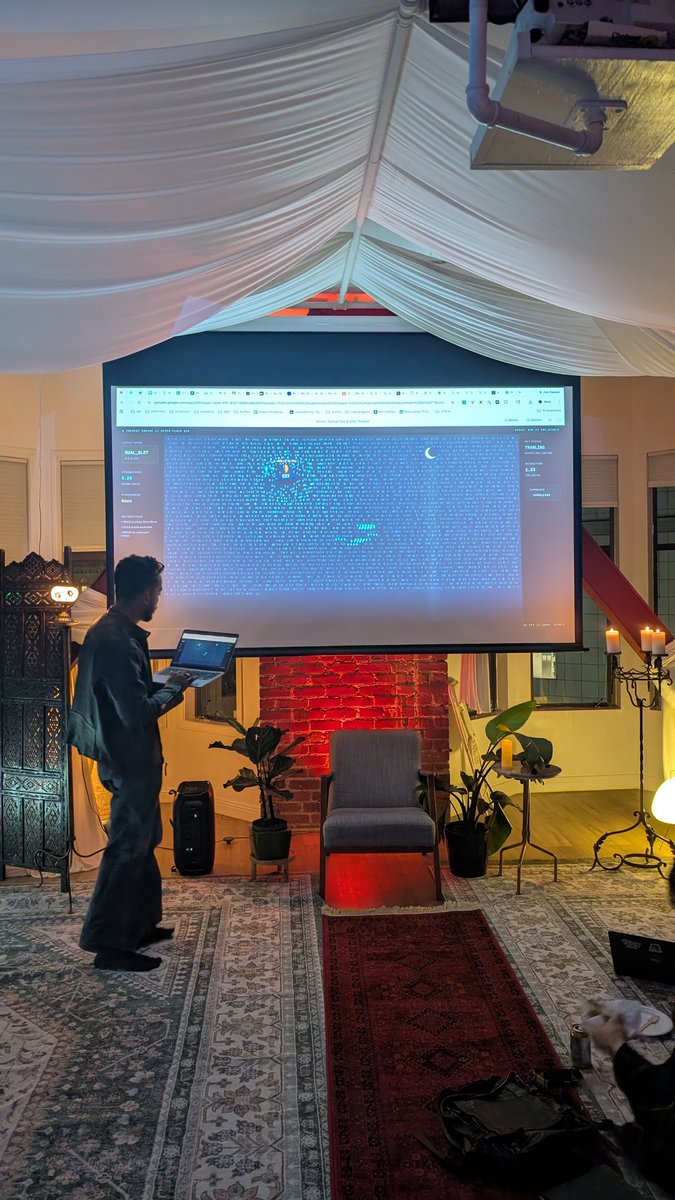
First on the block is @haliminfinity with his sea of text, using the cursor as a sailing boat. he even added fish running away from the boat
1
1
5
203
Md Halim retweeted

Apr 14
Every time you switch between design and code, you lose something, your momentum, your fidelity, or your vision. The gap between what you designed and what ships has always been the cost of building.
That’s why we built Wonder, a design tool where everything you create is backed by real code.
Public Alpha is now live at wonder.design
170
145
1,660
1,271,982
Md Halim retweeted
Apr 3
Introducing Liam.
An agent I made for myself to take care of all my annoying email tasks.
Writes drafts in my voice, declutters my inbox, and schedules meetings for me.
All within Gmail.
One click install. Free to use.
30
16
172
29,572
Md Halim retweeted

Mar 21
Web 1.0 came with new channels:
- email, search, link sharing, etc
Web 2.0 too:
- feeds, creators, viral invites, etc
Mobile:
- app stores, SMS invites, vertical vid, mobile ads
What about AI? I’ve been complaining that AI hasn’t come with much. But we’re seeing a big growth channel opening now: Products that are built as APIs/CLIs that can be pulled into new projects by Codex/Claude on the fly
Maybe the “AI-native hotel app” doesn’t mean a mobile booking app with an AI chat panel. It means a CLI that can book a hotel for you, that an AI agent can pull into a bespoke answer or project or into code. Bolting on an AI chat panel is this generation’s weak form of AI. Maybe the full reinvention involves making it agent-first not human-first
and once you start looking at it that way, a lot of existing products suddenly feel mis-specified. they’re built as destinations, but agents don’t want destinations. they want capabilities. composable, callable, reliable capabilities.
So instead of “go to Expedia” or “open the app,” the future interaction is more like: an agent assembles a workflow on the fly. it pulls a flight search tool, a hotel booking tool, maybe a weather model, maybe even your personal preference graph. none of these are full products in the traditional sense. they’re more like endpoints with taste and state.
This flips distribution completely. historically you win by owning the surface area. seo, app store ranking, homepage traffic. in an agent world, you win by being the default callable primitive. the thing that shows up again and again in agent-generated plans because it works, has clean interfaces, and returns structured outputs. distribution shifts from “top of funnel” to “top of call stack.”
And the crazy part is this might actually compress product surface area dramatically. the best products might look more like tight, extremely well-designed CLIs with opinionated defaults rather than sprawling UIs. almost like the stripe api moment, but for everything. imagine if every vertical had a “stripe-level” primitive that agents preferentially use.
there’s also a weird inversion of brand here. humans used to choose brands. now agents will. so the brand becomes partially machine-legible. reliability, latency, error rates, schema clarity. you can almost imagine “agent seo” where the ranking factors are things like success rate across thousands of agent runs, or how easy your tool is to integrate in a chain-of-thought execution loop.
This also suggests a new kind of moat. not just data or network effects, but integration depth with agent ecosystems. if claude or codex or openclaw learns that your tool is the safest way to accomplish X, it gets baked into prompts, templates, maybe even fine-tunes. you become a default. and defaults, historically, are insanely sticky.
The contrarian take is that most current “AI features” are a local maximum. chat panels, copilots, assistants. they’re transitional. the real end state might look closer to invisible infrastructure that agents orchestrate. the ui is just a debug layer for humans to peek into what the agents are doing.
so maybe the new growth channels for ai look like:
- being callable
- being composable
- being reliable at scale in agent loops
- being embedded in agent templates and workflows
- being the default primitive in a given domain
and if that’s right, then the question for any new product isn’t “what’s the ui” or even “what’s the killer feature.” it’s “what’s the minimal, highest-leverage capability we can expose such that agents will repeatedly choose us when building something new.”
129
87
826
212,999
Md Halim retweeted

Mar 19
After YC, Airbnb raised $615k at a $3M post-money valuation. We were the highest valuation in our batch.
Mar 19

the default yc round this batch (W26) seems like 4m on 40m
I remember when I first started in venture exactly three years ago (W23 batch) and most venture ppl were complaining about YC pushing their founders to do 2m on 20m
in 3 years the market went from a very begrudging 2 on 20 to a more neutral 4 on 40
interesting to think about where things land 3 years from here
161
130
2,702
536,784

Feb 15
“0-1 is a test of emotional endurance”
Feb 14

0 to 1 is the least teachable and least repeatable stage of startups
you cant formula your way to fit
its messy its emotional and often its more art than pattern
everyone wants a framework for pmf
but fit is what happens when you accidentally collide with genuine demand
you cant preplan an accident
only run enough experiments to increase your odds
in that stage progress feels meaningless until it suddenly feels obvious
one day youre guessing
the next day youre chasing inbound requests you didnt create
the shift is instant and irreversible
what you can control is speed
how fast you iterate how honest you are about dead ends how willing you are to walk away from sunk costs
most founders fail not because theyre wrong but because they stay wrong for too long
0 to 1 isnt a science but an emotional endurance test disguised as market discovery
the formula is to survive long enough for luck to look like strategy
2
204
Md Halim retweeted

2 Sep 2025
— Dostoevsky, The Possessed

15
681
5,743
232,528
Feb 11
the barbell strategy, putting your resources at two extremes instead of the middle. it hits
Feb 11

i spent $1m on creators to grow prosumer and saas products
the creator-led growth playbook is split into 2 strategies:
1. quality
work with established influencers.
they already have an audience that trusts them, so you piggyback on the trust they’ve built over time.
ofc, deals are more expensive.
2. quantity
build a ugc farm.
this strategy is focused on volume.
work with smaller creators.
they create a fresh account and ship 2 pieces of content per day.
hire 10 creators and you’ll get 600 pieces of content per month.
here you can be a bit more aggressive with the content, the goal is to iterate quickly on hooks and angles.
often founders ask me: which strategy should we focus on?
the answer is both.
one builds trust.
the other drives volume and exploration.
2
4
168
Md Halim retweeted

Feb 11
i spent $1m on creators to grow prosumer and saas products
the creator-led growth playbook is split into 2 strategies:
1. quality
work with established influencers.
they already have an audience that trusts them, so you piggyback on the trust they’ve built over time.
ofc, deals are more expensive.
2. quantity
build a ugc farm.
this strategy is focused on volume.
work with smaller creators.
they create a fresh account and ship 2 pieces of content per day.
hire 10 creators and you’ll get 600 pieces of content per month.
here you can be a bit more aggressive with the content, the goal is to iterate quickly on hooks and angles.
often founders ask me: which strategy should we focus on?
the answer is both.
one builds trust.
the other drives volume and exploration.
21
4
36
2,790
Feb 7
being challenged by hard material is not evidence that you are not meant for it.
it is evidence that you have arrived at the edge of growth.
48
Md Halim retweeted
1
1
6
775
Feb 1
I once wrote in my college diary:
“Can there be 100 million non-technical jobs where people in low-income countries reliably earn $1,000/month?”
I was framing it as a jobs problem.
I now realise it’s actually an infrastructure problem.
The next wave of work won’t come from:
•creators
•coders
•freelancers
It will come from something far less glamorous —
operators inside software-defined workflows.
Every modern company already runs on a massive hidden layer of work:
•onboarding
•data cleanup
•reconciliation
•exception handling
•QA
•customer lifecycle operations
•finance & revenue ops
AI doesn’t remove this layer.
It forces it to become structured, auditable and human-in-the-loop.
The real bottleneck isn’t skills.
It’s trust.
“How do I safely let a remote human touch a live production workflow?”
If we can turn messy operational work into:
•modular tasks
•clear playbooks
•monitored workflows
•human AI loops
…then you don’t create jobs.
You create human infrastructure for the digital economy.
That’s where the next 100 million non-technical roles will come from.
1
81
Jan 25
if you switch your morning coffee for green tea, you lose 87% of whatever joy you’ve left in your life
1
78
Jan 21
A friend said “Thank you” to ChatGPT after a voice conversation.
I was like you didn’t have to say Thank you to an AI.
His response - “Well, we’ll see after a few years”
He thinks when AGI takes over, they’re gonna remember who were nice to them 😂
71
Jan 19
As a founder, there’s a moment when the dashboard stops being a tool and starts being a mirror.
You see exactly where the money is leaking before anyone else does. That shift changes how you sleep.
64
Jan 14
Hey @grok
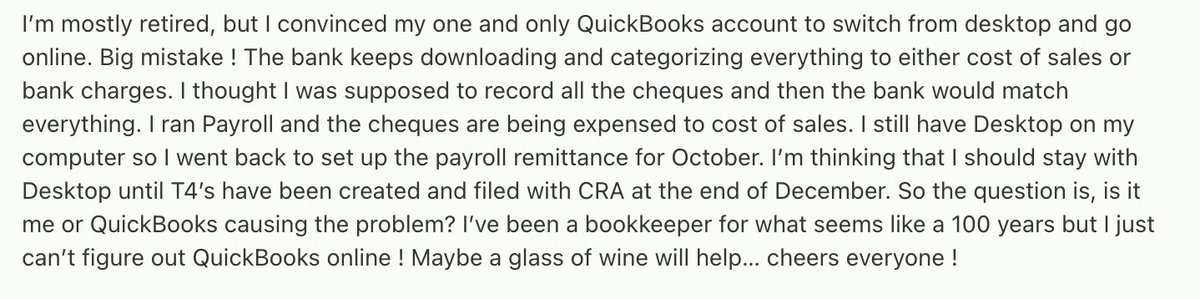
Curious, why do so many accountants keep using QuickBooks, despite not actually enjoying it?
1
73