
Writing a book about the value of print for St. Martin’s Press. Rep’d by Mark Gottlieb, Trident Media Group.
Joined November 2009
- Tweets 2,479
- Following 2,081
- Followers 2,867
- Likes 15,581
273 Photos and videos


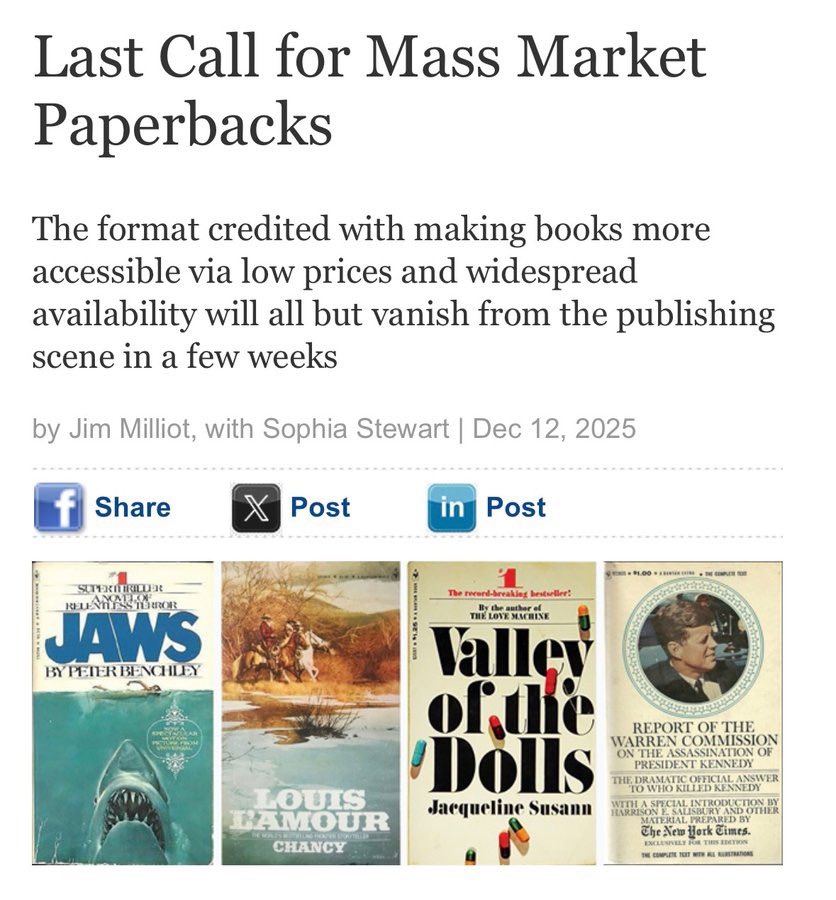
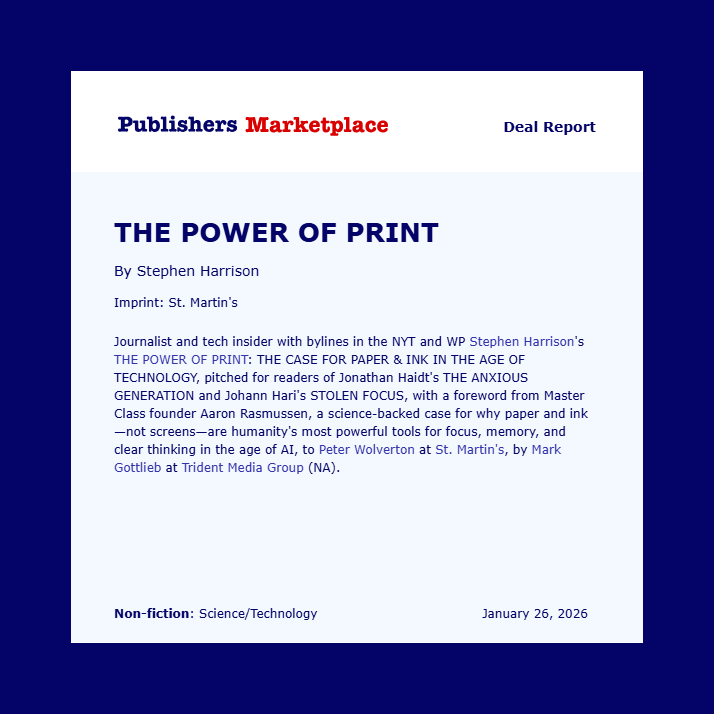
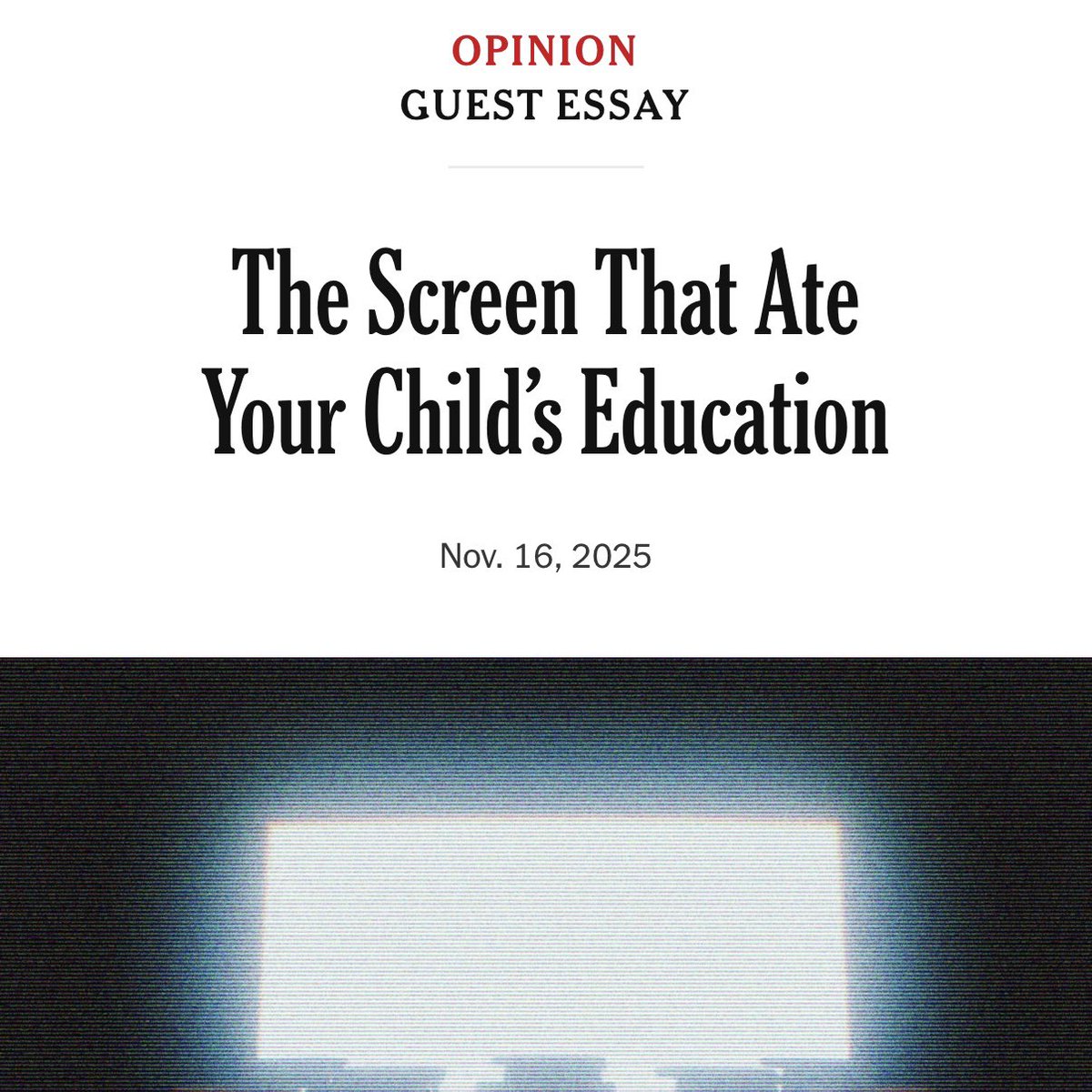
Pinned Tweet

10 Dec 2025
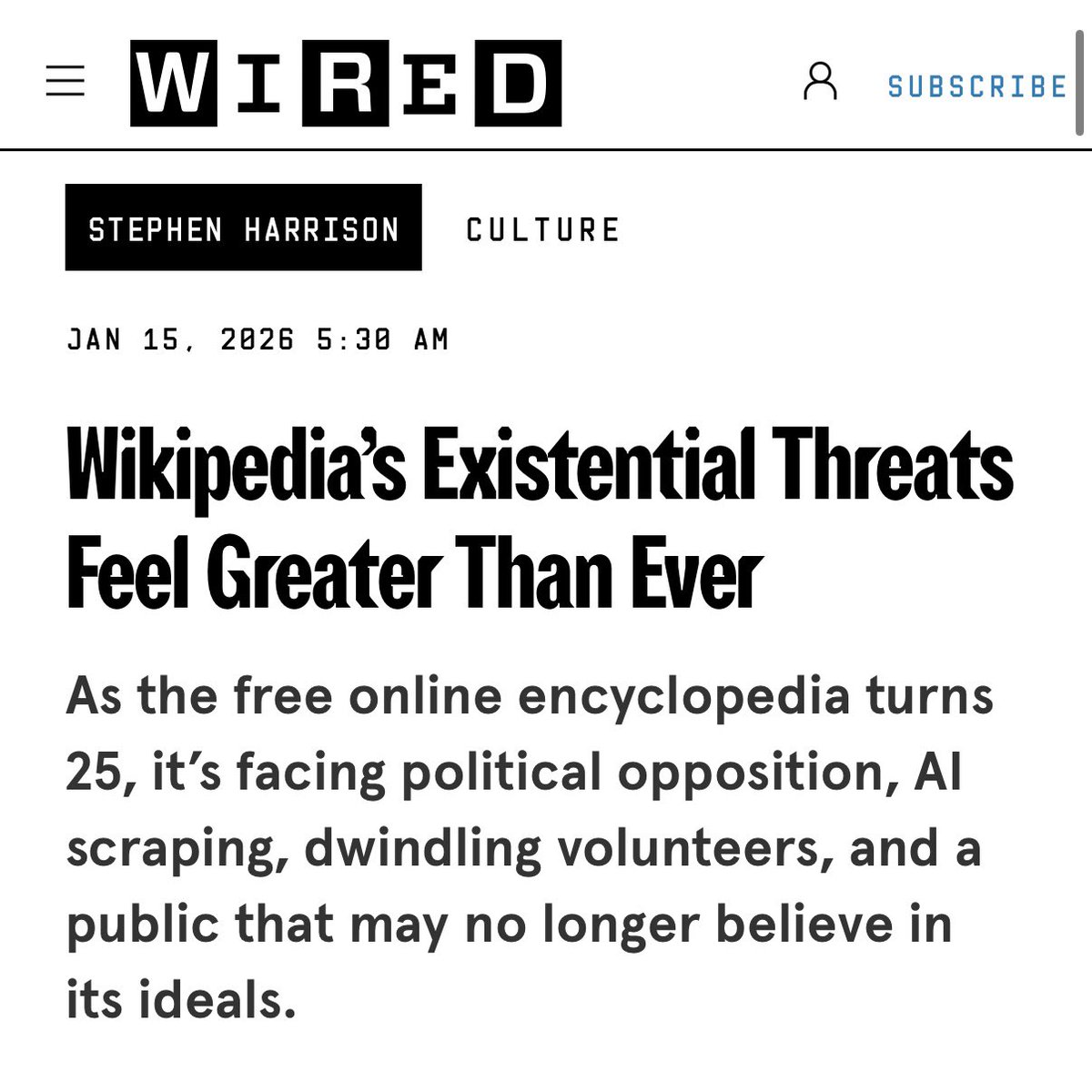
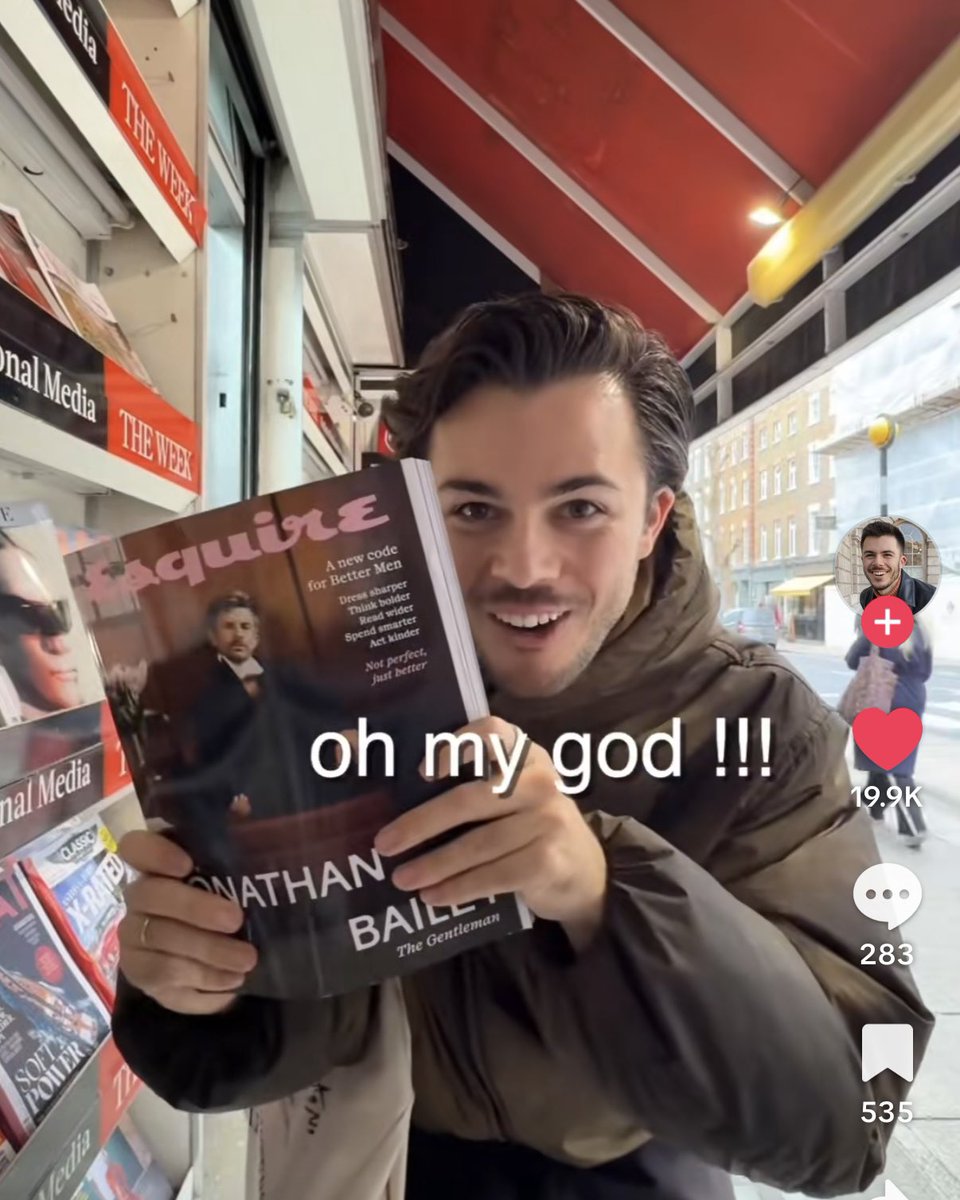
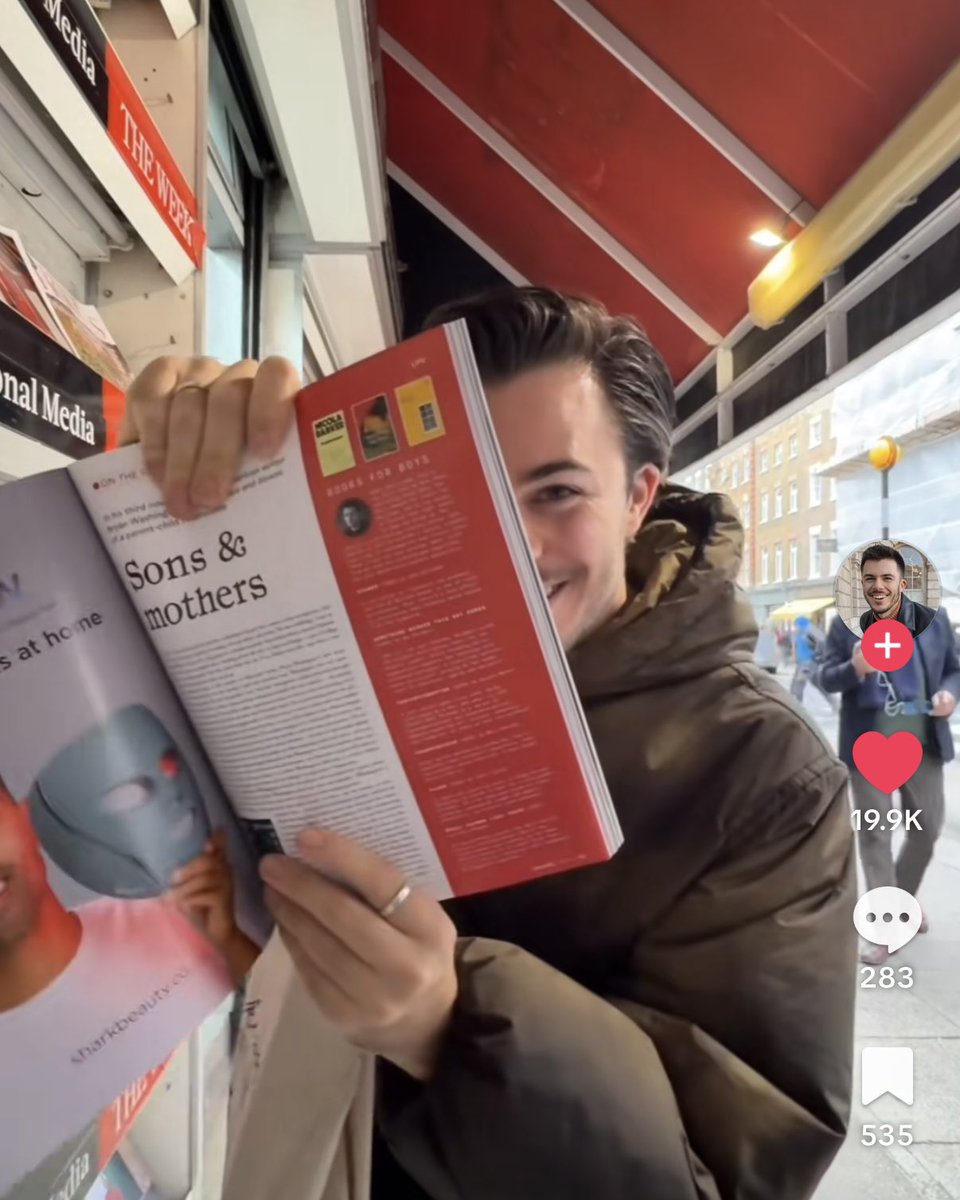
Case study in the power of print: TikTok creator @jackbenedwards reaches millions with his videos, but always dreamed of seeing his work in physical form. He's now a books columnist for @EsquireUK and made a video about the thrill of tracking down a copy of the magazine.
2
29
833
25,580
Japanese college students read manga on tablets or in print, then were tested. The tablet readers showed heightened activity in brain regions tied to spatial processing, meaning they had to work harder to reconstruct the comic panels’ visual layout in their minds.

#Neuroscience keeps confirming what #readers already knew: physical #books 📚 don’t just tell #stories…they help our #brains 🧠 remember them. psypost.org/neuroscientists-…
2
6
188
Stephen Harrison retweeted

Jun 12
We evolved from an oral to written tradition because writing allows for a level of intellectual and emotional complexity that speaking does not.
We shouldn’t act like the death of literacy is no big deal. People will become dumber. They already are.
Jun 12

We’re reverting to an oral culture and nothing is going to stop it as long as phones and social media exist.
But that doesn't mean reading has to end.
Someone who hates reading can scroll twitter hours and hours a day even thoug it's filled with text.
It's because twitter is in the maxims/sayings/proverbs/adages category. This is compressed and accessible.
4
34
1,406
Stephen Harrison retweeted

Some good news: 36 percent of kids in the UK enjoy reading, a four percent increase since 2025. One in five children are now reading daily. This year is a National Year of Reading, & there’s a massive campaign afoot to get kids reading. And it’s working. We need it here, now.
Jun 10

JUST IN: Study reveals children’s enjoyment of reading has risen for the first time in 5 years.
10
97
698
15,048
Stephen Harrison retweeted

Jan 21
Nobody is complaining loudly enough that Wikipedia is sometimes no longer even on the first page of google results. Like what the hell are we doing
445
21,116
221,264
2,365,232
Stephen Harrison retweeted

May 18
My story on the "educational" games your kid is almost certainly playing in school, which often turn out to just be ripoffs of popular time-wasting iPhone games with a few multiple-choice questions bolted on: theatlantic.com/technology/2…
11
14
158
16,430
Worth noting that Pope Leo’s background is Augustinian. St. Augustine is the patron saint of printers.
2
232
This story is one of Lovett’s best. It’s rare that anything on Wikipedia gets a true conclusion, much less a relatively happy one where the parties agree they both made honest mistakes. Sometimes “assume good faith” works.
edithistory.substack.com/p/w…
1
2
210
Stephen Harrison retweeted

May 4
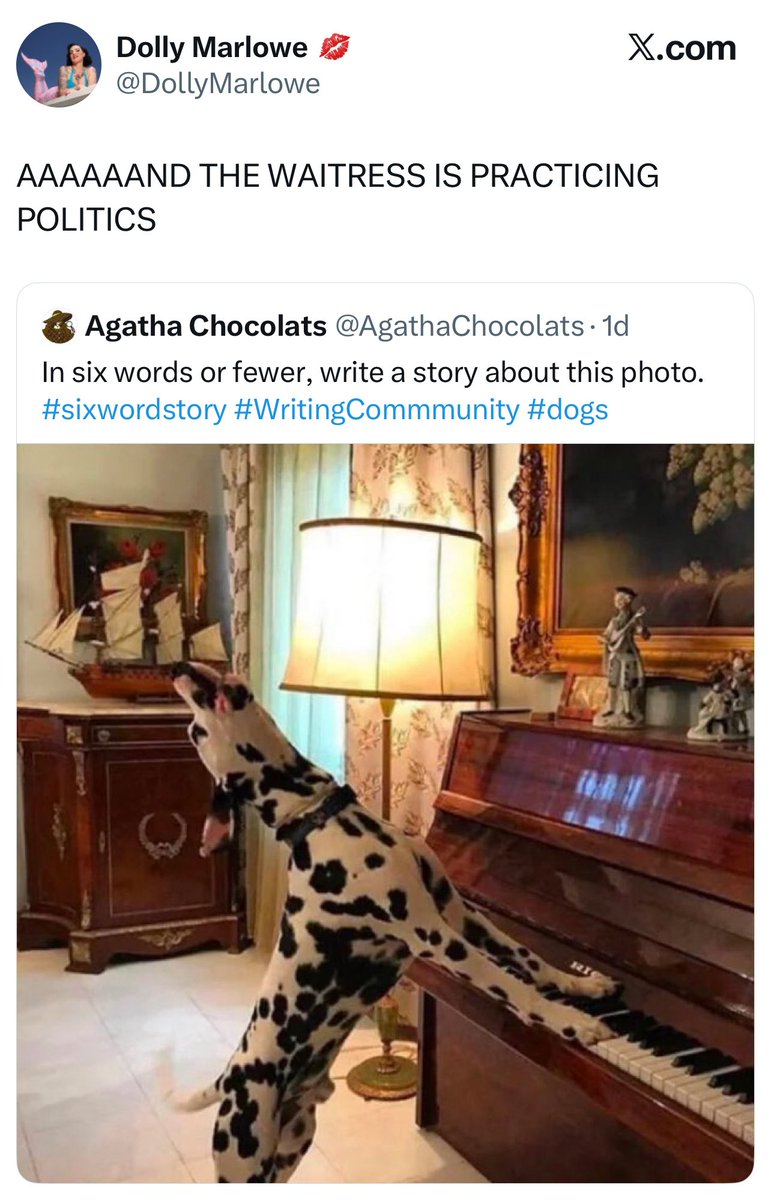
This post is an excellent example of the role of background knowledge to comprehension.
You only understand it if you know the song and the singer. If you do, it’s hilarious.
Consider how this reads for someone who doesn’t know the song. It’s nonsense.
54
70
1,204
76,390
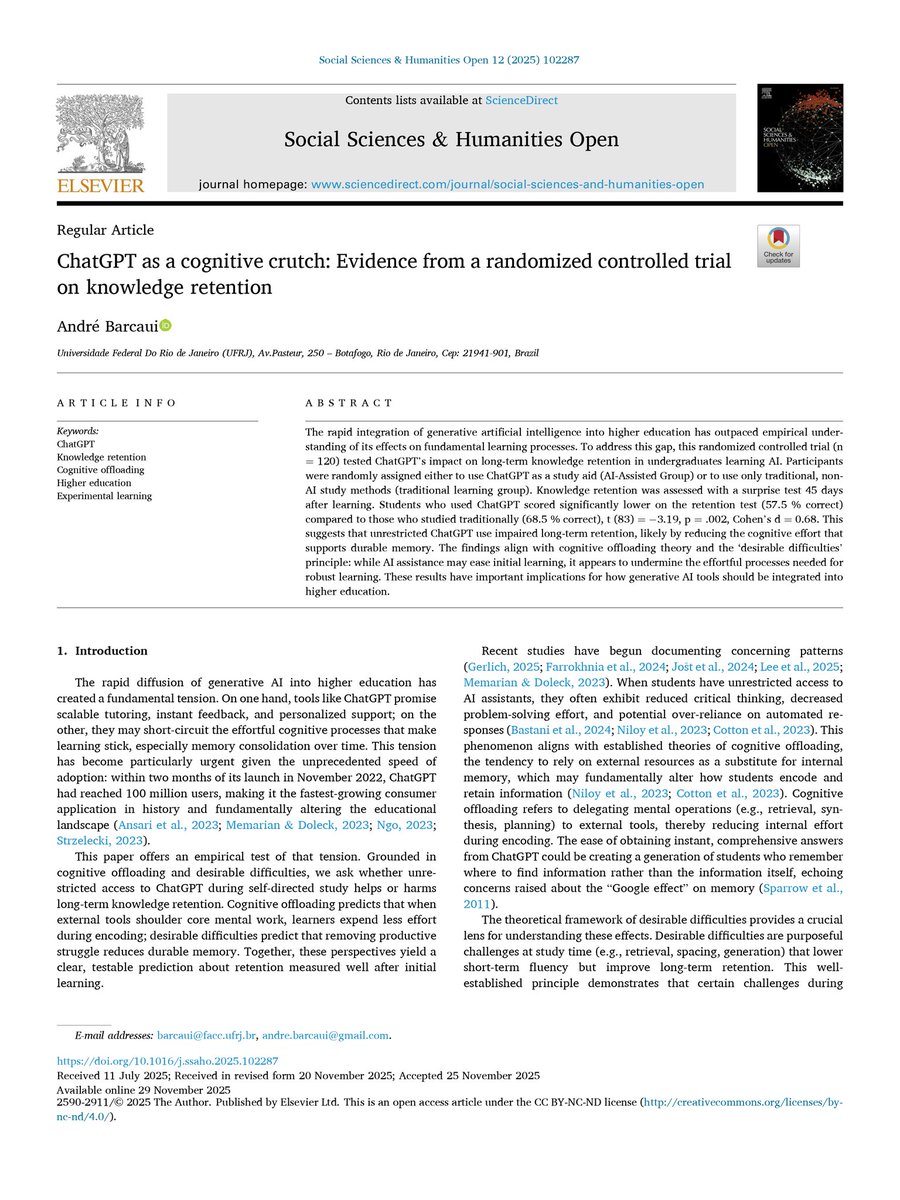
The irony is that this post, which raises genuine concerns, was clearly written with ChatGPT
May 1

🚨Just IN: If you've used ChatGPT for writing or brainstorming in the last 6 months, your creative ability may already be permanently damaged.
A controlled experiment just proved the effect doesn't reverse when you stop using it.
3,302 creative ideas. 61 people. 30 days of tracking.
Researchers split students into two groups. Half used ChatGPT for creative tasks. Half worked alone. For five days, the ChatGPT group outperformed on every metric. Higher scores. More ideas. Better output. AI was making them better.
Then day 7. ChatGPT removed. Every creativity gain vanished overnight. Crashed to baseline. Zero lasting improvement.
But that's not the bad part.
ChatGPT users' ideas became increasingly identical to each other over time. Same content. Same structure. Same phrasing. The researchers called it homogenization. Everyone using ChatGPT started producing the same ideas wearing different clothes.
When ChatGPT was removed, the creativity boost disappeared -- but the homogenization stayed. 30 days later, same result. Their creative range had been permanently compressed.
Five days of use. Permanent damage 30 days later.
A separate trial confirmed it. 120 students. 45-day surprise test. ChatGPT users scored 57.5%. Traditional learners scored 68.5%. AI reduces cognitive effort. Less effort means weaker encoding. Weaker encoding means less creative raw material.
You're not renting a productivity boost. You're financing it with your originality.
The interest rate is permanent.
256
Stephen Harrison retweeted
Apr 28
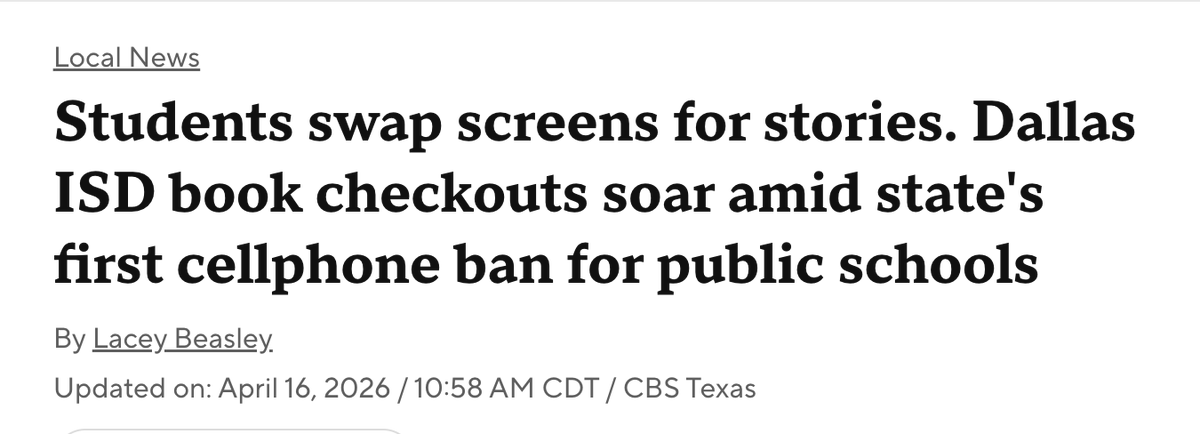
One year into cell phone bans, Dallas schools see 24% increase in library book checkouts.
👏👏👏
"Public school districts in Texas are almost one school year into the first statewide cellphone ban, and a North Texas school district is seeing positive impacts.
Dallas ISD officials said that, district-wide, they have seen a significant increase in library book checkouts, which they largely attribute to students no longer having cellphones with them during the school day.
"I started hearing, 'Oh, I'm so bored. I can't get on my phone after I do my work or during lunchtime,'" Hillcrest High School librarian Nina Canales said. "Once they lock into these stories, they don't seem to care about their phones at all."
From the first day of school to March 31, 2026, the district reported an increase of more than 200,000 additional books checked out compared to the previous year.
A look at the library checkouts for the previous year:
2025-2026 Total Circulation (1st day of school to March 31, 2026) – 1,084,837
2024-2025 Total circulation (1st day of school to March 31, 2025) – 872,430
Total library book checkout increase: 24.35%
At Dallas ISD's Hillcrest High, students are following this trend.
Canales said there were roughly 500 books checked out in the first nine weeks of the 2024-2025 school year. This school year, that number spiked to about 1,800 books.
"That floored me," Canales said. "I had to re-do the report again because I was like, 'What, are you kidding me?'"
Students felt the impact too.
"Now that I'm busy with a bunch of work and college, I don't find myself missing my phone that much, even at home," said Yamilet Jimenez, 9th grader."
By @laceybeasnews.
@JonHaidt @safe_screens
61
681
3,186
1,245,955
Stephen Harrison retweeted
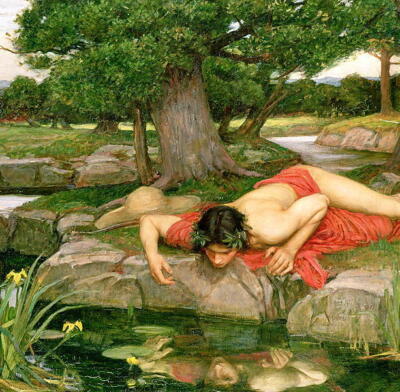
We've got the myth of Narcissus all wrong. It's not a story about falling in love with yourself, it's about the dangers of being seduced by things that look human but aren't, wrongly ascribing to them human will & intelligence. Which makes it a perfect metaphor for AI.
28
281
1,748
98,359
A new medium is never an addition to an old one, nor does it leave the old one in peace. It never ceases to oppress the older media until it finds new shapes and positions for them.
—Marshall McLuhan, 1964
4
201
Stephen Harrison retweeted

Apr 14
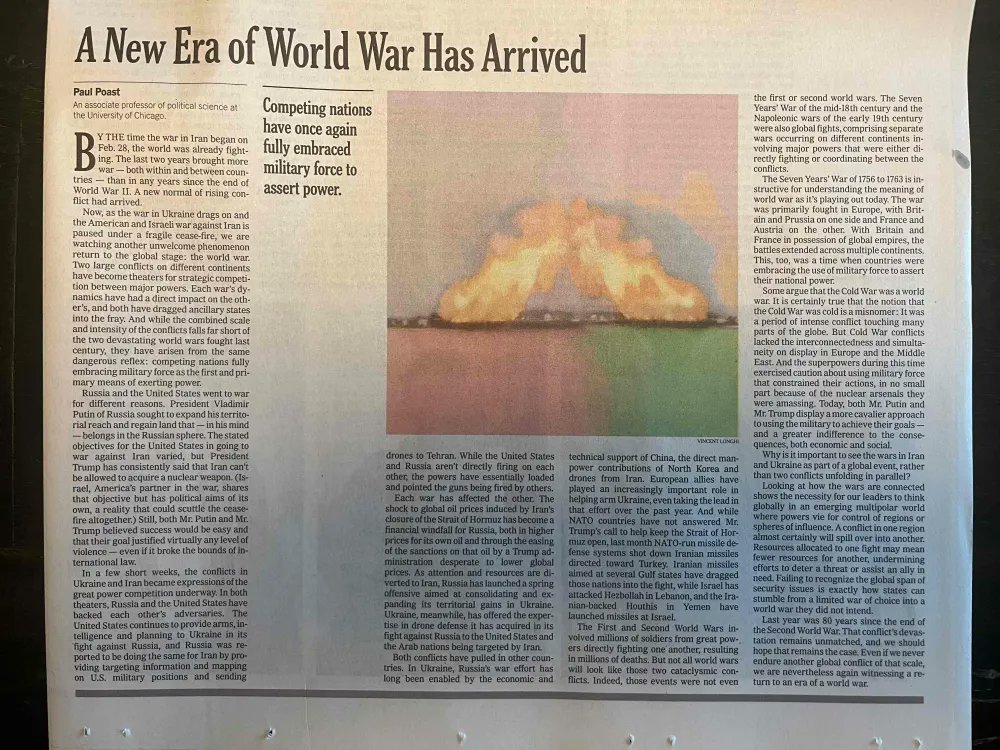
From the Gutenberg press to now: People still love seeing their writing in print.
Apr 13

I was a thrill to have my essay on world war published by @nytimes . But my PARENTS loved that it appeared in their physical Sunday edition :)
7
60
6,406
Stephen Harrison retweeted

Apr 8
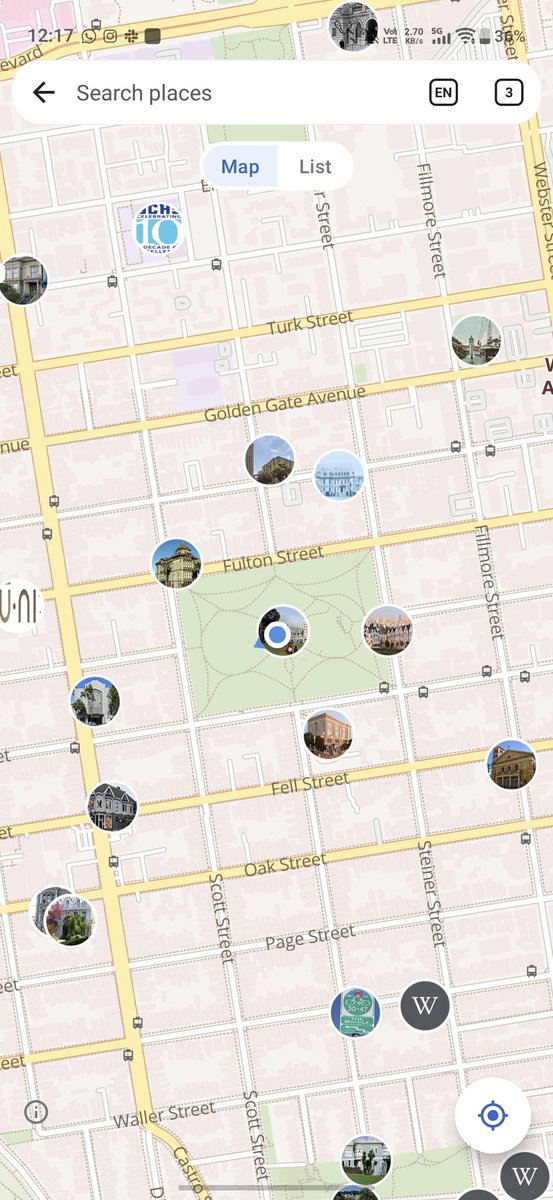
i accidentally discovered one of the coolest features on the internet
the Wikipedia app has a "nearby" feature that shows wikipedia articles around your location!
i opened it and instantly fell into a rabbit hole of random places, local history and weird things around me
try it and tell me what shows up near you
189
2,334
38,628
7,168,683
Stephen Harrison retweeted
Haunted by something I read this morning in a book on the Vikings: “A society without books is ... a society without a history.” We have no idea what we’re throwing away when we abandon literacy as a culture. The rejection of reading is the birth of a new dark age.
28
421
2,192
37,139
Stephen Harrison retweeted

Mar 23
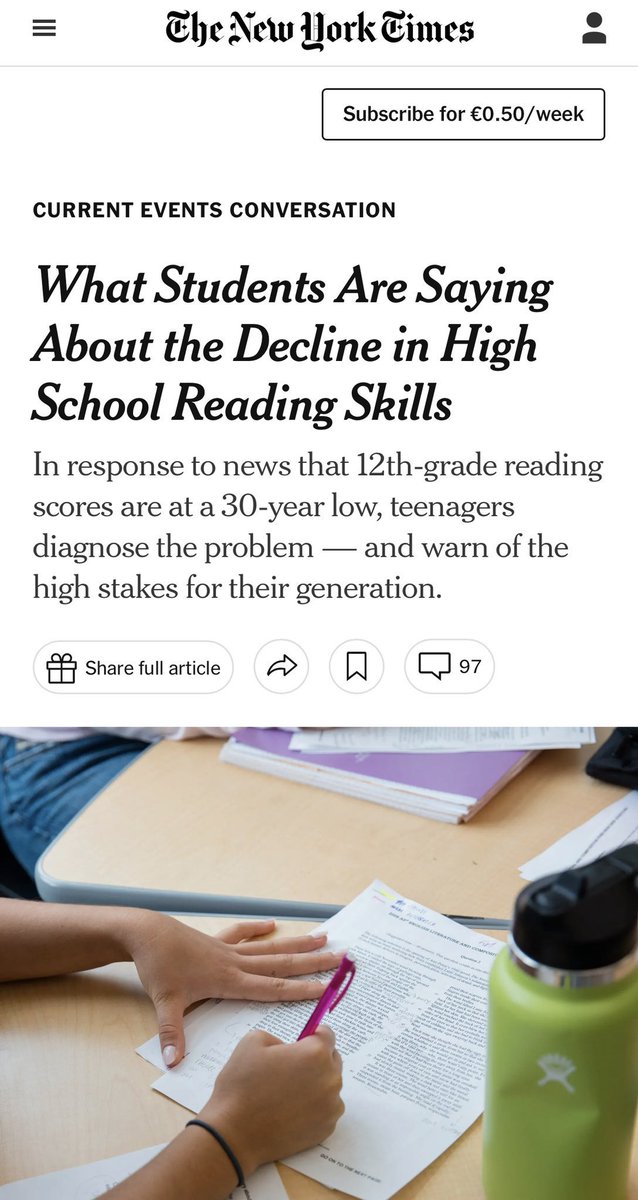
Una generación que no lee bien tendrá más dificultades para entender política, contratos o información básica. New York Times: la caída de la lectura es un problema democrático y laboral, no solo educativo. Los propios estudiantes piden soluciones claras: más lectura real en clase, menos vídeos y atajos, estándares académicos más exigentes y límites al uso del móvil y la IA nytimes.com/2025/11/06/learn…
24
469
1,106
51,561
Stephen Harrison retweeted

Mar 13
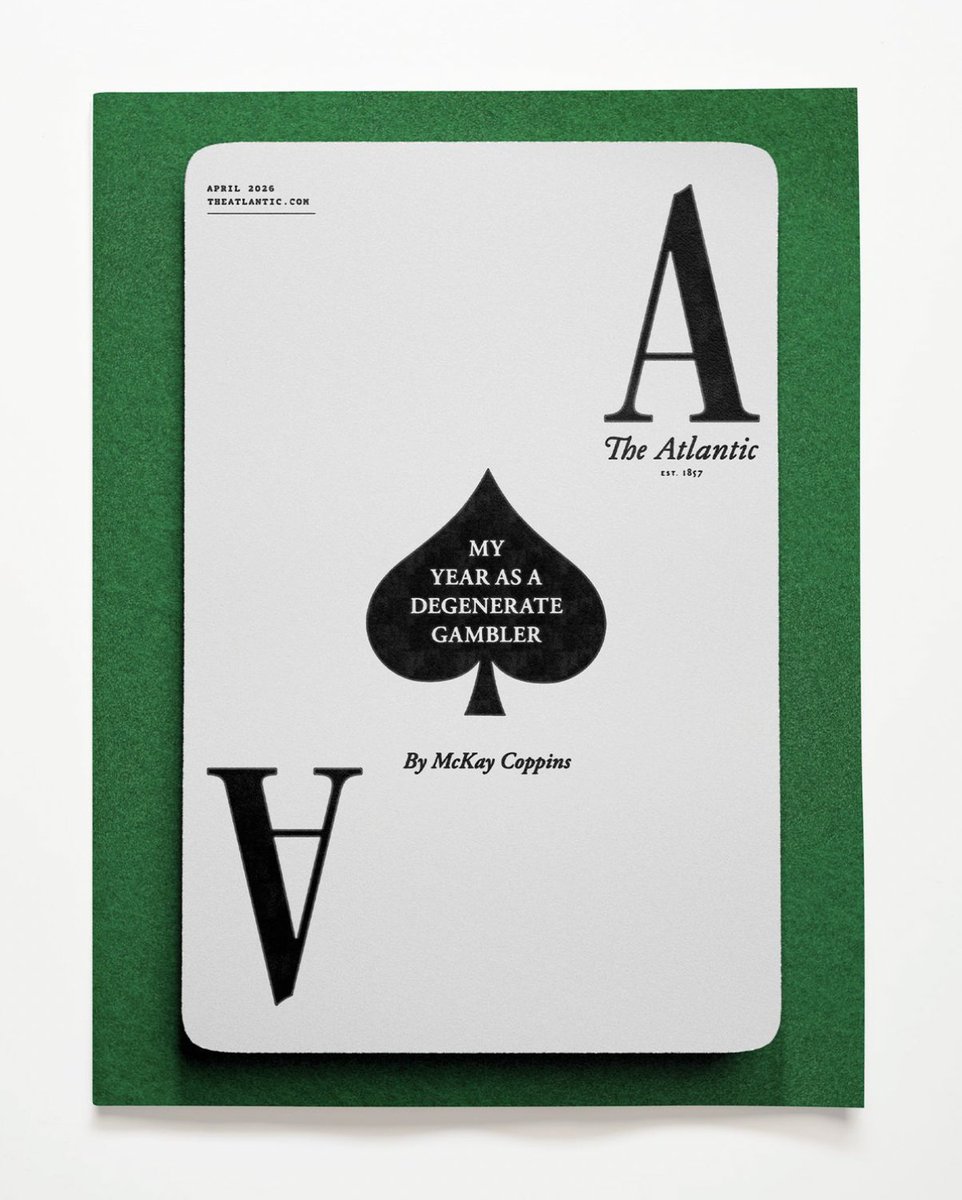
This is as good as everyone says it is, and to me it’s not really about losing the money, which most gamblers do; it’s about how gambling changed Coppins, and changed his relationship with the people around him. A perfectly executed piece.
Mar 12

Last year, The Atlantic gave me $10K to gamble with. What started as a journalistic gimmick turned into something more... unnerving.
My cover story on the online betting boom warping sports, culture, politics, and the psyches of millions of young men: theatlantic.com/magazine/202…
13
56
610
101,359
Stephen Harrison retweeted

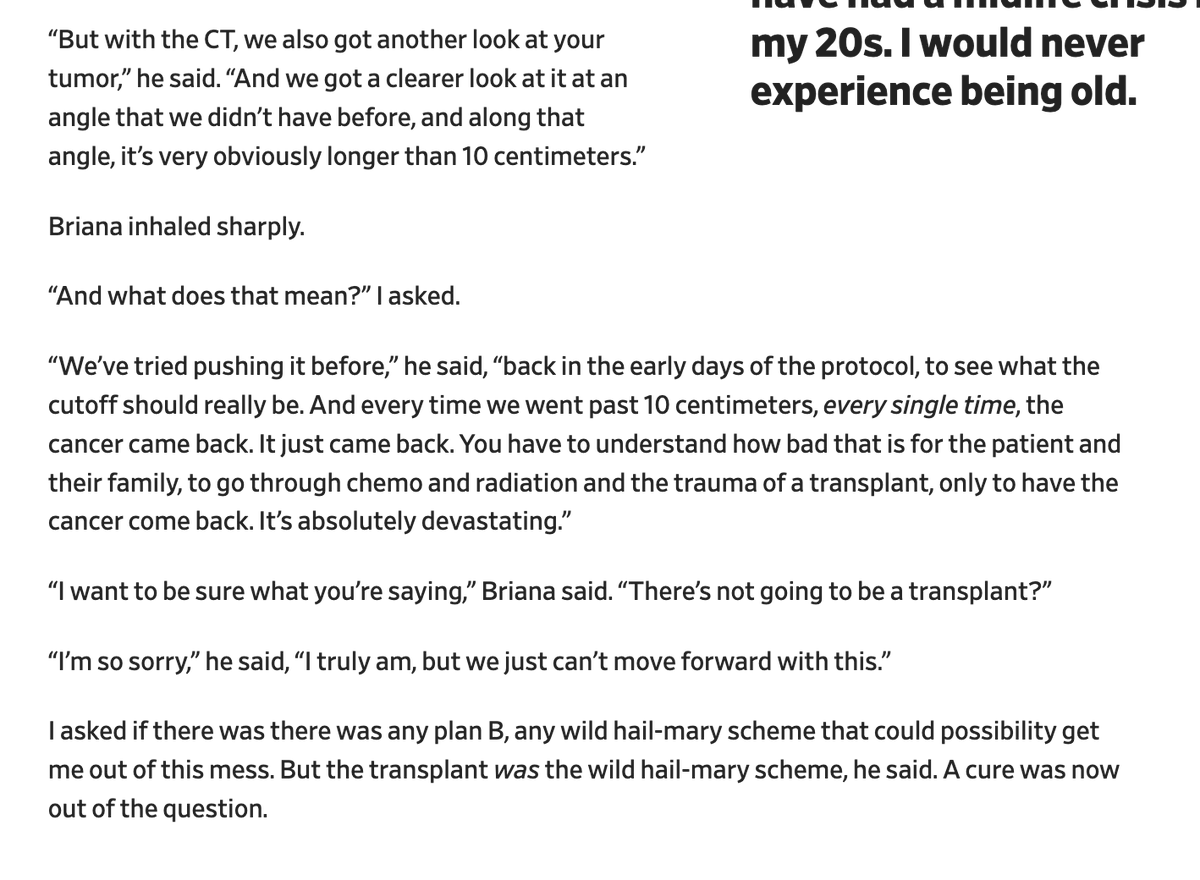
For Slate, I wrote about what it's like to get a terminal cancer diagnosis when you're 42.
31
75
1,147
202,217
Stephen Harrison retweeted
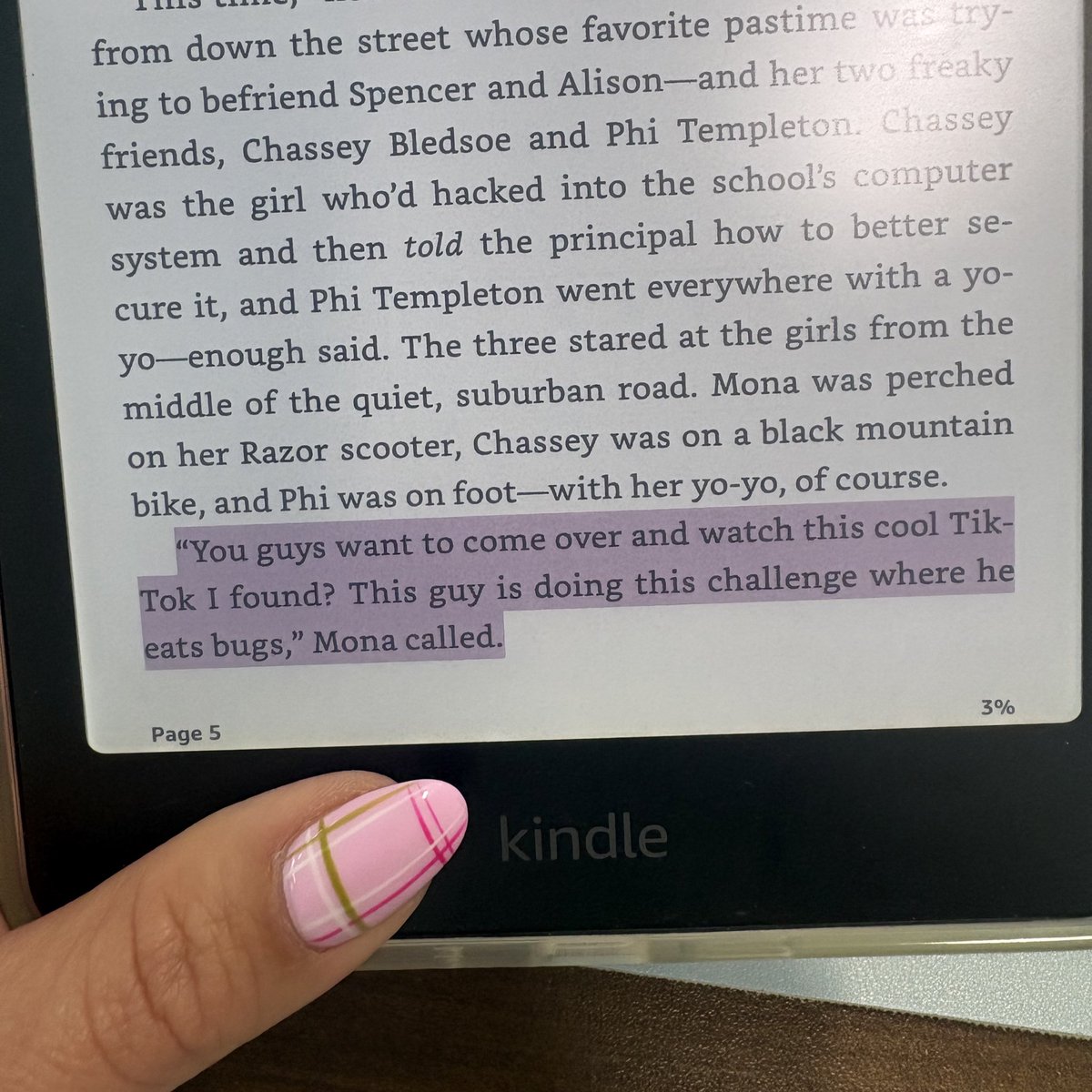
I can't stress enough how important it is that you buy physical books.
Mar 11

Started reading Pretty Little Liars (originally published in 2006) and I’m five pages in and they’ve updated it to include a TikTok reference…do I DNF?
154
1,429
14,158
392,628