
899 Photos and videos



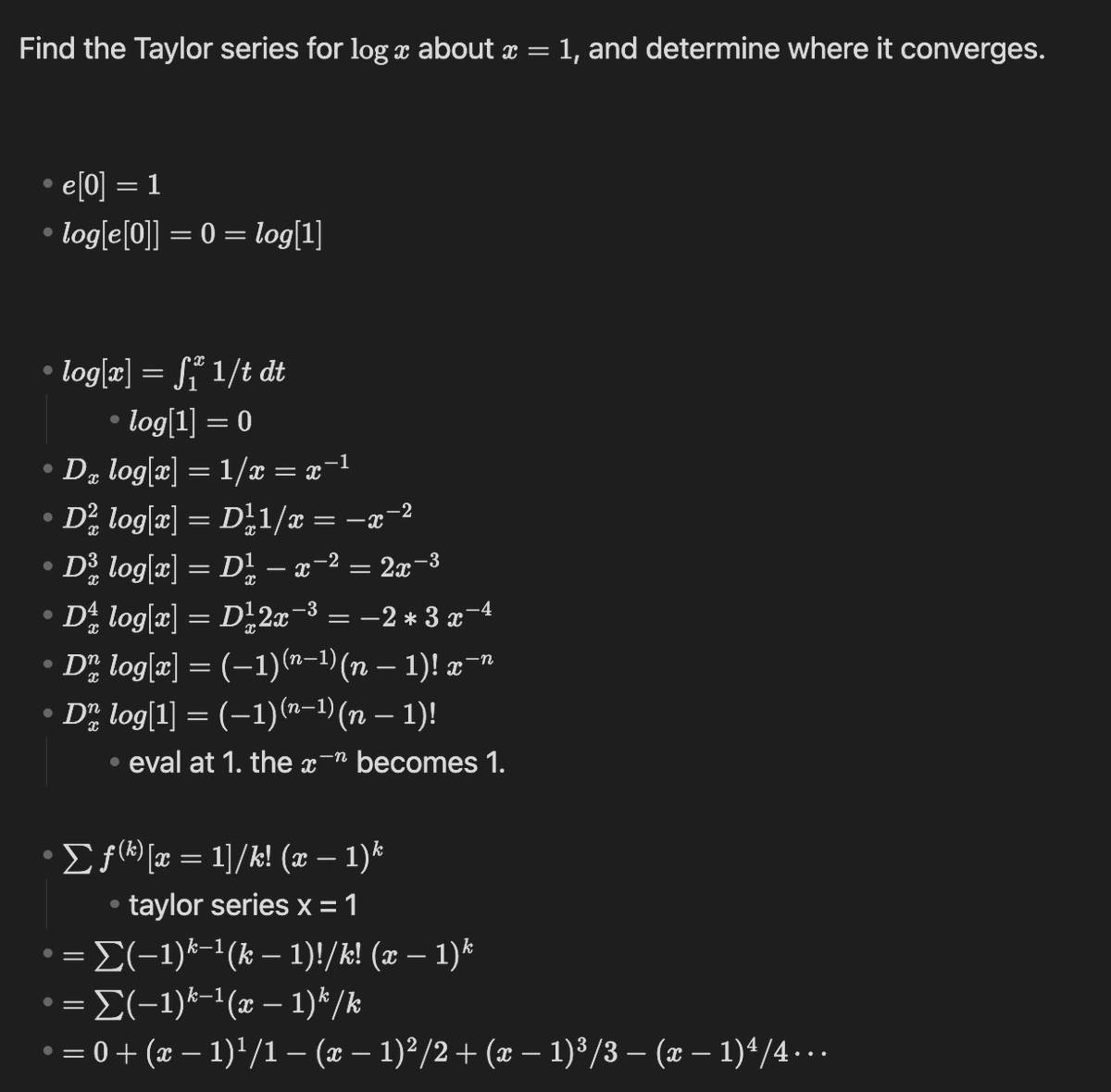





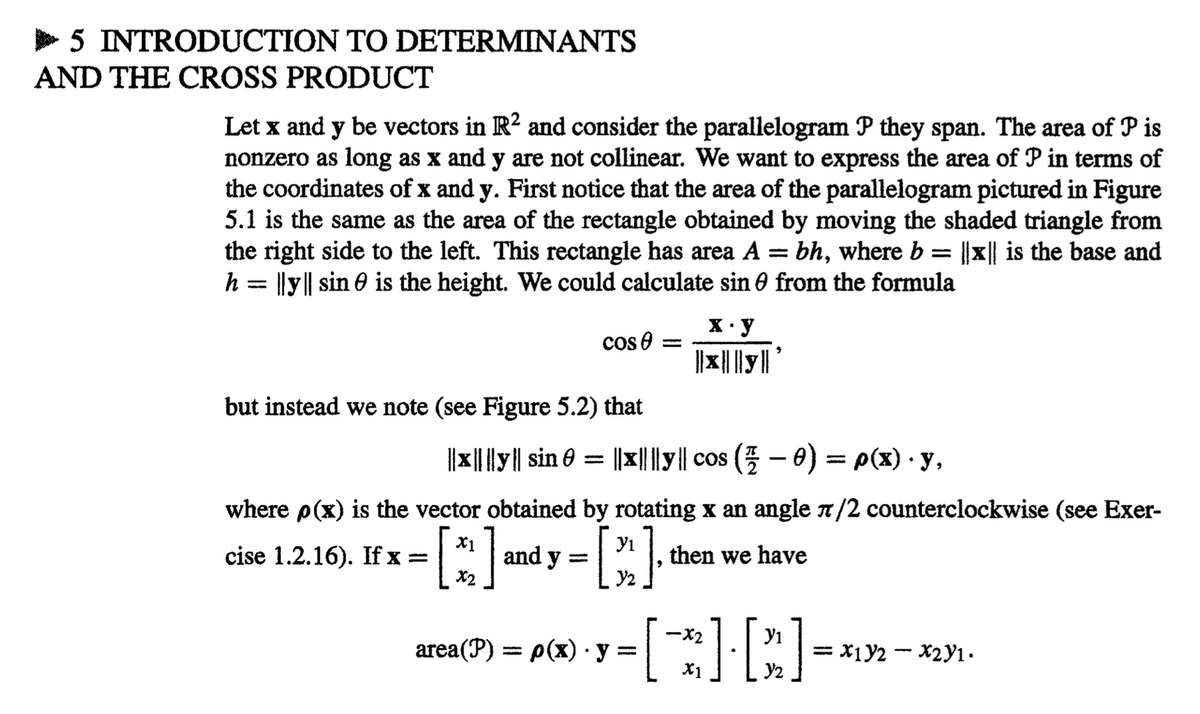

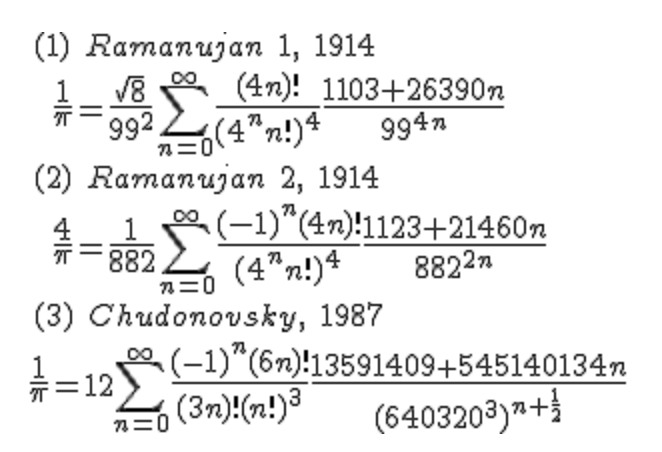

ya it's like the turing halting problem. we can't get deterministically correct solutions, but we can get LLMs that are approximately correct
Jun 10

Gödel's incompleteness theorem is one of those things that math popularisers always talk about as a hugely important result.
But according to @3blue1brown, it almost never comes up in practice. It's a weird pathology that nobody expects to matter for the big questions.
40
hh retweeted

Jun 8
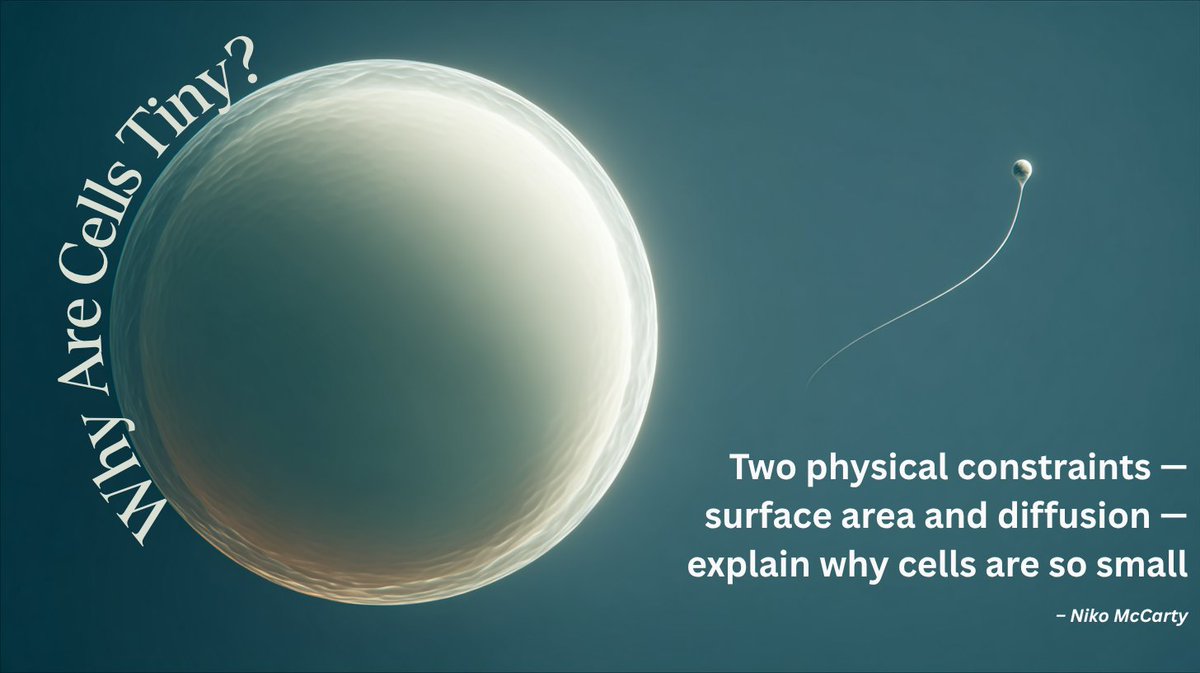
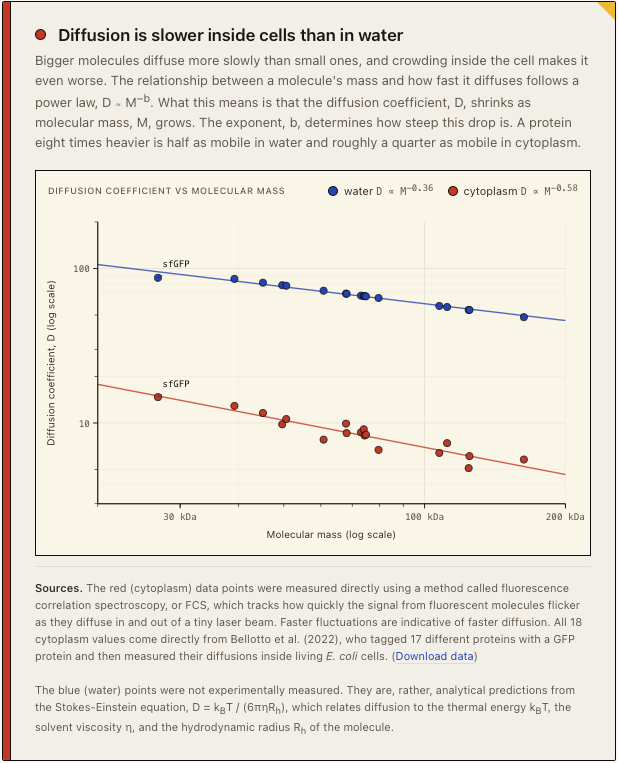
I'm writing an interactive book about the cell. My next chapter, "Why Are Cells Small?" is now live.
TL;DR: Cells are limited by two physical constraints; diffusion rates and their ratio of volume and surface area.
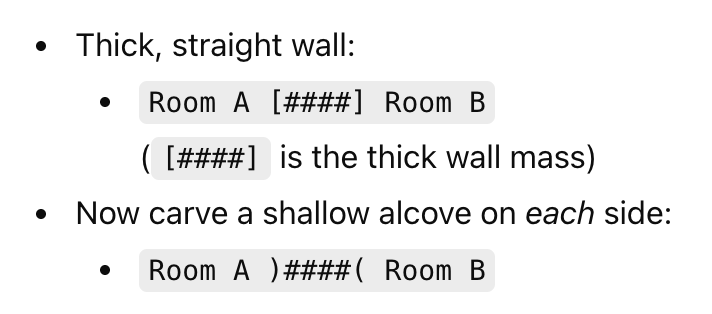
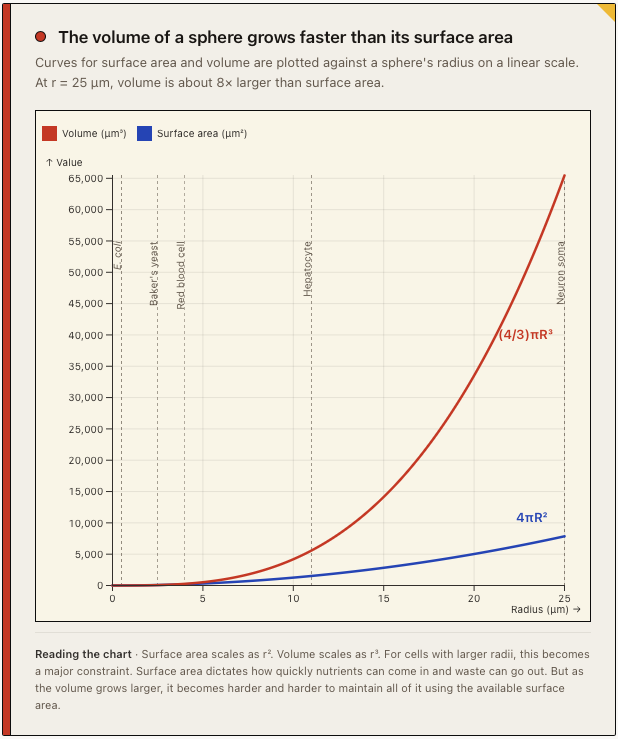
First, surface area: Assuming that a cell is roughly spherical in shape, its internal volume grows proportionally to the cube of its radius, whereas its surface area grows proportionally to the square of that radius. This means that the available amount of membrane (where nutrients come in, and waste goes out) grows much slower than the volume as a whole. So as a cell's radius goes up, it gets harder and harder to maintain cellular functions.
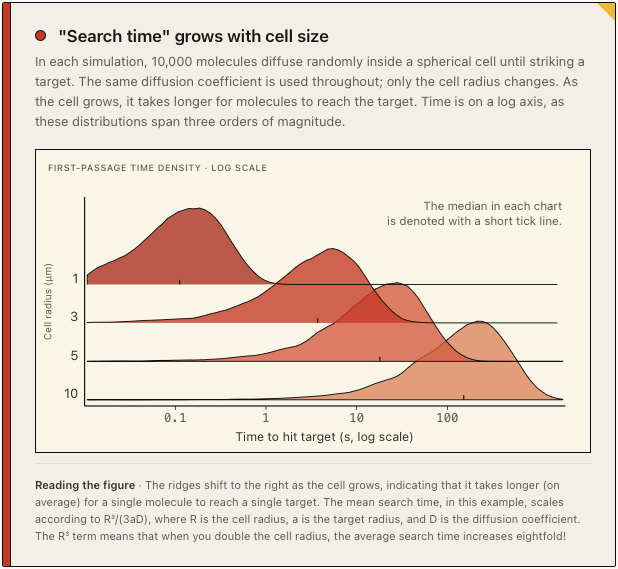
Second, diffusion: Molecules need to collide with each other for biology to work. Enzymes must find substrates, signaling molecules must reach receptors, and ribosomes must collide with messenger RNAs. Inside a cell, nearly everything happens by chance encounters amongst these molecules! As a cell’s volume grows, though, the chance that these encounters will happen decreases (assuming the total numbers of molecules stay constant).
With these constraints in mind, we can begin to speculate as to why various cells are shaped the way they are.
Red blood cells are tiny and shaped like biconcave discs to aid with diffusion; by abandoning a spherical shape and evolving more toward a ‘donut,’ they increase their surface area without compromising volume.
Human eggs are by far the largest cells in the body, growing to about 100 micrometers in diameter. They can do this because they are not so metabolically active, and thus don't require random collisions to occur frequently. Instead, they stockpile nutrients during oogenesis to wait out fertilization.
Finally, there is a giant bacterium, called Thiomargarita magnifica, that can extend about one centimeter in length, so large that it is visible to the naked eye. It does this by breaking the surface area-to-volume rule, filling between 65–80 percent of its internal volume with an empty vacuole. In other words, it pushes most of its molecules to the cell periphery, thus shortening diffusion distances.
14
46
330
16,276

yuk

Rule changes for the SpaceX $SPCX IPO:
Index providers waived the profitability requirement and cut the seasoning window from 90 days to 5.
This forces over $30 trillion in passive 401k and retirement money to buy SpaceX at IPO valuations.
Bloomberg Intelligence estimates S&P 500 funds must absorb 19% of SpaceX's float within 6 months.
Russell 1000 and Nasdaq 100 funds will absorb 24%.
The rules built to protect passive investors:
1. S&P 500 has required 12 months of trading and 4 quarters of GAAP profitability since 2002. Both waived.
2. Nasdaq cut its inclusion window from 90 trading days to 15.
3. FTSE Russell cut its to 5.
All three benchmarks are now structured to buy SpaceX at IPO pricing.
98