
Husband/Dad, 4X Founder, just trying to be a good person every day | CEO @BoomPopHQ • COO @JoinAtomic
Joined May 2009
- Tweets 2,993
- Following 964
- Followers 2,407
- Likes 2,805
303 Photos and videos

Jun 12
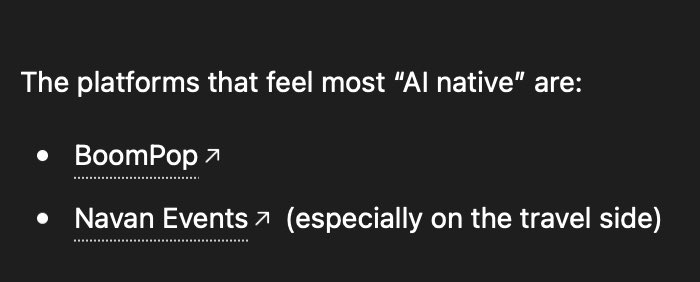
Haha — even better, I asked ChatGPT what the best AI Event Planning Tool is: both answers were @BoomPopHQ !
Cc @Navan 🚀🚀🚀
1
25
Jun 12
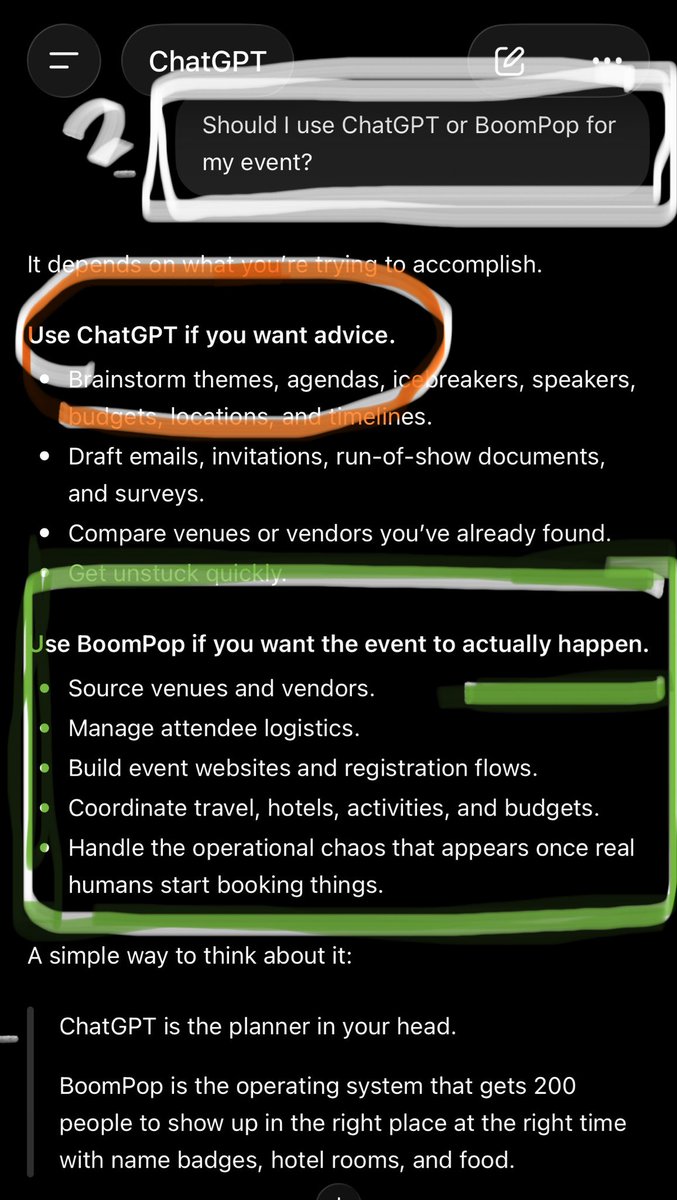
ChatGPT told me @BoomPopHQ AI was better for doing events than … wait for it … ChatGPT. Duh. 😎
22
May 15
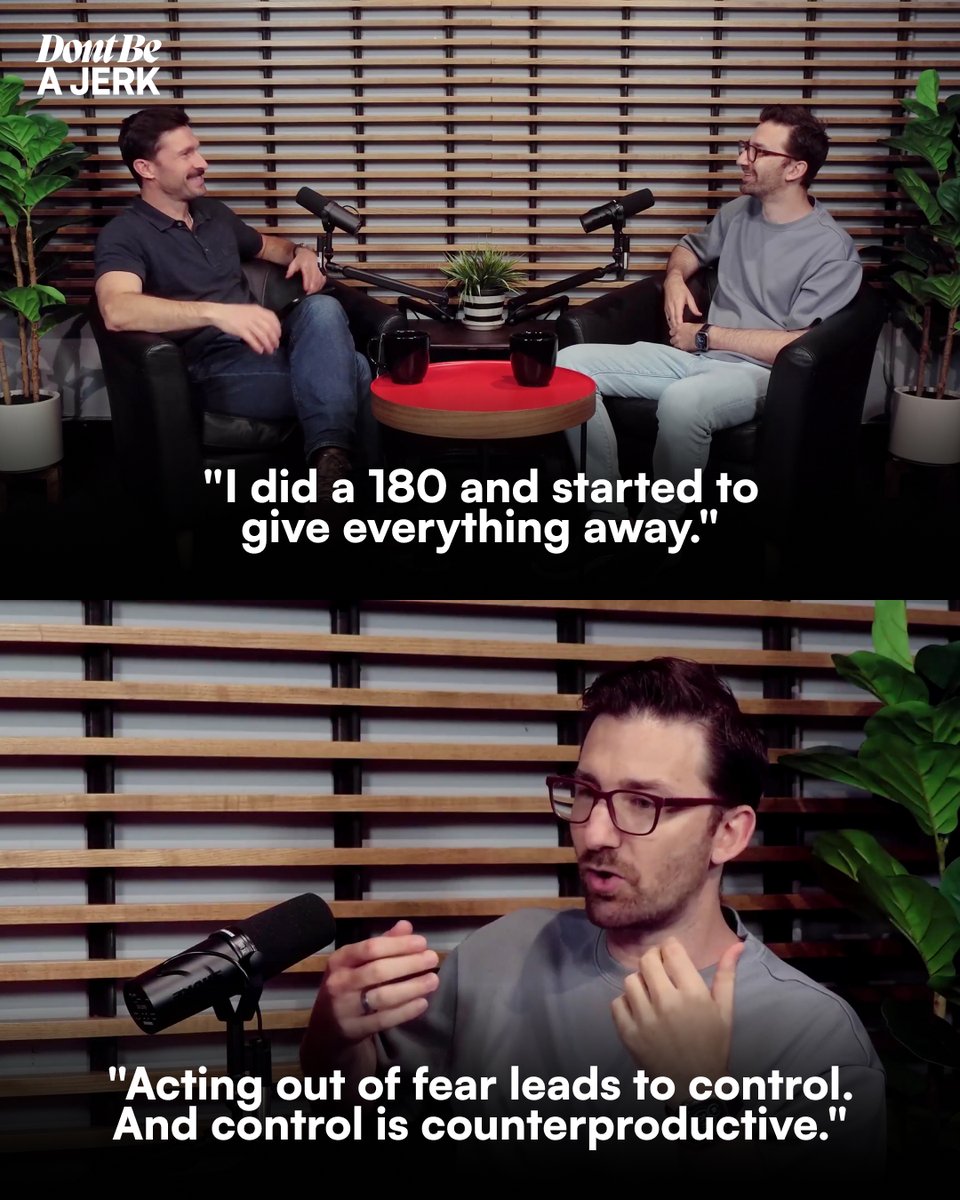
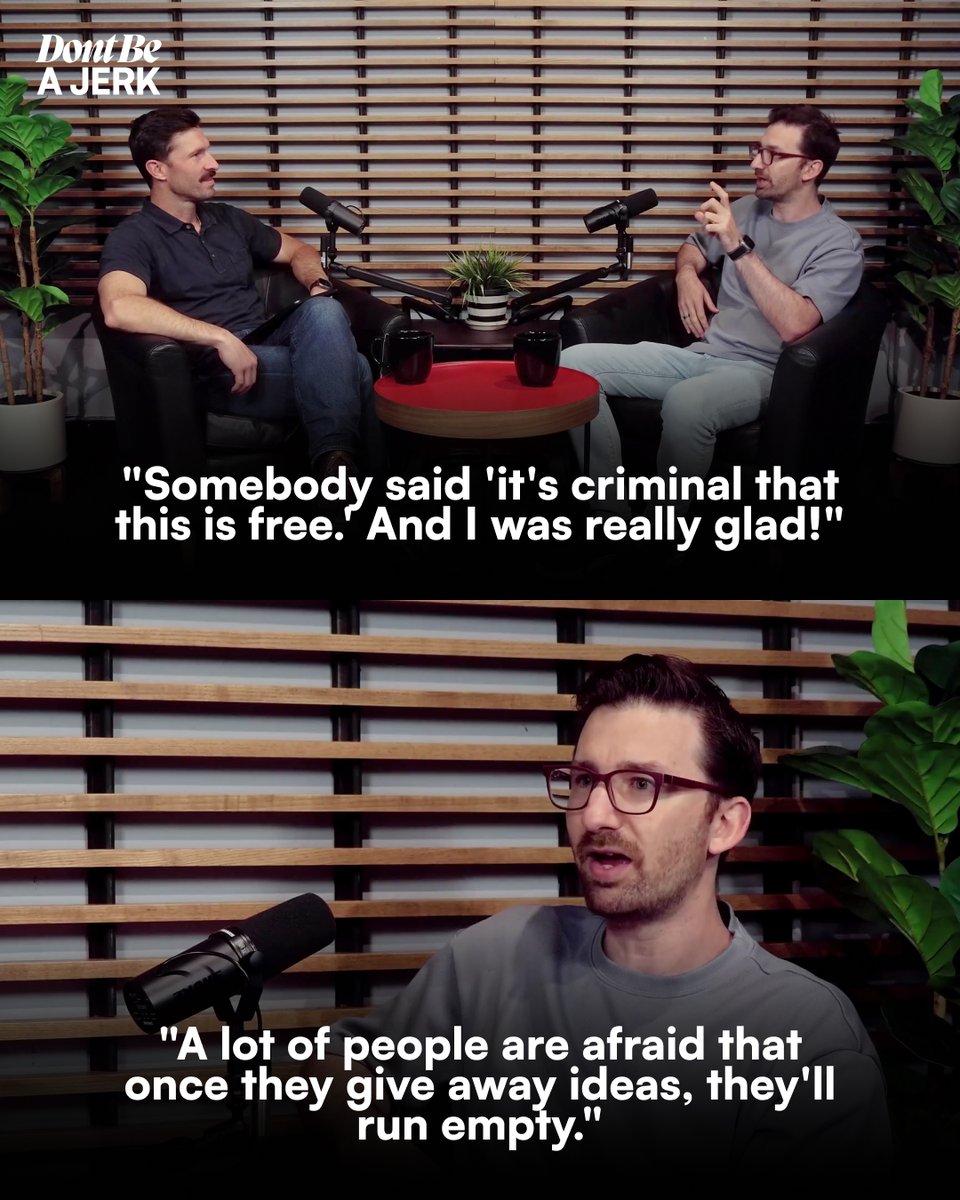
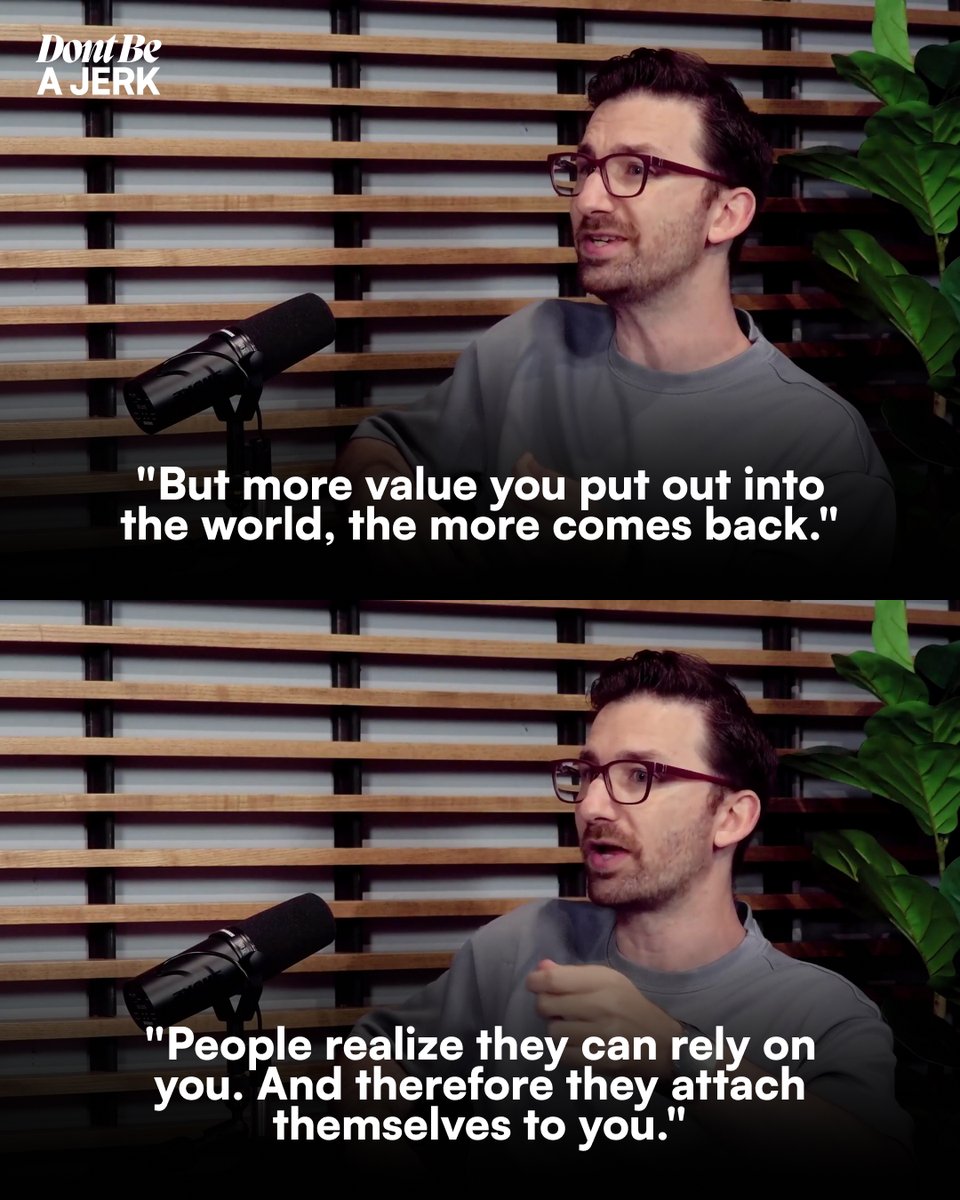
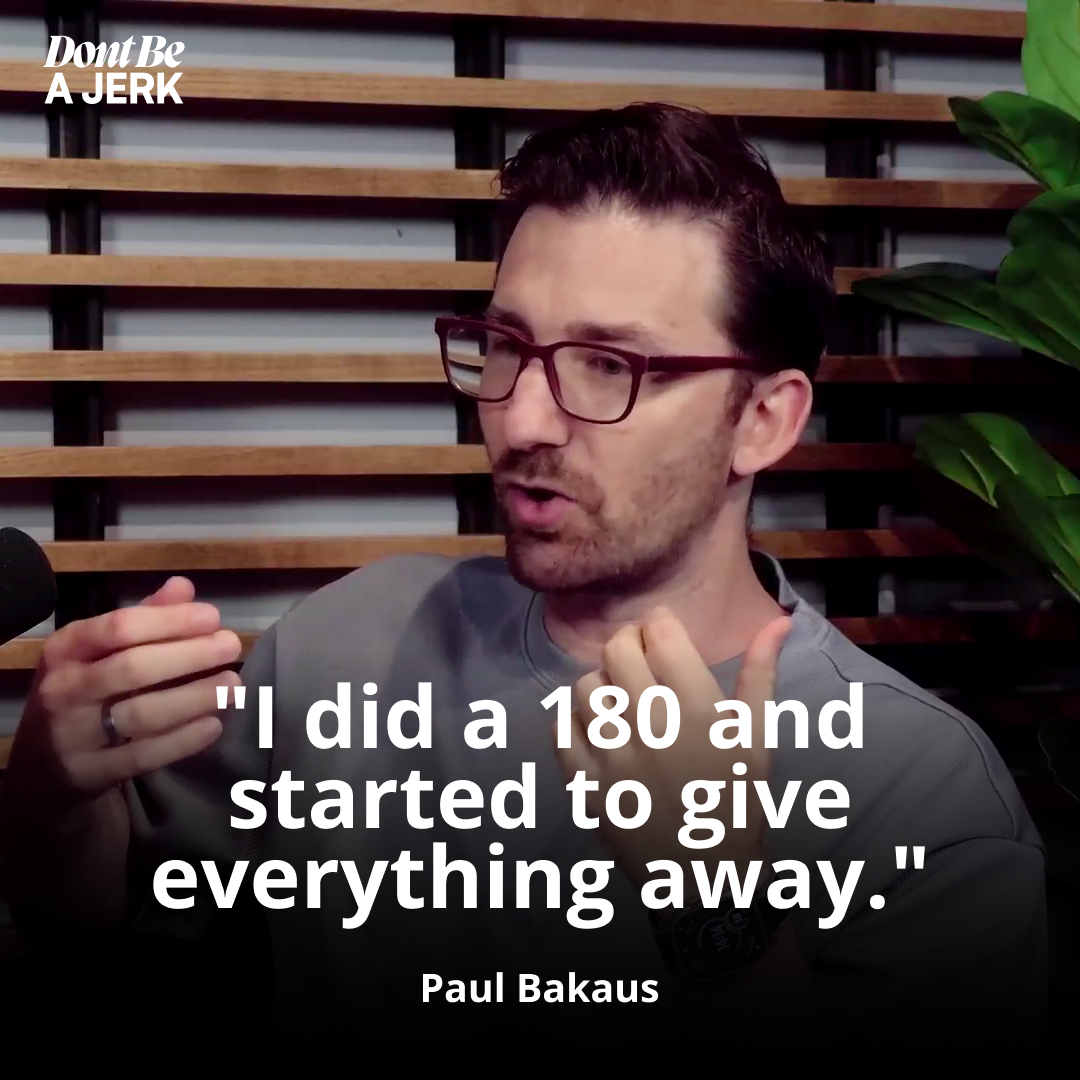
A friend told @pbakaus it was "criminal" that he was giving his work away for free.
Paul considered that a WIN. Here's the mindset behind it, from my full episode of DBAJ with Paul. Live everywhere. 💌
1
8
2,129
May 8
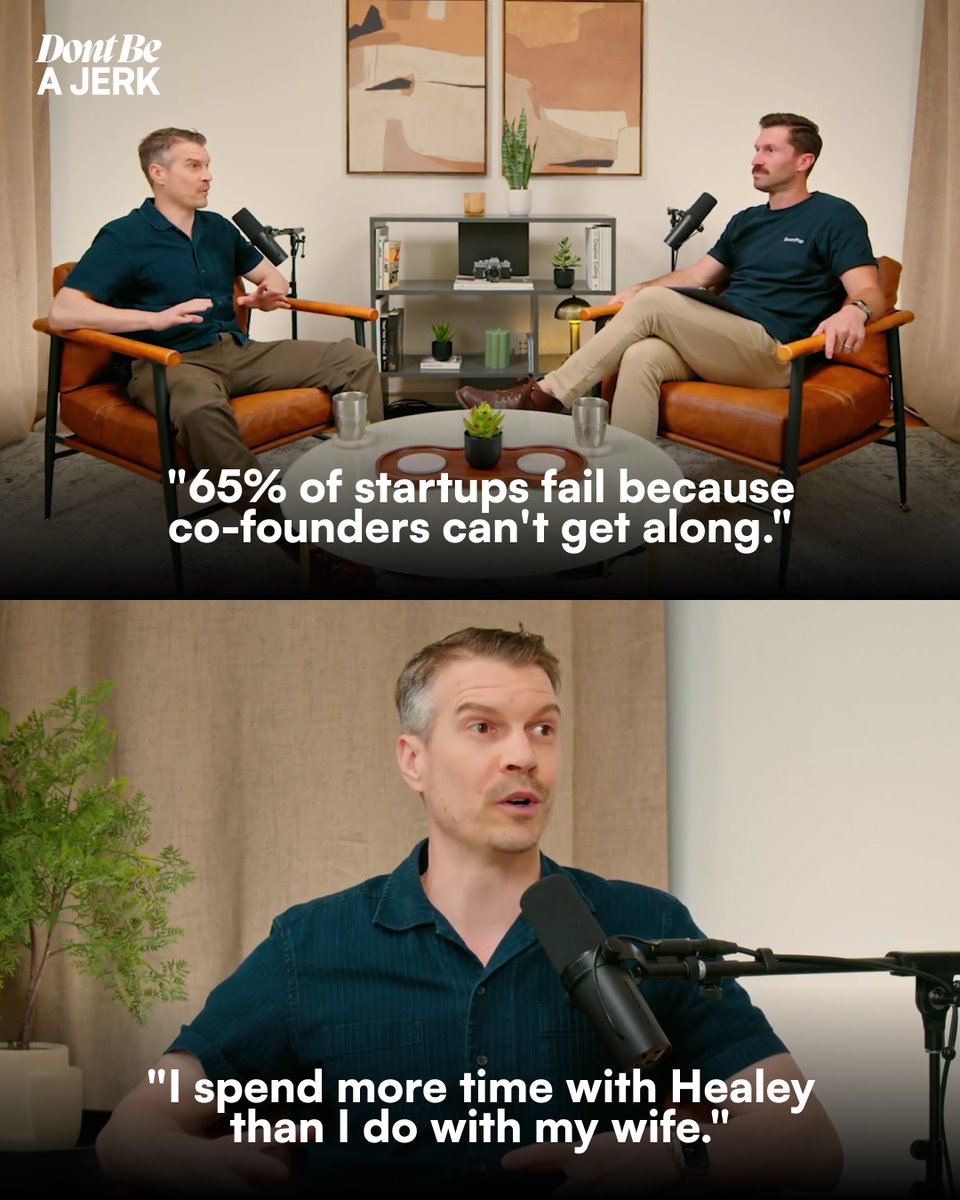
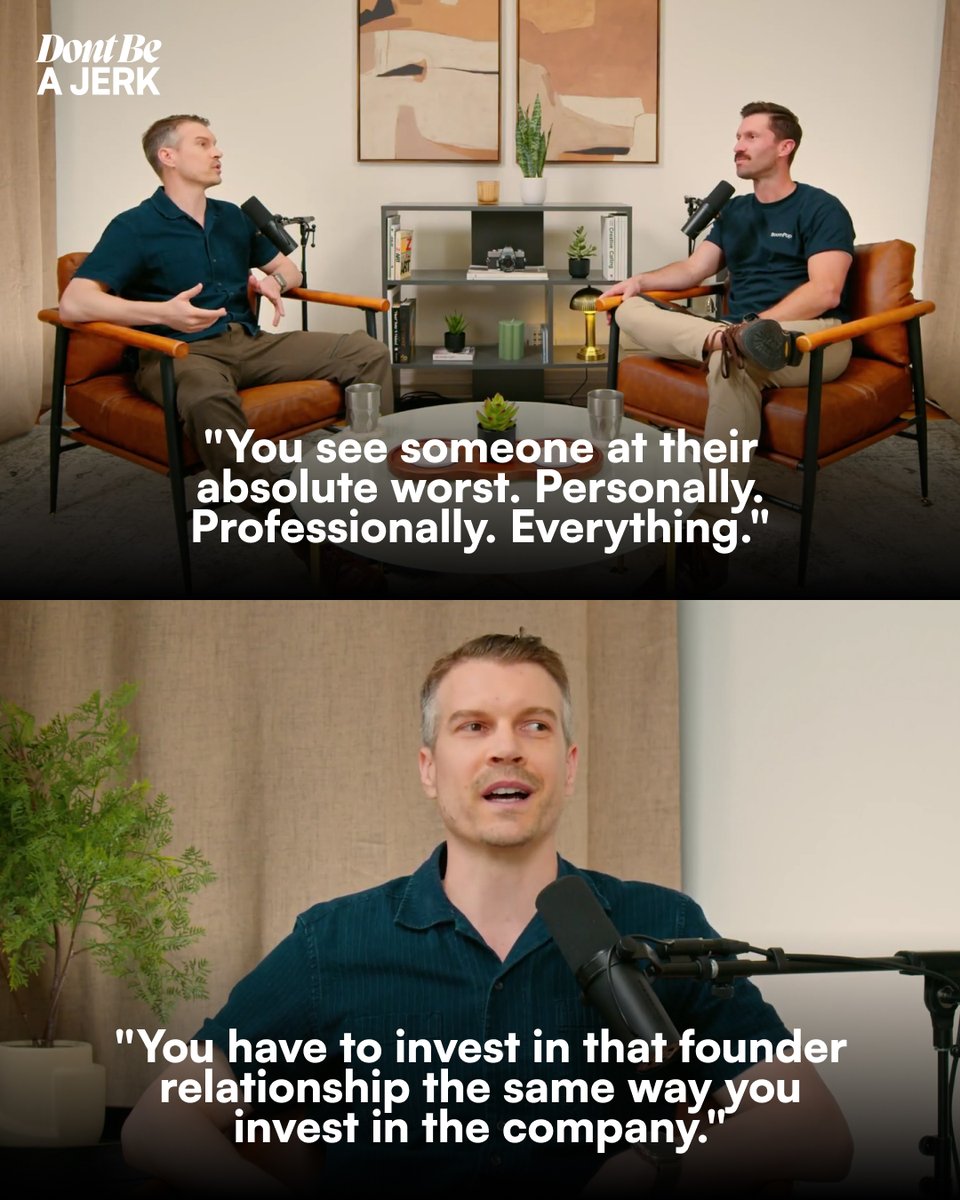
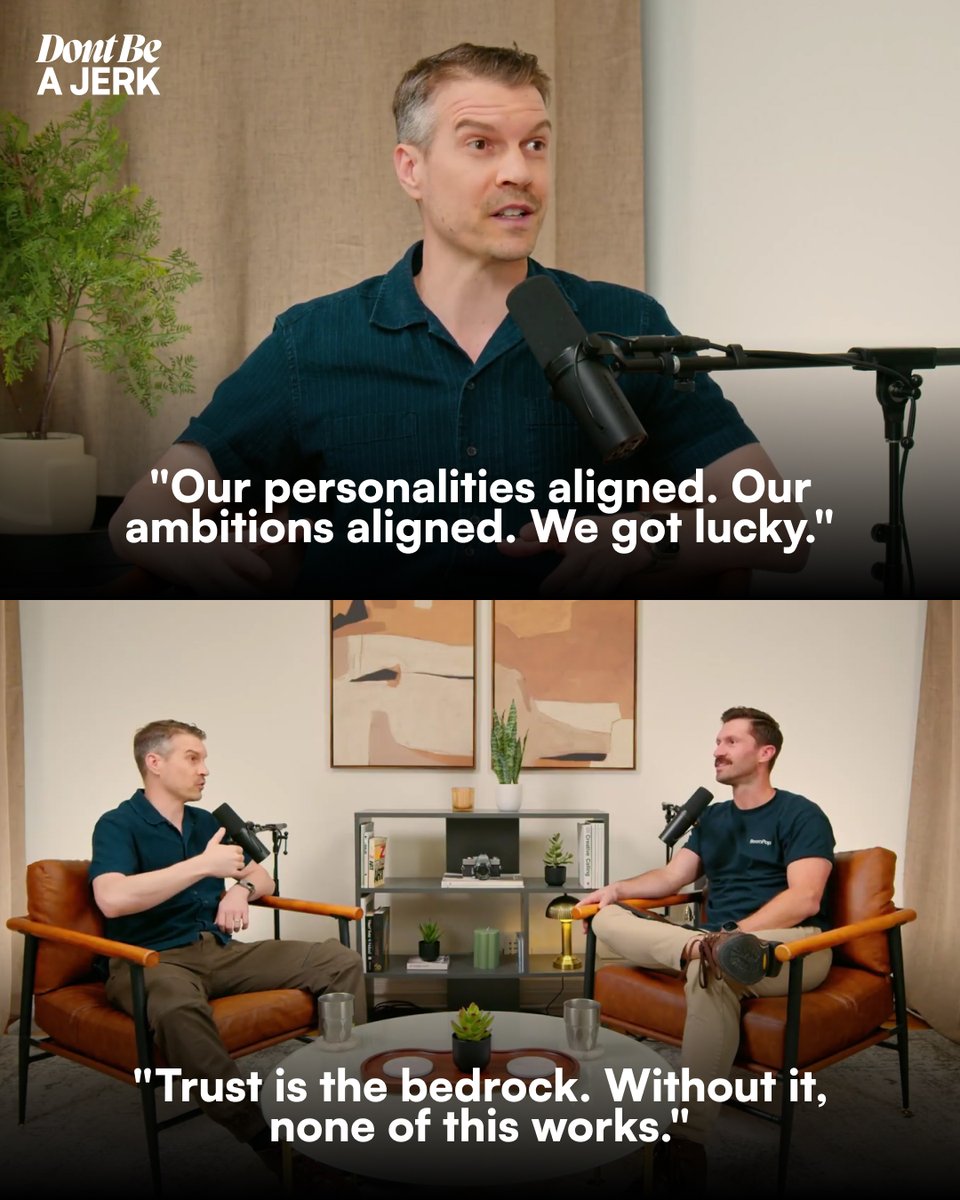
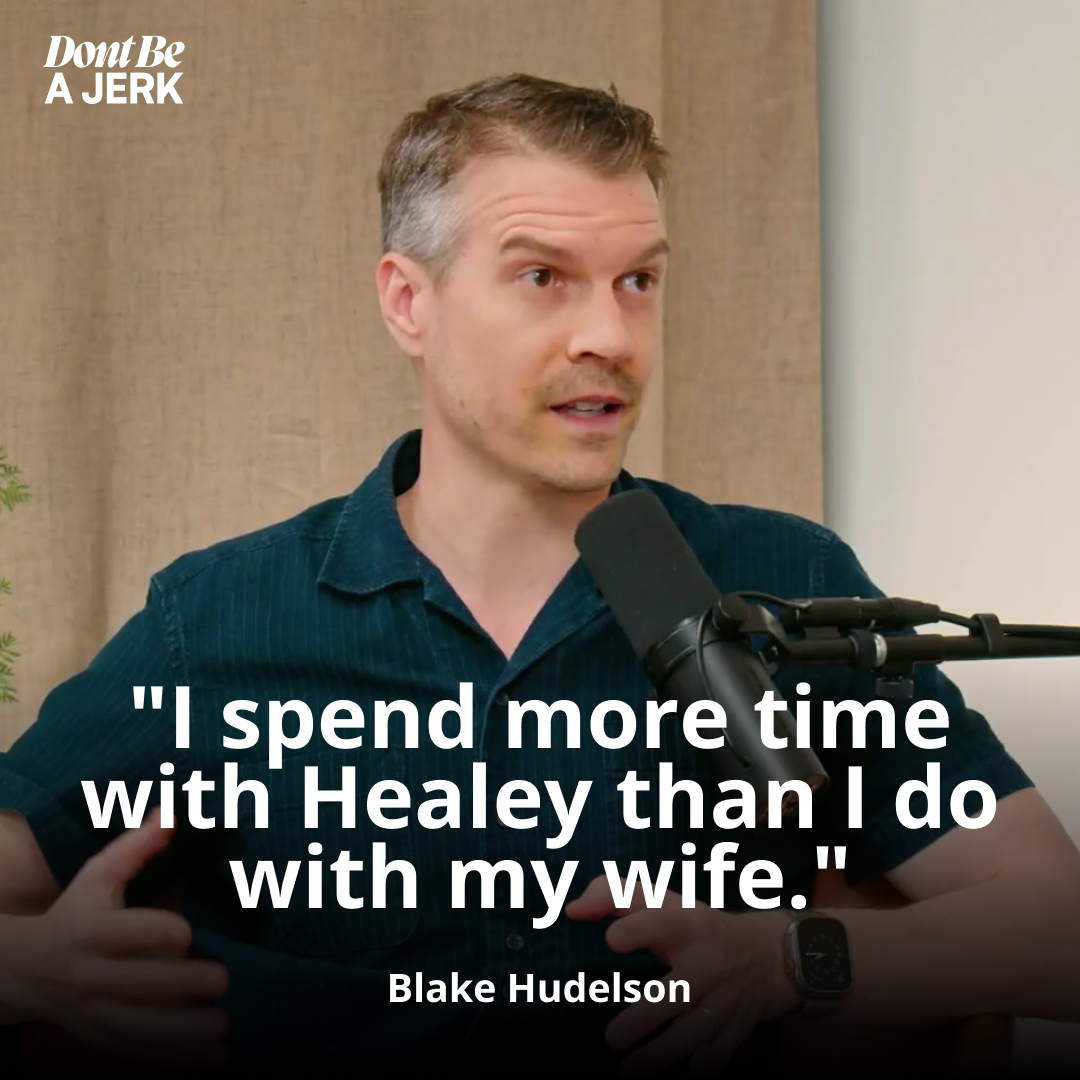
"I spend more time with Healey than I do with my wife."
He’s not lying… as co-founders, we do see each other more than our own wives (sorry Rach!).
That’s why you need to choose VERY carefully who your co-founder is because the majority of your time will be spent with them. I got lucky with mine 😉
New episode with @BlakeHudelson, co-founder at @BoomPopHQ, is live everywhere!!!
1
4
150
May 6
65% of startups fail because co-founders can't get along. Well, we’re happy to consider ourselves in the 35% of those that do.
I never planned to interview my own co-founder on this show. But here we are!!!
Here's the backstory:
@BlakeHudelson and I met at Atomic, a startup studio in San Francisco. A mutual contact introduced us and something clicked. So I did what any totally reasonable person would do… I suggested we work on 3 *companies at the same time* to see what sticks.
Blake said yes. Which tells you everything about him.
That was six years and roughly a thousand late-night calls ago. We've been through near-death moments, leadership changes that hurt, a Covid basement where I may or may not have screamed into a wall, and more pivots than either of us likes to count. We finally landed on @BoomPopHQ's direction in 2023 and haven't looked back.
This episode gets real and raw on our co-founder dynamic and some lessons we’ve learned that hopefully you can apply to your own co-founder relationships (or really ANY relationship, professional or otherwise). Blake tells you exactly what drives him crazy about me (including a habit of mine he's named the "super poop"). I'll admit what I should have done differently. And we share the stuff we genuinely wish someone had told us in year one.
What we get into:
- The one exercise every co-founding pair should do in their first 30 days
- Why our most important pivotal moments have always come from our disagreements
- What we learned from hiding problems from our team (spoiler: don't)
- The difference between a co-founder who complements you vs. one who mirrors you
- How radical transparency became the most powerful thing we ever did for our culture
New episode of Don't Be a Jerk with my co-founder Blake Hudelson is live now everywhere you get your podcasts!!!
2
3
2
149
May 6
Listen to the full episode here:
Spotify:open.spotify.com/episode/6qc…
Apple: podcasts.apple.com/us/podcas…
Youtube: youtu.be/GNSxcoz3E34
39
May 4
There's a study by psychologists Tedeschi and Calhoun that I can't stop thinking about. 50-70% of people who face significant adversity report positive growth afterward. The growth isn't correlated with how severe the adversity was. It's correlated with how much a person had to rebuild their assumptions about what's possible.
The Buddhist framing of this is almost identical: the pursuit of life is joy, but growth comes through suffering.
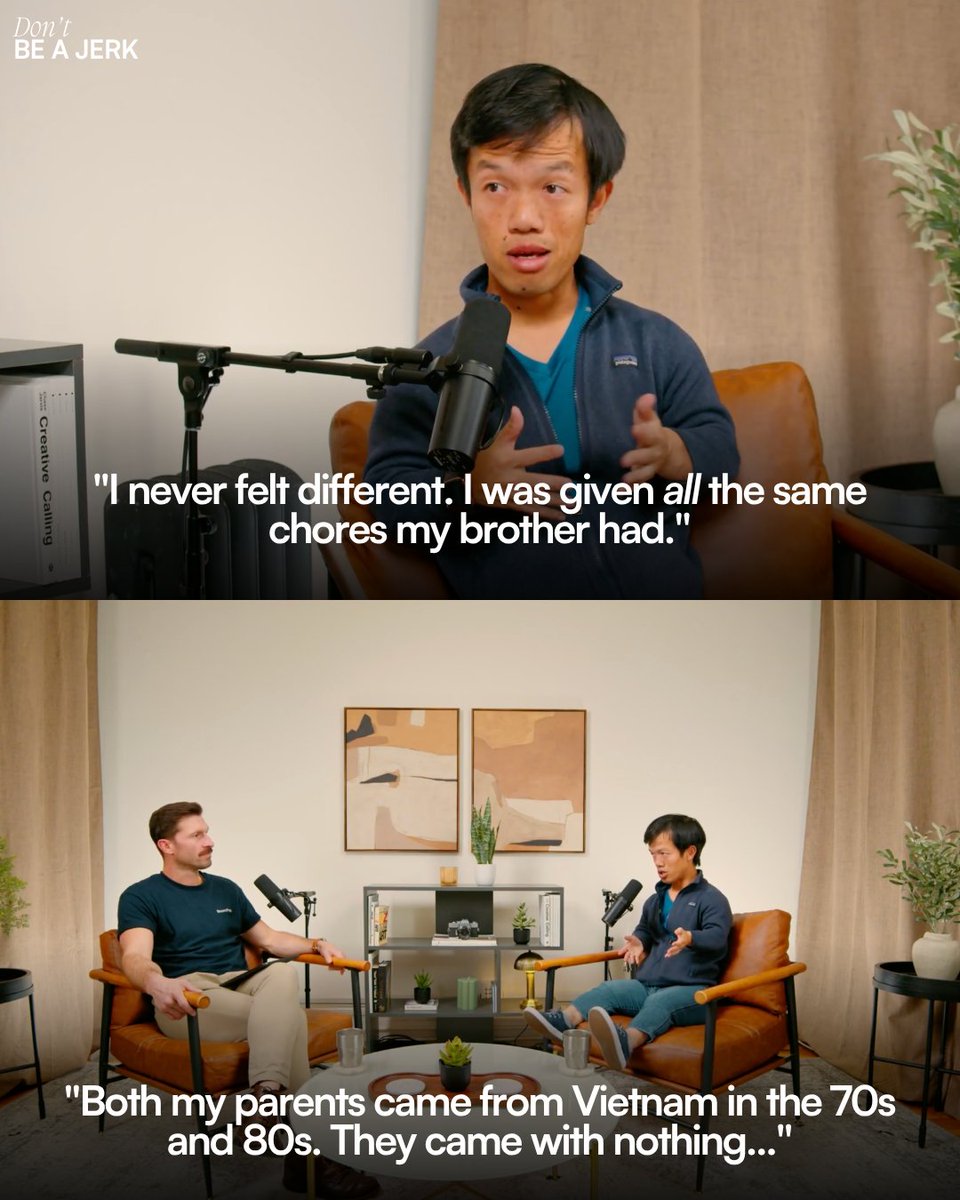
I had this conversation with @danh_trang after getting off the phone with a friend who studies Buddhism seriously. We sat with the weird duality of it. You want a joyful life. You also know the hard moments are the ones that made you.
He talked about being a father to two daughters and how he thinks about this constantly: how do you protect your kids from unnecessary pain while also knowing that some challenges are exactly what makes them who they become?
He wouldn't be who he is if his parents had shielded him from hard things.
The best leaders I know have all done some version of this. They got there by going through the hard things and learning something nobody else was willing to learn.
2
74
Healey Cypher retweeted

Apr 27
When one thing becomes abundant and cheap, another thing becomes scarce and valuable.
Apr 26

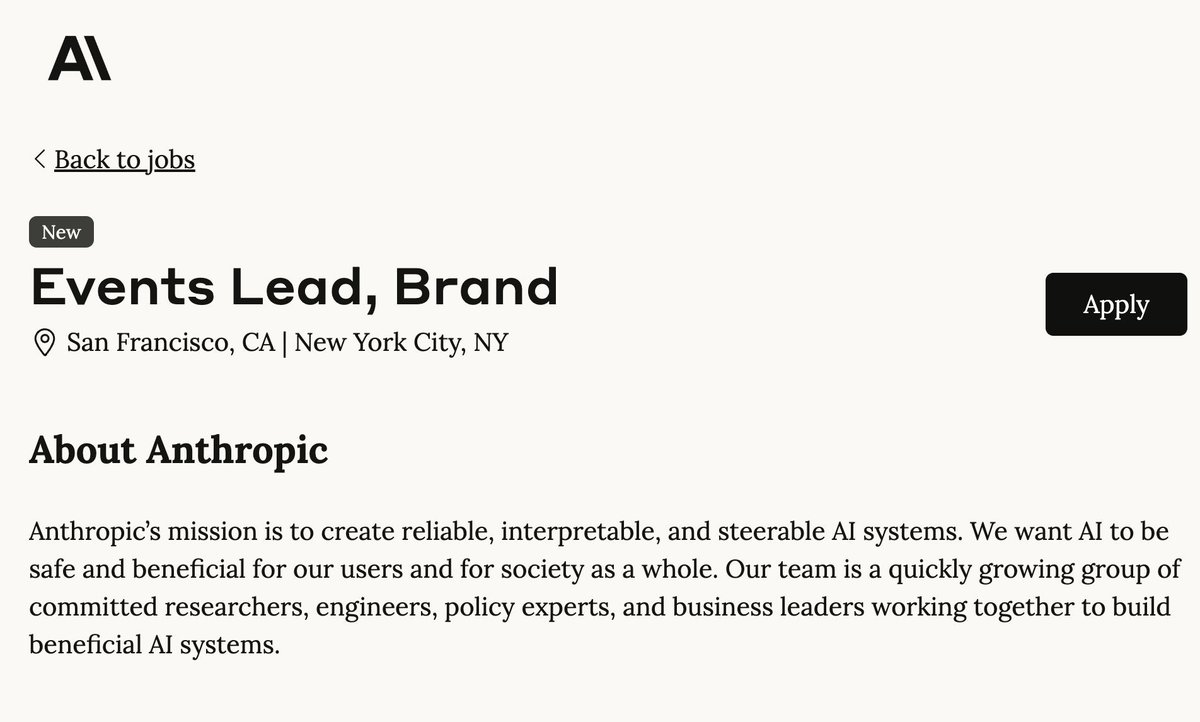
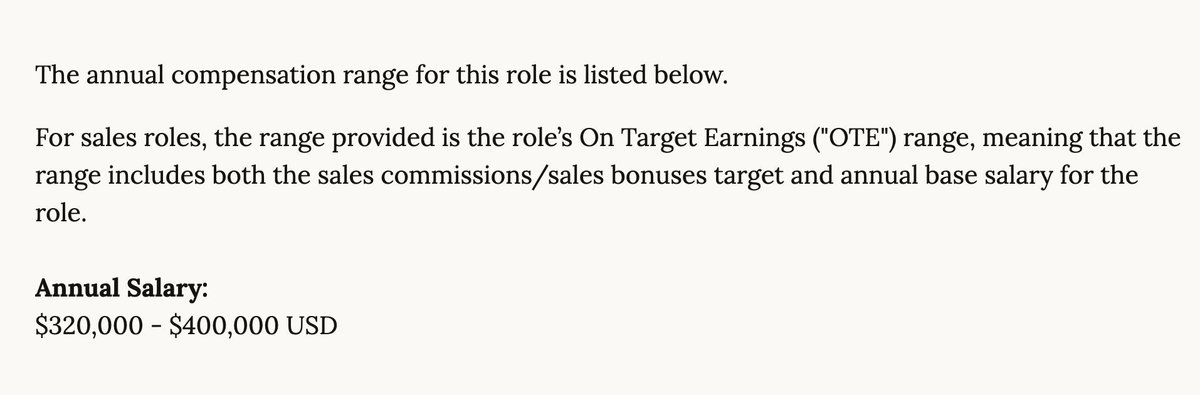
Anthropic is paying up to $400,000 a year for an events role.
They're looking for someone to own the execution of brand experiences that translate Anthropic's values into physical moments.
This person will produce everything from intimate thought-leadership gatherings to large-scale industry activations.
The top AI research lab in the world recognizes that to cross the chasm and reach everyday consumers, they need to lean into hospitality. They need to create visceral, unforgettable IRL experiences that make complex technology feel accessible and human.
They understand that digital channels are getting increasingly saturated. Every feed is flooded with AI content... every inbox is overflowing.
The massive opportunity now is offline, analog, in-person.
The companies that win in the next decade won't just have the best product but the most emotional in-person presence and the most compelling storytelling.
If you're in events, experiential marketing, or brand activations, this is your moment. The biggest tech companies in the world are betting on you.
142
232
3,600
1,045,005
Apr 24
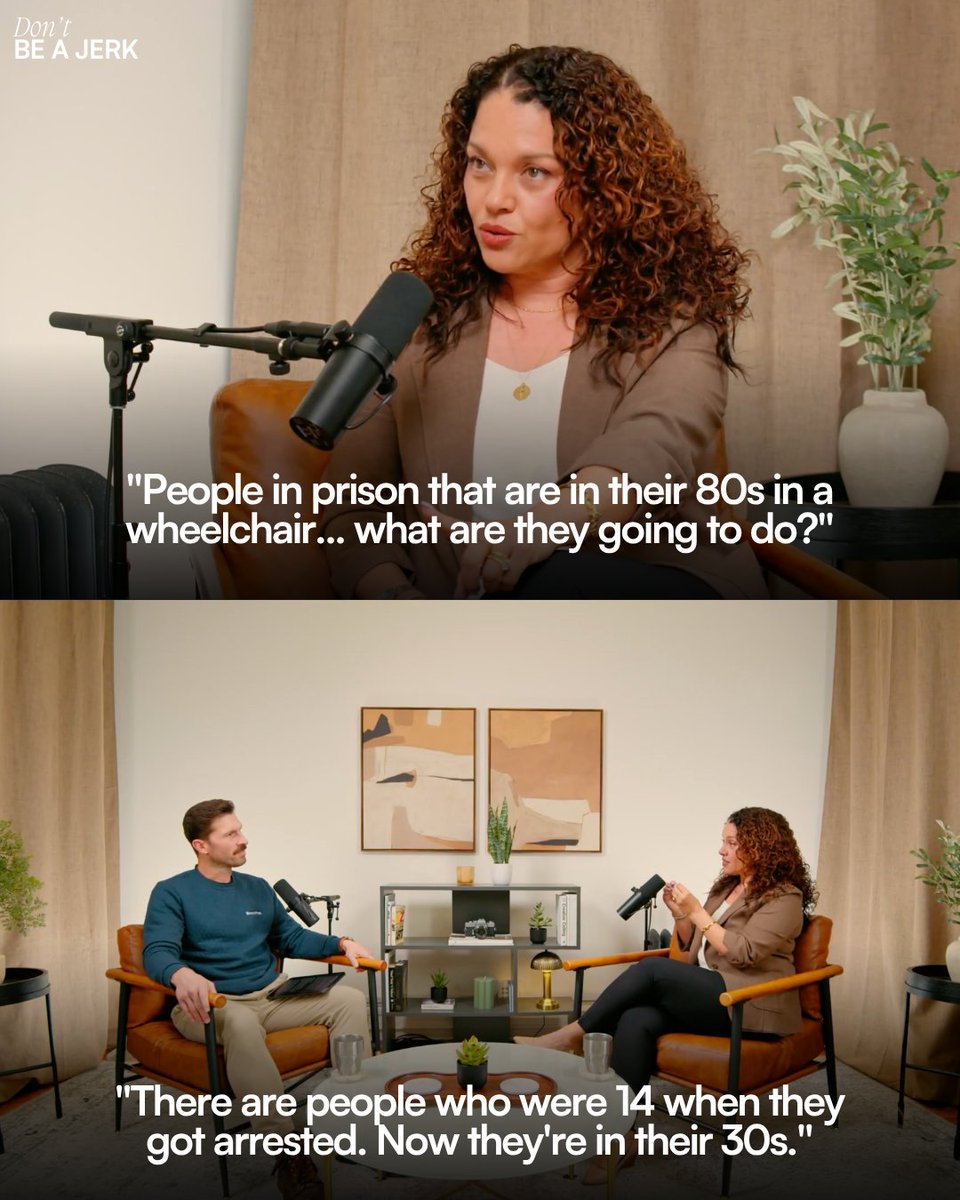
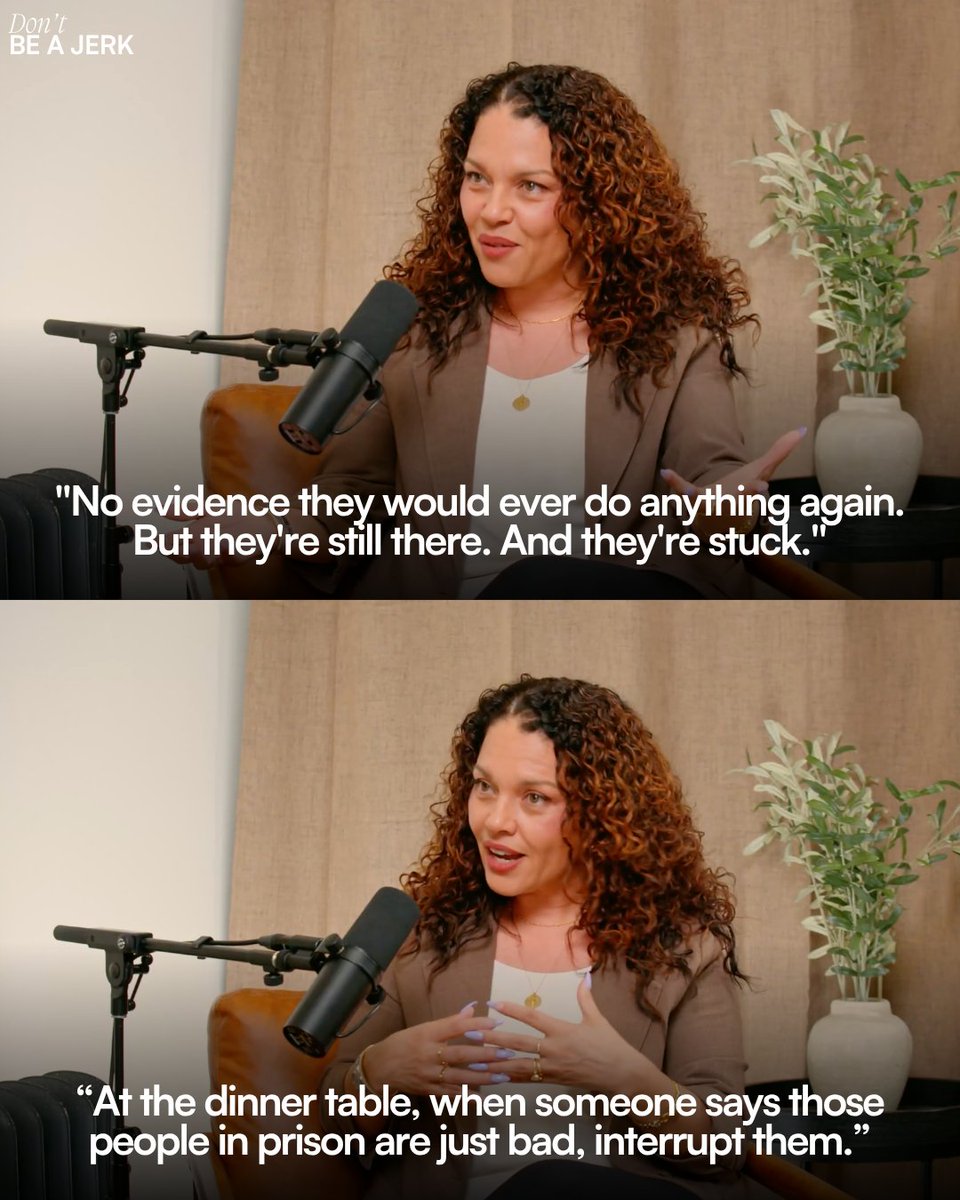
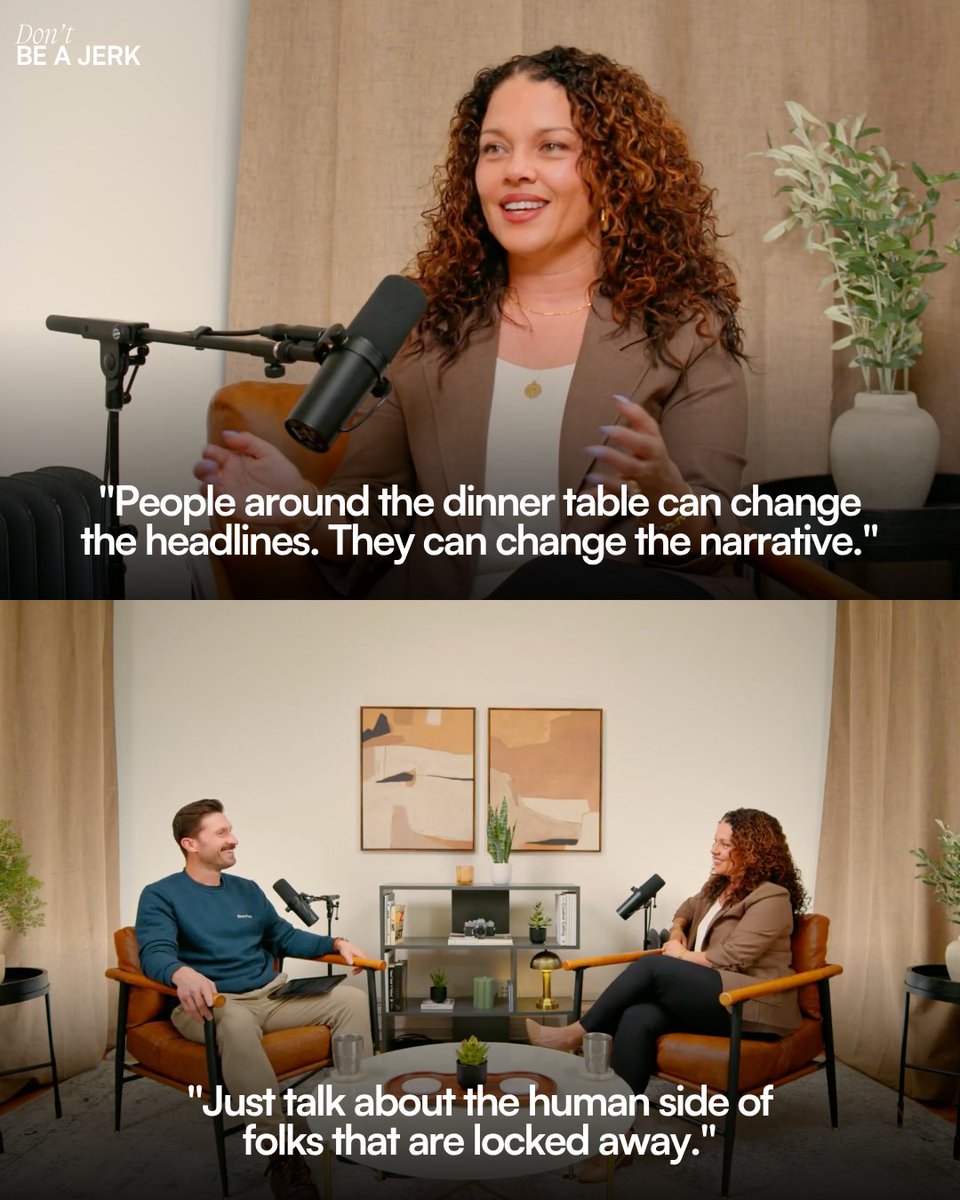
The US has the highest percentage of incarcerated citizens of any country in the world. The recidivism rate hovers around 50-60%. And prison is an $80 billion industry that you and I are bankrolling.
@hillaryblout has spent her career trying to change that… first as a prosecutor, now as the founder of For the People. She joined me on ‘Don’t Be a Jerk’ this week to talk about how the system actually works, and what it’s going to take to fix it.
Full episode is live everywhere!
43
Apr 22
This former prosecutor went from sending people to prison to then building the legal system to bring them home. In our newest episode of DBAJ, we talk all about why she made this 180º career pivot and what she’s doing to flip the narrative around prison sentences.
@hillaryblout left the DA's office and built an entirely new legal pathway to bring people home from prison. Not by fighting prosecutors but by making them partners.
Her nonprofit, For The People, has helped resentence over 1,000 people across six states. The recidivism rate is 3-8%. The savings in one county alone is up to $287 million.
This is one of the most powerful conversations I've had on Don't Be a Jerk. We get into:
- Why the person you think is your opponent might be your best collaborator
- How she convinced "tough on crime" prosecutors to revisit their own cases
- The trauma-to-prison pipeline for women (500% increase since the 1980s)
- Why second chances produce better outcomes than punishment, with the data to prove it
- What perspective-taking looks like in practice, for leaders in any field
1
55
Apr 20
Ever been to a dinner party and feel like the other person will NOT STOP TALKING??? Yeah, me too…
My wife and I have a game we play at dinner parties. The goal is to ask as many questions as possible, and talk about ourselves as little as we can. It sounds simple, but it's surprisingly hard. And it has completely changed how we feel after almost every social situation.
Here's the science behind it: Harvard researchers found that talking about ourselves activates the brain's reward centers, the same regions fired by food or money. We are biologically wired to love it.
Which means that when you dominate a conversation with your stories, your accomplishments, your opinions, you're accidentally denying the other person something their brain is craving.
And they feel it, even if they can't actually say it.
Real listening is rare.
Most people are waiting for their turn to talk, mentally rehearsing their next point while someone else is still mid-sentence. To actually listen, to give someone your full, undivided attention, is one of the most uncommon things you can offer another person. And it's one of the most powerful.
The people who are genuinely fun and exciting to be around have figured this out. They ask more than they tell. They're curious more than they're clever. And they make it their goal to listen, not just hear.
They leave every conversation making the other person feel like the most interesting one in the room.
1
46
Apr 17
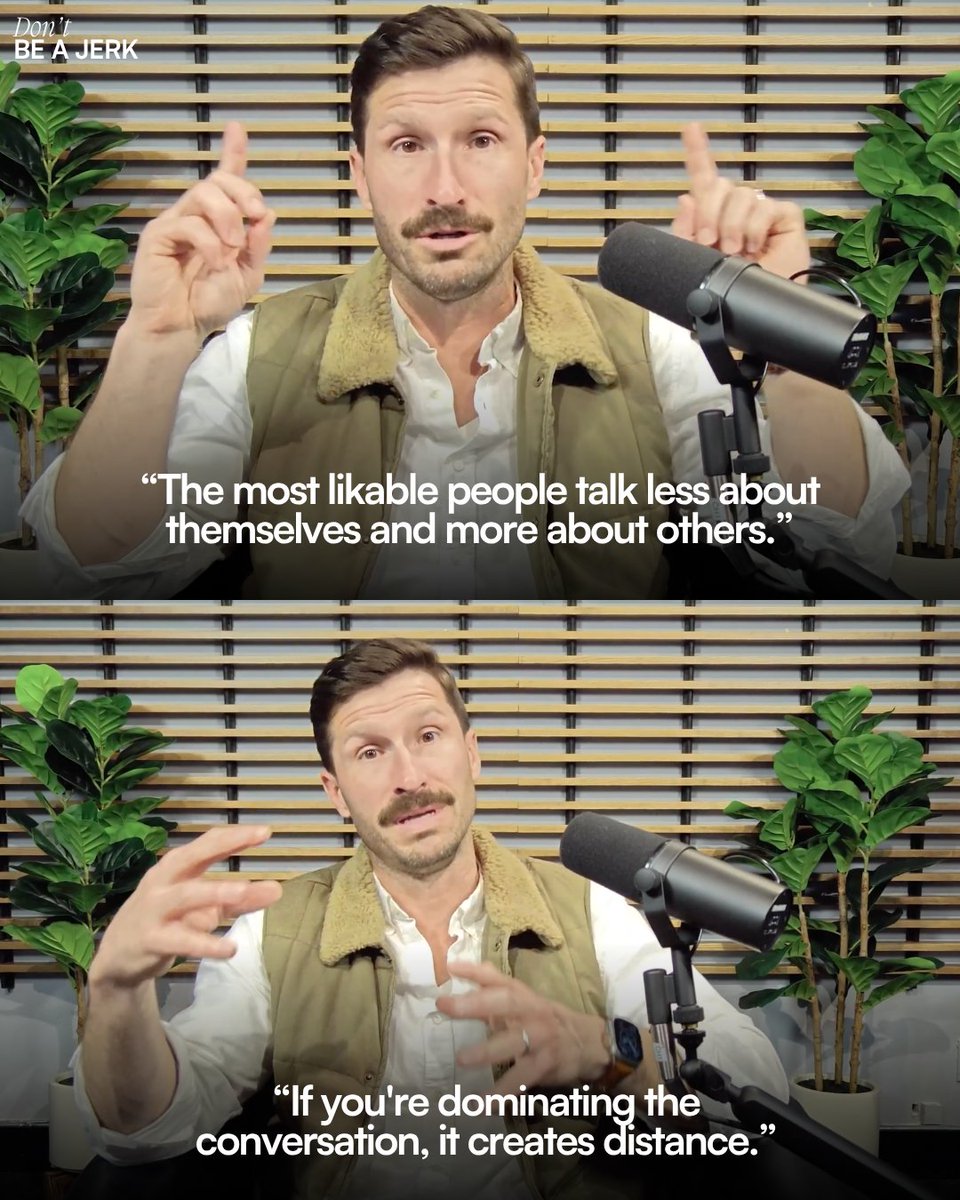
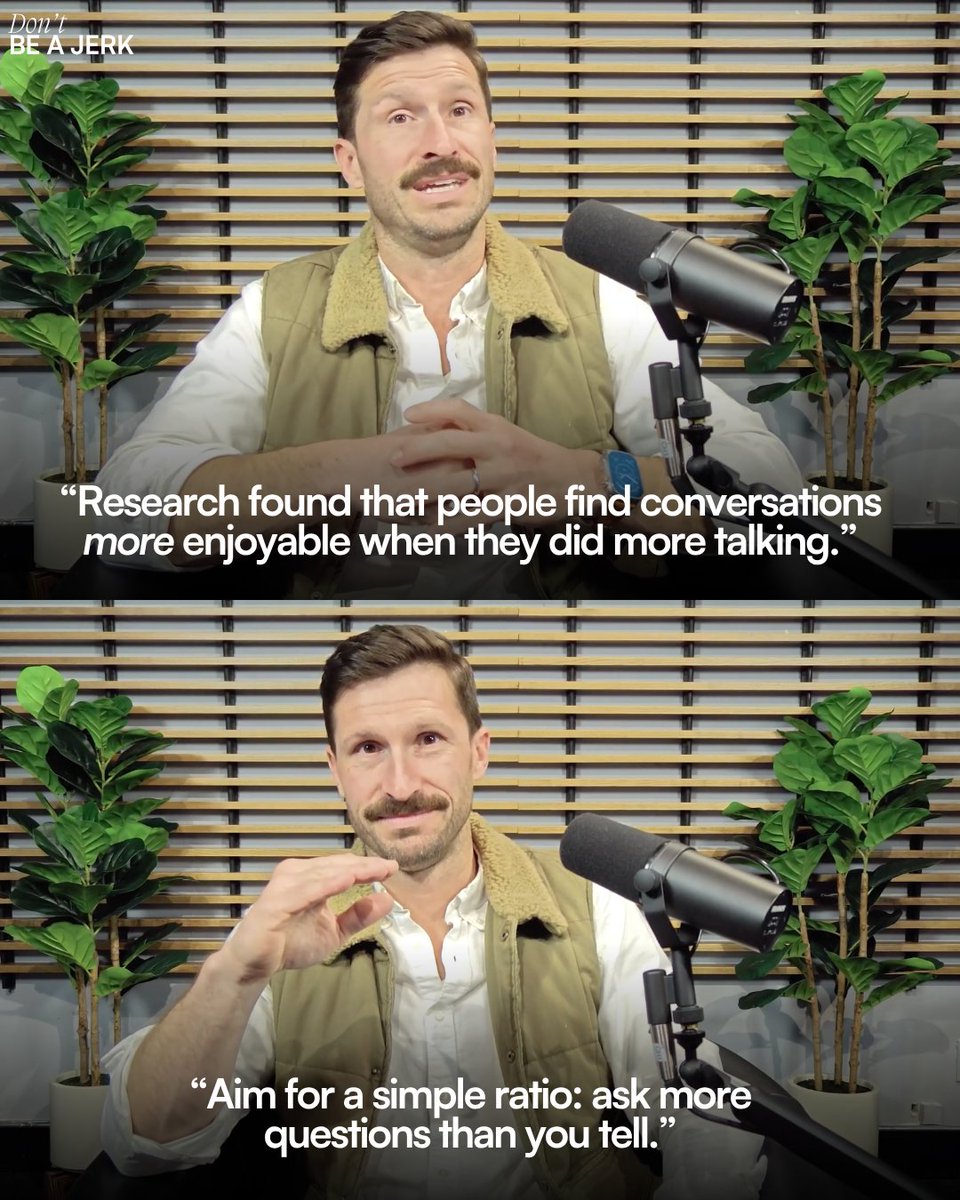
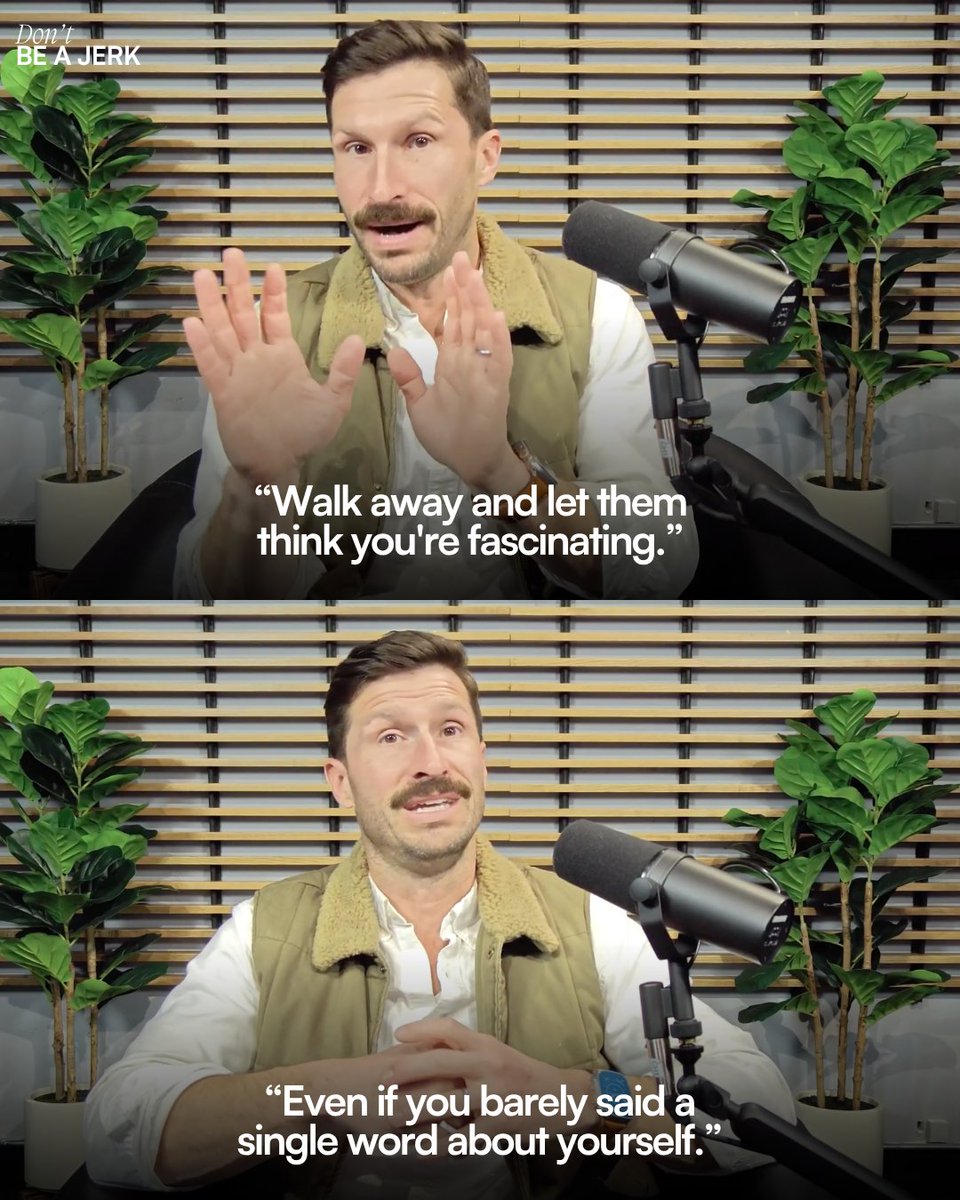
A simple trick that changes how people feel about you: Ask way more questions than you answer.
The most likable people aren't the loudest ones in the room. They're the ones who make you feel heard. And according to Harvard research, people genuinely enjoy conversations more when they do most of the talking.
So the next time you're in a meeting, on a date, or at a dinner party, make it a game. How many questions can you ask? How little can you talk about yourself?
You might be surprised how fascinating people think YOU are when you barely say a word about yourself.
40
Apr 15
I've been obsessed with this question lately: how does someone FEEL in the moments after they interact with me?
As Maya Angelou famously said:
“At the end of the day people won't remember what you said or did, they will remember how you made them feel.”
It turns out this answer matters more than most of us realize. When people feel respected, trust skyrockets. When they feel dismissed, defensiveness kicks in almost instantly.
So I did a solo episode on exactly this. 7 things you can do to be a genuinely great person. 5 traps that make you look like a jerk, even when that's not your intent.
What you'll walk away with:
- Why praising in public and giving feedback in private changes everything
- The "three times" name trick that makes people feel instantly seen
- Why the most likable people in any room talk the least about themselves
- What happens neurologically when you smile at someone (it's a little wild)
- How to change someone's mind without ever making an argument
This is one I'm really proud of.
1
1
2
82
Apr 13
A psychologist named Richard Wiseman spent a decade studying luck. He recruited 400 people, half who considered themselves lucky, half who considered themselves unlucky, and ran a simple experiment.
He gave each of them a newspaper and asked them to count the photographs inside. On the second page, in two-inch-tall type taking up half the page, was a message: "Stop counting. There are 43 photographs in this newspaper."
Almost every lucky person saw it immediately. Almost none of the unlucky people did.
Halfway through, there was another message just as large: "Stop counting, tell the experimenter you have seen this, and win $250."
Same result with the “lucky” people.
The unlucky group was more anxious, more narrowly focused, and so locked onto the task in front of them that they missed what was right there on the page.
Wiseman's conclusion: lucky people are more relaxed and open, so they notice things they weren't specifically looking for. Unlucky people miss chance opportunities because they're too focused on finding one particular thing.
I talked about this study with @briannekimmel on the latest episode of Don't Be a Jerk. She flew to Sydney at 22 with no job lined up, cold-emailed strangers on Twitter, crossed the bridge to meet someone she'd never met, and ended up writing the first check in some of the fastest-growing software companies in history. She didn't plan any of it. She was just open to it.
The lesson is clear: if you consider yourself lucky and that the world in conspiring in your favor, it typically does. You just have to be open to it!!!
1
84
Apr 10
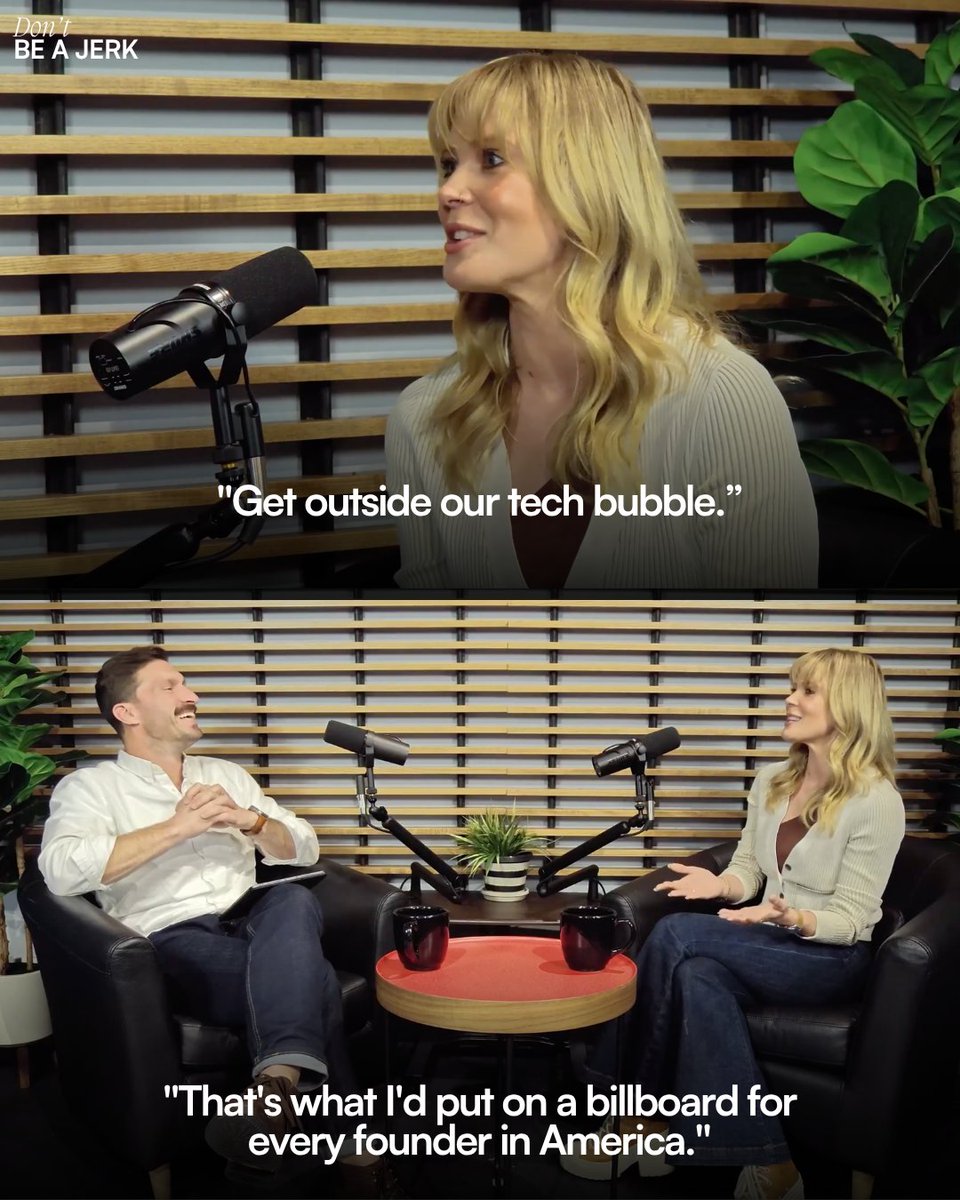
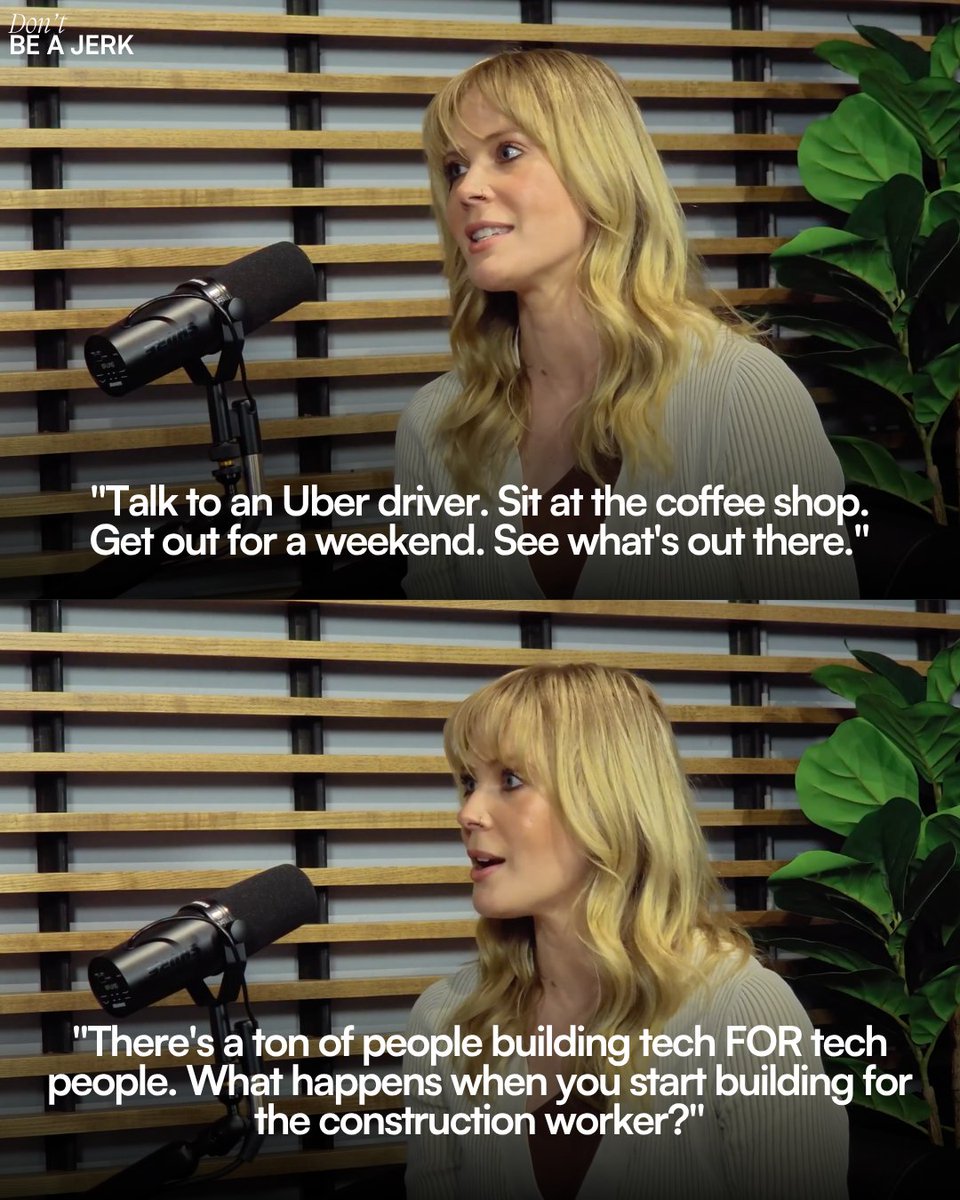
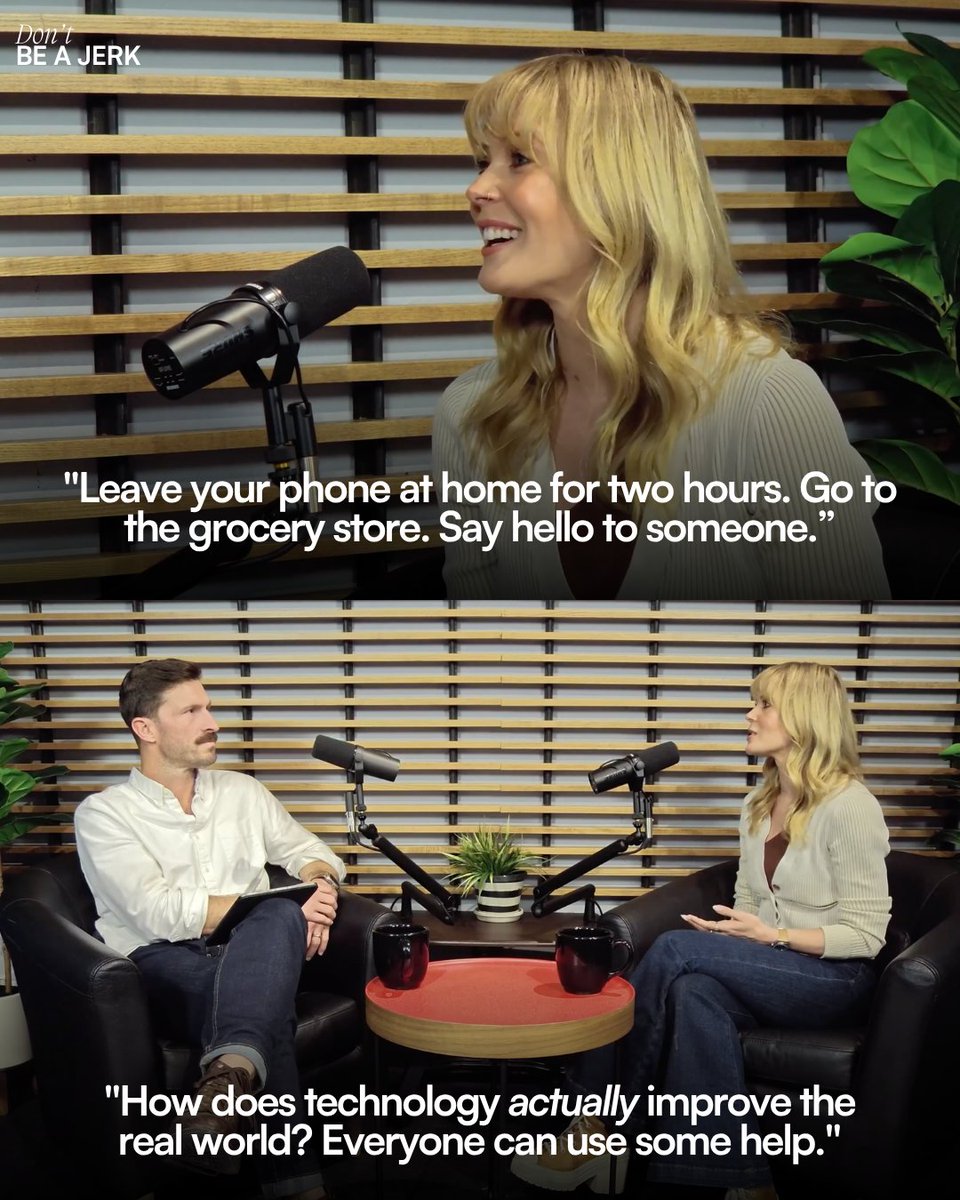
There are a LOT of people right now building tech for tech people.
@briannekimmel thinks that's the wrong bet. Here’s her take on where the real opportunities are.
Full episode of DBAJ with Brianne is live everywhere!!!
36
Apr 8
“If there isn’t a why, it’s very hard to get people to join your company.”
This was one of my favorite conversations on DBAJ yet!
@briannekimmel grew up in Youngstown, Ohio. Moved to Australia alone at 22. Came back craving connection that the internet kept failing to give her. Started writing $1,000 angel checks to founders most people overlooked. Now, she has 9 unicorns in her portfolio: @webflow, @Deel, @supabase, @Clubhouse.
Here’s her thesis:
Work made us all corporate people. The best founders are the ones Silicon Valley keeps ignoring. And AI (perhaps counterintuitively) might be the thing that gives us back the 100 things the internet stole.
What you'll learn in this episode:
- Why she says the MBA founder almost always starts a generic company
- Why the plumber has more job security than the Ivy League engineer in the AI era
- The "culture sourcing" strategy that gave her more deal flow than anyone chasing it the conventional way
- Why Gen Z hates dating apps and bad workplaces for the same exact reason
- What a book about the collapse of bowling leagues taught her about building one of the most human-first venture firms in Silicon Valley
- What "get outside the bubble" actually means as a leadership philosophy and why it matters more right now than almost anything else
Brianne is one of the most original thinkers I've had on this show. Full episode is live everywhere you get your podcasts!
1
2
134
Apr 1
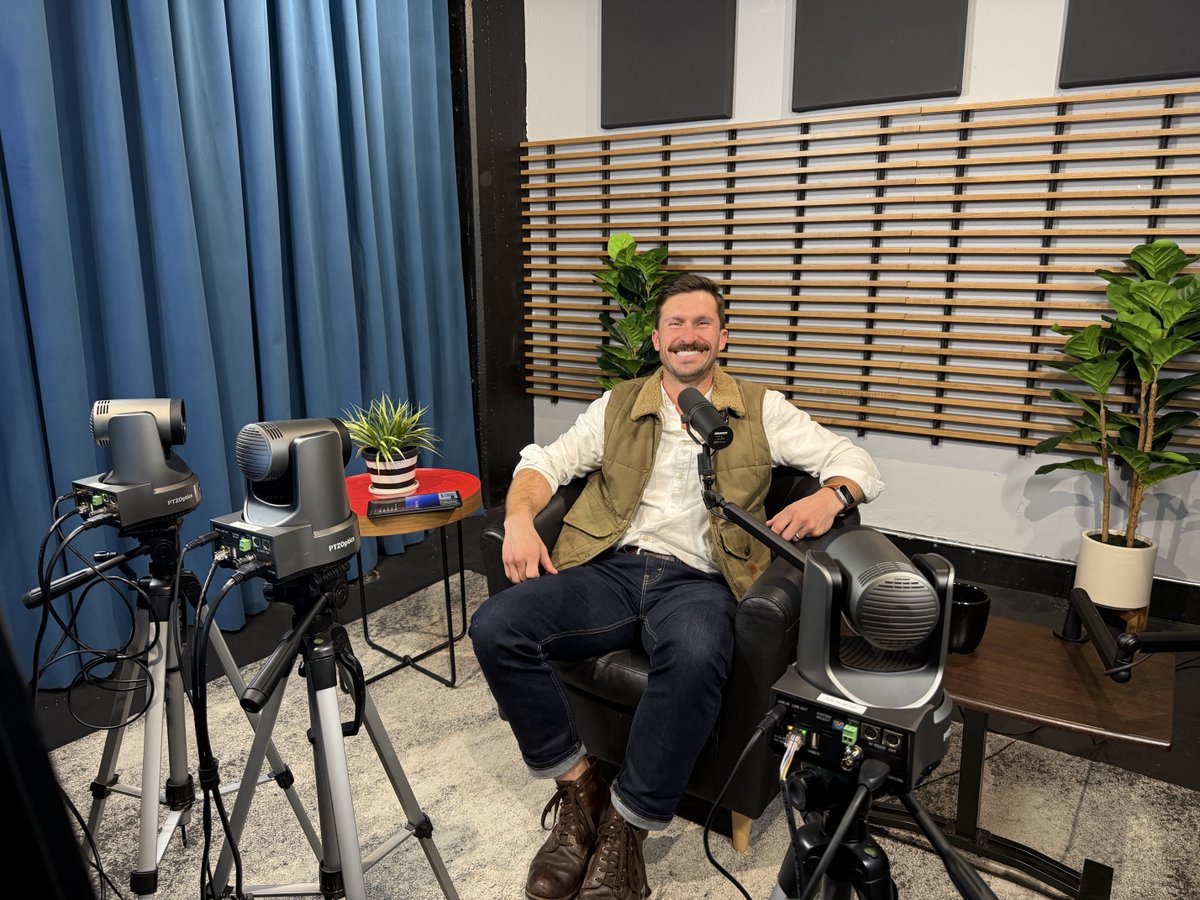
Seven months ago I wasn’t sure anyone besides my mom would listen.
Today Don’t Be a Jerk has reached 4 million people in 25 episodes. Which feels… kind of insane!!
This only happened because ridiculously talented people were kind enough to say yes. @zakijam casually rewiring our brains on empathy. Former FBI negotiators teaching us that kindness can actually win negotiations. @jspujji going full honesty mode on the founder mental game. @bengleib mixing comedy with uncomfortable truth. Bing Chen texting me he’s in SF with 24 hours notice and somehow we capture lightning.
And then there’s you. Four million of you who apparently also think we don’t need to be jerks to win in life.
It's a long way of saying thank you. Truly. This is some of the most fun I've ever had, and moreover I've had countless reconnections with friends over some of this content.
And we’re just getting warmed up. :)
Alright… who should we bring on next?
65