
Foreign correspondent for @Guardian in Taiwan. Via @guardianaus covering immigration and the Pacific and 3 wild years as NT corro helen.davidson@theguardian.com
Joined July 2010
- Tweets 17,879
- Following 6,079
- Followers 22,794
- Likes 27,438
773 Photos and videos

Helen Davidson retweeted

I am heartbroken at the hollowing out of an institution I so deeply loved, and for my colleagues, who deserve so much better. I didn't know it at the time, but my last story for the Post published today, on a meth and public health crisis in Fiji
washingtonpost.com/world/202…
11
70
329
52,767

A short note to confirm The Washington Post closed its Seoul hub today. Have loved every moment of working with the team here and at the mothership. The cuts have been deep across the board and I will miss the many talented people I have learned from — you are all magnificent.
39
127
542
52,812
Helen Davidson retweeted

If Jeff Bezos could afford to spend $75 million on the Melania movie & $500 million for a yacht to sail off to his $55 million wedding to give his wife a $5 million ring, please don't tell me he needed to fire one-third of the Washington Post staff.
Democracy dies in oligarchy.
23,095
30,618
167,920
5,577,985
Helen Davidson retweeted

Feb 4
My deepest sympathies go out to the laid off journalists from the @washingtonpost
The journalists covering East Asia consistently produced pieces that helped improve our understanding of the region, particularly thinking of @ShibaniMahtani, @annafifield, @cdcshepherd, @gerryshih
2
13
1,196
Helen Davidson retweeted

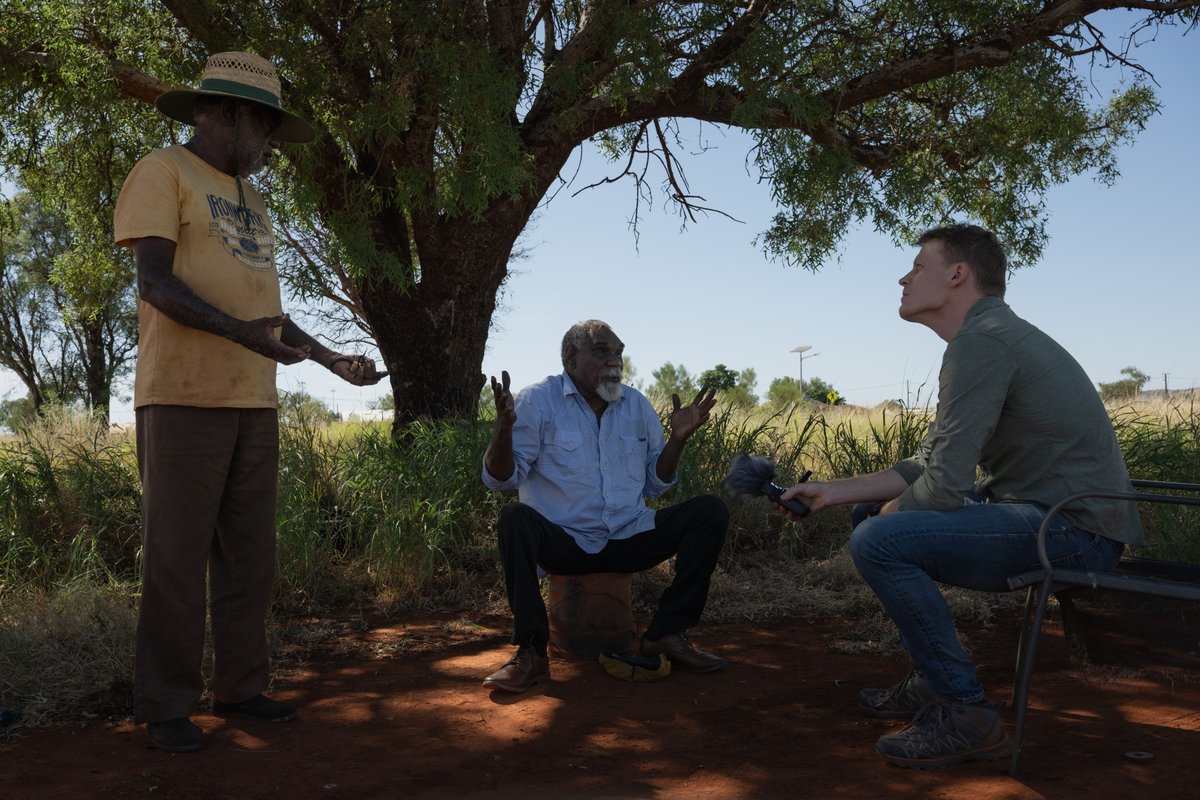
It was an honor to be @washingtonpost's first Sydney bureau chief. Unfortunately, I'm also the last. The paper is shrinking foreign coverage. I've lost my job. Worse, millions of readers will lose my colleagues' brilliant coverage. At a time of tumult, we need more info, not less
524
968
5,167
206,755
Helen Davidson retweeted
I've been laid off from the Post today, along with too many of my incredible colleagues, after eight incredible years, most of them in Hong Kong and covering China's expansion, a story that will define our generation.
280
412
2,429
202,698
RT @gerryshih: It was a privilege to be a Post correspondent, roaming the world the last 7 years for a paper I very much believed in. I'm…
269
Appalling day in media, what a massive loss of talent across the board, at a time it’s needed more than ever
Feb 4

I was laid off as Asia editor of the Washington Post today. It was an absolute privilege to work with people who are not only incredible journalists but also wonderful humans. My heart breaks for everyone who lost their job today - and for the readers who will be the worse for it
1
6
26
2,099
Helen Davidson retweeted

Jan 13
Having been in Hong Kong prison in summer, it’s so brutally hot that even in shorts nearly every male prisoner would break out in rashes, while many would have fainting and vomiting spells. It’s even worse for women who, unlike men, can’t take off their shirts to work.
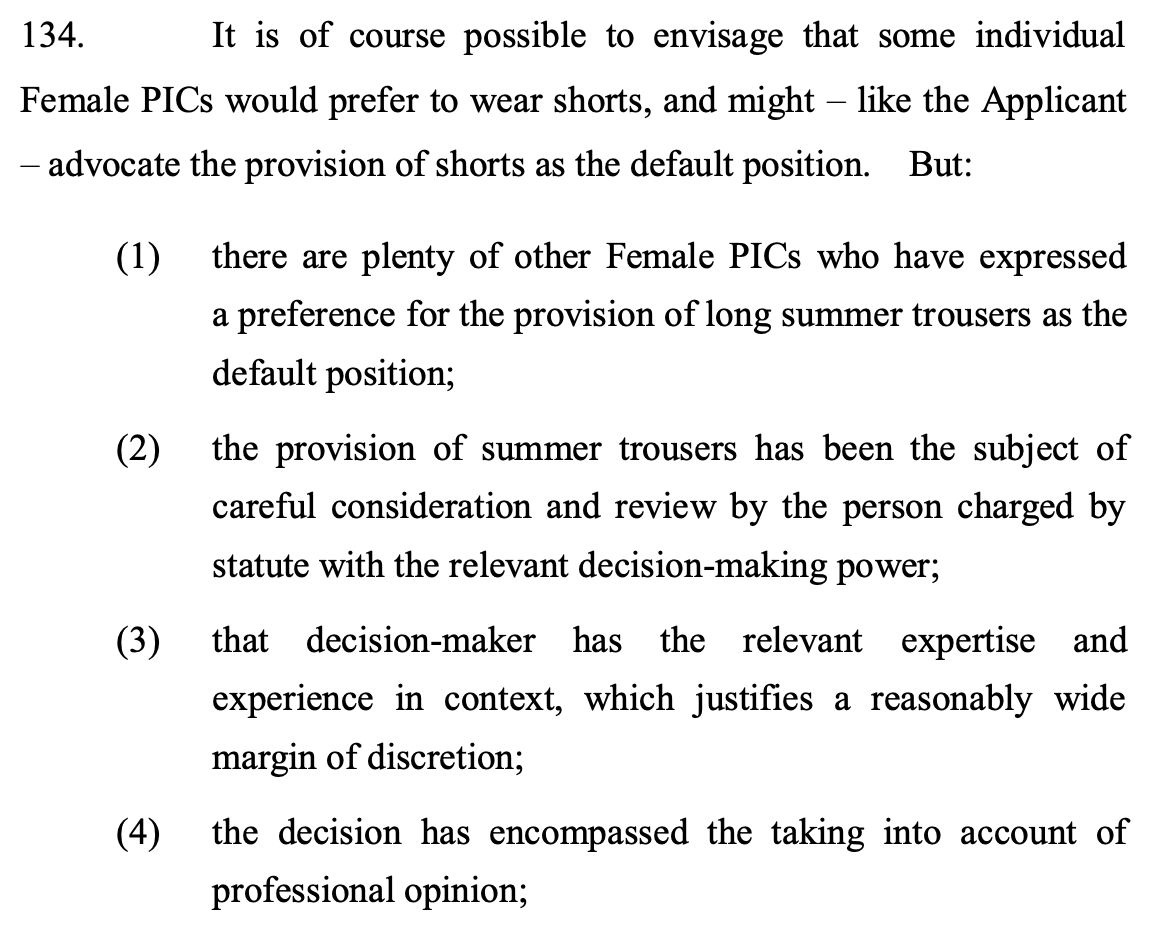
Reading Judge Coleman’s opinion, it boils down to “We must trust the good officers as Correctional Services that they have good reasons for this discriminatory policy, and they say some prisoners like it.” Utterly absurd.
Jan 13

Chow Hang Tung's appeal against having to wear trousers in summer (while male inmates may wear shorts) has been denied by High Court Judge Russell Coleman.
Decision here: legalref.judiciary.hk/lrs/co…
1
29
85
12,204
Helen Davidson retweeted

Jan 13
Exclusive: Chinese officials are using a ‘highly specific’ interpretation of EU rules to suggest Taiwanese figures should not be granted visas, officials say. theguardian.com/world/2026/j…
10
46
138
23,607
Helen Davidson retweeted

Jan 13
The more pressure vis-a-vis Europe, the more pressure vis-a-vis Taiwan, the closer we will stand together.
External pressure is the catalyst for a new era of EU-Taiwan cooperation.
#EUwithTAIWAN
theguardian.com/world/2026/j…
7
3
33
5,119

Jan 14
RT @BehrouzBoochani: The footage coming out of Iran makes it believable that the number of people killed by security forces is in the thous…
124
Jan 13
My final Taiwan byline for the Guardian with a scoop on Beijing’s latest creative pressure campaign: telling Europe they’ve misunderstood their own border laws theguardian.com/world/2026/j…
3
12
29
4,295
Helen Davidson retweeted

19 Dec 2025
My first story from Taipei, with thanks to @heldavidson
theguardian.com/world/2025/d…
5
8
1,543
Helen Davidson retweeted

16 Dec 2025
A huge thanks to @heldavidson for quoting me. Just to elaborate on my two quotes in the @guardian as noted below by @SupportJimmyLai:
“[Jimmy Lai’s publications] kept Hong Kong honest in many ways … We kind of forget that Jimmy Lai and his media businesses played an important role in Hong Kong as an international financial centre because it kept the free flow of information going about Hong Kong’s corporate underbelly.”
- Politics aside, because Lai was very much outside of HK’s business establishment, it meant that his publications had a much freer hand than most other publications to undertake fearless investigative journalism. This led to Next Magazine and Apple Daily having exposed many HK and China corporate scandals.
- Notwithstanding the at times unnecessarily salacious ways in which some of these scandals were broken by Next and Apple, their work was so valued by the financial sector in HK that they would often look to Next and Apple reports as preliminary first steps in their IPO or mergers and acquisitions due diligence.
- Jimmy Lai’s publications were standard bearers (in substance, even if not always in style) of HK as an international financial centre, insofar as it reflected a deal-making hub in which investors and financiers have access to information with little fetter.
- The downfall of Jimmy Lai and his publications coincided with a time when, as has been variously reported, national security laws have made equities analysts reluctant to state their views on Chinese companies frankly, and prospectus disclosure rules plus companies registry search rules were changed with a new to more opacity about HK and Chinese companies.
“The trajectory of [Jimmy Lai’s] life reflects the history of Hong Kong itself.”
- Jimmy Lai’s rise as a HK businessman reflected HK’s economic rise. His initial wealth came from the garments manufacturing and retail sector.
- His distrust of the CCP reflected that of HKers generally, and was solidified by the Tiananmen Square Massacre, just like it was for many HKers.
- His founding of Next Magazine and Apple Daily reflected a flourishing HK media scene in the 1990s. Ironically for someone who was strongly anti-CCP, the CCP’s antics was once very profitable for him, as his entrepreneurial instincts propelled him to plug a HK media market gap in which being anti-CCP in print was no longer the preserve of the cobwebbed “we need to save China!” intellectual types.
- However, as the CCP and its allies started closing in, advertisements in Next and Apple gradually dried up, but that did not stop Jimmy Lai from holding on to his beliefs, while the HK public stuck with him.
- When the National Security Law came into force and Lai was first arrested, the public supported him and protested in the most HK way possible: buying Next Digital Limited shares and driving up its share price even as the likelihood of the company being shut down by the HK Government’s moves grew, which would (and eventually did) render the company’s shares worthless.
- And then Lai was locked up again, and we are where we are both with him and with HK.
15 Dec 2025

“The trajectory of his life reflects the history of Hong Kong itself,” said @kevinkfyam in @guardian.
"We kind of forget that #JimmyLai and his media businesses played an important role in Hong Kong as an international financial centre because it kept the free flow of information going about Hong Kong’s corporate underbelly.”
#FreeJimmyLai
theguardian.com/world/2025/d…
5
12
38
4,146
12 Nov 2025
RT @SaksithCNA: JUST IN: She Zhejiang, a Chinese-Cambodian tycoon accused of running online gambling sites and cyber scams in Myanmar and C…
1
334
Helen Davidson retweeted

8 Sep 2025
To shrug and say, ‘Well, it’s just the way things are’ is to walk ever further down a path that cedes ever more authority and risks betraying an already frayed compact with readers.
#MediaWatch
29
123
384
84,829
8 Sep 2025
Revealed: the huge growth of Myanmar scam centres that may hold 100,000 trafficked people. By @rebeccarat theguardian.com/global-devel…
6
5
1,523
Helen Davidson retweeted

3 Sep 2025
China drilling for oil and gas inside Taiwan’s exclusive economic zone buff.ly/99wpZ9d Experts say the move could be part of Beijing’s ‘greyzone’ grab for disputed territory.
1
5
3
1,464
3 Sep 2025
My wrap on China's military parade today: A new photo for the history books as Xi, Putin and Kim arrive together, warnings of peace and war, a lot of big shiny military hardware, and a definitely not mad Trump
theguardian.com/world/2025/s…
6
4
9
3,428