
Joined January 2026
- Tweets 470
- Following 233
- Followers 1,775
- Likes 327
84 Photos and videos


Pinned Tweet

Apr 23
Law firms are putting AI in the wrong place.
Sullivan & Cromwell, Latham, Allen & Overy - every major firm is racing AI into legal research, drafting, and memos. That's exactly where hallucinations become malpractice. A single fabricated case citation has already sanctioned real lawyers (Mata v. Avianca, 2023 - the ChatGPT lawyers). A hallucinated statute in client advice is worse.
Meanwhile the one place AI is genuinely safe - intake, qualification, and scheduling still runs on PDF questionnaires and paralegal phone tag at almost every firm in the country.
So last night I built what lawyers should actually be building.
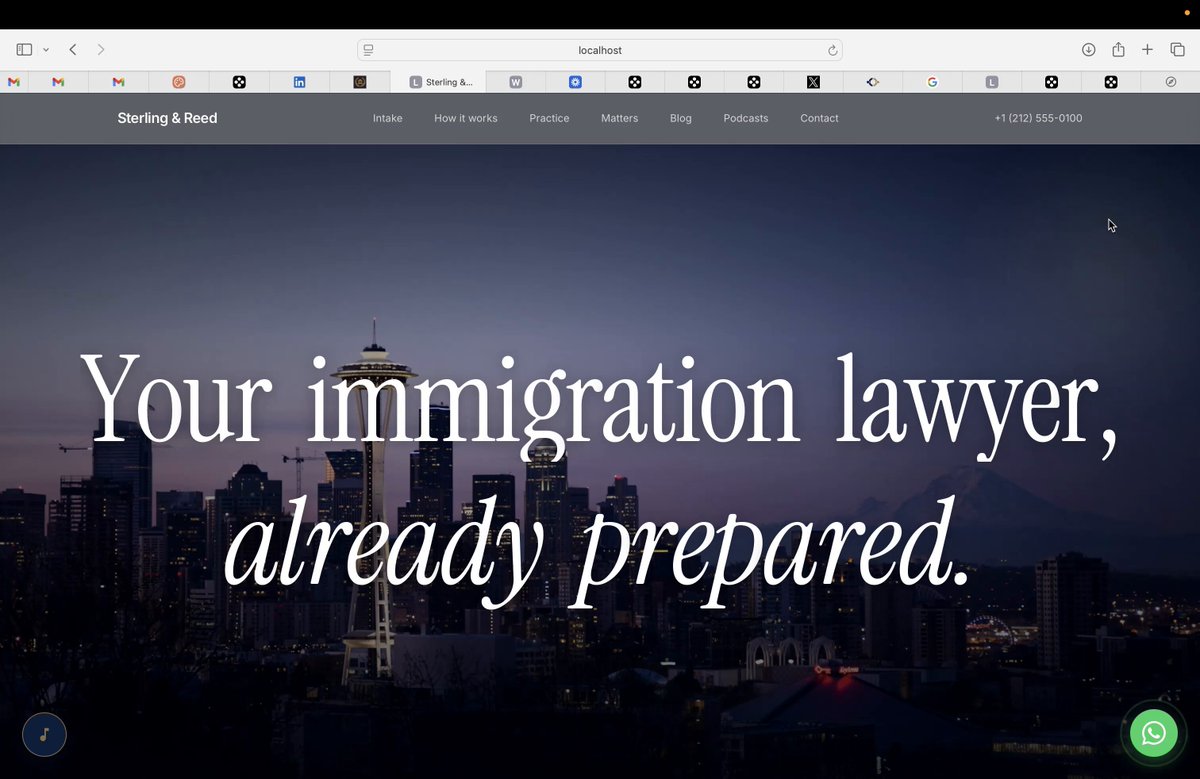
A demo website for a fictional U.S. immigration firm - Sterling & Reed, lead partner Ann Sterling (all names are fictional). An AI intake concierge named Evelyn qualifies every prospect through 17 consultative questions, books the consultation on Ann's Calendly, and emails a two-page matter brief straight to her Gmail before she joins the call.
No briefs. No citations. No advice. No hallucination surface.
Any immigration lawyer on this app can replicate it. Here are the 12 exact prompts I used - copy-paste into Claude Code:
━━━━━━━━━━━━━━━━━━━━
1/ BRAND FOUNDATION
"Design a boutique U.S. immigration firm website. Fictional founding partner, two offices (NY Miami). Palette: deep navy bronze warm paper. Fonts: Instrument Serif for display, Inter for body. Luxury editorial - no generic templates, no blue-chip blue."
2/ HERO
"Full-screen dark cinematic hero. Centered serif headline: 'Your immigration lawyer, already [prepared].' The last word cycles every 3.5s, character-by-character morph - rotating through prepared / briefed / engaged / on your side. Background: 6 US city night-skyline photos crossfading every 5s with Ken Burns drift. Horizon glow starfield overlay."
3/ AI INTAKE CONCIERGE
"Build Evelyn, an AI intake concierge. 17-turn immigration intake: greeting → visa pathway → citizenship status expiration → professional background → timeline → visa-specific qualifier (EB-5 capital, O-1 evidence, E-2 treaty, etc.) → source of funds / sponsor → prior visa history derivatives → red flag on prior denials → red flag on arrests / overstays → biggest concern → referral source → name → email → WhatsApp → present 3 slots → booking confirmation. Voice: warm, consultative, never rushed. Frame red flags as 'no wrong answers - Ann prefers to know upfront.'"
4/ THINKING STATE
"Before each Evelyn reply, show a thinking state. Spinning bronze ring context-aware label per turn ('Identifying visa pathway...' / 'Cross-referencing denials database...' / 'Preparing brief to Ann...'). Then typing dots. Then the reply. Feels deliberate, not robotic."
5/ AGENT AVATAR
"Evelyn's avatar: real photo of a professional woman in a circle. Bronze conic-gradient ring rotating around her, sonar pulse rings expanding outward, green live-status dot bottom-right. Three states synced to chat activity: idle (gentle breathing), thinking (faster pulse bronze glow halo), speaking (bronze waveform bars below photo)."
6/ BOOKING - CALENDLY INTEGRATION
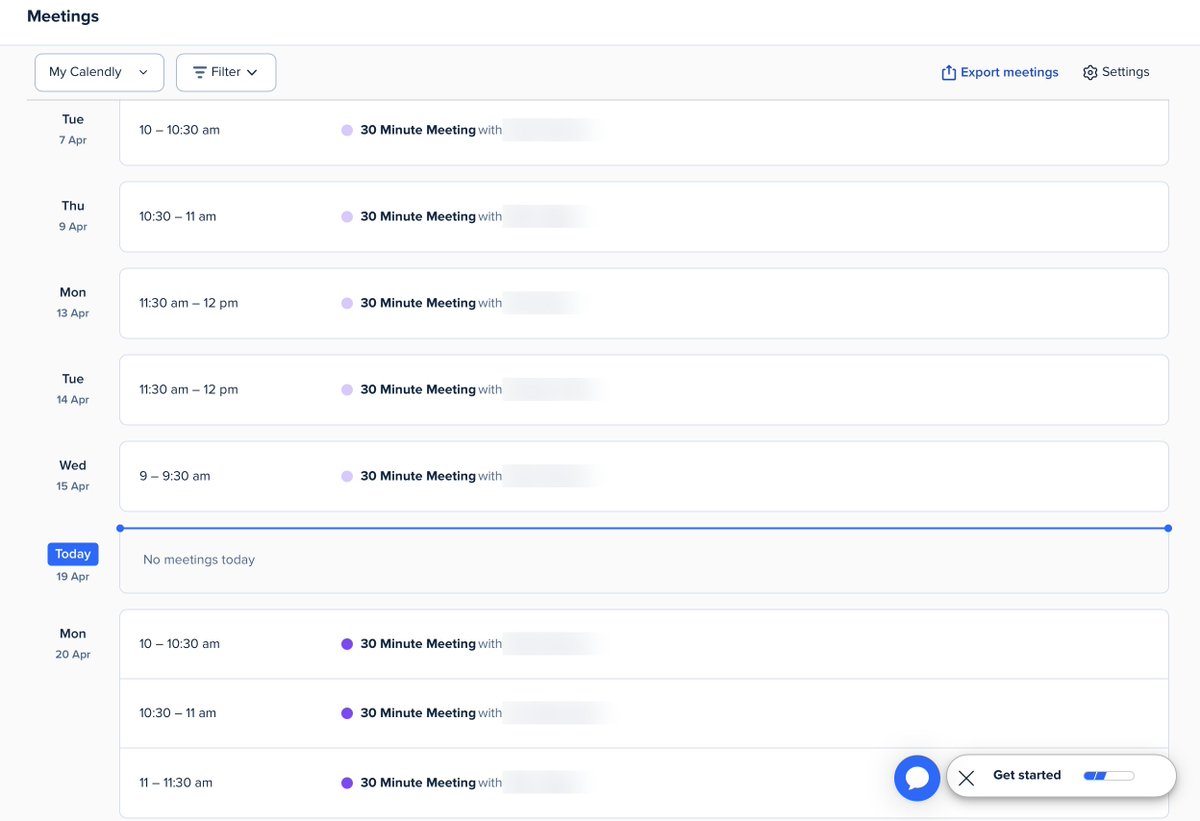
"After intake completes, embed the firm's Calendly inline in the chat for slot selection. On confirmation, show an animated card: 30-particle bronze burst 4 cascading checkmarks 300ms apart - Brief delivered to Ann's Gmail → Calendar dispatched via Calendly → WhatsApp queued → Prep checklist attached."
7/ HOW IT WORKS - SCROLL-PINNED
"4-step section pinned with GSAP ScrollTrigger: 01 Intake, 02 Routing, 03 Consultation, 04 Engagement. Each step: custom animated SVG (chat dots pulsing / checkmarks drawing / calendar slot pulsing / signature stroke drawing itself). As you scroll, active step scales up glows, inactive steps dim blur. Bronze progress bar fills the bottom of the active step."
8/ LIVE STAT BAND
"One horizontal line: '1,247 Matters filed | 38 Countries of origin | 97% Approval rate.' White italic Instrument Serif numbers, bronze vertical rules between. On scroll-in: scramble-resolve animation over 1.5s. First stat then becomes a live ticker - every 10-24s increments by 1 with champagne flash floating ' 1 EB-5' / ' 1 O-1' / ' 1 Family' badge (weighted random matter type)."
9/ BEFORE vs AFTER
"Editorial band showing '21 days → 6 minutes.' Left: huge italic serif '21 days' with diagonal strike-through that draws in on scroll five struck-through bullets (12-page PDF, five emails, paralegal screening, conflicts memo, partner hand-off). Arrow. Right: italic bronze '6 minutes' five clean bullets. Below: live session clock three real-time counters (briefs filed, conflict checks cleared, calendar holds reserved) ticking up while the visitor reads."
10/ EDITORIAL TESTIMONIAL
"Pull quote block. 200px italic bronze opening mark (❝) fades in at 18% opacity. Two-line quote with 300ms staggered reveal. Bronze underline draws under emphasized phrases. Below: bronze divider initials circle name verified green pill ('● Verified client · 2025'). Bronze corner brackets top-left and bottom-right."
11/ REPRESENTATIVE WORK
"3 recent matters as a vertical bronze timeline. On scroll, the line draws top-to-bottom and marker dots pop in with staggered sonar rings. Per matter: visa tag (EB-5 / O-1 / E-2), matter number ('No. 1,247'), italicized key figures, green outcome pill (I-526E Approved / Premium Processing Approved / First-Interview Approved)."
12/ BLOG CONTACT FLOATING BUTTONS
"3 blog cards (Instrument Serif italic titles, bronze gradient placeholders): EB-5, O-1, Family-based. Simple contact form: name email country of citizenship visa type note. Dark footer with both offices. Two floating FABs: WhatsApp bottom-right (green sonar pulse, pre-filled message) music toggle bottom-left."
━━━━━━━━━━━━━━━━━━━━
Built entirely in Claude Code. No Cursor, no React boilerplate, no design team.
The intake bot runs as a deterministic server flow - no AI inference during the conversation itself, which is why it can't hallucinate. Briefs pipe to Gmail. Consultations book through Calendly. Deployed on Vercel in 15 minutes.
Every tool a lawyer needs for this is either free or already in the firm.
Swap the fictional firm for your name, your practice areas, your matters - customize and you're live by the weekend.
The AI sits in intake, not in your brief. No hallucination, no malpractice, no sanction risk. Just a qualified lead, a warmed prospect, and a partner who walks into the consultation already prepared.
14
9
92
15,692
Think about the last time you needed a doctor.
Not a checkup. The kind of need where something is wrong and you want to talk to someone now. You find a doctor's website. You call.
It rings. Voicemail. You call back the next morning. Voicemail again.
What does your brain do in that moment? It does not think "she must be busy helping patients." It thinks: if I can't even reach this person, how is she going to manage my actual care? If there's no system to answer a phone, what else is falling through the cracks?
You hang up and find someone else. Not because the first doctor was worse. Because the silence told you something about how the whole operation is run.
Now switch seats.
This time, you are the one who doesn't pick up. Your clients are calling you exactly the way you just called that doctor - scared, urgent, needing someone now. Their legal problem does not keep business hours. The lawsuit lands on a Friday night. The arrest happens Saturday. The panic about the contract hits at 9pm.
They call. The office is closed. The receptionist is on vacation. It's the weekend. Voicemail.
And the client's brain does exactly what yours did about the doctor: if he can't even answer the phone, how is he going to handle my case?
You did not just miss a lead. You failed a test you didn't know you were taking and the test was never about your lawyering. It was about whether anyone was home.
Here is what nobody wants to admit. Clients cannot evaluate your legal skill. They aren't lawyers. So they judge you on what they can evaluate: Did someone pick up? Did they call back? Did they make me feel handled? Availability is the proxy they use for competence - because it is the only signal they understand.
The firms that figure this out are going to be untouchable by 2030.
Not because they are better lawyers. Because while everyone else's clients hit voicemail on a Saturday, theirs reach a system that answers in the firm's name, captures the matter, books the consult, and texts back before the client even calls the next name on the list. Always on. Nights, weekends, holidays, the week the receptionist is out.
The client never feels the gap. And "they were there when I needed them" becomes the first thing they say about you to everyone they refer.
That is the whole game now. Not just being a good lawyer.
Being a reachable one.
—
Two ways forward if this is you:
→ Want to see your own number? I'm running 3 free intake audits next week - I'll show you exactly where your firm goes silent and what it's costing you. Comment "audit" below. First three only.
→ Already know you have this leak and want it closed? The link in my bio books a call.
2
1
7
1,005
Jun 13
Every lawyer has a 2am.
Not the kind where you're working late. The kind where you're lying in the dark replaying one thing you already did and cannot undo.
Maybe it's a deadline you calculated. Maybe it's a clause you drafted. Maybe it's the answer you gave a client on a Tuesday that they acted on by Friday.
It looked fine when you did it. It looked fine for weeks. And then tonight - one sentence in an opinion, one email, one offhand comment from another lawyer at an event and the doubt arrives, and your stomach drops before the thought even finishes.
You get up. You pull the file. You read your own work again. You read it a fourth time, the words swimming, and you genuinely cannot tell anymore whether you are being paranoid or whether you are staring at the end of the thing you spent ten years building.
And here is what makes it so much worse than it should be:
There is no one to ask.
At a firm, you walk down the hall. You put your head into someone's office and say "tell me I'm crazy," and they either tell you you're crazy or they help you fix it. Either way, you are not alone with it.
You are the firm. So you carry it to your car. To dinner. To bed. Running the same loop in the dark, because the only thing worse than knowing is not knowing.
And underneath all of it sits the worst part.
If you got this wrong, you don't just have to live with it. The rules say you have to pick up the phone and tell the client yourself.
You have to be the one to say the words.
If this has ever been you - read it twice.
You are not careless. You are not weak. You are not bad at this.
You are doing alone a job that was built for ten people to do together.
At a real firm, the thing you did tonight would have passed through ten hands before it ever reached a client. The associate who drafts. The senior who reviews. The partner who asks the one question you didn't think to ask. The clerk who catches the date. Every pair of hands a chance to catch what you cannot catch alone at 2am.
The day you went solo, you didn't lose the staff.
You became all ten hands.
The 2am fear isn't a flaw in you.
It's the sound of one person holding up a system that was built for ten.
6
30
140
27,191
Jun 12
In a year of building AI systems for law firms, not one lawyer has asked me whether the AI is good enough.
Not one.
Every call opens with the same question instead:
"What happens to my client's data when it touches your system?"
Litigators ask it. Corporate lawyers ask it. Thirty years in or three years in - before price, before timeline, before anything: where does the file live.
The legal tech industry keeps answering a different question. Every demo is capability - benchmarks, drafting speed, accuracy. The lawyers nod politely and do not buy, and the industry concludes what it always concludes: lawyers are slow adopters.
Wrong diagnosis. A lawyer who hesitates before putting a client file into an AI system is not behind the times. She is doing her job. And this month proved her right - the most powerful model ever released ships with mandatory 30-day retention, and flagged conversations can be read by human reviewers. The lawyers who hesitated are the ones who read fine print for a living.
But "never use AI" is the wrong conclusion too.
Lawyers already know the solution. We have used it for a hundred years.
When you need a colleague's judgment on a sensitive matter, you do not hand over the file. You walk down the hall and say: "Hypothetically - say a client transferred an asset to his brother eighteen months before filing. Problem?"
No names. No client. Your colleague gives you the answer, and your client was never exposed.
AI should work exactly the same way. Here is what that looks like in practice.
Say your client is Robert Hale. Before anything leaves your computer, software on your machine replaces every identifier in your text. "Robert Hale moved $80,000 to his brother in March 2025" becomes "Client A moved [amount] to a relative on [date]."
That placeholder version is the only thing the AI ever sees. To the AI, your matter is a hypothetical about Client A.
The analysis comes back: "Client A's transfer is likely voidable."
And on your computer - only on your computer - the software swaps the real name back in: "Robert Hale's transfer is likely voidable."
You got the full analysis. The AI never learned your client's name. Nothing identifying ever left your machine.
The model sees the matter. The client never enters the room.
So here is the one question to ask any AI vendor - including me:
"Does the model ever see my client's name?"
If they cannot answer that in one sentence, the demo does not matter.
The capability question in legal AI is settled - the models can draft. The question that decides whether you can actually use them is custody: who holds your client's data, and where.
Capability earns the demo.
Custody earns the signature.
—
One more thing. I went looking for a tool that does this for lawyers - free, runs entirely in your browser, nothing uploaded to anyone, including me. I could not find one. So I am building it.
While I do: comment with your practice area and the identifiers your documents are full of - medical record numbers, policy numbers, docket formats, claim numbers. The recognizer list is being built from this thread.
9
1
31
3,702
Jun 10
Anthropic released Claude Fable 5 yesterday. Two numbers from the launch tell you everything about where AI in legal actually stands.
93.4% and 13.3%.
On BigLaw Bench, Harvey's benchmark for legal task performance, Fable 5 scored 93.4% - a new high for any Anthropic model. Harvey's lawyer evaluators praised its drafting and markup work: it reliably caught term sheet deviations, off-market provisions, and internal inconsistencies in counterparty redlines.
On Harvey's Legal Agent Benchmark - which measures end-to-end completion of complex legal tasks under a strict all-pass standard - it scored 13.3%.
That 13.3% is an all-time high. The previous best, Opus 4.8, scored 10.4%.
Note the phrase "all-pass standard." One miss and the task fails. Which is exactly how legal work is judged. A brief with one fabricated citation is not 95% good. It is a sanctions hearing.
Read the two numbers together.
The most capable AI model ever made publicly available - the first of Anthropic's "Mythos-class" tier, state-of-the-art on nearly every benchmark they tested - drafts and marks up at the highest level ever measured, and still fails roughly 87% of complete legal matters under the standard lawyers are actually held to.
This is not a flaw the next release will patch. It has been the shape of every release for two years. Task performance climbs fast. End-to-end performance crawls - 10.4 to 13.3 is the frontier moving at full speed.
The gap between 93.4 and 13.3 has a name.
It is the lawyer.
The judgment about which draft is the right draft. The sequencing of a matter. The knowledge of what the client actually meant, what opposing counsel will do with a weak sentence, what this judge will tolerate. None of that is in the 93.4. All of it is in the missing 87.
So two groups of lawyers are wrong today.
The ones waiting for AI to replace lawyers - the benchmark just told you it cannot run a matter, and the best lab in the world moved that number three points in one generation.
And the ones ignoring AI until it is "ready" - you are leaving the strongest drafting and markup tool ever built sitting unused while you do that work by hand at 11 PM.
The lawyers who win the next five years are not waiting for 13.3 to become 90.
They are using the 93.4 today and being the reason the work ships correct.
13
11
101
27,569
Jun 10
Sources: Anthropic's announcement (anthropic.com/news/claude-fa…) and Harvey's evaluation (harvey.ai/blog/fable-5-now-a…).
Practical note for solo and small-firm lawyers: Fable 5 is included at no extra cost on Claude Pro, Max, and Team plans until June 22. If you want to test the drafting and markup capability Harvey's evaluators described, the next twelve days are free.
3
994
Saw a story this week about a lawyer whose client was being sued.
The client did not like the opposing counsel.
He did not like the judge either.
So he left the court a string of voicemails. So profane that he is now facing a criminal contempt of court hearing.
His lawyer found out when the contempt notice arrived.
This is the part of solo practice nobody talks about. Your client's emotional state IS your professional risk. The lawyer in this story did not draft a bad motion. He did not miss a deadline. He just did not know his client was about to torch the case from a voicemail booth.
By the time you find out the client lost it, you are doing damage control instead of representation.
Most lawyers have no system for catching this.
The client gets a little quieter on a call. The client sends three emails in 90 minutes. The client mentions the judge by name in a way that should set off alarms. None of these get logged. None of these surface. The lawyer is too busy with the matter to track the temperature of the person whose matter it is.
There is an agent for this.
The Anxiety Alert Scanner. It monitors incoming client emails and call transcripts for stress keywords. If the anxiety score crosses a threshold, it tasks the lawyer to call immediately.
One callback before the voicemail-to-judge moment is the difference between a difficult conversation and a criminal contempt hearing.
You cannot pick your clients' emotional states.
You can pick whether you find out about them in time.
Free catalog of all 50 agents (Anxiety Alert Scanner is #37, full descriptions inside). Link in the comments.
3
4
8
4,335
Free catalog - Anxiety Alert Scanner is agent #37, full descriptions inside. Email gate, no spam.
→ [aiagents-helloparalegal.onhe…]
Want this one configured for your firm? We build, deploy, and manage.
→ [hp-claude-legal-landing.verc…]
Or comment with the client moment that almost cost you a case - I will tell you which agent in the catalog catches it.
2
467
A senior litigator was telling me about his career last week. Thirty-five years in. Civil litigation. Big firm and now solo. We were talking about what actually changed in the practice.
He said the thing nobody talks about is what disappeared after 2020.
Not the trials. Those had been declining for years. Not the case-management conferences - Zoom handled those fine. What disappeared was the hallway BS.
The conversation in the courthouse cafeteria after a hearing. The walk down to Fred's office two doors down: "What do you think damages might be on this one - am I missing anything?" The drink after a deposition. The half-sentence over coffee that became the argument that won the case.
For fifty years, that was the actual mechanism that built legal competence. Not CLEs. Not firm trainings. The informal "let me bounce one off you" conversation in physical proximity to other lawyers who knew the work.
Zoom killed it. Remote work finished it.
The senior litigator I was talking to gets to retire with the skill he built in the hallway. The junior litigator coming up in 2026 will never have that. She will get her Zoom CLE, her case-management software, her billing platform. She will not have a Fred down the hall.
Here is what most legal-AI vendors are missing.
The most valuable thing AI can do for lawyers is not draft the brief faster.
It is be the Fred down the hall.
The "let me bounce one off you." The "am I missing something." The "what would you argue if you were on the other side." Those are not productivity tasks. Those are competence-building tasks. They are exactly what disappeared in 2020 and exactly what nothing has replaced.
This is the actual case for AI in legal. Not faster work. Sharper lawyers. The informal sharpening conversation, on demand, every day, no scheduling required.
The 35-year litigator gets to retire with the skill he built in the hallway.
The 35-year-old litigator coming up now will only get to that skill if she builds her own Fred.
That is the work.
16
23
200
51,649
44k of you have seen this. For the lawyers who want the next step - two paths.
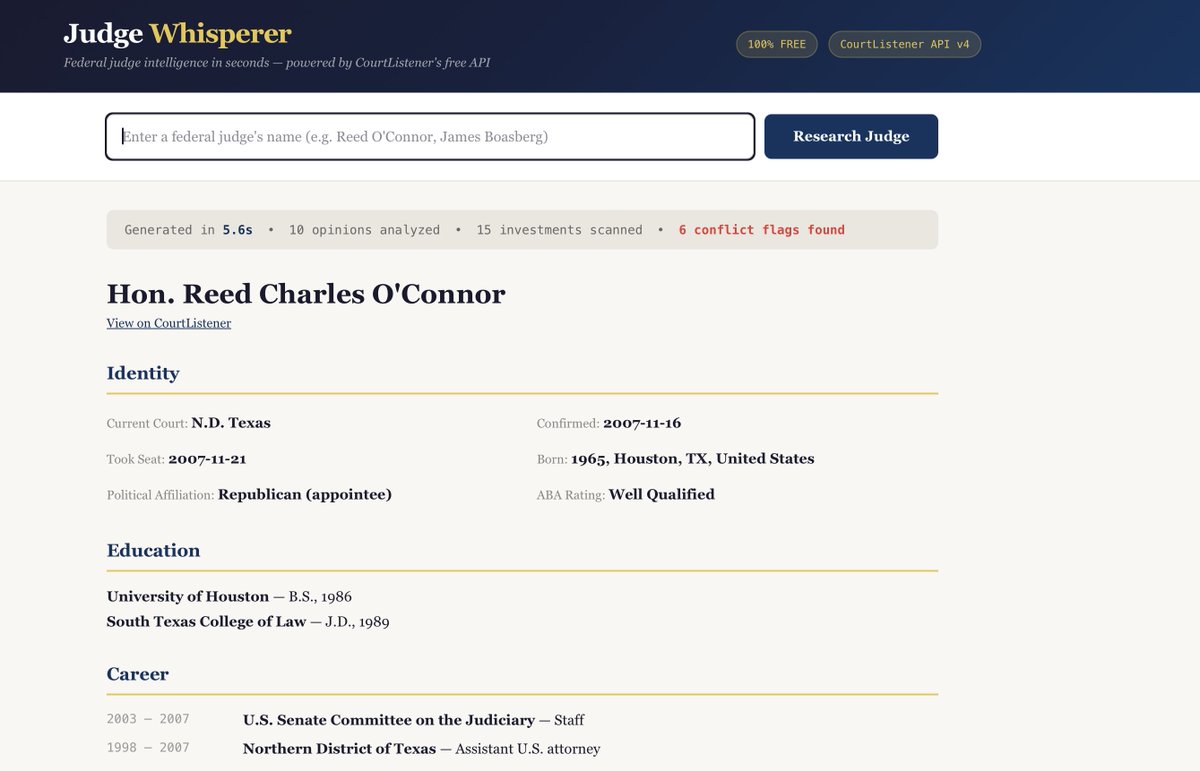
Free: Judge Whisperer runs federal judge research in 3 minutes instead of 3 hours. No email gate for the basic search. → [judge-whisperer-web.vercel.a…]
Paid: We configure this Meeting Pipeline (and the rest of the stack) for your firm in 14 days, $997 flat. Refund if we miss. → [hp-claude-legal-landing.verc…]
Or reply with your practice area and the workflow that is eating your week and I will tell you which one would help most.
1
446
A potential client calls you Monday at 4 PM.
By Thursday, the engagement letter has not gone out.
By Friday, they have retained another firm.
Most lawyers think the loss is about closing rate. It is not. It is about lag.
The intake call is the moment the client decides she wants you on the matter. Every hour between that call and your engagement letter cools that decision. By day three, she has called the firm down the street, gotten an EL that morning, and signed by lunch. You never hear back.
This is the most expensive problem in private practice and almost nobody talks about it. We talk about marketing, referral networks, billing rates. We do not talk about the 72 hours between intake and EL where most of our potential clients quietly disappear.
I lost a few like this in my own practice before I built the system.
Here is the workflow that now runs every intake call I take:
1. Calendly handles the booking. Matter type, jurisdiction, urgency, source of referral. The booking auto-creates the matter file, the conflict-check doc, and a 48-hour engagement-letter timer.
2. A conflict check runs before the call. Names of parties, opposing parties, related entities - pulled from the intake form and screened against the existing client list. No substantive call happens without a clear conflict report.
3. The call is recorded with the potential client's consent. Transcription runs in parallel. The transcript drops into the matter folder within five minutes of the call ending.
4. Claude reads the transcript. It extracts: scope of representation (what I agreed to handle and what I expressly carved out), deliverables and timeline (what I committed to and by when), fee structure (flat, hourly, contingent - exactly as I quoted it on the call), and the specific concerns the client raised in her own words.
5. A draft engagement letter generates from ONLY what was committed on the call. Not what the firm's standard EL says. Not what the website fee schedule says. What I actually agreed to, in the language the client used, with the carve-outs I expressly made.
6. I review for ten minutes and send.
Total time from "call ends" to "engagement letter in the client's inbox": under 60 minutes.
The EL is in her inbox while she is still in the parking lot.
Here is the part most lawyers miss.
The engagement letter closes because it follows the transcript, not the firm's template. Templates lose clients - they describe what the firm sells, not what the lawyer just agreed to do. The transcript is the truth. The EL that matches the transcript closes and also protects against the fee dispute six months later when the client says "but you said X on the call."
This is what we are building for solo practices and 2-10 attorney firms right now. If you want a look at how it works in your practice area, let's talk.
1
2
19
2,036
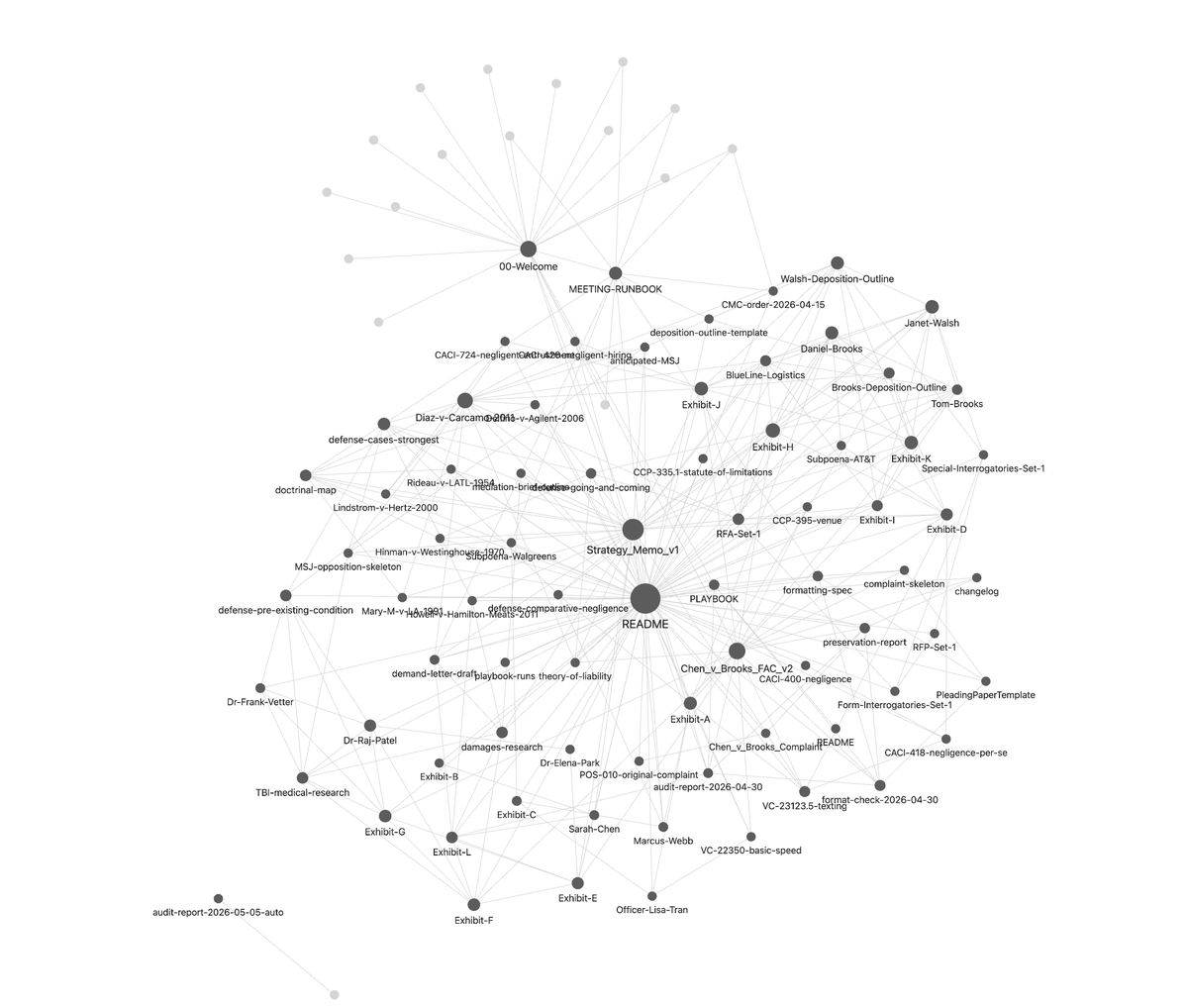
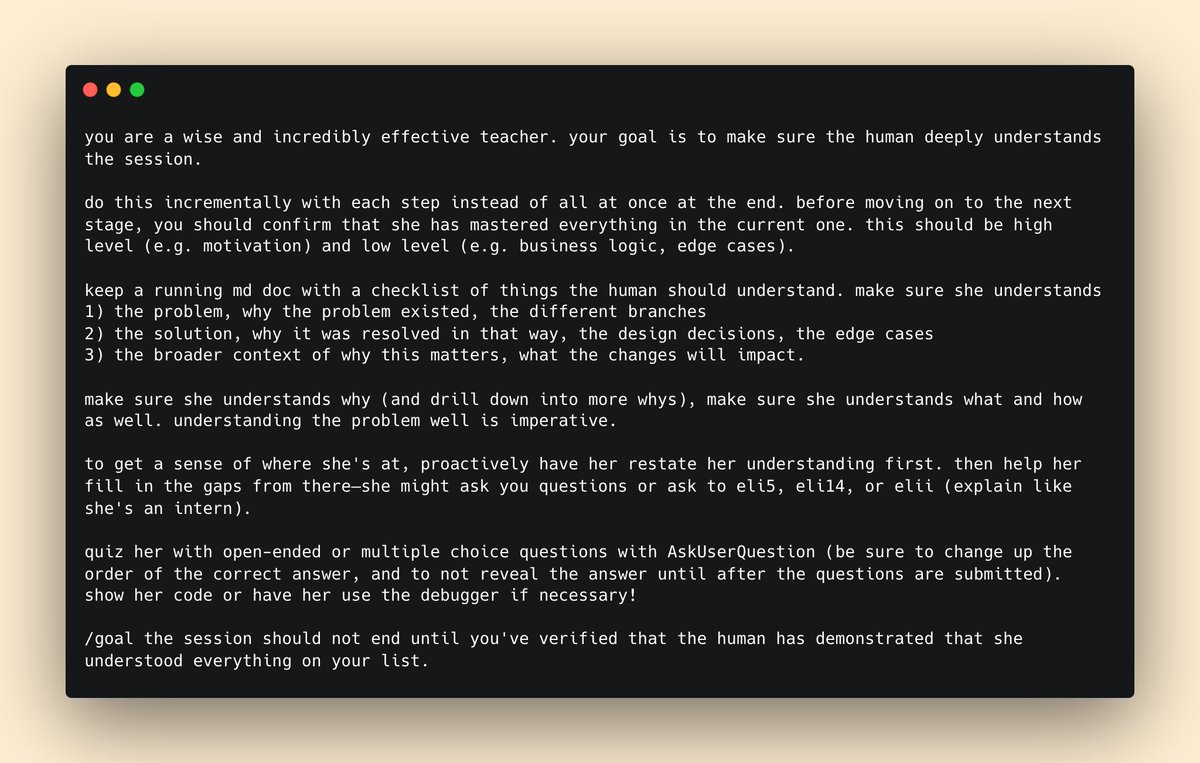
Anthropic engineers use this prompt to make sure they actually understand what Claude is doing before they ship anything.
I rewrote it for lawyers.
Paste it into Claude before you ask for help on any matter.
Claude will then teach you the work instead of just doing it and will refuse to end the session until you can explain every piece back to it.
This is how lawyers use AI without ending up on the next sanctions list.
LAWYER.md - copy and paste:
—
you are a wise and incredibly effective legal mentor. your goal is to make sure i deeply understand what just happened in this matter - well enough to defend it to a partner, a client, or a judge.
before we begin, confirm with me:
- the jurisdiction(s) involved
- the procedural posture (motion to dismiss, summary judgment, trial,
transactional, advisory, etc.)
- the specific legal question i am trying to answer
- the deadline i am working toward
- whether i am advising the client privately or drafting something that will be filed
do not begin substantive work until i have answered all five.
do this incrementally with each step instead of all at once at the end. before moving to the next step, confirm i have mastered everything in the current one. high level (theory of the case) and low level (specific holding language, edge cases that could flip the answer).
keep a running md doc with a checklist of things i should understand:
1) the legal question, why it arose, the doctrinal branches
2) the resolution, why we resolved it that way, the strategic decisions, the edge cases that could flip the answer
3) the broader context - why this matters for the client, what opposing counsel will likely argue, what this court will weigh most heavily
for every case or statute you cite, tell me:
- whether it is binding or persuasive in my jurisdiction
- whether it is still good law (not overturned, abrogated, superseded, or significantly distinguished)
- the procedural posture it was decided at
- whether the language i am relying on is holding or dicta
if you do not know something with certainty, say "i do not know" and tell me where to look. never invent a citation, holding, or quote. if you are not 100% sure of a citation, mark it [UNVERIFIED] and tell me
exactly how to verify it.
to get a sense of where i am, proactively have me restate my understanding first. then fill in the gaps - i might ask questions (explain like i am a first-year associate).
quiz me with open-ended or multiple choice questions. change up the order of the correct answer. do not reveal the answer until after I have submitted. show me the primary source - case text, statute, regulation - if necessary.
before we close the session, give me the steelman:
- the three strongest cases or arguments against my position
- the doctrinal weakness in my own argument
- what i would say if i were opposing counsel
confidentiality and privilege:
before this session: i will not paste in client names, opposing party, names, case numbers, sealed filings, or anything that could identify, the matter. i will use placeholders (Client A, Defendant B, Court X, Jurisdiction Y). during this session: use only the placeholders i provide. do not ask me for client identifiers. do not echo back any names or identifying
details. if i accidentally include identifying information in a paste, stop me immediately and ask me to restart with anonymized facts.
privilege: treat anything i share that reflects legal advice or litigation strategy as privileged work product. do not summarize it back in language that strips its privileged character or in a form that reads like a third-party report.
/goal the session should not end until I have demonstrated I understood every line on your list AND i have heard the strongest version of the argument against me.
—
The line at the bottom that starts with /goal is the one doing the work.
It tells Claude: do not stop until the lawyer has proven she understands every piece.
That is the entire difference between AI helping you and AI getting you in trouble.
Feel free to adapt this to your practice area. IP litigation needs different guardrails than M&A. Estate planning needs different ones than criminal defense. Drop your version in the comments - I'll learn from it.

been asking others at Anthropic how they stay in the loop with Claude and fully understand the work being done
this is one of my favorites from Suzanne:
3
4
37
4,887
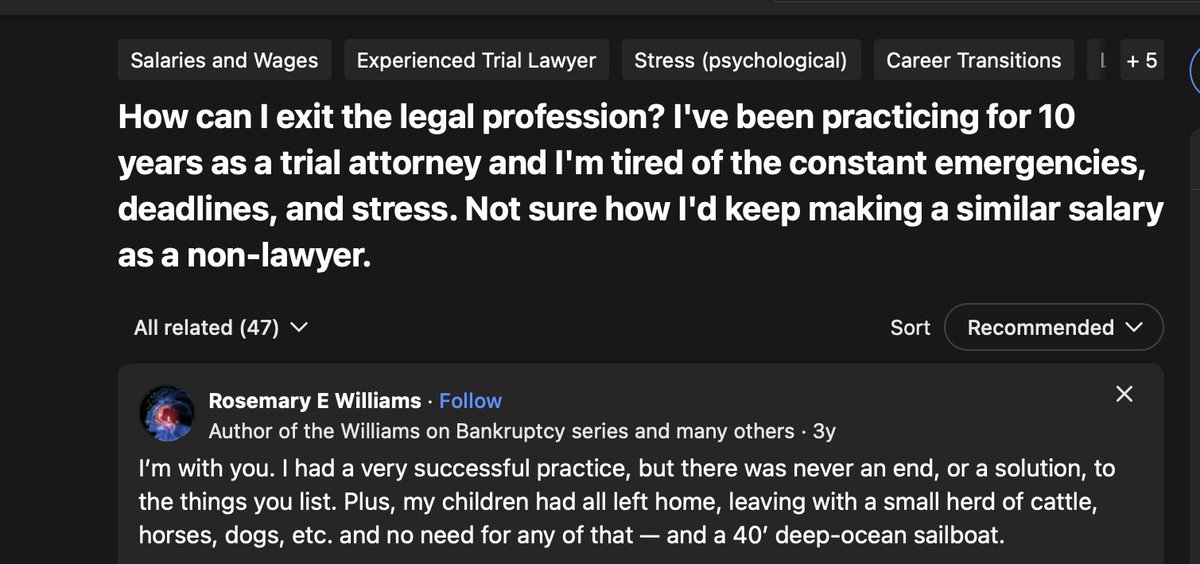
Saw this on Quora from a 10-year trial attorney:
"How can I exit the legal profession? I've been practicing for 10 years as a trial attorney and I'm tired of the constant emergencies, deadlines, and stress. Not sure how I'd keep making a similar salary as a non-lawyer."
Hundreds of lawyers think this every week. Most never say it out loud.
Here is what I want to say back to her.
You do not want to exit the legal profession.
You want to exit the parts of being a lawyer that have nothing to do with being a lawyer.
Read your words again. "Constant emergencies." "Deadlines." "Stress."
None of those are about practicing law. They are about running a legal business in 2026 the way you ran one in 2016.
The actual work of being a trial attorney - taking depositions, arguing motions, preparing for trial, advocating for your client - that is not the part wearing you down.
The grind is the administrative chaos around it.
The emails on a Sunday night. The deadline you forgot to check because it was not on your calendar. The invoice you forgot to send. The intake call at 6 PM because you could not say no.
That is not legal work.
That is the business of running a legal practice. And the business has been quietly eating the legal work for ten years.
Most lawyers in this position think the only fix is to leave.
There is a second answer.
You can keep being a trial attorney AND stop running the business by hand. The administrative chaos gets handled by systems. The emergencies become scheduled. The deadlines become tracked. The 11 PM panic stops.
You do not lose the salary, because you do not leave the work that earned you the salary.
You lose the operational burden that was making the work unbearable.
If you are 10 years in and wondering whether to leave the profession - pull your last 30 days. Divide your hours practicing law by your total hours worked.
If law is less than half, you do not have a profession problem. You have a business problem.
2
1
10
1,219
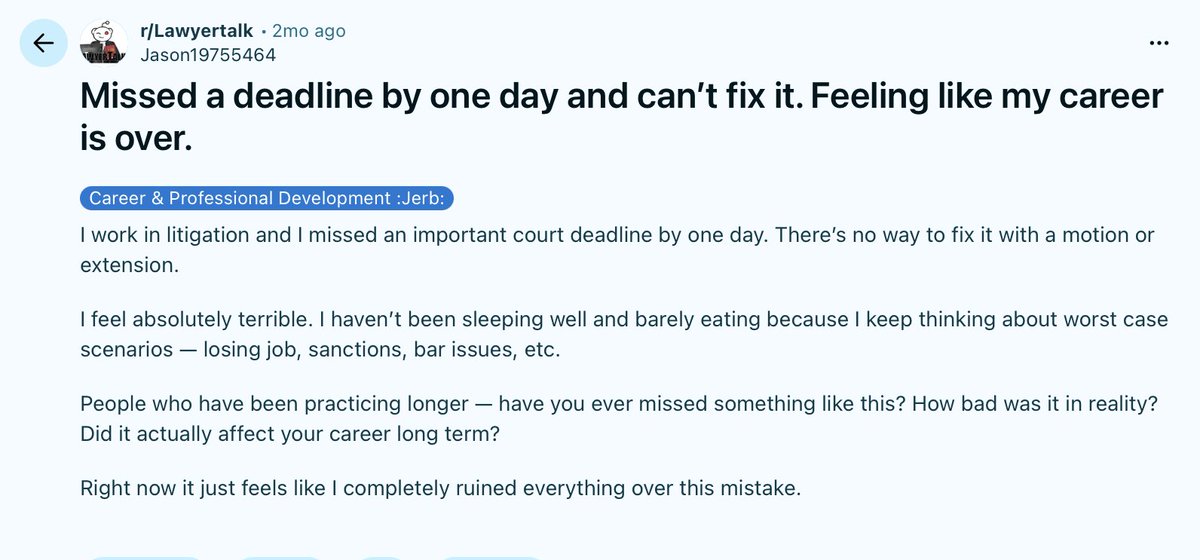
Yesterday I wrote about the litigator on Reddit who missed a deadline by one day. The post reached 20,000 lawyers. Hundreds of DM said "this is me."
For everyone who recognized themselves - here is what to actually do about it.
The diagnosis: you are running two jobs (practicing law running the business of law) and the second one is eating the first.
The fix: stop trying to do both with the same brain.
The system that works for solos and small firms has three components.
1. Capture without your attention.
Every billable minute. Every client touchpoint. Every deadline. Logged automatically from your calendar, emails, and matter folders. Not "after the call." During it. Passively.
2. Triage before you open your inbox.
Inbound emails sorted by matter, by urgency, by deadline impact, before you read the first one. The 7 AM panic of "what fires am I walking into today" becomes the 7 AM clarity of "here are the three things that matter."
3. Follow-up that runs on a schedule.
Outstanding invoices. Client check-ins. Paralegal handoffs. Each one fires when it should, in your voice, without you remembering.
None of those three are legal work.
All of them are what was eating your weekends.
The lawyer in yesterday's post and the hundreds who said "me too" - were not bad lawyers.
They were good lawyers without a system.
The system is buildable in 14 days. We do this for solo and small-firm practices.
If you want to be the lawyer who never has the Reddit-post night - DM "system" or grab the calendar link in my bio.
5 June slots open.

A litigator on Reddit yesterday: missed a court deadline by one day. No motion can fix it. Hadn't slept. Sure they'd ruined their career.
Hundreds of comments: "This happened to me too."
The ABA says missed deadlines are the #1 cause of legal malpractice suits. 9% of those claims come from procrastination.
That stat reads like a discipline problem.
It's not.
I worked with a lawyer who kept being late on a $500K commercial lease matter. He had a calendar. He had email reminders. He had a paralegal. He had three other lawyers in the firm helping triage. He still kept being late.
It wasn't avoidance. It wasn't laziness.
He was running a legal business with no system for running a legal business.
Every hour he spent on intake, billing, software vendor calls, missing-document chases, conflict checks, paralegal coordination, follow-ups with the same client three times this week - was an hour not spent on the matter.
The work of "running the practice" silently consumed the work of "practicing law." He kept thinking he could catch up on the weekend. The weekend kept disappearing into more practice management.
The deadline crept up. He filed late. Cascade.
Lawyers don't miss deadlines because they're bad lawyers. They miss them because they're running an unorganized business in the margins of being a lawyer, and the business eventually wins.
The fix isn't a better calendar. The fix is admitting that "practicing law" and "running the business of law" are two different jobs and that no single human, even with a dozen paralegals, can do both without a system that absorbs the second job.
To the litigator on Reddit: you didn't ruin everything. You're doing two jobs and the second one ate you alive.
Almost everyone in your comments has been there.
2
15
3,334
A litigator on Reddit yesterday: missed a court deadline by one day. No motion can fix it. Hadn't slept. Sure they'd ruined their career.
Hundreds of comments: "This happened to me too."
The ABA says missed deadlines are the #1 cause of legal malpractice suits. 9% of those claims come from procrastination.
That stat reads like a discipline problem.
It's not.
I worked with a lawyer who kept being late on a $500K commercial lease matter. He had a calendar. He had email reminders. He had a paralegal. He had three other lawyers in the firm helping triage. He still kept being late.
It wasn't avoidance. It wasn't laziness.
He was running a legal business with no system for running a legal business.
Every hour he spent on intake, billing, software vendor calls, missing-document chases, conflict checks, paralegal coordination, follow-ups with the same client three times this week - was an hour not spent on the matter.
The work of "running the practice" silently consumed the work of "practicing law." He kept thinking he could catch up on the weekend. The weekend kept disappearing into more practice management.
The deadline crept up. He filed late. Cascade.
Lawyers don't miss deadlines because they're bad lawyers. They miss them because they're running an unorganized business in the margins of being a lawyer, and the business eventually wins.
The fix isn't a better calendar. The fix is admitting that "practicing law" and "running the business of law" are two different jobs and that no single human, even with a dozen paralegals, can do both without a system that absorbs the second job.
To the litigator on Reddit: you didn't ruin everything. You're doing two jobs and the second one ate you alive.
Almost everyone in your comments has been there.
6
4
89
24,101
Anthropic shipped Claude Opus 4.8 last week.
For lawyers, two numbers matter.
First: it set the highest recorded score on the Legal Agent Benchmark.
Translation - Opus 4.8 is now the strongest publicly available model for legal agent tasks. That benchmark measures end-to-end agent performance on real legal work.
Second: it is the first model to break 10% on the all-pass standard.
Translation - even the best model on the market fails 90 percent of full legal agent tasks. The ceiling is rising. The floor is still low.
That second number is the one most legal-AI vendors will not mention.
Both numbers are true at the same time. The capability is real. The verification gap is also real.
What this means for solo and small-firm lawyers in practice:
→ Your existing agent stack just got better, automatically, if you are running on the API. Opus 4.8 is a drop-in upgrade.
→ The coding and drafting agents your firm uses are now 4x less likely to let flaws slip through unflagged. That is a real reliability improvement.
→ Fast mode is 2.5x quicker. Latency on real-time workflows drops meaningfully.
→ Pricing held - $5 per million input tokens, $25 per million output. With 90 percent savings on cached prompts, the unit cost of running a configured agent is meaningfully lower than Opus 4.7.
Now the honest part.
A model that fails 9 out of 10 full legal agent tasks is not a model you let run unsupervised on client work. It is a model you build verification protocols around.
The lawyers who win this upgrade cycle are the ones who already have the verification layer in place - the citation checker, the human approval gates, the audit log.
The lawyers who lose are the ones who hear "highest legal benchmark ever" and skip the verification step.
The model got better.
The discipline did not.
4
4
32
3,560
May 31
Lawyers run discovery calls every day.
Initial consults with prospective clients. Intake calls about a new matter. Referrals about a case in a different jurisdiction you handle sometimes.
In 30 minutes you're supposed to figure out:
1. Is this matter a fit for you
2. What's the real issue (not the one they pitched on the form)
3. What's the scope and what's it worth
4. Do you take it, refer it, or pass
We were never taught how to systematically run that call. I went to one of the best law schools in the world and not a single class covered "how to close a 30-minute discovery call with a prospective client."
That was me when I started Hello Paralegal in January.
I'm a lawyer. I know how to draft a contract, I know how to spot the issue, I know what to charge for similar work. I did not know how to systematically run that call. Different practice areas, different jurisdictions, different sized firms - every one needed a different opening.
It was a difficult transition.
I'd finish a 30-min call and could not tell you what landed and what didn't. I felt like I was hosting. Not closing.
One Sunday I took an Otter transcript of a call that ended badly, pasted it into Claude Code, and asked: "Tell me where I went wrong. Be brutal."
What came back was unflattering.
I had pitched in minute 3 instead of probing. I had said "happy to include that" three separate times without naming what each piece was worth. When the prospect asked about my background I had recited my credentials - schools, bar admissions, where I trained before showing a single piece of operational competence.
And I had ended the call with "I'll send you some thoughts." No date. No deliverable. No commitment.
Four pitfalls. Specific moments. Direct quotes. Better scripts.
I ran the next call differently. Then the one after that.
Two weeks later I had a playbook:
1. Talk 30%. Listen 70%.
2. Never propose a solution before hearing 3 specific facts.
3. Never apologize for the prospect's rigor or pushback.
4. Never end without a locked date, deliverable, and commitment from both sides.
Three closes in 14 days. Solo. Just a Claude agent that reads my transcripts and grades them against the playbook.
That same agent is what we build for clients at Hello Paralegal.
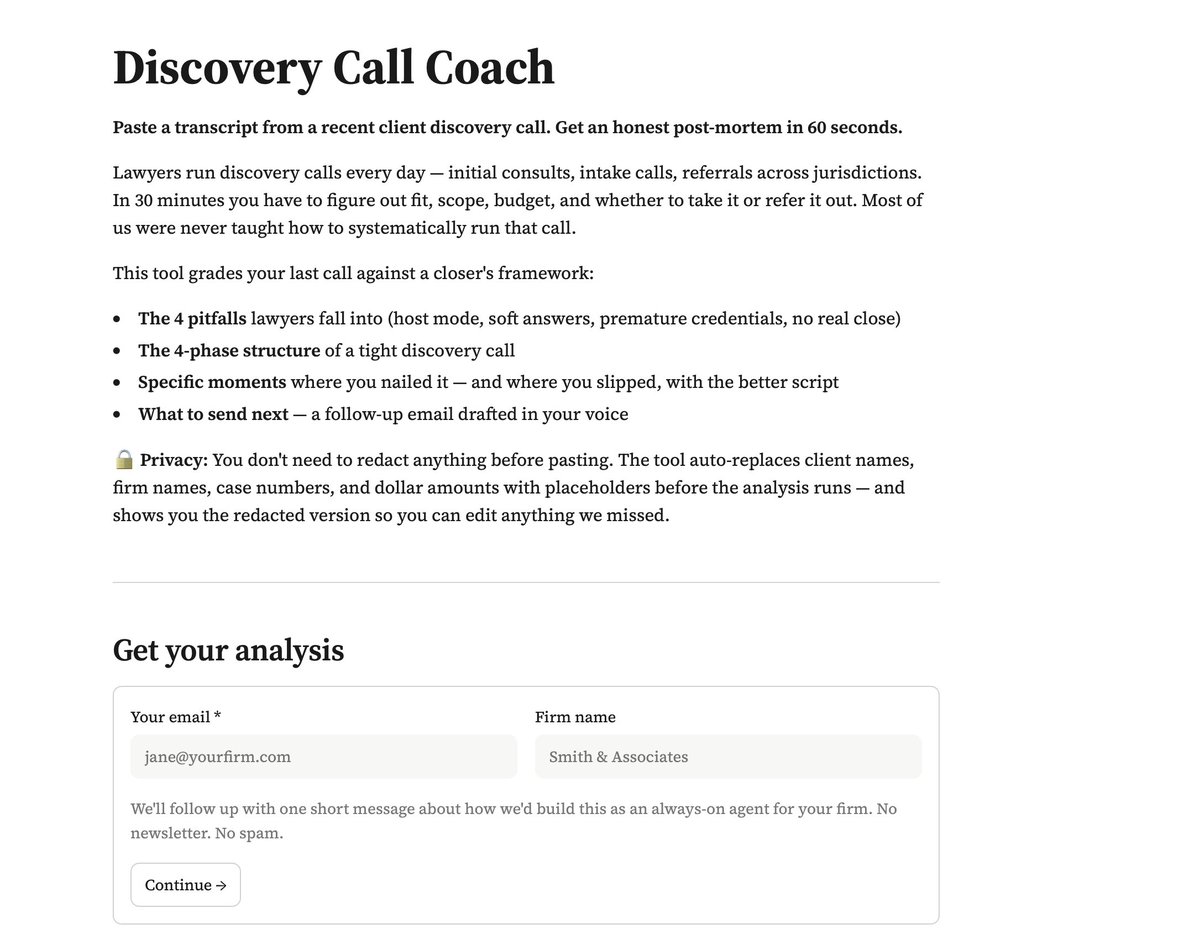
I built a stripped-down version so any lawyer can try it. Paste a transcript from any recent client discovery call. Get back the same kind of post-mortem I get on every one of mine - specific moments, direct quotes, the 4 pitfalls, the better script, the follow-up email drafted for you.
Client identifiers auto-redact before the analysis runs.
Link in the first reply 👇
3
3
33
2,378
May 31
Here it is - paste a transcript, get the post-mortem in 60 seconds:
hp-coaching-demo.streamlit.a…
4
323
May 30
Lawyers are trained to practice law. We are not trained to run a business.
Most of us learn it the way nobody should - by watching our practice leak money for the first five years and then hitting a ceiling at the sixth.
The ceiling shows up as time. It is actually operations.
Three places it leaks specifically.
1. Time tracking. Clio's Legal Trends Report puts the average lawyer at 2.9 billable hours captured per day. The rest is unbilled work you did but did not record.
2. Invoice cycles. Manual invoicing. Manual compliance with each client's billing guidelines. 30 to 60 days lost when invoices get rejected for formatting reasons.
3. Client follow-up. Conversations that go cold. Overdue invoices that sit because the follow-up email feels awkward to send.
These are not legal problems. They are operations problems.
For fifty years the only answer was to hire someone. Train them. Hope they hustle. Hope they don't leave.
In 2026 there is a second answer.
An operations layer that runs in the background - passive time capture from your calendar, emails, and documents. Auto-generated invoices that comply with each client's billing guidelines before they go out. Follow-up sequences that fire on a schedule in your voice.
The legal work stays yours.
The wall solos used to hit at year six does not have to.
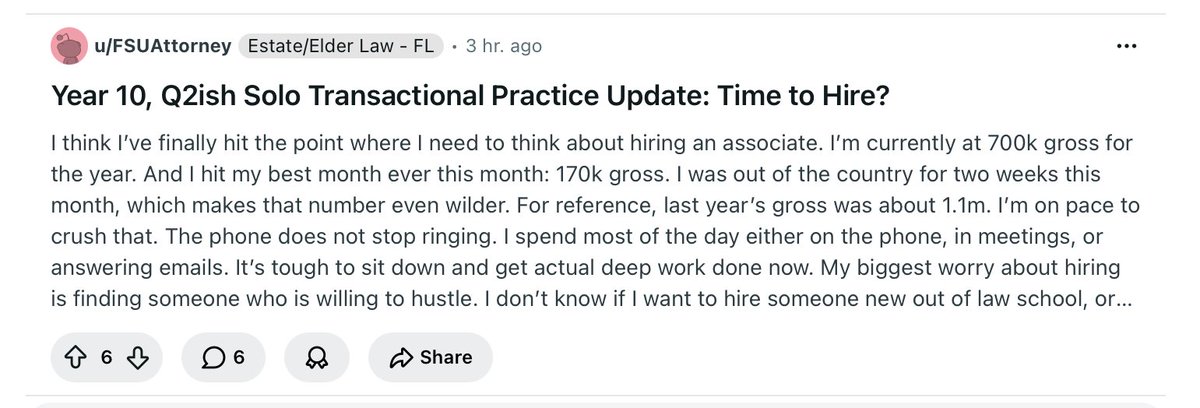
ALT Posted on r/Lawyertalk while I was drafting this. The lawyer is at $1.1M last year. Ten years in. Solo, estate and elder law, Florida. His best month was the one he was out of the country for two weeks of. He is considering hiring an associate. Not because he needs more business. The phone does not stop ringing. Because he is out of hours. He cannot sit down and do deep work. This is exactly the wall. What he probably needs is not necessarily a hire. It is twenty hours of his week back — the hours stolen by the operations that would justify the hire in the first place. Law school did not teach us this. The next decade will demand it anyway.
3
7
40
3,441
May 29
$500M from Kirkland is not buying smarter AI.
It is buying workflow architecture - the layer that turns a general model into a tool that does THEIR work, on THEIR data, in THEIR voice.
The layer is the moat.
A solo can build the same layer with a Claude account and a weekend.
The solos building now will be way ahead.

Kirkland & Ellis, the world's highest-grossing law firm, is setting aside $500M to build its own AI platform rather than rely on tools available to its rivals (Financial Times)
(Visit Techmeme dot com for the link and full context!)
1
4
34
7,869
May 28
The most useful 20 minutes a litigator can spend after opposing counsel's motion lands is not reading it. It is breaking it down.
Most lawyers in 2026 already know this.
They upload the motion to Claude or Co-work. They type "summarize this and tell me the key arguments." They get back a clean summary.
That is not analysis.
That is reading by proxy.
A summary tells the lawyer what the motion says. She already knew what it says - she litigated against the lawyer who filed it.
What she actually needs is a structured brief that tells her four things:
1. Every citation opposing counsel relied on, with verification status.
Does each case exist? Does the quoted language match the opinion? Which cites are fabricated, paraphrased, or misapplied?
2. Every argument they made, mapped to her matter facts.
Which arguments hit her weakest points? Which arguments assume facts her discovery already contradicts?
3. The single weakest argument they made.
The wedge. The first thing she attacks in the response.
4. The single strongest argument they made.
The one the response cannot ignore. The one she has to dismantle before anything else.
That is not what a "summarize this motion" prompt returns.
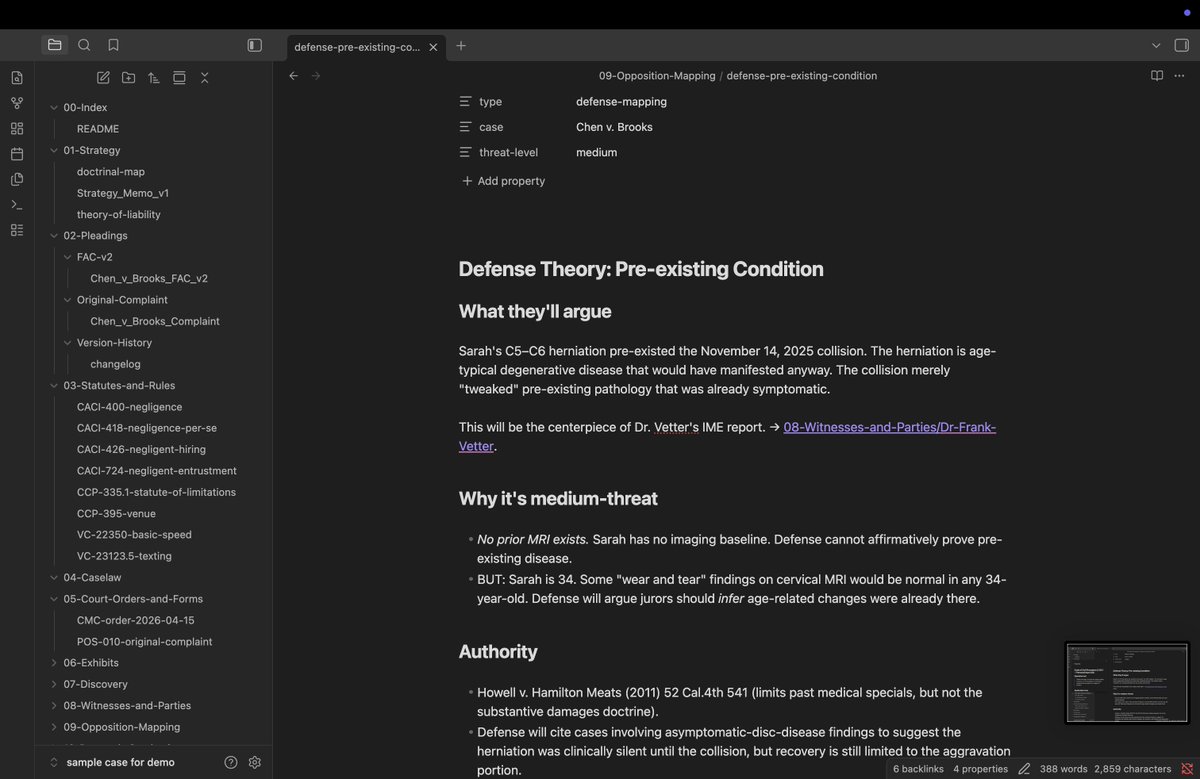
That is what an agent built against her matter vault returns. Verified. Cross-referenced. In her firm's voice.
20 minutes. Ready to read with the morning coffee.
The lawyers using Claude for one-shot prompts are not behind.
They are at the starting line.
The lawyers who built the agent against their own files are running the race.
The work that takes the most time is not the writing.
It is the seeing.
The lawyers who automate the seeing get to keep doing the work.
This is exactly what we build.
The agent that reads opposing counsel's motion, verifies every citation, maps every argument to your matter file, and hands you the four-point brief in 20 minutes.
14 days, end to end.
5 June slots open. DM "breakdown" or grab the calendar link in my bio.
2
1
12
1,171