
Engineers who accidentally became performance marketers. We ship more ads before lunch than most teams ship in a quarter. DTC × Google × Meta × AI.
Joined February 2017
- Tweets 1,007
- Following 51
- Followers 180
- Likes 717
200 Photos and videos










Jun 3
The agency space is cooked because everyone runs the same playbook on every client.
Same audit doc. Same campaign structure. Same 90-day "roadmap" with the brand name swapped into the header.
It works often enough to keep the lights on. That's the trap. Average is repeatable, so average is what gets templatized.
Here's the line we draw.
SOPs are for the parts of the work that don't change. Account builds, naming conventions, conversion-action setup, QA checklists, reporting cadence. That layer is identical across every account we run.
Strategy is the part that changes every time. A Shopify brand-builder at $200K/mo, a P&C insurance lead-gen operator, and a SaaS founder fighting blended CAC are three different problems. The angle that prints for one would quietly drain the budget of another. We've seen it happen in audits we inherited.
So the repeatable layer is where our systems live. The AI Agentic System ships the volume: hundreds of ads, the landing-page variants, the email cadence, from documented inputs. That's the part a machine should own.
The judgment layer is where the three of us spend our hours. Me and @andreilunev review the output, we don't assemble it. What gets read into a vertical, which test to kill at day three, when the data is lying: none of that lives in an SOP. It lives in operators with enough accounts behind them to have a gut, in a team small enough to pass it down instead of dilute it across 40 junior buyers.
That's also why we qualify hard before taking a brand on. A client who needs a bespoke build that breaks every SOP we have isn't one we serve well, so we pass.
The agencies stuck running one playbook everywhere aren't lazy. They scaled the template because the judgment layer doesn't scale with headcount, and they had headcount to feed. We built the template into systems so the three of us could spend our hours on scaling our clients' PnLs instead.
1
3
399
Jun 3
We turn away multiple brands a week. On purpose.
For most of our first stretch running Tegra, we didn't.
Here is an ugly truth for most agencies (including us in the past): brands showed up with budget and a credit card, and we found a reason to say yes. Revenue is revenue. The pipeline math felt obvious.
It wasn't.
Here's what we kept signing:
The account already in great shape. Nothing structurally broken, decent ROAS, a competent operator already inside it. We'd come in, tidy the edges, and produce a 5% lift that nobody could feel. We were getting paid to not break things.
The brand where we weren't confident we could move the number. Sometimes the product, the margins, or the market just isn't there. We knew it on the audit call. We signed anyway and spent six months proving ourselves right.
The brand not ready for Google Ads. No clean conversion tracking, a landing page that loses 70% of clicks, a fulfillment problem upstream. Spend isn't the lever for that brand yet. We took the retainer and watched paid traffic expose every crack they hadn't fixed.
And the brand under our minimums, where the account-load math never works and someone on the team quietly resents it for a year.
Every one of those is a wrong-fit engagement. And wrong fit doesn't fail loudly. It fails slow.
Here's the mechanism nobody tells you when you start an agency.
A wrong-fit client doesn't just underperform. It taxes everything around it.
It pulls senior review hours away from the accounts that are actually compounding. It generates the awkward monthly call where you explain why flat is fine. It produces the churn 5 months later that you saw coming on day one. And it teaches your team that the work doesn't reliably win, which is the most expensive thing an operator can come to believe.
You're not just losing on that account. You're taxing the whole portfolio to carry it.
So we built a real qualification gate. Four questions, asked before we send a single proposal:
- Is the account already in good shape? Then we're the wrong call.
- Are we genuinely confident we can move the number? If we're hedging on the audit, that's the answer.
- Is paid the actual constraint right now, or is it tracking, the offer, or the page? If it's upstream, spend makes it worse.
- Does this clear our minimums without straining account-load? If the math only works when someone overextends, it doesn't work.
A no on any one of those is a no on the whole engagement. We say it on the call now, with the reason, and we point them at what they actually need first.
The first few times, saying no to live revenue felt insane. Three of us run this. Turning away a signed retainer is not a small feeling.
Then the second-order effects showed up.
Profit went up, not down, because the accounts we keep are ones we can genuinely win, and winning accounts renew, refer, and expand. Stress dropped, because we deleted the standing dread of the call where you defend mediocre numbers. Every account started stacking wins, because we stopped diluting senior attention across engagements that were never going to move. And the team got happier, because nobody likes spending their week on the account they knew was wrong on day one.
The brands we turn away aren't getting a worse deal. A wrong-fit engagement loses for everyone in it. We just stopped being the agency that takes the money anyway and lets both sides find that out in month six.
Fit-first beats taking anyone with a credit card because the credit card was never the constraint. Our attention is. We only have so much senior review to spend, and every wrong-fit client is attention we're not giving to a brand we can actually move. As well as helping us to make promises we can actually deliver.
1
1
112
Jun 2
Most agencies clock out at 5pm. During the biggest sales weeks of the year. Here's what "caring more" actually looks like.
What a typical agency gives you:
- 1 media buyer managing 15 accounts
- 10 changes per month across the whole account
- Weekly report that's the same template with different numbers
- Response time: "we'll look into it first thing Monday"
- Clocked out during your biggest revenue days
Here's what Tegra looks like:
ROAS drops 0.3 points? We're investigating within 30 minutes. Not because an alert went off. Because we're already in there.
Ad disapproval at 9pm on a Thursday? Fixed and re-approved before the client checks their phone in the morning.
Checkout page breaks during a promotion? We're on a call with the dev team at midnight coordinating the fix. Client finds out after it's already resolved.
Here's the part no system covers: caring. You can't automate it.
We built AI systems that watch accounts 24/7 and flag anomalies the moment they happen. But the systems don't fix the problem. We do. At midnight. On weekends. During holidays.
When a client's account is bleeding money and they don't know it yet, going to sleep isn't an option for us. We've tried. It doesn't work.
Every account gets the same person who built the strategy, executing it daily. No handoff. No rotation. Same brain, same context, same obsession.
The software is real and it's good. The edge underneath it is simpler: we give more of a damn than the team that clocks out at 5.
1
1
3
92
Jun 2
If you're spending $30K /mo on Meta or Google and your agency is giving you monthly reports and vibes instead of daily execution, we should talk.
Here's what changes when both founders personally execute your account.
Live in 3 days, not 21. Hundreds of new creatives per week, not per quarter. Campaign deployment through the API at speeds manual work can't match. Daily Slack so you're never guessing what happened to your budget. Bi-weekly strategy calls where both people on the call are the same people inside your account every day.
Month-to-month. No setup fees. No contracts. You own everything from day one.
Recent results: $800K to $2.1M in 90 days. CPA down 40%. ROAS from 1.6 to 3.8. Live numbers from accounts we manage right now.
Every month with the wrong partner is compounding underperformance you can't get back. The spend leaves your account either way. The only question is what it comes back as.
tegra.co/work-with-us
1
35
May 14
Creative printing on steroids
May 13

The bottleneck in performance marketing in 2026 isn't budget. It isn't bidding. It isn't even targeting.
It's creative throughput.
The teams winning right now ship 50x more variations than their competitors. Not because they have bigger teams. Because they treat creative production as infrastructure, not as a project.
Here's what shipping thousands of creatives per day actually looks like at our shop.
THE OLD WAY
A marketer briefs a designer. Designer drafts. Marketer reviews. Designer revises. Two weeks later, you have one ad to test. By the time you know if it worked, the trend has already moved past you.
THE NEW WAY
A spec file flows through the pipeline. Every angle gets 25 to 35 image variants. Every video gets 8 to 12 hook variants. Same character locked across 50 shots. Same brand DNA. Different mood, lens, mechanism, headline. All rendered in parallel, scored automatically, and only the winners survive to upload.
The unlock isn't the AI models. Veo 3, Sora 2 Pro, Kling, Seedance, gpt-image-2, Gemini Flash. Anyone can rent those. The unlock is the plumbing around them.
WHAT WE JUST DEPLOYED
A hybrid event-driven architecture for creative generation.
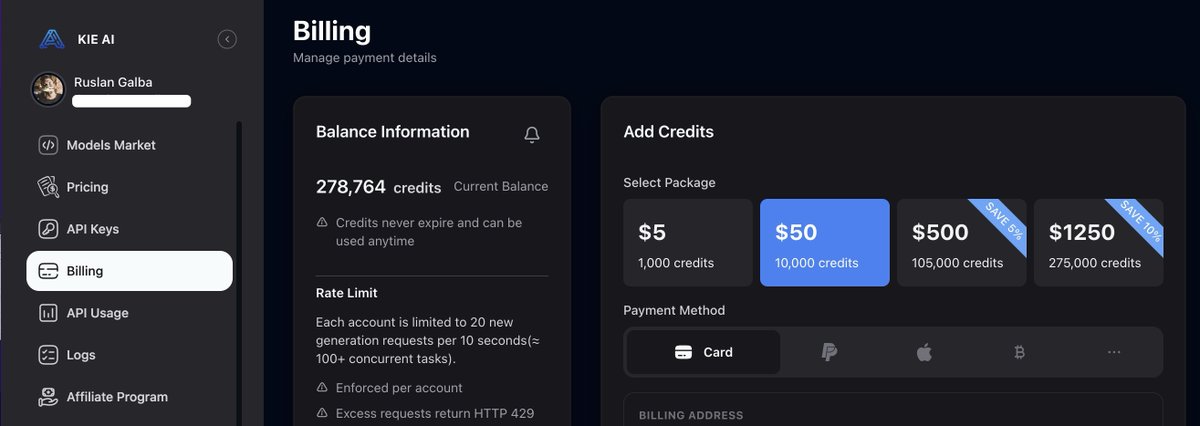
When our pipeline submits a render to a model provider, instead of polling every 10 seconds asking "is it ready yet?", we attach a callback URL. The provider pings us back the instant the render finishes. One round trip per task, not thirty.
We stood up a small receiver service on Railway. It accepts the completion events, writes them to a tiny SQLite store, and exposes a local-network status endpoint. Our pipeline polls the receiver in milliseconds instead of polling the model provider in 10-second cycles.
What that buys us:
50 parallel image renders no longer melt the provider's rate limit.
Wall clock drops from "longest render plus N polls of overhead" to "longest render plus 3 seconds."
Failed renders surface instantly instead of waiting on a timeout.
Overnight bulk jobs work unattended. The receiver catches every callback. By morning, the local pipeline has every result waiting in line.
THE PROOF
We stress-tested the system with 12 concurrent agents firing 15 mixed image-and-video tasks each. 180 total tasks. 179 completed correctly at a p50 latency of 550 milliseconds. The single delayed task auto-recovered through the safety-net poller. Zero cross-contamination. Zero work lost.
The architecture is layered: webhook is the speedometer, polling is the seatbelt. We always wear both.
THE QUALITY LAYER
Throughput without quality is just noise at scale. Every creative passes through:
The 3-rule filter. Every claim must be visualizable, falsifiable, unique.
The Cooper hierarchy. Maximum 4 text elements per image, one dominant at 40 to 50 percent of the visual weight.
The $10K validator. 9-year-old clarity test, deadly-sins screen, scoring gate, voice-register check.
The image-first gate. Render the still keyframe, score it, only commit to the expensive video render if the still survives. A bad still costs cents. A bad video costs dollars.
The anti-AI copy filter. No cliches. No fake urgency. No fabricated stats. Claims trace to source.
Performance posteriors. Winning patterns from past campaigns automatically bias the next batch toward what works for that brand, that audience, that funnel layer.
Every render reports its actual cost. We track dollars per finished second of polished long-form creative. Benchmark range we hold ourselves to: $0.15 to $0.30. We sit inside it because the architecture forces us to.
THE COMPOUND ADVANTAGE
At 50 brands, multiple markets per brand, weekly autogrowth loops, the math gets brutal fast.
A team shipping 10 ads per brand per week is moving 2,500 ads weekly. A team shipping 100 ads per brand per week is moving 25,000. The second team learns 10x faster, finds winners 10x faster, and compounds the gap weekly.
The teams that will dominate the next cycle aren't the ones with the cleverest prompts. They're the ones with the cleanest plumbing. The ones who treat creative production as a system that runs while they sleep.
That's where we've been investing.
2
48
May 11
Speed > perfection
May 10

Most brands test 3 ad creatives. We test 50 . Same budget.
Usually brands hire a designer. $200 per image. Get 3 polished concepts in a week. Upload them to PMax, run for a month, and conclude "ads don't work for this product."
But it's only 3 tested options. That's not a test. That's a coin flip.
We generate 100 variations in an afternoon. Cost: $40. Time: 2 hours. And here's the part that matters - we're not looking for the "perfect" ad. We're looking for the one PMax's algorithm picks as a winner.
Big difference.
PMax works by matching creative assets to audience signals. More assets mean more combinations for the machine to test. Three images give the algorithm almost nothing to work with. A hundred gives it room to find patterns you'd never predict.
(Spoiler: the winner is almost never the one we'd pick ourself.)
If you've spent any time in feed optimization, you already know this principle. More complete product data = more visibility. More attributes = more queries matched. Same logic applied to creative - more inputs, more chances for the algorithm to surface what converts.
Here's what a weekly cadence looks like:
Monday - generate 100 variations across 5 angles. Aspirational, technical, social proof, value, problem/solution.
Week 1 - broad test at $50/day. Identify which angle converts.
Week 2-3 - kill everything except the winning angle. Generate micro-variations within it.
Week 4 - scale the top 3 performers.
We run this cycle monthly. The creative pipeline stays full. The data stays fresh.
The brands winning on Shopping right now aren't making better ads. They're testing at a volume and speed their competitors can't touch.
4
74
May 10
A 10% improvement in retention is worth more than a 25% increase in new acquisition.
We found this across the brands we work with.
Every agency is obsessed with new customers. The profit is in winning with the ones you already have.
1
3
22
May 10
Both founders work on every account. Not manage. Work. Ruslan builds every Google campaign. Andrei builds every Meta campaign. Since 2017, hundreds of brands at scale.
When the person making strategic decisions is the same person executing, nothing gets lost in translation. No game of telephone between a strategist and a buyer who interprets it differently. The person who sees your data at 7 AM adjusts bids at 7:15. That compression between insight and action is where most of the performance gap between agencies lives.
Month-to-month because long contracts are a signal. An agency that knows clients would leave if they could needs the contract to survive. We'd rather earn it every 30 days.
Every asset belongs to you from day one. Full account access. Daily Slack. Bi-weekly strategy calls. No setup fees.
Free audit first, your accounts on screen, honest conversation: tegra.co/work-with-us
1
42
May 10
Had 8-figure brands reach out for an audit last month.
They are working with a "top-tier" agency paying $15k /mo retainers.
First account we opened:
- Brand name as a targeting keyword in non-branded search.
- PMax burning budget on existing customers with no exclusions.
- Shopping titles still default Shopify descriptions.
These agencies have incredible websites. Polished case studies. Senior strategist titles.
The space is really good at "looking good".
But actual delivering? Quite often, it's junior mediabuyers hired 2 months ago
4
74
May 10
We cut our operational costs by 75% without cutting corners, meanwhile bringing 50x more value to the brands we work with - thousands of creatives and dozens of presell pages per month.
Here's the breakdown by function.
Cost area 1: Feed management.
Before AI systems: feed specialist at $65K/year handling 12 brands. At 13 brands, we needed a second specialist. Linear cost curve.
After: feed pipeline runs across all 50 brands. Cost per brand: API expenses only, roughly $20-30 per brand per month. Annual cost for feed management went from $65K to under $2K in API fees.
The quality actually went up. The 152-point validation catches issues that human reviewers miss when they're reviewing their 400th product title.
Cost area 2: Reporting.
Before: 6 hours per week building reports. At $75/hour fully loaded, that's $23,400/year on report generation.
After: one command generates all reports in 12 minutes. Annual cost: effectively zero (compute time). The reports pull from 7 channels instead of the 3-4 we could reasonably cover manually.
Clients didn't notice the change in production method. They noticed the reports were more comprehensive. Several specifically mentioned the anomaly callouts as valuable. We never had those in the manual reports.
Cost area 3: Ad copy production.
Before: copywriter account manager collaboration. 4-6 hours per brand per week for RSA refreshes, feed copy updates, and presell page variants. Across 50 brands, that's 200-300 hours per week.
After: generation pipelines produce copy from competitive research and keyword data. Review time: 20-30 minutes per brand per week. From 300 hours to 25 hours. 90% reduction.
The key wasn't just generating faster. It was generating from better inputs. The system uses competitive intelligence data, keyword cluster analysis, and brand voice guidelines that no human copywriter could hold in working memory simultaneously.
Cost area 4: Client communication.
Before: responding to ad-hoc data requests. "What was our ROAS last week?" "Why did CPCs go up?" "Can you pull the search term report?" Each question: 15-30 minutes to pull data, format it, write the response.
After: automated weekly summaries with threshold-based alerting. Clients get the data before they ask. Anomalies are explained in the summary.
Client email volume dropped 60%. Not because clients are less engaged. Because the proactive summaries answer the questions before they're asked.
Total operational cost reduction: 75%.
The math: before AI systems, our operational overhead per account was over $2,000/month (time, tools, and overhead allocated). After: approximately $320/month per account.
That $1300/month savings per account across 50 accounts is now pushed towards creating 10,000 ads and 300 presell pages per month. Win for clients = win for us.
The uncomfortable truth: most of what agencies bill for is execution that follows repeatable patterns. If your marketing team's competitive advantage is "we do the repetitive work diligently" - maybe it's a good time to consider better options.
3
54
May 9
Imagine keeping QS 7 across 50 brands. Manual doesn’t cut it.
That’s why we run Claude Code agents daily to check for low QS and “LOW” assets in PMax.
All weak ones getting swapped right away with new sets of creatives.
Low QS keywords are getting reshuffled into more relevant ad groups.
Weak LPs are sent to autoresearch algorithms to harden.
May 9

Quality Score 7 accounts pay 30-50% less per click than accounts scoring 5 or below.
Same keywords. Same auction. Dramatically different costs.
We tracked this across 25 e-commerce accounts. Here's what actually matters - and the order to fix things.
Quality Score has three components:
1. Landing page experience
2. Expected click-through rate
3. Ad relevance
Most agencies spend months tweaking ad copy to improve scores. That's the wrong starting point.
Fix the landing page first.
Landing page optimization (fastest impact):
- Add 500 words of relevant, useful content. Thin pages score "below average" almost every time.
- Page speed under 2 seconds. We took one client from 4.2s to 1.8s load time. Quality Score went from 4 to 7 in 6 weeks. CPC dropped from $3.80 to $2.10.
- Mobile-first design. Not "responsive." Mobile-first.
- Reviews and trust signals above the fold. Not at the bottom where nobody scrolls.
- Transparent pricing. No hidden fees.
We've seen accounts go from Quality Score 4 to 7 just by fixing the landing page. No ad changes at all.
Ad relevance (second priority):
- Build tight ad groups with 10-15 keywords maximum. Not 50 keywords in one group.
- Ad copy must match search intent, not just include the keyword.
- Use every available extension - sitelinks, callouts, structured snippets, promotions.
- Google emphasizes extensions heavily in their scoring. Most accounts barely use them.
Expected CTR (third priority):
- Negative keyword hygiene every 72 hours. This is the single most neglected optimization.
- Run manual split tests alongside your RSAs. Low-budget accounts can't get enough impressions for RSA optimization to work. Monthly manual tests solve this.
- Bid adequately for competitive positioning. Being too conservative tanks CTR because you're showing in position 4 instead of position 1.
The funnel-based approach:
- Match your ad messaging and landing page to the customer journey stage.
Top of funnel: educate about the problem.
Middle of funnel: compare your solution.
Bottom of funnel: urgency guarantee clear CTA.
One generic ad and one generic landing page for all stages guarantees mediocre Quality Scores across the board.
Target: Quality Score 7 on every keyword. Below that, you're overpaying for every single click.
5
170
May 9
We've audited dozens of accounts from "top-tier" agencies. The findings are depressingly consistent. Here's what we keep finding.
The common audit findings:
PMax is running with zero audience exclusions. Existing customers, recent purchasers, newsletter subscribers - all getting served acquisition campaigns. The agency was paying to acquire people who had already bought.
Default Shopify feed titles. "Blue Widget - Small" across thousands of products. No search intent keywords. No brand positioning. Just whatever Shopify auto-generated.
No prospecting structure. Everything is lumped into one campaign. New customers and returning customers are competing for the same budget with no way to tell which is which.
Tracking is broken across the board. Conversions double-counting. GA4 not matching Google Ads. Server-side tracking is misconfigured. The data the agency was "optimizing" against was wrong.
Why does this keep happening:
It's not malice. It's the business model. The person on the sales call has 10 years of experience. The person running your account has 4 months.
Want to know if your account has these problems? Check five things in 10 minutes:
- open PMax and look for brand exclusions
- compare your product titles to what Google shows in the Shopping tab
- check if your search campaign has been changed in the last 30 days
- look at whether your agency's 'optimizations' include worthless $0.10 bid adjustments.
3
8
2,104
May 8
The agency model has a scaling problem that nobody talks about.
More clients = more people = more management = less of the expertise that got you the clients in the first place.
We decided not to play that game.
Instead of hiring our way to scale, we built AI systems that compound.
System 1 was feed optimization. Saved 12 hours a week. Used that time to build System 2: ad copy generation. That saved another 8 hours. System 3: automated reporting. System 4: quality validation. Each one freed the time to build the next. By System 6, we had more capacity than a team three times our size - and every system was getting better without us touching it.
Every system we build makes the next one faster. That's the part most agencies miss. It's not about one automation. It's about compounding automation.
One system saves 10 hours/week.
Five systems save 50.
The sixth system gets built with those 50 freed hours.
The math compounds. Every system we build makes the next one faster to create. That's the real advantage - not the output of any single system, but the velocity of building the next one.
The agencies still hiring to scale are competing against this math. The window where you could scale the old way is closing. Not because people aren't valuable. Because the gap in output per person is becoming impossible to ignore.
Build the systems. Or compete against the teams who did.
1
6
49
May 8
Two founders personally executing every account is objectively a terrible way to scale an agency. Our accountant tells us regularly. Every advisor says: "Hire, delegate, stop being the bottleneck."
From a scaling perspective, they're right. From a results perspective, completely wrong.
When both people building your campaigns have nine years across 300 brands, things move at a speed layered organizations can't match. Live in 3 days. Hundreds of creatives per week. ROAS from 1.6 to 3.8 because the person who sees the data acts on it within the hour.
No meeting to discuss the meeting about the strategy review. No Slack thread where the buyer asks the strategist what the client meant. Two people who've done this thousands of times, in your account, making decisions in real time.
Can't take 100 clients. Don't want to. Rather run a focused roster extremely well.
tegra.co/work-with-us
7
23
Apr 27
We've run the same audit checklist on hundreds of Google Ads accounts.
22 items. 7 categories. Here's what actually catches the waste.
Tracking (the silent killer):
Check if multiple tracking systems are counting the same purchase. Google Tag Manager, GA4, Shopify pixel - if they're all firing on checkout, Google sees 3 conversions per sale. Your "4x ROAS" is fiction. Check repeat rates. Anything above 1.1 on Purchase actions means you have duplicates.
Targeting:
Are customer email lists uploaded and actively used for lookalike targeting? Are negative keyword lists current? Most accounts we audit haven't updated negatives in months. Every irrelevant click is budget burned.
Campaign structure:
How much branded traffic is hiding in your "generic" campaigns? Pull the search terms from every non-brand campaign. If you see your brand name, you're inflating your prospecting numbers.
GMC:
Product titles need keywords in the first 70 characters - that's where they get cut off in Shopping ads. Product ratings syncing? Promotions set up? Store quality score reviewed? These are free performance wins most accounts ignore.
Bidding:
Brand campaigns should use manual or position-based bidding. Never tROAS. Google will spend as much as possible to hit the target on brand terms - which means overpaying for traffic you'd get anyway.
Search:
Mine your search terms report weekly. Pause anything that's spent 2x your target CPA with ROAS below 1. Expand on converting queries that aren't directly targeted.
PMax YouTube:
PMax asset groups need search themes and customer list signals. Empty signal fields mean the algorithm is guessing. YouTube creatives should look organic, not scripted. Add audience signals. Use tROAS or tCPA if you have 30 conversions.
22 items. Most accounts fail on 8-12 of them. Every failure is money walking out the door.
1
6
55
Apr 27
Most brands at $50K-$500K/mo in ad spend are stuck in a model designed to benefit the agency, not you. Flat fee regardless of performance. Junior buyer you never vetted. 12-month contract keeping you hostage.
We built the opposite.
Both founders execute every account personally. Ruslan on Google, Andrei on Meta. Not "oversee" - hands on keyboard, deploying campaigns through the APIs directly. Dozens of tailored campaigns and hundreds of creatives per week at a speed that's physically impossible manually.
Live in 3 days, not 21. Month-to-month. No setup fees. No contracts. You own every asset from day one. If we stop earning it, you leave.
$10M /mo managed across 300 brands since 2017. If your spend is growing but returns are running in place - worth a look.
tegra.co/work-with-us
1
29
Apr 27
The dirty secret of most agencies?
That $15K/month retainer goes to junior staff doing work that AI handles better and faster.
Your brand gets a senior strategist for the pitch, then a 6-month experienced employee for the actual work.
1
6
24
Apr 27
Since you're looking - here's what to demand from whoever you go with. Not specific to us.
First: month-to-month terms. Any agency confident in results won't need a 12-month contract. Long contracts protect agencies from mediocre work.
Second: you own the accounts. If they build campaigns you can't access independently, walk away. That's creating switching costs so high that leaving feels harder than staying.
Third: ask who touches your account daily. Not who "oversees" it. Who logs in and makes changes. If it's not a senior person, you're paying senior rates for junior execution.
Fourth: no long onboarding. If they can't be active in your account within a week, their process prioritizes their convenience over your growth.
We check all four. Both founders, since 2017, 300 brands. Full ownership from day one. Live in 3 days. Cancel anytime.
Free audit if you want a second opinion before deciding.
tegra.co/work-with-us
6
24
Apr 23
Work that actually moves accounts: feed restructuring, campaign overhauls, LP testing, exclusion rebuilds.
Hard. Takes thinking. Takes skill.
Most retainers don't pay for that. They pay for the theater of looking busy.
6
12
Apr 22
$184M in managed spend. 160 accounts. 22 markets.
Every operational mistake you can make, we've made it. Then we built the SOPs converted into AI Agentic flows, so we'd never make it again.
Systems are just documented lessons from expensive failures.
6
39